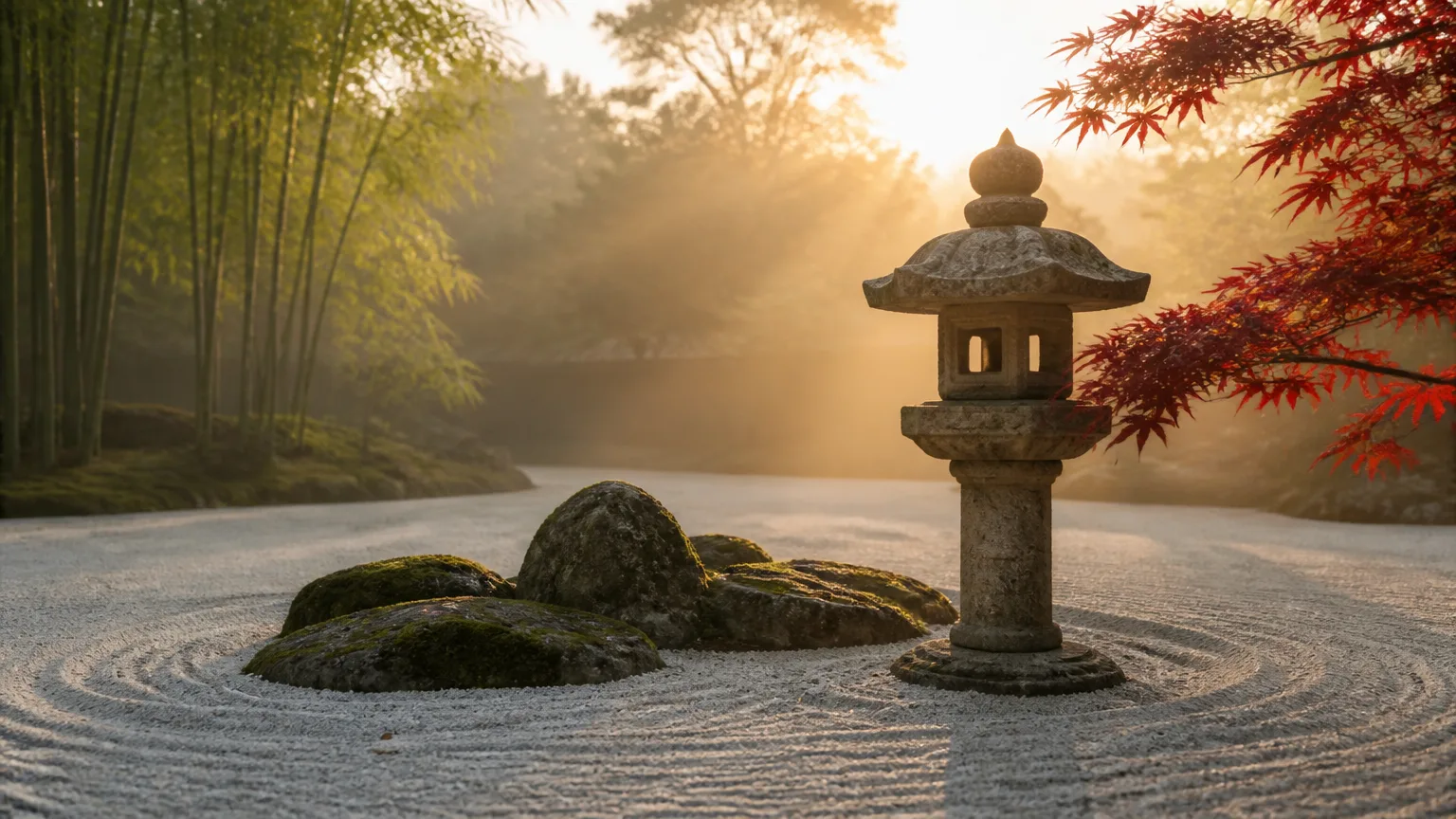
As we enter a quiet garden, our steps naturally soften. Gravel gathers the light, stones offer steady presence, and plants move gently in the breeze. Open space gives the mind room to settle. This is the heart of zen garden wellness: discovering how a mindful setting can support calm, reflection, and deeper awareness.
Here, we use “zen garden” broadly to describe spaces shaped for attention and inner stillness. We also honor the distinct traditions of Zen practice and Bhakti Yoga. Their methods and histories are not the same, yet both can invite us to meet the present moment with sincerity, care, and openness.
Calm is not an escape from life or its responsibilities. Instead, it can become a foundation for remembrance, prayer, self-observation, and gratitude. In a garden, we may notice our breathing, offer a quiet prayer, or recognize the beauty of serving others with greater patience.
The garden’s repeated patterns can also support devotional practice. Raking gravel, walking a familiar path, or tending a plant gives our attention a gentle place to rest. In the same spirit, chanting with attention gathers the mind through sacred sound, helping us remember love and our connection with the Divine.
As we explore mindful spaces, we will consider how simple surroundings can nourish meaningful inner change. A stone, a leaf, or a shared moment of silence may become an invitation to listen more deeply. From that steadiness, we can return to our families, communities, and daily service with greater compassion.
Why Mindful Spaces Help the Mind Become Receptive
A mindful space does not force the mind to become peaceful. Instead, it offers fewer demands competing for our attention. In a zen garden, visual simplicity can steady us through open space, balanced forms, and a limited range of colors.
Repeated patterns also help gather scattered attention. Raked gravel, stepping stones, or carefully placed plants give the eyes a gentle rhythm to follow. Natural textures, such as wood, stone, moss, and water, invite the senses to soften without overwhelming them.
Intentional boundaries create another kind of support. A low wall, a quiet pathway, or a small garden alcove signals that we have entered a space for pausing. These boundaries do not separate us from life. They help us meet life with greater awareness.
As distractions lessen, we may notice what is moving within us. Quiet observation can reveal restlessness, worry, attachment, or familiar emotional habits. We do not need to judge these experiences or push them away. We can notice them with patience, as we might watch clouds passing across an open sky.
This gentle attention is different from seeking instant wellness. A garden can support our practice, but it cannot complete the practice for us. Lasting transformation still asks for self-inquiry, ethical living, honest relationships, and wise guidance.
The space becomes a companion, not a cure. When we return regularly, we learn how our minds respond to silence, beauty, and stillness. We may discover that calm is not always the absence of difficulty. Sometimes it is the ability to remain present while difficulty moves through us.
From the perspective of Bhakti Yoga, the natural world offers more than sensory comfort. Creation can become a visible expression of the sacred, inviting us to remember the Divine through ordinary forms. A leaf opening, water reflecting light, or a stone resting quietly may awaken gratitude and devotion.
This way of seeing changes how we receive the present moment. We are not merely using a garden to escape our responsibilities. We are practicing remembrance so we can return to them with more love, steadiness, and care.
In this spirit, zen garden wellness is not about arranging perfect surroundings or achieving a permanently quiet mind. It is about creating conditions that help us listen. As we attend to the garden, we may become more receptive to inner truth, the needs of others, and the sacred presence woven through daily life.
The Elements of a Reflective Garden: Stone, Water, Plants, and Open Space
A reflective garden begins with a few honest, well-chosen elements. Stone, water, plants, and open space each shape how we move, notice, and listen. Together, they can support zen garden wellness without requiring elaborate design or perfect conditions.
Stones often become grounding focal points. Their weight and stillness invite us to pause, especially when our thoughts feel scattered. We do not need to assign rigid spiritual meanings to every object. Instead, we can allow a stone’s symbolism to arise through sincere reflection. One stone may remind us of steadiness, while another simply recalls a meaningful place or person.
Gravel, sand, and defined walking paths bring a quiet sense of order. Their lines and textures can remind us that life is always shifting, even when patterns seem stable. As we rake, trace, or walk these surfaces slowly, we practice meeting each moment without rushing. The path becomes less about reaching a destination and more about honoring each step.
Water offers another invitation. A small pool, fountain, or bowl can suggest release, renewal, and the gentle movement of change. When physical water is not practical, we can evoke its presence through a recording, a nearby stream, or the sound of rain. In a small space, a simple tabletop fountain, blue ceramic vessel, or rain chain can provide a low-maintenance reminder to soften and begin again.
Plants teach through their quiet service. A tree offers shade, herbs share fragrance, and flowers brighten a space without asking for recognition. Seasonal changes show us that growth, rest, loss, and renewal all belong to nature’s rhythm. By observing these cycles, we may grow more humble and grateful for the care that sustains us.
We can choose plants that suit our climate, time, and abilities. Native species, hardy grasses, potted plants, and drought-tolerant varieties can bring life to balconies and courtyards. Fragrance can deepen attention, while shade creates a welcoming place for prayer, conversation, or silent rest. Even one living plant can become a companion in our daily practice.
Tending the garden can become devotional care rather than perfectionism. We remove fallen leaves, water the soil, and clear pathways because we are preparing a place for presence. The work itself can express love and service, especially when we remember that care extends beyond our private peace.
For those drawn to Bhakti, the garden may also become a place to explore offering nature through devotion. A flower, leaf, or handful of gathered greenery can remind us to offer the beauty of the natural world with gratitude. Such offerings need not be grand; their sincerity matters most.
Finally, open space gives every element room to breathe. An uncluttered area can support silence, movement, or shared reflection. We may sit beneath a tree, walk a simple circle, or leave space for others to gather. In this openness, the garden welcomes us as we are and encourages a deeper connection with the sacred, with one another, and with the living world.
Bringing Bhakti Yoga Into the Garden
We can enter a mindful garden not only to relax, but to remember our loving connection with the sacred. In Bhakti Yoga, the garden becomes a place for offering attention, gratitude, and presence. Its beauty supports us, yet our devotion does not depend on perfect surroundings.
We might begin with a simple sequence. First, we arrive and notice the ground beneath us. We gently clean or arrange the space, settle the body, and set an intention. Then we chant or pray, sit in silence, and close with gratitude for the practice, the garden, and the life we share.
This rhythm gives our visit a deeper purpose. We are not using the garden mechanically as an escape from difficult feelings or daily responsibilities. Instead, we enter with bhava: an attitude of sincerity, humility, and loving remembrance. Even a few quiet minutes can become an offering when we meet them with an open heart.
Our devotional temperaments may differ, and each can find a natural expression outdoors. We may repeat a mantra silently, letting each syllable steady the mind. We may sing soft kirtan, read a passage from scripture, offer flowers, or walk slowly while remembering the Divine.
Music can serve as a gentle bridge between focused attention and devotion. The voice gathers our scattered thoughts, while rhythm helps the heart participate. For those drawn to melody, harmonium as a form of devotional music practice can make prayer more embodied and expressive. We can also explore harmonium as a form of devotional music practice as a way to deepen this offering. We do not need musical skill; heartfelt participation is enough.
A sacred setting can be very small. A balcony, courtyard, windowsill, or shared outdoor area can support japa and reflection. We might place one flower beside a candle, keep a small text nearby, or simply face the open sky.
In this way, zen garden wellness becomes less about appearance and more about relationship. We care for the space, and the space helps us care for our inner life. As we chant, listen, and offer gratitude, we also remember our connection with one another and with the living world.
Designing a Personal Mindful Space in Any Home
We do not need a large garden, costly materials, or special knowledge to create a mindful space. A quiet corner, windowsill, balcony, or small patch of floor can support reflection. In zen garden wellness, intention matters more than size or perfection.
Begin by noticing where we are most likely to pause. Choose a location that feels safe, offers some privacy, and receives comfortable natural light. It should also be easy to reach, especially if movement, balance, or energy is limited. The best place is one we can use consistently, even for a few peaceful minutes.
Keep the design simple and restrained. We might begin with one comfortable seat, one focal element, a living plant, and a small surface for sacred items. A stone, candle, prayer bead, or meaningful image can offer a gentle point of attention. Leave the surrounding path or visual field uncluttered, so our eyes and minds have room to rest.
Sensory details can deepen our experience. We may welcome soft outdoor sounds, the texture of wood or woven fabric, and a temperature that feels supportive. A mild natural scent can be comforting, but strong fragrances may cause discomfort or overwhelm. We can also avoid features with sharp sounds, flashing light, or textures that feel unpleasant.
Renters and urban residents have many creative options. A few stones in a shallow bowl can suggest a garden on a shelf. A tray garden with sand, pebbles, and a small plant can rest on a table, while containers can bring greenery to a balcony or doorstep. We might also claim a quiet corner indoors or participate in a shared community plot.
Let the space support devotion and connection in ways that feel natural to us. We may sit in silence, chant softly, offer gratitude, or read a few lines of wisdom. If others share our home, we can invite them to use the space, while respecting different needs for quiet and privacy.
Care for the space as part of the practice. Watering a plant, sweeping sand, pruning leaves, and repairing a loose container can become mindful acts of service. As we work, we can breathe steadily and offer our attention to the task rather than treating maintenance as something to outsource.
With regular care, even a modest space begins to hold meaning. We learn to arrive, listen, and return with patience. Each visit reminds us that calm grows through relationship: with our surroundings, with our inner life, and with the people and living world around us.
From Solitary Calm to Sangha: Gardens as Community Spaces
A garden can hold solitude, yet it can also gather us into sangha, a spiritual community rooted in care. When we sit beside one another beneath open sky, calm becomes something we share. Our presence reminds us that wellness grows through relationship, not separation.
Mindful gardens can welcome many forms of gathering without becoming over-programmed. We might host a small kirtan beneath a tree, discuss a passage from scripture, or offer a period of quiet reflection. Children can explore leaves, stones, and insects through simple nature activities, while others gather for service. The garden remains spacious enough for unplanned moments of prayer, conversation, and rest.
In this setting, shared tending becomes seva, or selfless service. We may sweep pathways, water plants, prepare cushions, or arrange simple seating. We can welcome newcomers, remove litter, and preserve silence when the moment calls for it. These small offerings help us practice humility while making the space more beautiful and accessible for everyone.
Our service also includes how we care for one another. Before beginning a chant, we can ask for consent and explain what guests may expect. We can seek permission before taking photographs, especially when children or quiet visitors are present. Clear pathways, stable seating, shade, and low-sensory areas help people with mobility or sensory needs participate more fully.
We also remember that not everyone knows Bhakti practices. Some may feel ready to sing, while others prefer listening or walking quietly. We can offer invitations rather than expectations, allowing each person to engage according to their comfort. This spirit reflects a spiritual life rooted in love and service, where welcome matters as much as practice. It also invites us toward a spiritual life rooted in love and service, expressed through our shared care.
Over time, community rhythms give the garden a dependable heart. A weekly care gathering, a seasonal flower offering, or a shared meal can create gentle continuity. We begin to recognize familiar faces, notice changes in the plants, and trust that someone will be there to greet us.
Silence and fellowship strengthen one another. Quiet allows us to listen inwardly, while compassionate presence assures us that we are not alone. Through this balance, zen garden wellness extends beyond personal calm into a living practice of connection, devotion, and belonging.
Working With Restlessness, Anger, and Distraction in the Garden
A quiet garden does not always make us feel peaceful at once. Sometimes stillness reveals the agitation already moving within us. We may notice a tight jaw, restless hands, quick thoughts, or the impulse to leave. This is not failure. It is an honest beginning.
We can meet these experiences with gentleness rather than judgment. Sitting beside a stone path, we might notice warmth in the chest, pressure in the shoulders, or a racing mind. We can name these sensations without needing to solve them immediately. The garden gives us room to witness what is present without feeding every thought or impulse.
When anger arises, we can practice pausing before we speak or act. Feel both feet touching the ground. Lengthen the exhale, allowing it to become slightly slower than the inhale. Name the emotion simply: “anger is here,” or “fear is here.” Then repeat a chosen mantra, such as “I offer this to the Divine,” or “May I respond with compassion.”
After several breaths, we can ask what is needed now. Is wise action required, or would rest create more space? Perhaps we need to step away, drink water, or seek support before responding. A garden does not ask us to suppress emotion. It helps us create a pause where care can guide our next choice.
This pause reflects Bhakti values of humility, forgiveness, and non-harm. We remember that our reactions are real, but they do not have to become our identity. By offering anger, grief, or distraction to the Divine, we make room for transformation without pretending that pain has disappeared.
Simple movement can also help settle strong energy. We might walk slowly around the garden, coordinate steps with the breath, or practice a few steadying postures. These yoga techniques for anger management can support regulation while keeping our attention rooted in devotion and awareness.
Distraction deserves the same kindness. Birds, weather, sounds, and passing memories may draw us away. Each time we notice, we can return to the gravel, the breath, a mantra, or the presence of the living world. Returning is itself a practice of patience.
Zen garden wellness can complement professional mental-health care, medical support, and safety planning. It cannot replace them when distress feels severe, persistent, or unsafe. If we may harm ourselves or someone else, we should leave the garden and contact trusted support or emergency services. Our spiritual practice includes receiving help, protecting life, and allowing community to care for us.
Frequently Asked Questions About Zen Garden Wellness and Bhakti Practice
Do we need a traditional Japanese zen garden to benefit?
No. A simple, respectful, nature-based space can support calm and reflection. We might arrange a few stones, tend a plant, or sit beneath a tree. Intention and consistent practice matter more than imitating a cultural form. As we create, we can learn about the traditions that inspire us and approach them with care.
Can we practice Bhakti Yoga in a zen garden?
Yes. Japa, prayer, kirtan, scripture reading, and devotional contemplation can take place in many settings. We may use the garden to remember the Divine, offer gratitude, and deepen our relationship with love and service. At the same time, we honor the distinct roots of Japanese garden traditions and Bhakti Yoga rather than blending them carelessly.
What if we cannot maintain a garden?
Our practice does not depend on perfect upkeep. A low-maintenance container, windowsill altar, public garden, or shared community space can become a welcoming refuge. We can care for what is possible and allow the form to change with our season of life. Flexible care opens the door to steady connection without perfectionism.
Is silence required?
Silence can support reflection, but it is not the only path. Soft chanting, instrumental bhajan, or a guided group practice may also nurture presence when the setting and community permit it. We listen for what serves the space, the people nearby, and our shared intention.
How often should we use the space?
A realistic rhythm is more helpful than an ideal schedule that creates guilt. We might take a brief daily pause, repeat a mantra while watering a plant, or set aside a longer weekly session. Even a few attentive minutes can help us return to steadiness. When we miss a day, we simply begin again.
In these small acts, zen garden wellness becomes a living practice. We arrive as we are, offer our attention, and make room for calm, devotion, and compassionate connection.
Let the Garden Become a Place of Loving Attention
A mindful garden does not need to be large, polished, or perfectly quiet. It becomes meaningful through the care we bring to it. A stone path, a bowl of water, or a single tree can remind us to slow down and notice what is here.
This is the heart of zen garden wellness: relationship. We tend our relationship with the body, the natural world, the Divine, and the people who share our lives. As we listen more closely, we may discover that healing is not an isolated achievement. It grows through connection, gratitude, and compassionate participation.
The garden is a vessel for practice, not a performance of spirituality. It cannot promise permanent calm or protect us from every difficulty. Instead, it offers a supportive place to meet each moment with honesty, devotion, and patience.
We might sit with a restless mind, breathe through grief, or offer a quiet prayer of thanks. We might notice the needs of a plant, welcome a neighbor, or make room for someone else to rest. These simple acts unite inner reflection with loving service.
Over time, our attention may become more generous. We begin to see that caring for a space also teaches us to care for ourselves and one another. The calm we touch in the garden is not meant to end at the garden’s edge. It can accompany us into conversations, family life, work, and the wider community.
We do not need to begin with a complete redesign. We can clear one small corner and choose a focal point: a stone, a candle, a plant, or an open view of the sky. Then we can offer a few minutes of attentive presence, noticing our breath, the sounds around us, and the quiet life unfolding nearby.
Let the practice remain modest and repeatable. When we miss a day or feel distracted, we simply return. With time, the space may change naturally, shaped by the seasons, our care, and the needs of those who gather there.
In this way, the garden becomes a place of loving attention. Reflection becomes most transformative when it returns us to compassionate participation: ready to listen, ready to serve, and ready to meet everyday life with a more open heart.