
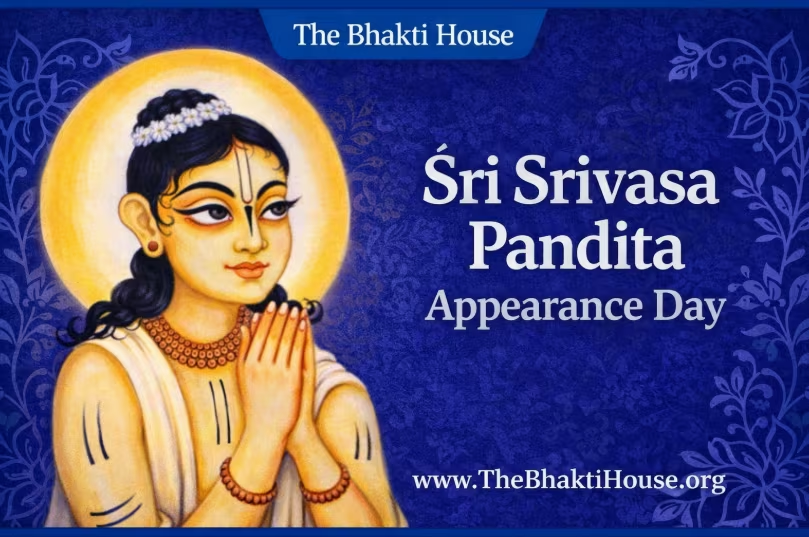
The appearance day of Śrī Srivasa Pandita is a deeply meaningful observance in the Gaudiya Vaishnava calendar because Srivasa Pandita is one of the most intimate associates of Śrī Caitanya Mahaprabhu and one of the celebrated members of the Pañca-tattva. In Gaudiya theology, the Pañca-tattva consists of Śrī Caitanya Mahaprabhu, Śrī Nityananda Prabhu, Śrī Advaita Acharya, Śrī Gadadhara Pandita, and Śrī Srivasa Pandita. Srivasa is honored not merely as a historical companion of Mahaprabhu, but as a central figure in the Lord’s saṅkīrtana pastimes and as a representative of the Lord’s pure devotees.
For devotees, this festival is not simply a date on a calendar. It is an opportunity to remember the atmosphere of early Nabadwip kīrtana, the mood of surrender found in the Lord’s associates, and the sacred role of the devotee in making the Lord’s mercy accessible to the world. Srivasa Pandita’s life teaches that the Lord delights in gathering with His devotees, hearing His holy names sung, and revealing His mercy where there is sincerity, humility, and unwavering faith.
At The Bhakti House, we observe this festival in Jackson, Michigan, in a standard ISKCON-style online format with a short reading, kīrtan, a brief class or discussion, and closing prayers. Even in an online setting, the observance can be spiritually potent when approached with attention, devotion, and a desire to hear about the Lord and His devotees.
Who Is Śrī Srivasa Pandita?
Śrī Srivasa Pandita, also called Srivasa Thakura, is widely known in the Gaudiya Vaishnava tradition as one of the Lord’s foremost associates in Navadvipa. He and his wife, Malini Devi, are remembered as dear companions of Mahaprabhu’s family, and his home became one of the primary sites of the Lord’s early saṅkīrtana pastimes. In the tradition’s theological understanding, Srivasa represents the Lord’s devotional energy among the Pañca-tattva, and he is also traditionally associated with Narada Muni.
Among all the places sanctified by Gaura-līlā, the home of Srivasa Pandita stands out because it was there that Mahaprabhu performed intimate nightly kīrtanas with His closest associates. These kīrtanas were not casual musical gatherings. They were revelations of divine love, where the holy name was sung with such intensity that the Lord manifested extraordinary ecstatic symptoms and transformed the lives of all present. The tradition remembers these pastimes as foundational to the public saṅkīrtana movement that would later spread throughout the world.
Srivasa Pandita is therefore more than a revered historical devotee. He is an emblem of sacred hospitality, unshakable faith, and complete dedication to kīrtana. His home became an altar. His family life became service. His identity became inseparable from the glorification of the Lord.
The House of Śrīvāsa: The Birthplace of Intimate Saṅkīrtana
One of the most important reasons devotees honor Srivasa Pandita is because the house of Śrīvāsa became the setting for Lord Caitanya’s intimate nocturnal kīrtanas. The Caitanya-caritāmṛta describes how Śrī Caitanya Mahaprabhu regularly performed congregational chanting in Srivasa’s home, with the doors closed to those who came in a mocking or offensive mood. This detail is spiritually significant: kīrtana is open to all, but its deeper realities are revealed only where there is reverence and devotion.
In Gaudiya Vaishnava memory, Śrīvāsa-aṅgana is not merely a building. It is the prototype of the devotional home. It shows that a residence can become a temple when centered on hearing, chanting, and serving. This has practical meaning for modern devotees, especially those gathering online or in homes. You do not need grandeur to host the Lord’s presence. What is needed is sincerity, the holy name, and the association of devotees.
For this reason, Srivasa Pandita is especially relevant for communities like The Bhakti House. His example reminds us that true spiritual culture begins where the holy name is welcomed, scripture is heard, and Vaishnavas gather in a mood of service.
The Faith of Śrī Srivasa Pandita
Srivasa Pandita is also remembered for his astonishing faith during moments of personal trial. One of the best-known episodes from Gaura-līlā recounts that while Mahaprabhu was performing kīrtana in Srivasa’s house, Srivasa’s son passed away. Yet Srivasa did not allow the kīrtana to be interrupted. He did not want the Lord’s ecstatic glorification to be disturbed by worldly lamentation. This episode is preserved in the tradition as a profound example of spiritual steadiness, showing that Srivasa saw service to the Lord as higher than even the most painful material circumstances.
This pastime should not be read superficially or sentimentally. It does not teach emotional coldness. Rather, it reveals a level of God-centered consciousness so deep that Srivasa trusted the Lord completely, even in grief. His example teaches that devotion does not mean the absence of suffering; it means orienting everything, including loss, toward surrender and faith.
In an age marked by anxiety, distraction, and instability, Srivasa Pandita’s life offers a needed corrective. He shows that bhakti is not fragile. It can hold steady under pressure. It can continue singing in the midst of uncertainty. It can place the holy name at the center even when the heart is tested.
Śrī Srivasa Pandita and the Mood of the Pañca-tattva
To understand Srivasa Pandita properly, it helps to place him within the Pañca-tattva. In ISKCON and the broader Gaudiya Vaishnava tradition, Lord Caitanya is worshiped not in isolation but together with His associates. This is part of a key theological principle: the Lord reveals Himself through loving relationships, and access to Him comes through His devotees. A Mayapur article based on Prabhupada’s explanations stresses that Lord Caitanya is worshiped along with His associates and identifies Srivasa as one of the five central manifestations honored in Pañca-tattva worship.
This matters for observance because festivals like Srivasa Pandita’s appearance day train the heart in relational theology. We do not seek Krishna independently. We come through guru, Vaishnavas, and the Lord’s eternal servants. Srivasa Pandita represents the assembly of devotees who surround the Lord in loving service. To remember him is to remember that devotion is communal, not merely individual.
That mood is especially important for online observances. Even when physically dispersed, devotees can gather around the same center: the holy name, the same sacred hearing, the same offering of respect to the Lord and His associates.
What We Learn From Śrī Srivasa Pandita Today
Śrī Srivasa Pandita’s life carries several powerful lessons for modern spiritual practitioners:
1. Build your life around kīrtana
Srivasa’s home became sanctified because it was given to the Lord’s names. His example challenges us to ask whether our homes, schedules, and habits actually support remembrance of Krishna.
2. Protect sacred atmosphere
The kīrtanas in Srivasa’s house were intimate and reverent. This teaches that devotional gatherings need not be casual or noisy in mood. Sacred atmosphere matters.
3. Stay steady in difficulty
Srivasa’s response to sorrow demonstrates mature faith. Bhakti is not merely for easy days. It is meant to anchor the heart in every season.
4. Honor the devotees
The Lord takes great pleasure in those who honor His devotees. To celebrate Srivasa Pandita is to deepen our appreciation for Vaishnava association.
5. See the home as a place of worship
For many householders and small communities, the example of Śrīvāsa-aṅgana is especially encouraging. The home can become a place of kīrtana, study, hospitality, and transformation.
How The Bhakti House Will Observe Śrī Srivasa Pandita Appearance Day Online
For our observance in Jackson, Michigan (local time), The Bhakti House will follow a standard ISKCON-style online program:
Short reading about the pastime and personality
We will begin with a focused reading on the life, qualities, and service of Śrī Srivasa Pandita. This portion helps set the devotional mood, anchors the observance in śāstra and tradition, and gives participants a clear meditation for the rest of the program.
Kīrtan (20–30 minutes)
Because Srivasa Pandita is inseparable from the Lord’s saṅkīrtana pastimes, kīrtan should be central. This is not filler between spoken portions. It is the heart of the observance. A simple, attentive, prayerful kīrtan is entirely appropriate and spiritually powerful.
Brief class or discussion (20–30 minutes)
After kīrtan, a short class or discussion can draw out practical applications from Srivasa Pandita’s life: faith in adversity, sacred community, devotional hospitality, the role of the devotee, and the meaning of Pañca-tattva worship.
Closing prayers
The program may conclude with traditional Vaishnava prayers, offering gratitude for the association of devotees and praying for the mercy to develop steadiness in chanting and service.
This standard structure is both simple and profound. It mirrors the basic rhythm of healthy devotional culture: hear, chant, reflect, and pray.
Why Online Observance Still Matters
Some may wonder whether an online observance can truly carry the spirit of a Vaishnava festival. The answer is yes, when the gathering is sincere and centered on hearing and chanting. While nothing replaces in-person sadhu-saṅga, online programs still create a real opportunity for shared remembrance, scriptural learning, and congregational participation.
For a festival honoring Srivasa Pandita, this is especially fitting. His life was about creating sacred space for kīrtana and hearing. Even through digital means, devotees can still consecrate time, attention, and consciousness for that purpose. What matters most is not technological perfection, but devotional intention.
At The Bhakti House, we see online observances not as lesser substitutes, but as genuine opportunities to serve, remember, and gather around Krishna-katha and the holy name.
A Meditation for This Festival
On this appearance day of Śrī Srivasa Pandita, we can pray:
May our homes become places of kīrtana.
May our hearts become steady in trial.
May we honor the Lord through honoring His devotees.
May we learn to value sacred association over distraction.
May we one day develop even a fraction of Srivasa Pandita’s faith, humility, and dedication.
That is a worthy meditation for any devotee, congregation member, or sincere seeker.
Conclusion
The appearance day of Śrī Srivasa Pandita is an invitation to remember one of the great pillars of Gaura-līlā: a devotee whose home became the stage of divine saṅkīrtana, whose heart remained fixed in service, and whose life demonstrates the beauty of devotion centered on the holy name. The tradition remembers him as a key associate of Lord Caitanya, a member of the Pañca-tattva, and a shining example of devotional steadiness and sacred community.
As The Bhakti House observes this festival online in Jackson, Michigan, may we do more than remember a saintly figure from the past. May we receive his example as a living instruction for our own homes, communities, and practice of bhakti today.
All glories to Śrī Srivasa Pandita. All glories to the devotees of Lord Gauranga.

