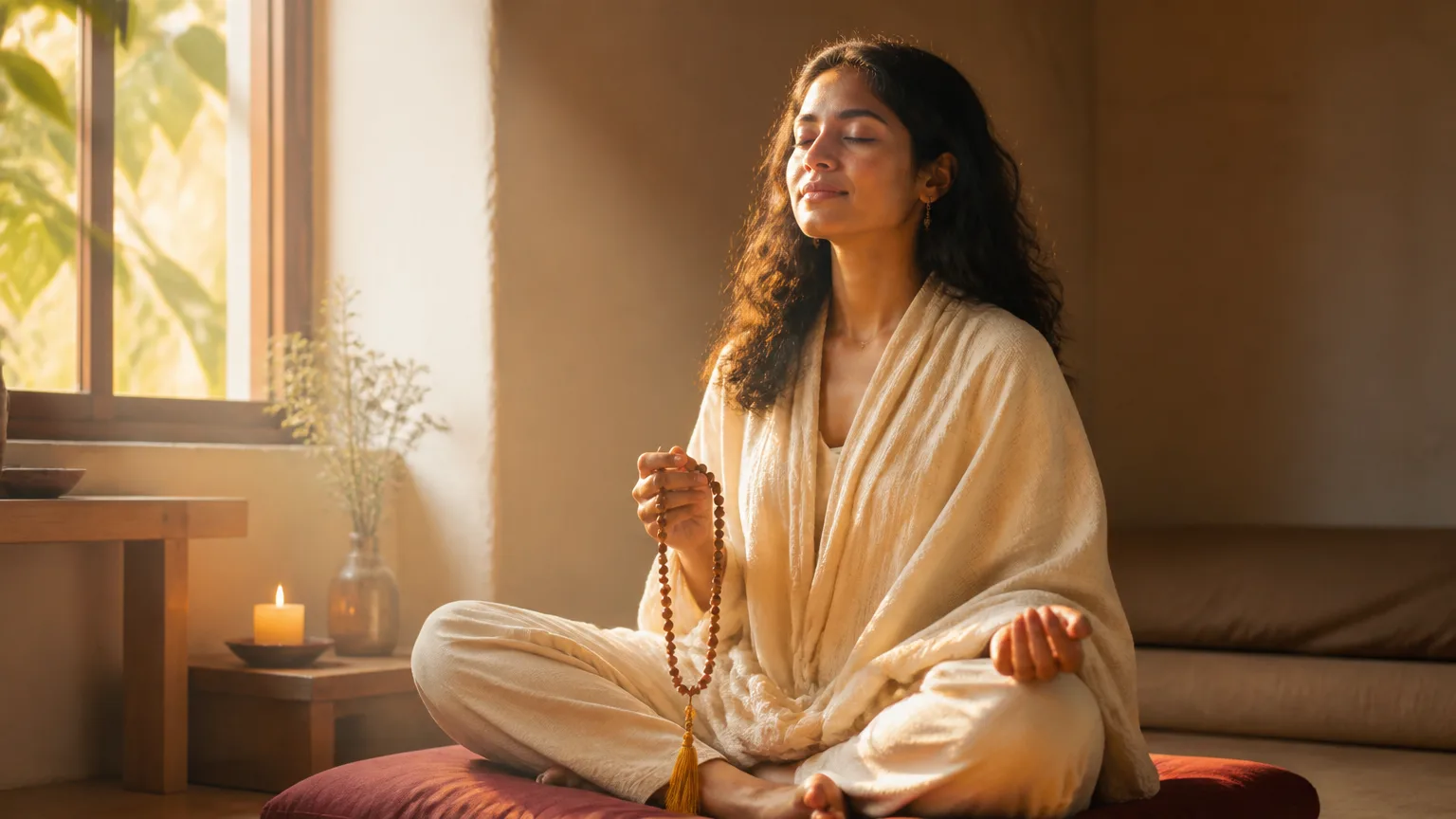
Nama japa can begin anywhere: in a quiet corner, during a morning routine, or whenever the heart seeks grounding. This devotional practice involves repeating a sacred name or mantra, creating a direct and personal way to meet the Divine. Its simplicity welcomes beginners while continuing to support experienced spiritual seekers.
Yet nama japa is more than mechanical repetition. It brings together sound, attention, remembrance, and devotion, although its deeper experience may unfold gradually. Understanding the relationship between Hindi, bhakti yoga, and spiritual practice can further enrich this journey. You do not need perfect concentration, extensive knowledge, or ideal circumstances to begin. This guide offers a practical first step toward making the sacred name part of your day.
Understanding the Power of Repetition
Nama japa is more than a concentration exercise. In many devotional traditions, the Divine Name is understood to carry spiritual presence. Repeating it becomes an act of remembrance, helping you turn toward the Divine with attention, trust, and openness.
The mind naturally follows familiar patterns, especially when thoughts become scattered or anxious. A sacred name offers a compassionate, uplifting rhythm to replace unhelpful mental loops. As you repeat the name quietly or aloud, emotional energy may gradually move from restlessness toward steadiness and devotional feeling.
With regular practice, some people notice greater inner calm, patience, and awareness in daily life. These benefits usually develop gradually, rather than through instant transformation. Nama japa is not a substitute for professional mental-health care, particularly when anxiety, depression, or other concerns require qualified support.
The quality of practice matters more than speed, volume, or outward performance. A few sincere repetitions, offered consistently, can be more meaningful than a hurried session focused on reaching a number. You may also explore the devotional power of kirtan and sacred-name repetition to see how shared chanting can deepen this remembrance.
Choosing a Name, Mantra, and Method
Begin by choosing a form of nama japa that feels meaningful and sustainable. You might repeat a name of God, a traditional mantra, or a sacred phrase connected to your devotional lineage. If a mantra requires initiation or specific pronunciation, seek guidance from a trusted teacher or established tradition. Learning about the devotional beauty and practices of bhakti can also provide helpful context.
Next, select the method that best supports your attention. Audible repetition allows you to hear each word and often helps beginners remain focused. Whispered japa offers privacy while preserving the rhythm of the voice. Mental repetition can be especially useful in public, while walking, or during ordinary daily activities.
A mala is an optional tool for counting repetitions and maintaining a steady pace. Use it as a support, not a test of spiritual achievement. The purpose of nama japa is attentive remembrance and devotion, rather than reaching a particular number.
For a meaningful beginning, choose one primary name or mantra for a defined period, such as several weeks. Constantly switching in search of a more powerful option can divide your attention. Give your chosen practice time to become familiar, steady, and personal.
A Simple Nama Japa Practice to Begin Today
Begin by preparing a clean, peaceful place. Creating a mindful space for calm and reflection can help signal that this time is set apart. Sit comfortably with a relaxed spine, close your eyes or soften your gaze, and take several unhurried breaths.
Set a simple intention, such as remembering the Divine with sincerity. Then repeat your chosen name or mantra slowly. Listen carefully to every syllable, allowing the sound to remain at the center of your attention.
Distraction is natural. When thoughts, sounds, or emotions arise, notice them without self-criticism. Gently return to the name and begin the next repetition. The purpose is not to force uninterrupted concentration, but to practice returning with patience.
Start with a manageable commitment: five minutes or one mala. Extend the duration only when the practice feels sustainable. Consistency matters more than ambitious sessions.
You can also practice nama japa while walking, traveling, cooking, or pausing between tasks. These moments support remembrance, while a dedicated seated practice provides structure and depth. Quality matters more than perfect posture, flawless focus, or a dramatic emotional experience. Sincere attention, repeated regularly, allows the practice to become familiar and steady.
Working With Distraction, Doubt, and Expectations
Distraction, boredom, restlessness, and uncertainty are normal when you begin nama japa. The mind will wander; each time you notice and return to the Name, you have already practiced. Treat that return as progress rather than evidence of failure.
Do not measure growth only through visions, bliss, or immediate relief. Devotional change may appear more quietly through greater patience, humility, steadiness, or kinder responses during daily challenges. These signs often develop gradually, beyond the meditation period.
Practice sincerely without demanding a particular result. Non-attachment as a path to inner peace frees repetition from comparison, performance, and pressure. You do not need to match another person’s pace or experience.
After one week, review your routine with honesty and compassion. Make one practical adjustment—such as changing the time, posture, mantra volume, or session length—rather than abandoning the practice. Consistency grows through thoughtful refinement.
Let the First Repetition Be the Beginning
Nama japa gains strength through sincere, repeated engagement. Choose a meaningful Name, set a manageable period, and listen attentively to each repetition. When the mind wanders, return gently without judgment.
Begin today with one intentional session, even if it lasts only a few minutes. Then make a simple vow for the next seven days. Let the practice grow naturally rather than forcing a particular spiritual outcome. Every repetition offers an opportunity to remember the Divine and bring devotion into ordinary life.