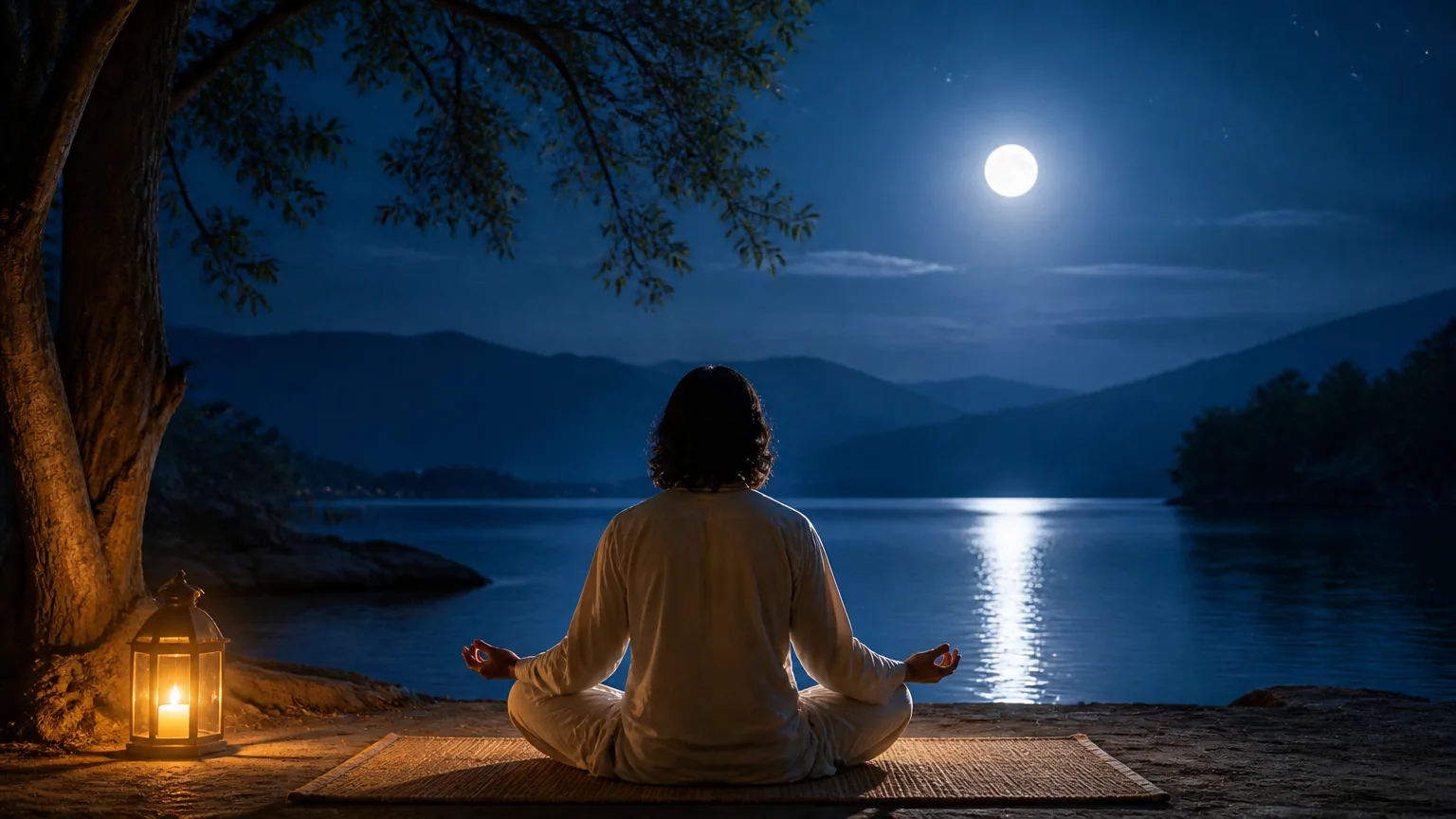
Meditation for full moon practice offers us a meaningful pause beneath the moonlight. As the lunar cycle reaches fullness, we can slow down, notice what has unfolded, and meet the present with gratitude. This is not about superstition or achieving a mystical experience. It is a sacred container for honest reflection, renewal, and connection with the Divine.
Through Bhakti Yoga, meditation becomes a loving offering of attention, not a performance or test of concentration. We listen inwardly, honor what we are carrying, and make space for fresh devotion. Beginners can adapt this ritual at home with a candle and quiet breath, or join meditation classes near me for supportive community. Together, we enter stillness and trust the gentle rhythm of return.
Preparing a Sacred Space and a Clear Intention
Before beginning our meditation for full moon, we prepare a space that feels quiet, welcoming, and sincere. We might tidy a corner, light a candle or lamp, arrange a few flowers, or place a meaningful image or sacred text nearby. Elaborate materials are not needed. A clean space and an attentive heart are enough.
As we prepare, we allow the outer room to reflect our inner readiness. We can sit comfortably, soften our breathing, and name an intention for this gathering. Perhaps we choose surrender, gratitude, forgiveness, or a renewed commitment to loving service. Our intention does not need perfect words. It only needs to be honest.
We may also write down one quality we are ready to release, such as fear, resentment, or self-doubt. Beside it, we name one devotional quality we wish to cultivate, such as patience, compassion, or trust. We offer both with tenderness, without judging our present state.
This preparation becomes a simple form of arcana, the Bhakti Yoga practice of making an offering with reverence and loving attention. To explore this sacred practice more deeply, read arcana in Bhakti Yoga and learn more about arcana in Bhakti Yoga. Even a candle, a flower, and our willing presence can become a beautiful offering.
A Guided Full Moon Meditation for Inner Renewal
Let us begin by choosing a comfortable posture, seated on a cushion or chair. Soften the shoulders, relax the hands, and allow the breath to settle into its natural rhythm. For these next 15 to 20 minutes, we gently step away from phones, unfinished tasks, and mental urgency. Nothing needs to be solved right now.
Bring your attention to each inhale and exhale. Notice the body resting, supported by the earth. When thoughts arise, we greet them kindly and return to the breath. This is not a practice of perfection, but a loving return to presence.
Now, let us remember the Divine Name with humility and steady attention. We may softly repeat the Hare Krishna maha-mantra:
Hare Krishna, Hare Krishna, Krishna Krishna, Hare Hare
Hare Rama, Hare Rama, Rama Rama, Hare Hare.
Let the sound move with the breath. We can repeat it aloud, whisper it, or listen inwardly. As the full moon shines above us, imagine a compassionate light resting at the heart. With each breath, let this light gently touch places that feel tired, guarded, or uncertain.
Without judgment, ask ourselves: What am I ready to release? Perhaps it is an old habit, fear, or demand for control. We do not force emotional catharsis. We simply offer what is ready, trusting Divine love to guide its timing.
For several quiet minutes, rest in silent listening. Receive the breath, the mantra’s echo, and the stillness. Close with gratitude, offering this renewal through practices for spiritual growth to our families, communities, and all beings.
Letting Devotion Become Sound, Prayer, and Offering
From this quiet listening, devotion may naturally become sound, prayer, or song. We might softly chant before or after silent meditation, letting the voice support concentration without turning our practice into a performance. Even one repeated name can carry us from private reflection into joyful remembrance.
Kirtan, japa, or reading a beloved verse can deepen this movement. When appropriate, we may include a harmonium, kartals, or simple clapping. Yet unaccompanied singing is complete, too. Whether we are exploring learning harmonium in Bhakti or humming quietly in a shared room, every level of musical experience belongs here.
We can also offer food, flowers, a candle, prayer, or music to the Divine. This offering is an act of relationship: we present what we have with love, then receive the moment as prasada, a gift touched by grace. In our meditation for full moon practice, these simple gestures make renewal tangible.
Our homes and voices may differ, but devotion remains accessible. A whispered mantra, gentle clapping, or silent prayer can open the same doorway: remembrance held in love and shared with all beings.
Sharing the Practice Through Satsanga and Community Service
Our full moon practice can grow beyond personal reflection into a gentle satsanga, or gathering in spiritual friendship. We might begin with a warm welcome, followed by kirtan, meditation, and a few quiet moments of prayer. Meaningful association with devotees offers encouragement, accountability, humility, and the strength to continue our path together.
After meditation, each person may share one insight or gratitude. We listen without offering unsolicited advice, debating, or comparing experiences. Then we share prasada, allowing nourishment and fellowship to deepen the evening.
Before closing, we choose one practical service intention for the coming lunar cycle. We might help at a temple, support a neighbor, prepare meals, or serve a local community project. Renewal becomes tangible when devotion moves through our hands and choices. We can gather in person or online, participate quietly, or join through one shared prayer. Every sincere offering belongs.
Carry the Full Moon’s Clarity Into Everyday Bhakti
The moon is a rhythm, not a deadline. Each cycle offers another opportunity to begin again, carrying remembrance, compassion, and service into ordinary life.
After our meditation for full moon, we can record one insight and one service action. We revisit them at the next full moon, without expecting identical results. Let devotion keep unfolding through daily choices.
We may practice alone or with community. Together, reflection becomes loving participation, and each return opens us more deeply to Divine love.