Short answer: Kartik (Kārttika) is the lunar month falling roughly between October and November. In the Vaishnava tradition it is associated with Krishna in His form as Dāmodara, “the one bound with a rope.” Namāmīśvaraṁ sac-cid-ānanda-rūpam is the opening line of the Dāmodarāṣṭaka (Damodarastakam), an eight-verse prayer to Krishna as Damodara. Devotees traditionally sing it during Kartik, often while offering a lamp.
This article explains the month, the prayer, and some simple ways to observe both. It describes the teachings and practices of the Gaudiya Vaishnava tradition and does not claim to settle questions beyond that tradition.
What Is Kartik?
Kartik is a month in the Hindu lunar calendar. It falls in about late October to mid-November, and the exact dates change each year with the lunar calendar. Vedabase’s translation of Caitanya-caritāmṛta gives its Gregorian range as October–November. In the same verse, Madhya-līlā 20.201, the presiding Deity of the month of Kārttika is named as Dāmodara, and the month before it, Āśvina, is given as Padmanābha’s month (CC Madhya 20.201).
That verse also adds a clarification. The Dāmodara who presides over the month of Kārttika is described as a different manifestation from the Dāmodara of Vraja, the son of Nanda Mahārāja. So the verse separates the month’s presiding form from the child Krishna of Vraja. It does not describe the lamp-offering or the prayer.
Other Gaudiya Vaishnava texts and teachings mention the month as well:
- Rūpa Gosvāmī’s list of the sixty-four items of devotional service includes observing special vows, such as the Kārttika-vrata (Caitanya-caritāmṛta, Madhya-līlā 22.127).
- Vaishnava sources say that devotees usually take extra vows in this month, offer ghee lamps and sing the Damodarastakam daily.
- One Gaudiya Vaishnava source gives the first day of the bright fortnight of Kartik as the date of Krishna’s rope-binding pastime. It presents this as the main reason the month is called “Damodara.”
- The Hare Krishna Movement quotes the Skanda Purāṇa as calling Kartik “the best of months, the most dear to Lord Sri Krishna” and as saying that a ghee lamp offered to Krishna this month burns away sins. This is a scriptural claim as quoted by that source. The article does not verify it independently.
The Bhakti House’s guide to Vraja Mandala describes Kartik as “the month of Damodar,” a devotional time when many pilgrims visit Vraja. It says devotees offer lamps to Krishna and sing the Damodar prayers, remembering the pastime in which Mother Yashoda bound child Krishna with love.
Śrīla Prabhupāda’s instructions for Kartik
In a 1974 lecture on Śrīmad-Bhāgavatam 1.8.31, Śrīla Prabhupāda called the observance “Dāmodara-vrata.” He asked his disciples to observe it for one month, from 18 October to 17 November. Each evening they were to offer a small candle before the Deity, outside the room, and chant the Dāmodarāṣṭaka. He noted that the prayer is printed in the ISKCON songbook and is sung during this vow. This summary relies on a search excerpt of the lecture rather than the full page, so readers who want the exact wording should consult the lecture itself.
Why Is Krishna Called Damodara?
The name Dāmodara is commonly explained as dāma (rope) plus udara (belly). The name was given when His mother bound Him with ropes. In the well-known story, child Krishna in Gokula takes butter and runs from His mother, Yashoda. She catches Him and binds Him to a heavy grinding mortar. Devotional retellings stress that the all-powerful Lord allows Himself to be bound by the love of His devotee. Two sons of Kuvera, who had been trapped in the form of trees, are then freed. These details come from tradition-based summaries of the prayer, such as the Namamisvaram text and commentary on KKSongs and the Vedapedia entry on the Damodarastakam.
The pastime fits the central message of bhakti: God is approached and captured not by power or wealth but by affection. The Bhakti House’s article on prema, or pure love of God, explores this ideal further.
What Is Namamisvaram Saccidananda Rupam?
The phrase is the opening of the Dāmodarāṣṭaka, and the prayer is named for these first words. Aṣṭaka means “eight,” so the title means roughly “eight verses to Dāmodara.” The first line is usually read as follows (this is an explanatory gloss, not an official translation):
- Namāmi – I offer obeisances
- īśvaram – to the Lord, the controller
- sac-cid-ānanda-rūpam – whose form is eternal existence (sat), knowledge (cit) and bliss (ānanda)
The same idea appears in Brahma-saṁhitā 5.1, where Krishna, known as Govinda, is described as having an “eternal blissful spiritual body” (sac-cid-ānanda-vigrahaḥ) and as the cause of all causes (Brahma-saṁhitā 5.1). The prayer therefore begins by saying that the child being bound is not an ordinary child. According to the tradition, He is the Supreme Lord.
What the eight verses emphasize
According to tradition-based summaries, the speaker of the prayer does not ask for liberation or any other boon. The speaker asks only that the child form of Krishna, Bāla-Gopāla, remain in his heart. The prayer reflects on Krishna’s fear and humility before His mother, on the ropes that bind Him, and on the freeing of Kuvera’s sons. It asks for prema-bhakti, loving devotion, and the last verse bows to Rādhārāṇī (KKSongs; Vedapedia).
Where does the prayer come from?
Devotional tradition attributes it to the Padma Purāṇa, saying it was spoken by Satyavrata Muni to Nārada and Śaunaka. Caitanya-caritāmṛta (Madhya-līlā 19.230) quotes one of its verses and identifies the source as the Dāmodarāṣṭaka “in the Padma Purāṇa.” The Hari-bhakti-vilāsa (2.16.198) instructs devotees to recite it daily in Kartik.
Vedapedia adds a scholarly caveat: the prayer does not appear in any standard edition of the Padma Purana, and scholars think it is a later Gaudiya Vaishnava work. Devotees and scholars therefore describe its origin differently. Within the Gaudiya tradition it is received as an authoritative devotional prayer. A historian of texts may describe it differently.
This article did not find the full Sanskrit text of the prayer on Vedabase. Readers who want the verses with word-for-word meanings should consult a trusted devotional printing or the sources listed below.
How Do Devotees Observe Kartik?
Practices vary between communities and individuals. Commonly described elements include:
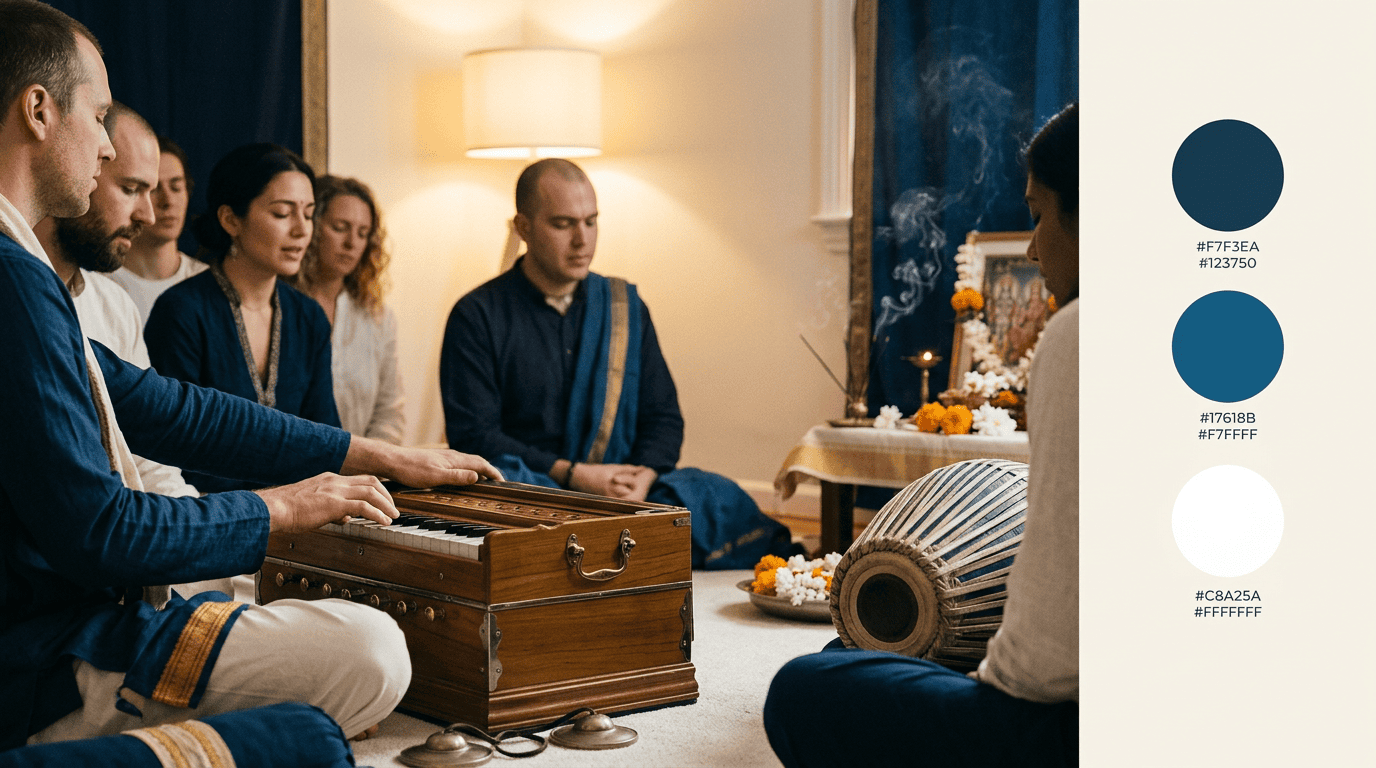
- Offering a lamp (dīpa), often a ghee lamp or a simple candle, before a picture or Deity of Krishna each evening.
- Singing the Damodarastakam daily during the month.
- Taking a modest vow (vrata), such as additional chanting, reading or a simplified diet. The Kārttika-vrata is among the special vows in Rūpa Gosvāmī’s list of devotional practices.
- Visiting or remembering Vraja, especially Govardhan and Radha-kunda, which the Bhakti House describes in its guides to Govardhan and Radha-kunda.
Some traditional sources praise the month at length and attribute special spiritual merit to lamp-offering. Those claims are matters of faith within the tradition. They are not independently verifiable, and this article does not treat them as proven.
A simple beginner approach
- Choose a quiet time each evening and a safe place for a small lamp or candle, away from anything flammable.
- Offer it with a simple prayer in your own words, or recite the first verse if you know it.
- Sing or listen to the Damodarastakam, or chant the Hare Krishna mahā-mantra, as you are able. For background on communal singing, see our guide to kirtan.
- Keep any vow small and sustainable. The point is sincerity and remembrance, not strictness.
These are practical suggestions, not universal requirements. If you are unsure about a vow, ask an experienced practitioner or your local community.
Key Takeaways
- Kartik is an autumn lunar month, roughly October to November, associated in Gaudiya Vaishnavism with Krishna as Damodara.
- The Damodarastakam is an eight-verse prayer that begins “Namāmīśvaraṁ sac-cid-ānanda-rūpam.”
- The prayer centers on Krishna being bound by Mother Yashoda’s love. Its main petition is for loving devotion rather than any other gift.
- Its attribution to the Padma Purana is traditional, and Caitanya-caritāmṛta itself cites it that way. Scholars discuss whether it belongs to a later period.
- The Damodara who presides over the month is described in Caitanya-caritāmṛta as a different manifestation from the Damodara of Vraja, Nanda’s son.
Conclusion
Kartik is a month set aside in the Vaishnava tradition for remembering Krishna as Damodara, the Lord who allows Himself to be bound by a mother’s love. The Damodarastakam, which begins “Namāmīśvaraṁ sac-cid-ānanda-rūpam,” is the prayer most closely associated with the month. Devotees sing it with a lamp offered each evening. Scholars and devotees differ on its textual origin, but within the Gaudiya tradition its message is clear: the aim is not liberation or any other gift but loving devotion. A simple, sincere practice, such as a small lamp, a few verses and a modest vow, is a fitting way to begin.
Recommended Reading
- Vraja Mandala: A Complete Guide to Its Spiritual and Cultural Significance
- Unveiling Kirtan Meaning: Discover Its Spiritual Significance
- What Is Prema? Understanding Its Meaning and Significance Explained
- Govardhan: A Complete Guide to History, Significance & Celebrations
Sources and References
- Śrī Caitanya-caritāmṛta, Madhya-līlā 20.201 (Vedabase): the presiding Deity of Kārttika as Dāmodara, and the month’s October–November range.
- Śrī Brahma-saṁhitā 5.1 (Vedabase): the meaning of sac-cid-ānanda in relation to Krishna’s form.
- Vraja Mandala guide (The Bhakti House): Kartik as the month of Damodar, lamp-offering and singing the Damodar prayers.
- Namamisvaram (KKSongs): devotional text of the prayer and its themes.
- Damodarastakam (Vedapedia): traditional attribution and the scholarly caveat about the Padma Purana.
- Also referenced, without direct links: Caitanya-caritāmṛta Madhya-līlā 19.230 and 22.127; Teachings of Lord Caitanya, ch. 7; Śrīla Prabhupāda’s 1974 lecture on Śrīmad-Bhāgavatam 1.8.31 (summarized from a search excerpt); and the Hare Krishna Movement’s quotation of the Skanda Purāṇa.