
A Humble Welcome to Radha-kunda
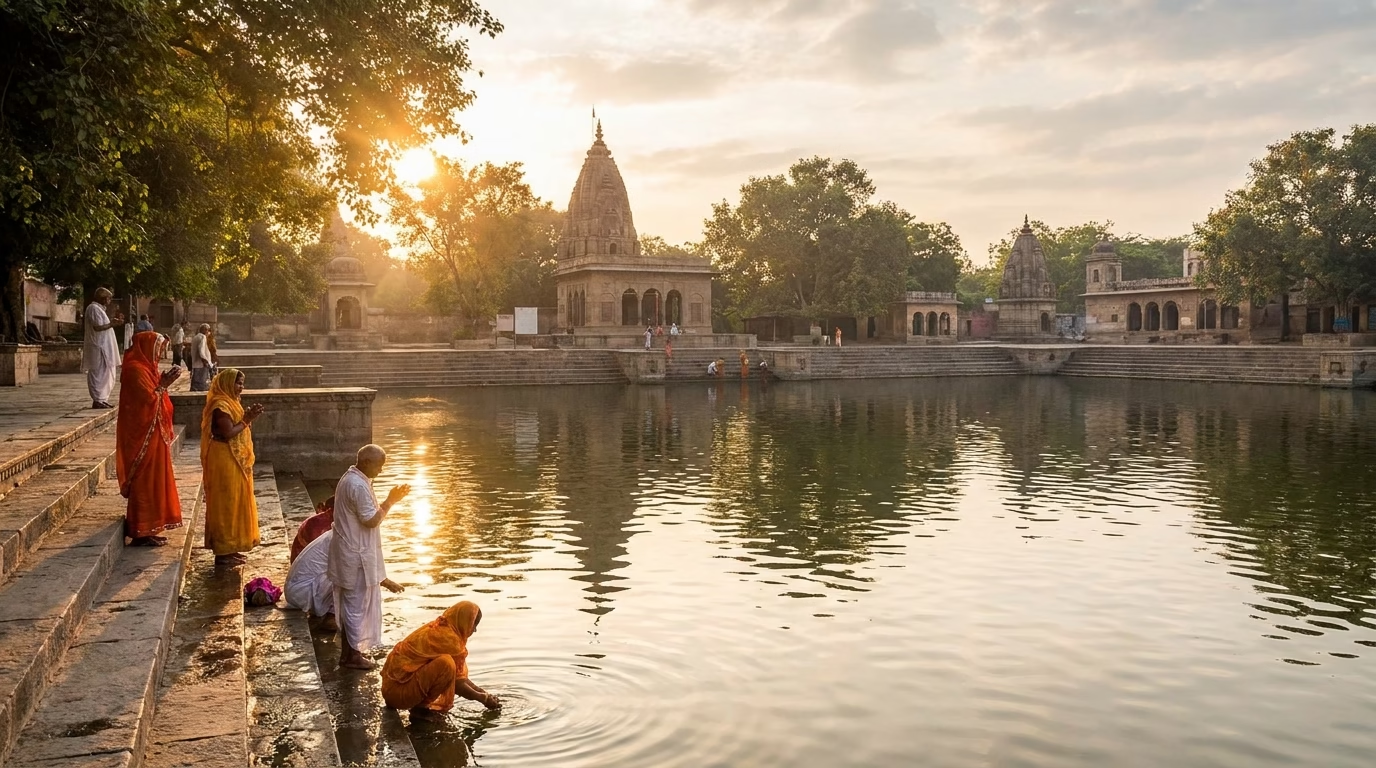
Radha-kunda is one of the most sacred places in the Bhakti tradition, especially for devotees who follow the path of Sri Krishna and Srimati Radharani. Located in the village of Arita, near Govardhan Hill in Vraja, India, Radha-kunda is a small, beautiful lake that holds a vast spiritual meaning.
For some readers, this may be a familiar holy place. For others, it may be a new name. Wherever you are beginning, you are welcome here.
In Sanskrit, the word kunda means “pond” or “sacred lake.” Radha-kunda means “the sacred lake of Radha,” referring to Srimati Radharani, the beloved of Sri Krishna and the supreme example of pure devotion in the Bhakti tradition. Nearby is another sacred pond called Shyama-kunda, the lake of Shyama, a loving name for Krishna that means “the dark-blue one.”
In Bhakti Yoga, we learn that places connected with divine love are not ordinary. They are living invitations. Radha-kunda is not simply a historical site, a pilgrimage destination, or a peaceful body of water. It is honored as a place where the heart can remember the highest form of love: selfless, intimate, joyful devotion to God.
This guide explores the history and spiritual significance of Radha-kunda with humility and care. We will look at its scriptural roots, its connection to Krishna’s pastimes, its rediscovery by great saints, and its practical meaning for spiritual seekers today.
The Sacred Geography of Radha-kunda in Vraja
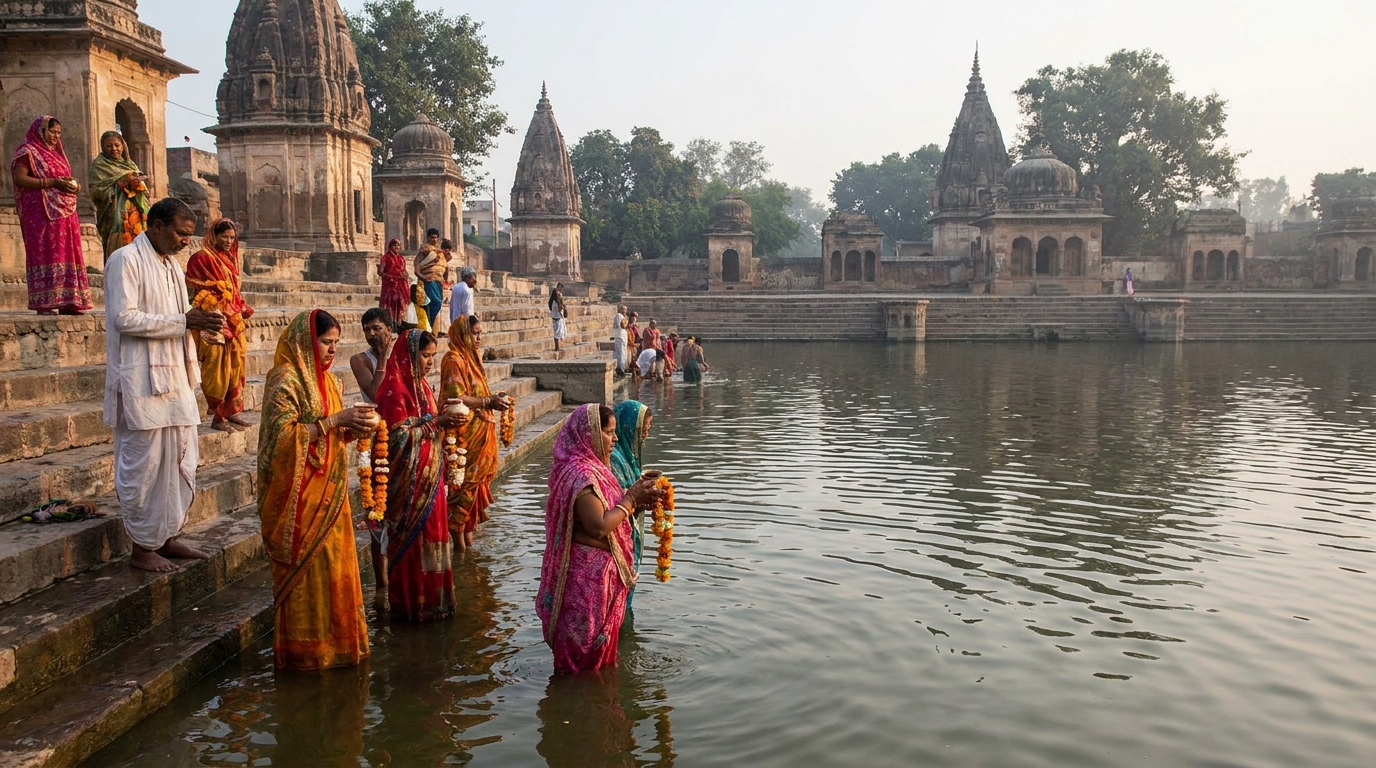
Radha-kunda is situated in the sacred region known as Vraja, or Vrindavan, the land where Sri Krishna performed His childhood and youth pastimes. Vraja is not only a place on the map; for devotees, it is a spiritual landscape of remembrance, prayer, and love.
Vraja: The Land of Krishna’s Loving Pastimes
In the Bhakti scriptures, Vraja is described as the place where Krishna reveals His most intimate and loving nature. He is not approached there primarily as a distant, majestic God, but as a beloved child, friend, and divine lover. This is one of the remarkable gifts of Bhakti Yoga: it teaches that God can be known not only through awe, but also through affection.
Vraja includes places such as Vrindavan, Govardhan, Nandagram, Barsana, and Radha-kunda. Each place carries memories of divine activities called lila. The word lila means “divine play” or “sacred pastime.” These are not ordinary stories. They are spiritual windows through which devotees meditate on God’s qualities, relationships, and loving nature.
Radha-kunda is especially connected to the love between Radha and Krishna. For this reason, it is revered by many saints as the holiest place in Vraja.
Govardhan and the Circle of Pilgrimage
Radha-kunda lies near Govardhan Hill, another deeply sacred site. Govardhan is celebrated in the Srimad Bhagavatam, one of the central scriptures of the Bhakti tradition, where Krishna lifts Govardhan Hill to protect the residents of Vraja from a devastating storm.
Many pilgrims visit Radha-kunda while performing Govardhan parikrama. The word parikrama means “walking around a sacred place in reverence.” This practice is not only physical movement. It is a walking prayer. With each step, pilgrims remember Krishna, chant His names, and offer their lives in devotion.
Radha-kunda and Shyama-kunda are often considered the crown jewels of the Govardhan area. They are small in size compared to rivers and mountains, but their spiritual depth is immeasurable.
The Divine Origin of Radha-kunda and Shyama-kunda
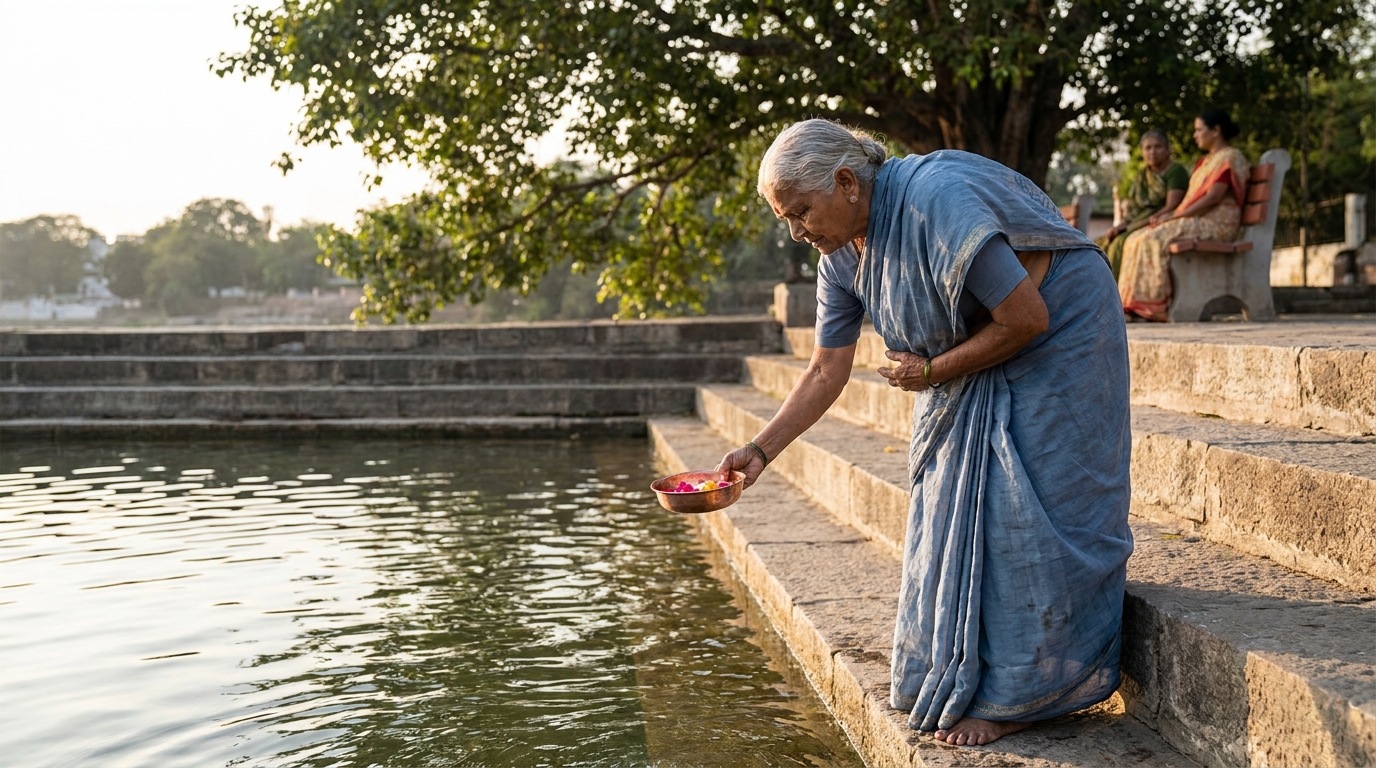
The origin of Radha-kunda is described in devotional texts such as the Govinda-lilamrita, Garga Samhita, and the writings of the Gaudiya Vaishnava saints. These narrations explain how Radha-kunda and Shyama-kunda appeared through a loving exchange between Radha and Krishna.
Krishna and the Arishta Demon
According to tradition, a powerful demon named Arishtasura came to Vraja in the form of a huge bull. He caused fear among the residents, but Krishna, the protector of His devotees, defeated him.
After Krishna killed Arishtasura, the cowherd girls of Vraja, led by Srimati Radharani, playfully told Him that because the demon had come in the form of a bull, Krishna had committed a sinful act by killing a bull. In Vedic culture, the bull is sacred, representing dharma, or righteousness. Although Krishna is always pure and beyond sin, this loving exchange created an opportunity for a deeper pastime.
The gopis, the devoted cowherd girls, said that Krishna should purify Himself by bathing in all the holy rivers and sacred waters.
The Appearance of Shyama-kunda
In response, Krishna struck the ground with His heel and created a deep pond. He then called all the holy rivers and sacred waters of the universe to enter it. They appeared personified and filled the pond. Krishna bathed there, and this pond became known as Shyama-kunda.
The name Shyama is one of Krishna’s sweet names. It refers to His beautiful dark complexion, often compared to a monsoon raincloud. Shyama-kunda is therefore the sacred lake of Krishna.
In this pastime, we see both divine power and loving intimacy. Krishna can summon all sacred rivers by His will, yet He does so in the playful mood of answering Radha’s loving challenge. Bhakti often reveals God not only as all-powerful, but as lovingly conquered by the devotion of His devotees.
The Appearance of Radha-kunda
After Krishna created Shyama-kunda, He invited Radharani and the gopis to bathe in it. But Radharani, in Her loving pride, said that She and Her friends would create their own pond. Using their bangles, they began digging the earth nearby.
This detail is deeply cherished by devotees. Radharani and the gopis did not use royal tools or display external power. They used their own bracelets and their own hands. Their effort was an expression of love.
When their pond was formed, Krishna again requested the holy rivers to enter it. The sacred waters, understanding the supreme position of Srimati Radharani, joyfully entered Radha’s pond. This became Radha-kunda.
In this loving story, Radha-kunda is revealed as the lake of Srimati Radharani’s devotion, compassion, and spiritual beauty. It is honored as the place where Her love for Krishna is most fully celebrated.
Discover a wealth of knowledge by exploring our insightful articles. Our articles cover a wide range of topics to enhance your understanding. Stay informed and inspired by reading our latest articles.
Why Radha-kunda Is Spiritually Supreme in Bhakti Tradition
Among the many holy places of India, Radha-kunda holds a uniquely exalted position. This is especially emphasized in the Gaudiya Vaishnava tradition, the lineage connected with Sri Chaitanya Mahaprabhu, who appeared in Bengal in the 15th century and taught the chanting of God’s holy names.
The Teaching of Srila Rupa Goswami
Srila Rupa Goswami, one of the foremost teachers of Bhakti Yoga, glorifies Radha-kunda in his devotional writings. In Upadeshamrita, also known as The Nectar of Instruction, he explains that Mathura is spiritually higher than Vaikuntha, Vrindavan is higher than Mathura, Govardhan is higher than Vrindavan, and Radha-kunda is the highest because it is most dear to Krishna.
This teaching may sound bold, but its heart is simple: the most sacred place is where love of God is most fully revealed.
In Bhakti, spiritual greatness is not measured by size, wealth, or worldly fame. It is measured by love. Radha-kunda is supreme because it is the place of Srimati Radharani’s pure love for Krishna. Her love is completely selfless. It has no selfish desire, no pride, no demand for reward. It exists only for Krishna’s happiness.
Srimati Radharani: The Embodiment of Pure Devotion
To understand Radha-kunda, we must try to understand, at least a little, who Srimati Radharani is.
In the Bhakti tradition, Srimati Radharani is not seen as an ordinary person. She is the supreme devotee of Krishna and the personification of bhakti, loving devotion. She shows us what it means to love God with the whole heart.
Her love is tender, strong, playful, humble, and total. She is the one who gives Krishna the greatest joy. Because Radha-kunda belongs to Her, devotees approach it with deep reverence.
For spiritual seekers, Radharani’s example is profoundly practical. She teaches us that devotion is not about religious performance alone. It is about the intention of the heart. Do we want to serve? Do we want to love? Do we want to remember God with sincerity? Even a small beginning in that direction is precious.
The Mood of Sacred Intimacy
Radha-kunda represents the most intimate form of divine love, known in Sanskrit as madhurya-rasa. The word rasa means “spiritual relationship” or “flavor of loving exchange.” Madhurya means sweetness.
This topic is very sacred and should be approached with humility. The love of Radha and Krishna is not material romance. It is the purest spiritual love, completely free from selfish desire. Saints have spent lifetimes purifying their hearts to meditate on these mysteries properly.
For most of us, the practical lesson is simple and beautiful: spiritual life is a journey from self-centeredness to God-centered love. Radha-kunda invites us to let our hearts become softer, more prayerful, more honest, and more willing to serve.
Radha-kunda in the Life of Sri Chaitanya Mahaprabhu
Sri Chaitanya Mahaprabhu is honored by Gaudiya Vaishnavas as Krishna Himself in the mood and golden complexion of Srimati Radharani. He taught that the simplest and most powerful spiritual practice for this age is the chanting of the holy names of God.
The central mantra He shared is the Hare Krishna maha-mantra:
Hare Krishna Hare Krishna
Krishna Krishna Hare Hare
Hare Rama Hare Rama
Rama Rama Hare Hare
The word mantra means a sacred sound that frees the mind and awakens the heart. The word maha means “great.” So the maha-mantra is the great chant for awakening love of God.
The Rediscovery of Radha-kunda
During His pilgrimage through Vraja, Sri Chaitanya Mahaprabhu visited the area of Radha-kunda. At that time, the exact location of the sacred ponds had become hidden and was not widely known. According to devotional history, Mahaprabhu recognized Radha-kunda and Shyama-kunda in two small fields of water.
He bathed there and experienced deep spiritual ecstasy. His recognition of Radha-kunda renewed the awareness of this holy place for future generations.
This moment is important because it shows that sacred places can become hidden externally, but they are never lost spiritually. When sincere devotion appears, the holy place reveals itself again.
The Goswamis and the Restoration of Vraja
Sri Chaitanya Mahaprabhu instructed His followers, especially the Six Goswamis of Vrindavan, to uncover the lost places of Krishna’s pastimes, write books on Bhakti, and establish temples for worship.
The word Goswami refers to a person who has mastered the senses in the service of God. These saints lived very simply, often under trees, absorbed in chanting, scripture, and remembrance of Radha and Krishna.
Through their devotion and scholarship, the sacred geography of Vraja became more widely known. Radha-kunda was honored, protected, and worshiped as an essential place of pilgrimage.
Their lives teach us that spiritual discovery requires humility, discipline, and love. They did not seek fame or comfort. They sought only to serve the divine couple, Radha and Krishna, and to share the path of Bhakti with the world.
The Practice of Pilgrimage at Radha-kunda
Visiting Radha-kunda can be a deeply transformative experience. But even if we cannot physically travel there, we can still honor Radha-kunda through remembrance, prayer, study, and sincere practice.
Bathing, Reverence, and Inner Purity
Many pilgrims bathe in Radha-kunda and Shyama-kunda, believing that their waters carry immense spiritual mercy. However, traditional teachers often remind us to approach this practice with respect, not as a casual ritual.
Sacred bathing is not meant to be tourism. It is meant to be prayer. Before entering holy water, one may bow, ask forgiveness for any offenses, and pray for a clean heart. The external bath is meaningful when it is joined with an internal desire to become purified of envy, selfishness, and forgetfulness of God.
Some saints caution that Radha-kunda is so sacred that one should not approach it with a careless mood. This does not mean we should feel excluded. Rather, we should come humbly, like a child approaching a loving mother.
A simple prayer might be:
“Srimati Radharani, please help me develop sincere love for Krishna. Please purify my heart and guide me in service.”
Chanting at Radha-kunda
Chanting the holy names is one of the most accessible practices in Bhakti Yoga. Whether sitting near Radha-kunda, walking around it, or remembering it from afar, chanting connects the heart with God.
The Hare Krishna mantra is not limited by background, nationality, age, education, or previous spiritual experience. Anyone can chant. The sound itself is considered sacred and spiritually nourishing.
At Radha-kunda, chanting is especially cherished because the atmosphere naturally supports remembrance. Pilgrims may softly chant on beads, sing in groups, or simply sit quietly and listen.
The practice is not about performance. It is about presence. Even one sincere repetition of God’s name can become a turning point in the heart.
Offering Service with a Humble Heart
In Bhakti, love becomes real through service. The Sanskrit word seva means loving service offered for the pleasure of God and His devotees.
At Radha-kunda, service may include cleaning the area, supporting the local community, helping pilgrims, offering flowers, feeding others, or simply behaving respectfully. Service can also mean protecting the sacred atmosphere by avoiding noise, exploitation, or careless behavior.
For those far away, service may include sharing spiritual wisdom, chanting regularly, supporting devotional communities, caring for the environment, or offering one’s daily work to God.
Radha-kunda teaches that the highest love expresses itself not in taking, but in serving.
Scriptural Glories of Radha-kunda
The greatness of Radha-kunda is celebrated in many devotional writings. These scriptures are not merely historical documents; they are guides for inner transformation.
Upadeshamrita and the Heart of Devotional Guidance
In Upadeshamrita, Srila Rupa Goswami gives practical guidance for growing in Bhakti. He teaches about controlling speech, mind, anger, tongue, belly, and senses; choosing uplifting company; avoiding harmful habits; and cultivating enthusiasm, patience, and confidence.
Near the end of this short but powerful text, he glorifies Radha-kunda as most dear to Krishna. This is significant. After offering practical instructions, he points the reader toward the highest goal: pure love.
This reminds us that the path of Bhakti includes both practice and grace. We begin with daily choices: chanting, prayer, humility, kindness, and service. Gradually, by divine mercy, the heart becomes ready to appreciate deeper spiritual realities.
Radha-kunda stands as the summit of that journey, not because it excludes beginners, but because it reveals where the path is leading: complete love for God.
Chaitanya-charitamrita and the Mercy of Holy Places
The Chaitanya-charitamrita, written by Srila Krishnadasa Kaviraja Goswami, describes the life and teachings of Sri Chaitanya Mahaprabhu. It includes accounts of Mahaprabhu’s travels in Vraja and His ecstatic love for Krishna.
This scripture helps us understand that holy places are approached through mood, not merely location. One may stand in a sacred place with a distracted mind, or one may remember that place from across the world with tears of longing. The outer journey and inner journey are both important, but the inner mood gives life to the pilgrimage.
Mahaprabhu showed how to approach Radha-kunda: with reverence, longing, chanting, and deep humility.
The Bhagavata Vision of Loving Devotion
The Srimad Bhagavatam does not present spiritual life as dry philosophy. It reveals a God who loves His devotees and becomes lovingly involved in their lives. Its stories of Krishna in Vraja form the foundation for understanding places like Radha-kunda.
The Bhagavatam repeatedly teaches that the highest spiritual goal is pure devotion, free from selfish motivation. Radha-kunda embodies that teaching in a place. It is like a liquid scripture, a sacred lake that silently speaks of love beyond ego.
When we hear about Radha-kunda, we are invited to ask: How can my life become more devotional? How can I love without needing to control? How can I serve God and others with sincerity?
The Inner Meaning of Radha-kunda for Daily Life
Not everyone will travel to India. Not everyone will physically visit Radha-kunda. But everyone can receive inspiration from its message.
The sacred meaning of Radha-kunda can enter our homes, relationships, work, and personal spiritual practice.
Love That Becomes Service
Radha-kunda teaches that love is not just emotion. Love becomes service.
In daily life, this may mean preparing food with gratitude and offering it to God before eating. It may mean speaking gently, forgiving someone, listening deeply, or helping without expecting praise.
Bhakti Yoga transforms ordinary actions into spiritual offerings. We do not have to abandon our responsibilities to begin. We can begin right where we are.
A parent caring for a child, a student studying honestly, a worker serving with integrity, a friend offering compassion—all can become part of the path when offered with devotion.
Prayer That Softens the Heart
Prayer is central to Bhakti. It does not need to be complicated. It can be honest and simple.
“Dear Krishna, please guide me.”
“Dear Radharani, please help me serve.”
“Please make my heart kind.”
“Please help me remember You.”
Radha-kunda invites this kind of prayer. Not prayer for superiority, not prayer to impress others, but prayer to become more loving and more real before God.
The heart may be restless, wounded, skeptical, or tired. That is okay. Bhakti begins with sincerity, not perfection.
Chanting as a Daily Connection
Chanting is one of the most practical ways to carry the spirit of Radha-kunda into everyday life. You can chant softly in the morning, during a walk, before sleep, or whenever the mind needs shelter.
The holy names are considered non-different from God. This means that when we chant sincerely, we are not merely speaking syllables. We are entering relationship.
Even five minutes a day can make a difference. Over time, chanting cleanses the heart, steadies the mind, and awakens gratitude.
Community and Spiritual Friendship
In Bhakti, spiritual growth is supported by sadhu-sanga, the company of sincere spiritual people. The word sadhu means a saintly or devoted person, and sanga means association.
Radha-kunda is surrounded by a culture of pilgrims, monks, families, teachers, and seekers. At its best, this community reminds us that we are not meant to walk alone.
Spiritual friendship can help us continue when inspiration fades. It gives us encouragement, accountability, and shared joy. Whether in a temple, home gathering, online community, or simple friendship, devotional company nourishes the heart.
How to Approach Radha-kunda with Respect
Because Radha-kunda is so sacred, devotees emphasize the importance of respectful behavior. This applies both to physical visits and to how we speak or think about the holy place.
Avoiding a Tourist Mentality
A tourist mentality asks, “What can I take from this place?”
A pilgrim’s heart asks, “How can I honor this place?”
This difference matters. Radha-kunda is not a backdrop for self-display. It is a place of prayer. Visitors are encouraged to dress modestly, speak respectfully, avoid littering, and follow local devotional customs.
Photography, social media, and travel excitement should never overshadow reverence. It is better to experience a holy place with a quiet heart than to collect many images without inner connection.
Honoring Local Devotees and Traditions
Radha-kunda is home to many residents who have dedicated their lives to worship, chanting, and service. Some live very simply. Some may be renounced practitioners. Some are families serving the holy place generation after generation.
A respectful pilgrim does not judge quickly. Instead, one listens, learns, and offers kindness.
If receiving guidance from teachers or guides, it is wise to seek those who represent authentic devotional lineages and live with humility. Sacred places can sometimes attract commercialism, so discernment is also part of respect.
Remembering That Mercy Is Personal
In Bhakti, divine mercy is not mechanical. One does not “use” Radha-kunda to obtain spiritual advancement. Rather, one prays to be allowed to serve.
This shift protects us from spiritual pride. Radha-kunda is not a spiritual trophy. It is a sacred shelter.
If we approach with humility, even from far away, we may receive deep nourishment. If we approach with pride, even standing at the water’s edge, we may miss the essence.
Radha-kunda and the Universal Invitation of Bhakti Yoga
Although Radha-kunda is rooted in a specific sacred tradition, its message speaks to people of many backgrounds. It calls the heart toward love, humility, prayer, and service.
Bhakti Yoga is not limited to scholars, monks, or lifelong practitioners. It is a practical path for anyone who wants to grow closer to God.
A Path for the Whole Person
Bhakti engages the whole person: voice, mind, body, emotions, and daily actions.
We chant with the voice.
We remember with the mind.
We bow with the body.
We pray with the heart.
We serve with our time, talents, and energy.
Radha-kunda represents the fullness of this offering. It reminds us that spiritual life is not meant to remain theoretical. Love must be lived.
The Healing Power of Sacred Remembrance
Many people come to spiritual life carrying pain, regret, or longing. The stories of Radha and Krishna are not meant to deny human struggle. Rather, they reveal a love deeper than our wounds.
Sacred remembrance can heal the heart. When we remember Radha-kunda, we remember that pure love exists. We remember that God is not only a judge or distant creator, but a beloved person who can be approached through affection.
This remembrance can bring courage. It can help us forgive. It can teach us to love without needing to possess. It can open us to grace.
One Sincere Step Is Enough to Begin
Sometimes the glories of Radha-kunda may feel too high, too sacred, or too far away. We may wonder, “Am I qualified?”
The Bhakti answer is gentle: begin with sincerity.
Qualification grows through practice and mercy. No one needs to pretend to be advanced. We can start by chanting one mantra, offering one prayer, reading one verse, serving one person, or taking one honest step toward God.
Radha-kunda is the highest sacred place, yet its message is full of compassion. The highest love does not push sincere seekers away. It invites us to come closer, little by little.
A Closing Meditation on Radha-kunda
Radha-kunda is a sacred lake, a historical holy place, a scriptural treasure, and a living symbol of divine love. Its history begins in the playful and profound pastimes of Radha and Krishna. Its significance is carried through the teachings of Sri Chaitanya Mahaprabhu, Srila Rupa Goswami, and the saints of Bhakti Yoga. Its message continues to flow into the lives of seekers today.
To approach Radha-kunda is to approach the mystery of love itself.
Not ordinary love, which often asks, “What will I receive?”
But divine love, which asks, “How may I serve?”
This is the heart of Bhakti Yoga. Through chanting, prayer, service, sacred study, and loving community, we gradually learn to live in relationship with God. We learn to soften the heart. We learn to see others with compassion. We learn to offer our lives, one day at a time.
Whether you have visited Radha-kunda many times, dream of going someday, or are simply hearing its name for the first time, you are welcome on this path. Srimati Radharani’s mercy is not limited by geography. Krishna’s holy names can be chanted anywhere. A sincere prayer can rise from any heart.
May Radha-kunda inspire us to live with humility, devotion, and love. May we take shelter in the holy names. May we serve with kindness. And may each of us, exactly as we are, take one sincere step toward God today.
FAQs
What is Radha-kunda?
Radha-kunda is a sacred lake in Vrindavan, India, known for its significance in Hindu mythology and devotion to Lord Krishna and Radha. It is considered one of the most holy places for devotees of Krishna.
Why is Radha-kunda considered so important?
Radha-kunda is believed to be the bathing place of Radha, the eternal consort of Lord Krishna. It is said that taking a dip in the waters of Radha-kunda can purify one’s soul and bring one closer to the divine couple.
What are some rituals associated with Radha-kunda?
Devotees often perform rituals such as taking a holy dip in the waters of Radha-kunda, offering prayers, and circumambulating the lake. It is also common for pilgrims to offer flowers, incense, and lamps at the various shrines surrounding the kunda.
When is the best time to visit Radha-kunda?
The best time to visit Radha-kunda is during the months of October to March when the weather is pleasant. Additionally, the sacred month of Kartik (October-November) is considered especially auspicious for visiting Radha-kunda.
Are there any rules or guidelines to follow when visiting Radha-kunda?
Visitors are expected to maintain a respectful and reverent attitude when visiting Radha-kunda. It is customary to dress modestly, refrain from loud behavior, and follow any specific rules set by the local authorities or temple management.

