

In the quiet hours before the world becomes busy, there is a sacred invitation waiting for every heart. Morning sadhana is a simple, powerful way to begin the day with remembrance, prayer, chanting, and loving service to God.
In Bhakti Yoga, the path of devotion, our spiritual life is not meant to be separate from daily life. It is meant to sweeten it, guide it, and bring us closer to the Divine in everything we do. Morning sadhana helps us begin the day not from stress, distraction, or fear, but from connection.
The word sadhana comes from Sanskrit and means “spiritual practice” or “a means of attaining a goal.” In Bhakti Yoga, that goal is loving relationship with God. Whether we say Krishna, Rama, Radha, Narayana, the Divine, the Lord, or simply God, the heart of morning sadhana is the same: to turn toward the sacred with sincerity.
You do not need to be perfect. You do not need to know everything. You do not need to have a long history of spiritual practice. Morning sadhana begins with one humble step.
Morning sadhana is a daily spiritual practice performed in the early part of the day, often before beginning work, family duties, or other responsibilities. It may include chanting sacred names, meditation, prayer, reading scripture, offering gratitude, worship, journaling, or acts of service.
In Bhakti Yoga, morning sadhana is especially centered on bhakti, which means devotion or loving service. This devotion is not merely a feeling. It is a living practice. It is how we offer our attention, words, actions, and heart to God.
A Sacred Beginning to the Day
The morning carries a special energy. The mind is often more peaceful before it becomes filled with messages, tasks, news, and conversations. The heart is more available. The atmosphere feels softer.
The ancient yogic tradition describes the early morning hours before sunrise as especially favorable for spiritual practice. This time is sometimes called brahma-muhurta. Brahma means “spiritual” or “related to the Divine,” and muhurta means “a period of time.” Traditionally, brahma-muhurta refers to the time roughly 1.5 hours before sunrise.
For many people today, waking before sunrise may not always be possible. Parents, shift workers, caregivers, students, and those with health challenges may have different rhythms. The essence is not to create guilt. The essence is to give God the first sincere part of your day, whenever that may be.
Sadhana Is Practice, Not Performance
Morning sadhana is not a performance. It is not about proving that we are spiritual. It is not about comparing ourselves to others.
It is practice.
Some mornings may feel full of devotion. Other mornings may feel dry, distracted, or sleepy. Still, the practice has value. Just as watering a plant daily brings growth even when we cannot see it happening, daily spiritual practice nourishes the soul.
In the Bhagavad Gita, Krishna teaches that even a little advancement on the spiritual path can protect one from great fear. This is a deeply compassionate teaching. It reminds us that every sincere effort matters.
A Relationship Built Through Regular Attention
Every relationship grows through attention. If we love someone, we make time for them. We listen. We speak. We remember. We serve.
Morning sadhana is a way to build our relationship with God through regular loving attention. We chant the Divine Names. We offer prayers. We listen to wisdom. We ask for guidance. We offer our day.
This simple daily offering gradually changes how we see ourselves and the world.
Why Morning Sadhana Is So Powerful
Morning sadhana has power because it shapes the foundation of the day. Before we step into responsibilities, we remember who we are: spiritual beings, loved by God, meant to live with purpose, compassion, and devotion.
Without morning spiritual practice, it is easy to let the day define us. With morning sadhana, we invite God to define the day.
It Centers the Mind
The mind can be like a busy marketplace. Thoughts, worries, plans, memories, and desires all compete for attention. Morning sadhana gently gathers the mind and places it at the feet of the Divine.
Chanting is especially helpful for this. In Bhakti Yoga, we often chant mantra. A mantra is a sacred sound vibration that helps focus the mind and awaken the heart. One of the most beloved mantras in the Bhakti tradition is the maha-mantra, meaning “great mantra”:
Hare Krishna Hare Krishna
Krishna Krishna Hare Hare
Hare Rama Hare Rama
Rama Rama Hare Hare
“Hare” calls upon the Divine feminine energy of devotion, often understood as Srimati Radharani, the compassionate energy of God. “Krishna” means the all-attractive Lord. “Rama” means the source of joy and spiritual pleasure.
When we chant, we are not simply repeating words. We are calling out to God with the hope of being reconnected in love.
It Purifies the Heart
In Bhakti scriptures, the heart is often described as being covered by layers of dust—selfishness, fear, envy, resentment, forgetfulness, and false identity. Chanting and prayer gently cleanse the heart.
The Sri Chaitanya Charitamrita and the teachings of Sri Chaitanya Mahaprabhu emphasize the chanting of the holy names as the process for spiritual awakening in this age. Sri Chaitanya taught that chanting cleanses the mirror of the heart. This is a beautiful image. The soul is already pure, but our vision becomes clouded. Morning sadhana helps wipe the mirror clean.
As the heart becomes clearer, we may notice more patience, gratitude, humility, and compassion. We may still struggle, but we begin to struggle with God beside us.
It Gives Strength for Daily Life
Spiritual practice is not an escape from life. It is preparation for life.
When we begin the day with morning sadhana, we become better equipped to face challenges. We may respond with more grace instead of reacting from ego. We may remember to pause before speaking harshly. We may see service opportunities in ordinary moments.
Bhakti Yoga teaches that every action can become an offering. Cooking, parenting, studying, working, cleaning, caring for others, and creating can all become sacred when done with love and remembrance.
Morning sadhana helps us carry this devotional mood into the whole day.
The Heart of Bhakti Yoga in Morning Practice

Bhakti Yoga is the yoga of love and devotion. The word yoga means “connection” or “union.” Bhakti Yoga is the practice of reconnecting with God through loving service.
This path welcomes the whole person. Our emotions, voice, hands, mind, relationships, and daily duties can all be offered. We do not have to reject the world to love God. Instead, we learn to see the world as God’s energy and to live in it with gratitude and care.
Chanting the Holy Names
Chanting is central to Bhakti Yoga because the Divine Names are understood to be non-different from God. This means that when we chant sincerely, we are in direct spiritual contact with the Lord.
There are two common forms of chanting:
Japa is personal, meditative chanting, often done softly on prayer beads. A mala, or set of beads, helps count the repetitions and keeps the hands engaged.
Kirtan is call-and-response group chanting, often accompanied by instruments like harmonium, mridanga drum, and kartals, or hand cymbals. Kirtan can be joyful, tender, meditative, or deeply moving.
In morning sadhana, even five or ten minutes of chanting can make a difference. The important thing is not musical ability. The important thing is sincerity.
Prayer as Honest Conversation
Prayer in Bhakti is personal. It can be formal or simple. It can come from scripture, or it can come from our own heart.
A morning prayer might be:
“Dear Lord, please guide me today. Help me remember You. Let my words be kind, my actions useful, and my heart humble. Please let me serve in some small way.”
This kind of prayer opens the heart. It invites God into our choices. It reminds us that we are not alone.
Sometimes prayer includes gratitude. Sometimes it includes confession. Sometimes it includes tears. Sometimes it is simply sitting quietly and saying, “Please help me.”
All sincere prayer is heard.
Service as Love in Action
In Sanskrit, seva means service. In Bhakti Yoga, service is love expressed through action.
Morning sadhana may include a small act of service: lighting a candle or lamp, offering flowers, preparing food for God, cleaning a sacred space, or praying for others.
Service can also extend beyond the altar. Sending a kind message, preparing breakfast with love, caring for a child, helping a neighbor, or doing one’s work honestly can become seva when offered to God.
Bhakti is not only what happens during meditation. Bhakti is how we live.
Check out our latest posts at https://thebhaktihouse.org/blog.
Building a Simple Morning Sadhana Routine
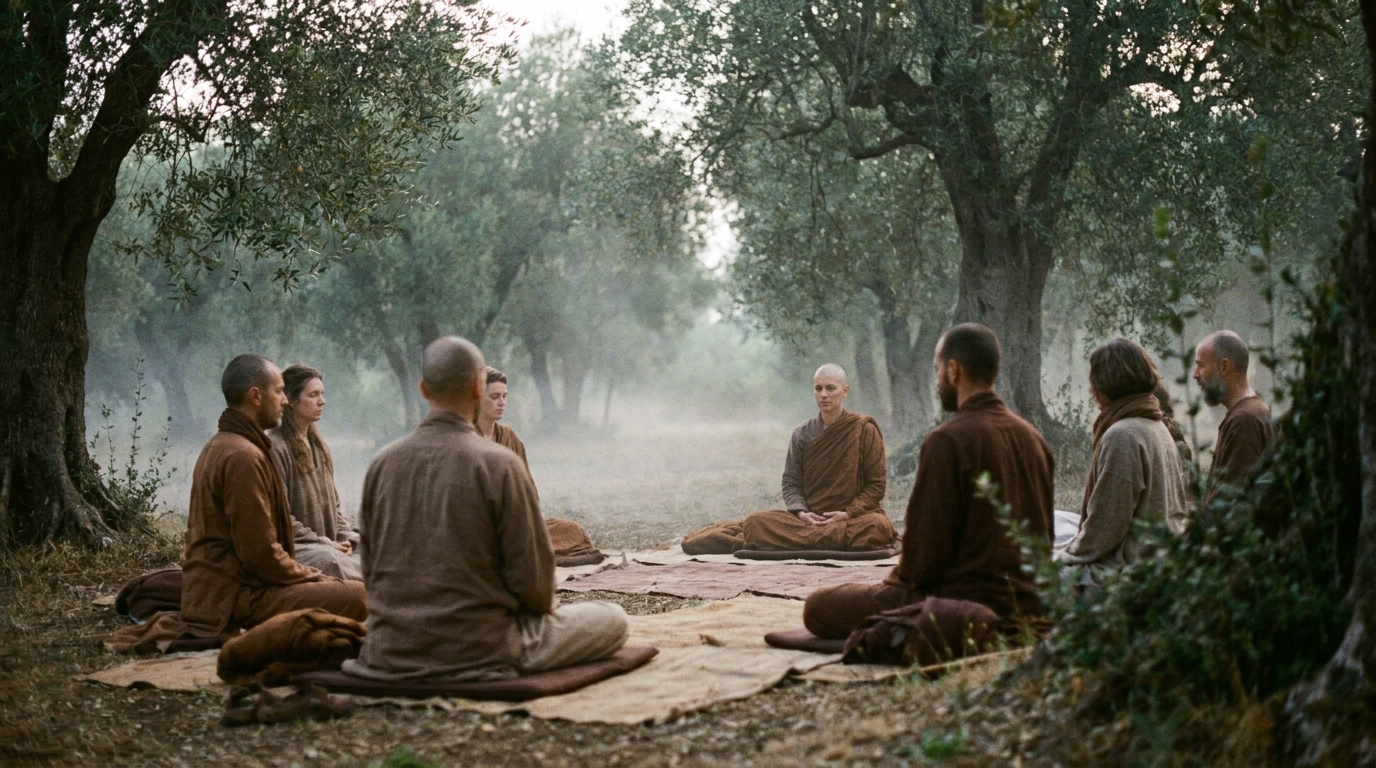
A morning sadhana routine does not need to be complicated. It is better to begin with something simple and steady than to create an ambitious plan that becomes overwhelming.
Consistency grows devotion. Devotion gives life to consistency.
Start Small and Make It Sacred
If you are new to morning sadhana, begin with 10 or 15 minutes. You might choose:
A few moments of gratitude
Three deep breaths
A short prayer
Five minutes of mantra chanting
One verse from the Bhagavad Gita
A simple offering of the day to God
This may seem small, but small sincere practices create deep roots over time.
If you already have a practice, you may gradually expand it. You might chant more rounds of japa, read more scripture, attend morning kirtan, or spend more time in prayer. Let your practice grow naturally, like a flower opening to sunlight.
Create a Peaceful Space
Having a dedicated space for morning sadhana can help the mind settle. It does not need to be large or elaborate. A small clean corner is enough.
You may include:
A picture or form of Krishna, Radha, Rama, Vishnu, or a sacred teacher
A candle or ghee lamp
Fresh flowers or leaves
Scripture, such as the Bhagavad Gita or Srimad Bhagavatam
Prayer beads
A journal
Incense, if appropriate and comfortable for your home
The purpose of a sacred space is not decoration. It is invitation. When you sit there each morning, your heart begins to recognize, “This is where I turn toward God.”
Follow a Gentle Structure
A simple morning sadhana structure might look like this:
Wake and wash your face or bathe if possible.
Sit in your sacred space.
Offer a prayer of gratitude.
Chant a mantra or the holy names.
Read a few lines of scripture.
Reflect on one intention for the day.
Offer your actions to God.
This routine can be adapted for different lifestyles. A parent may chant while holding a child. A commuter may listen to kirtan on the way to work. A student may read one Gita verse before class. A person with illness may pray from bed.
God sees the heart, not the external arrangement.
Morning Sadhana and the Bhagavad Gita
The Bhagavad Gita is one of the most treasured scriptures of Bhakti Yoga. It is a sacred conversation between Krishna and Arjuna, spoken on a battlefield at a moment of crisis. Arjuna is confused, overwhelmed, and unsure of his duty. Krishna guides him toward wisdom, devotion, and surrender.
This setting is meaningful for us. Spiritual life does not begin only when everything is calm. Sometimes it begins in the middle of our own battlefield—stress, grief, responsibility, uncertainty, or change.
Remembering God Throughout the Day
In the Bhagavad Gita, Krishna encourages Arjuna to remember Him and still perform his duty. This is a central teaching of Bhakti Yoga. We do not have to abandon our responsibilities to be spiritual. We learn to remember God while doing them.
Morning sadhana trains the heart in remembrance. If we remember God in the morning, it becomes easier to remember during the day. A mantra may arise while washing dishes. A prayer may come before a difficult meeting. A verse may guide us in a moment of anger.
The morning becomes the seed. The day becomes the field.
Offering the Fruits of Our Work
Krishna teaches that we can offer the results of our actions to Him. This means we act with sincerity, but we do not cling tightly to the outcome. We do our best, and we offer the fruits.
This is deeply practical.
Before work, we can pray, “May this effort be pleasing to You.”
Before study, “May this knowledge be used in service.”
Before caring for family, “May I see this as sacred service.”
Before a hard conversation, “May my words be guided by truth and kindness.”
Morning sadhana helps us enter the day with this offering mood.
Devotion Over Perfection
The Bhagavad Gita assures us that even a simple offering—a leaf, a flower, a fruit, or water—offered with devotion is accepted by Krishna. This verse is beloved because it shows God’s heart. The Lord is not hungry for our wealth or grand display. He is hungry for our love.
In morning sadhana, we may offer something very simple. A cup of water. A flower. A piece of fruit. A few heartfelt words.
The offering becomes beautiful because of devotion.
Overcoming Common Obstacles in Morning Sadhana
Every sincere practitioner faces obstacles. This does not mean we are failing. It means we are human. The path of Bhakti is compassionate and practical. We learn to keep going with humility.
“I Am Too Busy”
Many people feel they do not have time for morning sadhana. Life is full. Responsibilities are real.
But morning sadhana does not always require a long practice. Begin with what is possible. Five minutes of sincere chanting is better than waiting for the perfect one-hour practice that never happens.
You might wake ten minutes earlier. You might prepare your space the night before. You might reduce morning phone use. You might chant while walking.
The question is not, “Do I have unlimited time?” The question is, “Can I offer one sincere moment to God?”
“My Mind Is Too Distracted”
A distracted mind is not a disqualification. It is the very reason we practice.
When chanting, the mind may wander many times. Gently bring it back to the sound of the mantra. Not harshly. Not with shame. Just return.
Each return is an act of devotion.
Imagine a child learning to walk. A loving parent does not condemn the child for falling. The parent encourages the child to rise again. In the same way, God sees our effort with compassion.
“I Do Not Feel Devotion”
Some mornings the heart feels dry. We may chant but feel little. We may pray but feel distant. This can be discouraging.
Yet Bhakti Yoga teaches that devotion is both a gift and a practice. We practice not because we always feel devotion, but because we desire devotion.
A simple prayer for such mornings is:
“Dear Lord, I do not feel much devotion today, but I want to want You. Please help me.”
This honesty is precious. Humility opens doors that pride cannot.
Deepening Your Morning Sadhana Over Time
As morning sadhana becomes part of your life, it may naturally deepen. What begins as discipline can become nourishment. What begins as effort can become longing. What begins as a routine can become relationship.
Add Scripture Study
Reading even one verse a day can transform the mind. The Bhagavad Gita, Srimad Bhagavatam, and other Bhakti texts carry living wisdom.
Scripture study is not meant only for scholars. It is meant for seekers. Read slowly. Ask, “How does this apply to my life today? What is God teaching me? How can I practice this?”
If a verse speaks to you, carry it through the day. Write it down. Repeat it. Let it become a companion.
Practice Gratitude
Gratitude softens the heart. Each morning, name three things you are grateful for. They may be simple: breath, food, shelter, friendship, sunlight, the chance to chant, the mercy of another day.
In Bhakti, gratitude is not only positive thinking. It is spiritual vision. We begin to see life as gift. We begin to recognize God’s kindness in small details.
Keep a Devotional Journal
A devotional journal can help you notice growth. You might write:
A prayer for the day
A reflection from chanting
A verse that touched you
A challenge you want to offer to God
A moment of grace you noticed
Over time, this journal becomes a record of your relationship with the Divine. You may look back and see how gently God has been guiding you.
Join Spiritual Community
In Sanskrit, sadhu-sanga means association with spiritually minded people. Sadhu means a saintly or sincere practitioner, and sanga means association or company.
Community helps sustain practice. When we chant with others, hear from others, serve with others, and learn from others, our faith becomes nourished.
If possible, attend kirtan, visit a temple, join a Bhakti gathering, study with a group, or connect with practitioners online. Spiritual life becomes joyful when shared.
Bringing Morning Sadhana Into the Whole Day
The goal of morning sadhana is not only to have a peaceful morning. The deeper goal is to live a God-centered life.
The morning practice is like lighting a lamp. Then we carry that lamp into our work, relationships, choices, and challenges.
Remember Through Mantra
Choose a short mantra or prayer to return to during the day. It may be the maha-mantra, a name of God, or a simple prayer like, “Please guide me.”
You can chant quietly while walking, cooking, driving, or waiting. These small moments keep the heart connected.
Turn Work Into Worship
Whatever your work may be, try beginning it with an offering. Before opening your laptop, entering a classroom, preparing food, making a phone call, or caring for someone, pause and inwardly say, “I offer this to You.”
This transforms ordinary action into worship.
The external activity may look the same, but the consciousness changes. Bhakti Yoga is the art of changing consciousness through love.
Serve the People Around You
Morning sadhana should make us kinder. If our practice is real, it gradually shows in how we treat others.
We may become more patient with family, more honest at work, more compassionate toward those who suffer, more forgiving, and more willing to help.
Every person we meet is a soul, a child of God. To serve them with respect is part of our devotion.
A Simple Morning Sadhana You Can Try Tomorrow
If you are wondering how to begin, here is a gentle practice you can try tomorrow morning. Adapt it as needed.
Step 1: Wake With Gratitude
Before reaching for your phone, place your hand on your heart and say, “Thank You for another day. Please help me use it well.”
This small pause can change the tone of the morning.
Step 2: Cleanse and Sit
Wash your face, drink water, and sit in a quiet place. If you have an altar or sacred space, sit there. If not, simply sit somewhere peaceful.
Take a few deep breaths. Let your body arrive.
Step 3: Chant
Chant the maha-mantra or another sacred name of God for five to fifteen minutes. Listen carefully to the sound. When the mind wanders, gently return.
Hare Krishna Hare Krishna
Krishna Krishna Hare Hare
Hare Rama Hare Rama
Rama Rama Hare Hare
If you are not familiar with Sanskrit, do not worry. Chanting is learned by practice, and the heart understands sincerity.
Step 4: Read One Verse or Reflection
Read a short passage from the Bhagavad Gita or another devotional text. Ask yourself, “What is one quality I can practice today?”
Maybe it is patience. Maybe humility. Maybe courage. Maybe compassion.
Step 5: Offer the Day
Close with a prayer:
“Dear Lord, I offer this day to You. Please guide my thoughts, words, and actions. Let me remember You and serve with love.”
Then step into the day carrying that prayer.
The Quiet Miracle of Daily Devotion
Morning sadhana may look simple from the outside. A person sits, chants, prays, reads, and offers. But inside, a quiet miracle is taking place.
The heart is being trained to turn toward God.
Over time, we may notice that we are less controlled by the opinions of others. We may feel more steady in difficulty. We may become more grateful, more forgiving, more truthful, and more loving. We may begin to sense that God is not far away, but intimately present.
This is the gift of Bhakti Yoga. It brings the infinite into the ordinary. It teaches us to meet God in sound, in prayer, in food, in service, in scripture, in community, and in the heart.
Morning sadhana is not about becoming spiritually impressive. It is about becoming spiritually honest. It is a daily way of saying, “I need You. I love You. Please let me remember You.”
And God responds to sincerity.
Everyone Is Welcome to Begin
Wherever you are on your spiritual journey, you are welcome. Whether you were raised in a devotional tradition or are just beginning to explore. Whether you know many Sanskrit words or none at all. Whether your faith feels strong or fragile. Whether your mornings are peaceful or messy.
Bhakti Yoga is a path of love, and love begins with sincerity.
You can begin tomorrow with one prayer, one mantra, one verse, one offering, one act of service. Do not underestimate the power of one sincere step. The Lord sees the heart. The Divine Names are merciful. The path is open.
May your morning sadhana become a gentle shelter, a source of strength, and a daily doorway into deeper love for God. Everyone is welcome to take one sincere step toward God today.
FAQs
What is morning sadhana?
Morning sadhana refers to the spiritual practice or discipline performed early in the morning, typically before sunrise. It often includes meditation, yoga, chanting, and other forms of spiritual practice.
Why is morning sadhana important?
Morning sadhana is believed to be important because it sets the tone for the rest of the day. It is said to help individuals connect with their inner selves, cultivate a sense of peace and clarity, and build a strong foundation for spiritual growth.
What are some common practices in morning sadhana?
Common practices in morning sadhana include meditation, pranayama (breath control), yoga asanas (postures), chanting of mantras, reading of sacred texts, and self-reflection. These practices may vary depending on individual beliefs and traditions.
How long should morning sadhana be practiced for?
The duration of morning sadhana can vary depending on individual preferences and schedules. Some people may practice for 30 minutes to an hour, while others may dedicate more time. It is important to find a balance that works for each individual.
What are the benefits of morning sadhana?
The benefits of morning sadhana may include increased mental clarity, emotional stability, physical well-being, and spiritual growth. It is also believed to help individuals develop a sense of discipline and focus that can positively impact their daily lives.

