
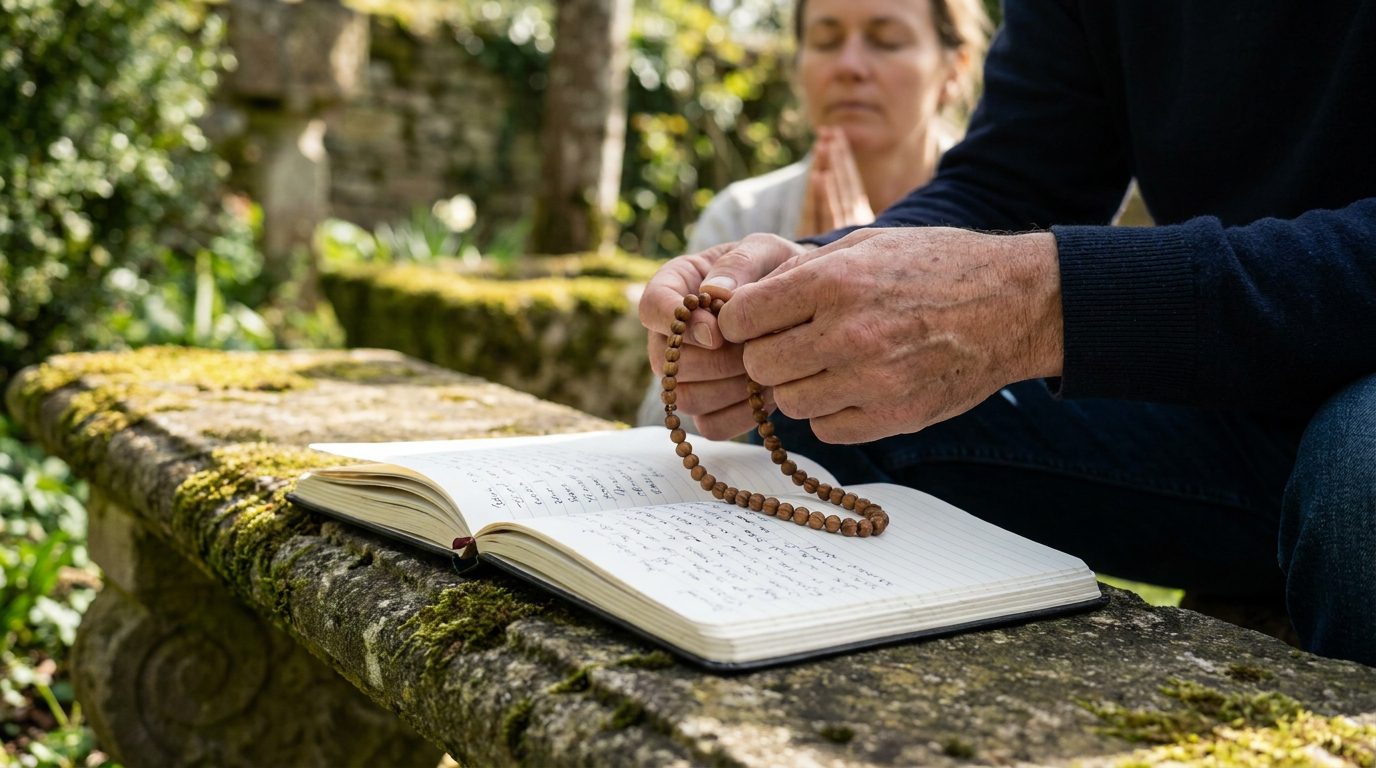
A personal devotional practice is the loving time we set aside to remember God, reconnect with the soul, and live with greater sincerity, compassion, and purpose. In Bhakti Yoga, devotion is not only something we do in a temple, church, mosque, synagogue, meditation room, or sacred gathering. It is a way of living.
Bhakti means “loving devotion” or “loving service.” Yoga means “connection.” So Bhakti Yoga is the path of reconnecting with the Divine through love.
This path welcomes everyone. You do not have to be born into a particular culture, know Sanskrit, wear certain clothes, or already feel spiritually advanced. You may be full of faith, full of questions, or somewhere in between. You may be returning to prayer after many years, or just beginning to wonder if God is calling your heart.
A personal devotional practice can begin very simply: one sincere prayer, one sacred song, one moment of gratitude, one act of kindness offered with love.
In the Bhagavad-gita, one of the foundational texts of Bhakti Yoga, Sri Krishna says, “Whatever you do, whatever you eat, whatever you offer or give away… do that as an offering to Me” (Bhagavad-gita 9.27). This teaching shows us that devotion is not separate from daily life. Our work, meals, relationships, struggles, and joys can all become sacred when offered with love.
Beginning Where You Are
Let Your Practice Be Honest
The first step in deepening your devotional life is not to pretend to be someone else. It is to come before God as you are.
Sometimes people think spiritual life means always feeling peaceful, pure, or inspired. But real devotion includes our tiredness, doubts, grief, hopes, and imperfections. A humble prayer like, “God, I do not know how to love You fully, but I want to learn,” can be deeply powerful.
Bhakti Yoga teaches that sincerity is more important than appearance. A small offering made with love can touch the heart of God.
In the Bhagavad-gita, Krishna says, “If one offers Me with love and devotion a leaf, a flower, fruit, or water, I will accept it” (Bhagavad-gita 9.26). The offering itself may be simple, but the love behind it is precious.
Start Small and Stay Steady
Many people become inspired and try to change everything at once. They may begin with long meditation, strict routines, many prayers, and ambitious goals. This can be beautiful, but if the practice becomes too heavy, it may not last.
A devotional practice grows best when it is steady and realistic. Begin with something you can return to every day.
You might start with:
- Five minutes of chanting in the morning
- A short prayer before meals
- Reading one verse of scripture daily
- Offering your work to God before beginning
- Ending the day with gratitude
The heart deepens through regular contact with the Divine, just as a relationship deepens through consistent attention. Even a few sincere minutes each day can become a doorway into profound spiritual growth.
Create a Sacred Space
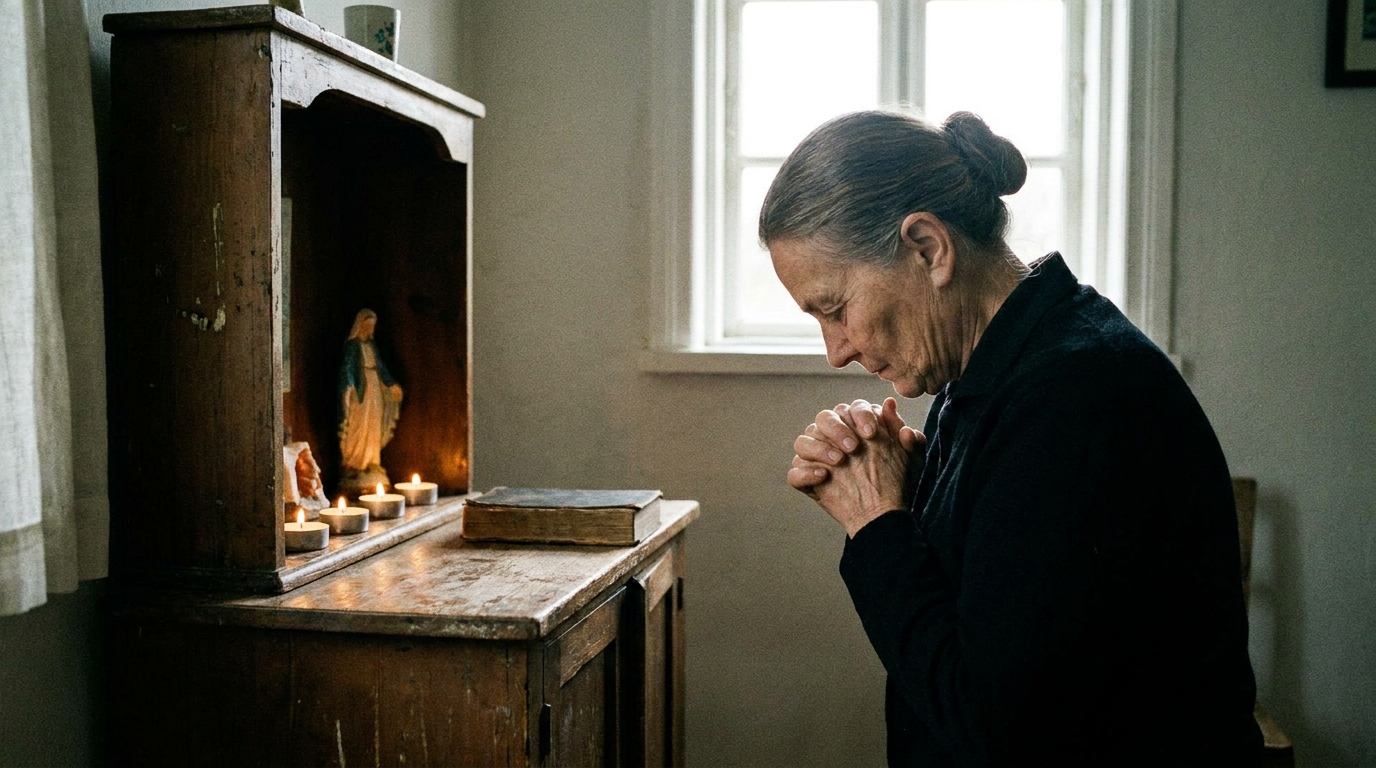
A sacred space does not need to be elaborate. It can be a small table, shelf, corner, windowsill, or bedside area where you keep objects that help you remember God.
You may include:
- A picture or sacred image
- A candle or lamp
- Flowers
- Scriptures or spiritual books
- Prayer beads
- Incense
- A journal
This space becomes a gentle invitation. When you see it, your heart remembers: “I am more than my tasks. I am a soul. I am loved by God. I can return.”
Deepening Through Chanting and Sacred Sound

The Power of Mantra
In Bhakti Yoga, chanting is one of the most important devotional practices. A mantra is a sacred sound or prayer that helps focus the mind and awaken the heart. The word mantra can be understood as “that which frees the mind.”
One widely practiced mantra in the Bhakti tradition is the maha-mantra, or “great mantra”:
Hare Krishna Hare Krishna
Krishna Krishna Hare Hare
Hare Rama Hare Rama
Rama Rama Hare Hare
“Hare” calls upon the divine energy of God. “Krishna” means the all-attractive Lord. “Rama” means the source of joy and spiritual pleasure. This mantra is a prayer: “O Lord, O divine energy of the Lord, please engage me in Your loving service.”
You do not have to understand everything intellectually for chanting to nourish you. Just as sunlight warms the skin whether or not we understand physics, sacred sound can gradually soften and purify the heart.
Japa: Personal Meditation With Beads
Japa means softly repeating a mantra, often using prayer beads to count. Many Bhakti practitioners chant on a strand of 108 beads, moving bead by bead while repeating the mantra.
Japa is personal, intimate, and grounding. It gives the restless mind a sacred place to rest. When thoughts wander, we gently return to the sound. No harshness is needed. The practice is not about forcing the mind into silence, but lovingly bringing it back to God.
A simple way to begin:
- Sit comfortably in a clean, quiet place.
- Take a few slow breaths.
- Offer a short prayer for sincerity.
- Chant the mantra clearly enough to hear yourself.
- When distracted, gently return to the sound.
- End with gratitude.
Even one round, or even five minutes, can be meaningful when offered with devotion.
Kirtan: Singing Together
Kirtan is congregational chanting, usually with music. It is prayer sung aloud, often in call-and-response style. One person leads, and others respond.
Kirtan is especially powerful because it reminds us that spiritual life is not lonely. We chant together, listen together, and offer our voices together. Some may sing loudly, some softly, some with tears, some with uncertainty. All are welcome.
In the Srimad-Bhagavatam, another central Bhakti scripture, hearing and chanting the names and qualities of God are described as essential practices for awakening devotion. Through sacred sound, the heart becomes cleansed, and our original love for God begins to shine.
Sure, here is the sentence with the clickable link:
Check out our latest posts on posts.
Deepening Through Prayer
Prayer as Relationship
Prayer is not only asking for things. Prayer is relationship. It is speaking with God, listening for guidance, opening the heart, and learning to trust.
There are many kinds of prayer:
- Gratitude: “Thank You for this day.”
- Confession: “I am struggling. Please help me grow.”
- Surrender: “May Your will guide me.”
- Intercession: “Please bless and protect others.”
- Love: “I want to remember You.”
In Bhakti Yoga, prayer can be formal or spontaneous. You may recite traditional prayers, or you may speak in your own words. God understands every language, every tear, and every sincere intention.
Praying Through Difficulty
A deep devotional practice does not mean life becomes free from pain. Rather, devotion gives us a sacred way to walk through pain.
When we are grieving, confused, anxious, or disappointed, we can bring these emotions into prayer. Instead of hiding from God, we can say, “This is what is happening inside me. Please sit with me. Please guide me. Please help me see how to love even here.”
The lives of saints in the Bhakti tradition show us that prayer matures through both sweetness and struggle. Sometimes our deepest prayers arise when our usual supports fall away. In those moments, the soul may cry out with unusual honesty.
This cry is not a failure. It can be a beginning.
Listening After Prayer
After speaking, allow a few moments of silence. Listening is also part of prayer.
This does not always mean hearing a voice. Guidance may come as a gentle conviction, a scripture that speaks to your situation, wise counsel from a teacher, or a quiet shift in the heart.
Bhakti Yoga encourages us to remain humble. We listen, we reflect, we seek guidance, and we compare our inspiration with sacred teachings and the wisdom of compassionate devotees. In this way, prayer becomes both heartfelt and grounded.
Deepening Through Scripture and Reflection
Scripture as Living Wisdom
Bhakti scriptures are not meant only for scholars. They are living wisdom for the heart.
Texts like the Bhagavad-gita, Srimad-Bhagavatam, and teachings of the great Bhakti saints help us understand who we are, who God is, and how to live with devotion in this world.
The Sanskrit word shastra means sacred scripture or spiritual teaching. Shastra gives direction, like a lamp on the path. When life feels confusing, scripture helps us remember what is eternal.
A simple daily practice may be reading one verse and asking:
- What does this teach me about God?
- What does this teach me about the soul?
- How can I apply this today?
- What quality is being invited in me?
Even a small amount of scripture, read with humility, can deeply shape the heart.
The Bhagavad-gita in Daily Life
The Bhagavad-gita is a conversation between Sri Krishna and Arjuna, a warrior facing a moral and emotional crisis. Arjuna is overwhelmed and unsure what to do. Krishna guides him with teachings on the soul, duty, meditation, wisdom, and devotion.
This setting is very practical. The Gita is not spoken in a cave far away from responsibility. It is spoken in the middle of life’s complexity.
Many of us are like Arjuna. We have responsibilities. We face decisions. We feel torn between fear and faith. The Gita teaches that spiritual growth does not require running away from life, but learning to act with devotion, humility, and surrender.
Krishna’s invitation is deeply personal: “Always think of Me, become My devotee, worship Me, and offer your homage to Me” (Bhagavad-gita 18.65). This is not a cold command. It is a loving call to bring the heart back into relationship with the Divine.
Journaling as Devotional Reflection
Writing can help deepen your practice. A devotional journal gives space to notice how God is moving in your life.
You might write:
- A prayer for the day
- A lesson from scripture
- A moment of gratitude
- A struggle you are offering to God
- A quality you want to cultivate
- A name of someone you are praying for
Over time, your journal becomes a record of grace. You may look back and see how prayers were answered, how your heart softened, or how you were carried through seasons you once thought impossible.
Deepening Through Service
Seva: Loving Service
Seva means service offered with devotion. In Bhakti Yoga, service is not merely volunteering or being helpful, though it may include both. Seva is action offered to God for the benefit of others.
This can happen in many forms:
- Cooking a meal with love
- Cleaning a sacred space
- Helping someone in need
- Supporting a spiritual community
- Caring for family with patience
- Sharing wisdom gently
- Using your skills for a higher purpose
Service purifies the heart because it moves us away from “What can I get?” toward “How can I love?”
Offering Your Work
Not everyone can spend hours in formal spiritual practice each day. Many people are caring for children, working jobs, studying, healing, or carrying responsibilities. Bhakti Yoga does not reject these realities. Instead, it teaches us to spiritualize them.
Before beginning your work, pause and pray:
“May this be an offering. May my words and actions serve You. May I be honest, kind, and useful today.”
This simple intention can transform ordinary work into devotion.
Krishna teaches in the Bhagavad-gita that we have a right to perform our duty, but we are not the ultimate controller of the results. When we offer the fruits of our work to God, we learn freedom from anxiety, pride, and despair.
Serving Without Pride
Service can also reveal our ego. We may want recognition, control, or appreciation. This is natural to notice, and it does not mean we should stop serving. Rather, we can bring these discoveries into prayer.
“Lord, I see my desire to be praised. Please help me serve with a cleaner heart.”
In this way, service becomes a mirror and a medicine. It shows us where we need healing, and it gives us opportunities to practice humility.
Deep devotional service is not about becoming important. It is about becoming available.
Deepening Through Community
The Gift of Sangha
Sangha means spiritual community, the company of those who support our growth. In Bhakti Yoga, association is considered essential because the heart is influenced by the company it keeps.
When we spend time with people who chant, pray, serve, study, and sincerely seek God, our own devotion becomes nourished. We remember what matters. We are encouraged when we feel weak. We learn by example.
A healthy spiritual community does not demand perfection. It creates space for growth. It welcomes questions, honors each person’s journey, and points everyone toward loving service.
Learning From Teachers and Elders
A guide, mentor, or teacher can help us deepen our practice with wisdom and care. In Sanskrit, guru means spiritual teacher—one who helps remove darkness by sharing divine knowledge. A true teacher does not exploit or dominate. A true teacher serves, guides, and helps us come closer to God.
It is wise to seek guidance from those whose lives reflect humility, compassion, steadiness, and scriptural understanding. Their example can help us avoid confusion and grow in a balanced way.
Practicing Devotion With Others
Personal practice is strengthened by shared practice. Attending kirtan, joining study groups, serving meals, celebrating holy days, or simply spending time with sincere devotees can uplift the heart.
If you are new, you do not have to know all the songs or customs. Come as you are. Listen. Participate as you feel comfortable. Ask questions. Receive what nourishes you.
Bhakti grows beautifully in the warmth of shared devotion.
Deepening Through Daily Choices
Bringing Devotion Into the Morning
The morning is a powerful time for spiritual practice. Before the world becomes loud, the heart may be more open.
A simple morning routine could include:
- Waking and offering gratitude
- Washing and sitting in your sacred space
- Chanting a mantra
- Reading a verse
- Praying for guidance
- Setting an intention for service
Even if your morning is busy, you can begin with one sentence: “Dear God, please help me remember You today.”
Eating as a Sacred Practice
In Bhakti Yoga, food can become a beautiful part of devotion. Many practitioners prepare vegetarian food and offer it to Krishna with prayer. Food offered to God is called prasadam, meaning “mercy” or “grace.”
The practice is simple. Prepare food with care, place it before a sacred image or in your heart before God, and pray: “Please accept this offering.” Afterward, receive the food with gratitude.
This reminds us that nourishment is not separate from grace. Eating becomes less about consumption and more about receiving.
Ending the Day With Remembrance
Before sleep, take a few moments to reflect.
You might ask:
- Where did I remember God today?
- Where did I forget?
- Whom did I help?
- Whom do I need to forgive?
- What am I grateful for?
Then offer the day back to God. The successes, the mistakes, the conversations, the unfinished tasks—all of it can be placed in divine hands.
This practice softens the heart and helps us sleep in remembrance.
Working Through Obstacles With Compassion
When You Feel Dry or Distracted
Every practitioner experiences dry seasons. Chanting may feel mechanical. Prayer may feel empty. Scripture may feel distant. The mind may resist.
Please do not be discouraged. Dryness does not mean God is absent. It may simply mean the heart is being invited into deeper steadiness.
Continue gently. Reduce the practice if needed, but do not abandon the relationship. Sometimes love matures when we show up even without strong feelings.
When You Feel Unworthy
Many people carry shame. They may think, “I am too broken,” “I have made too many mistakes,” or “God will not accept me.”
Bhakti Yoga offers a different message: the soul is eternally connected to God. Our mistakes may cover that relationship, but they do not erase it. Divine love is not fragile.
The holy names, prayer, service, and sincere repentance can gradually cleanse the heart. The path is not for perfect people. It is for sincere people.
When Life Becomes Too Busy
If life is full, simplify. Do not turn devotion into another burden. Instead, weave remembrance into what you already do.
Chant while walking. Pray while driving. Offer your meals. Listen to kirtan while cooking. Read one verse before bed. Serve the person in front of you.
God is not limited to long rituals. A sincere heart can meet God anywhere.
Growing in Love, Not Performance
Devotion Is Not a Competition
It can be tempting to compare our practice with others. Someone may chant more, know more scripture, attend more programs, or seem more advanced. But comparison often steals the sweetness from devotion.
Bhakti is personal. God sees the heart, the effort, the tears, the sincerity, and the hidden struggles.
Your offering may look small to others, but if it is offered with love, it is spiritually significant.
Measuring Growth by the Heart
How do we know our devotional practice is deepening?
Not only by how much we do externally, but by the qualities growing within us:
- More humility
- More compassion
- More patience
- More gratitude
- More honesty
- More desire to serve
- More remembrance of God
- More kindness toward others
In the Bhakti tradition, spiritual advancement is seen in the softening of the heart. If our practice makes us proud, harsh, or judgmental, we can pause and pray for real devotion.
Returning Again and Again
The path of Bhakti is a path of returning. We remember, we forget, and we return. We feel inspired, we become distracted, and we return. We make progress, we stumble, and we return.
This returning is itself an act of love.
Like a child learning to walk, we may fall many times. A loving parent does not reject the child for falling. In the same way, God welcomes our sincere efforts to rise and come closer.
A Simple Devotional Practice You Can Begin Today
A 20-Minute Daily Practice
If you want a practical structure, here is a gentle 20-minute devotional practice:
- Prepare your space – Light a candle or sit quietly for one minute.
- Offer a prayer – Ask for sincerity and guidance.
- Chant – Spend 10 minutes chanting a mantra, such as the maha-mantra.
- Read – Read one verse from the Bhagavad-gita or another sacred text.
- Reflect – Ask how the teaching applies to your day.
- Serve – Choose one act of kindness to offer today.
- Close with gratitude – Thank God for the opportunity to practice.
This is simple, but powerful. If 20 minutes feels too much, begin with five. If five feels too much, begin with one sincere prayer.
A Weekly Rhythm
You may also create a weekly rhythm:
- One day for kirtan or sacred music
- One day for deeper scripture study
- One day for service
- One day for journaling
- One day for community connection
- Daily chanting and prayer in whatever amount is possible
Rhythm helps devotion become part of life, not just an occasional feeling.
Keep the Heart at the Center
The purpose of practice is love. Chanting, prayer, scripture, and service are not boxes to check. They are ways to turn toward God.
If you ever feel your practice becoming dry or rigid, return to the simple prayer: “Please help me love You. Please help me serve with sincerity.”
This prayer can guide a lifetime.
The Beautiful Invitation of Bhakti Yoga
Bhakti Yoga is a practical path for the whole person. It engages the voice through chanting, the mind through sacred study, the heart through prayer, the hands through service, and the whole life through loving offering.
It does not require us to escape the world. It teaches us to live in the world with remembrance, compassion, and devotion. It invites us to see our relationships, work, food, challenges, and gifts as opportunities to love God and serve others.
Deepening your personal devotional practice is not about becoming spiritually impressive. It is about becoming more sincere, more surrendered, and more loving. It is about allowing God into the ordinary places of life until they become luminous with grace.
Wherever you are on the journey, you are welcome. Whether you know many prayers or none, whether your faith feels strong or tender, whether you are joyful, wounded, curious, or uncertain—there is a place for you on the path of Bhakti.
Take one sincere step today. Chant one holy name. Offer one prayer. Read one verse. Serve one person. Give one moment of your heart to God. That one step, taken with sincerity, can open the door to a lifetime of divine love.
FAQs
What is a personal devotional practice?
A personal devotional practice is a spiritual or religious practice that an individual engages in to deepen their connection with their faith or spirituality. This can include activities such as prayer, meditation, scripture reading, and other rituals or practices that are meaningful to the individual.
Why is a personal devotional practice important?
A personal devotional practice is important for individuals as it provides a dedicated time and space for spiritual reflection, growth, and connection with their faith or spirituality. It can also provide a sense of peace, purpose, and guidance in daily life.
How can one establish a personal devotional practice?
One can establish a personal devotional practice by setting aside regular time for spiritual activities, finding a quiet and comfortable space for reflection, and choosing meaningful practices such as prayer, meditation, or scripture reading. It’s important to be consistent and open to exploring different practices to find what resonates best.
What are some common elements of a personal devotional practice?
Common elements of a personal devotional practice may include prayer, meditation, reading sacred texts, journaling, attending religious services, participating in rituals or ceremonies, and engaging in acts of service or charity.
How can a personal devotional practice benefit an individual?
A personal devotional practice can benefit an individual by providing a sense of inner peace, spiritual growth, guidance, and a deeper connection with their faith or spirituality. It can also offer a source of strength, comfort, and resilience during challenging times.

