
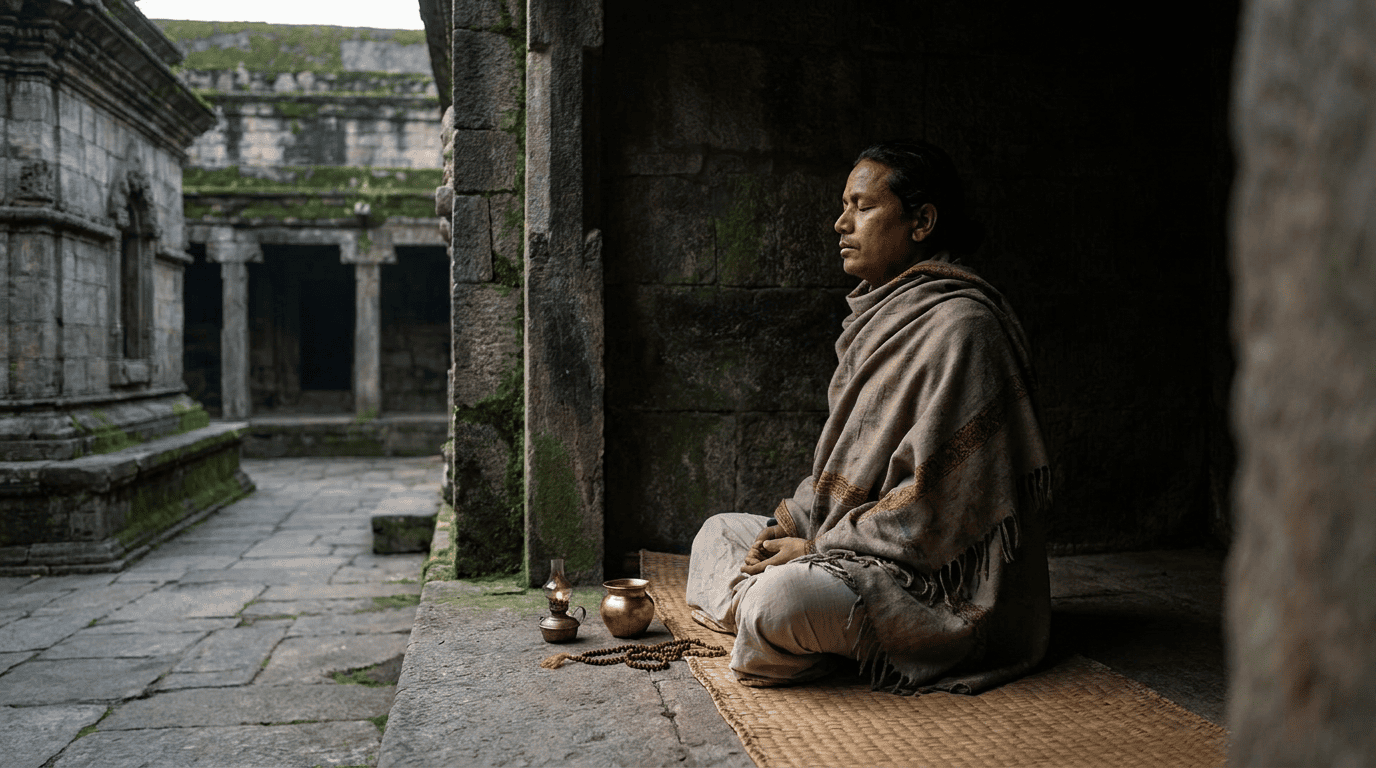
In a world that moves quickly, many of us long for a quiet place within—a space where the heart can breathe, the mind can soften, and the soul can remember its relationship with God. This is where daily sadhana becomes such a precious gift.
Sadhana is a Sanskrit word that means “spiritual practice.” It is not meant to be complicated, heavy, or reserved for monks and saints. Daily sadhana is simply the loving rhythm of turning toward the Divine each day. It may include chanting, prayer, meditation, sacred reading, service, gratitude, and simple acts done with devotion.
In Bhakti Yoga, the yoga of love and devotion, sadhana is not about becoming perfect. It is about becoming sincere. It is a daily offering of the heart. Whether you are new to spiritual life, returning after a long time, or already walking a devotional path, daily sadhana can help you cultivate inner peace in a practical, gentle, and deeply transformative way.
Daily sadhana is a steady spiritual practice that helps us remember who we truly are and reconnect with God. In Bhakti Yoga, this remembrance is not dry or mechanical. It is relational. It is the soul turning toward the Supreme with love.
Sadhana Means Practice With Purpose
The word sadhana comes from the Sanskrit root “sadh,” meaning “to accomplish” or “to bring about.” In spiritual life, sadhana is the practice that helps bring about awakening, purification, and love.
Just as the body needs nourishment each day, the heart and soul also need nourishment. Daily sadhana gives us that nourishment. It helps us begin the day with intention rather than anxiety, devotion rather than distraction, and remembrance rather than forgetfulness.
This practice may be very simple:
- Chanting God’s names
- Offering a heartfelt prayer
- Reading a few verses of sacred wisdom
- Sitting quietly in meditation
- Serving someone with kindness
- Offering food with gratitude
- Reflecting on how to live with more compassion
The power is not in doing something grand. The power is in doing something sincere and regular.
Bhakti Yoga: The Path of Love
Bhakti means “devotion” or “loving service.” Yoga means “connection” or “union.” So Bhakti Yoga is the path of reconnecting with God through love.
Unlike some paths that emphasize only intellectual study or physical discipline, Bhakti Yoga engages the whole person: the voice through chanting, the mind through remembrance, the heart through prayer, the body through service, and daily life through loving intention.
In the Bhagavad Gita, one of the central scriptures of the Bhakti tradition, Krishna says:
“Always think of Me, become My devotee, worship Me, and offer your homage unto Me.”
— Bhagavad Gita 18.65
This invitation is intimate and practical. Krishna is not asking for a performance. He is inviting relationship. Daily sadhana is how we gently respond to that invitation.
Why Daily Sadhana Brings Inner Peace
Inner peace is not merely the absence of problems. It is the presence of spiritual grounding. Life will always bring change, uncertainty, and challenge. But daily sadhana helps us meet life from a deeper place.
Peace Comes From Remembering
Much of our anxiety comes from forgetfulness. We forget that we are spiritual beings. We forget that God is near. We forget that love is our deepest nature. We forget that we are not alone.
Daily sadhana helps us remember.
When we chant, pray, or sit with sacred teachings, we are not escaping life. We are returning to reality. We are remembering that beneath the surface of our responsibilities and emotions, there is a soul longing for divine connection.
The Bhagavad Gita teaches that the mind can be either our friend or our enemy. When the mind is restless and uncontrolled, it pulls us in many directions. But when the mind is gently trained through spiritual practice, it becomes a friend.
“For one who has conquered the mind, the mind is the best of friends; but for one who has failed to do so, the mind will remain the greatest enemy.”
— Bhagavad Gita 6.6
Daily sadhana is one way we lovingly befriend the mind.
Small Daily Practices Create Deep Change
We may think transformation requires dramatic effort. But spiritual growth often happens quietly, through small daily choices.
A few minutes of chanting each morning can change the tone of the day. A prayer before meals can soften the heart. A verse of scripture can guide a difficult decision. A moment of gratitude can interrupt a cycle of complaint. A simple act of service can remind us that love is meant to be shared.
Over time, these practices create inner strength. They shape our consciousness. They help us respond rather than react. They gradually cleanse the heart of fear, resentment, envy, and loneliness.
In Bhakti, this cleansing is understood as the natural result of contact with the Divine. Just as sunlight removes darkness, sincere devotional practice brings clarity and warmth to the heart.
The Heart of Sadhana: Chanting the Holy Names
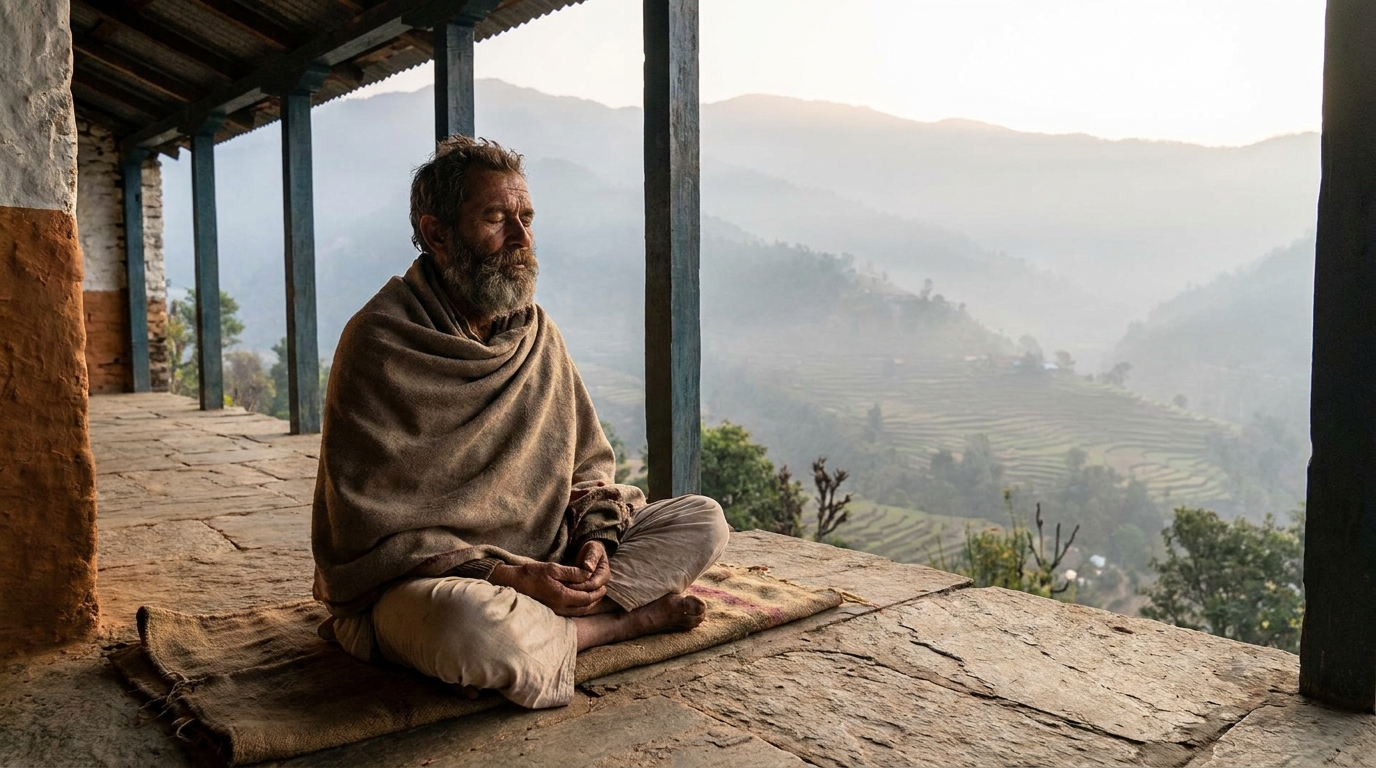
Among the practices of Bhakti Yoga, chanting is especially central. Chanting means repeating sacred names of God, either softly, aloud, in song, or in meditation.
What Is Mantra?
A mantra is a sacred sound or phrase used for meditation and prayer. The Sanskrit word mantra can be understood as “that which frees the mind.” Man means “mind,” and tra means “to protect” or “to liberate.”
In Bhakti Yoga, mantras are not just sounds. They are personal and relational because they carry the names of God. When we chant, we are calling out with the heart.
One of the most beloved mantras in the Bhakti tradition is the Maha Mantra, meaning “the great mantra”:
Hare Krishna Hare Krishna
Krishna Krishna Hare Hare
Hare Rama Hare Rama
Rama Rama Hare Hare
Krishna means “the all-attractive one.” Rama means “the source of joy.” Hare is a call to the divine energy of the Lord, often understood as a prayer to be engaged in loving service.
This mantra can be chanted by anyone, from any background. There is no requirement except sincerity.
Japa: Personal Meditative Chanting
Japa is the practice of softly repeating a mantra, often on prayer beads. It is a quiet and personal form of chanting.
For many people, japa becomes the foundation of daily sadhana. Sitting in the morning with beads in hand, chanting one mantra at a time, we give the mind a sacred place to rest. When thoughts wander, we gently return to the sound.
There is no need to force the mind. The practice is not about harsh control. It is about loving return.
Each mantra is like placing one flower at the feet of God. Some flowers may feel fresh and fragrant. Others may feel distracted or tired. Still, each offering matters.
Kirtan: Singing Together
Kirtan is devotional singing, often in a call-and-response style. In kirtan, sacred names are sung with music and community. It is joyful, healing, and deeply accessible.
Sometimes inner peace comes not from silence alone, but from singing our hearts open. Kirtan allows us to bring everything—our longing, grief, gratitude, confusion, and hope—into the sound of divine remembrance.
The Srimad Bhagavatam, a treasured Bhakti scripture, glorifies hearing and chanting about God as a powerful way to purify the heart:
“By regularly hearing the Bhagavatam and rendering service to the pure devotee, all that is troublesome to the heart is almost completely destroyed.”
— Srimad Bhagavatam 1.2.18
This verse reminds us that spiritual sound has a cleansing effect. When we hear and chant sincerely, the heart gradually becomes peaceful.
Check out our latest posts at https://thebhaktihouse.org/blog.
Creating a Morning Sadhana Routine
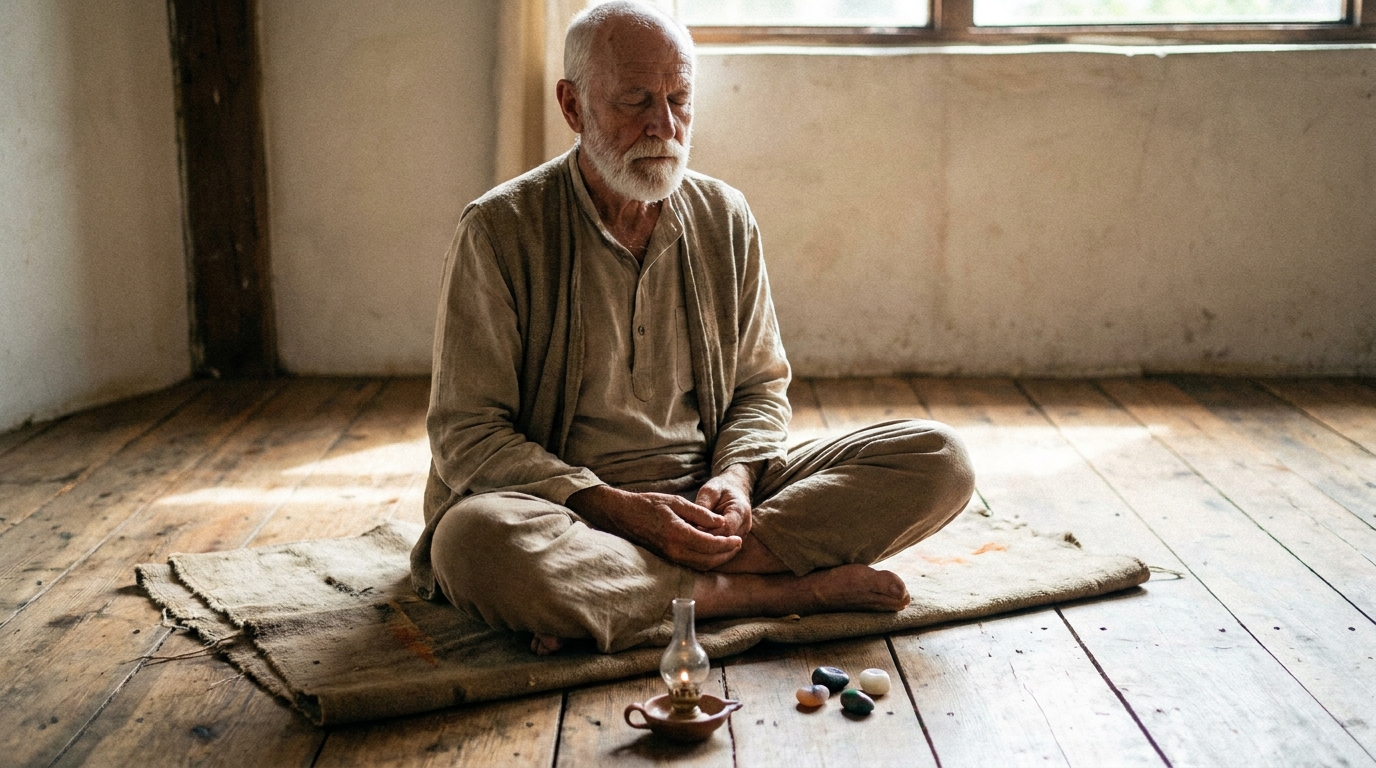
Morning is a sacred time for spiritual practice. Before the demands of the day rush in, we can offer the first moments to God. This does not have to be long or elaborate. A simple, consistent morning sadhana can become a spiritual anchor.
Begin With a Gentle Offering
When you wake up, before checking your phone or entering the world of messages and tasks, pause for a moment.
You might place your hand on your heart and pray:
“Dear Lord, please guide me today. Let my thoughts, words, and actions be pleasing to You. Help me serve with love.”
This small offering can shift the entire day. It reminds us that life is not separate from spiritual practice. Every day can become an offering.
Set a Realistic Time
One of the most common mistakes in building daily sadhana is starting with too much. We may become inspired and commit to an hour or two, only to feel discouraged when life becomes busy.
It is better to begin with something sustainable.
You might start with:
- 5 minutes of chanting
- 5 minutes of prayer
- 10 minutes of sacred reading
- 1 round of japa on beads
- A short gratitude reflection
The key is consistency. A small practice done daily is more powerful than a large practice done occasionally.
As your heart develops taste and steadiness, your sadhana may naturally grow.
Create a Sacred Space
A sacred space helps the mind understand, “This is where I turn toward God.”
It can be a small altar, a clean corner, a candle, a picture of Krishna, Jesus, a saint, or any sacred image that inspires devotion. You may keep scriptures, prayer beads, flowers, incense, or a journal there.
The space does not need to be fancy. It only needs to be cared for with love.
When you sit in the same place each day, that place gradually becomes spiritually charged by your prayers and chanting. It becomes a refuge.
Prayer as a Daily Conversation With God
Prayer is one of the most natural expressions of the soul. You do not need formal language. You do not need to know exactly what to say. Prayer begins with honesty.
Speak From the Heart
In Bhakti Yoga, God is not distant or impersonal. The Divine is understood as deeply personal, loving, and responsive. Therefore, prayer can be intimate.
You can pray when you are grateful. You can pray when you are confused. You can pray when you feel unworthy. You can pray when you have no words at all.
A simple prayer may be:
“Please help me remember You.”
“Please teach me how to love.”
“Please guide my choices today.”
“Please let me serve someone.”
“Please give me strength to forgive.”
Prayer is not only asking for things. It is opening the heart to relationship.
Include Gratitude
Gratitude is a powerful part of daily sadhana because it softens the heart. When we take time to notice blessings, we begin to see life as sacred.
You might write down three things each morning or evening that you are grateful for. They can be simple: clean water, a kind word, sunlight, a meal, a chance to begin again.
Gratitude does not deny suffering. Rather, it helps us hold suffering within a larger field of grace.
Offer Your Struggles
Many people feel they must be peaceful before coming to God. But Bhakti teaches the opposite: we come to God as we are.
If your mind is restless, offer the restlessness. If your heart is heavy, offer the heaviness. If you feel distracted during chanting, offer the distraction and keep going.
God is not waiting for a polished version of you. The Divine receives sincerity.
Sacred Study for Spiritual Growth
Daily sadhana becomes deeper when we nourish the mind with sacred wisdom. Just as food shapes the body, what we hear and read shapes consciousness.
Reading Bhakti Scriptures
Bhakti scriptures offer guidance for living with devotion in the real world. They help us understand the nature of the soul, the mind, karma, divine love, and the purpose of life.
Some foundational texts include:
- Bhagavad Gita: A conversation between Krishna and Arjuna about duty, devotion, wisdom, and surrender
- Srimad Bhagavatam: A devotional scripture filled with stories, teachings, and prayers centered on loving relationship with God
- Narada Bhakti Sutra: A concise text describing the nature of pure devotion
- Chaitanya Charitamrita: A biography and theological text about Sri Chaitanya Mahaprabhu, who spread the chanting of God’s names with deep compassion
If these texts are new to you, begin slowly. Read one verse. Reflect on one idea. Ask, “How can I live this today?”
Apply One Teaching
Spiritual study is not meant only for information. It is meant for transformation.
If you read a verse about humility, look for one chance to listen better that day. If you read about compassion, serve someone. If you read about remembering God, place a small reminder in your home or workplace.
The Bhagavad Gita encourages us to offer our actions to God:
“Whatever you do, whatever you eat, whatever you offer or give away, and whatever austerities you perform—do that as an offering to Me.”
— Bhagavad Gita 9.27
This verse is profoundly practical. It means our ordinary life can become spiritualized. Cooking, working, parenting, studying, cleaning, and speaking can all become offerings when done with devotion.
Reflect Through Journaling
Journaling can support daily sadhana by helping us notice the movements of the heart.
You might write:
- What did I learn in today’s reading?
- Where did I feel close to God today?
- Where did I forget?
- What am I grateful for?
- Who can I serve tomorrow?
- What quality do I want to cultivate?
This kind of reflection brings awareness. And awareness, when held with prayer, becomes a doorway to growth.
Service: Turning Inner Peace Into Love
In Bhakti Yoga, inner peace is not meant to stay only inside us. It naturally expresses itself as service. The Sanskrit word seva means “selfless service” or “loving service.”
Seva Begins at Home
Sometimes we imagine service must be something large or public. But seva often begins in the closest places.
Washing dishes with gratitude can be seva. Caring for a child can be seva. Listening to a friend can be seva. Doing your work honestly can be seva. Offering kind words can be seva.
The heart of seva is intention. We ask, “How can this action be offered to God? How can this serve life?”
When we serve in this mood, even simple tasks become sacred.
Serve Without Needing Recognition
Service becomes purifying when we practice releasing the need to be praised. This is not always easy. Most of us want to be seen and appreciated. That is human.
But Bhakti gently teaches us to serve for love itself.
When we offer service to God, we are never unseen. The Divine knows the heart behind every action. Even a small act done with love has spiritual value.
Krishna says in the Bhagavad Gita:
“If one offers Me with love and devotion a leaf, a flower, fruit, or water, I will accept it.”
— Bhagavad Gita 9.26
This verse is tender and encouraging. God is not asking for wealth or status. He is asking for love. A leaf, a flower, a fruit, or a little water—offered with devotion—is accepted.
Community as Spiritual Support
Sadhana grows stronger in good company. In Sanskrit, satsang means “association with truth” or “spiritual company.” It refers to spending time with people who encourage devotion, wisdom, and sincerity.
Spiritual community helps us stay inspired. When our own practice feels weak, the faith of others can carry us. When we feel alone, community reminds us that we are walking together.
Kirtan gatherings, scripture study, shared meals, service projects, and honest spiritual friendship can all become part of a healthy devotional life.
Overcoming Common Obstacles in Daily Sadhana
Every sincere practitioner faces obstacles. This does not mean you are failing. It means you are human. The path of Bhakti is patient and compassionate.
“I Don’t Have Enough Time”
Many people feel too busy for daily sadhana. But often, the issue is not time—it is rhythm.
Begin with one small practice connected to something you already do. Chant while walking. Pray before eating. Read one verse before bed. Offer your commute to God. Take three conscious breaths and repeat a sacred name.
If you truly have only two minutes, give those two minutes with your whole heart. Sincerity matters.
“My Mind Is Too Distracted”
A distracted mind is not a reason to stop sadhana. It is the reason we need sadhana.
When the mind wanders during chanting or prayer, gently return. Again and again. Each return is part of the practice.
Do not measure your sadhana only by how peaceful you feel during it. Sometimes the deepest growth happens when we continue even through restlessness.
The practice is not to have no thoughts. The practice is to keep turning toward God.
“I Feel Spiritually Unqualified”
Many of us carry feelings of unworthiness. We may think, “I am not pure enough,” “I do not know enough,” or “I have made too many mistakes.”
Bhakti offers hope. The path is not dependent on our perfection. It is dependent on God’s grace and our willingness to take shelter.
The Narada Bhakti Sutra describes devotion as the highest love for God. This love is not limited by birth, background, education, or past mistakes. Anyone can begin. Anyone can chant. Anyone can pray. Anyone can serve.
The door is open.
“I Start Strong, Then Stop”
This is very common. Rather than judging yourself, simply begin again.
In devotional life, beginning again is beautiful. Each new morning is an opportunity to return. If you miss a day, do not let guilt become another obstacle. Offer your regret, receive mercy, and take the next step.
Consistency grows through compassion, not self-hatred.
A Simple Daily Sadhana Plan
If you are wondering how to begin, here is a gentle daily sadhana plan. You can adjust it according to your life, tradition, and capacity.
Morning Practice
Start with 15 to 30 minutes if possible:
- Sit in a clean, quiet place.
- Offer a short prayer for guidance.
- Chant a mantra, such as the Maha Mantra, for 5 to 15 minutes.
- Read one verse or passage from a sacred text.
- Reflect on one quality to practice that day, such as patience, gratitude, humility, or kindness.
If you have more time, you can expand your chanting, study, or meditation.
Midday Remembrance
Pause during the day for a brief moment of devotion:
- Offer your food with gratitude.
- Repeat a sacred name before beginning work.
- Take a short walk while chanting softly.
- Send a prayer for someone who is suffering.
- Ask, “How can I serve right now?”
These small pauses bring spiritual awareness into daily life.
Evening Reflection
Before sleep, gently review your day:
- Where did I remember God?
- Where did I act with love?
- Where did I struggle?
- What can I offer and release?
- What am I grateful for?
End with prayer. Ask for forgiveness where needed. Offer gratitude. Rest in the mercy of the Divine.
Making Your Whole Life an Offering
The beauty of Bhakti Yoga is that sadhana does not end when we leave our meditation seat. Daily life itself can become a temple when approached with devotion.
Work as Worship
Whatever your work may be, it can become part of your spiritual path when done with integrity, compassion, and offering.
Before beginning work, you might pray:
“May this work be useful. May I serve through it. May I remember You while doing it.”
This transforms work from mere obligation into worship. Even difficult tasks become opportunities to grow in patience, humility, and dedication.
Relationships as Sacred Practice
Our relationships often reveal where we need healing and growth. They show us our attachments, fears, expectations, and capacity to love.
In Bhakti, relationships can become sacred when we see others as souls, beloved parts of God. This does not mean we ignore boundaries or accept harm. It means we practice respect, compassion, truthfulness, and forgiveness where appropriate.
A daily sadhana of love might include:
- Listening without interrupting
- Speaking with kindness
- Apologizing sincerely
- Praying for someone difficult
- Serving without keeping score
- Seeing the Divine presence in others
These practices cultivate inner peace because they reduce conflict in the heart.
Food as Devotion
In Bhakti Yoga, food can also become spiritualized through offering. Prasada means “mercy” or “grace.” It refers to food that has been lovingly offered to God and then received as sacred.
You can make a simple offering at home. Prepare vegetarian food with care, place it before a sacred image or in your heart’s prayer, and say:
“Dear Lord, please accept this offering made with love.”
Then receive the food with gratitude.
This practice teaches us that nourishment is a gift. It slows us down. It brings sacredness into the kitchen and the dining table.
The Fruit of Daily Sadhana
The fruit of daily sadhana is not always immediate, but it is real. Over time, the heart becomes softer. The mind becomes clearer. The soul feels more at home.
Inner Peace Becomes Steady
At first, peace may come only during practice. Then gradually, it begins to accompany us throughout the day. We may still face stress, grief, or uncertainty, but something within remains connected.
This is not emotional numbness. It is spiritual rootedness.
Like a tree with deep roots, we may bend in the wind, but we do not easily break.
Love Becomes Natural
Bhakti Yoga teaches that love of God is already within the heart. Sadhana does not create something artificial. It uncovers what is eternal.
As the heart is cleansed through chanting, prayer, service, and remembrance, love becomes more natural. We become less self-centered and more generous. Less reactive and more forgiving. Less lonely and more connected.
This is the miracle of devotion: by turning toward God, we learn to love all beings more deeply.
Faith Grows Through Experience
Faith is not only belief. It is trust that grows through lived experience.
When you practice daily sadhana, you begin to notice subtle changes. A mantra supports you during a hard moment. A prayer brings clarity. A scripture verse speaks directly to your life. A service opportunity opens your heart.
These experiences build faith gently and personally.
Everyone Can Begin Today
Daily sadhana is not about achieving a spiritual image. It is about cultivating a living relationship with God. It is a humble, daily return to love.
You do not need to be from a certain background. You do not need to know Sanskrit. You do not need to have everything figured out. You do not need to be perfectly peaceful before you begin.
Come as you are.
Bring your longing, your questions, your gratitude, your doubts, your hopes, and your heart. Begin with one sincere step: chant one mantra, say one prayer, read one verse, offer one meal, serve one person, or sit quietly and remember that God is near.
At The Bhakti House, all are welcome on this path of love. Wherever you are in your journey, may your daily sadhana become a gentle shelter, a source of inner peace, and a bridge between your heart and the Divine. Take one sincere step toward God today, and trust that grace will meet you there.
FAQs
What is sadhana?
Sadhana is a Sanskrit term that refers to the spiritual practice or discipline undertaken by an individual to attain a specific goal, such as spiritual growth, self-realization, or enlightenment.
What is daily sadhana?
Daily sadhana is the practice of engaging in spiritual disciplines or rituals on a regular basis, typically performed at the same time each day. It is a way for individuals to cultivate a deeper connection with their spiritual path and to make progress towards their spiritual goals.
What are some common practices in daily sadhana?
Common practices in daily sadhana may include meditation, chanting, prayer, yoga, reading sacred texts, and performing rituals or ceremonies. These practices are often tailored to an individual’s specific spiritual tradition or beliefs.
What are the benefits of daily sadhana?
Engaging in daily sadhana can bring numerous benefits, including increased inner peace, clarity of mind, spiritual growth, and a deeper sense of connection with the divine. It can also help individuals develop discipline, focus, and a sense of purpose in their spiritual journey.
How can one establish a daily sadhana practice?
To establish a daily sadhana practice, it is important to set aside a specific time each day for spiritual practice and to create a dedicated space for it. It can also be helpful to seek guidance from a spiritual teacher or mentor, and to start with manageable practices that can be gradually expanded upon. Consistency and commitment are key to establishing a successful daily sadhana practice.

