
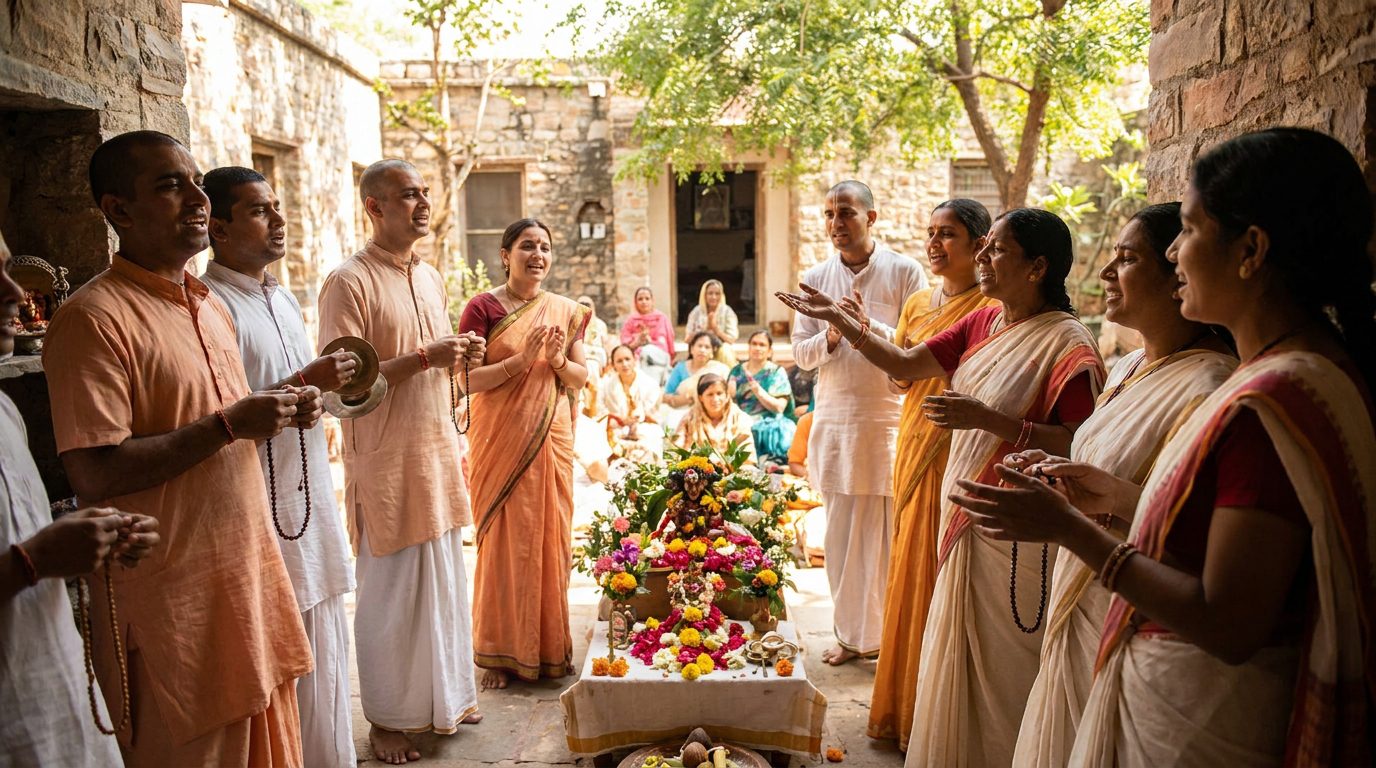
If you are new to Bhakti Yoga, welcome. Truly, you are welcome here just as you are.
You do not need to be born in a certain culture, speak a certain language, or already know spiritual philosophy to begin. You do not need to be perfect. You do not need to have your life neatly arranged. Bhakti Yoga begins with something very human and very beautiful: the heart’s longing to love and be loved by God.
The word bhakti comes from Sanskrit, the ancient sacred language of India. It means devotion, loving service, or heartfelt connection with the Divine. Yoga means union, connection, or a path that brings us closer to our true spiritual nature. So Bhakti Yoga can be understood simply as the path of reconnecting with God through love.
In Bhakti Yoga, God is not only seen as a distant force or abstract energy. God is approached as a personal, loving reality—someone we can speak to, sing to, serve, remember, and gradually come to love with our whole heart.
This path is practical. It is lived through chanting, prayer, sacred study, community, kindness, offering food, serving others, and remembering God in daily life. It does not ask us to reject the world, but to spiritualize our lives by bringing love and devotion into ordinary moments.
What Is Bhakti Yoga?
Bhakti Means Loving Devotion
Bhakti is often translated as “devotion,” but it is more than a feeling. It is a way of living. It means offering our thoughts, words, actions, and relationships in a spirit of love for God.
In the Bhagavad Gita, one of the most beloved sacred texts of Bhakti Yoga, Krishna says:
“Whatever you do, whatever you eat, whatever you offer or give away, and whatever austerity you perform—do that as an offering to Me.”
— Bhagavad Gita 9.27
This verse is deeply practical. It teaches that spiritual life is not separate from daily life. Cooking, working, parenting, studying, cleaning, singing, resting, and helping others can all become part of our spiritual path when done with devotion.
Bhakti Yoga invites us to ask, “How can I offer this moment with love?”
Yoga Means Connection
Many people first hear the word yoga and think of physical postures. While physical yoga can be helpful for health and focus, the deeper meaning of yoga is connection—especially connection with God, the soul, and our true purpose.
Bhakti Yoga is one of the major yoga paths described in sacred texts. It is sometimes called the yoga of the heart because it awakens our natural capacity to love selflessly.
This does not mean we become emotional in an ungrounded way. Rather, Bhakti purifies the heart. It helps us move from selfishness to service, from anxiety to trust, from isolation to relationship, and from forgetfulness to remembrance of God.
A Path for Everyone
One of the most beautiful qualities of Bhakti Yoga is that it is open to everyone.
You may be new to spirituality. You may come from a Christian, Jewish, Muslim, Buddhist, Hindu, secular, or interfaith background. You may be full of faith, or you may be full of questions. You may feel close to God, or you may not even know how to speak about God yet.
Bhakti Yoga welcomes sincere seekers.
In the Bhagavad Gita, Krishna teaches that anyone who takes shelter in divine love can attain spiritual perfection. The path is not limited by birth, wealth, education, gender, or social position. The real qualification is sincerity.
The Heart of Bhakti: Relationship with God
God as the Beloved
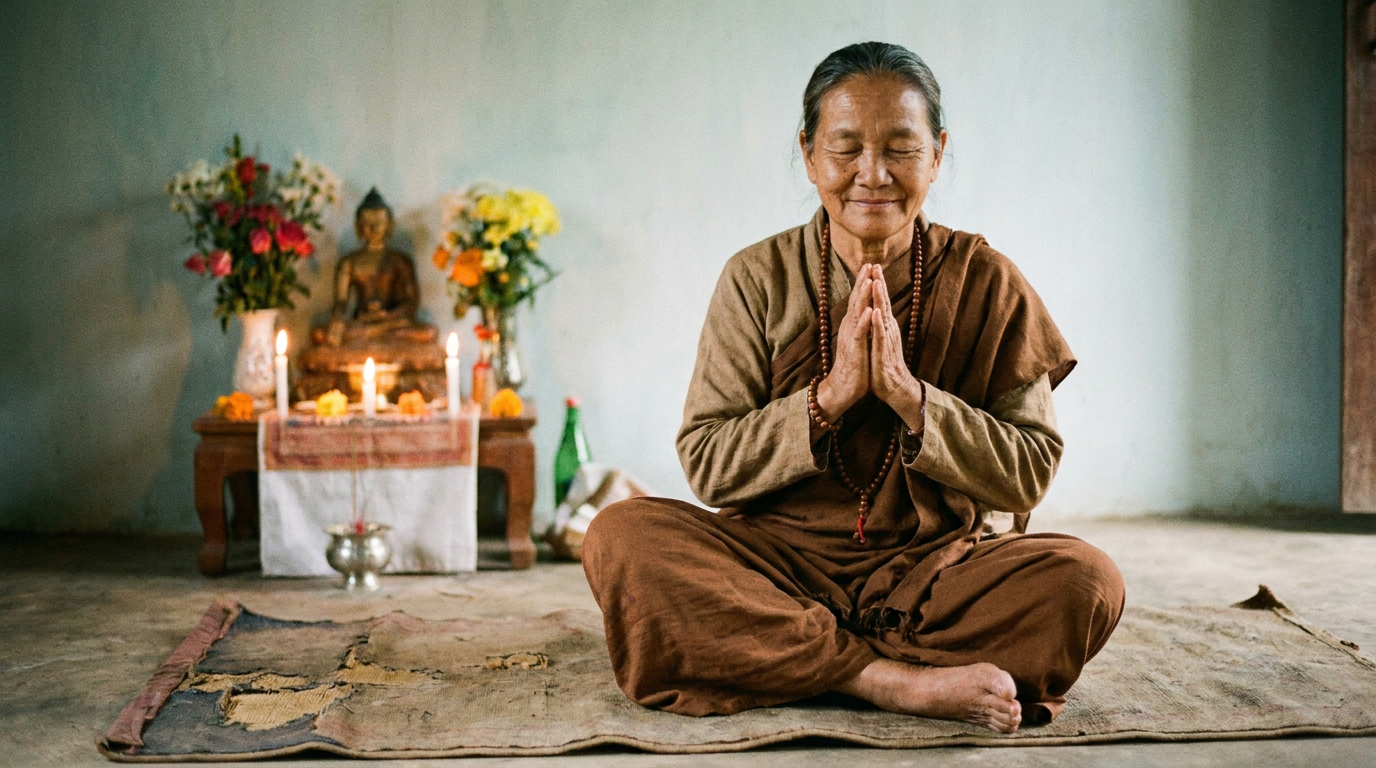
In Bhakti Yoga, God is understood as the Supreme Person, the source of all beauty, wisdom, strength, compassion, and love. Different traditions may call God by different names. In Bhakti scriptures, names such as Krishna, Rama, Vishnu, Narayana, and Hari are often used.
The name Krishna means “the all-attractive one.” This points to a loving understanding of God: the One who draws the heart by divine beauty and kindness.
Bhakti does not insist that we erase our own background or language of prayer. Rather, it invites us to deepen our relationship with God through sincere remembrance and loving service.
Some may pray to Krishna. Some may say “Lord,” “Beloved,” “Divine Mother,” “Allah,” “Adonai,” “Christ,” or simply “God.” The heart of Bhakti is not external performance but genuine loving connection.
The Soul’s Natural Longing
Bhakti Yoga teaches that we are not only bodies or minds. We are atman, a Sanskrit word meaning the eternal self or soul. The soul is spiritual by nature, and its deepest need is loving relationship with God.
Many of us try to satisfy the heart through success, possessions, approval, entertainment, or control. These things may bring temporary comfort, but they cannot fully nourish the soul. Bhakti gently points us back to the source of love.
This is why chanting, prayer, and service can feel so healing. They are not artificial activities placed upon us from the outside. They awaken something already within us.
Love That Transforms Daily Life
Bhakti Yoga is not just about having peaceful moments during meditation. It is about transformation.
Over time, devotion softens the heart. We may become more patient, forgiving, grateful, humble, and compassionate. We may begin to see others not as competitors or obstacles, but as beloved children of God.
This is spiritual growth in Bhakti: not simply knowing more, but loving better.
Please visit our website for more information on our articles: articles.
The Main Practices of Bhakti Yoga for Beginners
Chanting the Holy Names
One of the most important practices in Bhakti Yoga is chanting. In Sanskrit, chanting sacred names of God is called kirtan when sung together, and japa when repeated softly or privately, often on beads.
A well-known mantra in the Bhakti tradition is the Maha Mantra, meaning “the great mantra”:
Hare Krishna Hare Krishna
Krishna Krishna Hare Hare
Hare Rama Hare Rama
Rama Rama Hare Hare
A mantra is a sacred sound vibration that helps focus the mind and awaken the heart. The word mantra can be understood as “that which frees the mind.” In Bhakti, mantras are not merely sounds; they are considered spiritual invitations to connect with God.
“Hare” refers to the divine energy of God, often understood as the compassionate feminine aspect of the Divine. “Krishna” means the all-attractive Lord. “Rama” means the source of spiritual joy.
A simple prayerful meaning of the Maha Mantra is: “O Lord, O Divine Energy of the Lord, please engage me in Your loving service.”
You do not need to chant perfectly. You can begin with a few minutes a day. Sit quietly, breathe naturally, and repeat the mantra with sincerity. If your mind wanders, gently return to the sound. The practice is not about forcing the mind into silence. It is about bringing the heart back to God again and again.
Prayer from the Heart
Prayer in Bhakti Yoga can be formal or spontaneous. You can recite traditional prayers, or you can speak to God in your own words.
You might pray:
“Dear God, please guide me.”
“Please help me remember You.”
“Please teach me how to love.”
“Please make my heart humble and kind.”
“Please accept this small offering.”
Prayer does not require fancy language. In fact, some of the most powerful prayers are simple and honest.
Bhakti Yoga encourages a living relationship with God. This means we can bring everything to prayer: gratitude, confusion, grief, hope, mistakes, and longing. God is not shocked by our humanity. The Divine meets us with compassion.
Offering Food with Love
Another beautiful beginner practice is offering food to God before eating. In Sanskrit, food offered with devotion is called prasadam, which means mercy or grace.
The practice is simple. Prepare vegetarian food with cleanliness and gratitude. Before eating, place the food before a picture, altar, or sacred space, and say a prayer such as:
“Dear Lord, thank You for this food. Please accept this offering made with love.”
Then, after a moment, honor the food as prasadam.
This practice transforms eating into meditation. It reminds us that food is a gift, the earth is a gift, our bodies are a gift, and God is the ultimate giver. It also helps cultivate nonviolence, gratitude, and sacred awareness in daily life.
Reading Sacred Wisdom
Bhakti Yoga is nourished by scripture. Sacred texts help us understand who we are, who God is, and how to live with purpose.
For beginners, the Bhagavad Gita is a wonderful place to start. It is a conversation between Krishna and Arjuna, a warrior facing crisis, confusion, and moral struggle. In that moment of uncertainty, Krishna teaches about the soul, duty, devotion, meditation, and surrender.
Another important Bhakti text is the Srimad Bhagavatam, also called the Bhagavata Purana. It is filled with stories, prayers, philosophy, and descriptions of devotion to Krishna. It teaches that hearing about God with faith purifies the heart.
You do not need to understand everything immediately. Read slowly. Reflect on one verse. Ask, “How does this apply to my life today?” Sacred study is not just information; it is a form of association with divine wisdom.
Service as Worship
Service is central to Bhakti Yoga. In Sanskrit, devotional service is often called seva. Seva means serving with love, without selfish expectation.
Service may look like helping at a temple or spiritual community, cooking prasadam, cleaning, singing, teaching, donating, listening to someone who is struggling, caring for children, protecting animals, planting a garden, or offering your professional skills for a good purpose.
The spirit matters most. Even a small act can become sacred when offered to God.
Krishna says in the Bhagavad Gita:
“If one offers Me with love and devotion a leaf, a flower, a fruit, or water, I will accept it.”
— Bhagavad Gita 9.26
This verse is very dear to Bhakti practitioners. It shows that God is not hungry for our wealth or status. God accepts love. A simple offering, made sincerely, can carry deep spiritual power.
How to Begin a Simple Daily Bhakti Practice
Start Small and Stay Steady
Beginners sometimes feel inspired and try to change everything at once. But Bhakti grows best with steadiness and patience. A small daily practice done sincerely is more helpful than a large practice done for two days and then abandoned.
You might begin with:
- Five minutes of chanting each morning
- One heartfelt prayer before sleep
- Reading one verse of the Bhagavad Gita daily
- Offering your food before eating
- Doing one act of kindness as service to God
Choose something realistic. Let it become part of your life gently.
Create a Sacred Space
A sacred space can help you remember your intention. It does not need to be elaborate. You might place a picture of Krishna, a candle, flowers, sacred books, prayer beads, or any item that reminds you of God.
This space becomes a place to pause, chant, pray, read, and return to your heart.
If you live with others or have limited space, even a small shelf or corner can be enough. God is not limited by size. The sincerity of the heart makes the space sacred.
Practice Japa Meditation
Japa is the personal repetition of a mantra. Many Bhakti practitioners use mala beads, a string of 108 beads, to count the mantra. But if you do not have beads, you can still chant softly or mentally.
Here is a simple way to begin:
- Sit comfortably.
- Take a few slow breaths.
- Say a short prayer for guidance.
- Chant the Maha Mantra slowly and clearly.
- Listen to each word as you chant.
- When distracted, gently return to the mantra.
The key is listening. In Bhakti chanting, we are not just producing sound; we are receiving sound. We allow the holy name to enter the heart.
Bring Devotion into Ordinary Activities
Bhakti Yoga is not limited to a meditation cushion or temple room. You can practice while walking, cooking, driving, working, cleaning, or caring for family.
You might silently repeat a mantra while washing dishes. You might pray before sending an important email. You might offer your workday to God. You might listen to kirtan while cooking. You might thank God before drinking water.
Little acts of remembrance gradually reshape consciousness. Life becomes less divided between “spiritual” and “ordinary.” Everything can become an offering.
Common Questions Beginners Ask
Do I Have to Become Hindu to Practice Bhakti Yoga?
No. Bhakti Yoga comes from the Vedic spiritual tradition of India and is deeply connected with Hindu scriptures and devotional culture. It is important to honor that sacred origin with respect.
At the same time, Bhakti itself—the path of loving God—is universal. People from many backgrounds practice chanting, prayer, service, and devotion while honoring their own spiritual journey.
You do not need to label yourself quickly. Begin with sincerity. Learn respectfully. Let your relationship with God unfold naturally.
What If I Am Not Sure I Believe in God?
You are still welcome.
Bhakti Yoga does not demand that beginners have complete certainty. Many people begin with curiosity, longing, or even doubt. You can pray honestly: “If You are there, please guide me.” You can chant and observe how it affects your heart. You can study wisdom texts and reflect.
Faith in Bhakti is not blind pressure. It is cultivated through experience, association, practice, and grace. A small seed of openness can grow.
Is Chanting a Religious Ritual or Meditation?
It can be both. Chanting is a meditation because it focuses the mind on sacred sound. It is also a devotional practice because the sound is a name of God.
In Bhakti Yoga, the name of God is understood to be spiritually powerful and non-different from God’s presence. This may be a new idea for beginners, but it can be approached practically: when we chant sincerely, the heart becomes calmer, cleaner, and more connected.
Do I Need a Guru?
The word guru means teacher or spiritual guide. In Bhakti Yoga, guidance is very important because spiritual life deepens through learning from those who live the path.
However, beginners do not need to rush. Start by studying authentic teachings, attending sincere communities, asking questions, and praying for guidance. Over time, you may feel drawn to receive deeper instruction from a qualified teacher.
A true spiritual guide does not exploit or control. A genuine guru points the soul toward God, scripture, humility, service, and love.
What If I Make Mistakes?
You will. We all do.
Bhakti Yoga is not a path for people who never fall down. It is a path for people who keep turning back toward God.
Mistakes can become teachers if they make us humble and sincere. Instead of giving up, we can pray, learn, apologize when needed, and begin again. Divine grace is greater than our weakness.
The Role of Community in Bhakti Yoga
Satsang: Keeping Spiritual Company
In Sanskrit, satsang means association with truth or gathering with spiritually minded people. Community is a great support for beginners.
When we spend time with people who chant, pray, serve, and sincerely seek God, our own devotion becomes stronger. We remember what matters. We feel encouraged. We learn through example.
Bhakti is personal, but it is not meant to be lonely. Singing together in kirtan, honoring prasadam together, discussing scripture, and serving side by side can deeply nourish the heart.
Kirtan: Singing as Shared Prayer
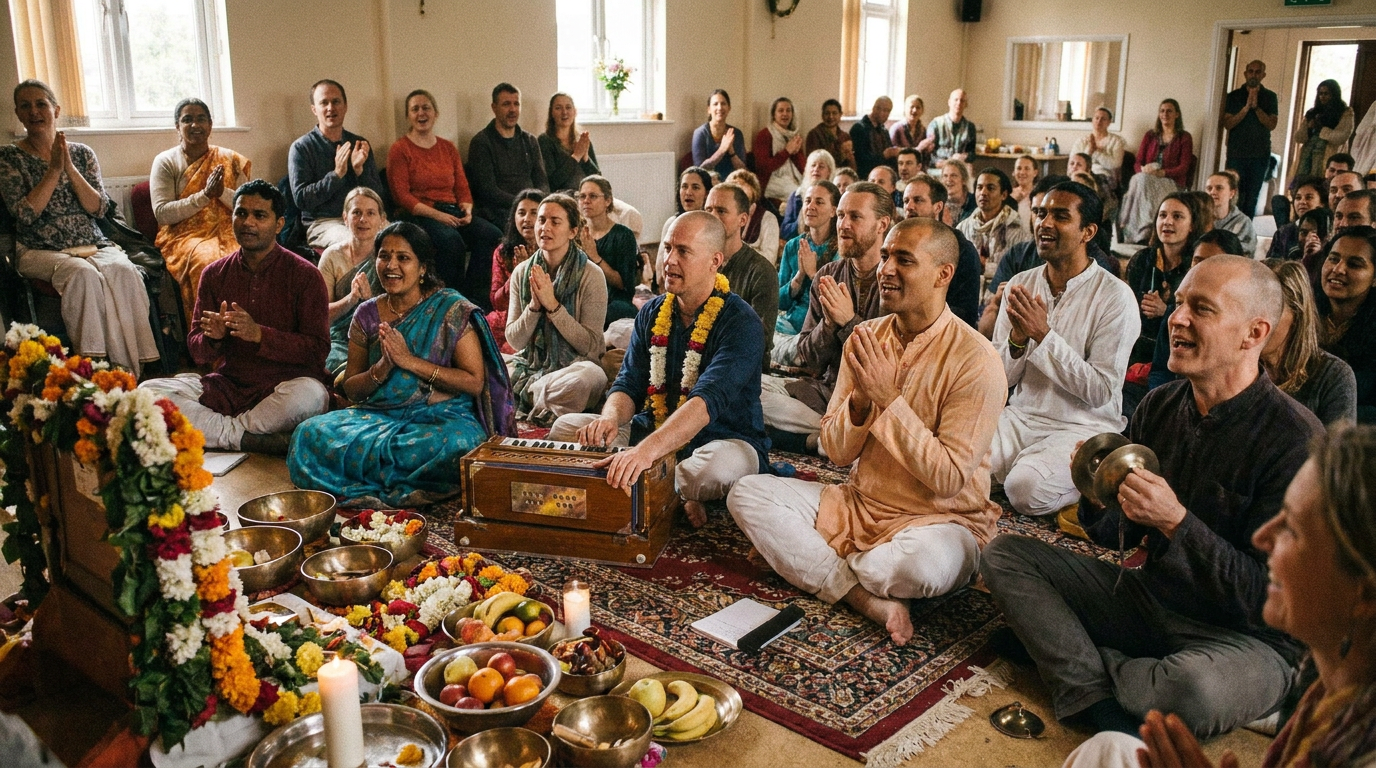
Kirtan is call-and-response chanting, often with instruments like harmonium, mridanga drum, kartals, guitar, or simply clapping hands. One person leads a mantra, and the group responds.
For many beginners, kirtan is the doorway into Bhakti Yoga. You may not understand every word at first, but the heart can still feel the beauty. The sound, rhythm, and shared devotion create a sacred atmosphere.
Kirtan is not a performance. It is an offering. Whether your voice is trained or untrained, soft or strong, you can participate. God hears the heart more than the musical skill.
Serving Together
Community also gives us opportunities for seva. We can cook, clean, welcome guests, organize gatherings, distribute food, support spiritual programs, or help someone in need.
Serving with others teaches humility. It reminds us that Bhakti is not only about our personal peace; it is about becoming instruments of compassion.
Bhakti Yoga and Inner Transformation
From Restlessness to Remembrance
The mind is often restless. It jumps between regrets about the past and worries about the future. Bhakti gives the mind a loving place to rest: the names, qualities, and presence of God.
This remembrance is called smaranam in Sanskrit. It means remembering the Divine. Even a moment of sincere remembrance can bring light into the heart.
Over time, chanting and prayer create new inner habits. Instead of turning automatically to fear, comparison, or distraction, we learn to turn toward God.
From Ego to Humility
The ego wants to be the center. It wants recognition, control, and superiority. Bhakti gently teaches us that we are not the supreme enjoyer or controller. We are servants of love.
This may sound small to the ego, but it is liberating for the soul. To serve God and others with love is not humiliation; it is our natural joy.
Humility in Bhakti does not mean self-hatred. It means seeing clearly: “I am dependent on grace. I am loved by God. I am here to love and serve.”
From Fear to Trust
Life brings uncertainty. Bhakti does not remove every difficulty, but it gives us shelter within difficulty.
In the Bhagavad Gita, Krishna says:
“Always think of Me, become My devotee, worship Me, and offer your homage unto Me. Thus you will come to Me without fail.”
— Bhagavad Gita 18.65
This is a promise of relationship. Krishna invites the soul into loving remembrance. For a beginner, this can be practiced simply: “Let me remember God today. Let me offer this moment. Let me trust that I am not alone.”
Trust grows slowly, like a plant. It is watered by chanting, prayer, scripture, and the experience of grace.
A Beginner-Friendly Bhakti Yoga Routine
Morning Practice
Morning is a sacred time because the mind is often quieter. Even 10 or 15 minutes can shape the whole day.
A simple morning practice might include:
- Bowing your head or placing your hands over your heart
- Offering a short prayer of gratitude
- Chanting the Maha Mantra for five to ten minutes
- Reading one verse from the Bhagavad Gita
- Setting an intention: “May my words and actions today be an offering of love.”
This does not need to be dramatic. The power is in sincerity and regularity.
Midday Remembrance
During the day, pause for small moments of devotion.
Before eating, offer your food. Before beginning work, say a quiet prayer. If stress rises, chant softly or mentally. If you meet someone difficult, remember that they too are a soul.
These small practices help spiritual life enter the real places where we need it most.
Evening Reflection
At night, take a few minutes to reflect.
You might ask:
- Where did I remember God today?
- Where did I forget?
- Did I speak with kindness?
- Did I serve someone?
- What can I offer back to God now?
Then pray simply: “Thank You for guiding me. Please forgive my mistakes. Please help me grow in love.”
This kind of reflection keeps the heart soft and honest.
Bhakti Scriptures for Beginners
The Bhagavad Gita
The Bhagavad Gita is often the best starting place. It addresses real human struggle. Arjuna is confused and overwhelmed, and Krishna responds with wisdom that is both profound and practical.
For beginners, it may help to read a version with commentary from a respected Bhakti tradition. Read slowly. Do not worry if some concepts feel unfamiliar. Let the teachings work on the heart over time.
Important themes include:
- The soul is eternal
- God is the source and friend of all beings
- Our work can become an offering
- Devotion is the highest form of yoga
- Surrender to God brings peace
The Srimad Bhagavatam
The Srimad Bhagavatam is a rich devotional scripture that describes the beauty of God, the lives of saints, and the process of Bhakti. It is especially centered on hearing and chanting about Krishna.
One famous teaching from the Bhagavatam explains that by hearing about God regularly, the heart becomes cleansed of unwanted things, and devotion awakens naturally.
This is encouraging for beginners. We do not purify ourselves by our own strength alone. We place ourselves near sacred sound, sacred stories, and sincere devotees, and the heart gradually changes by grace.
The Teachings of the Saints
Bhakti Yoga has been carried through generations by saints and teachers who lived lives of deep devotion. Saints such as Mirabai, Tulsidas, Narada Muni, Ramanuja, Madhva, Chaitanya Mahaprabhu, and many others taught that the essence of spiritual life is loving devotion to God.
Their songs and prayers remind us that Bhakti is not dry philosophy. It is living love. It is longing, surrender, joy, tears, service, and intimate connection with the Divine.
Living Bhakti in the Modern World
Bhakti at Work
You can practice Bhakti Yoga at work by offering your efforts to God. This does not mean you must speak about spirituality all day. It means working with honesty, kindness, focus, and humility.
Before beginning, pray: “May this work be useful. May I serve through it.”
When challenges come, remember: “This too can be part of my growth.”
When success comes, offer gratitude instead of pride.
Work becomes yoga when it is connected to God.
Bhakti in Relationships
Relationships are one of the most powerful places to practice devotion. It is easy to feel spiritual when alone in prayer; it is harder when someone misunderstands us, criticizes us, or needs our patience.
Bhakti teaches us to see others as souls. This does not mean we allow harm or ignore healthy boundaries. But it does invite us to relate with compassion, forgiveness, and respect.
We can ask, “How can I serve God by speaking kindly here? How can I honor the soul in front of me?”
Bhakti in Times of Pain
Pain can either close the heart or open it. Bhakti gives us a way to bring suffering into relationship with God.
If you are grieving, overwhelmed, or struggling, you can still chant. You can still pray. Even if your prayer is only tears, that too can be an offering.
Many great devotees prayed most deeply in hardship. Not because suffering is good in itself, but because it can strip away illusion and bring us closer to our need for divine shelter.
God is not far from a broken heart. In Bhakti, the broken heart can become a doorway to grace.
Common Obstacles and Gentle Encouragement
“My Mind Is Too Distracted”
Everyone’s mind is distracted. That is why we practice.
When chanting, do not become discouraged by wandering thoughts. Each time you return to the mantra, you are strengthening your devotion. The practice is not ruined by distraction; the practice is the humble return.
“I Do Not Feel Devotion Yet”
Feelings come and go. Bhakti is deeper than temporary emotion.
Sometimes devotion feels sweet and natural. Sometimes it feels dry. Continue gently. Chant, pray, read, serve, and associate with sincere devotees. Feelings often awaken gradually through faithful practice.
A seed does not become a tree in one day. But if watered regularly, it grows.
“I Am Not Good Enough”
Bhakti begins when we stop trying to qualify ourselves by ego and begin depending on grace.
God does not ask for perfection before accepting us. Krishna asks for love. Even a leaf, a flower, a fruit, or water offered with devotion is accepted.
Bring what you have. Begin where you are. Let grace do its work.
Taking Your First Step on the Path of Love
Bhakti Yoga for beginners is not complicated. It is a gentle turning of the heart toward God.
You can begin today with one sincere practice:
Chant one round or one minute of the Maha Mantra.
Offer your meal with gratitude.
Read one verse of the Bhagavad Gita.
Say one honest prayer.
Serve one person with kindness.
Remember God before you sleep.
The path of Bhakti is both ancient and fresh. It has been walked by saints, seekers, parents, students, workers, artists, monks, householders, and people from every kind of life. It is not reserved for the spiritually advanced. It is how we become spiritually awakened—one offering, one prayer, one holy name, one act of love at a time.
Wherever you are coming from, and whatever you carry, you are welcome. God is already near, already kind, already calling the heart home.
May you feel encouraged to take one sincere step toward God today. That step may be small, but in Bhakti Yoga, no sincere step is ever lost.
FAQs
What is Bhakti Yoga?
Bhakti Yoga is a spiritual practice that focuses on devotion and love for a personal god. It is one of the paths of yoga mentioned in ancient Indian texts and emphasizes the cultivation of a loving relationship with the divine.
How is Bhakti Yoga practiced?
Bhakti Yoga is practiced through various methods such as chanting, singing devotional songs, prayer, meditation, and acts of service. The goal is to develop a deep sense of love and devotion towards the divine.
Who can practice Bhakti Yoga?
Bhakti Yoga is open to anyone, regardless of their religious or spiritual background. It is a path that emphasizes the universal nature of love and devotion, and welcomes practitioners from all walks of life.
What are the benefits of practicing Bhakti Yoga?
Practicing Bhakti Yoga can lead to a sense of inner peace, joy, and fulfillment. It can also help cultivate a sense of connection with others and the world around us, as well as provide a deeper understanding of the nature of love and devotion.
How can beginners start practicing Bhakti Yoga?
Beginners can start practicing Bhakti Yoga by finding a personal deity or form of the divine that resonates with them, and then engaging in devotional practices such as chanting, singing, and prayer. It’s also helpful to seek guidance from experienced practitioners or teachers to deepen one’s understanding and practice of Bhakti Yoga.

