

Bhakti Yoga is the path of loving devotion to God. It is not limited by background, culture, age, education, or previous experience. In the Bhakti tradition, the heart is the main offering. We come as we are, with sincerity, and we learn to turn our daily life into a loving relationship with the Divine.
The word bhakti comes from Sanskrit and means devotion, loving service, or heartfelt connection. Yoga means union or connection. So Bhakti Yoga means connecting with God through love. This love can be expressed through chanting sacred names, prayer, meditation, reading wisdom scriptures, serving others, and remembering God throughout the day.
A daily Bhakti practice does not need to be complicated. It does not require a perfect home, a long schedule, or advanced knowledge. It begins with one sincere step. A few minutes of chanting. A simple prayer. A small act of service. A quiet moment of gratitude. Over time, these small offerings shape the heart and bring peace, clarity, humility, and joy.
The Bhagavad-gita, one of the central scriptures of Bhakti Yoga, teaches that God accepts even “a leaf, a flower, a fruit, or water” when offered with devotion. This beautiful verse reminds us that spiritual life is not about impressing God. It is about offering love.
Before building a daily Bhakti practice, it helps to pause and ask: “Why do I want to practice?”
Maybe you want more peace. Maybe you feel called to deepen your relationship with God. Maybe you are healing, searching, or longing for meaning. Maybe you simply want to live with more love and gratitude.
All of these are welcome starting points.
Offer Your Heart Honestly
In Bhakti Yoga, honesty is sacred. You do not need to pretend to be more spiritual than you feel. You can begin by saying:
“God, I do not know exactly how to do this, but I want to come closer to You.”
This kind of prayer is powerful because it is real. Bhakti grows in the soil of sincerity, not performance.
Start Small and Stay Steady
Many people begin spiritual practices with enthusiasm and then become discouraged when they cannot maintain a long routine. A daily Bhakti practice is best built gently.
Start with 5 to 15 minutes each day. Choose something simple enough that you can do it consistently. In devotional life, steadiness matters more than intensity.
A small daily practice done with love is more transforming than a large practice done once in a while and then abandoned.
Choose a Sacred Time
Traditionally, early morning is considered a very helpful time for spiritual practice. The mind is quieter, the world is softer, and the heart is more available. In Sanskrit, the early morning spiritual time is sometimes called brahma-muhurta, a peaceful period before sunrise that supports meditation and prayer.
But if early morning is not possible, please do not feel excluded. God is available at every hour. Choose a time you can actually keep: morning, lunch break, evening, or before sleep.
The best time is the time you will return to with sincerity.
Create a Sacred Space at Home
A daily Bhakti practice becomes easier when you have a simple place where your body and mind know, “This is where I come to remember God.”
Your sacred space does not need to be elaborate. It can be a shelf, a corner, a small table, or a clean area in your room. What matters is the intention.
Keep It Clean and Peaceful
Cleanliness supports clarity. You might place a cloth, a candle, a picture of Krishna, Rama, Radha, Lord Vishnu, Lord Chaitanya, or any form of God that awakens devotion in your heart. Some practitioners also keep images of saints, teachers, or sacred places.
If you are new to Bhakti Yoga and not sure where to begin, you can simply create a peaceful space with a candle, flowers, and a prayerful intention.
Offer Simple Items With Love
In the Bhakti tradition, offerings are a way of saying, “God, this belongs to You. Please accept it.”
You might offer:
- Fresh water
- A flower
- Fruit
- Incense
- A candle or lamp
- A simple home-cooked vegetarian meal
The offering is not about luxury. It is about love. As the Bhagavad-gita teaches, even the simplest item becomes spiritually meaningful when offered with devotion.
Make Your Space Inviting
Let your sacred space feel like a place you want to visit. Keep your chanting beads there if you use them. Keep a scripture or devotional book nearby. You might also keep a journal for prayers, reflections, and gratitude.
Over time, your sacred space can become like a spiritual anchor in your home—a place where you remember who you are and who you belong to.
Practice Daily Chanting
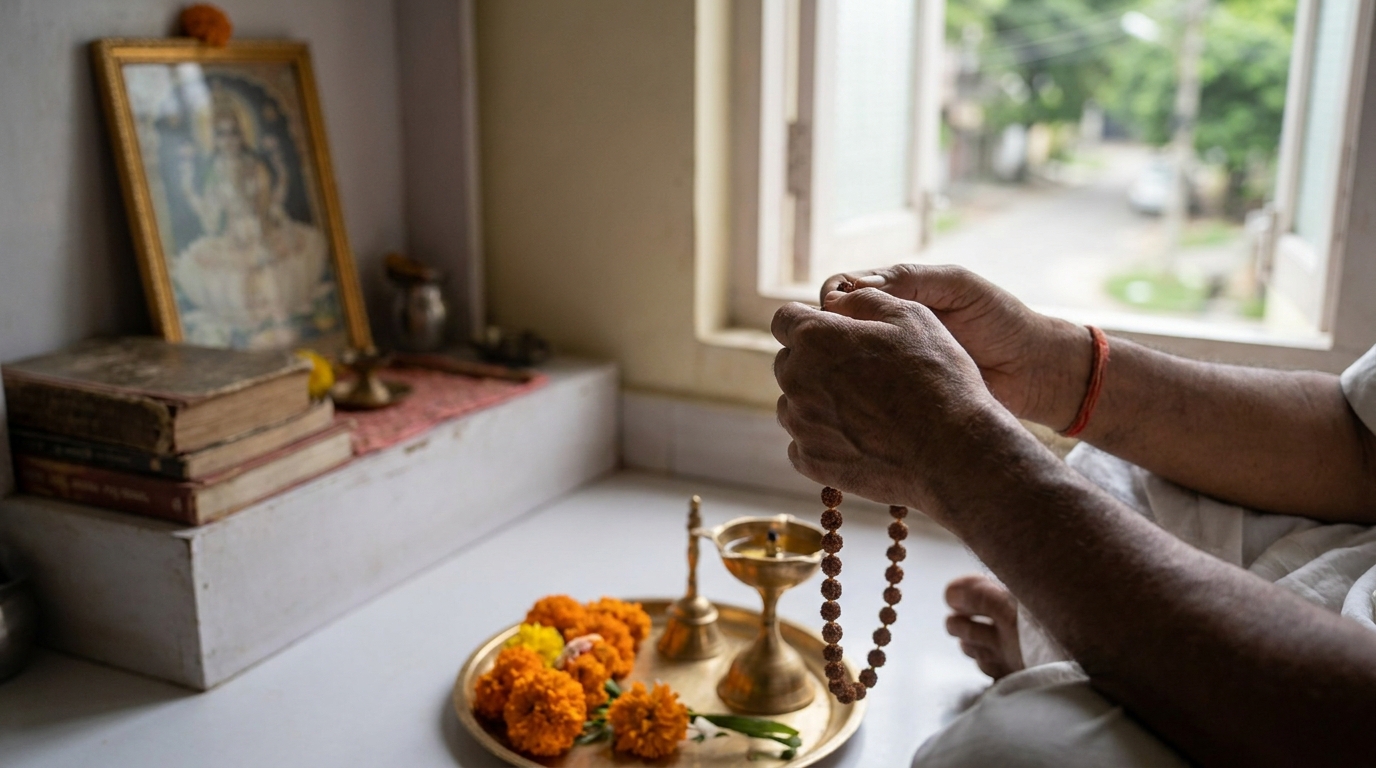
Chanting is one of the most accessible and powerful practices in Bhakti Yoga. In Sanskrit, chanting sacred names is often called kirtan when sung together and japa when repeated softly or silently as a personal meditation.
The sacred names of God are understood in Bhakti scriptures to carry divine presence. When we chant, we are not simply making sound. We are calling out with the heart.
Understand the Maha-Mantra
One of the most beloved mantras in the Bhakti tradition is the Hare Krishna maha-mantra:
Hare Krishna Hare Krishna
Krishna Krishna Hare Hare
Hare Rama Hare Rama
Rama Rama Hare Hare
The word mantra means a sacred sound that helps free and focus the mind. Maha means great. So maha-mantra means the great sacred chant.
A simple devotional understanding is this: “O Lord, O Divine Energy of the Lord, please engage me in Your loving service.”
Krishna means the all-attractive Lord. Rama means the source of spiritual joy. Hare refers to the divine energy of God, often understood as calling upon Radha, the feminine aspect of divine love.
You do not need to understand everything perfectly to begin. Chanting works through sincerity. Like calling the name of someone dear, the meaning deepens through relationship.
Begin With a Few Minutes of Japa
If you have chanting beads, often called japa mala, you can chant one round daily. A traditional mala has 108 beads. On each bead, you chant the mantra once.
If that feels like too much at first, begin with 5 minutes. Set a timer. Sit comfortably. Breathe gently. Chant clearly enough that you can hear yourself.
The hearing is important. In Bhakti Yoga, chanting and hearing go together. We offer the sound, and we receive the sound.
Sing Kirtan at Home
Kirtan is devotional singing, often with instruments like harmonium, kartals, drum, guitar, or simply clapping hands. You can sing alone, with family, or with recordings.
Kirtan softens the heart. It gives the mind something holy to hold. It welcomes emotion, longing, joy, and even tears. In Bhakti, the heart does not have to be hidden. It can be offered.
If you feel shy, sing quietly. If you feel joyful, sing fully. God hears the devotion, not the performance.
Please visit our website for more information on our articles: articles.
Build a Prayer Life
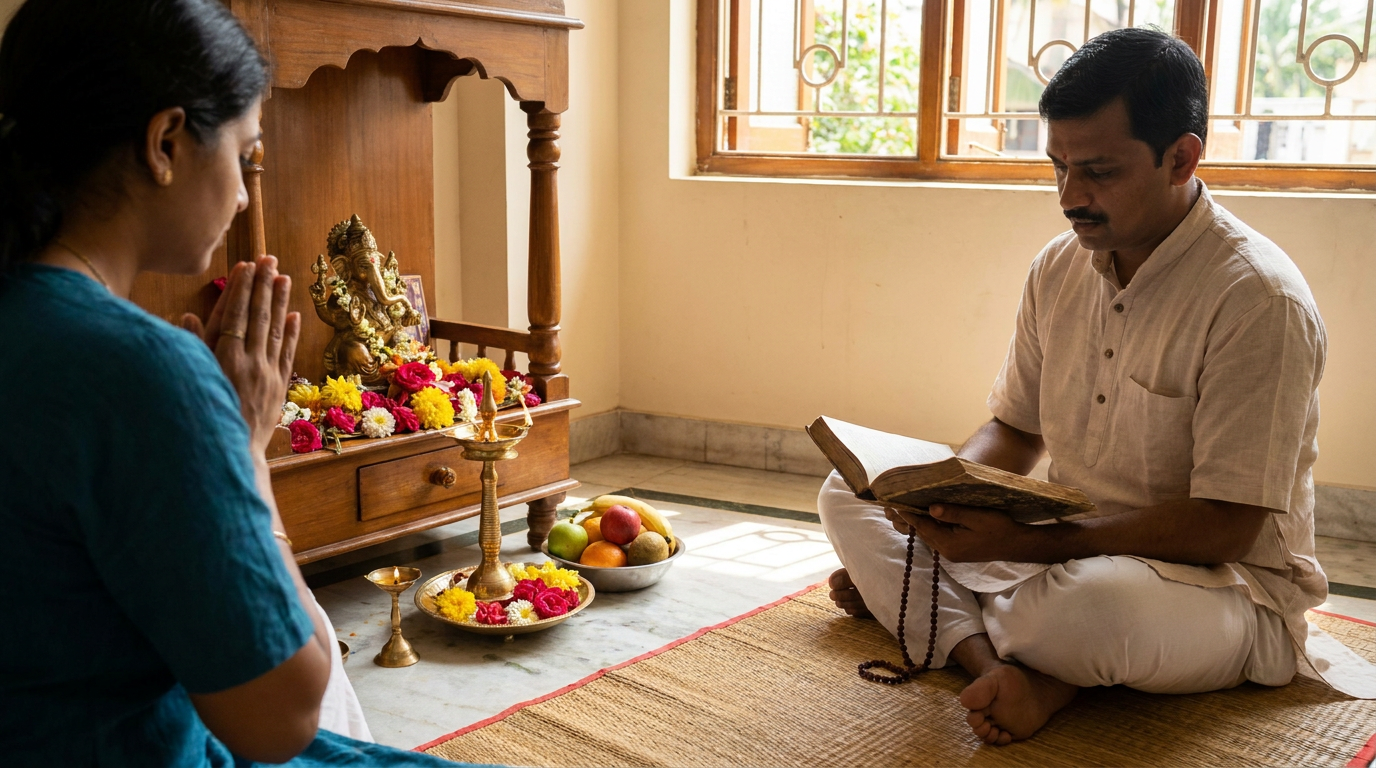
Prayer is the natural language of Bhakti. It is how the soul speaks to God.
You do not need formal words, though traditional prayers can be beautiful. You can pray in your own language. You can pray aloud, silently, written in a journal, or whispered while walking.
Speak to God Personally
Bhakti Yoga invites relationship. God is not only a distant power. God is the beloved, the friend, the guide, the shelter, and the supreme well-wisher.
You can pray:
“Please guide me.”
“Please help me serve.”
“Please purify my heart.”
“Please help me love You more.”
“Please protect my family.”
“Please show me how to forgive.”
This personal prayer makes spiritual life intimate and real.
Include Gratitude
Gratitude opens the heart. Each day, name a few blessings. They may be simple:
- Breath
- Food
- Shelter
- Friendship
- A chance to begin again
- A moment of beauty
- The holy name
- The mercy of God
Gratitude helps us see life as a gift rather than a burden. It does not deny suffering, but it reminds the heart that grace is present even in difficulty.
Pray for Others
A Bhakti practice becomes especially sweet when it expands beyond our own needs. Pray for loved ones, strangers, those who are suffering, those who have hurt you, and those you struggle to understand.
This is spiritual growth in action. The heart becomes wider. Compassion becomes more natural. We begin to see others not as obstacles, but as souls on their own journey.
Read Bhakti Scriptures With a Practical Heart
Scripture study is an important part of daily Bhakti practice. Sacred texts nourish the mind and guide the heart. They remind us of eternal truths when daily life becomes distracting or overwhelming.
You do not need to read for hours. Even one verse a day can become a lamp for the path.
Start With the Bhagavad-gita
The Bhagavad-gita is a conversation between Krishna and Arjuna on a battlefield. Arjuna is confused, overwhelmed, and unsure of his duty. Krishna guides him with wisdom about the soul, action, devotion, and surrender.
This setting is deeply practical. The Gita is not spoken in a cave far away from life. It is spoken in the middle of crisis. That means its teachings are for real human beings facing real responsibilities.
A daily practice could be:
- Read one verse
- Read the translation slowly
- Reflect on one phrase
- Ask, “How can I live this today?”
For example, Krishna teaches that we should offer our actions to Him. Practically, this means we can turn work, parenting, study, cooking, and service into devotion when done with loving intention.
Explore the Srimad Bhagavatam
The Srimad Bhagavatam, also called the Bhagavata Purana, is a beloved Bhakti scripture filled with stories, prayers, philosophy, and descriptions of God’s loving relationships with devotees.
It teaches that hearing about God purifies the heart. This hearing is called shravanam in Sanskrit, meaning devotional listening. In Bhakti, listening is not passive. It is a form of receiving grace.
You might listen to a class, read a short passage, or join a study group. Let the stories inspire your own devotion.
Read the Lives of Saints
The lives of Bhakti saints show us what devotion looks like in human form. Saints such as Mirabai, Tulsidas, Narottama Dasa Thakura, Bhaktivinoda Thakura, and many others lived with deep longing for God.
Their songs and prayers teach us that love for God includes humility, courage, surrender, and joy. They also remind us that Bhakti is not dry theory. It is a living flame.
Offer Your Food With Love
Eating is something we do every day, which makes it a beautiful opportunity for Bhakti practice. In the devotional tradition, food offered to God is called prasadam, meaning mercy or grace.
When we prepare and offer food with devotion, eating becomes sacred.
Cook With a Devotional Mood
Before cooking, pause for a moment. You might wash your hands, quiet your mind, and think, “I am preparing this as an offering.”
Traditionally, Bhakti practitioners offer vegetarian food, avoiding meat, fish, and eggs, because compassion and nonviolence support a heart of devotion. If you are transitioning, begin gently. Add more plant-based meals and offer what you can with sincerity.
Cooking can become meditation when done with remembrance.
Make a Simple Offering
Place a portion of the food on a clean plate or bowl. Put it before your sacred space. Offer a prayer such as:
“My dear Lord, please accept this food prepared with love. May it nourish my body and help me serve You and others.”
You may chant the Hare Krishna mantra or another prayer. After a few moments, the food is honored as prasadam.
Eat With Gratitude
When you eat prasadam, try to slow down. Remember that food is not only fuel. It is a gift from God, the earth, the farmers, the cooks, and so many unseen hands.
This simple practice can change the consciousness of the home. Meals become moments of grace.
Serve Others as an Expression of Devotion
Service is at the heart of Bhakti Yoga. In Sanskrit, devotional service is called seva. It means loving service offered without selfish expectation.
Seva helps devotion move from the meditation seat into the world. It teaches us to love God by caring for God’s children.
Begin With the People Around You
Sometimes we imagine service must be large or dramatic. But daily seva often begins close to home.
You can serve by:
- Listening with patience
- Cooking for someone
- Helping a family member
- Encouraging a friend
- Cleaning a shared space
- Speaking gently
- Forgiving sincerely
- Showing kindness to a stranger
When offered to God, ordinary acts become devotional offerings.
Serve a Spiritual Community
If possible, connect with a Bhakti community, temple, satsang, or kirtan group. Satsang means association with truth or with spiritually minded people.
Community helps us stay inspired. We learn from others. We chant together. We ask questions. We remember that we are not alone on the path.
Service in community may include helping with meals, cleaning, welcoming guests, organizing kirtan, supporting events, or simply showing up with a humble heart.
Serve Without Needing Recognition
Bhakti service is not about being seen as spiritual. It is about pleasing God. This is a lifelong practice because the ego naturally wants appreciation.
When you serve quietly, you train the heart in humility. You begin to taste the joy of giving without needing applause.
Bring Bhakti Into Your Daily Activities
A daily Bhakti practice is not only what happens during formal prayer or chanting. It is also how we remember God while living our ordinary lives.
The beauty of Bhakti Yoga is that everything can become connected.
Offer Your Work
Before beginning work, school, caregiving, or daily tasks, pause and say:
“May this be an offering.”
This small prayer changes the atmosphere of action. Work becomes less about ego and more about service. Success and difficulty both become part of spiritual growth.
The Bhagavad-gita teaches the practice of acting without attachment to the results. This does not mean becoming careless. It means doing our best while offering the outcome to God.
Practice Remembrance Throughout the Day
In Sanskrit, remembrance of God is called smaranam. This can be practiced in simple ways:
- Chant quietly while walking
- Listen to kirtan while cooking
- Keep a small prayer card nearby
- Pause before meals
- Offer gratitude before sleep
- Remember God when seeing nature
- Repeat a mantra during stress
These small moments create a thread of devotion through the day.
Transform Challenges Into Prayer
Daily life includes frustration, fear, conflict, and disappointment. Bhakti does not ask us to deny these emotions. It invites us to bring them to God.
When anxious, chant.
When angry, pause and pray.
When sad, speak honestly to the Lord.
When confused, ask for guidance.
Every challenge can become a doorway to deeper surrender.
Make a Realistic Daily Bhakti Routine
A daily routine helps devotion become steady. It gives the heart a rhythm. But the routine should serve your relationship with God, not become a source of pride or guilt.
Start with something simple and sustainable.
A 10-Minute Bhakti Practice
If you are very busy, try this:
- Sit in your sacred space
- Take three deep breaths
- Offer a short prayer
- Chant the Hare Krishna mantra for five minutes
- Read one verse or devotional quote
- End with gratitude
This is enough to begin. Do it sincerely, and it will grow.
A 30-Minute Bhakti Practice
If you have more time:
- Light a candle or offer incense
- Chant one round of japa
- Read from the Bhagavad-gita
- Journal one reflection
- Offer prayers for yourself and others
- Make a simple intention for the day
This kind of practice can deeply shape your mood, choices, and relationships.
A Morning and Evening Rhythm
Many people find it helpful to have a morning practice and a short evening closing.
Morning:
- Chant
- Pray
- Read scripture
- Offer the day to God
Evening:
- Give thanks
- Reflect honestly
- Ask forgiveness
- Chant softly before rest
This rhythm brings Bhakti into both the beginning and end of the day.
Stay Humble When Practice Feels Difficult
Every sincere practitioner goes through seasons of dryness, distraction, doubt, or inconsistency. This does not mean you have failed. It means you are human.
Bhakti Yoga is a relationship, and relationships deepen through honesty, patience, and returning.
Do Not Let Guilt Stop You
If you miss a day, begin again. If your mind wanders during chanting, gently return. If you feel spiritually weak, pray from that place.
Guilt often makes us hide from God, but Bhakti teaches us to turn toward God. Divine love is greater than our inconsistency.
The path is not about never falling. It is about learning to return.
Avoid Comparing Your Practice
Someone else may chant more, know more Sanskrit, attend more programs, or appear more advanced. Bless them. Be inspired by them. But do not measure your worth by comparison.
God sees your heart. Your sincere offering matters.
A beginner chanting with tears of longing may be closer to the essence of Bhakti than a scholar speaking without humility. Knowledge is beautiful when it serves love.
Ask for Help
Spiritual life is easier with guidance. Seek the association of sincere practitioners. Ask questions. Attend kirtan. Join a class. Find mentors whose lives reflect kindness, humility, and devotion.
Bhakti grows through relationship—with God, with teachers, with community, and with all living beings.
Deepen Your Practice Over Time
As your daily Bhakti practice becomes steady, it will naturally deepen. You may feel called to chant more, study more, serve more, or simplify your life.
Let growth happen gradually and sincerely.
Increase Chanting Gently
If you begin with five minutes, you may later chant ten. If you chant one round of japa, you may later chant more. The point is not to rush, but to cultivate taste.
In Bhakti, spiritual taste is called ruchi. It means a genuine attraction to devotional practice. This taste develops through regular hearing, chanting, service, and grace.
Let Your Values Become Devotional
Over time, Bhakti begins to shape choices. We may become more mindful of what we eat, what we watch, how we speak, how we spend money, and how we treat others.
This is not about harsh judgment. It is about love becoming practical.
We begin asking, “Does this help me remember God? Does this help me become more compassionate? Does this nourish my devotion?”
Celebrate Holy Days
Bhakti traditions include many sacred festivals, such as Janmashtami, the appearance day of Lord Krishna; Gaura Purnima, honoring Lord Chaitanya; Rama Navami, celebrating Lord Rama; and many others.
Participating in holy days can bring joy and community into your practice. You may fast, chant, hear stories, cook offerings, decorate your home, or attend a gathering.
Festivals remind us that spiritual life is not only discipline. It is celebration.
The Heart of Daily Bhakti Practice
At its core, daily Bhakti practice is about remembering God with love. The details may vary from person to person, but the essence is simple:
Chant the holy names.
Offer sincere prayers.
Read sacred wisdom.
Serve others.
Offer your food.
Remember God throughout the day.
Return again and again.
The Bhagavad-gita offers a deeply comforting teaching: “Always think of Me, become My devotee, worship Me, and offer your homage unto Me.” This is an invitation, not a threat. It is Krishna calling the soul back into loving relationship.
Daily Bhakti practice helps us respond to that invitation.
You may begin imperfectly. Most of us do. You may feel distracted. You may have questions. You may carry wounds, doubts, or a complicated past. Still, you are welcome.
God is not waiting for you to become perfect before you approach. The path itself purifies, heals, and awakens love.
So today, take one sincere step. Chant one mantra. Offer one prayer. Read one verse. Make one small act of service. Place one flower, one fruit, or one glass of water before God with love.
Everyone is welcome on the path of Bhakti. Wherever you are starting from, you can begin now—with humility, hope, and one sincere step toward God.
FAQs
What is Bhakti practice?
Bhakti practice is a spiritual practice in Hinduism that involves devotion and love towards a personal god. It often includes rituals, prayers, and meditation to cultivate a deep connection with the divine.
Why is a daily Bhakti practice important?
A daily Bhakti practice is important for spiritual growth and inner peace. It helps individuals to develop a strong bond with their chosen deity, cultivate gratitude, and experience a sense of fulfillment and purpose in life.
How can one start a daily Bhakti practice?
To start a daily Bhakti practice, one can begin by setting aside a specific time each day for prayer, meditation, and devotional activities. It is also helpful to create a sacred space for practice and to seek guidance from spiritual teachers or mentors.
What are some common practices in Bhakti tradition?
Common practices in the Bhakti tradition include chanting mantras, singing devotional songs (bhajans), offering prayers and offerings to deities, reading sacred texts, and participating in community worship and festivals.
What are the benefits of a daily Bhakti practice?
The benefits of a daily Bhakti practice include increased spiritual awareness, emotional well-being, a sense of connection with the divine, and a deeper understanding of one’s purpose in life. It can also bring about a sense of inner peace and contentment.

