
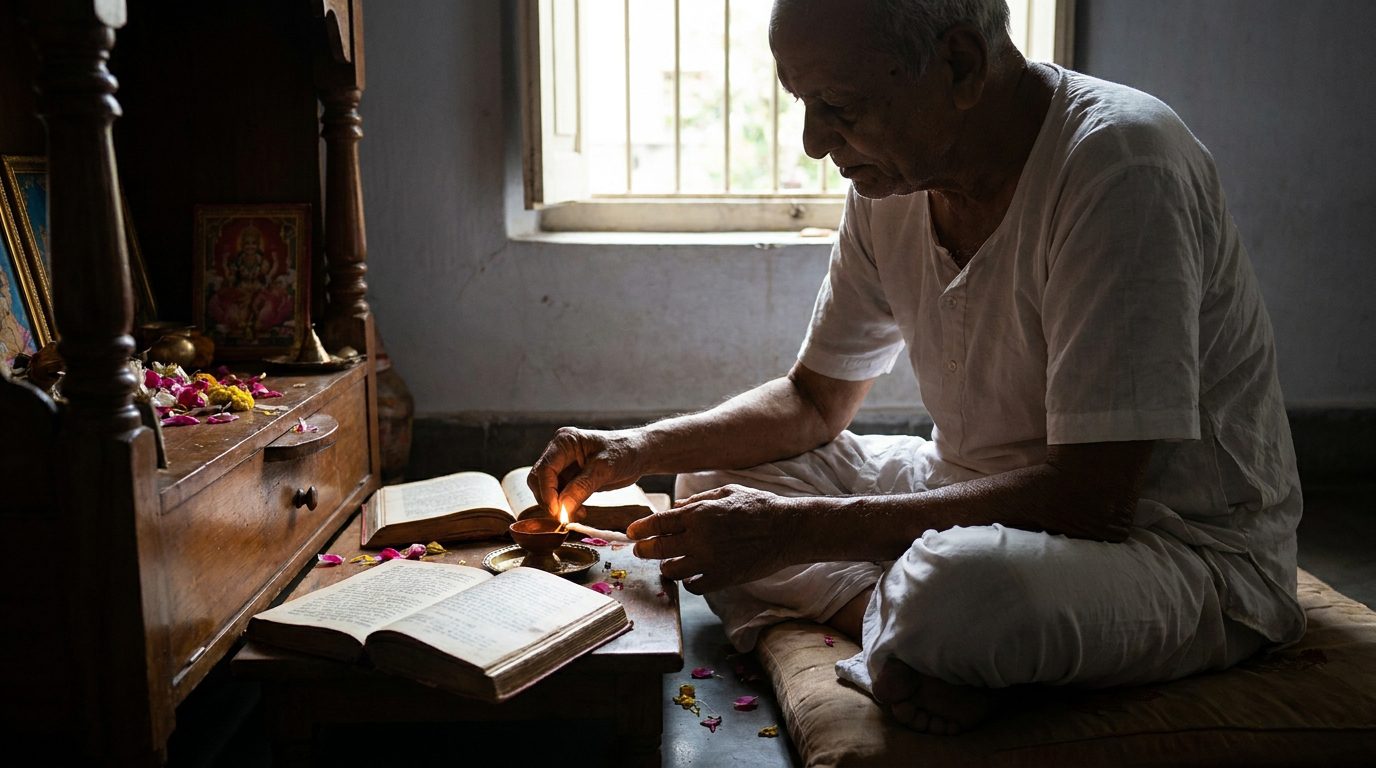
Patience Opens the Heart to Bhakti
Patience is one of the quiet treasures of Bhakti Yoga. It may not look as dramatic as a powerful kirtan, a beautiful altar, or a deep moment of prayer, but patience is often the sacred ground where devotion takes root.
Bhakti means loving devotion to God. Yoga means connection. So Bhakti Yoga is the path of reconnecting with the Divine through love—through chanting, prayer, service, remembrance, worship, and the sincere offering of our hearts.
And like all real relationships, our relationship with God deepens over time.
In Bhakti, patience is not passive waiting. It is not giving up, delaying, or becoming spiritually lazy. Patience means continuing with faith, even when the heart feels dry. It means showing up to chant even when the mind wanders. It means serving even when no one notices. It means praying even when answers come slowly.
Patience matters because devotion is alive. It grows like a sacred seed. We water it with chanting, nourish it with prayer, protect it through good association, and offer it sunlight through service. But we cannot force it to bloom on our timeline.
Grace comes in God’s time. Our part is to remain sincere.
Bhakti Is a Relationship, Not a Race
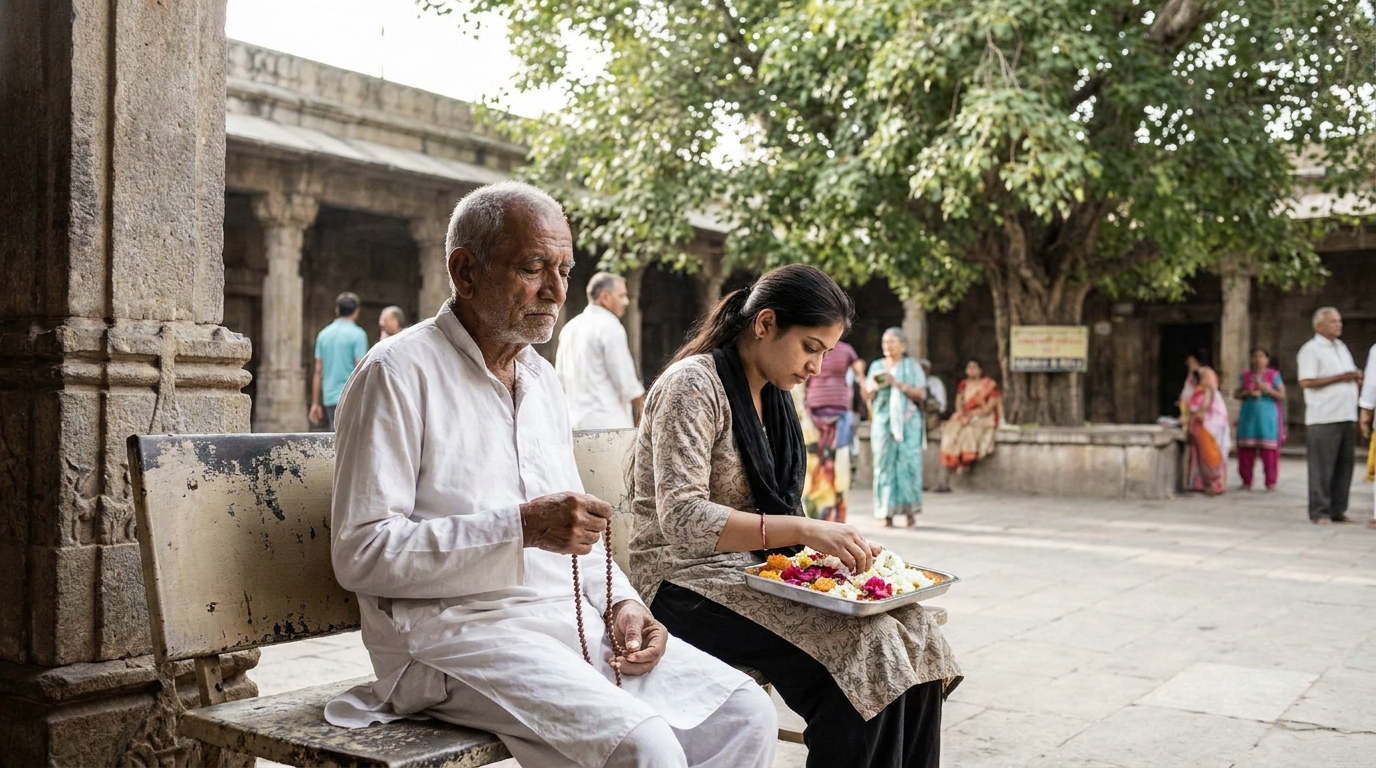
In modern life, we are often trained to expect fast results. We click, swipe, order, and receive. We measure progress by speed, productivity, and visible success.
But spiritual growth does not always move according to these patterns.
Bhakti Yoga invites us into something more tender and more honest: relationship. A relationship with God cannot be rushed. Love cannot be manufactured by pressure. Trust cannot be forced into the heart overnight.
In the Bhagavad Gita, Sri Krishna says, “As all surrender unto Me, I reward them accordingly” (Bhagavad Gita 4.11). This verse reminds us that God responds to each person personally. The journey is not mechanical. It is intimate.
Some people feel immediate inspiration when they begin chanting the holy names. Others struggle for months or years with restlessness, doubt, or old habits. Some experience joy quickly, while others discover that Bhakti first brings hidden pain to the surface so it can be healed.
None of this means we are failing.
It means the heart is being worked on.
Spiritual Growth Has Seasons
Just as nature moves through seasons, our devotional life also has seasons.
There are spring-like moments when everything feels fresh. Chanting feels sweet. Prayer feels natural. Service feels joyful.
There are summer-like moments when devotion becomes strong and steady, full of energy and enthusiasm.
There are autumn-like moments when we begin to release old identities, attachments, and patterns.
And there are winter-like moments when everything feels quiet, bare, or uncertain.
Patience helps us honor every season. We do not abandon the path just because the season changes. We keep watering the seed of devotion.
The Sanskrit word bhakti-lata-bija means “the seed of the creeper of devotion.” This image, found in the teachings of Sri Chaitanya Mahaprabhu, describes devotion as a sacred vine planted in the heart. It grows when we hear and chant about God, especially through the holy names.
A seed does not become a flowering vine in one day. But with care, it grows beyond our expectations.
The Scriptures Praise Steady Devotion
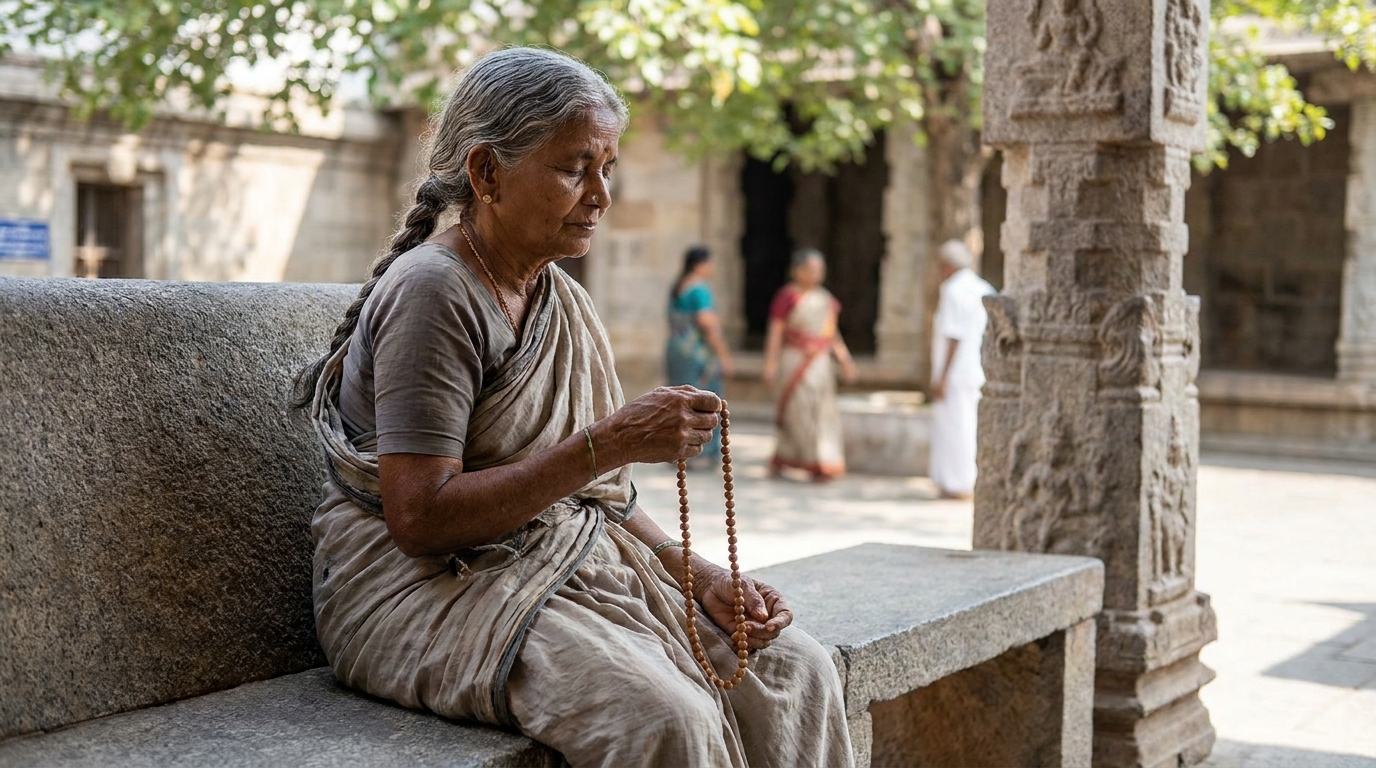
Authentic Bhakti scriptures often speak about patience as an essential quality for spiritual life. Not because God wants us to suffer, but because deep love requires steadiness.
In the Bhagavad Gita, Krishna teaches, “The mind is restless, turbulent, obstinate and very strong” (Bhagavad Gita 6.34). Arjuna, Krishna’s dear friend and student, admits that controlling the mind seems harder than controlling the wind.
This is such a comforting moment. Even Arjuna, a great soul, honestly speaks about struggle.
Krishna does not reject him. Instead, He explains that the mind can be trained through practice and detachment (Bhagavad Gita 6.35). In Sanskrit, practice is called abhyasa. Detachment is called vairagya. Together, they mean we keep returning to what nourishes the soul while gently loosening our grip on what pulls us away from God.
This is patience in action.
We do not expect the mind to become peaceful instantly. We lovingly bring it back, again and again.
“Enthusiasm, Confidence, and Patience”
In the Nectar of Instruction, a beloved Bhakti text by Srila Rupa Goswami, six principles are described as favorable for devotion. Three of the first are enthusiasm, confidence, and patience.
In Sanskrit, these are utsaha, niscaya, and dhairya.
Utsaha means enthusiasm—showing up with energy and willingness.
Niscaya means confidence—trusting that the path of devotion truly works.
Dhairya means patience—remaining steady even when results are not immediate.
These three belong together.
Enthusiasm without patience can become burnout. Patience without enthusiasm can become dullness. Confidence without humility can become pride. But when enthusiasm, confidence, and patience are balanced, the devotee becomes spiritually grounded.
This is a practical teaching for all of us. Whether we are new to Bhakti Yoga or have practiced for many years, we need all three.
We need the enthusiasm to chant today.
We need the confidence that God hears us.
We need the patience to keep going, even when the heart is still learning how to love fully.
Discover a wide range of insightful articles that delve into various spiritual topics. These articles offer guidance and inspiration for personal growth. Stay updated with the latest articles to enhance your spiritual journey.
Patience Helps Us Chant with Sincerity
Chanting is at the heart of Bhakti Yoga. Many practitioners chant the maha-mantra:
Hare Krishna Hare Krishna
Krishna Krishna Hare Hare
Hare Rama Hare Rama
Rama Rama Hare Hare
The word mantra means a sacred sound that helps free the mind. Maha means great. So the maha-mantra is the “great mantra” for awakening love of God.
Hare addresses the divine energy of God. Krishna means “the all-attractive one.” Rama means “the source of joy.” When we chant, we are calling out: “O Lord, O divine energy of the Lord, please engage me in Your loving service.”
This is a prayer of the heart.
But chanting is not always easy. The tongue may move while the mind runs in many directions. We may sit down to chant and suddenly remember messages, tasks, worries, or conversations. Sometimes we may feel peaceful. Other times we may feel distracted or even discouraged.
Patience protects our chanting.
Instead of thinking, “I am bad at this,” we can think, “I am learning to call on God.”
Instead of judging every chant, we can gently return to hearing the sound.
Instead of demanding a mystical experience, we can offer our sincere effort.
Every Holy Name Is Meaningful
One of the beautiful teachings of Bhakti is that God is present in His names. The holy name is not considered ordinary sound. It is a direct way to be with God.
This means no sincere chanting is wasted.
Even if we feel distracted, the holy name is purifying the heart. Even if we feel unqualified, the holy name is merciful. Even if we chant softly, awkwardly, or imperfectly, God hears the intention.
Patience helps us trust this.
When we chant regularly over time, something begins to change. The mind may become clearer. The heart may become softer. We may become less reactive, less selfish, more prayerful, more grateful. We may begin to feel God’s presence in simple moments.
This transformation may be gentle, but it is real.
The goal is not to perform chanting perfectly. The goal is to keep calling out with sincerity.
Patience Softens the Ego
One reason patience is so important in Bhakti is that it softens the ego.
The ego wants control. It wants recognition. It wants spiritual experiences on demand. It wants to say, “I have achieved something.” But devotion is not an achievement we can own. It is a gift we receive.
In Sanskrit, grace is often described as kripa—divine mercy. Bhakti grows by our sincere effort and God’s mercy. Both are needed.
We practice. God gives grace.
We chant. God reveals Himself.
We serve. God purifies the intention.
We take one step. God may carry us many more.
Patience reminds us that we are not the controllers of spiritual life. We are participants in a loving relationship with the Supreme Person.
Waiting Can Become Worship
Waiting is difficult when we feel entitled. But waiting can become sacred when it is filled with trust.
A person may pray for healing, clarity, forgiveness, purpose, or deeper devotion. When the answer does not come quickly, the mind may become restless. “Why is God not helping me? Why am I still struggling? Why do others seem to be progressing faster?”
These are honest human questions. Bhakti does not ask us to pretend. We can bring these feelings into prayer.
We can say, “Krishna, I do not understand Your timing, but I want to trust You. Please guide me. Please help me remain close to You.”
This kind of prayer is powerful because it is real.
Patience does not mean we never cry. It means we keep turning toward God through our tears.
Patience Deepens Service
Service is another essential part of Bhakti Yoga. In Sanskrit, devotional service is called seva. Seva means loving service offered for the pleasure of God, without selfish expectation.
Service can be simple. Cooking a meal and offering it to God. Helping clean a temple or community space. Supporting others on the spiritual path. Sharing kindness. Singing in kirtan. Listening with compassion. Using our skills in a spirit of offering.
But service also requires patience.
Sometimes service is joyful and appreciated. Other times it is unseen. Sometimes we serve with inspiration. Other times we serve while tired, misunderstood, or humbled. Sometimes we expect service to make us feel spiritually elevated, but instead it reveals our impatience, pride, or need for validation.
This is not a failure. It is part of purification.
Bhakti gently shows us what is inside the heart so we can offer it to God.
Serving Without Immediate Reward
In the Bhagavad Gita, Krishna teaches the principle of offering our work without attachment to the results. He says we have a right to perform our duty, but not to control the fruits of action (Bhagavad Gita 2.47).
For Bhakti practitioners, this means we do our service sincerely, but we let go of needing a certain outcome.
We may share spiritual wisdom, but we cannot force someone to receive it.
We may organize a program, but we cannot control who attends.
We may cook, clean, sing, teach, donate, or encourage, but we cannot demand praise.
We offer the effort. Krishna receives the offering.
Patience allows service to become love rather than transaction.
When we serve patiently, the heart becomes lighter. We begin to taste the joy of giving itself.
Patience Helps Us Face Inner Struggles
Many people come to spiritual life hoping for peace, and by God’s grace, peace does come. But sometimes the first stage of Bhakti is not peaceful in the way we expect. It may reveal the noise inside us.
Old habits may resist change. Attachments may feel stronger. Doubts may arise. The mind may say, “This is too hard,” or “You are not spiritual enough,” or “You will never change.”
Patience is essential here.
Bhakti Yoga is not about pretending to be pure. It is about sincerely turning toward God again and again, allowing divine love to purify us over time.
The Srimad Bhagavatam, a central Bhakti scripture, explains that by regularly hearing about Krishna, the impurities in the heart are gradually cleansed (Srimad Bhagavatam 1.2.17). The key word is gradually. Spiritual cleansing is often a process.
This is a hopeful teaching. It means we do not need to be perfect before we begin. We begin, and purification unfolds.
Compassion for Ourselves and Others
Patience also teaches compassion.
When we understand that our own growth takes time, we become gentler with others. We stop expecting everyone to heal, mature, or understand at the same pace.
In spiritual community, this is very important. People come from different cultures, families, wounds, beliefs, and life experiences. Some are lifelong practitioners. Some are just beginning. Some are curious. Some are cautious. Some are carrying grief. Some are rediscovering faith after disappointment.
A patient Bhakti community makes room for sincere seekers.
At The Bhakti House, the spirit is not “You must be perfect to belong.” Rather, it is “Come as you are, and let us take steps toward God together.”
This mood reflects the heart of Bhakti.
Patience and Grace Work Together
Sometimes we may wonder: If everything depends on grace, why practice? And if everything depends on practice, where is grace?
Bhakti gives a beautiful answer: our practice invites grace, and grace empowers our practice.
A farmer cannot force rain to fall, but the farmer can prepare the field. In the same way, we cannot force divine love to awaken by our own power, but we can prepare the heart.
We prepare the heart by chanting.
We prepare the heart by hearing sacred wisdom.
We prepare the heart by offering food with love.
We prepare the heart by serving others.
We prepare the heart by avoiding actions that harden the heart.
We prepare the heart by praying honestly.
Then, when grace comes, the heart is ready to receive it.
God Is Not Delaying Out of Neglect
It is easy to think that if our prayers are not answered quickly, God is distant. But Bhakti scriptures reveal a more loving understanding: God is deeply present, guiding each soul according to what will help them grow.
Krishna is described in the Bhagavad Gita as seated in the heart of all beings (Bhagavad Gita 18.61). This means the Divine is not far away. God is not absent from our struggle. He is present within the heart, witnessing, guiding, and waiting for our loving attention.
Sometimes grace comes as comfort.
Sometimes grace comes as strength.
Sometimes grace comes as a closed door.
Sometimes grace comes as a delay that protects us.
Sometimes grace comes as a lesson we would not have chosen, but deeply needed.
Patience helps us stay open to grace in many forms.
Practical Ways to Cultivate Patience in Bhakti
Patience is a virtue, but it is also a practice. We can cultivate it in simple, daily ways.
Bhakti Yoga is very practical. It does not require us to leave the world or become someone else. It invites us to spiritualize our life through loving connection with God.
Here are some gentle ways to develop patience in devotion.
Chant a Little Every Day
A daily chanting practice, even if small, builds spiritual steadiness.
You may begin with one round of japa, which is meditative chanting on beads. Or you may chant the maha-mantra for five or ten minutes. If you are new, simply sit quietly and repeat the names of God with sincerity.
The goal is consistency, not performance.
If your mind wanders, bring it back. If you miss a day, begin again. If you feel dry, chant anyway with a humble prayer: “Please help me remember You.”
Over time, the holy name works deeply.
Pray Honestly
Prayer does not need to be polished. Speak to God from the heart.
You can pray:
“Please help me be patient.”
“Please guide me.”
“Please let me serve with love.”
“Please help me trust Your timing.”
“Please remove what blocks my devotion.”
Honest prayer builds relationship. It transforms waiting into connection.
Serve in Small Ways
Choose one act of seva that you can offer regularly.
It may be helping at a temple, supporting a spiritual gathering, cooking for someone, giving your time, sharing encouragement, or caring for your family in a devotional mood.
Before you serve, pause and inwardly offer it: “Krishna, this is for You.”
This simple intention changes everything.
Hear Sacred Wisdom Regularly
Spiritual hearing nourishes patience. Reading or listening to Bhakti teachings reminds us that we are part of a much bigger journey.
The Bhagavad Gita, Srimad Bhagavatam, and the lives of saints can help us see our struggles with more faith. We learn that even great souls endured tests, delays, longing, and surrender.
When we hear regularly, we remember what matters.
Keep Good Association
In Sanskrit, spiritual association is called sadhu-sanga. A sadhu is a saintly person or sincere practitioner, and sanga means association.
We become influenced by the company we keep. When we spend time with people who value chanting, prayer, service, humility, and compassion, our own devotion becomes stronger.
Good association helps us be patient when we feel weak. Sometimes another devotee’s faith carries us until our own faith feels strong again.
When Patience Feels Hard
There may be days when patience feels impossible. We may feel tired of waiting, tired of struggling, tired of trying to grow.
If this is where you are, please know: you are not alone.
Many sincere seekers pass through moments of discouragement. The path of Bhakti is full of mercy, but it is also deeply honest. It asks for the heart, and the heart is not always simple.
In those moments, we can take shelter in small steps.
Chant one mantra.
Offer one prayer.
Read one verse.
Do one act of service.
Bow your head and say, “I am still here, God. Please help me.”
This is devotion.
Not every offering has to feel grand. Sometimes the most beautiful offering is simply not giving up.
God Sees the Sincere Effort
Bhakti teaches that God sees the heart. Others may see our external life, but God sees our intention, struggle, longing, and effort.
A small act done with sincerity can be spiritually powerful.
In the Bhagavad Gita, Krishna says that if one offers Him a leaf, a flower, fruit, or water with devotion, He accepts it (Bhagavad Gita 9.26). The offering may be simple, but devotion makes it precious.
This verse is deeply encouraging. God is not asking for wealth, status, or perfection. He is asking for love.
And love grows through patient offering.
The Sweet Fruit of Patient Devotion
The fruit of patience in Bhakti is not only that we become calmer. The deeper fruit is that our love becomes more real.
Patient devotion becomes less dependent on mood. We learn to chant when inspired and when distracted. We learn to serve when praised and when unnoticed. We learn to pray when life feels clear and when it feels confusing.
Over time, devotion becomes part of who we are.
We may notice that we respond differently to difficulty. We may feel more grateful. We may become less quick to judge. We may find joy in simplicity. We may begin to feel that God has been with us all along.
This is grace.
The path of Bhakti is not about becoming spiritually impressive. It is about becoming spiritually sincere. It is about allowing love for God to awaken in the heart and flow into our relationships, choices, words, and actions.
Patience protects that awakening.
It gives love room to mature.
Everyone Is Welcome to Begin Again
Patience matters in Bhakti because the heart is sacred, and sacred things grow with care.
Wherever you are on your journey—new to Bhakti Yoga, returning after time away, exploring from another faith background, or simply curious about chanting and devotion—you are welcome.
You do not need to have everything figured out. You do not need to be perfect. You do not need to compare your journey with anyone else’s.
You can begin with one sincere step.
Chant one holy name. Offer one prayer. Serve one person. Read one verse. Sit quietly and ask God to guide you.
Bhakti is the path of love, and love grows through patience, humility, and grace.
May we all learn to trust God’s timing. May we keep watering the seed of devotion. May our chanting become more heartfelt, our service more selfless, our prayers more honest, and our lives more lovingly offered.
Everyone is welcome to take one sincere step toward God today.
FAQs
What is Bhakti?
Bhakti is a spiritual practice in Hinduism that emphasizes devotion to a personal god. It involves expressing love and devotion through various forms of worship, prayer, and rituals, often leading to a deep emotional connection with the divine.
Why is patience important in Bhakti?
Patience is crucial in Bhakti because spiritual growth and the development of a deep relationship with the divine often take time. It allows practitioners to endure challenges, maintain faith during difficult periods, and cultivate a steady and unwavering devotion.
How can one cultivate patience in their Bhakti practice?
One can cultivate patience in Bhakti by engaging in regular meditation, practicing mindfulness, and setting realistic spiritual goals. Additionally, reflecting on the teachings of scriptures and seeking guidance from spiritual mentors can help reinforce the importance of patience.
What are the consequences of impatience in Bhakti?
Impatience in Bhakti can lead to frustration, disillusionment, and a weakened connection with the divine. It may cause practitioners to abandon their spiritual practices prematurely or to seek immediate results, which can hinder their overall spiritual development.
Can patience enhance the experience of Bhakti?
Yes, patience can significantly enhance the experience of Bhakti. It allows practitioners to fully immerse themselves in their spiritual journey, appreciate the nuances of their devotion, and experience deeper emotional and spiritual fulfillment over time.

