
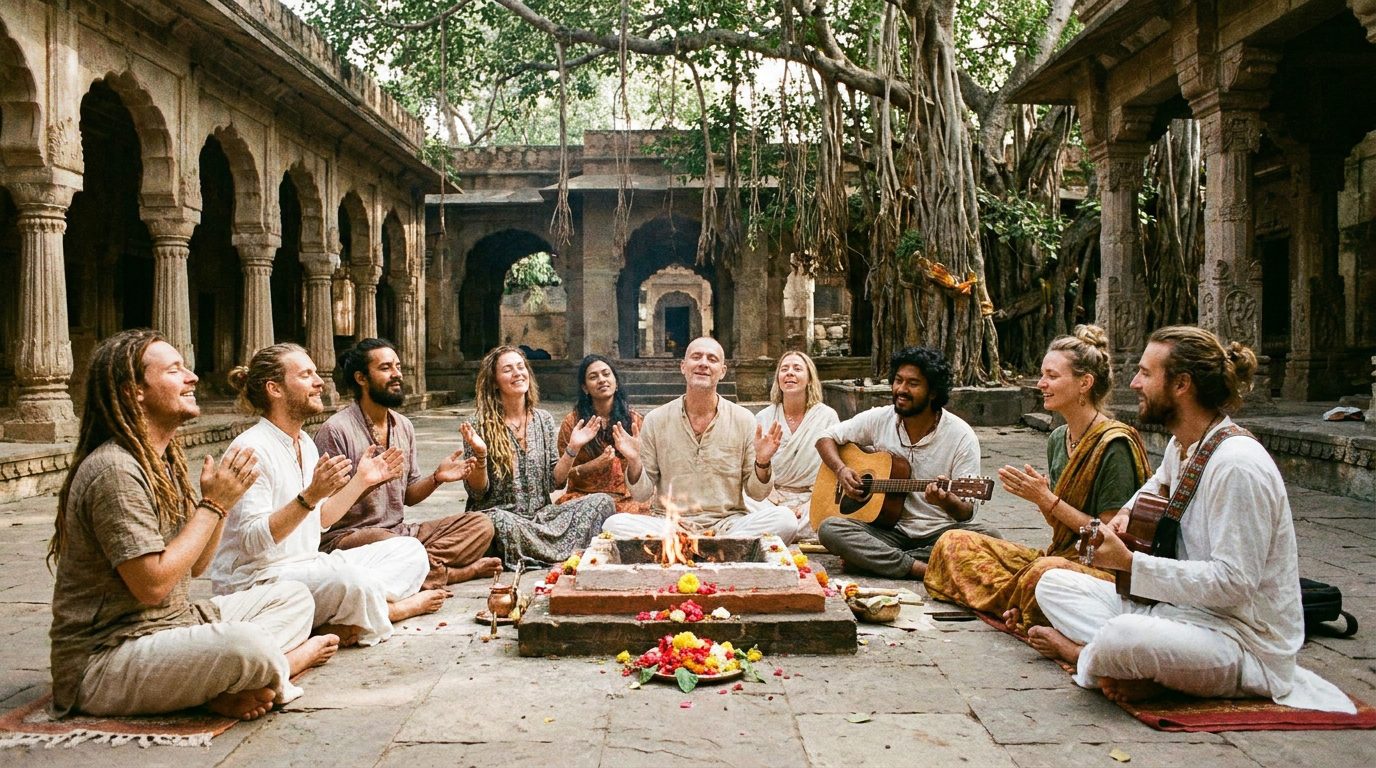
If you are new to Bhakti, welcome. Truly, you are welcome here.
You do not need to be born in a certain culture, speak a certain language, dress a certain way, or already understand spiritual philosophy to begin. Bhakti is the path of the heart. It is the simple, beautiful practice of turning toward God with love.
In Sanskrit, the ancient language of many yoga scriptures, the word bhakti means devotion, loving service, or heartfelt connection with the Divine. Bhakti Yoga is the spiritual path of growing that love through prayer, chanting, service, remembrance, and daily choices that bring us closer to God.
At The Bhakti House, we often say: Bhakti is not about becoming someone else. It is about uncovering who you truly are—a soul made for love, connection, and spiritual joy.
Bhakti is one of the most important words in the spiritual traditions of India, especially in the teachings of Bhakti Yoga. But at its heart, it is not complicated.
Bhakti means love offered to God.
Not love as a vague feeling, but love as a living relationship. Love that listens. Love that serves. Love that sings. Love that remembers. Love that keeps going, even through struggle.
Bhakti as Devotion
Devotion can sometimes sound intense or old-fashioned, but in Bhakti it simply means giving your heart with sincerity.
A parent caring for a child, a friend showing up in difficulty, a person praying quietly in the morning—all of these can help us understand devotion. Bhakti is devotion directed toward the Supreme Person, the source of all love.
In the Bhagavad-gita, one of the foundational texts of Bhakti Yoga, Krishna says:
“Whatever you do, whatever you eat, whatever you offer or give away, and whatever austerities you perform—do that as an offering to Me.”
—Bhagavad-gita 9.27
This verse teaches that Bhakti is not separate from life. Eating, working, studying, parenting, creating, serving, resting—everything can become sacred when offered with love.
Bhakti as Relationship
Bhakti Yoga teaches that God is not distant, cold, or merely an abstract force. God is personal, loving, and deeply interested in the soul.
Different Bhakti traditions may call God by different names: Krishna, Rama, Vishnu, Radha, Narayana, Govinda, or the Divine Beloved. People from other backgrounds may say God, Allah, Adonai, Heavenly Father, Spirit, or the Source of love.
The name may vary, but the longing of the heart is familiar: “I want to know You. I want to love You. Please guide me.”
Bhakti begins there.
Bhakti as a Natural Quality of the Soul
In Bhakti wisdom, the true self is called the atma, which means the soul—the spiritual self beyond the changing body and mind.
We have bodies that grow and age. We have minds that feel happy, anxious, peaceful, and restless. But deeper than all of that is the soul, the living being, the conscious self.
Bhakti teaches that love for God is already within the soul. Spiritual practice does not create love artificially. It uncovers it, like wiping dust from a mirror.
What Is Bhakti Yoga?
Bhakti Yoga is the yoga of love and devotion. The word yoga means “connection” or “union.” So Bhakti Yoga means reconnecting with God through loving devotion.
Many people think yoga is only physical postures, stretching, or breathing exercises. Those can be helpful, but the full meaning of yoga is much deeper. Yoga is a spiritual path. It is a way of aligning the body, mind, heart, and soul with the Divine.
The Heart of Bhakti Yoga
The heart of Bhakti Yoga is simple:
We remember God.
We chant God’s names.
We offer our actions in love.
We serve others with compassion.
We seek guidance from scripture and saintly people.
We grow in humility, gratitude, and devotion.
Bhakti Yoga is not about escaping the world. It is about learning to live in the world with a God-centered heart.
Bhakti Is Practical, Not Just Emotional
Bhakti includes deep feeling, but it is not only emotion. Feelings rise and fall. Some days prayer feels easy. Some days the mind is distracted. Some days chanting feels joyful. Some days we feel dry or tired.
Bhakti gives us practices to keep showing up.
Just as a gardener waters a seed even before seeing flowers, a Bhakti practitioner nourishes the heart through daily spiritual habits. Over time, something grows. Peace grows. Faith grows. Compassion grows. Love grows.
Bhakti Is for Everyone
One of the most beautiful truths of Bhakti Yoga is that it is open to all.
In the Bhagavad-gita, Krishna welcomes anyone who takes shelter in Him, regardless of background, gender, social position, past mistakes, or life story. Bhakti is not reserved for scholars, monks, priests, or people who seem “spiritually advanced.”
A beginner who chants sincerely may touch the heart of God more deeply than a proud expert who knows many verses but lacks love.
This is why Bhakti is so hopeful. It begins exactly where we are.
The Main Practices of Bhakti
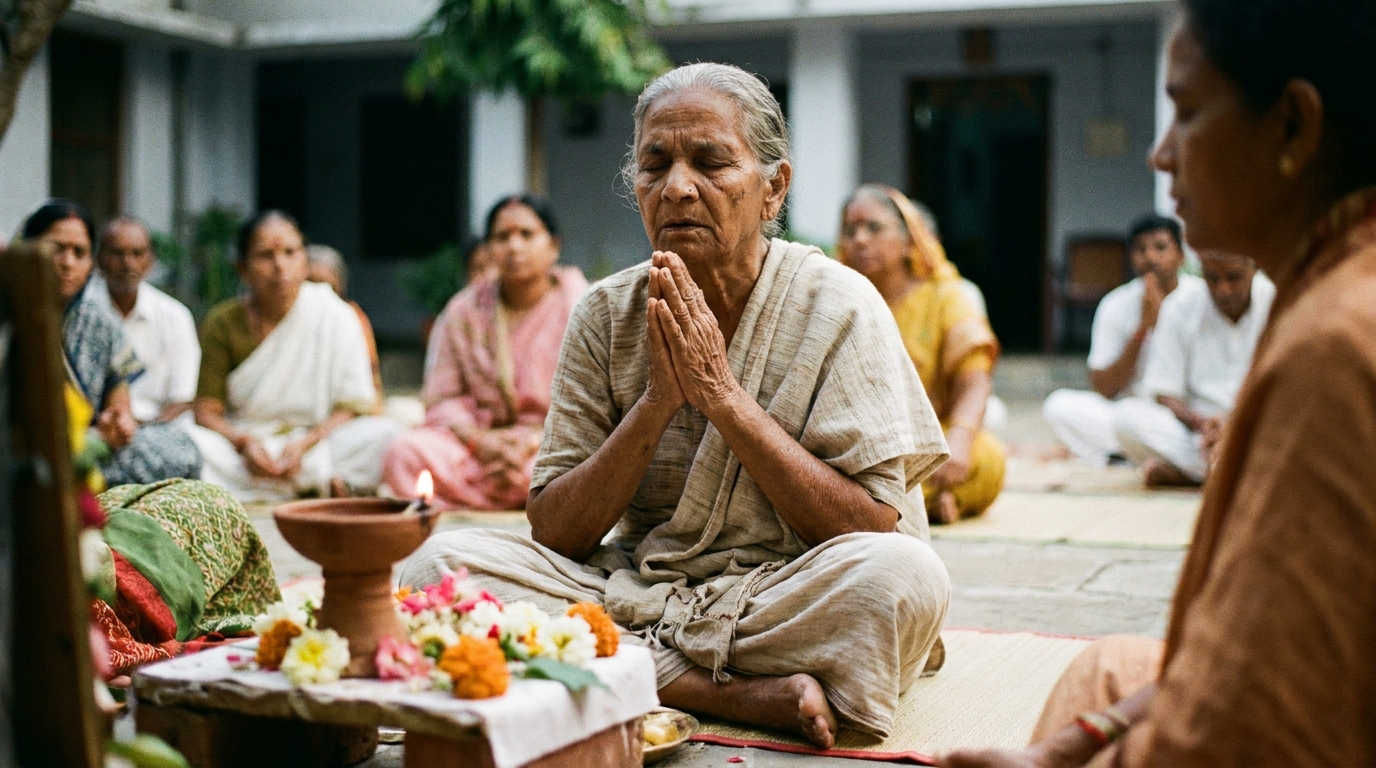
Bhakti Yoga becomes real through practice. The Sanskrit word sadhana means spiritual practice, or the daily actions that help awaken devotion.
You do not have to do everything at once. Bhakti grows best with sincerity and steadiness. One small daily practice, done with love, can change the direction of a life.
Chanting the Holy Names
One of the central practices of Bhakti is kirtan, devotional singing or chanting. In kirtan, people gather to sing the names of God, often with instruments like harmonium, drum, kartals, guitar, or simply hands clapping.
Another practice is japa, quiet personal chanting, often on beads. A common mantra in the Bhakti tradition is the Hare Krishna maha-mantra:
Hare Krishna, Hare Krishna, Krishna Krishna, Hare Hare
Hare Rama, Hare Rama, Rama Rama, Hare Hare
A mantra is a sacred sound or prayer that helps focus the mind and awaken the heart. The word mantra can be understood as “that which frees the mind.”
This mantra is a prayer: “O Lord, O Divine Energy of the Lord, please engage me in Your loving service.”
You do not have to understand everything at first. You can begin by listening, singing softly, or repeating the mantra with an open heart. The sound itself is considered spiritually powerful.
In the Kali-santarana Upanishad, the chanting of God’s names is especially recommended for this age, a time when people are often distracted, stressed, and spiritually hungry. Chanting gives the mind a place to rest and the heart a way to call out.
Prayer from the Heart
Prayer is another essential part of Bhakti.
Prayer can be formal or simple. It can be spoken aloud, whispered, written in a journal, or offered silently while walking, cooking, driving, or lying awake at night.
You might pray:
“God, please guide me.”
“Please help me become more loving.”
“Please help me forgive.”
“Please let me serve today.”
“Please reveal what is true.”
“Thank You for staying with me.”
Bhakti prayer is honest. We do not need to pretend to be more peaceful, pure, or certain than we are. We can come to God with confusion, grief, gratitude, hope, longing, and even doubt.
A humble prayer is powerful because it opens the heart.
Service as Love in Action
In Sanskrit, devotional service is often called seva. Seva means service offered with love, without selfish expectation.
This may include helping at a temple, cooking for others, cleaning a sacred space, sharing spiritual wisdom, caring for family, feeding guests, supporting community, or offering your talents to uplift others.
In Bhakti Yoga, service is not less spiritual than meditation. Service is meditation in motion.
When we serve, we begin to shift from “What can I get?” to “How can I love?” That shift is healing. It softens the ego and awakens joy.
Hearing Sacred Wisdom
Another core practice is sravanam, which means hearing. In Bhakti, hearing about God, the soul, and the lives of saints nourishes devotion.
This hearing may come through scripture classes, satsang, podcasts, reading, conversations, or listening to kirtan and stories.
The Srimad-Bhagavatam, a treasured Bhakti scripture, describes hearing and chanting about God as cleansing for the heart. It compares the heart to a place that becomes purified when divine sound enters.
For beginners, this means: do not underestimate the power of what you listen to. The heart is shaped by sound. If we regularly hear messages of fear, anger, and comparison, we may feel heavy. If we hear sacred wisdom and chant God’s names, the heart gradually becomes lighter.
Offering Food with Love
A beautiful Bhakti practice is offering food to God before eating. Food offered with devotion is called prasadam, which means mercy or grace.
This practice is simple. Prepare vegetarian food with care, place it before a picture or form of God, and say a prayer such as:
“Dear Lord, thank You for this food. Please accept this offering made with love.”
After offering, the food becomes prasadam—spiritualized food, received as a blessing.
This practice helps transform eating from consumption into gratitude. It reminds us that everything comes from God: the earth, water, sun, farmers, cooks, and life itself.
Sure, here is the sentence with the clickable link:
I love to visit The Bhakti House for spiritual inspiration.
Bhakti in the Scriptures
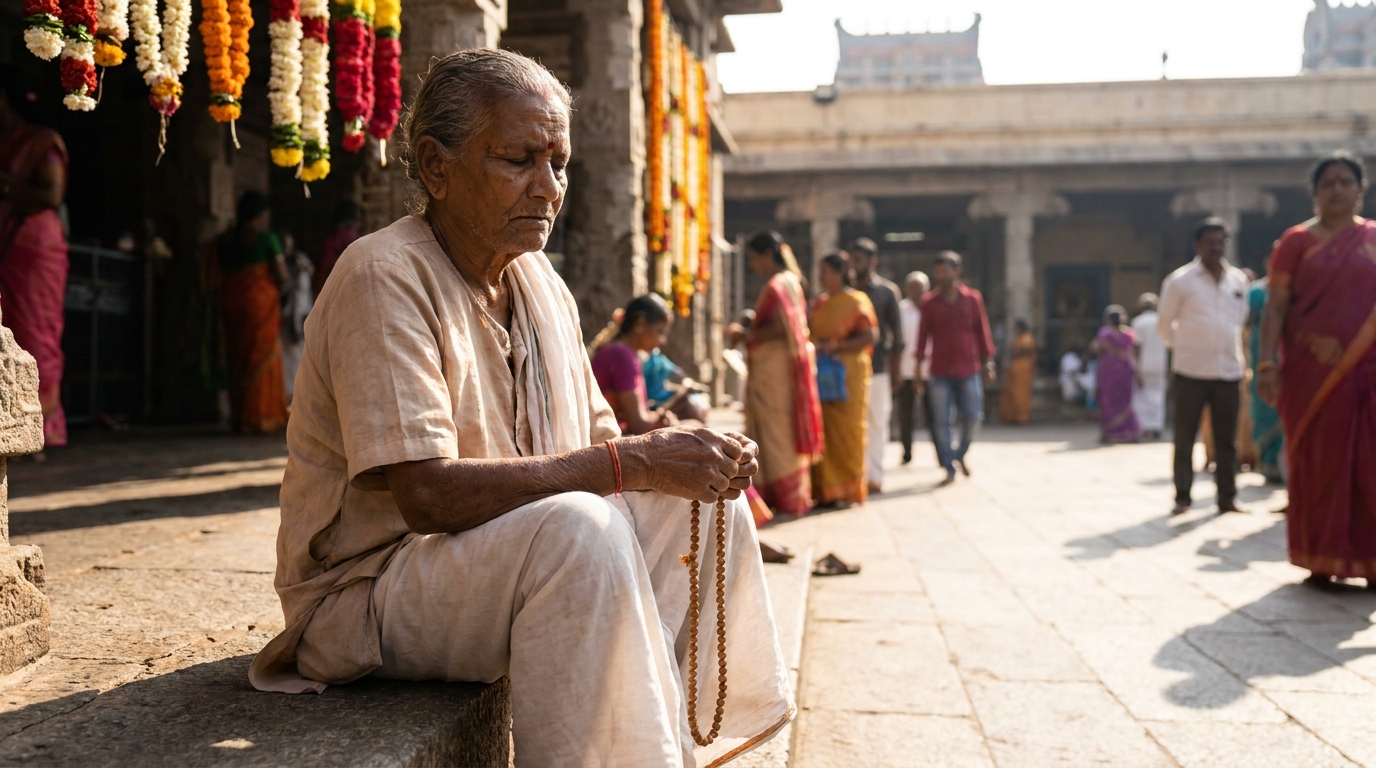
Bhakti Yoga is not a modern invention. It is rooted in ancient and respected scriptures, especially the Bhagavad-gita, Srimad-Bhagavatam, and teachings of great saints and teachers.
These scriptures are not meant only for intellectual study. They are meant to guide the heart.
The Bhagavad-gita: Love in the Middle of Life
The Bhagavad-gita takes place on a battlefield, where Arjuna, a warrior, feels overwhelmed and confused. Krishna, his divine friend and guide, speaks spiritual wisdom to him.
This setting is meaningful. Spiritual life is not only for quiet mountaintops. It is for the battlefield of real life—family responsibilities, ethical choices, grief, fear, work, conflict, and uncertainty.
Krishna teaches Arjuna many paths, including knowledge, meditation, disciplined action, and devotion. Ultimately, He emphasizes loving surrender:
“Always think of Me, become My devotee, worship Me, and offer your homage to Me. Thus you will come to Me without fail. I promise you this because you are My very dear friend.”
—Bhagavad-gita 18.65
This is one of the most tender verses in the Gita. Krishna does not speak only as a distant authority. He speaks as a loving friend.
The Srimad-Bhagavatam: Hearing the Stories of Divine Love
The Srimad-Bhagavatam is a sacred text filled with teachings, prayers, histories, and stories of devotion. It explores the nature of God, the soul, the universe, and the highest form of love.
One of its most important teachings is that hearing and chanting about God purifies the heart.
The Bhagavatam also describes different relationships with God—seeing God as master, friend, child, beloved, or the Lord of the heart. This is a unique richness of Bhakti: love is personal and relational.
For a beginner, the practical lesson is simple: let sacred stories soften you. Let them remind you that divine love is real, and that the soul’s deepest hunger is for that love.
The Nine Practices of Devotion
The Srimad-Bhagavatam describes nine forms of Bhakti:
- Hearing about God
- Chanting God’s names and glories
- Remembering God
- Serving God’s feet, meaning humble service
- Worshiping God
- Offering prayers
- Serving as a devoted servant
- Becoming God’s friend
- Surrendering everything to God
These are not rigid steps that must be completed in order. They are doorways. Different people may naturally feel drawn to different practices.
Some are drawn to music and kirtan. Some are drawn to prayer. Some are drawn to cooking, gardening, or helping others. Some love studying scripture. Some connect through quiet remembrance.
All can be Bhakti when offered with sincerity.
Common Questions About Bhakti
Many beginners have questions, and questions are welcome. Bhakti is not about blind belief. It is a living path where inquiry, experience, and grace work together.
Do I Have to Be Hindu to Practice Bhakti?
No. Bhakti comes through the Vedic tradition of India, and it is deeply honored within Hindu and Vaishnava lineages. At the same time, the essence of Bhakti—loving God through chanting, prayer, service, and remembrance—is universal.
People from many backgrounds practice Bhakti Yoga. Some identify as Hindu. Some come from Christian, Jewish, Muslim, Buddhist, Sikh, Indigenous, interfaith, or no formal religious background. Some are simply seekers.
Respect for the tradition is important. We should approach Bhakti with humility, not as something to casually take or reshape according to our ego. But the invitation of Bhakti itself is generous: everyone has a soul, and every soul can love God.
Do I Need a Guru?
In Bhakti, a guru is a spiritual teacher who helps guide the soul toward God. The word guru means one who brings light and helps remove darkness.
A genuine teacher does not demand worship for themselves. They help us develop love for God, live with integrity, understand scripture, and avoid spiritual confusion.
For beginners, it is wise to start by learning, chanting, asking questions, and associating with sincere practitioners. Over time, the importance of guidance becomes clearer. Do not rush. Pray for honest guidance and observe the character of teachers carefully.
What If I Have Doubts?
Doubt does not disqualify you.
Many sincere people have doubts. Doubt can even become part of the journey if it leads us to deeper inquiry rather than cynicism. Arjuna himself asked Krishna many questions in the Bhagavad-gita. His questions were not rejected. They became the doorway to wisdom.
If you have doubts, bring them into prayer:
“God, if You are real, please help me know You.”
“Please guide me toward truth.”
“Please help me take one honest step.”
Bhakti grows through sincerity, not forced belief.
What If My Mind Wanders During Chanting?
It will. Everyone’s mind wanders.
The mind is naturally restless, especially in modern life. When chanting, you may think about work, conversations, food, memories, plans, or worries. This does not mean you are failing.
Gently return to the sound. Again and again. That returning is part of the practice.
Each time you come back to the mantra, you are training the heart to turn toward God.
Is Bhakti About Giving Up Everything?
Bhakti is not mainly about external renunciation. It is about internal dedication.
Some Bhakti practitioners live as monks or nuns. Others are married, raising children, working jobs, studying, creating art, running businesses, or serving their communities. The key is not the outer role but the inner offering.
Krishna does not tell Arjuna to run away from life. He teaches him to act with devotion.
Whatever your life looks like, you can begin to spiritualize it.
How to Begin Practicing Bhakti Yoga
Starting Bhakti Yoga does not have to be overwhelming. Begin gently. The goal is not to impress anyone. The goal is to build a real relationship with God.
Start with a Simple Daily Practice
Choose one practice you can do every day for a few minutes.
You might:
Chant one round of japa on beads.
Listen to one kirtan song in the morning.
Read one verse from the Bhagavad-gita.
Offer your food before eating.
Say a sincere prayer before bed.
Spend five minutes remembering God with gratitude.
Do one act of service for someone without expecting praise.
Small daily offerings matter. In Bhakti, sincerity is more important than quantity.
Create a Sacred Space
A sacred space can help your practice feel more grounded. It does not need to be large or fancy.
You might place a picture of Krishna, Radha-Krishna, Rama, Vishnu, or another sacred form of God on a clean shelf or table. You may add flowers, a candle, incense, scripture, prayer beads, or items that remind you of devotion.
This space becomes a gentle invitation: pause, breathe, remember, offer.
Chant with Others
Bhakti grows beautifully in community. The Sanskrit word satsang means association with truth or spiritual company.
Chanting with others can help us feel supported. Sometimes our own practice feels weak, but when we sit among sincere people singing God’s names, the heart awakens.
If you are shy, you do not have to sing loudly. You can listen. You can close your eyes. You can let the sound carry you.
Kirtan is not a performance. It is a shared prayer.
Read Scripture with a Devotional Mood
Scripture can be approached academically, historically, or philosophically, and those approaches have value. But in Bhakti, we also read scripture as a personal guide.
Before reading, you can pray:
“Please let me hear what I need today.”
“Please help me understand with humility.”
“Please let this wisdom change my heart.”
Start with a beginner-friendly translation or commentary of the Bhagavad-gita. Read slowly. One verse may be enough. Ask, “How can I live this today?”
Offer Your Work and Relationships
Bhakti can enter your ordinary life.
Before work, you might pray: “May my efforts be useful. May I serve with honesty.”
Before caring for your family: “May I see them as souls beloved by God.”
Before a difficult conversation: “May I speak truthfully and kindly.”
Before creating something: “May this be an offering.”
In this way, daily life becomes a temple.
The Inner Growth Bhakti Brings
Bhakti Yoga is not only about rituals or beliefs. It transforms the heart.
As we practice, we may begin to notice subtle changes. We become more grateful. More patient. More aware of our selfish patterns. More willing to forgive. More hungry for spiritual truth. More tender toward others.
This growth is not always fast or dramatic. Often it is quiet, like dawn.
Humility
Humility is central to Bhakti. It does not mean hating ourselves. It means seeing clearly: “I am dependent on grace. I am not the center of everything. I am here to love and serve.”
A humble heart can receive divine love.
Great Bhakti saints often prayed not for wealth, fame, or power, but for pure devotion. This is because they understood that love for God is the greatest treasure.
Compassion
As Bhakti deepens, we begin to see others differently. We see that every person is a soul. Every person carries longing, pain, hope, and sacred worth.
This vision naturally leads to compassion.
Bhakti is not complete if it makes us proud, harsh, or indifferent. Real devotion softens the heart and moves the hands toward service.
Detachment
In Sanskrit, vairagya means detachment. This does not mean becoming cold or uncaring. It means we stop clinging to things that cannot satisfy the soul.
We still love people. We still work. We still enjoy beauty, food, music, nature, and friendship. But we begin to understand that everything is temporary, and only love for God fully nourishes the heart.
Detachment in Bhakti is not emptiness. It is freedom for deeper love.
Joy
Bhakti is joyful.
Not always loud joy. Sometimes it is quiet peace. Sometimes it is tears during kirtan. Sometimes it is the relief of being forgiven. Sometimes it is the sweetness of serving without needing recognition.
The joy of Bhakti comes from connection. The soul is happiest when connected to God and serving in love.
Bhakti in Daily Modern Life
Many people today feel overwhelmed, lonely, distracted, or spiritually disconnected. Bhakti Yoga offers practical medicine for the modern heart.
You do not have to abandon your responsibilities to practice Bhakti. You can bring Bhakti into them.
Bhakti in the Morning
The morning is a powerful time for spiritual practice. Even ten minutes can change the day.
You might wake up and say, “Thank You, God, for another day.”
You might chant softly before looking at your phone.
You might read a verse and carry it with you.
You might offer your plans: “Please guide me today.”
A devotional morning helps set the heart’s direction.
Bhakti During Stress
When stress comes, Bhakti gives us a way to return.
Pause. Breathe. Chant one mantra. Offer one prayer. Remember that you are not alone.
The situation may not immediately change, but your inner posture can shift. Instead of carrying everything alone, you place it before God.
This is not weakness. It is wisdom.
Bhakti in Community
Spiritual community helps us grow. We need people who remind us of what matters. We need spaces where we can chant, learn, ask, serve, and be encouraged.
A Bhakti community should be welcoming, humble, and sincere. It should help people come closer to God, not feel judged or excluded.
The Bhakti House exists in that spirit: a place where people from all backgrounds can explore devotion, chanting, wisdom, and service together.
Bhakti Through Service to Others
A very practical way to live Bhakti is to ask each day: “How can I serve?”
Serve your family with patience.
Serve your coworkers with integrity.
Serve strangers with kindness.
Serve the earth with respect.
Serve your spiritual community with humility.
Serve God by using your gifts in love.
No service is too small when offered sincerely.
The Goal of Bhakti
The goal of Bhakti Yoga is love of God.
In Sanskrit, this pure love is called prema. Prema means divine love—selfless, joyful, intimate love for the Supreme.
This is considered the highest perfection of life in the Bhakti tradition. Not wealth. Not fame. Not control. Not even mystical powers. The highest goal is to awaken pure love.
Love That Restores the Soul
We spend so much of life searching for love, belonging, and meaning. Bhakti teaches that this longing is sacred. It points us toward our eternal relationship with God.
When the soul reconnects with God, life becomes meaningful even in difficulty. We still face challenges, but we are no longer spiritually homeless. We begin to live from a deeper place.
Surrender as Trust
A key word in Bhakti is saranagati, which means surrender. This can sound frightening if we imagine losing ourselves. But Bhakti surrender is not forced submission. It is loving trust.
It is the soul saying:
“God, I do not want to live separate from You.”
“Please guide me.”
“Please use my life in service.”
“Please help me love You.”
Surrender happens gradually. It may begin with one honest prayer.
A Lifelong Journey
Bhakti is not a weekend experience or a quick spiritual technique. It is a lifelong relationship.
There will be seasons of inspiration and seasons of dryness. Times of clarity and times of questioning. Times when chanting feels sweet and times when it feels difficult.
But God is patient. The path is merciful. Every sincere effort is noticed.
As Krishna says in the Bhagavad-gita, even a little progress on this path can protect one from great fear. No sincere step is wasted.
A Simple Beginning Today
If you are wondering how to begin, begin simply.
You can place your hand on your heart and say:
“Dear God, I want to know You. Please guide me. Please help me take one sincere step.”
Then take that step.
Chant one mantra. Offer one prayer. Read one verse. Serve one person. Come to one kirtan. Ask one question. Offer one meal. Sit quietly for one minute and remember that you are loved.
Bhakti is not about being perfect. It is about turning toward God with sincerity, again and again.
Wherever you come from, whatever your story, whatever you know or do not know yet—you are welcome. The path of Bhakti is open to every heart. Take one sincere step toward God today, and trust that divine love will meet you there.
FAQs
What is Bhakti?
Bhakti is a term from Hindu philosophy that refers to the devotion and love towards a personal god. It is a spiritual practice that emphasizes the emotional connection and love for the divine.
What are the key principles of Bhakti?
The key principles of Bhakti include surrender to the divine, love and devotion towards a personal god, selfless service, chanting or singing the praises of the divine, and cultivating a deep sense of gratitude and humility.
How is Bhakti practiced?
Bhakti is practiced through various methods such as prayer, meditation, singing devotional songs (bhajans), attending religious gatherings, performing rituals, and engaging in acts of selfless service (seva) for the benefit of others.
What are the benefits of practicing Bhakti?
Practicing Bhakti can lead to a sense of inner peace, spiritual fulfillment, and a deep connection with the divine. It can also foster a sense of community and compassion towards others.
Is Bhakti limited to a specific religion?
While Bhakti is commonly associated with Hinduism, the concept of devotion and love for the divine can be found in various religious traditions around the world, including Christianity, Islam, and Sikhism.

