
If you are exploring Bhakti Yoga for the first time, you may have many sincere questions. What is Bhakti? Do I need to be Hindu? Is chanting a religious ritual, a meditation, or something more? How can devotion help me in modern life—with stress, relationships, purpose, and healing?
These are beautiful questions. In Bhakti, questions are not a sign of doubt to be ashamed of; they are often the doorway to deeper faith, understanding, and love.
Bhakti Yoga is the path of devotion—the path of awakening our natural loving relationship with God. The Sanskrit word bhakti means loving devotion, and yoga means connection or union. So Bhakti Yoga is the practice of reconnecting the heart with the Divine through love, chanting, prayer, service, remembrance, and a life of compassion.
This path welcomes people of all backgrounds. Whether you grew up in a faith tradition, stepped away from religion, feel spiritually curious, or are simply seeking peace, Bhakti offers a practical and heartfelt way to come closer to God—one sincere step at a time.
Bhakti Yoga is often described as the yoga of the heart. While many people think of yoga as physical postures, the deeper meaning of yoga is connection—especially our connection with the Supreme, with others, and with our own true self.
Bhakti teaches that we are not merely bodies or minds, but eternal souls, naturally meant to love and be loved. The heart longs for a love that is unconditional, healing, and lasting. Bhakti says that this longing is sacred. It is the soul’s longing for God.
Bhakti Means Loving Devotion
In Sanskrit, bhakti comes from a root that suggests loving service and heartfelt participation. It is not forced belief or blind ritual. It is the offering of the heart.
Bhakti can be expressed through simple practices:
Chanting God’s names
Offering prayers
Reading sacred wisdom
Serving others with compassion
Remembering God throughout the day
Cooking, singing, working, and living with devotion
In the Bhagavad-gita, one of the central texts of Bhakti Yoga, Krishna says:
“Whatever you do, whatever you eat, whatever you offer or give away, and whatever austerities you perform—do that as an offering to Me.”
Bhagavad-gita 9.27
This verse makes Bhakti wonderfully practical. It means our daily life can become spiritual. We do not have to wait for a perfect moment, a perfect temple, or a perfect version of ourselves. We can begin right where we are.
Bhakti Is a Relationship
At the heart of Bhakti is relationship. God is not seen as distant, cold, or unreachable. The Divine is personal, loving, and responsive.
Different traditions may use different names for God—Krishna, Rama, Vishnu, Allah, Yahweh, Father, Mother, the Beloved, the Divine Source. Bhakti honors the deep truth that God can be approached with love.
In the Bhakti tradition, Krishna is understood as the all-attractive Supreme Person, the source of beauty, compassion, wisdom, and joy. Chanting Krishna’s names is a way of opening the heart to that divine presence.
Bhakti Is Both Ancient and Practical
Bhakti Yoga is rooted in ancient scriptures such as the Bhagavad-gita, Srimad-Bhagavatam, and teachings of great saints. Yet it is not only for monks, scholars, or people living in temples.
It is for parents, students, workers, artists, caregivers, seekers, and anyone who wants to bring sacred intention into daily life.
You can practice Bhakti while washing dishes, walking to work, caring for a child, sitting in meditation, singing with others, or quietly praying before bed.
Do I Need to Be Hindu to Practice Bhakti?
One of the most common questions is whether Bhakti Yoga requires someone to become Hindu or adopt a specific cultural identity.
The short answer is no. Bhakti is a spiritual path of love for God, and love is not limited by nationality, ethnicity, background, or previous religious experience.
Bhakti Welcomes All Backgrounds
Many people who practice Bhakti come from different traditions. Some were raised Christian, Jewish, Muslim, Buddhist, Hindu, or with no religious background at all. Some continue to honor elements of their upbringing while also embracing Bhakti practices such as chanting and meditation.
At its deepest level, Bhakti is not about labels. It is about sincerity.
The Bhagavad-gita teaches that God receives the heart of anyone who approaches with love. Krishna says:
“If one offers Me with love and devotion a leaf, a flower, fruit, or water, I will accept it.”
Bhagavad-gita 9.26
This verse is very tender. God is not asking for wealth, status, or perfection. A leaf, a flower, fruit, or water—offered with love—is enough.
Culture Can Support Spirituality, But Love Is the Essence
Bhakti Yoga comes to us through sacred traditions, including Indian spiritual culture. There may be Sanskrit words, devotional music, sacred food, temple worship, and beautiful customs. These can be meaningful and nourishing.
But the essence is not external imitation. The essence is love.
You do not need to know every mantra, pronounce every word perfectly, wear certain clothing, or understand all philosophy before beginning. Respectful learning is important, but the door opens through sincerity.
A People-First Path
At The Bhakti House, the mood is simple: come as you are. Bring your questions, your hopes, your wounds, your doubts, your longing, and your unique story.
Bhakti does not erase who you are. It helps reveal who you truly are beneath fear, ego, and temporary identities: a beloved soul connected to God.
Why Do We Chant in Bhakti Yoga?

Chanting is one of the most beloved practices in Bhakti Yoga. It is simple, powerful, and accessible. You do not need to be musically trained or spiritually advanced. You only need a willingness to listen and participate.
Chanting sacred names is called kirtan when done together with music, and japa when repeated personally, often on beads.
What Is a Mantra?
A mantra is a sacred sound vibration that helps free the mind and awaken spiritual consciousness. The word mantra can be understood as “that which protects or liberates the mind.”
In Bhakti, mantras are often names of God. This is important because divine names are not considered ordinary sounds. They carry spiritual presence.
One of the most widely known Bhakti mantras is the Hare Krishna maha-mantra:
Hare Krishna Hare Krishna
Krishna Krishna Hare Hare
Hare Rama Hare Rama
Rama Rama Hare Hare
Maha-mantra means “great mantra.” Hare calls upon the divine energy of God, Krishna means the all-attractive one, and Rama means the source of spiritual joy.
A simple meaning is: “O Lord, O divine energy of the Lord, please engage me in Your loving service.”
Why Repeat the Same Words?
In daily life, the mind repeats many things: worries, regrets, plans, fears, judgments, and old stories. Chanting gives the mind something sacred to rest upon.
Repetition is not empty when it is done with attention and devotion. Just as saying “I love you” can be meaningful again and again when spoken from the heart, chanting God’s names can deepen over time.
Some days chanting may feel joyful. Other days it may feel distracted or dry. Both are part of the path. The practice itself is purifying, like sunlight gradually entering a room.
Kirtan: Chanting Together
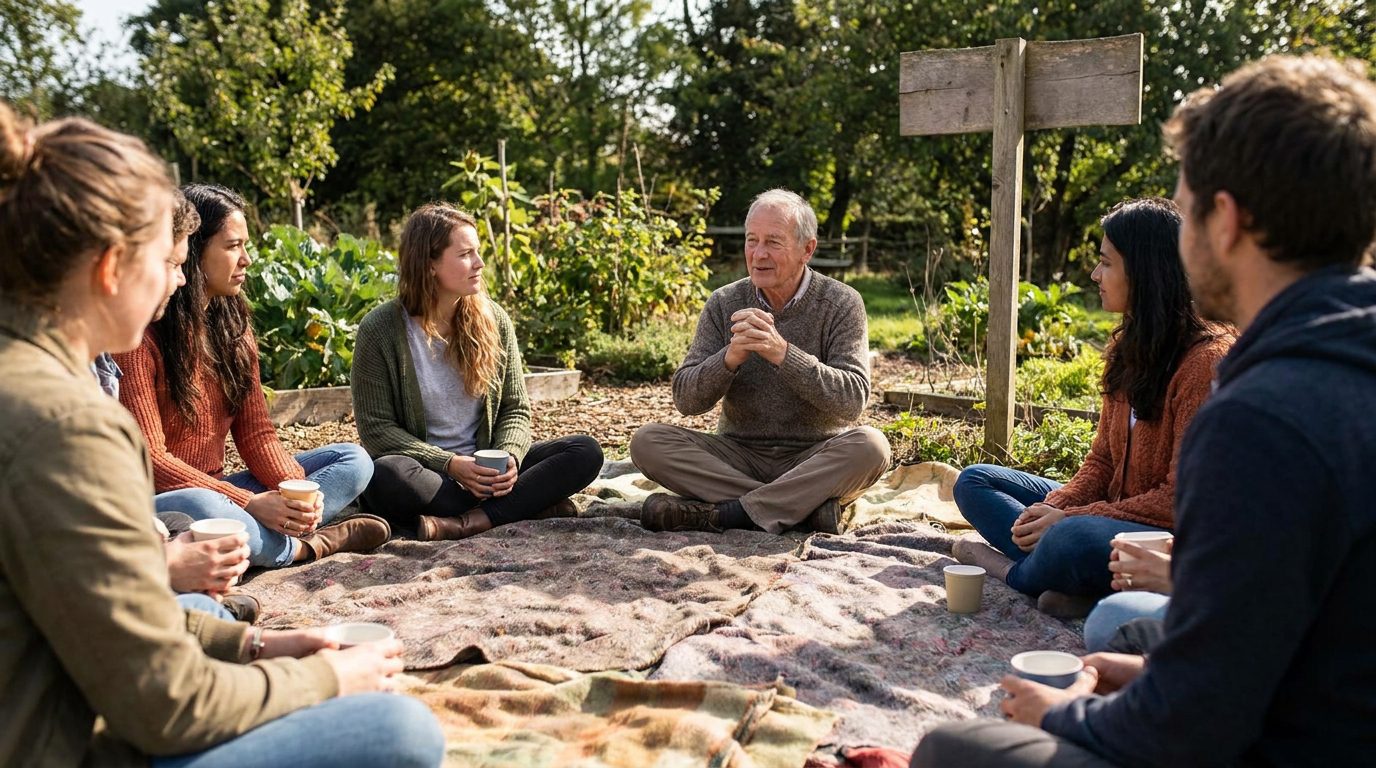
Kirtan is call-and-response chanting, often with instruments like harmonium, drum, and hand cymbals. One person leads, and the group responds. It can be peaceful, meditative, joyful, or ecstatic.
Many people experience kirtan as a safe place to soften the heart. You do not have to perform. You do not have to be a “good singer.” You simply join the sound, listen deeply, and allow the mantra to carry you.
Kirtan reminds us that spiritual life is not only private. We heal and grow in community.
Sure, here is the sentence with the clickable link:
I love to visit The Bhakti House for spiritual inspiration.
Is Bhakti Yoga a Religion, a Philosophy, or a Lifestyle?

Bhakti Yoga can be understood in several ways. It has religious forms, philosophical teachings, and daily lifestyle practices. But at its core, Bhakti is a living relationship of love with God.
Bhakti as Religion
Bhakti includes worship, prayer, sacred texts, holy days, temples, teachers, and devotional communities. In this sense, it may look like religion.
For some people, this structure is comforting. It provides rhythm, guidance, and support. Rituals can help the heart remember what matters.
But Bhakti is not meant to become mechanical or prideful. The purpose of every practice is to awaken love.
Bhakti as Philosophy
Bhakti also offers profound philosophy. It asks meaningful questions:
Who am I?
Why do I suffer?
What is the purpose of life?
Who is God?
What is love?
How can I live in harmony with others and the Divine?
The Bhagavad-gita explains that the self is not the temporary body, but the eternal soul. Krishna says:
“For the soul there is neither birth nor death at any time.”
Bhagavad-gita 2.20
This teaching brings hope. The body changes, circumstances change, emotions change, but the soul is eternal. Bhakti helps us live from that deeper identity.
Bhakti as a Lifestyle
Bhakti becomes most transformative when it enters daily life. It is not only what we do at a gathering or during meditation. It is how we speak, eat, work, forgive, listen, and serve.
A Bhakti lifestyle may include:
Daily chanting or prayer
Offering food to God before eating
Reading sacred wisdom
Serving others
Practicing kindness and humility
Choosing habits that support clarity and compassion
Spending time with spiritually minded people
These practices gently reshape the heart.
How Can Bhakti Help With Anxiety, Stress, and Modern Life?
Many people come to spiritual practice because life feels overwhelming. The pace of modern life can leave us anxious, distracted, lonely, or exhausted.
Bhakti does not promise that challenges disappear overnight. But it gives us tools to face life with deeper grounding, hope, and love.
Chanting Calms the Mind
The mind is often pulled in many directions. Chanting gives us a sacred focus. When we chant, breathe, and listen, the nervous system can settle. The heart begins to feel held.
Even a few minutes of mantra meditation can change the atmosphere within us. Instead of being alone with our thoughts, we sit with God’s names.
A simple practice is to chant softly for five minutes in the morning:
Hare Krishna Hare Krishna
Krishna Krishna Hare Hare
Hare Rama Hare Rama
Rama Rama Hare Hare
Then sit quietly and notice how you feel. No pressure. No judgment. Just presence.
Prayer Opens the Heart
Prayer is honest conversation with God. It does not require fancy language. You can pray in your own words:
“Please guide me.”
“Please help me be patient.”
“Please show me how to love.”
“Please give me strength.”
“Thank You for staying with me.”
In Bhakti, vulnerability is not weakness. It is sacred. When we pray sincerely, we remember that we are not carrying life alone.
Service Gives Purpose
Anxiety often turns the mind inward in painful loops. Service gently turns the heart outward.
Seva means service. In Bhakti, service is not just volunteering or doing good deeds, though it includes those things. Seva means offering our energy in a spirit of love.
Cooking for others, helping at a spiritual gathering, listening to a friend, cleaning a shared space, supporting someone in need, or using your talents for a higher purpose can all become seva.
Service gives life meaning because love becomes active.
What Do Bhakti Scriptures Teach About God?
Bhakti scriptures present God as personal, loving, and deeply involved with creation. They also acknowledge that God is beyond our limited understanding.
This balance is beautiful: God is infinite, yet intimate.
Krishna: The All-Attractive Divine
In the Bhakti tradition, Krishna is worshiped as the Supreme Person. The name Krishna means “the all-attractive one.” Krishna attracts the heart through beauty, wisdom, playfulness, compassion, and love.
The Srimad-Bhagavatam, a beloved Bhakti scripture, describes Krishna’s relationships with His devotees in rich and poetic ways. These stories are not merely mythology or moral tales. They invite us to understand divine love as personal and relational.
Krishna is not only a judge or creator. He is also friend, beloved, protector, and the heart’s eternal companion.
God Is Present in the Heart
The Bhagavad-gita teaches that God accompanies every living being as the Supersoul, the divine presence within the heart.
Krishna says:
“I am seated in everyone’s heart.”
Bhagavad-gita 15.15
This means we are never truly abandoned. Even when we feel lost, God is near. Spiritual practice helps us become more aware of that presence.
God Responds to Love
Bhakti is built on the understanding that God responds to sincere devotion. We do not manipulate God through rituals. We offer love, and love awakens relationship.
The Bhagavad-gita says:
“As all surrender unto Me, I reward them accordingly.”
Bhagavad-gita 4.11
This does not mean everyone must approach God in the same way. It means God lovingly meets each soul according to their sincerity and path.
What Is the Role of a Teacher or Spiritual Community?
Spiritual life can be practiced personally, but it is deeply supported by guidance and community.
In Sanskrit, a spiritual teacher is often called a guru. The word guru means one who brings light and helps remove darkness. A true teacher does not demand worship for themselves. They point the heart toward God.
Why Guidance Matters
We all have blind spots. We may confuse ego with intuition, sentiment with devotion, or spiritual growth with external performance. A genuine teacher helps us stay grounded, humble, and focused on the essence.
In the Bhagavad-gita, Krishna encourages sincere inquiry:
“Approach a spiritual teacher. Inquire submissively and render service. The self-realized souls can impart knowledge because they have seen the truth.”
Bhagavad-gita 4.34
This verse highlights three qualities: humility, inquiry, and service. Questions are welcome, but the mood is respectful and sincere.
Healthy Spiritual Community
A healthy Bhakti community should help people feel encouraged, not controlled. It should support devotion, honesty, kindness, and personal growth.
Community gives us:
Friends on the path
Shared chanting and prayer
Opportunities for service
Encouragement during hard times
A place to learn and ask questions
Examples of lived devotion
No community is perfect because people are still growing. But when the shared center is sincere service to God, community can become a shelter for the heart.
Belonging Without Pressure
You do not have to have everything figured out to join a Bhakti gathering. You can come quietly, listen, chant if you like, ask questions, or simply receive.
Belonging begins with sincerity, not perfection.
Do I Have to Change My Whole Life to Begin?
Many people worry that starting Bhakti means they must immediately change everything—their diet, habits, relationships, schedule, identity, or beliefs.
Bhakti is transformative, but transformation can be gentle and gradual. Love grows step by step.
Begin With One Practice
You might begin with one simple practice:
Chant one round of mantra meditation
Attend one kirtan
Read one verse of the Bhagavad-gita daily
Offer one meal with gratitude
Say one sincere prayer each morning
Do one act of service each week
Small practices, done sincerely, can have great spiritual power.
Spiritual Growth Is a Journey
A seed does not become a tree in one day. It needs water, light, time, and care. In Bhakti, the seed of devotion is nourished by hearing, chanting, remembering, serving, and associating with devotees.
There may be seasons of enthusiasm and seasons of struggle. This is normal. The important thing is to keep turning toward God.
Devotion Purifies Naturally
As Bhakti deepens, some habits may naturally fall away. We may become less attracted to things that disturb the mind or harden the heart. We may feel drawn toward compassion, simplicity, truthfulness, and purity.
This is not about shame. It is about love making space for more love.
What About Doubt, Pain, and Imperfection?
Bhakti does not ask us to pretend. It does not require a perfect smile or a life free from grief. Many saints prayed through tears. Many sincere seekers wrestled with doubt.
God can receive the whole heart.
Doubt Can Become Inquiry
Doubt is not always the enemy of faith. Sometimes doubt protects us from superficial belief and pushes us toward deeper understanding.
In Bhakti, we can bring doubts into prayer, study, and conversation:
“I want to believe, but I am struggling.”
“I do not understand this teaching yet.”
“Please help me see what is true.”
“Please guide me to sincere teachers and good association.”
Honest inquiry can strengthen devotion.
Pain Can Soften the Heart
Life brings loss, disappointment, and suffering. Bhakti does not minimize pain. Instead, it gives pain a sacred direction.
When we suffer, we can turn toward God rather than away. We can pray, chant, cry, and ask for shelter. Sometimes the heart opens most deeply when we realize we cannot control everything.
The Srimad-Bhagavatam is filled with prayers of devotees who faced hardship yet found refuge in the Lord. Their example teaches us that devotion is not dependent on easy circumstances.
Perfection Is Not the Starting Point
Many people feel unworthy of spiritual life. They think, “I am too distracted, too broken, too inconsistent, too doubtful.”
But Bhakti begins with sincerity, not perfection.
Krishna’s invitation in the Bhagavad-gita is full of compassion:
“Abandon all varieties of separate duties and simply surrender unto Me. I shall deliver you from all sinful reactions. Do not fear.”
Bhagavad-gita 18.66
This is not a threat. It is a loving call: “Come to Me. Do not be afraid.”
How Do I Practice Bhakti at Home?
You do not need a temple nearby to begin practicing Bhakti. Your home can become a sacred space.
Create a Simple Sacred Space
You may set aside a small area with a candle, flowers, sacred books, or an image of Krishna or a form of God meaningful to you. This space does not have to be elaborate. It is simply a reminder to pause and reconnect.
Come there daily, even briefly. Offer a prayer. Chant. Read. Sit quietly.
Offer Your Food With Love
In Bhakti, food prepared and offered to God becomes prasadam, which means mercy or grace. The practice is simple: before eating, pause and offer the food with gratitude.
You might say:
“Dear Lord, thank You for this food. Please accept this offering with love. May it nourish my body and help me serve with kindness.”
Traditionally, devotees offer vegetarian food to Krishna, prepared with care and devotion. If you are new, begin with gratitude and keep learning.
Read a Little Every Day
Sacred reading nourishes the mind and heart. Even one verse from the Bhagavad-gita can guide your day.
Try reading slowly and asking:
What does this teach me about God?
What does this teach me about myself?
How can I live this today?
Bhakti wisdom is not meant to stay on the page. It is meant to become kindness, courage, humility, and love.
Is Bhakti Only About Emotion?
Because Bhakti emphasizes love, some people think it is only emotional. But true Bhakti engages the whole person: heart, mind, body, and soul.
Emotion Is Welcomed, But Not Worshiped
Feelings can be beautiful. Tears in kirtan, joy in prayer, and gratitude in service are gifts. But emotions come and go.
Bhakti is deeper than temporary feeling. It is commitment, remembrance, and loving service even when the heart feels quiet.
Philosophy Gives Devotion Roots
Without wisdom, emotion can become unstable. Bhakti scriptures help us understand who we are, who God is, and how to practice with steadiness.
Knowledge and devotion support each other. Wisdom protects devotion from sentimentality. Devotion protects wisdom from becoming dry or prideful.
Service Makes Love Real
Love becomes real through action. If we say we love God but ignore others, our devotion remains incomplete. Bhakti teaches us to see every living being as connected to God.
This vision encourages compassion toward people, animals, and the earth. Service becomes an expression of spiritual understanding.
What Is the Goal of Bhakti Yoga?
The goal of Bhakti Yoga is pure love of God. This love is not selfish, fearful, or transactional. It is the soul’s natural state.
In Sanskrit, this mature divine love is called prema. Prema means pure spiritual love—love without selfish desire.
Love Beyond Transaction
Many of us first approach God with needs: help me, protect me, heal me, guide me. This is natural and good. God welcomes us.
Over time, Bhakti gently transforms the heart from “What can I get?” to “How can I love? How can I serve? How can I remember You?”
This is freedom.
Returning to Our True Nature
Bhakti teaches that our deepest identity is not separate from love. We are eternal servants and beloved parts of God. Service here does not mean oppression or loss of self. It means joyful participation in divine love.
Just as a hand is healthy when connected to the body, the soul becomes joyful when connected to God.
A Path of Joyful Surrender
Surrender in Bhakti does not mean giving up intelligence, personality, or responsibility. It means offering ourselves to the care and guidance of the Divine.
It means praying, “Let my life become an instrument of love.”
This surrender brings peace because we stop trying to be the center of everything. We begin to live in relationship with the true Center.
Common Questions From New Seekers
Here are a few simple answers to questions many people ask when first approaching Bhakti Yoga.
Can I chant if I do not fully understand the mantra?
Yes. Understanding can grow through practice. Just as medicine can help even before we understand its chemistry, sacred sound can purify the heart as we continue learning.
Still, it is good to learn the meaning over time. Chant with respect, curiosity, and sincerity.
What if my mind wanders while chanting?
That is normal. The mind wanders. When you notice, gently return to the sound. Do not be harsh with yourself.
Each return is part of the practice.
Can I practice Bhakti alongside another faith?
Many people do. Bhakti is centered on loving God, and sincere devotion can deepen one’s prayer life and spiritual sensitivity. It is wise to proceed respectfully, thoughtfully, and with guidance if questions arise.
Do I need to follow strict rules?
Spiritual principles help protect devotion, but Bhakti begins with a willing heart. Start with simple practices and let your understanding mature. Rules without love can become dry, but love guided by wisdom becomes strong.
What if I feel unworthy?
You are welcome. The path is not only for the pure; it is the path that purifies. God’s mercy is greater than our shortcomings.
Take one step. Offer one prayer. Chant one mantra. Begin.
Taking One Sincere Step Toward God
Bhakti Yoga is a path of love—simple enough for a child, deep enough for a lifetime of study, and practical enough for daily life.
You do not need to have all the answers before you begin. In fact, many answers come through practice: through chanting when the mind is restless, praying when the heart is heavy, serving when life feels uncertain, and remembering God in small moments throughout the day.
The invitation of Bhakti is gentle and profound: bring your life into relationship with the Divine. Bring your voice, your questions, your work, your meals, your friendships, your grief, your gratitude, your hopes, and your heart.
Everyone is welcome. Whatever your background, wherever you are on the journey, you can take one sincere step toward God today. Chant one holy name, offer one heartfelt prayer, serve one person with kindness, or simply pause and say, “Please guide me.”
That one step matters. And by grace, one step can open the door to a lifetime of love.
FAQs
What is Bhakti?
Bhakti is a term from Hindu philosophy that refers to the devotion and love towards a personal god. It is a spiritual practice that involves surrendering to the divine and cultivating a deep, loving relationship with the deity.
What are the main practices of Bhakti?
The main practices of Bhakti include chanting the names of the deity, singing devotional songs, reading scriptures, performing rituals, and engaging in acts of service and charity. These practices are aimed at deepening one’s love and devotion towards the divine.
Who can practice Bhakti?
Bhakti is open to people of all backgrounds and is not limited by caste, creed, or gender. Anyone who seeks a personal connection with the divine and wishes to cultivate love and devotion can practice Bhakti.
What are the benefits of practicing Bhakti?
Practicing Bhakti can lead to a sense of inner peace, joy, and fulfillment. It can also help individuals develop a deeper understanding of themselves and their relationship with the divine. Additionally, Bhakti is believed to purify the heart and lead to spiritual liberation.
Are there different forms of Bhakti?
Yes, there are different forms of Bhakti, each emphasizing a different aspect of devotion. These include Saguna Bhakti (devotion to a personal deity with attributes), Nirguna Bhakti (devotion to the formless, attributeless divine), and Vaidhi Bhakti (devotion practiced according to prescribed rules and rituals).

