
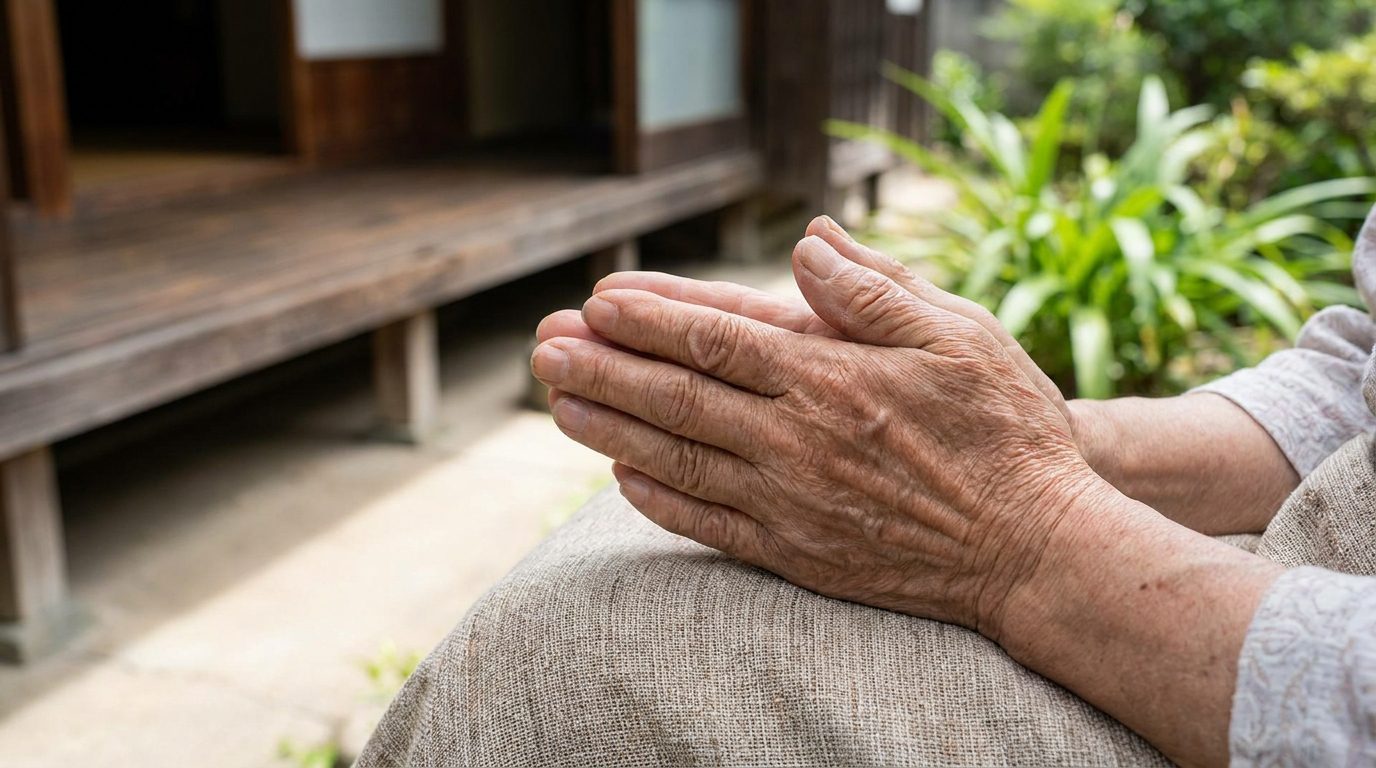
Vandanam is a beautiful Sanskrit word that means “offering respect,” “bowing down,” “prayer,” or “reverential greeting.” In the Indian spiritual tradition, it is much more than a social gesture. Vandanam is a heartfelt expression of humility, gratitude, and love.
The word comes from the Sanskrit root vand, which means “to praise,” “to honor,” or “to offer respectful prayers.” When someone performs vandanam, they are not simply saying hello. They are acknowledging the sacred presence within another person, honoring God, and softening the heart through humility.
In everyday Indian culture, vandanam may appear as a bow, folded hands, touching the feet of elders, or offering respectful words such as “Namaste,” “Pranam,” or “Hare Krishna.” In Bhakti Yoga, the path of devotion, vandanam also refers to prayerful offering—speaking to God with sincerity, gratitude, longing, and love.
At The Bhakti House, we understand vandanam as a simple, practical way to live with more reverence. Whether we are greeting a guest, bowing before the altar, offering a prayer, or thanking someone who has helped us, vandanam teaches us to see life as sacred.
Vandanam as a Traditional Indian Greeting
Across India and many parts of the world, traditional greetings are rooted in respect. Vandanam is one of the spiritual foundations behind these greetings. It reminds us that every person is more than a body, a name, or a social role. Each of us is a soul, beloved by God.
Namaste and Vandanam
One of the most widely known Indian greetings is “Namaste.” This word is often translated as “I bow to you.” It comes from namah, meaning “obeisance” or “respect,” and te, meaning “to you.”
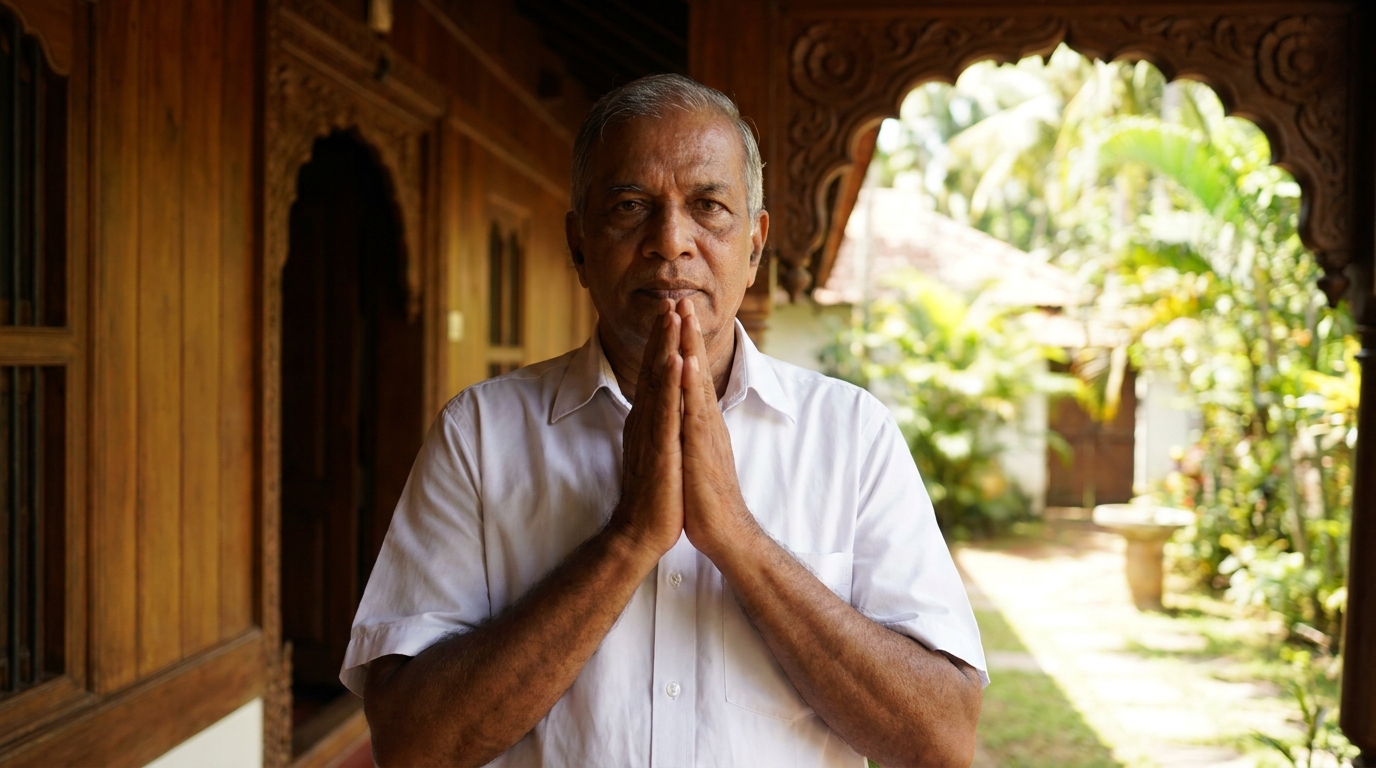
When someone says Namaste with folded hands, they are offering a small form of vandanam. The gesture says, “I honor you,” or more deeply, “I honor the divine presence within you.”
For people new to Indian spirituality, Namaste can be a gentle doorway into a more conscious way of relating. Instead of rushing into conversation, it invites us to pause. It helps us remember that the person before us is worthy of respect.
Pranam and Offering Respect
Another common word connected with vandanam is “Pranam.” Pranam means a respectful bow or salutation. In many Indian homes, children offer pranam to parents, grandparents, teachers, and saints. This may include bowing the head, touching the feet of elders, or simply offering folded hands.
Touching the feet may feel unfamiliar to those from other cultures, but in the traditional understanding, the feet of elders and saints symbolize the path they have walked. By bowing, we honor their experience, sacrifice, and wisdom. It is not about humiliation. It is about humility.
True humility does not mean thinking we are worthless. It means recognizing that we are part of something greater than ourselves. Vandanam helps us become teachable, grateful, and open-hearted.
Folded Hands: The Universal Gesture of Reverence
The most common physical gesture of vandanam is folding the palms together near the heart. In Sanskrit, this is often called anjali mudra. A mudra is a meaningful hand gesture, and anjali means offering.
When we bring both hands together, we symbolically unite body and spirit, action and intention, self and service. Placing the hands near the heart reminds us that our greeting should not be mechanical. It should come from within.
This simple gesture can be practiced by anyone—regardless of nationality, religion, age, or background. It is gentle, non-invasive, and deeply respectful.
The Spiritual Meaning of Vandanam in Bhakti Yoga
In Bhakti Yoga, vandanam is not only a greeting. It is one of the main practices of devotion. Bhakti Yoga means the yoga of love and devotion to God. The Sanskrit word bhakti means loving service, and yoga means connection. So Bhakti Yoga is the path of reconnecting with God through love.
Vandanam Among the Nine Practices of Bhakti
A famous verse from the Śrīmad-Bhāgavatam, one of the most beloved scriptures in the Bhakti tradition, lists nine practices of devotion:
*Śravaṇam kīrtanam viṣṇoḥ smaraṇam pāda-sevanam
Arcanam vandanam dāsyam sakhyam ātma-nivedanam*
This means:
“Hearing about the Lord, chanting His names, remembering Him, serving His feet, worshiping Him, offering prayers, serving as His servant, becoming His friend, and surrendering everything to Him.”
Here, vandanam means offering prayers. It is the devotional practice of turning toward God with an honest heart. It may be spoken aloud, whispered softly, sung, written in a journal, or offered silently within.
This is encouraging because it means anyone can practice vandanam. You do not need to be a scholar. You do not need perfect Sanskrit pronunciation. You do not need to be born into a particular culture. If you can sincerely say, “God, please guide me,” you have begun.
Prayer as Relationship
In Bhakti Yoga, prayer is not only asking for things. Prayer is relationship.
Sometimes we pray with gratitude: “Thank You for carrying me.”
Sometimes we pray with longing: “Please help me remember You.”
Sometimes we pray in struggle: “I do not know what to do.”
Sometimes we pray in surrender: “Let me serve Your will.”
Vandanam gives us permission to bring our whole self before God. We do not have to pretend. We can be honest, tender, confused, joyful, broken, hopeful, and sincere. God is not distant from the heart that calls out.
Vandanam Softens the Ego
One of the great gifts of vandanam is that it softens the ego. The ego says, “I am the center. I must control everything. I deserve more respect.” Vandanam gently teaches, “I am a servant. I am loved. I can honor others. I can depend on God.”
This is not weakness. In fact, humility is a great spiritual strength. A humble heart can learn, forgive, listen, and grow. A humble heart can receive grace.
In the Bhagavad-gītā, Lord Krishna teaches that humility is part of true knowledge. When we practice vandanam, even through a small bow or a simple prayer, we train the heart in this sacred quality.
Please visit our website for more information on our articles: articles.
How to Practice Vandanam in Daily Life
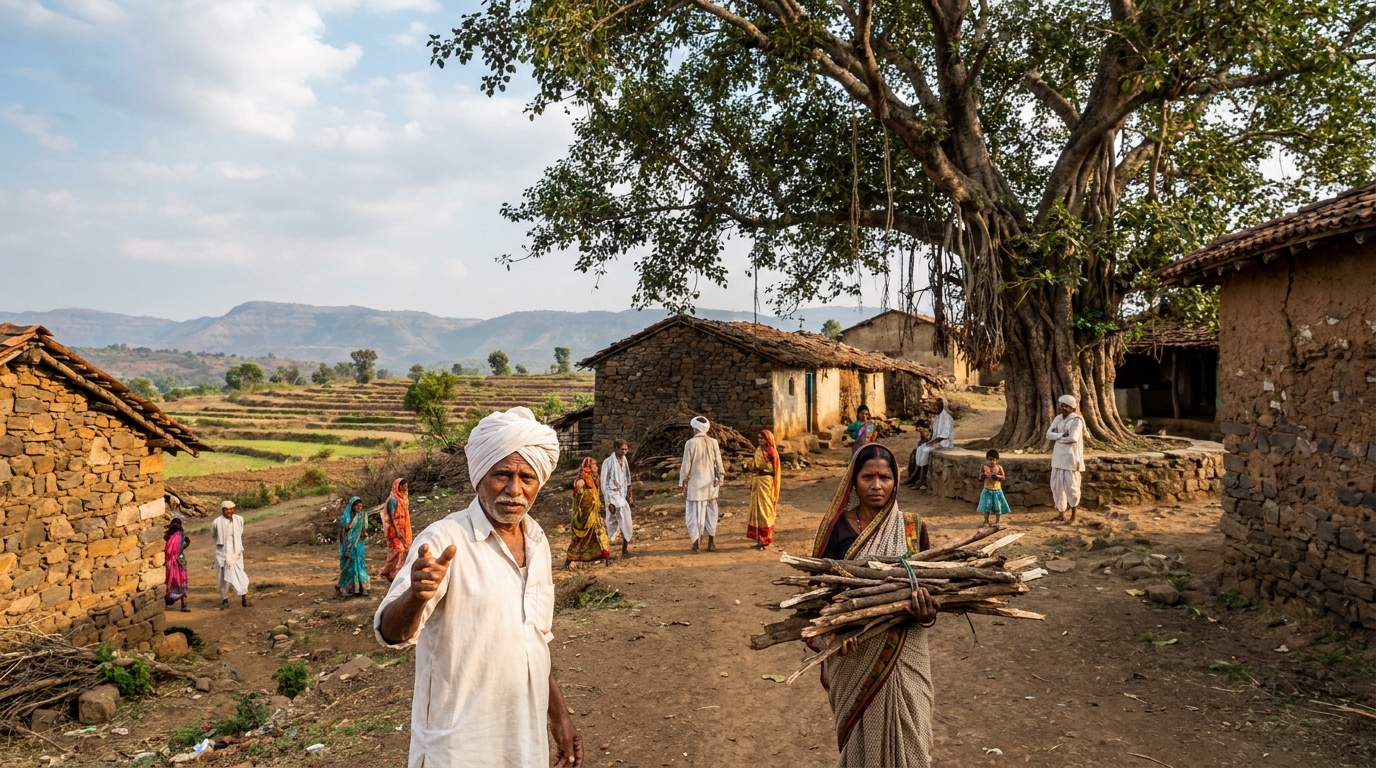
Vandanam is not limited to temples, ceremonies, or religious festivals. It can become part of daily life in simple and meaningful ways. The heart of the practice is respect—toward God, toward others, toward sacred teachings, and toward life itself.
Begin the Day With a Simple Prayer
Before looking at your phone or entering the rush of responsibilities, take a moment to offer vandanam.
You might sit quietly, fold your hands, and say:
“Dear Lord, thank You for this day. Please guide my thoughts, words, and actions. Let me be of service. Let me remember You.”
This small prayer can change the mood of the entire day. It reminds us that we are not alone. We are walking with divine guidance.
Offer Respect Before Meals
In many Bhakti homes and temples, food is first offered to God before being eaten. This practice is called offering prasadam. The word prasadam means mercy or grace. When food is lovingly offered to God and then received, it becomes spiritually uplifting.
Even if you are new to this, you can begin simply. Before eating, pause and offer gratitude:
“God, thank You for this food. May it nourish my body and help me serve with love.”
This is also a form of vandanam. It turns an ordinary meal into a moment of remembrance.
Greet Others With Conscious Respect
The next time you greet someone, try doing so with more presence. You may say “Namaste,” “Pranam,” “Hare Krishna,” or simply “Hello” with genuine kindness. The outer word matters less than the inner intention.
Ask yourself: “Can I see this person as a soul? Can I honor their journey?”
This practice is especially powerful with people we find difficult. Vandanam does not mean we ignore boundaries or accept harmful behavior. But it does mean we try not to reduce anyone to their mistakes. We remember that everyone is on a path of growth.
Bow Before Sacred Wisdom
If you have a sacred text, such as the Bhagavad-gītā, Śrīmad-Bhāgavatam, Bible, Quran, Torah, or another scripture that inspires you, you can offer respect before reading. This may be as simple as touching the book to your head, folding your hands, or offering a prayer for understanding.
In the Bhakti tradition, we do not approach scripture only as information. We approach it as revelation—as living wisdom meant to transform the heart.
Before reading the Bhagavad-gītā, you might pray:
“Please help me hear what I need to hear. Please guide me from confusion toward love.”
End the Day With Gratitude
At night, before sleep, take a few moments for vandanam. Review your day gently. Offer thanks for what went well. Ask forgiveness for where you fell short. Pray for strength to grow.
You may say:
“Lord, whatever I did today, I offer it to You. Please forgive my mistakes. Please help me serve better tomorrow.”
This kind of evening prayer brings peace. It helps us release the day into God’s care.
Forms of Vandanam: From Greeting to Full Prostration
Vandanam can be expressed in many ways. Different regions of India and different spiritual lineages may have their own customs. What matters most is sincerity.
Anjali Mudra: Folded Hands
As mentioned earlier, folded hands are the most common and accessible form of vandanam. This can be used when greeting someone, entering a temple, standing before a deity, or beginning a prayer.
It is simple, beautiful, and universally understandable.
Bowing the Head
Bowing the head is another gentle form of respect. It may be done when receiving blessings, hearing the name of God, passing a sacred place, or greeting a teacher.
The head represents our pride, opinions, and sense of control. When we bow the head, we symbolically offer these things to God.
Touching the Feet
In traditional Indian culture, touching the feet of elders, parents, teachers, and saints is a sign of deep respect. It is often accompanied by receiving blessings.
In Bhakti, the feet of the Lord and the feet of saintly devotees are praised because they represent shelter. To take shelter means to place our faith in divine guidance. This does not mean blind following. It means honoring those who help us move closer to love, truth, and God.
Dandavat Pranam: Full Prostration
A deeper form of vandanam is called dandavat pranam. The word danda means stick, and vat means like. In this form, a person lies flat on the ground like a stick, offering full respect.
This is often done in temples or before spiritual teachers. It represents complete surrender: “I place my body, mind, and heart before God.”
For newcomers, this may feel intense or unfamiliar. There is no pressure. Bhakti grows naturally. A sincere folded-hands prayer can be as meaningful as a full prostration when offered with love.
Spoken Prayers and Sacred Names
Vandanam also includes verbal prayers. In Bhakti Yoga, chanting the names of God is central. This practice is called kirtan when sung together and japa when repeated softly or personally, often on beads.
One of the most beloved mantras in the Bhakti tradition is the Hare Krishna maha-mantra:
Hare Krishna Hare Krishna
Krishna Krishna Hare Hare
Hare Rama Hare Rama
Rama Rama Hare Hare
A mantra is a sacred sound that helps focus and purify the mind. Maha means great, so the maha-mantra is known as the great mantra for awakening love of God.
Chanting is a form of prayer. It is vandanam through sound.
Vandanam in Bhakti Scriptures
The practice of vandanam is deeply rooted in authentic Bhakti scriptures. These texts do not present prayer as a dry ritual. They show prayer as a living exchange between the soul and the Supreme Lord.
Prahlada Maharaja and the Nine Practices
In the Śrīmad-Bhāgavatam, the great devotee Prahlada Maharaja teaches the nine practices of Bhakti, including vandanam. Prahlada was only a child, yet he had deep faith. Even in difficult circumstances, he remembered Lord Vishnu and offered devotion.
His example teaches us that spiritual life is not limited by age, social status, or external situation. A child can pray. A busy parent can pray. A student can pray. A person in pain can pray. Anyone can practice vandanam.
Prahlada’s life also shows that prayer gives courage. When the world feels uncertain, vandanam reconnects us with the shelter of God.
Arjuna’s Prayers in the Bhagavad-gītā
In the Bhagavad-gītā, Arjuna begins as a warrior in confusion. He is overwhelmed, unsure of his duty, and emotionally shaken. Instead of pretending to be strong, he turns to Krishna and says, “I am Your disciple. Please instruct me.”
This is vandanam in spirit. Arjuna bows his pride and asks for guidance.
Later in the Gītā, after Krishna reveals His universal form, Arjuna offers heartfelt prayers. He praises Krishna, asks forgiveness, and acknowledges His divine nature.
This teaches us that prayer can include many moods: surrender, awe, friendship, repentance, and love. We can come to God exactly where we are.
Queen Kunti’s Prayers
The Śrīmad-Bhāgavatam also contains the famous prayers of Queen Kunti. She had suffered many hardships, yet she prayed with extraordinary faith and gratitude. Her prayers show that vandanam is not only for easy times. Sometimes the deepest prayers come from difficulty.
Kunti’s example helps us understand that prayer does not always remove every challenge immediately. Rather, prayer changes our relationship with challenges. It helps us see God’s presence even in uncertain moments.
The Prayers of the Saints
Throughout the Bhakti tradition, saints have composed prayers full of humility and longing. Saints like Śrī Chaitanya Mahaprabhu, the great teacher of chanting the holy names, expressed devotion through simple yet profound prayers.
One of His famous teachings is:
“Trinad api sunichena, taror api sahishnuna…”
This means one should be humbler than a blade of grass, more tolerant than a tree, ready to offer respect to others, and not demand respect for oneself. In such a state, one can constantly chant the holy name of God.
This verse beautifully captures the heart of vandanam. When we learn to offer respect, our chanting becomes deeper. Our relationships become kinder. Our spiritual life becomes more real.
The Inner Attitude Behind Vandanam
The outer form of vandanam is meaningful, but the inner attitude is the soul of the practice. Without sincerity, a bow can become empty. With sincerity, even one quiet prayer can open the heart.
Humility Without Shame
Humility is often misunderstood. Some people think humility means self-hatred or weakness. In Bhakti Yoga, humility means seeing ourselves truthfully.
We are small, but we are loved. We are imperfect, but we are capable of growth. We depend on God, but that dependence is beautiful.
Vandanam helps us release the burden of pretending to be in control. It invites us to become honest and receptive.
Gratitude as a Daily Practice
Vandanam naturally awakens gratitude. When we bow, we remember that life is a gift. Breath is a gift. Food is a gift. Friendship is a gift. Spiritual wisdom is a gift.
Gratitude does not mean life is always easy. It means we choose to notice grace even in the middle of life’s complexity.
A simple gratitude practice can be part of vandanam. Each day, name three things you are thankful for and offer them to God. Over time, this changes the heart.
Respect for All Beings
True vandanam extends beyond formal greetings. It becomes a way of seeing.
If every soul belongs to God, then every being deserves care. This includes people we love, people we struggle with, animals, nature, and ourselves.
In the Bhagavad-gītā, Krishna explains that a wise person sees with equal vision. This does not mean ignoring differences. It means seeing the spiritual essence beneath temporary coverings.
Vandanam trains us in this sacred vision.
Vandanam for People of All Backgrounds
You do not have to be Indian to practice vandanam. You do not have to know Sanskrit. You do not have to change your entire life overnight. The path of Bhakti is generous. It welcomes sincere steps.
If You Are New to Bhakti Yoga
If you are new, begin gently. Fold your hands once a day and offer a simple prayer. Try chanting for a few minutes. Attend a kirtan. Read a verse from the Bhagavad-gītā. Offer respect to someone who has helped you.
Spiritual growth is not a performance. It is a relationship.
If You Come From Another Faith Tradition
Many people who explore Bhakti Yoga come from Christian, Jewish, Muslim, Buddhist, Sikh, Indigenous, or other spiritual backgrounds. Vandanam does not require disrespecting your roots. In fact, it may help you honor the prayerful heart within your own tradition more deeply.
Bhakti teaches love for God. If you already pray, vandanam can enrich your prayer with humility, gratitude, and embodied reverence.
If You Are Unsure About God
Even if you are uncertain about God, you can still practice the spirit of vandanam. You can bow to truth, to love, to the mystery of life, to the goodness you hope to cultivate.
You might pray, “If You are there, please guide me.” That simple honesty is precious.
In Bhakti, sincerity is more important than external certainty. The heart that seeks is already being touched by grace.
Common Questions About Vandanam
Is Vandanam the Same as Namaste?
They are closely related, but not exactly the same. Namaste is a greeting that means “I bow to you.” Vandanam is a broader term meaning offering respect, bowing, praising, or praying. Namaste can be one expression of vandanam.
Is Vandanam Religious or Cultural?
It can be both. In Indian culture, vandanam appears as respectful greeting and etiquette. In Bhakti Yoga, it becomes a devotional practice offered to God, saints, teachers, elders, and all living beings.
Do I Need to Bow Physically?
Not always. Physical gestures can help the heart, but the essence of vandanam is inner respect. If bowing is not physically possible or culturally comfortable, you can offer folded hands, a kind word, or a sincere prayer.
Can Vandanam Be Practiced at Home?
Yes. Home is one of the best places to practice. You can offer vandanam in the morning, before meals, before reading scripture, during chanting, or before sleeping. You can also create a small sacred space with a candle, picture, scripture, or flower.
What Should I Say During Vandanam?
You can speak naturally. Here are a few simple prayers:
“Dear God, please guide me.”
“Thank You for Your mercy.”
“Please help me serve with love.”
“Please forgive my mistakes and help me grow.”
“Let my words and actions bring peace.”
The best prayer is the one that is honest.
Bringing Vandanam Into Modern Life
In a fast-moving world, vandanam may feel like a quiet revolution. Modern life often teaches us to promote ourselves, protect our image, and rush past one another. Vandanam teaches us to pause, honor, and remember.
In Families
Families can practice vandanam by greeting elders respectfully, saying prayers together, or offering gratitude before meals. Children naturally learn reverence when they see adults practicing it with love rather than force.
A small family prayer each evening can bring healing and connection.
In Community
In spiritual community, vandanam helps create a culture of respect. We greet one another as souls. We honor teachers without idolizing them. We serve guests with kindness. We listen carefully. We forgive more readily.
Community becomes sacred when respect is practiced daily.
In Work and Service
Even in professional life, the spirit of vandanam can guide us. We may not fold our hands in every meeting, but we can inwardly honor others. We can speak respectfully. We can serve honestly. We can remember that our work is an offering.
In the Bhagavad-gītā, Krishna teaches that work offered with devotion becomes spiritual. Vandanam helps us bring that mood into ordinary tasks.
The Transforming Power of a Simple Bow
A simple bow can change the heart.
When we bow, we remember we are not the center of the universe. When we fold our hands, we gather our scattered energy. When we pray, we open a doorway to grace. When we greet others with respect, we help create a more compassionate world.
Vandanam is simple, but it is not small. It carries generations of wisdom. It connects culture and devotion, body and heart, humility and love.
For the Bhakti practitioner, vandanam is a daily invitation: “Let me honor God. Let me honor the soul in others. Let me live with gratitude. Let me serve.”
And when we forget, we can begin again. That is the kindness of Bhakti. Every prayer can be a fresh start. Every greeting can become sacred. Every sincere bow can bring us closer to God.
Wherever you are on your spiritual journey, you are welcome. You can begin today with one small act of vandanam: fold your hands, take a breath, and offer one honest prayer. Everyone is welcome to take one sincere step toward God.
FAQs
What is Vandanam?
Vandanam is a traditional Indian greeting or salutation, often accompanied by a gesture such as a slight bow or placing the palms together in front of the chest.
What is the significance of Vandanam?
Vandanam is a sign of respect and reverence in Indian culture. It is commonly used to greet elders, teachers, and spiritual figures.
How is Vandanam performed?
Vandanam is performed by bringing the palms together in front of the chest, with fingers pointing upwards, and bowing slightly. It is often accompanied by saying “Namaste” or “Pranam”.
When is Vandanam typically used?
Vandanam is used in a variety of contexts, including when meeting someone for the first time, when seeking blessings from elders, and during religious or spiritual ceremonies.
What is the cultural significance of Vandanam?
Vandanam reflects the values of humility, respect, and gratitude that are deeply ingrained in Indian culture. It is a way of acknowledging the presence and worth of others.

