
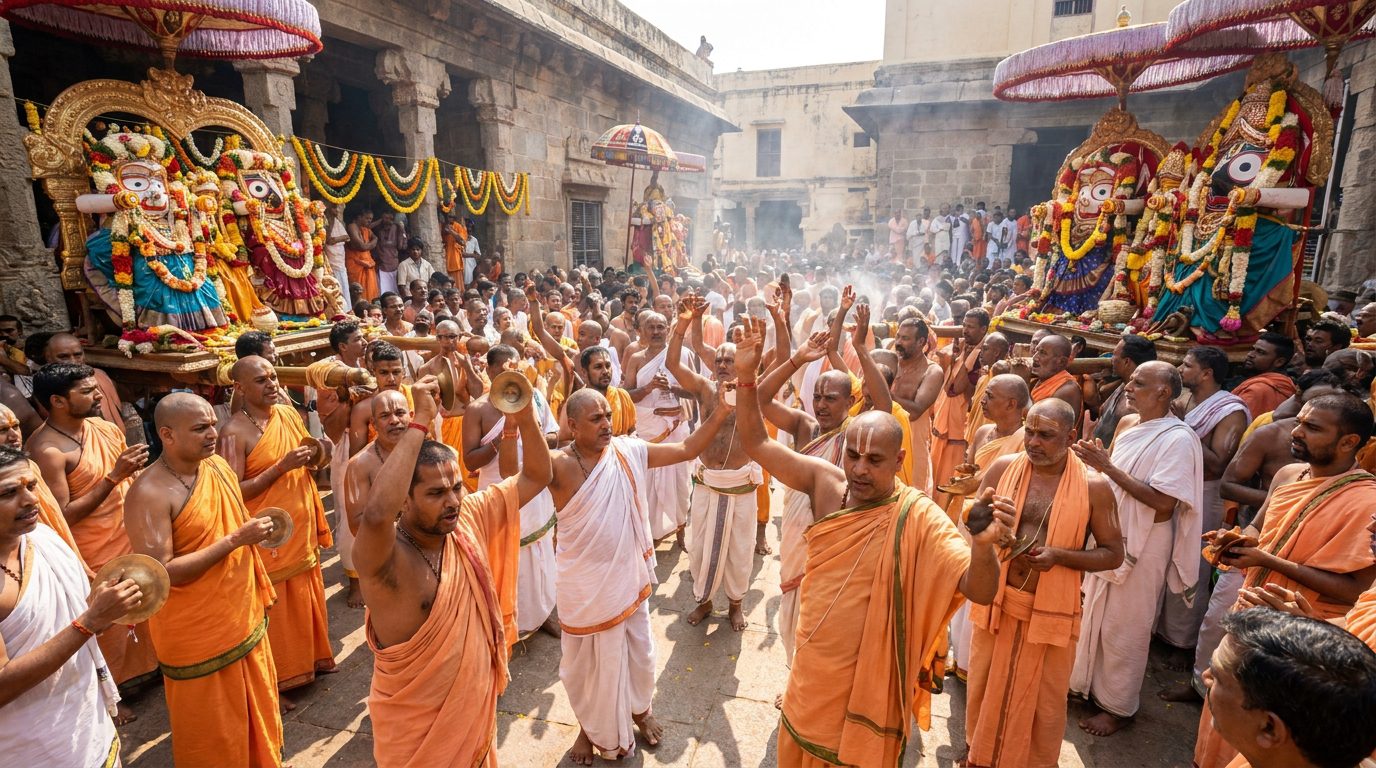
Vaiṣṇava festivals are sacred days of remembrance, celebration, and loving service to God. The word Vaiṣṇava refers to a devotee of Viṣṇu, or Kṛṣṇa—names for the Supreme Lord in the Bhakti Yoga tradition. Bhakti means devotion, or love offered to God with the heart.
These festivals are not only cultural events or religious holidays. They are invitations. They invite us to pause, remember the Divine, chant holy names, hear sacred stories, serve others, and renew our spiritual life.
In the Bhakti tradition, time itself can become sacred. A day, an hour, even a single moment can be transformed when we use it to remember God with sincerity. Whether you are new to Bhakti Yoga or have practiced for many years, Vaiṣṇava festivals offer gentle, joyful ways to grow closer to the Lord and to one another.
Below is a devotional guide to some of the major Vaiṣṇava festivals, their meanings, and how we can honor them in practical ways today.
Vaiṣṇava festivals help us remember what truly nourishes the soul. In daily life, we may become busy, distracted, or discouraged. Festivals lovingly interrupt our routine and remind us: we are spiritual beings, loved by God, and invited into a relationship of devotion.
Sacred Time for Sacred Remembrance
In the Bhagavad-gītā, Śrī Kṛṣṇa says, “Always think of Me, become My devotee, worship Me, and offer your homage unto Me” (Bhagavad-gītā 18.65). Vaiṣṇava festivals give us a beautiful structure for doing this.
On these days, devotees may gather to chant, hear stories from scripture, decorate the temple, cook vegetarian offerings, fast, pray, and serve guests. Each activity becomes spiritual when done with love.
Festivals Are for Everyone
You do not need to be born into a particular culture or know Sanskrit to participate. Bhakti Yoga is the path of the heart. If you can listen, chant, pray, serve, or simply sit with sincerity, you can take part.
The word kīrtana means singing or chanting the names of God, often together in a call-and-response style. The word prasāda means “mercy,” and refers to food that has been lovingly offered to God and then shared. These simple practices are central to many Vaiṣṇava festivals.
Celebration as Spiritual Practice
In Bhakti, celebration is not separate from spiritual discipline. Singing, dancing, feasting, fasting, decorating, storytelling, and serving are all ways to remember God. A festival is not merely something we attend—it is something we offer.
Janmāṣṭamī: The Appearance Day of Lord Kṛṣṇa
Janmāṣṭamī celebrates the divine appearance, or birth, of Lord Kṛṣṇa. Kṛṣṇa is worshiped by Vaiṣṇavas as the Supreme Personality of Godhead, the all-attractive Lord who reveals the sweetness of divine love.
The word Janmāṣṭamī comes from janma, meaning birth, and aṣṭamī, meaning the eighth day of the lunar calendar. According to the Bhāgavata Purāṇa, Kṛṣṇa appeared in a prison cell in Mathurā, at midnight, to Devakī and Vasudeva. Though He appeared as a child, He was fully divine.
The Meaning of Kṛṣṇa’s Appearance
Kṛṣṇa’s appearance teaches us that God enters even the darkest places. He appeared in a prison, during a time of fear and injustice, to bring hope, protection, and love.
This is deeply comforting. Many of us carry our own inner prisons—anxiety, grief, confusion, guilt, loneliness. Janmāṣṭamī reminds us that the Lord is not far away. He can appear in the heart when we call sincerely.
In the Bhagavad-gītā, Kṛṣṇa says, “Whenever and wherever there is a decline in dharma and a rise of irreligion, at that time I manifest Myself” (Bhagavad-gītā 4.7). Dharma means our true spiritual nature and duty. Kṛṣṇa comes to restore love, truth, and sacred purpose.
How Devotees Celebrate Janmāṣṭamī
Many devotees fast until midnight, the traditional time of Kṛṣṇa’s appearance. Temples may hold all-day programs with kīrtana, readings from scripture, dramas, dance, flower decorations, and abhiṣeka, a ceremonial bathing of the Deity with sacred substances like milk, yogurt, honey, and water.
At midnight, devotees joyfully sing, ring bells, and welcome Kṛṣṇa. Then prasāda is shared.
A Simple Way to Honor Janmāṣṭamī at Home
You can celebrate by placing a picture of Kṛṣṇa in a clean, peaceful space. Offer a flower, a candle, fruit, or a simple vegetarian meal. Chant the mahā-mantra:
Hare Kṛṣṇa, Hare Kṛṣṇa, Kṛṣṇa Kṛṣṇa, Hare Hare
Hare Rāma, Hare Rāma, Rāma Rāma, Hare Hare
This mantra is a prayer asking to be lovingly engaged in God’s service. Even a few minutes of sincere chanting can make the heart feel lighter.
Rāma Navamī: The Appearance Day of Lord Rāma
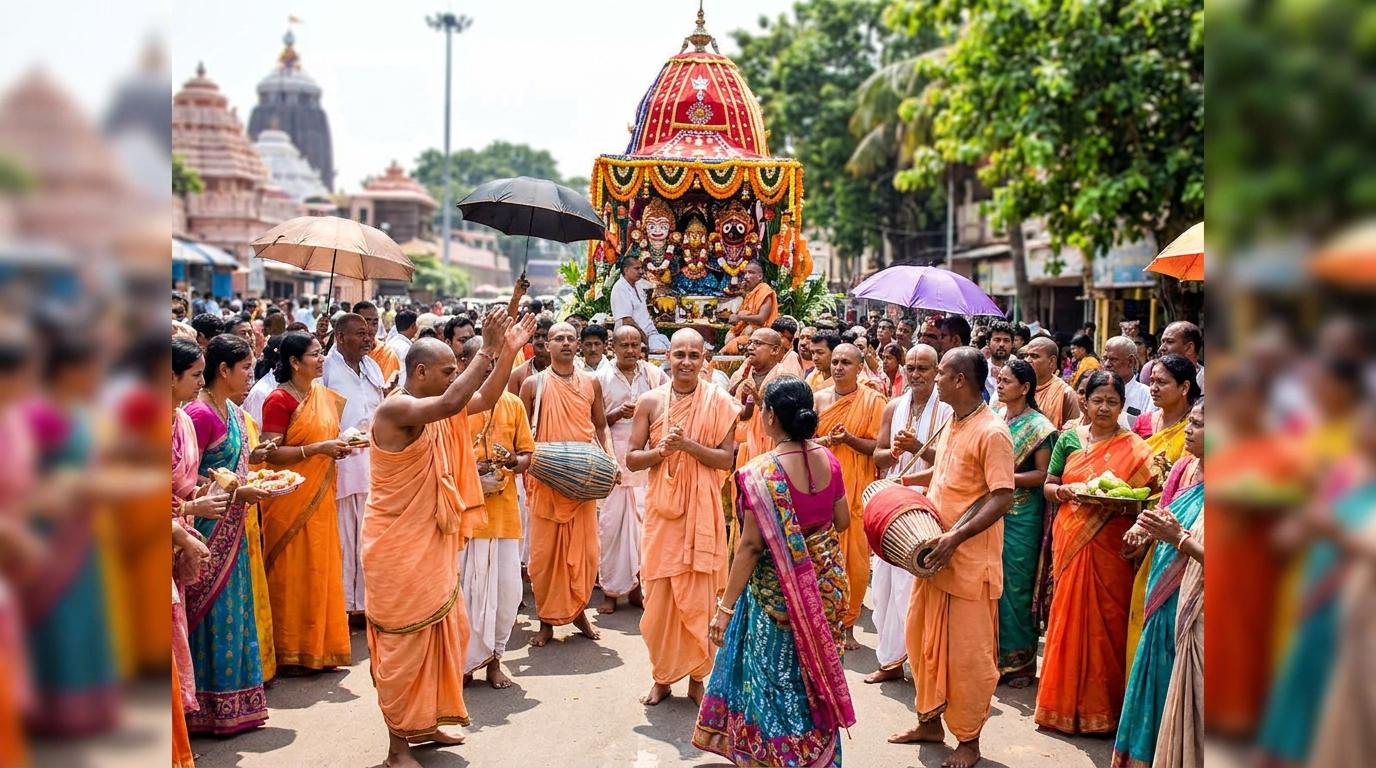
Rāma Navamī celebrates the appearance of Lord Rāma, an incarnation of the Supreme Lord known for righteousness, compassion, courage, and devotion to truth. Rāma means “the source of joy,” and Navamī refers to the ninth day of the lunar calendar.
Lord Rāma’s life is described in the Rāmāyaṇa, one of the great sacred epics of India. His story teaches us about integrity, service, loyalty, humility, and the victory of good over evil.
Lord Rāma as the Ideal King and Servant
Rāma is often called Maryādā Puruṣottama, meaning the perfect person who upholds sacred principles. He shows how to live with honor, even in difficulty.
When Rāma was exiled to the forest for fourteen years, He accepted it without bitterness. His wife Sītā and brother Lakṣmaṇa accompanied Him with deep love and devotion. Their journey reveals the beauty of sacrifice, faithfulness, and trust in God’s plan.
The Devotion of Hanumān
No discussion of Rāma Navamī is complete without remembering Hanumān, the great servant of Lord Rāma. Hanumān represents pure devotion in action. He does not serve for recognition. He serves because he loves.
For those on the Bhakti path, Hanumān is a powerful example. We can pray, “Please help me serve with humility, strength, and love.”
Practicing Rāma Navamī Today
On Rāma Navamī, devotees chant the names of Rāma, read from the Rāmāyaṇa, fast until midday, and gather for worship and prasāda.
A simple home practice is to read or listen to a story from the Rāmāyaṇa and reflect: Where in my life can I choose integrity? How can I serve with more faith? How can I respond to hardship without losing my devotion?
Sure, here is the sentence with the clickable link:
Check out our latest posts on posts.
Gaura Pūrṇimā: The Appearance Day of Śrī Caitanya Mahāprabhu
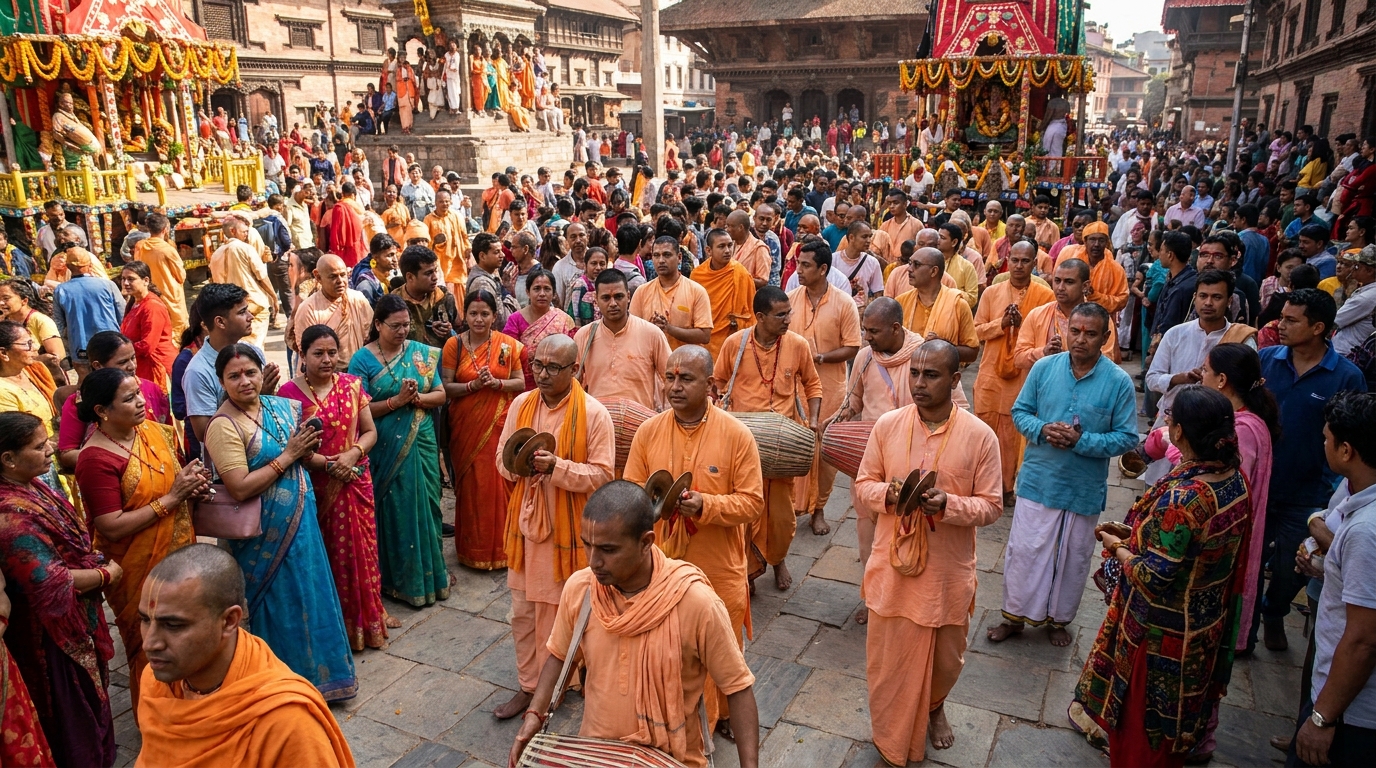
Gaura Pūrṇimā celebrates the appearance of Śrī Caitanya Mahāprabhu, the golden avatāra, or divine incarnation, who appeared in Bengal over 500 years ago. Gaura means golden, referring to His golden complexion, and Pūrṇimā means full moon.
Śrī Caitanya is especially loved because He taught the simple and powerful practice of chanting the holy names of God. He shared prema-bhakti, pure love of God, with everyone—regardless of background, education, caste, gender, or social position.
The Gift of the Holy Name
Śrī Caitanya Mahāprabhu taught that in this age, the most practical spiritual process is nāma-saṅkīrtana, congregational chanting of God’s names. Nāma means name, and saṅkīrtana means chanting together.
The Bṛhan-nāradīya Purāṇa says:
“Harer nāma harer nāma harer nāmaiva kevalam
kalau nāsty eva nāsty eva nāsty eva gatir anyathā”
This means: “In this age, the holy name of the Lord is the only way, the only way, the only way for spiritual progress.”
This is not meant to be narrow or harsh. It is merciful. Chanting is accessible. We can chant in a temple, at home, in the car, on a walk, softly, loudly, alone, or with others.
Compassion Without Barriers
Śrī Caitanya embraced people who were rejected by society. He transformed hearts through love, humility, and chanting. His life teaches that spiritual growth is not about pride or superiority. It is about becoming softer, kinder, and more devoted.
One of His famous teachings is:
“Tṛṇād api sunīcena
taror api sahiṣṇunā
amāninā mānadena
kīrtanīyaḥ sadā hariḥ”
This means we should be humbler than a blade of grass, more tolerant than a tree, ready to offer respect to others, and not demand respect for ourselves. In that mood, we can always chant the names of God.
How Gaura Pūrṇimā Is Celebrated
Devotees often fast until moonrise, chant, hear about the life of Caitanya Mahāprabhu, perform kīrtana, and share prasāda. Many temples offer a beautiful abhiṣeka ceremony and joyful singing late into the evening.
At home, you can honor Gaura Pūrṇimā by chanting the mahā-mantra and praying: “Please help me receive and share divine love.”
Nṛsiṁha Caturdaśī: The Appearance of Lord Nṛsiṁhadeva
Nṛsiṁha Caturdaśī celebrates Lord Nṛsiṁhadeva, the half-man, half-lion form of the Lord who appeared to protect His young devotee Prahlāda. Nṛsiṁha means “man-lion,” and Caturdaśī means the fourteenth day of the lunar calendar.
This festival is especially dear to devotees who seek protection, courage, and faith in difficult times.
Prahlāda’s Faith
Prahlāda was a young boy born into a family opposed to devotion. His father, Hiraṇyakaśipu, was powerful and cruel. He demanded worship for himself and became enraged when Prahlāda lovingly worshiped Lord Viṣṇu.
Despite threats and suffering, Prahlāda remained peaceful. He remembered God constantly and trusted in the Lord’s protection.
The story is found in the Śrīmad-Bhāgavatam, especially the Seventh Canto. It teaches that devotion can flourish even in hostile circumstances. No outer situation can prevent the soul from remembering God.
The Lord Protects the Sincere Heart
When Hiraṇyakaśipu challenged Prahlāda, asking if God was present in a pillar, Prahlāda said yes. The Lord then appeared from that pillar as Nṛsiṁhadeva—not human, not animal, not inside or outside, not during day or night—fulfilling divine justice in a way beyond material calculation.
For the devotee, this story gives hope: God is present everywhere, even where we least expect Him.
A Prayer for Protection
On Nṛsiṁha Caturdaśī, devotees often fast until dusk and chant prayers to Lord Nṛsiṁhadeva. A simple prayer is:
“Lord Nṛsiṁha, please protect my devotion. Please remove fear, pride, and anger from my heart. Please help me remember You in all circumstances.”
Rādhāṣṭamī: The Appearance Day of Śrīmatī Rādhārāṇī
Rādhāṣṭamī celebrates the appearance of Śrīmatī Rādhārāṇī, the eternal beloved of Lord Kṛṣṇa and the highest example of pure devotion. Rādhā is worshiped in the Vaiṣṇava tradition as the personification of divine love.
If Kṛṣṇa is the Supreme Lord, Rādhā is the supreme devotee. She shows what it means to love God completely, selflessly, and joyfully.
Understanding Rādhā with Reverence
For newcomers, Rādhā and Kṛṣṇa may seem like a divine couple from ancient stories. In Bhakti theology, Their love is the deepest spiritual reality. It is not ordinary romance. It is pure, selfless, eternal love between the soul and God, revealed in its highest form.
Rādhārāṇī’s compassion is especially emphasized. Devotees pray to Her because She helps us approach Kṛṣṇa. Like a loving spiritual mother, She notices even small efforts and magnifies them.
The Mood of Service
Rādhāṣṭamī teaches that the highest spiritual life is not to demand from God, but to serve God with love. Rādhā’s joy is Kṛṣṇa’s joy. Her heart is fully offered.
This is the essence of Bhakti Yoga: to transform the question “What can I get?” into “How may I serve?”
How to Honor Rādhāṣṭamī
Devotees may fast until noon, offer flowers, sing bhajans—devotional songs—and hear about Rādhārāṇī’s qualities. A simple prayer is:
“Śrīmatī Rādhārāṇī, please bless me with a drop of sincere devotion. Please teach me how to love and serve Kṛṣṇa.”
Govardhana Pūjā: Honoring Kṛṣṇa as the Protector
Govardhana Pūjā is celebrated the day after Dīpāvalī in many Vaiṣṇava communities. It remembers Kṛṣṇa lifting Govardhana Hill to protect the residents of Vṛndāvana from a devastating storm.
Govardhana is a sacred hill in Vṛndāvana, the holy land of Kṛṣṇa’s childhood pastimes. Pūjā means worship.
Kṛṣṇa Lifts Govardhana Hill
According to the Śrīmad-Bhāgavatam, Kṛṣṇa encouraged the villagers to worship Govardhana Hill, the cows, and the land that sustained them, rather than worshiping Indra, the proud celestial king of rain. Indra became angry and sent fierce storms.
To protect the people and animals, Kṛṣṇa lifted Govardhana Hill like an umbrella for seven days. Everyone took shelter beneath it.
This story teaches that God is the true protector. It also teaches humility. Even powerful beings like Indra must learn that pride blocks devotion.
Gratitude for the Earth and Cows
Govardhana Pūjā is also a festival of gratitude. Devotees honor cows, land, food, and the simple gifts of nature. In Bhakti culture, cows are respected because they give milk and represent gentleness, nourishment, and sacred living.
This festival invites us to ask: Am I living with gratitude? Am I caring for the earth? Am I receiving food as a gift from God?
The Mountain of Food
Many temples create an annakūṭa, which means “mountain of food.” Devotees prepare many vegetarian dishes and offer them to Kṛṣṇa. After the offering, everyone receives prasāda.
At home, you can make one simple vegetarian dish with love, offer it to Kṛṣṇa, and share it with others. The heart of the festival is gratitude and shelter.
Dīpāvalī: The Festival of Lights
Dīpāvalī, or Diwali, is widely known as the Festival of Lights. While it is celebrated in many Hindu traditions, Vaiṣṇavas often connect it with Lord Rāma’s return to Ayodhyā after His exile and victory over Rāvaṇa.
Dīpa means lamp, and āvalī means row. Rows of lamps symbolize the victory of light over darkness, truth over falsehood, and devotion over forgetfulness.
Welcoming the Lord Home
When Lord Rāma returned to Ayodhyā, the citizens lit lamps to welcome Him. Spiritually, Dīpāvalī invites us to light the lamp of devotion in our own hearts and welcome God back into the center of our lives.
Sometimes we may not reject God outwardly, but we gradually make everything else more important. Dīpāvalī is a gentle reminder: make room again. Clean the heart. Light the lamp. Welcome the Lord.
Inner Cleansing
Many families clean their homes before Dīpāvalī. This can also become a spiritual meditation. As we clean our physical space, we can pray for inner cleansing:
“Please remove envy, greed, resentment, and forgetfulness from my heart. Please let devotion shine here.”
A Simple Dīpāvalī Practice
Light a candle or ghee lamp in a safe place. Offer a prayer to Lord Rāma, Sītā, Lakṣmaṇa, and Hanumān. Chant the holy names, read a short passage from the Rāmāyaṇa, and share prasāda with family, friends, or neighbors.
Ekādaśī: A Twice-Monthly Festival of Devotion
Ekādaśī is not one annual festival, but a sacred day that comes twice a month, on the eleventh day of the waxing and waning moon. Ekādaśī means “eleventh.”
Vaiṣṇavas honor Ekādaśī as a day for increased remembrance of God, simplified eating, chanting, prayer, and spiritual focus.
Why Devotees Fast on Ekādaśī
Fasting in Bhakti Yoga is not meant for punishment or pride. It is meant to create space. By simplifying the body’s demands, we can give more attention to the soul.
Many devotees avoid grains and beans on Ekādaśī. Some take fruit, vegetables, nuts, milk, or simple preparations. Others may fast more strictly, depending on health and circumstance. The main principle is to increase devotion, not to harm the body or impress others.
The Inner Fast
The deeper fast is to reduce gossip, criticism, distraction, and unnecessary indulgence. We can fast from harsh speech. We can fast from resentment. We can fast from mindless scrolling and make time for prayer.
Ekādaśī is a practical gift for modern life. Twice a month, it asks: What am I feeding my soul?
How to Begin
If you are new, start gently. Eat simple vegetarian food without grains or beans, chant a little more than usual, read a verse from the Bhagavad-gītā, and offer one act of service.
Bhakti grows through sincerity, not pressure.
Appearance and Disappearance Days of Vaiṣṇava Saints
In the Vaiṣṇava calendar, devotees honor the appearance and disappearance days of great saints and teachers. An appearance day marks when a saint entered this world. A disappearance day marks when they left this world.
Both are sacred, because the lives of saints show us what devotion looks like in practice.
Why Saints Are Celebrated
Saints are living scriptures. They show compassion, humility, discipline, wisdom, and love in real human circumstances. By remembering them, we receive inspiration and guidance.
The Śrīmad-Bhāgavatam teaches the importance of hearing from saintly persons because their words awaken devotion in the heart. Association with devotees, called sādhu-saṅga, is one of the most powerful supports on the path of Bhakti.
Śrīla Prabhupāda and the Global Sharing of Bhakti
Many modern Vaiṣṇavas honor A.C. Bhaktivedanta Swami Prabhupāda, often called Śrīla Prabhupāda, who carried the teachings of Kṛṣṇa Bhakti from India to the wider world in the 1960s. Through his translations, temples, communities, and teachings, millions of people encountered the Bhagavad-gītā, kīrtana, prasāda, and devotional service.
Honoring a spiritual teacher does not mean idolizing a human being. It means feeling gratitude for someone who helped us remember God.
Practical Ways to Honor Saints
On these days, devotees may read biographies, hear memories, chant, offer flowers, cook prasāda, and recommit to a specific teaching.
A helpful reflection is: “What quality of this saint can I practice today?” Perhaps humility, courage, compassion, steadiness, or service.
Kārtika: The Month of Deepening Devotion
Kārtika is a sacred month in the Vaiṣṇava calendar, especially dear to Lord Kṛṣṇa and Śrīmatī Rādhārāṇī. It usually falls around October–November. Many devotees observe special vows, offer lamps, chant more, and hear about Kṛṣṇa’s pastimes.
Kārtika is sometimes called the month of Dāmodara, a name of Kṛṣṇa meaning “He who was bound by the belly.” This refers to a sweet childhood pastime in which Mother Yaśodā bound Kṛṣṇa with love.
The Dāmodara Lesson
The Dāmodara story, found in the Śrīmad-Bhāgavatam, reveals a beautiful truth: the infinite Lord allows Himself to be bound by the love of His devotee.
Kṛṣṇa, the Supreme, is not conquered by power, wealth, or scholarship. He is conquered by love.
This is the heart of Bhakti Yoga. God is a person, and love is the way to approach Him.
Offering a Lamp
During Kārtika, devotees often offer a small lamp to Kṛṣṇa each evening while singing the Dāmodarāṣṭakam, a prayer glorifying Kṛṣṇa as Dāmodara.
Even if you do not know the full prayer, you can offer a candle and say: “Dear Lord, please let the light of devotion grow in my heart.”
Taking a Gentle Vow
Some devotees take a small vow for the month—extra chanting, reading scripture daily, avoiding a habit, serving others, or offering a lamp each night.
The best vow is one that increases love and is realistic enough to keep with sincerity.
How to Participate in Vaiṣṇava Festivals
You may wonder, “What if I don’t know the rituals? What if I make a mistake?” Please do not worry. In Bhakti, sincerity is more important than perfection.
Come as You Are
You can attend a temple festival, join a kīrtana, listen quietly, ask respectful questions, or help serve prasāda. You do not need to know everything in advance.
If you are attending a temple, modest and comfortable clothing is usually appreciated. You may remove your shoes before entering the temple room. You can follow what others are doing, or simply sit and observe with respect.
Chant with an Open Heart
Chanting is one of the easiest ways to participate. The mahā-mantra is especially central:
Hare Kṛṣṇa, Hare Kṛṣṇa, Kṛṣṇa Kṛṣṇa, Hare Hare
Hare Rāma, Hare Rāma, Rāma Rāma, Hare Hare
Hare is a call to the divine energy of the Lord, often understood as Śrīmatī Rādhārāṇī. Kṛṣṇa means the all-attractive Lord. Rāma means the source of spiritual joy. Together, the mantra is a prayer: “Please engage me in Your loving service.”
Serve in Simple Ways
Service, or sevā, is love in action. You can help set up chairs, wash dishes, cut vegetables, greet guests, clean the floor, bring flowers, donate ingredients, or simply offer kindness to someone who is new.
In Bhakti, no service is small when offered with devotion.
Receive Prasāda Gratefully
Most Vaiṣṇava festivals include prasāda, sanctified vegetarian food offered to God. Receiving prasāda is itself a spiritual practice. It reminds us that nourishment is not merely physical—it is also divine mercy.
When we eat with gratitude, food becomes a bridge to God.
The Heart Behind Every Festival
Each Vaiṣṇava festival has its own story, mood, and practices. Janmāṣṭamī celebrates Kṛṣṇa’s divine appearance. Rāma Navamī honors Lord Rāma’s righteousness. Gaura Pūrṇimā shares the mercy of chanting. Nṛsiṁha Caturdaśī gives courage and protection. Rādhāṣṭamī reveals the highest love. Govardhana Pūjā teaches gratitude and shelter. Dīpāvalī lights the heart. Ekādaśī renews our focus. Kārtika deepens devotion.
Yet beneath them all is one loving invitation: remember God.
From Ritual to Relationship
Rituals are meaningful when they awaken relationship. A lamp is not just a lamp—it is our longing to bring light into the heart. A flower is not just a flower—it is beauty offered back to the source of beauty. A song is not just music—it is the soul calling out to the Beloved.
Bhakti Yoga turns ordinary actions into offerings.
Festivals Continue in Daily Life
The spirit of a festival does not have to end when the calendar day passes. We can carry it forward.
After Janmāṣṭamī, we can remember Kṛṣṇa in the midst of difficulty. After Rāma Navamī, we can choose integrity. After Gaura Pūrṇimā, we can chant more sincerely. After Govardhana Pūjā, we can live with gratitude. After Rādhāṣṭamī, we can serve with a softer heart.
Every day can become a small festival when we offer it to God.
A Gentle Invitation to Begin
If you feel drawn to Vaiṣṇava festivals, begin simply. Choose one upcoming festival. Learn its story. Chant one round of the mahā-mantra, or chant for five minutes. Offer a flower, a candle, a prayer, or a simple vegetarian meal. Read one verse from the Bhagavad-gītā or Śrīmad-Bhāgavatam. Serve one person with kindness.
Please remember: Bhakti Yoga is not about being perfect. It is about turning toward God with sincerity, again and again. The Lord sees the heart. Even one small offering made with love is spiritually powerful.
Everyone is welcome on this path—every background, every culture, every stage of life, every sincere seeker. May these sacred festivals bring light, courage, gratitude, and devotion into your heart. And may each of us take one sincere step toward God today.
FAQs
What are the major Vaiṣṇava festivals?
The major Vaiṣṇava festivals include Janmāṣṭamī (the appearance day of Lord Kṛṣṇa), Ratha-yātrā (the chariot festival), Govardhana-pūjā (the worship of Govardhana Hill), and Gaura-pūrṇimā (the appearance day of Lord Caitanya).
What is Janmāṣṭamī?
Janmāṣṭamī is the celebration of the appearance day of Lord Kṛṣṇa, which falls on the eighth day of the dark fortnight in the month of Bhādra (August-September). It is observed with fasting, singing, and dancing.
What is Ratha-yātrā?
Ratha-yātrā is the chariot festival, during which the deities of Lord Jagannātha, Lord Balarāma, and Lady Subhadrā are taken out in a procession on grand chariots. It is a major festival in Puri, India, and is also celebrated in other parts of the world.
What is Govardhana-pūjā?
Govardhana-pūjā is the worship of Govardhana Hill, a festival that commemorates the pastime of Lord Kṛṣṇa lifting the hill to protect the residents of Vṛndāvana from the wrath of Indra, the demigod of rain.
What is Gaura-pūrṇimā?
Gaura-pūrṇimā is the appearance day of Lord Caitanya, who is considered to be an incarnation of Lord Kṛṣṇa in the mood of a devotee. It is celebrated with fasting, singing, and dancing in the mood of devotion.

