

Every person carries a sacred spark.
You may express it through music, cooking, teaching, organizing, parenting, healing, building, gardening, writing, listening, encouraging, leading, serving, or simply showing up with a kind heart. In Bhakti Yoga, we are invited to see our talents not as random gifts or personal possessions, but as offerings—beautiful ways to reconnect with God and serve the world with love.
Bhakti Yoga is the path of devotion. The Sanskrit word bhakti means loving service, devotion, or heartfelt connection with the Divine. It is not limited to one culture, background, or personality type. Whether you are new to spiritual life, returning after a long time, or already walking a devotional path, Bhakti Yoga gently teaches that your whole life can become sacred when offered with love.
This guide is an invitation to unlock your potential by offering your talents. Not for ego. Not for comparison. Not to prove your worth. But to remember your worth as a beloved soul and to use what you have been given in service to God and others.
In modern life, talents are often measured by achievement, money, status, or recognition. But Bhakti Yoga offers a softer and deeper vision. Your gifts are not merely tools for success; they are ways your soul can participate in divine love.
What Is a Talent?
A talent is any ability, quality, or strength that can be used to bring goodness into the world.
Some talents are visible. You may sing beautifully, teach clearly, cook wonderfully, or create art that moves people. Other talents are quieter. You may be patient, compassionate, reliable, prayerful, attentive, or able to make others feel safe.
In spiritual life, both kinds of talents matter.
Someone who sings at a temple gathering and someone who washes the dishes afterward may both be offering deeply. Someone who gives a public talk and someone who quietly prays for others may both be serving God.
Bhakti Yoga reminds us that the value of an offering is not based on applause. It is based on sincerity.
The Soul Beyond Comparison
The Sanskrit word atma means the self or soul—the eternal spiritual being within the body. According to the Bhagavad-gita, one of the most beloved scriptures of Bhakti Yoga, we are not merely our temporary body, mind, job title, or social role. We are spiritual beings, beloved by God.
This understanding can free us from comparison.
When we compare our talents to others, we may feel proud, insecure, jealous, or discouraged. But when we remember that each soul is unique, we can appreciate the gifts of others without minimizing our own.
Your path of service does not need to look like anyone else’s.
A candle does not need to become the sun to offer light.
Gifts Are Meant to Flow
In Bhakti wisdom, love grows when it is shared. A talent kept only for self-centered enjoyment may eventually feel empty. But a talent offered in service becomes spiritually nourishing.
This does not mean we must reject our natural interests or become someone we are not. Rather, we learn to connect our abilities with a higher purpose.
If you love music, you can sing sacred songs or create sounds that uplift the heart.
If you love cooking, you can prepare food with prayer and offer it to God before sharing.
If you love learning, you can study scripture and help others understand spiritual truths.
If you love business, you can practice integrity, generosity, and compassionate leadership.
If you love caring for children, you can help them feel seen as souls.
When offered with devotion, ordinary work becomes sacred service.
Bhakti Yoga: The Path of Offering with Love
Bhakti Yoga is a practical spiritual path centered on loving relationship with God. It includes chanting, prayer, hearing sacred wisdom, worship, friendship, service, remembrance, and living with devotion.
The word yoga means connection. So Bhakti Yoga means connecting with God through love.
Offering Is at the Heart of Bhakti
In the Bhagavad-gita 9.26, Krishna says:
“Whoever offers Me with devotion a leaf, a flower, a fruit, or water, I accept that loving offering from the pure-hearted soul.”
This verse is simple and profound. God does not ask for something grand. A leaf, a flower, a fruit, or water—these are humble things. The key is devotion.
This teaches us that spiritual offering is not reserved for the wealthy, famous, educated, or outwardly religious. Anyone can offer. Everyone has something to give.
A meal can be offered. A song can be offered. A sincere prayer can be offered. A day’s work can be offered. A tear can be offered. A mistake can be offered with repentance. A small step forward can be offered.
God receives the heart.
Seva: Service as a Spiritual Practice
The Sanskrit word seva means service. In Bhakti Yoga, seva is not just helping; it is loving service offered for the pleasure of God and the welfare of others.
Seva can happen in a temple, in a home, at work, in a school, in a hospital, in a garden, online, or in a quiet conversation.
The spirit of seva asks:
“How can I serve?”
“How can this gift be used with love?”
“How can I help others remember their spiritual nature?”
This attitude can transform our entire life.
Bhava: The Mood Behind the Action
Another helpful Sanskrit word is bhava, meaning mood, feeling, or inner attitude. In Bhakti, the mood behind an offering is essential.
Two people may do the same service externally, but the inner mood can be different. One may serve to be admired. Another may serve to please God. One may serve with resentment. Another may serve with gratitude.
Of course, our hearts are often mixed. We may want to serve God, but also want recognition. We may feel generous one day and tired the next. Bhakti Yoga does not ask us to pretend. It invites us to keep purifying our intentions through chanting, prayer, humility, and honest self-reflection.
Growth is gradual. Sincerity is powerful.
Discovering the Talents God Has Given You
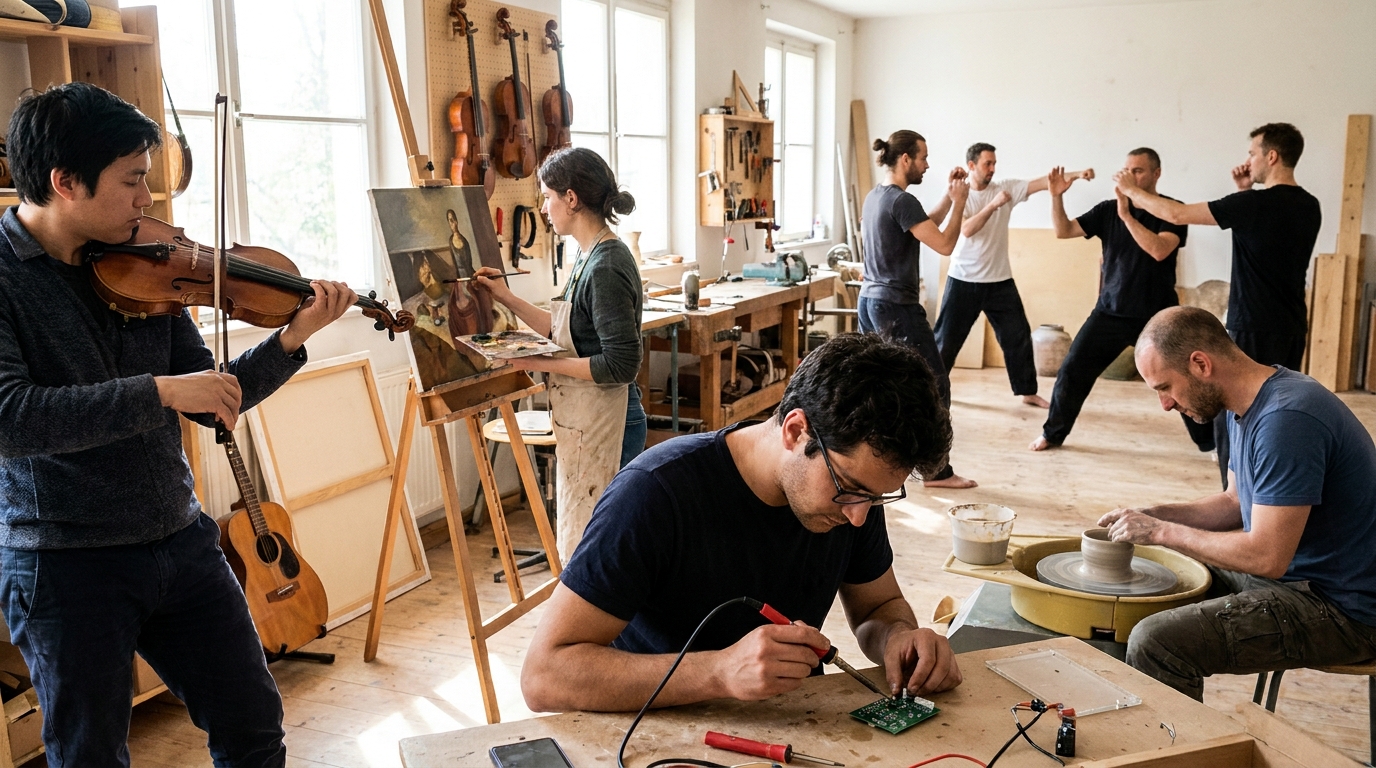
Some people know their talents clearly. Others feel unsure. You may think, “I don’t have anything special to offer.” But in Bhakti Yoga, everyone has something meaningful to give.
The journey begins with noticing.
Listen to What Naturally Draws Your Heart
Ask yourself:
What activities make me feel alive in a wholesome way?
What do people often come to me for?
What kind of service gives me quiet joy?
What burdens in the world move my heart?
What have I learned through my own struggles that may help others?
Sometimes your talent is hidden inside your compassion. If you feel deeply for lonely people, perhaps you have a gift for friendship. If you feel moved by confusion, perhaps you have a gift for teaching. If you feel concerned about disorder, perhaps you have a gift for organizing.
God often places clues in the heart.
Notice the Talents You May Overlook
Many people overlook their most important gifts because they come naturally.
You may say, “I just listen,” but deep listening is rare.
You may say, “I just cook,” but feeding people with love is sacred.
You may say, “I just help behind the scenes,” but communities survive because of humble support.
You may say, “I just pray,” but prayer is powerful service.
In Bhakti communities, the quiet offerings are often the roots of everything else. A flower may be seen, but the roots hold the plant.
Ask Trusted People
Humility does not mean denying your gifts. Sometimes others can see what we cannot see.
Ask a trusted friend, mentor, spiritual guide, or family member:
“What strengths do you see in me?”
“How do you think I could serve?”
“When have you seen me most joyful or useful?”
Receive their reflections with openness, not ego. Their words may help you recognize a direction for your service.
Bring Your Talents into Prayer
Prayer is a beautiful way to discover and offer your gifts.
You might pray:
“Dear God, please show me how to serve with what You have given me.”
“Please guide my talents toward love, humility, and spiritual growth.”
“Please help me use my abilities not for pride, but for Your pleasure and the benefit of others.”
In Bhakti Yoga, we are never alone in the process of discovering our purpose. God is present in the heart as guide and friend.
Check out our latest articles at https://thebhaktihouse.org/blog.
Transforming Work into Worship

Many people wonder, “How can I practice spirituality when I have a job, family, responsibilities, and so little time?”
Bhakti Yoga answers gently: begin where you are.
Your life does not have to be separate from your spiritual path. Your daily work can become worship when offered with love.
Karma and Karma Yoga
The Sanskrit word karma means action, and it also refers to the results of action. Karma Yoga means linking our actions to the Divine by acting with spiritual consciousness.
In the Bhagavad-gita 3.9, Krishna teaches that work should be performed as sacrifice for the Supreme. This means that when we act only for selfish gain, we become bound by anxiety and attachment. But when we act as an offering, work becomes purifying.
This is deeply practical.
You can begin your workday with a prayer:
“May my work today be an offering. May I act with honesty, kindness, and remembrance of You.”
Then your emails, meetings, caregiving, cleaning, planning, studying, and creating can all become part of your devotional life.
Excellence Without Ego
Offering your talents does not mean doing things carelessly. In Bhakti, we try to offer our best because love naturally wants to give nicely.
If you cook for someone you love, you try to cook with care.
If you decorate a sacred space, you do it attentively.
If you sing for God, you try to sing from the heart.
Excellence can be devotional when it is free from arrogance. We can work hard, improve our skills, and take responsibility, while remembering: “These abilities are gifts. The results belong to God.”
This brings balance. We do not become lazy, and we do not become proud. We become instruments.
Letting Go of the Results
One of the greatest teachings of the Bhagavad-gita is found in 2.47, where Krishna explains that we have a right to perform our duty, but we are not entitled to control the results.
This is not passive. It is liberating.
You may offer your talent sincerely, but people may not respond as you hoped. A project may not succeed. A song may not be appreciated. A class may have few attendees. A business may struggle. A service may go unnoticed.
Bhakti Yoga teaches us to act with devotion and surrender the outcome.
This helps protect the heart from discouragement. We can ask, “Was I sincere? Did I serve with love? What can I learn?” Then we continue.
God sees every offering.
Practical Ways to Offer Your Talents
Offering your talents can be simple, joyful, and deeply personal. You do not need to wait until you are perfect, fully trained, or completely confident. Start with what you have.
Offer Your Voice Through Chanting and Encouragement
Chanting is one of the central practices of Bhakti Yoga. The Sanskrit word mantra means a sacred sound that helps free the mind and awaken the heart. One widely practiced mantra in the Bhakti tradition is the Hare Krishna maha-mantra:
Hare Krishna, Hare Krishna, Krishna Krishna, Hare Hare
Hare Rama, Hare Rama, Rama Rama, Hare Hare
The word maha means great. This “great mantra” is a prayer calling upon God’s divine names. Krishna means the all-attractive Lord, Rama means the source of joy, and Hare calls upon the divine spiritual energy of the Lord.
If you have a musical talent, you can offer it through kirtan, which is devotional call-and-response chanting. But even if you do not consider yourself musical, you can still chant. Bhakti is not a performance. It is a prayer.
Your voice can also serve through kind words, encouragement, teaching, storytelling, or speaking truth with compassion.
Offer Your Hands Through Service
Your hands can become instruments of devotion.
You can cook, clean, garden, repair, build, write, paint, care for children, serve meals, prepare sacred spaces, pack donations, or help someone move.
In many Bhakti communities, practical service is treasured. Washing pots after a feast may look ordinary, but when done with love, it becomes worship.
The Srimad-Bhagavatam, another important Bhakti scripture, repeatedly glorifies hearing, chanting, and serving the Lord and His devotees. Service softens the heart because it shifts our focus from “What can I get?” to “How can I give?”
Offer Your Mind Through Study and Creativity
The mind is powerful. It can worry, judge, plan, imagine, remember, and create. In Bhakti Yoga, we learn to engage the mind in remembrance of God.
You can offer your mind by studying sacred texts, writing reflections, creating devotional art, designing helpful resources, solving problems for a spiritual community, or using your professional knowledge in service.
For example:
A designer can help create uplifting spiritual materials.
A writer can share devotional wisdom.
A teacher can make sacred philosophy understandable.
An accountant can support honest community management.
A therapist or coach can help people grow with compassion and integrity.
A student can offer their learning as preparation for future service.
No talent is outside the reach of devotion when offered sincerely.
Offer Your Home and Hospitality
Hospitality is sacred in Bhakti culture. A home can become a place of prayer, chanting, kindness, and spiritual nourishment.
You might invite friends for a simple vegetarian meal offered to God. This sanctified food is called prasadam, meaning mercy or grace. In Bhakti Yoga, food prepared with love and offered to God becomes spiritually uplifting.
You do not need a large house or fancy setting. A small table, a warm heart, and a simple prayer can create sacred space.
Hospitality can also mean making people feel welcome in community. Sometimes the person who smiles at the door is doing life-changing service.
Offer Your Resources with Gratitude
Some people have the ability to support spiritual service financially or materially. This is also a meaningful offering when done with humility.
Giving can support sacred gatherings, food distribution, education, books, community care, outreach, temple worship, retreats, and service projects.
In Bhakti, generosity is not about the amount. It is about the heart. A small gift offered with devotion is spiritually significant.
The practice of giving reminds us that everything we have is temporarily entrusted to us. We are caretakers, not owners.
Overcoming Obstacles in Offering Your Talents
As soon as we begin to offer ourselves, obstacles may arise. This is normal. Spiritual growth often reveals the places in us that need healing, purification, and deeper faith.
“I’m Not Good Enough”
Many sincere people hesitate because they feel unworthy.
But Bhakti Yoga does not begin with perfection. It begins with sincerity.
If you wait until you are completely pure, confident, and skilled, you may wait forever. Instead, offer what you can now, and let the offering purify you.
A child may bring a simple drawing to a loving parent. The parent does not criticize the technique. The parent receives the love.
In the same way, God receives sincere offerings, even when they are small.
Fear of Being Seen
Some people hide their talents because they are afraid of judgment. Others fear that using their gifts will make them proud.
Humility is important, but hiding is not always humility. Sometimes humility means allowing God to use you, even if you feel shy.
You can pray: “Please protect me from pride. Please let this service be for You.”
Then take a gentle step.
You do not need to force yourself into a public role. You can begin quietly. But do not bury your gifts out of fear.
Pride and the Desire for Recognition
Pride can enter any service. Even spiritual service. We may begin to think, “This is my project, my talent, my success.”
Bhakti Yoga offers many remedies.
Chanting softens pride.
Gratitude reminds us that our gifts come from God.
Community helps us stay accountable.
Serving in simple ways keeps us grounded.
Remembering the temporary nature of the body and mind helps us see clearly.
If pride appears, do not despair. Notice it, pray, and continue. The path of devotion is a path of purification.
Burnout and Overgiving
Offering your talents does not mean ignoring your limits. Service should be guided by wisdom, balance, and care.
Sometimes people serve intensely but forget to chant, pray, rest, nourish the body, or receive support. Over time, the heart becomes dry.
Bhakti service is meant to be connected to spiritual nourishment. We serve from relationship with God, not from pressure alone.
If you feel burned out, pause and return to the basics:
Chant.
Pray.
Hear sacred wisdom.
Take prasadam.
Rest.
Speak honestly with a trusted devotee or guide.
Healthy service is sustainable service.
Building a Life of Devotional Purpose
Unlocking your potential is not just about finding one perfect role. It is about living with devotional intention day by day.
Your purpose may unfold gradually. Your talents may change with different seasons of life. What you can offer as a student may differ from what you offer as a parent, elder, artist, professional, or caregiver.
Bhakti Yoga is flexible because love is alive.
Create a Simple Offering Practice
Begin each day with a small offering.
You might light a candle or incense, place your hands together, and say:
“Dear Lord, please accept this day. Please guide my thoughts, words, and actions. May my talents be used in love.”
This simple prayer can change the atmosphere of the whole day.
Even if the day becomes busy, the intention has been planted.
Choose One Talent to Offer Regularly
Rather than trying to do everything, choose one talent you can offer consistently.
For example:
Sing or chant once a week.
Cook prasadam for someone once a month.
Volunteer in a community service role.
Write a devotional reflection regularly.
Help with organizing gatherings.
Mentor someone younger.
Offer professional skills to a spiritual project.
Pray daily for people in need.
Consistency deepens devotion. Small offerings done regularly can transform the heart more than occasional dramatic gestures.
Find Spiritual Community
The Sanskrit word sanga means association or company. In Bhakti Yoga, spiritual association is very important because we become shaped by the people we spend time with.
A loving devotional community helps us remember God, encourages our service, corrects us gently, and gives us opportunities to grow.
If you are near a Bhakti community, temple, ashram, kirtan group, or devotional gathering, consider attending. If not, you may connect through online classes, chanting groups, scripture study, or spiritual friendships.
Community is not always perfect, because communities are made of growing people. But sincere association is a powerful support on the path.
Learn from a Guide or Mentor
In Bhakti traditions, spiritual guidance is deeply valued. A mentor, teacher, or guru can help us understand scripture, refine our intentions, and engage our talents wisely.
The word guru means spiritual teacher—one who helps remove darkness by giving divine knowledge. Approaching guidance does not mean losing your individuality. It means receiving wisdom from someone walking the path with experience and devotion.
If you are new, simply begin by listening, asking respectful questions, and observing whose life reflects humility, compassion, and devotion.
Offering Talents in Family, Work, and Community Life
Bhakti Yoga is not only for temples or retreat spaces. It can be lived in kitchens, offices, classrooms, neighborhoods, hospitals, studios, and family homes.
In Family Life
Family responsibilities can be sacred offerings.
Changing diapers, caring for elders, cooking dinner, listening to a spouse, supporting a sibling, or teaching a child to pray can all become devotional service.
It is easy to think spiritual life must look peaceful and quiet. But love often looks like patience in the middle of noise.
If you live with others, try bringing simple Bhakti practices into the home:
Play soft kirtan.
Share prasadam.
Read one verse of the Bhagavad-gita.
Say a gratitude prayer before meals.
Create a small sacred space.
Speak about God naturally and lovingly.
The goal is not to force, but to invite.
In Professional Life
Your workplace can become a field of spiritual practice.
You can offer your talents by being honest, fair, compassionate, diligent, and respectful. You can see coworkers as souls. You can avoid gossip. You can make decisions with integrity. You can use success as an opportunity for generosity rather than pride.
Before a difficult meeting, silently chant or pray.
Before sending an important message, ask for clarity and kindness.
When receiving praise, inwardly thank God.
When facing criticism, ask what can be learned.
This is practical Bhakti.
In Community Service
Many people feel called to serve beyond their immediate circle. Bhakti Yoga naturally inspires compassion because we begin to see everyone as part of God’s family.
Community service may include feeding people, caring for the environment, supporting spiritual education, helping the lonely, visiting the sick, or offering skills to uplift others.
When service is connected with devotion, it nourishes both the giver and receiver. We are not “saving” others from above. We are serving fellow souls with humility.
The Inner Fruit of Offering Your Talents
When talents are offered with devotion, something beautiful happens inside us. We begin to feel less separate from God and others. Our gifts become bridges.
The Heart Becomes Softer
Self-centered use of talent can make the heart hard. We may become competitive, anxious, or obsessed with outcomes.
Devotional offering softens the heart. We begin to feel gratitude. We notice grace. We become more compassionate toward others’ struggles.
Chanting the holy names, serving with humility, and offering our work gradually cleanse the mirror of the heart. This image is found in the teachings of Sri Chaitanya Mahaprabhu, a great teacher of Bhakti who spread the chanting of God’s names with deep love. He taught that chanting cleanses the heart and awakens our natural love for God.
Identity Becomes Clearer
When we offer our talents, we start to see ourselves differently.
Not just “I am a singer.”
Not just “I am a parent.”
Not just “I am successful.”
Not just “I am struggling.”
But: “I am a servant of God. I am a soul. I am loved. I can love.”
This identity brings freedom. Roles may change, but the soul’s relationship with God remains.
Joy Becomes Deeper
There is a joy that comes from receiving, achieving, and being appreciated. This joy is real, but often temporary.
There is another joy that comes from giving with love. This joy is quieter, deeper, and more sustaining.
In Bhakti Yoga, the highest joy is loving connection with God. Offering our talents is one way to move toward that joy.
The more we offer, the more we realize that love is not diminished by giving. Love expands.
A Simple Step-by-Step Guide to Begin Today
If you feel inspired but unsure where to start, begin gently. Spiritual life grows through sincere, steady steps.
Step 1: Pause and Remember
Take a few quiet breaths.
Remember: “I am a soul. God is present. My life can be an offering.”
You do not need a perfect mood. Just begin.
Step 2: Name One Gift
Write down one talent or quality you have.
It may be creativity, kindness, discipline, cooking, singing, organizing, teaching, listening, caregiving, writing, or problem-solving.
If you feel stuck, ask someone who knows you.
Step 3: Offer It in Prayer
Say a simple prayer:
“Dear God, this gift came from You. Please help me use it in a way that pleases You and serves others.”
This prayer is powerful because it shifts ownership into stewardship.
Step 4: Take One Action
Choose one small action within the next week.
Call someone who needs encouragement.
Attend a kirtan.
Cook and offer a meal.
Volunteer for one service.
Share a spiritual book.
Help clean a sacred space.
Create something uplifting.
Donate according to your capacity.
Pray for someone sincerely.
Do not wait for a grand plan. Love begins now.
Step 5: Reflect and Continue
After you serve, reflect:
How did this affect my heart?
Did I remember God?
What did I learn?
How can I serve again with more sincerity?
Bhakti Yoga is not about one-time inspiration. It is a lifelong relationship of offering and receiving grace.
Everyone Has Something Beautiful to Offer
You do not need to be perfect to be used by God.
You do not need to have a public talent.
You do not need to know many Sanskrit words.
You do not need to belong to a particular background, culture, or level of spiritual experience.
Bhakti Yoga welcomes the whole person. Your questions, your history, your hopes, your grief, your strengths, and even your doubts can be brought into the light of devotion.
God is not waiting for you to become someone else. God is inviting you to turn your heart toward Him, as you are, and take one sincere step.
Maybe your next step is chanting one mantra.
Maybe it is offering your food with a prayer.
Maybe it is serving someone quietly.
Maybe it is reading one verse of the Bhagavad-gita.
Maybe it is asking, “How can I use my talents in love?”
Whatever your step may be, take it with humility and hope.
At The Bhakti House, all are welcome—seekers, beginners, longtime practitioners, the curious, the weary, the joyful, and everyone in between. Come as you are. Bring what you have. Offer one sincere gift of the heart, and trust that God can turn even the smallest offering into a doorway of grace.
FAQs
What does it mean to offer one’s talents?
Offering one’s talents refers to sharing one’s skills, abilities, and expertise with others, whether it be through volunteering, mentoring, or providing services.
Why is offering one’s talents important?
Offering one’s talents is important as it allows individuals to contribute to their communities, help others, and make a positive impact. It also provides opportunities for personal growth and fulfillment.
How can one identify their talents?
One can identify their talents by reflecting on activities they enjoy, receiving feedback from others, and trying out different hobbies and skills to see what comes naturally to them.
What are some ways to offer one’s talents?
Some ways to offer one’s talents include volunteering for organizations, mentoring others, freelancing or offering services, teaching or leading workshops, and participating in community events.
What are the benefits of offering one’s talents?
The benefits of offering one’s talents include personal fulfillment, skill development, building a sense of community, making a positive impact, and potentially creating new opportunities for career or personal growth.

