
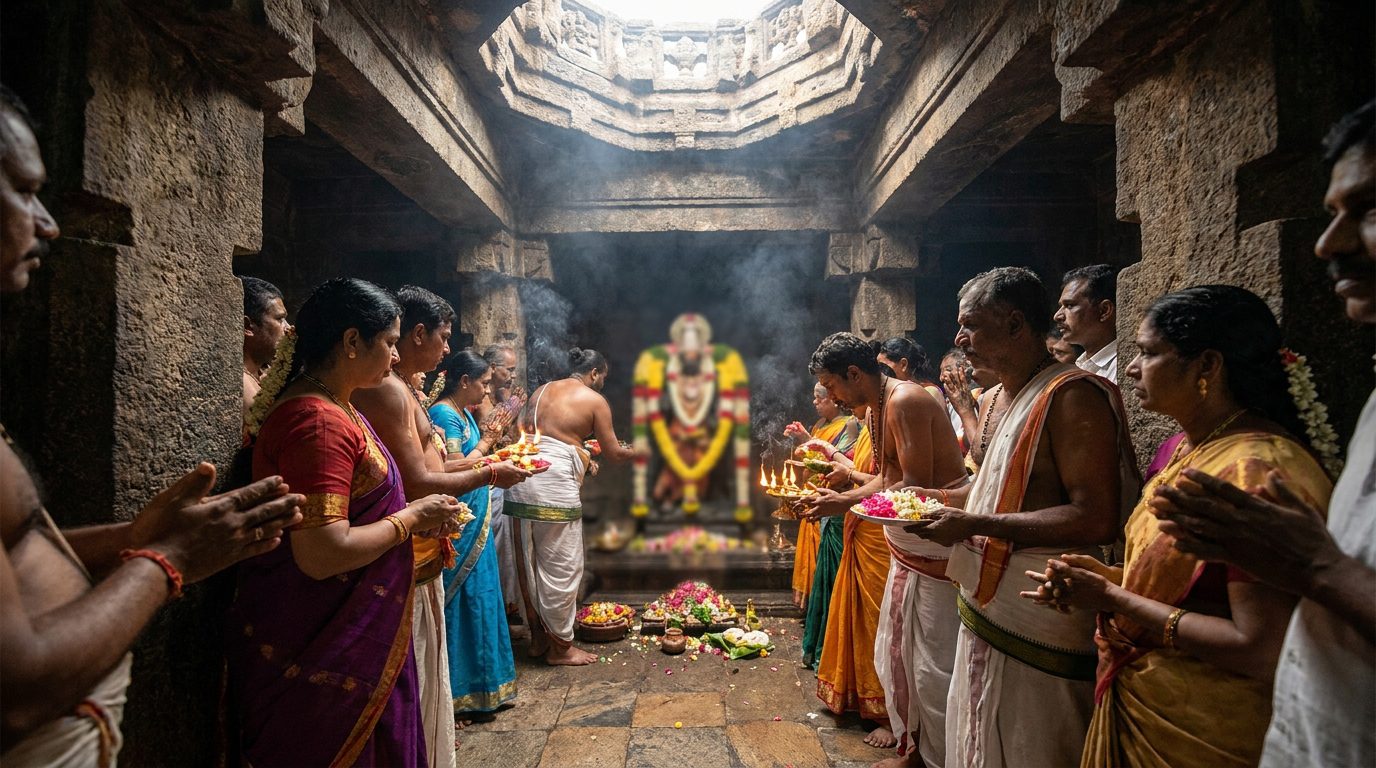
For many people, the word “temple” brings to mind a beautiful building, sacred music, incense, bells, candles, flowers, and a peaceful feeling in the heart. For others, temple worship may feel mysterious or unfamiliar. What is happening on the altar? Why are offerings made? Why do people bow, chant, or circle lamps before the Deity?
In Bhakti Yoga, temple worship is not meant to be confusing or distant. It is a loving practice that helps the heart remember God. The temple is a sacred home where the Divine is honored with devotion, beauty, gratitude, and care. It is a place where anyone—regardless of background, culture, experience, or belief—can come closer to God through simple, sincere acts of love.
The Sanskrit word bhakti means devotion, loving service, or heartfelt connection with the Divine. Temple worship is one of the most beautiful expressions of Bhakti Yoga because it engages the senses, the mind, the body, and the heart in spiritual remembrance.
Whether you are visiting a temple for the first time, returning after many years, or wishing to deepen your devotional life, this guide is offered with humility and warmth. May it help unlock the mysteries of temple worship and reveal its simple essence: love offered to God and love received from God.
Temple worship is the practice of honoring God in a sacred form through prayer, chanting, offerings, music, meditation, and service. In Sanskrit, worship is often called puja, which means an offering of respect, love, and devotion.
In the Bhakti tradition, God is understood to be personal, loving, and responsive. The Divine is not only a distant force but a real person who can be approached with affection. Temple worship creates a sacred environment where this relationship can be nourished.
The Temple as a Sacred Meeting Place
A temple is not merely a religious building. It is a place of meeting—where the soul meets God, where community gathers in devotion, and where the busy mind is gently invited to become peaceful.
Just as we decorate our homes for someone we love, the temple is decorated for the pleasure of the Lord. Flowers, lamps, music, incense, sacred food, and beautiful clothing are all offered with the mood, “Dear Lord, please accept this small expression of my love.”
For newcomers, it can help to remember that temple worship is not about performance. It is about presence. You do not have to know every prayer or ritual. You can simply stand, listen, breathe, and offer your heart.
The Meaning of the Deity
One of the most important aspects of temple worship is the presence of the Deity. In Sanskrit, the Deity is called murti, meaning a sacred form. In Bhakti Yoga, the Deity is not considered an idol or imaginary symbol. Rather, devotees understand the Deity as God mercifully appearing in a visible form so that we can offer service and develop a personal relationship.
This may feel new to some readers. A simple way to understand it is this: love naturally seeks expression. We may keep photos of loved ones, care for meaningful objects, or visit places that remind us of someone dear. In a much deeper spiritual way, the Deity allows devotees to focus their love and service on God in a tangible, personal manner.
The Bhagavad-gita explains that God accepts offerings made with devotion: “If one offers Me with love and devotion a leaf, a flower, fruit, or water, I will accept it” (Bhagavad-gita 9.26). This verse is the heart of temple worship. God is not hungry for our things. God is touched by our love.
Why Temple Worship Matters
Temple worship matters because the human heart needs sacred rhythm. Life can become crowded with responsibilities, anxieties, screens, ambitions, and disappointments. The temple reminds us that we are more than our roles and worries. We are spiritual beings, beloved by God, meant for a life of love and service.
Worship Purifies the Heart
In Bhakti Yoga, purification does not mean becoming harsh, judgmental, or “better than others.” It means clearing away the dust that covers the heart—selfishness, envy, fear, pride, and forgetfulness of God.
Temple worship helps purify the heart because it gently redirects our attention. Instead of asking, “What can I get?” worship teaches us to ask, “What can I offer?” This shift is deeply healing.
When we bow, we practice humility.
When we chant, we invite divine sound into the mind.
When we offer flowers, we practice gratitude.
When we serve others, we remember that love is active.
Worship Engages the Whole Person
Bhakti Yoga is practical because it does not ask us to reject our senses. Instead, it spiritualizes them.
We use our eyes to see the Deity.
We use our ears to hear sacred chanting.
We use our tongue to chant God’s names and honor blessed food.
We use our hands to offer service.
We use our feet to walk toward sacred places.
This is one reason temple worship is so powerful. It gives the body and mind a devotional direction. Even if the heart feels distracted, the practice itself gradually awakens devotion.
Worship Creates Community
Temple worship is not only personal; it is also communal. People gather to chant, pray, cook, clean, learn, celebrate festivals, and support one another.
In a world where many feel lonely, spiritual community can be a gift. The Sanskrit word sanga means association or company. In Bhakti, good association nourishes our spiritual growth. Being around sincere seekers helps us remember what matters most.
A temple at its best is a welcoming spiritual home, not a place of exclusion. Everyone is invited to come as they are and grow at their own pace.
Common Elements of Temple Worship
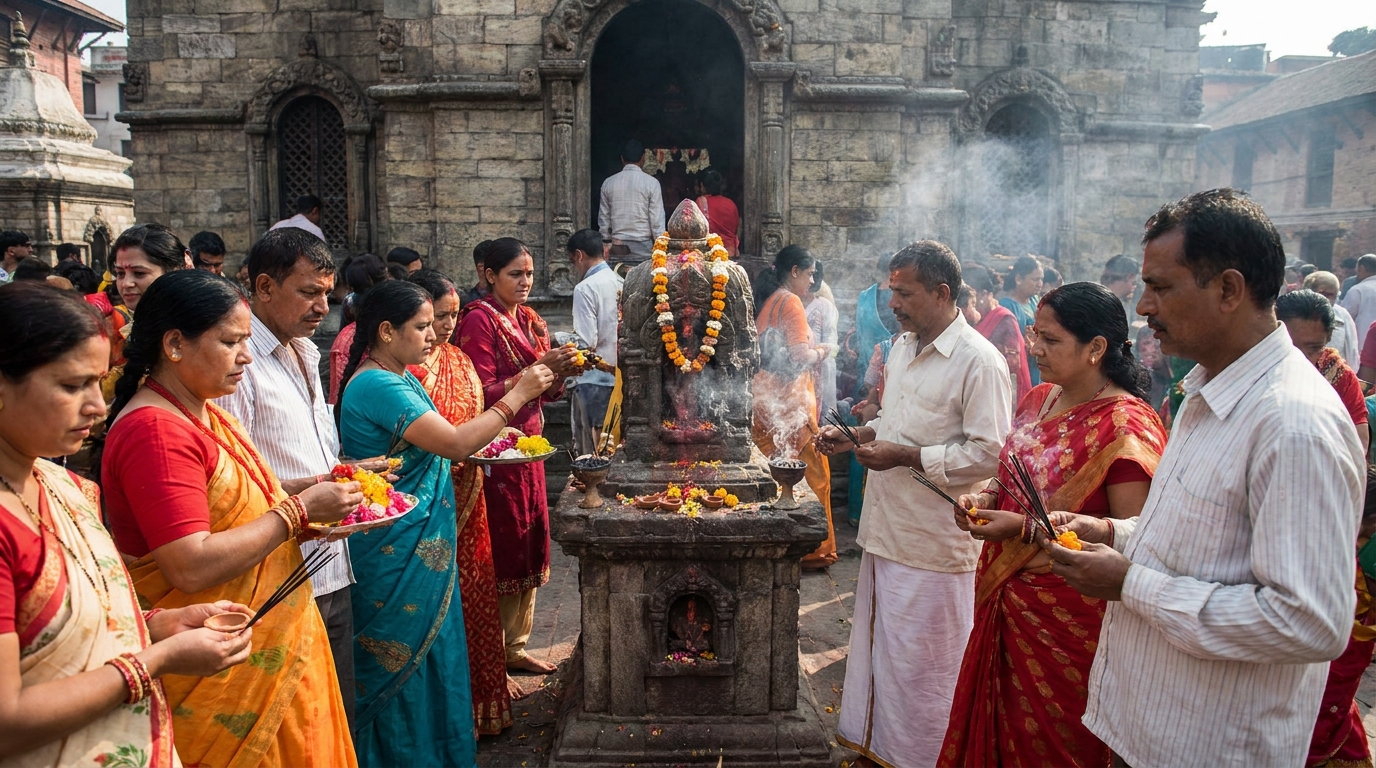
If you have ever attended a temple program, you may have seen lamps, incense, bells, conch shells, flowers, food offerings, and chanting. Each element has meaning, but the essence is simple: everything is offered to God with love.
Arati: Offering Light and Love
One of the most well-known temple ceremonies is arati. Arati is a devotional offering in which items such as incense, lamps, water, cloth, flowers, and fans are offered to the Deity.
The lamp is especially meaningful. Light represents knowledge, purity, and the presence of God. When the lamp is offered, devotees often sing and meditate on the Lord. Afterward, the lamp may be brought to the congregation, and people gently place their hands over the flame and touch their head or heart. This is a way of receiving sacred blessings.
Arati is not simply a ritual to watch. It is an invitation to participate inwardly. You might pray, “Dear God, please bring light into my heart. Please help me live in love.”
Kirtan: Sacred Chanting
Kirtan means the singing or chanting of God’s names, often with musical instruments and a call-and-response style. In Bhakti Yoga, sound is considered deeply transformative. The names of God are understood to carry divine presence.
One of the most beloved mantras in the Bhakti tradition is the Hare Krishna maha-mantra:
Hare Krishna, Hare Krishna, Krishna Krishna, Hare Hare
Hare Rama, Hare Rama, Rama Rama, Hare Hare
A mantra is a sacred sound vibration that helps lift the mind and awaken the heart. The word maha means great, so maha-mantra means “great mantra.” This chanting is a prayer asking to be engaged in loving service to God.
You do not need to have a perfect voice to chant. You do not need to understand everything at once. The practice is simple: hear, repeat, and offer your heart.
Prasadam: Sacred Food Offered with Love
Food offered to God is called prasadam, meaning mercy or grace. In temple worship, devotees prepare vegetarian food with cleanliness, care, and devotion, then offer it to the Lord. After the offering, the food is shared with everyone.
Prasadam is one of the most welcoming aspects of Bhakti Yoga. It teaches us that eating can become sacred. Instead of consuming unconsciously, we learn gratitude. We remember that food is a gift from God, nature, farmers, cooks, and so many living beings.
The Bhagavad-gita teaches that when we offer food to God, our eating becomes spiritually uplifting. Practically, honoring prasadam can help us slow down, appreciate, and receive nourishment with a thankful heart.
Darshan: Seeing and Being Seen
Darshan means seeing, but in temple worship it has a deeper meaning: seeing the Deity and being seen by the Lord.
When devotees come before the altar, they often fold their hands, bow, or silently pray. This moment is not just about looking at sacred forms. It is about allowing oneself to be present before God.
A simple darshan prayer might be: “My Lord, I am here. Please guide me. Please help me remember You.”
Even a few moments of sincere darshan can bring peace, clarity, and spiritual strength.
Please visit our website for more information on our articles: articles.
Understanding the Temple Altar
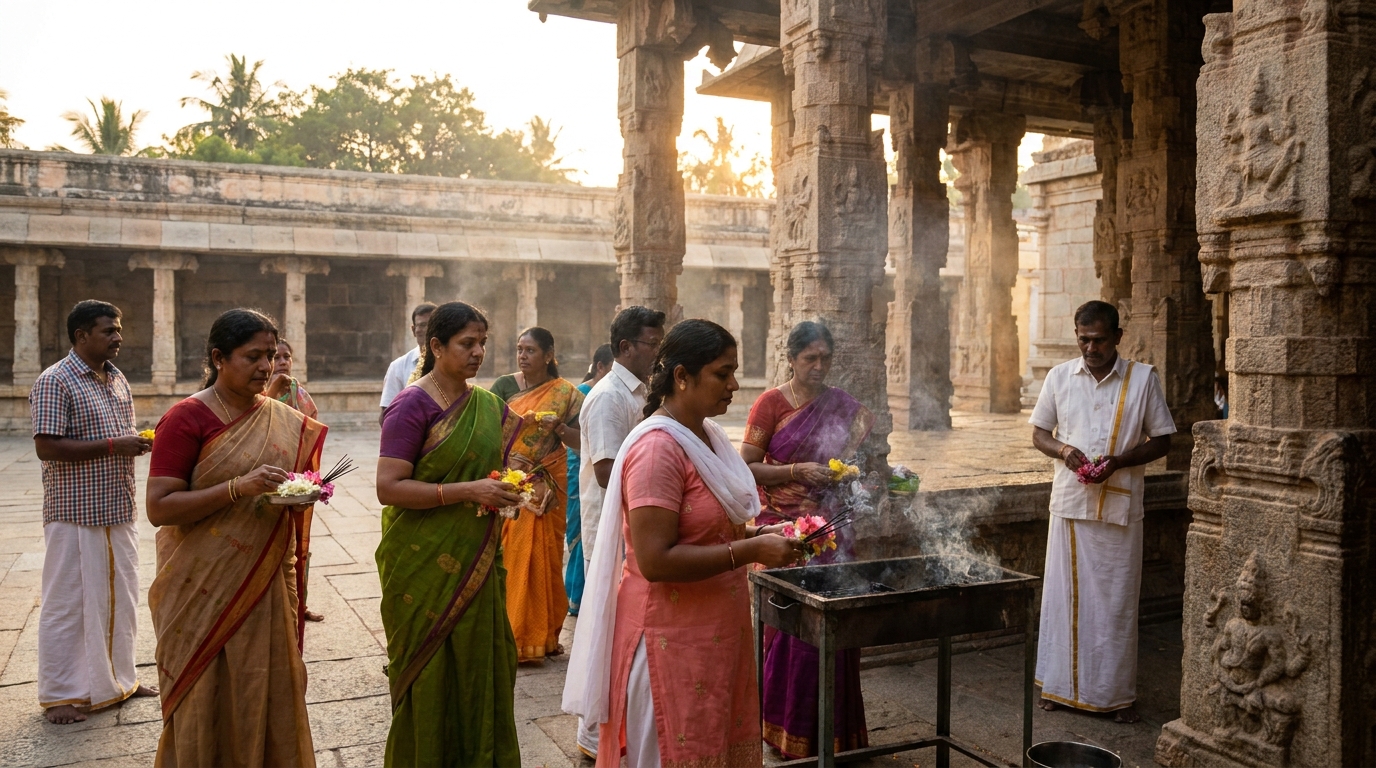
For many newcomers, the altar may seem elaborate. There may be beautifully dressed Deities, pictures of saints and teachers, flowers, lamps, sacred texts, and offerings. Each part has purpose and meaning.
The Altar as God’s Sacred Space
The altar is arranged as a place of honor for the Lord. It is treated with care, cleanliness, and reverence. Just as we would prepare a special seat for an honored guest, the altar is prepared as a loving space for God’s presence.
In Bhakti, God is approached not with fear but with affectionate respect. The altar reminds us that the Lord is the center. In a temple, everything revolves around serving and pleasing God.
Why Deities Are Dressed and Decorated
Deities are often dressed in fresh clothing, garlands, jewelry, and flowers. This may seem unusual at first, but it expresses a simple truth: love wants to serve beautifully.
Parents dress their children with care. Friends bring gifts to one another. We prepare special meals and decorate homes for guests. In the same way, devotees dress and decorate the Deity as an act of loving service.
This practice also teaches us to see beauty as spiritual. Beauty is not only for our enjoyment; it can be offered back to its divine source.
The Role of Sacred Teachers
Many temples include images or seats honoring spiritual teachers, called gurus or acharyas. A guru is a spiritual guide who helps us understand scripture and live a life of devotion. An acharya is one who teaches by example.
In Bhakti Yoga, the teacher is respected not as a replacement for God, but as a servant of God who guides others toward divine love. Authentic teachers help us become more humble, compassionate, prayerful, and sincere.
How to Visit a Temple for the First Time
If you are new to temple worship, you may wonder what to do, what to wear, or how to behave. Please know that a sincere heart matters most. Temples should be places of welcome, not anxiety.
Come with Respect and Openness
You do not have to know everything before you come. You can simply arrive with respect. Observe what others are doing. Ask gentle questions if you feel comfortable. Most devotees are happy to explain.
If there are customs such as removing shoes, bowing, or sitting on the floor, try to follow as you are able. If you have physical limitations, that is completely okay. Devotion is not measured by external ability.
What to Wear
Modest, clean clothing is usually appreciated in temples. You do not need special Indian clothing, though some people enjoy wearing traditional dress. The main idea is to dress respectfully for a sacred space.
Think of it like visiting a beloved elder, attending a prayer service, or entering a place of peace. Cleanliness and simplicity support a devotional mood.
Participating in Chanting and Prayer
During kirtan, you are welcome to listen quietly or join in singing. If the words are unfamiliar, you can follow along slowly. The sound itself is purifying, and participation grows naturally over time.
You may also see people bowing down. Bowing is a gesture of humility and surrender. If you feel comfortable, you can bow. If not, folding your hands or silently offering respect is also meaningful.
Receiving Prasadam
If prasadam is served, receive it with gratitude. It is not ordinary food; it has been offered to God with love. Many people experience prasadam as comforting, nourishing, and spiritually uplifting.
If you have dietary restrictions or allergies, it is perfectly fine to ask what is in the food. Care for the body is also part of spiritual life.
The Inner Meaning of Ritual
Ritual can be misunderstood. Sometimes people think ritual is empty or mechanical. And yes, any practice can become mechanical if the heart is absent. But in Bhakti Yoga, ritual is meant to awaken feeling, not replace it.
Ritual as a Container for Love
A ritual is like a cup that holds water. The cup is not the water, but it helps us receive and offer it. In the same way, temple rituals hold devotion. They give shape to love.
Lighting a lamp, offering incense, ringing a bell, or placing flowers before the Deity are all ways of saying, “God, I remember You. I want to serve You. Please accept this offering.”
When the heart is sincere, even a small act becomes spiritually powerful.
The Bell, Incense, and Flowers
The bell is often rung during worship to focus the mind and announce the offering. Its sound invites us to become present.
Incense represents a fragrant offering. Just as incense spreads throughout a room, devotion can spread throughout our life.
Flowers symbolize beauty, freshness, and the temporary nature of the material world. A flower blooms and fades, reminding us to offer our best moments to God while we have them.
Cleanliness and Sacred Attention
Temples emphasize cleanliness because cleanliness supports consciousness. Washing hands, keeping the altar neat, preparing food carefully, and caring for sacred items all cultivate mindfulness.
This principle can extend into our homes and daily lives. When we clean with devotion, cook with gratitude, or arrange a small sacred space, ordinary actions become offerings.
Temple Worship and Scripture
Authentic Bhakti Yoga is rooted in sacred texts such as the Bhagavad-gita, Srimad-Bhagavatam, and other devotional scriptures. These texts do not present worship as superstition. They describe it as a practical means of awakening our eternal relationship with God.
Bhagavad-gita: Offering with Devotion
In the Bhagavad-gita 9.26, Lord Krishna says that He accepts even a leaf, flower, fruit, or water when offered with devotion. This verse is deeply encouraging. It means we do not need wealth, status, or scholarship to approach God.
The real offering is the heart.
A person may offer an elaborate ceremony, and another may offer a single cup of water. If both are offered with sincerity, both can be pleasing to the Lord.
Srimad-Bhagavatam: Hearing and Chanting
The Srimad-Bhagavatam emphasizes hearing and chanting about God as powerful forms of devotion. Hearing sacred wisdom and chanting divine names cleanse the heart and awaken love.
In temple life, this is why classes, kirtans, and scriptural discussions are central. Devotion grows when we hear about God’s qualities, activities, compassion, and relationship with His devotees.
The Nine Practices of Bhakti
Bhakti scriptures describe nine main practices of devotion:
Hearing about God
Chanting God’s names
Remembering God
Serving the Lord
Worshiping the Lord
Offering prayers
Serving as a humble servant
Becoming a friend of the Lord
Offering everything to the Lord
Temple worship includes many of these practices together. When you attend a temple program, you may hear scripture, chant, pray, bow, serve, remember, and honor prasadam—all in one sacred experience.
Bringing Temple Worship into Daily Life
Temple worship is not meant to stay inside the temple walls. The temple trains the heart to live devotion everywhere—at home, at work, in relationships, and in moments of difficulty.
Create a Simple Sacred Space at Home
You can create a small altar or prayer space in your home. It may include a picture of Krishna, Rama, Vishnu, Radha, saints, your spiritual teacher, or any form of God you feel drawn to worship. You may place flowers, a candle, scripture, or a small bowl of water.
Keep it clean and peaceful. Visit it daily, even for a few minutes. This simple practice can bring spiritual grounding to your life.
Offer Your Food
One of the most practical ways to practice Bhakti Yoga is to offer your food before eating. You can prepare vegetarian meals with love and say a simple prayer:
“Dear Lord, thank You for this food. Please accept this offering. May it nourish my body and help me serve with love.”
This transforms eating into worship. It also helps cultivate gratitude and mindfulness.
Chant Every Day
Daily chanting is at the heart of Bhakti practice. You can chant the Hare Krishna mantra softly, sing kirtan, or repeat names of God that are meaningful to you.
Even five minutes a day can make a difference. Chanting helps calm the mind, soften the heart, and reconnect us with God.
Serve Others
Service is temple worship in action. In Sanskrit, service is called seva. Seva means offering our time, energy, talents, and care for the pleasure of God and the benefit of others.
You can serve in a temple by cooking, cleaning, greeting guests, singing, organizing programs, supporting festivals, or helping distribute prasadam. You can also serve outside the temple by showing kindness, feeding others, listening compassionately, and acting with integrity.
Bhakti is not only what we do in front of the altar. It is how we treat every living being.
Overcoming Common Misunderstandings
Temple worship can raise honest questions. Questions are welcome. In Bhakti Yoga, thoughtful inquiry is part of spiritual growth.
Is Temple Worship Only for Hindus?
No. While many temple practices come from the ancient Vedic tradition of India, Bhakti Yoga is a universal path of love for God. People from many cultures, faith backgrounds, and life experiences participate in chanting, prayer, service, and temple worship.
You do not need to change your heritage to begin practicing devotion. You are welcome to learn, participate respectfully, and take steps at your own pace.
Do I Need to Understand Sanskrit?
No. Sanskrit is a sacred language used in many Bhakti prayers and scriptures, but devotion is not limited by language. Many people begin by listening. Over time, meanings become familiar.
Simple explanations help:
Bhakti means devotion.
Kirtan means sacred chanting.
Prasadam means food offered to God.
Seva means loving service.
Darshan means seeing and being seen by the Divine.
Puja means worship or offering.
Understanding grows naturally through practice.
What If I Feel Distracted?
Distraction is normal. The mind wanders. The heart may feel dry. Sometimes we may attend worship and feel peaceful; other times we may feel restless.
Bhakti Yoga is patient. We keep coming back. Every sincere attempt matters. The practice itself gradually cleanses and strengthens us.
A humble prayer can help: “Lord, I am distracted, but I want to remember You. Please help me.”
Is Ritual Enough?
Ritual without love is incomplete. But love often grows through regular practice. Just as a musician practices scales or an athlete trains daily, a devotee practices worship to awaken natural devotion.
The goal is not ritual for its own sake. The goal is relationship with God.
The Transforming Power of Temple Worship
Temple worship can slowly transform the way we see ourselves, others, and the world.
From Consumer to Servant
Modern life often trains us to consume—more entertainment, more possessions, more recognition. Temple worship gently retrains the heart toward service.
Instead of asking, “How can the world serve me?” we begin asking, “How can I serve God and others?” This shift brings deep freedom.
From Anxiety to Surrender
The temple reminds us that we are not alone. God is present, guiding and caring for us. Surrender does not mean giving up responsibility. It means offering our efforts to God and trusting divine wisdom.
In the Bhagavad-gita, Krishna invites us to take shelter in Him. Practically, this means bringing our worries into prayer, doing our best, and remembering that God’s love is greater than our fear.
From Separation to Relationship
Bhakti Yoga teaches that the soul’s deepest need is loving relationship with God. Temple worship nourishes that relationship through daily gestures of remembrance.
A lamp, a song, a flower, a prayer, a meal, a bow—each becomes a thread connecting the heart to the Divine.
Practical Temple Etiquette for Beginners
Temple etiquette is simply a way of showing respect. It helps maintain a peaceful and sacred atmosphere.
Before Entering
Remove your shoes if that is the temple custom. Silence or lower your phone. Dress modestly and cleanly. Enter with a respectful mood.
If you are unsure what to do, ask someone kindly: “I’m new here. Is there anything I should know?” Most communities will be happy to help.
In the Temple Room
Avoid pointing your feet toward the altar if possible, as this may be considered disrespectful in many traditions. Speak softly. If a class or ceremony is happening, listen quietly or participate as you feel comfortable.
Children are welcome in many temples, and families should feel supported. At the same time, helping children understand the sacredness of the space can be a beautiful part of their spiritual education.
Around the Altar
Do not touch altar items or Deities unless invited or trained to do so. These items are cared for according to specific devotional standards.
You can offer respect by folding your hands, bowing, praying, or simply standing quietly with gratitude.
During Prasadam
Receive prasadam with appreciation. Take what you can honor, and try not to waste. If you are served by devotees, a simple “thank you” is always meaningful.
How Temple Worship Supports Spiritual Growth
Temple worship is not a one-time experience. It is a living practice that deepens over time.
It Builds Devotional Habits
Spiritual life grows through small, repeated actions. Attending temple programs, chanting regularly, honoring prasadam, hearing scripture, and offering service all create devotional habits.
These habits protect us during difficult times. When life feels uncertain, spiritual practice gives us a place to stand.
It Softens the Heart
The heart becomes softer through gratitude, humility, and service. Temple worship gives us many opportunities to practice these qualities.
We may begin by visiting occasionally. Then we may start chanting. Then we may help clean, cook, or welcome others. Gradually, devotion becomes less of an event and more of a way of life.
It Awakens Love for God
The ultimate goal of Bhakti Yoga is prema, pure love for God. This love is not sentimental or temporary. It is the soul’s natural state.
Temple worship helps awaken this love by placing God at the center. We remember that we are loved by the Divine, and we learn to love in return.
Taking Your First Step in Temple Worship
If you feel drawn to temple worship, begin simply. You do not need to know everything. You do not need to be perfect. You do not need to prove yourself.
You can visit a temple.
You can listen to kirtan.
You can offer a flower.
You can bow your head.
You can taste prasadam.
You can chant one round, one mantra, or one heartfelt prayer.
You can serve in one small way.
Bhakti Yoga is a path of sincere steps. The Lord sees the heart. Even the smallest offering, made with love, is spiritually meaningful.
Temple worship is a mystery, but not the kind meant to keep people away. It is a sacred mystery that opens through participation. The more we chant, pray, serve, hear, and offer, the more the heart begins to understand.
May every temple become a place of welcome. May every altar remind us of God’s kindness. May every chant bring peace. May every offering awaken love. And may every person, from every background, feel invited into the beautiful practice of devotion.
Wherever you are on your spiritual journey, you are welcome. Take one sincere step toward God today—through a prayer, a chant, an act of service, or a moment of gratitude—and trust that the Divine lovingly receives it.
FAQs
What is temple worship?
Temple worship refers to the religious practice of performing rituals, prayers, and offerings in a designated place of worship, such as a temple, church, mosque, or synagogue.
What are the purposes of temple worship?
The purposes of temple worship vary depending on the specific religious tradition, but generally include seeking spiritual guidance, connecting with the divine, offering gratitude, seeking forgiveness, and participating in communal worship.
What are some common practices in temple worship?
Common practices in temple worship may include reciting prayers, making offerings such as flowers or food, participating in rituals such as meditation or chanting, and seeking guidance from religious leaders or deities.
How is temple worship different across different religions?
Temple worship varies greatly across different religions, with each tradition having its own specific rituals, prayers, and customs. For example, Hindu temple worship may involve elaborate ceremonies and offerings to various deities, while Christian temple worship may focus on communal prayer and sacraments.
What are the benefits of participating in temple worship?
The benefits of participating in temple worship can include a sense of spiritual fulfillment, a feeling of connection to the divine, a sense of community and belonging, and the opportunity for personal reflection and growth.

