
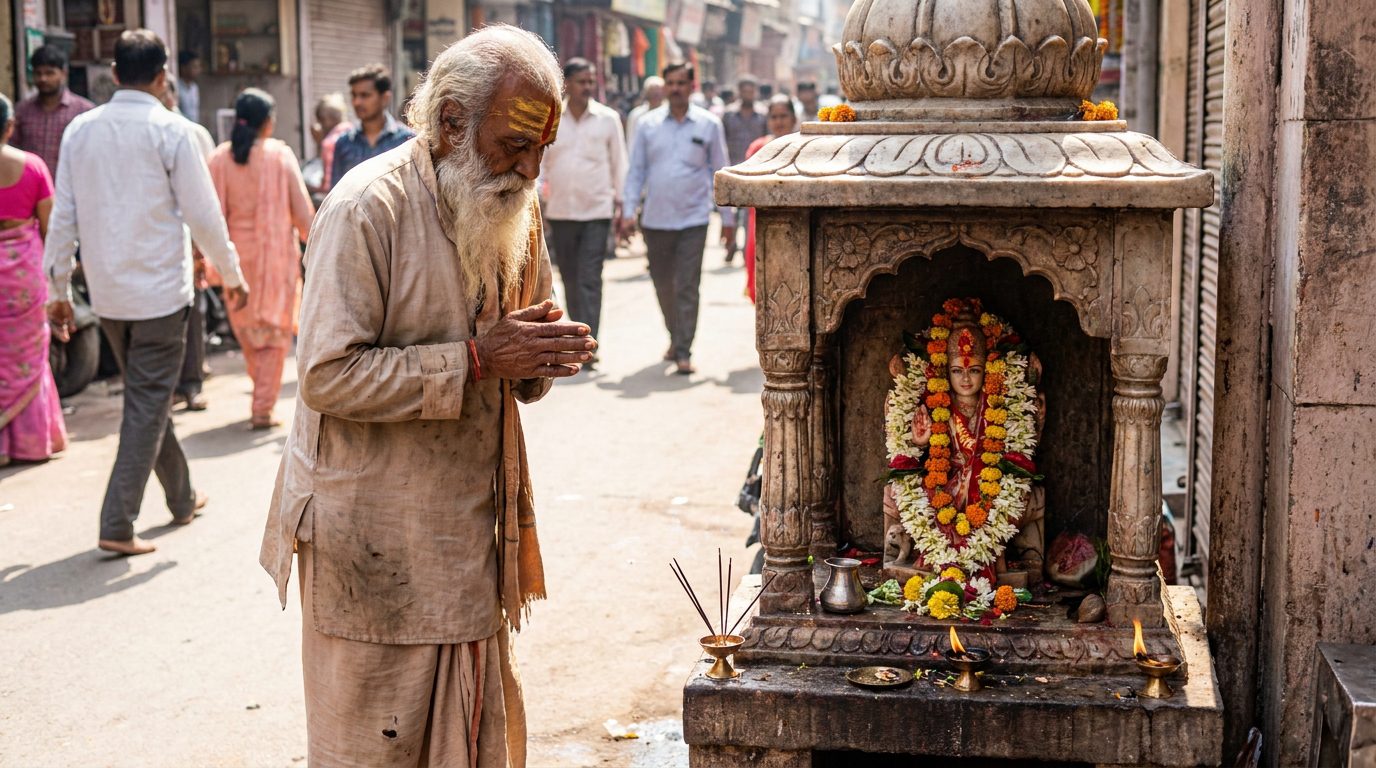
If you have ever felt curious about Bhakti Yoga, kirtan, meditation, mantra chanting, or spiritual community, you may have wondered, “Do I need to be Hindu to attend Bhakti programs?”
The simple answer is: no. You do not need to be Hindu to attend Bhakti programs.
Bhakti is a Sanskrit word that means devotion, love, or loving service. Bhakti Yoga is the path of connecting with God through the heart. It is a practical spiritual path of chanting, prayer, service, remembrance, sacred study, friendship, and offering our daily lives with love.
At The Bhakti House, people from many backgrounds are welcome. Some visitors identify as Hindu. Some come from Christian, Jewish, Muslim, Buddhist, Sikh, or Indigenous traditions. Some are spiritually curious but not religious. Some are healing from difficult religious experiences. Some are simply drawn by music, meditation, vegetarian food, or the peaceful atmosphere of community.
Bhakti does not ask you to pretend to be something you are not. It invites you to bring your sincere heart.
You may come with questions. You may come with doubts. You may come with faith, longing, grief, gratitude, or uncertainty. All of that is welcome.
The essence of Bhakti is not a label. It is love.
What Is Bhakti Yoga?
Bhakti Means Devotion
The word “Bhakti” comes from Sanskrit, an ancient sacred language of India. It means devotion, participation, loving connection, and service offered from the heart.
In Bhakti Yoga, the soul seeks a personal relationship with the Divine. Many Bhakti traditions refer to God by names such as Krishna, Rama, Vishnu, Narayana, Radha, Govinda, or Hari. These names are understood as sacred names of the Supreme Person, the all-loving source of life.
If these names are new to you, that is completely okay. You do not need to know everything before attending. In Bhakti, we learn by hearing, chanting, serving, and being in uplifting company.
Yoga Means Connection
The word “Yoga” means union or connection. Many people first encounter yoga through physical postures, known as asana. While asana can be helpful for health and focus, Yoga is much broader.
Bhakti Yoga means reconnecting the soul with God through love. It is a path of the heart. It is not only something we do on a mat or in a temple. It can be practiced while cooking, singing, working, caring for family, walking in nature, or offering a kind word.
The Bhagavad-gita, one of the most beloved Bhakti scriptures, explains that spiritual life can be lived in the middle of daily responsibilities. Krishna teaches Arjuna not to run away from life, but to act with devotion, wisdom, and surrender.
This is very practical. Bhakti Yoga helps us ask:
How can I live with more love?
How can I remember God in this moment?
How can I serve rather than simply consume?
How can my actions become offerings?
Bhakti Is a Relationship, Not a Performance
You do not need to be perfect to practice Bhakti. You do not need to have the right clothes, the right background, or the right vocabulary. You do not need to know how to pronounce every mantra perfectly.
Bhakti is not about performing spirituality for others. It is about gradually awakening the natural love that already lives within the heart.
In the Bhagavad-gita, Krishna says, “If one offers Me with love and devotion a leaf, a flower, fruit, or water, I accept it.” The offering is simple. The essential ingredient is love.
That verse is very comforting. God is not asking us for something impossible. A leaf, a flower, fruit, or water—offered sincerely—can become sacred. In the same way, a simple prayer, a small act of kindness, a few minutes of chanting, or one honest step toward God can be spiritually powerful.
Do I Need to Be Hindu to Attend?
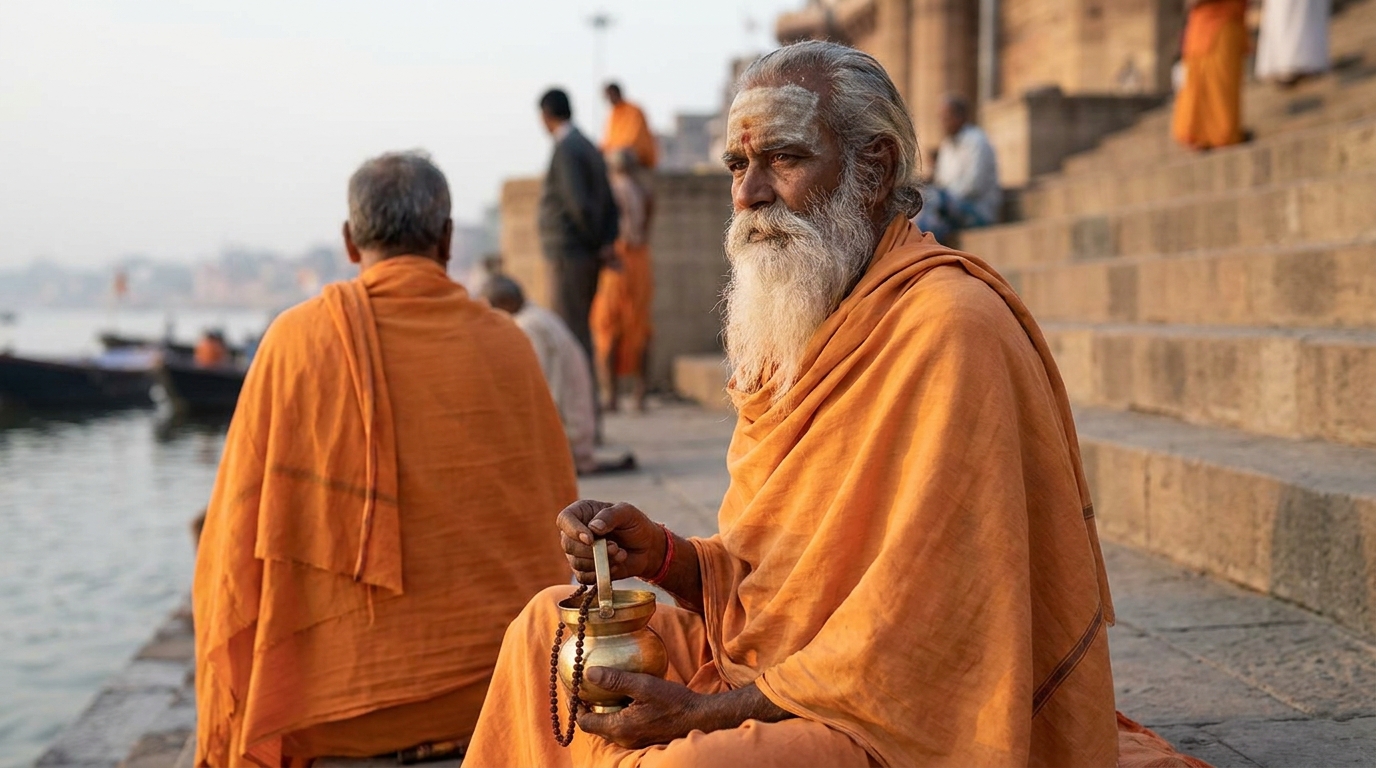
No, You Do Not Need to Convert
Bhakti programs are open to sincere seekers. You do not need to convert to Hinduism. You do not need to change your name, background, culture, or family tradition in order to attend.
Many people come to Bhakti gatherings to experience kirtan, which is devotional chanting, or to learn about meditation, sacred wisdom, and spiritual community. Some come once. Some come occasionally. Some gradually adopt Bhakti practices in their daily lives. Everyone’s journey is personal.
Bhakti Yoga has roots in the sacred traditions of India, and we honor those roots deeply. At the same time, the teachings of Bhakti speak to the universal longing of the soul: to love and be loved by God.
The soul is not limited by nationality, ethnicity, language, or birth. The deepest self is spiritual.
Bhakti Welcomes People of All Backgrounds
The Bhakti scriptures often emphasize that devotion is available to everyone. In the Bhagavad-gita, Krishna teaches that anyone who takes shelter in Him can attain the highest spiritual destination, regardless of birth, social position, or past circumstances.
This does not erase culture or tradition. Rather, it reveals something beautiful: spiritual love is not restricted to one group of people.
Bhakti has been carried through generations by saints, teachers, families, musicians, monks, scholars, mothers, fathers, farmers, poets, and everyday people. It has taken root in temples, homes, streets, forests, schools, and cities. Wherever there is sincere chanting, prayer, and service, Bhakti can live.
At a Bhakti program, you may meet people from many walks of life. The shared ground is not that everyone has the same identity. The shared ground is a desire to grow spiritually.
Respect Is More Important Than Religious Label
You do not need to be Hindu to attend, but it is helpful to come with respect.
Bhakti programs often include sacred images, Sanskrit mantras, offerings, scriptures, and customs that may be unfamiliar. You are not expected to know everything. It is always okay to ask kind questions.
Respect may look like removing shoes when entering a temple room, sitting peacefully during chanting or class, dressing modestly, listening with an open heart, and being mindful around sacred items.
You do not have to imitate anyone. You can simply observe, participate as you feel comfortable, and learn gradually.
Check out our latest posts at https://thebhaktihouse.org/blog.
What Happens at a Bhakti Program?
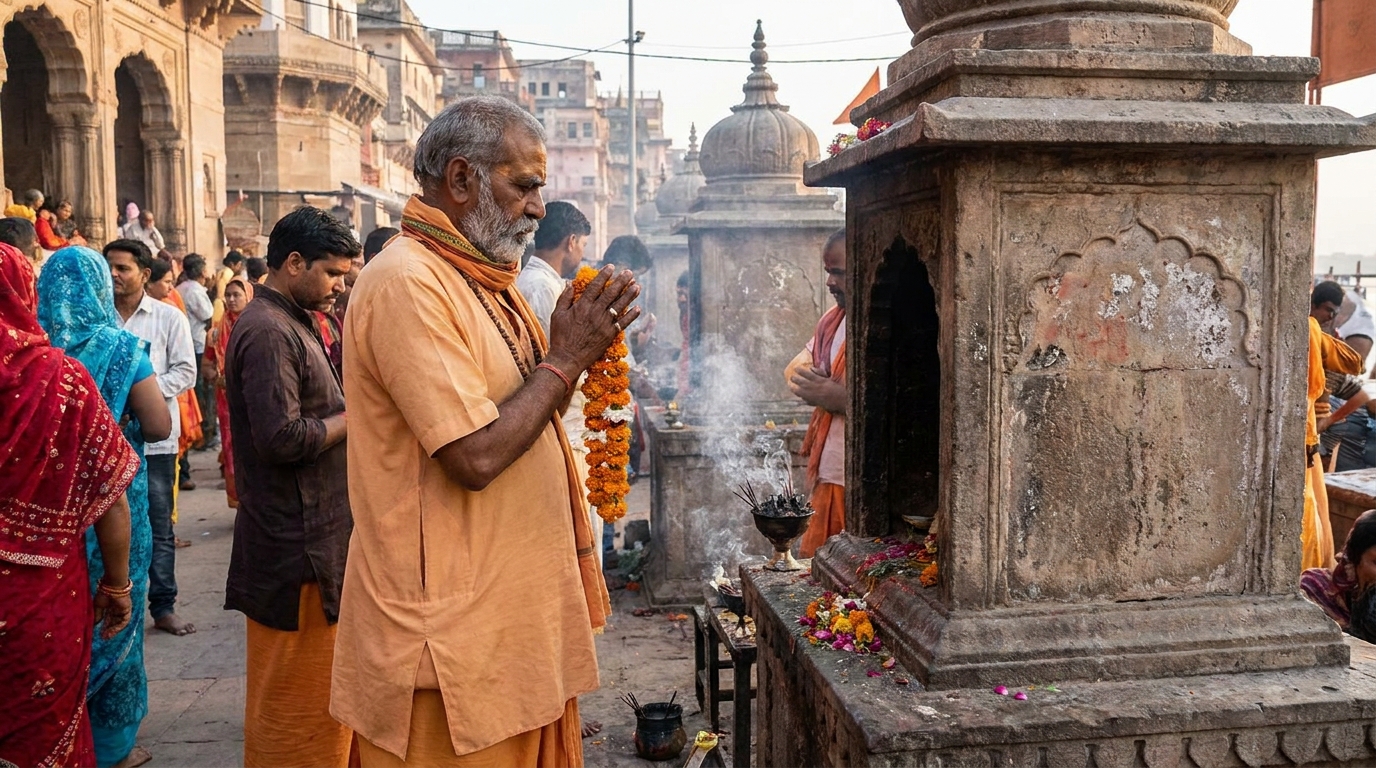
Kirtan: Sacred Chanting Together
One of the most common parts of a Bhakti program is kirtan. Kirtan means devotional singing, usually in a call-and-response style. A leader sings a mantra, and the group responds.
A mantra is a sacred sound vibration. The word “mantra” can be understood as “that which frees the mind.” In Bhakti Yoga, mantras are often names of God. By chanting these names, we cleanse the heart, focus the mind, and awaken devotion.
You may hear the maha-mantra, which means “great mantra”:
Hare Krishna Hare Krishna
Krishna Krishna Hare Hare
Hare Rama Hare Rama
Rama Rama Hare Hare
This mantra is a prayer. “Hare” addresses the divine energy of God, often understood as the compassionate feminine aspect of the Divine. “Krishna” means the all-attractive one. “Rama” means the source of joy and spiritual pleasure.
A simple meaning of the maha-mantra is: “O Lord, O divine energy of the Lord, please engage me in Your loving service.”
You do not have to fully understand the Sanskrit to benefit. Just as music can touch the heart before we understand every lyric, sacred sound can work gently within us when we chant or listen sincerely.
Japa: Personal Mantra Meditation
Some Bhakti programs introduce japa, which is personal mantra meditation. Japa is usually practiced with beads, similar to a rosary or prayer beads in other traditions. A practitioner softly chants a mantra on each bead as a way of focusing the mind and calling out to God.
If you are new, someone may show you how to hold the beads and chant. There is no pressure. Many people begin by simply listening.
Japa can become a daily spiritual anchor. Even a few minutes in the morning can help bring peace, clarity, and remembrance into the day.
Satsang: Spiritual Company
Another important part of Bhakti programs is satsang. “Sat” means truth or eternal spiritual reality. “Sang” means association or company. Satsang means gathering with others for spiritual truth.
In satsang, we hear sacred teachings, ask questions, chant, reflect, and support one another in spiritual growth.
The people we spend time with shape our hearts. When we gather with those who are trying to live with compassion, devotion, discipline, and humility, we naturally become inspired to grow.
Prasadam: Sacred Vegetarian Food
Many Bhakti programs include prasadam, which means mercy or grace. Prasadam is vegetarian food that has been lovingly prepared and offered to God before being shared.
In Bhakti Yoga, cooking can become meditation. Eating can become sacred. Food is not only fuel for the body; it can also nourish the heart when prepared with love and gratitude.
If you attend a Bhakti program and share prasadam, you are receiving more than a meal. You are receiving an offering that has been spiritualized through devotion.
If you have allergies or dietary needs, it is always okay to ask.
Will I Feel Out of Place If I Am New?
It Is Normal to Feel Nervous
Walking into any spiritual gathering for the first time can feel vulnerable. You might wonder where to sit, when to stand, whether to sing, or what to do with your hands. You may worry about mispronouncing words or not knowing the customs.
Please take heart. Everyone was new once.
You can sit quietly and observe. You can sing softly. You can clap along. You can close your eyes and listen. You can ask someone for help. There is no need to rush.
Bhakti grows naturally through sincere contact. Like a seed, it needs time, nourishment, and patience.
Come As You Are
You do not need special clothing to attend most Bhakti programs. Comfortable, modest clothing is usually appropriate. Some people may wear traditional Indian clothing, devotional clothing, or simple everyday clothes. There is no need to dress in a way that feels inauthentic.
Come clean, respectful, and open-hearted.
You do not need prior knowledge of Sanskrit, scripture, chanting, or Hindu customs. The purpose of a Bhakti program is not to test you. It is to create a space where hearts can turn toward God.
Questions Are Welcome
Healthy spiritual life includes sincere inquiry. In the Bhagavad-gita, Krishna encourages approaching spiritual teachers with humility, questions, and service. Questions are part of learning.
If you hear a word you do not understand—like karma, dharma, guru, seva, or lila—it is okay to ask.
Karma means action and reaction.
Dharma means the natural duty or sacred purpose of a person or thing.
Guru means spiritual teacher, one who helps remove darkness by giving divine knowledge.
Seva means service offered with love.
Lila means divine pastime, the loving activities of God and His devotees.
In Bhakti, learning is not just intellectual. It is relational. We learn through listening, serving, chanting, and living the teachings one step at a time.
Is Bhakti the Same as Hinduism?
Bhakti Has Deep Roots in Hindu Traditions
Bhakti Yoga is deeply connected with the spiritual traditions often called Hinduism, especially Vaishnavism, which is the devotional worship of Vishnu or Krishna as the Supreme Lord.
The Vedas, Upanishads, Bhagavad-gita, Srimad Bhagavatam, Ramayana, and writings of great saints all nourish the Bhakti path. These scriptures and traditions are sacred and deserve respect.
Many Bhakti practices—such as chanting Sanskrit mantras, offering food, worshiping Deities, observing holy days, and honoring gurus—come from these ancient devotional lineages.
So yes, Bhakti is rooted in the Hindu spiritual world. But the invitation of Bhakti reaches beyond social labels.
Sanatana Dharma: The Eternal Function of the Soul
You may hear the phrase Sanatana Dharma. “Sanatana” means eternal. “Dharma” means nature, duty, or essential function. Sanatana Dharma can be understood as the eternal nature of the soul: to love and serve God.
This is a beautiful way to understand Bhakti. Before we are American, Indian, Hindu, Christian, young, old, rich, poor, successful, struggling, or anything else, we are souls. The soul’s deepest need is loving connection with the Divine.
From this perspective, Bhakti is not foreign to anyone. It is the original language of the heart.
Religion and Spiritual Practice
For some people, Bhakti becomes their main religious path. For others, Bhakti practices enrich their existing faith. Some people attend kirtan while still honoring Jesus, Allah, the Divine Mother, the Buddha’s teachings, or a personal understanding of God.
At The Bhakti House, we encourage sincerity, not spiritual confusion. It is good to be honest and thoughtful about your path. Bhakti Yoga offers a clear devotional tradition centered on loving service to the Supreme Lord, especially through the chanting of God’s holy names.
You are welcome to come, learn, and see how the practices speak to your heart.
How to Participate Respectfully
Listen First
When entering a new spiritual space, listening is a sacred act. Listen to the chants. Listen to the teachings. Listen to the mood of the community. Listen to your own heart.
You do not need to understand everything immediately. In Bhakti, hearing is powerful. The Sanskrit word shravanam means hearing about God. It is one of the main practices of devotion.
The Srimad Bhagavatam, a central Bhakti scripture, describes nine processes of devotional service, including hearing, chanting, remembering, serving, worshiping, praying, becoming a servant, becoming a friend of God, and surrendering everything. These are not abstract ideas. They are practical ways to bring God into daily life.
You can begin with hearing.
Join the Chanting as You Feel Comfortable
If there is kirtan, feel free to participate at your own pace. You can sing loudly, softly, or simply listen. If the words are projected or printed, you may follow along. If not, you can gradually pick up the sounds.
The holy names are not owned by any one person. They are gifts of grace. Chanting is a way of calling out to God, like a child calling for a loving parent.
Do not worry about having a “good voice.” Bhakti is not a concert. It is an offering.
Honor the Sacred Space
Many Bhakti gatherings take place in a temple room or spiritual center. There may be an altar with Deities, sacred pictures, candles, flowers, or offerings.
A Deity is a sacred form of God worshiped according to scripture and tradition. In Bhakti, the Deity is not considered an idol in the sense of something imaginary. Rather, devotees understand that God kindly appears in a visible form so we can offer personal service with love.
If this is new to you, you do not have to force belief. You can simply be respectful.
Avoid placing feet toward the altar if possible. Do not touch sacred items unless invited. Silence your phone. Speak gently. These simple acts help preserve a prayerful atmosphere.
Receive Prasadam with Gratitude
If prasadam is served, receive it with gratitude. It is common to say “Thank you” or “Haribol,” which means “chant the names of Hari,” another name for God.
Prasadam is usually vegetarian and often free from onion and garlic, depending on the tradition. The mood is important: we receive, rather than simply consume.
Food becomes a reminder that life is sustained by grace.
What If I Follow Another Religion?
Bhakti Can Deepen Love for God
Many people from other religious backgrounds find that Bhakti practices deepen their love for God. Chanting, prayer, service, and sacred food are not strange to most faith traditions. The names, forms, and theology may differ, but the heart’s movement toward God is recognizable.
A Christian may connect with the idea of singing God’s names and serving with love. A Muslim may appreciate devotion, prayer, surrender, and remembrance. A Buddhist may appreciate mantra meditation and compassion. A Jewish seeker may recognize sacred song, community, and food offered with gratitude.
Bhakti Yoga does have its own theology and practices. It is not necessary to flatten all traditions into one. But sincere spiritual people can often appreciate one another with humility.
You Do Not Have to Leave Your Questions at the Door
If you are unsure how Bhakti fits with your current beliefs, you can take your time. You can attend, listen, read, pray, and reflect.
Spiritual growth does not need to be rushed. God is patient. The heart opens gradually.
You may ask:
Does this practice help me become more humble?
Does it increase compassion?
Does it bring me closer to God?
Does it inspire service?
Does it help me let go of selfishness?
These are good questions in any tradition.
Avoid Cultural Appropriation by Practicing with Respect
Because Bhakti comes through sacred Indian traditions, it is important not to treat it as a trend, performance, or aesthetic. Respect means honoring the source, learning from authentic teachers, and approaching the practices with sincerity.
Chanting mantras is not just “good vibes.” Wearing devotional symbols is not just fashion. Sacred food is not just exotic cuisine. These are expressions of a living spiritual tradition.
You do not need to be Indian or Hindu to participate, but it is beautiful to participate with gratitude, humility, and reverence.
What Do Bhakti Scriptures Say About Who Is Welcome?
The Bhagavad-gita: Devotion Is Open to All
The Bhagavad-gita is a conversation between Krishna and Arjuna. Arjuna is facing a great moral and spiritual crisis. Krishna teaches him about the soul, action, meditation, wisdom, and devotion.
One of the Gita’s central messages is that God is available to everyone through loving devotion. Krishna says that even if a person has made mistakes, if they turn sincerely toward Him, they can become saintly. This is a deeply hopeful teaching.
Bhakti is not reserved for those with a perfect past. It is for those who are willing to turn toward God now.
The Srimad Bhagavatam: Hearing and Chanting Purify the Heart
The Srimad Bhagavatam teaches that hearing and chanting about God cleanses the heart. This means that spiritual sound gradually removes envy, fear, selfishness, and forgetfulness.
We may come to a Bhakti program with a restless mind or heavy heart. By hearing sacred teachings and chanting holy names, something within us begins to soften.
This purification is not harsh. It is loving. It is like sunlight entering a room that has been dark for a long time.
Sri Chaitanya: The Holy Name Is for Everyone
Sri Chaitanya Mahaprabhu, a great saint and teacher of Bhakti Yoga from 15th-century India, widely shared the chanting of God’s names. He taught that in this age, the easiest and most powerful spiritual practice is chanting the holy names of God.
He did not restrict chanting to scholars, priests, or a particular social group. He invited everyone to chant, dance, and taste the joy of devotion.
This spirit is at the heart of many Bhakti programs today: gather together, chant sincerely, honor prasadam, hear spiritual wisdom, and serve one another.
Practical Ways to Begin Bhakti Yoga
Attend a Program with an Open Heart
If you are curious, simply come. You do not need to know everything before arriving. Attend a kirtan, Sunday gathering, study circle, meditation session, festival, or community meal.
Let yourself experience the atmosphere. Notice how you feel during the chanting. Notice the mood of service. Notice whether your heart feels nourished.
Sometimes one evening of sincere chanting can awaken something we did not even know we were missing.
Try Chanting at Home
You can begin with a few minutes of mantra meditation each day. You might softly chant:
Hare Krishna Hare Krishna
Krishna Krishna Hare Hare
Hare Rama Hare Rama
Rama Rama Hare Hare
Start with five minutes. Sit comfortably. Breathe gently. Listen to the sound. When the mind wanders, bring it back with kindness.
There is no need to force a mystical experience. Just chant and listen.
Offer Your Food with Gratitude
Before eating, pause and offer your food to God in your own words. If you feel drawn to a Bhakti practice, you can prepare vegetarian food and say a simple prayer:
“My dear Lord, thank You for this food. Please accept this offering and help me use this energy in Your service.”
This small act can transform daily eating into devotion.
Serve in a Simple Way
Seva, or devotional service, is central to Bhakti. Service can be practical: washing dishes, setting up chairs, cooking, cleaning, greeting guests, helping with music, offering skills, or supporting the community.
Service softens the ego. It teaches us that love is not only a feeling. Love becomes action.
You can also practice seva at home, at work, or with your family. Any sincere act offered to God can become part of Bhakti Yoga.
Read a Little Each Day
Sacred study gives direction to devotion. You might begin with the Bhagavad-gita, especially with guidance from a trusted Bhakti teacher or community.
Read slowly. Reflect. Ask questions. Try to apply one teaching in your day.
Bhakti is not about collecting information. It is about transformation.
Common Concerns from First-Time Guests
“Will Anyone Pressure Me to Convert?”
A healthy Bhakti community should not pressure you. Spiritual life grows best through sincerity, not force. You are welcome to attend, learn, ask, and participate at your own pace.
Commitment may grow naturally over time, but it should come from the heart.
“What If I Do Not Believe in Krishna?”
You are still welcome to attend. Many people first come without a clear belief. Some are curious about the philosophy. Some love the music. Some are seeking peace.
Bhakti invites you to hear and chant. Understanding may deepen gradually.
Krishna means “the all-attractive one.” Even if you are unsure about Krishna as a name or form of God, you can begin by praying, “Dear God, if You are there, please guide me.”
A sincere prayer is never wasted.
“Can I Bring My Children?”
In many Bhakti communities, children are welcome. They may enjoy music, dancing, stories, and prasadam. It is helpful to check with the specific program about children’s spaces, timing, and expectations.
Bhakti is naturally family-friendly because it includes song, food, stories, festivals, and service.
“Do I Need to Know Sanskrit?”
No. Sanskrit words will often be explained. You can learn gradually.
Many people begin by hearing the sounds. Over time, words like kirtan, prasadam, seva, guru, mantra, and bhakti become familiar.
The heart can receive before the mind understands every detail.
The Heart of the Matter: God Looks at Sincerity
The real question is not, “Am I Hindu enough?” or “Do I belong here?” The deeper question is, “Am I willing to take a sincere step toward God?”
Bhakti teaches that God is supremely loving and personal. He sees the heart. He knows our journey, our wounds, our longing, and our potential. We may be unsure of ourselves, but God is not unsure of us.
A Bhakti program is not a private club for the spiritually advanced. It is a place where we gather to remember what matters most. We chant because our minds forget. We pray because our hearts need shelter. We serve because love grows when it is given. We eat prasadam because grace can enter even through the simplest parts of life.
You do not need to be Hindu to attend Bhakti programs. You only need a respectful heart and a willingness to explore.
Come as you are. Sit with us. Chant if you like. Listen if you prefer. Ask questions. Honor prasadam. Meet kind people. Let the holy names touch your heart.
Everyone is welcome to take one sincere step toward God. And if that step is small, that is perfectly beautiful. In Bhakti, even one sincere step is met with divine grace.
FAQs
What is Bhakti?
Bhakti is a term in Hinduism that refers to the devotion and love towards a personal god, often expressed through prayer, rituals, and worship.
Are Bhakti programs only for Hindus?
No, Bhakti programs are open to people of all faiths and backgrounds. The teachings and practices of Bhakti are meant to be inclusive and accessible to anyone seeking spiritual growth and connection.
What can I expect at a Bhakti program?
Bhakti programs often include chanting, singing, meditation, and discussions on spiritual topics. Participants may also have the opportunity to engage in devotional practices and rituals.
Do I need to have prior knowledge of Hinduism to attend Bhakti programs?
No, prior knowledge of Hinduism is not required to attend Bhakti programs. The teachings and practices are often explained and accessible to newcomers.
Can I participate in Bhakti programs if I do not believe in Hindu deities?
Yes, Bhakti programs are open to individuals with varying beliefs. The focus is on cultivating love and devotion, rather than adherence to specific deities or religious doctrines.

