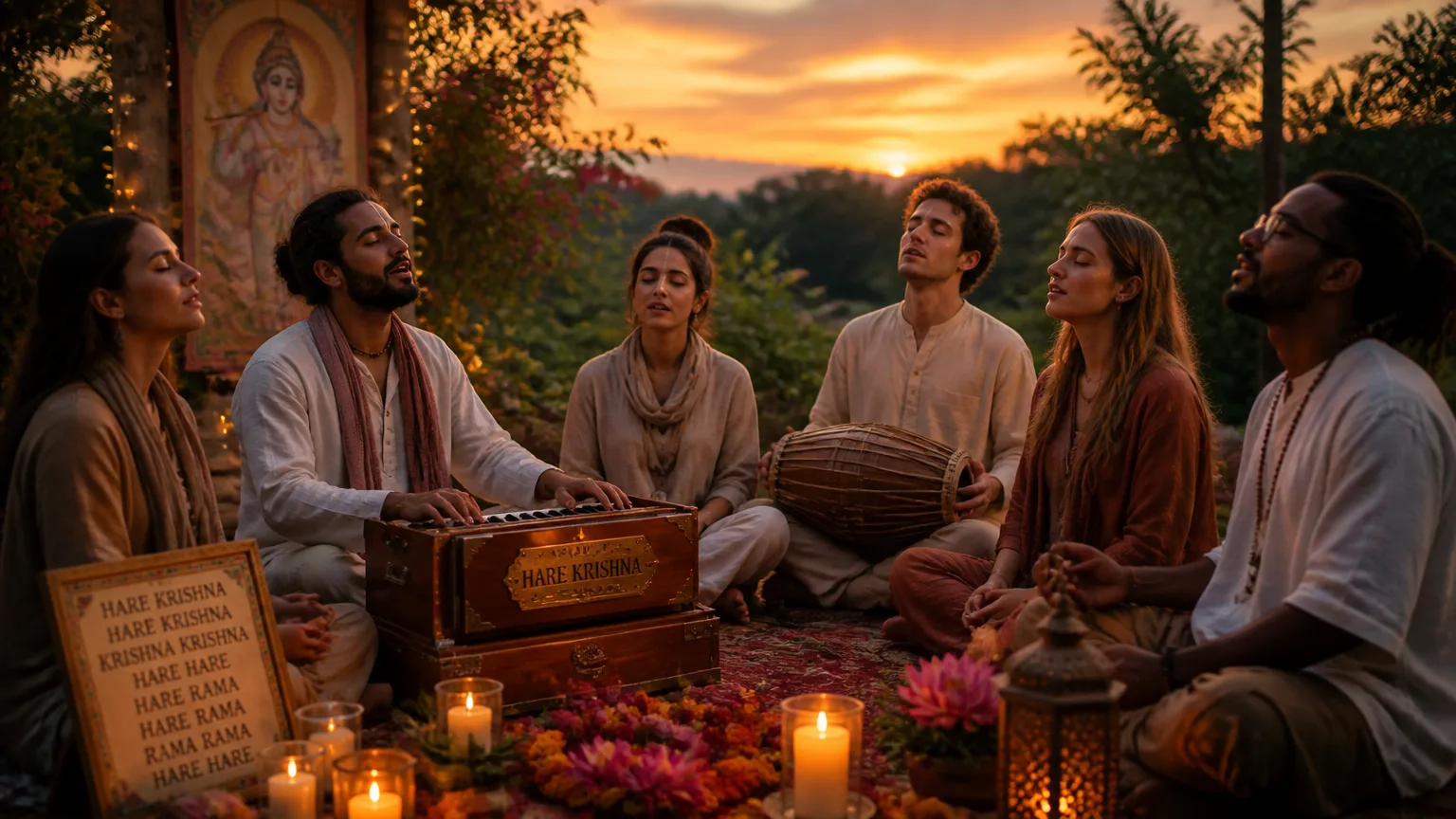
Kirtan is more than just a form of music; it is a profound spiritual practice that resonates deeply within the hearts of those who engage in it. As a vital component of Bhakti Yoga, kirtan serves as a powerful medium for connecting with the Divine. Through the repetition of sacred mantras and hymns, practitioners create a space where the divine presence becomes tangible, fostering an atmosphere of devotion and community.
Understanding kirtan as an act of devotion allows individuals to appreciate its transformative potential. Each chant invites participants to immerse themselves in a rhythm that transcends the mundane, fostering a shared spiritual experience. The collective energy generated during a kirtan session can uplift the spirit, providing solace and inspiration.
Many spiritual leaders have emphasized the significance of this practice. For instance, the insights found in Śrīla Prabhupāda’s Teachings on Chanting the Holy Name highlight how chanting serves as a direct link to the Divine, enriching one’s spiritual journey. By engaging in kirtan, individuals not only cultivate personal devotion but also contribute to a vibrant community, where the essence of love and devotion flourishes.
1. The Historical Roots of Kirtan
Kirtan, a devotional practice characterized by call-and-response chanting, finds its origins within the Bhakti movement. This spiritual renaissance emerged in medieval India, emphasizing personal devotion to God over ritualistic practices. Influential saints, such as Mirabai and Tulsidas, played pivotal roles by composing heartfelt hymns and songs that resonated deeply with the masses.
The Bhakti movement fostered a sense of community through shared experiences of love and devotion. Kirtan became a key element, inviting individuals to connect with the Divine collectively. The teachings of these saintly figures underscored the importance of vocal expression in spirituality, illuminating pathways to divine connection.
As kirtan evolved, it transcended regional and cultural boundaries, uniting diverse communities in their quest for divine engagement. This historical context highlights how kirtan not only served as a form of worship but also as a vehicle for social change, promoting inclusivity and shared spiritual experiences.
2. An Invitation to Dance: The Community Aspect of Kirtan
Kirtan gatherings serve as vibrant hubs of collective spirituality, drawing individuals together in joyful celebration. The communal experience of chanting enhances personal devotion, allowing participants to feel a profound connection not only to the Divine but also to one another. As voices harmonize, shared vibrations foster a sense of unity that transcends individuality.
These gatherings are often filled with laughter, singing, and even dancing, creating an atmosphere that encourages openness and connection. For instance, events like the Friday Night Kīrtan exemplify the joy that arises when a community comes together to engage in this sacred practice.
In such environments, participants often share their experiences and insights, deepening their bonds. This interaction cultivates a supportive network, reinforcing the idea that the journey of spirituality is not a solitary path, but rather a shared adventure enriched by collective energy and enthusiasm.
3. The Transformative Effects of Kirtan on Mind and Body
Participating in kirtan offers profound psychological and physiological benefits. The rhythmic chanting acts as a powerful form of meditation, significantly enhancing mindfulness. As participants immerse themselves in the music and lyrics, they become fully present, allowing stress and anxiety to dissipate. This immersion fosters a deep sense of tranquility.
Moreover, the physical responses elicited by musical rhythms can lead to spiritual awakenings. The vibrations generated during kirtan resonate within the body, promoting relaxation and emotional healing. Many individuals report feeling a release of pent-up emotions, facilitating a cathartic experience.
For instance, studies have shown that engaging in group chanting lowers cortisol levels, the hormone associated with stress. This reduction not only promotes well-being but also enhances overall emotional resilience. By creating a nurturing environment, kirtan serves as a catalyst for personal transformation, allowing participants to reconnect with themselves and the divine.
4. Personal Experiences: Stories of Transformation Through Kirtan
Many devotees share transformative experiences that highlight kirtan’s profound impact on their spiritual journeys. For instance, Bipat, a long-time practitioner, recounts how participating in kirtan shifted his perspective on life. He describes moments of deep connection during sessions, where the collective energy stirred feelings of joy and belonging. This experience propelled him from doubt to unwavering faith.
Another participant, Maya, shares how kirtan assisted her in overcoming personal challenges. Through regular chanting, she found solace and clarity amid life’s chaos. The teachings embedded in these sessions provided her with practical guidance, reinforcing the idea that kirtan is not merely an act of worship but a means of personal healing.
These testimonials illustrate the real-life applications of kirtan’s teachings, emphasizing its role in fostering community and individual growth. To delve deeper into these transformative journeys, refer to the article “From Curiosity to Commitment: Why We Approach Kṛṣṇa.”
Conclusion: Embracing Kirtan in Daily Life
Incorporating kirtan into daily routines can profoundly enhance one’s spiritual growth. This practice fosters a personal commitment that not only deepens individual devotion but also nurtures community bonds. As participants chant together, they create a shared energy that amplifies the experience of connecting with the Divine.
Moreover, the holistic wellness benefits of kirtan are noteworthy. Regular engagement can reduce stress and promote emotional resilience. By integrating kirtan into your life, you invite a transformative energy that supports both personal healing and collective joy.
For those seeking to deepen this practice, consider exploring the insights shared in Bhakti in the Home — Creating a Sacred Atmosphere. Embrace kirtan as a daily ritual, and witness the positive changes it brings to your life and community.