
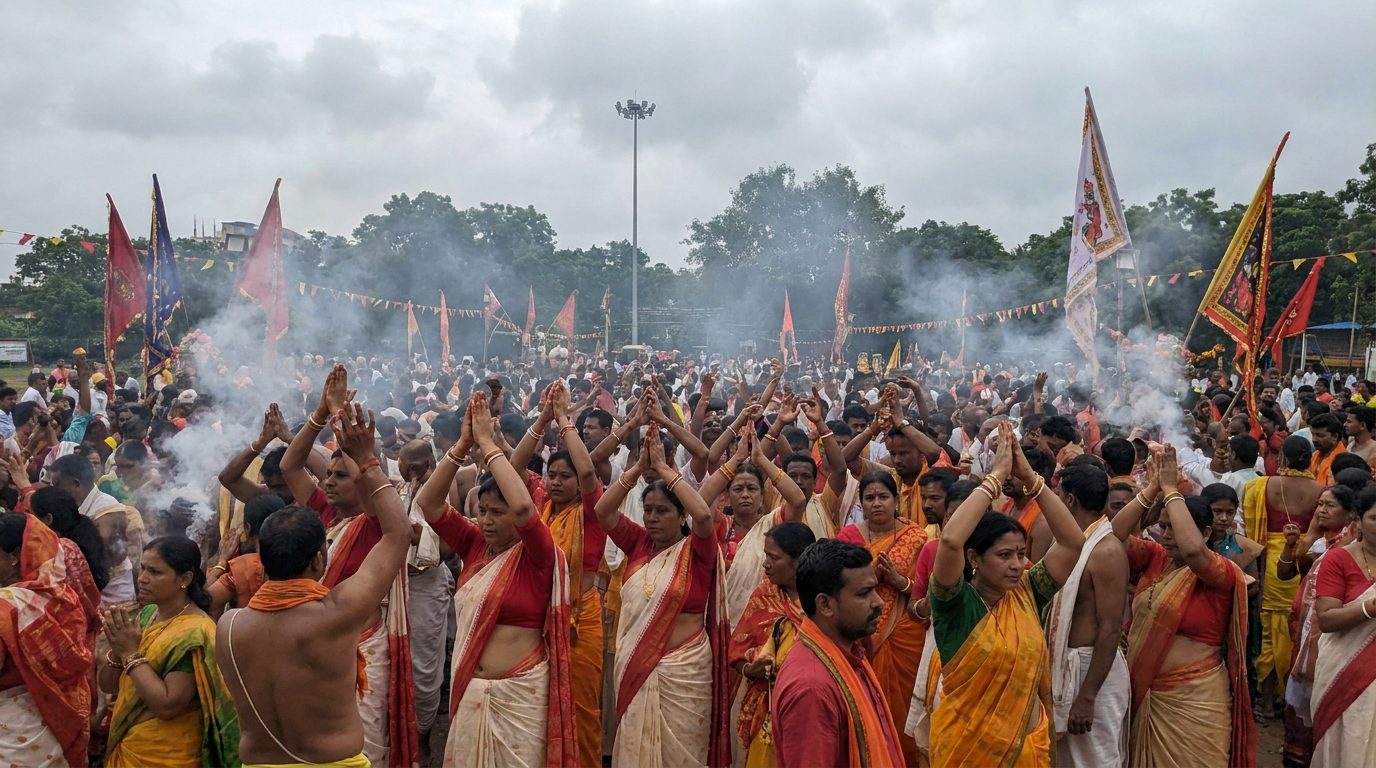
Festival worship is the sacred art of remembering God together.
In Bhakti Yoga, the path of devotion, festivals are not just dates on a calendar. They are living invitations. They call the heart to pause, gather, sing, pray, serve, and celebrate the Divine with love.
The Sanskrit word bhakti means loving devotion. It is not limited to one culture, language, or background. Bhakti is the soul’s natural longing to love and be loved by God. Festival worship gives that longing a joyful form.
Whether you are new to spiritual life or have been practicing for many years, festivals can help you feel connected, inspired, and spiritually nourished. They offer a rhythm of remembrance in a busy world. They bring people together in community, and they make spiritual truths easier to experience through music, food, storytelling, prayer, and service.
In the Bhagavad-gita, Lord Krishna says, “Whatever you do, whatever you eat, whatever you offer or give away, do that as an offering to Me” (Bhagavad-gita 9.27). Festival worship is one beautiful way to live this teaching. We take ordinary things—flowers, music, lamps, food, time, energy—and offer them with love.
This guide will help you understand the heart of festival worship and how to participate in it practically, whether at a temple, in a Bhakti community, or at home.
The Heart of Festival Worship in Bhakti Yoga
Festival worship is not about performance. It is about relationship.
The outer details are helpful: decorations, sacred songs, traditional foods, scriptures, and rituals. But the inner offering is what matters most. A simple prayer offered sincerely can be more meaningful than an elaborate ceremony performed without love.
Festival Worship Is an Offering of Love
In Sanskrit, the word seva means service. In Bhakti Yoga, service is not forced duty. It is love in action.
When we help clean a sacred space, cook a meal, greet guests, arrange flowers, sing in kirtan—devotional chanting—or quietly pray for others, we are practicing seva. We are telling God, “Please accept this small offering from my heart.”
The Bhagavad-gita teaches that God accepts even a leaf, flower, fruit, or water when offered with devotion (Bhagavad-gita 9.26). This verse is especially comforting. It reminds us that the Divine is not impressed by wealth, status, or complexity. God is moved by sincerity.
Festivals Help Us Remember What Matters
Life can become crowded with responsibilities, worries, and distractions. Festival worship helps us remember our deeper identity.
Bhakti scriptures teach that we are not merely the body or mind. We are eternal souls, beloved parts of God. Festivals awaken this memory in a warm and embodied way. We sing, hear sacred stories, serve one another, and taste blessed food. The whole person becomes involved in spiritual life.
This is why festivals are so powerful. They speak to the mind through wisdom, to the heart through music and prayer, to the senses through beauty, and to the soul through devotion.
Celebration and Surrender Can Live Together
Sometimes people think spirituality must be very serious and celebration must be worldly. Bhakti Yoga shows another way.
Devotional celebration is sacred when it brings us closer to God. Dancing in kirtan, sharing prasada, decorating the altar, or laughing with spiritual friends can all become worship.
Surrender in Bhakti does not mean becoming lifeless or passive. It means opening our heart to divine guidance. It means letting God be the center. Festival worship helps us practice this joyfully.
Preparing for a Festival with Devotion
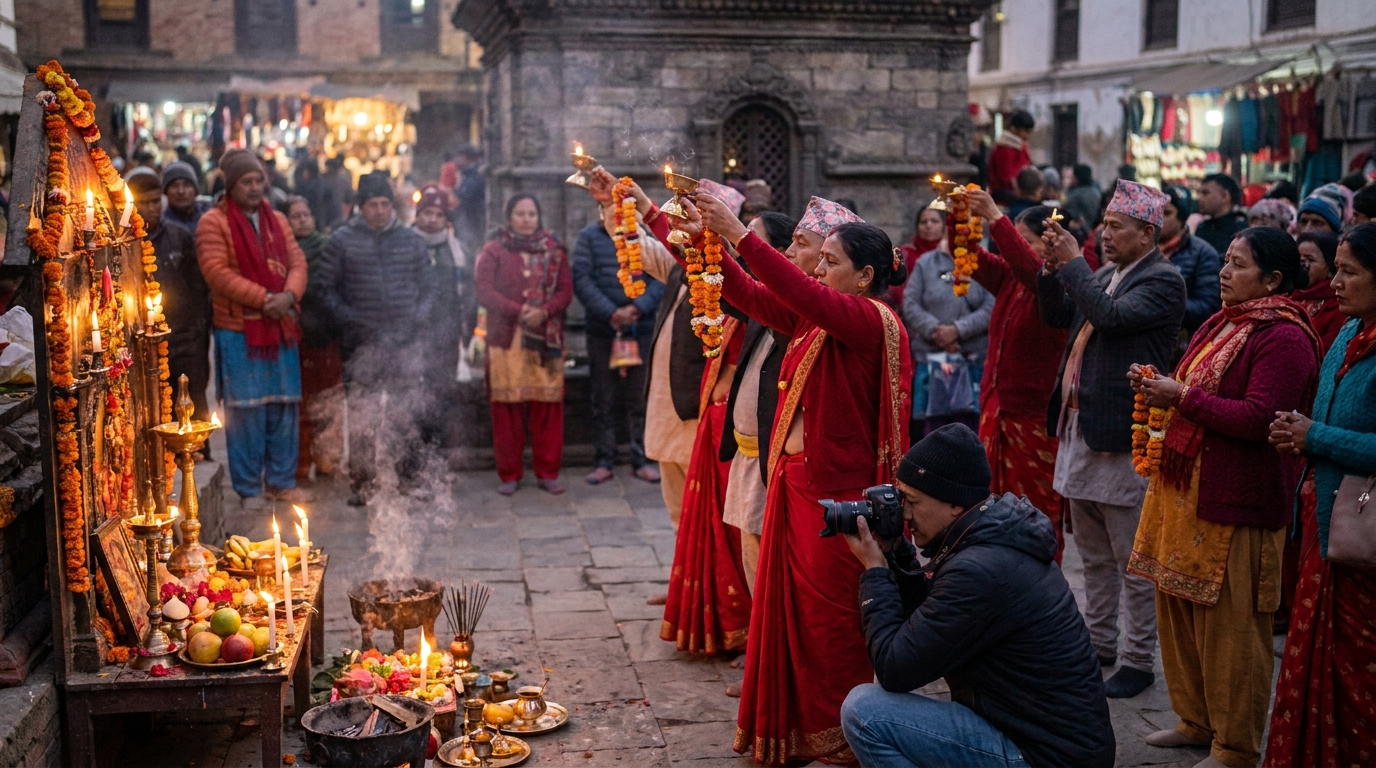
The way we prepare for a festival can be just as meaningful as the festival itself.
Preparation turns the mind toward God. It gives us time to slow down and make space inwardly. Whether you are planning a large community event or a quiet home observance, the mood of preparation matters.
Begin with Intention
Before choosing decorations, menus, or schedules, begin with prayer.
You may pray in your own words:
“Dear Lord, please help me honor this festival with sincerity. Please let this gathering bring joy, healing, and remembrance. May everyone who comes feel welcomed and spiritually uplifted.”
This simple intention transforms planning into worship.
If you are serving with others, begin your meeting with a short chant or moment of silence. This helps everyone remember that the goal is not perfection. The goal is devotion.
Learn the Meaning of the Festival
Every Bhakti festival has a spiritual message.
For example, Janmashtami celebrates the appearance of Lord Krishna, the all-attractive form of God. Gaura Purnima honors Sri Chaitanya Mahaprabhu, who shared the practice of chanting the holy names with all people. Radhastami celebrates Srimati Radharani, the embodiment of pure devotion. Diwali often reminds us of divine light, the return of Lord Rama, and the victory of goodness over darkness.
Learning the meaning helps us participate with depth. Even reading one short passage from scripture or hearing one class can change the experience.
Prepare the Space
A festival space should feel welcoming, clean, and spiritually focused.
This does not require luxury. A simple room can become sacred through cleanliness, flowers, candles or lamps, devotional images, and loving intention.
In Bhakti communities, the altar is often the heart of the space. An altar may include sacred images of Krishna, Rama, Radha, Chaitanya Mahaprabhu, or other forms of the Divine. For those new to this tradition, an altar is not an idol in the ordinary sense. It is a place of loving focus, where the heart can offer respect, prayer, and devotion.
If you are hosting at home, you might create a small altar with a clean cloth, a picture of God or a sacred teacher, flowers, and a small lamp.
Prepare Your Own Heart
It is easy to become so busy serving a festival that we forget to be present.
Take a little time before the event for personal prayer, chanting, or quiet breathing. Offer any stress to God. Ask for humility. Ask to see every guest as a soul.
Even if everything does not go perfectly, a peaceful heart can help others feel safe and welcomed.
Check out our latest articles at https://thebhaktihouse.org/blog.
Essential Elements of Festival Worship
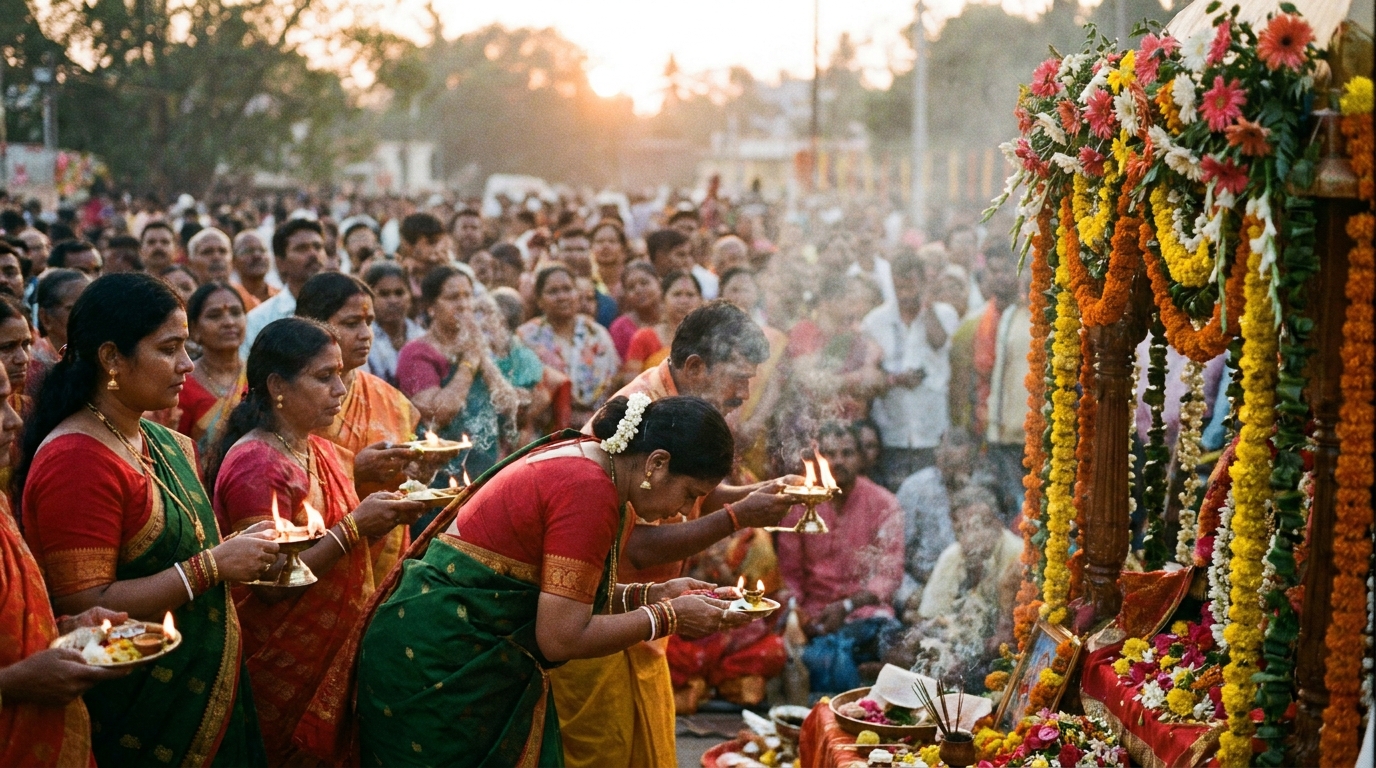
Festival worship can take many forms, but certain elements appear again and again in Bhakti Yoga. These practices are simple, profound, and open to everyone.
Kirtan: Chanting the Holy Names
Kirtan means devotional singing, usually done together. In Bhakti Yoga, chanting the names of God is considered one of the most accessible and powerful spiritual practices.
The Brihan-naradiya Purana emphasizes chanting the holy names as the recommended practice for this age. Sri Chaitanya Mahaprabhu especially shared the chanting of the maha-mantra:
Hare Krishna, Hare Krishna, Krishna Krishna, Hare Hare
Hare Rama, Hare Rama, Rama Rama, Hare Hare
The word Hare addresses the divine energy of God, often understood as the compassionate, loving energy that connects us to Krishna. Krishna means “the all-attractive one.” Rama means “the source of spiritual joy.”
Chanting does not require previous experience. You can listen, sing softly, clap, dance, or simply let the sound wash over you. The holy name meets each person where they are.
Katha: Hearing Sacred Stories
Katha means spiritual discussion or storytelling. Festivals often include readings from Bhakti scriptures such as the Bhagavad-gita, Srimad Bhagavatam, or Ramayana.
These stories are not merely historical or poetic. They reveal eternal truths about love, courage, humility, compassion, and surrender.
For example, the Srimad Bhagavatam describes Krishna’s childhood pastimes in Vrindavan, where every person, animal, tree, and river is absorbed in loving relationship with Him. Hearing these stories softens the heart and awakens devotion.
A good festival talk should not make people feel excluded or overwhelmed. It should help everyone understand the practical message: How can I love more deeply? How can I remember God in daily life? How can I serve with humility?
Puja: Offering with Reverence
Puja means worship or offering. It may include flowers, incense, lamps, water, food, prayers, and mantras.
For newcomers, puja can seem mysterious at first. But at its heart, puja is very simple. It is the act of offering something beautiful to God with respect.
Lighting a lamp can mean, “May divine light awaken in my heart.” Offering flowers can mean, “May my life become fragrant with devotion.” Offering food can mean, “Everything comes from You, and I return it with gratitude.”
The details may vary, but the mood is the same: love, gratitude, and reverence.
Prasada: Sacred Food Offered with Love
Prasada means mercy or grace. In Bhakti Yoga, food prepared and offered to God becomes prasada—spiritual nourishment.
Sharing prasada is one of the most beloved parts of festival worship. It brings people together. It reminds us that eating can be sacred. It allows everyone, regardless of background, to receive grace in a very tangible way.
Traditionally, prasada is vegetarian and prepared with cleanliness, care, and devotion. The cook’s consciousness matters. Cooking can become prayer when done with love.
Before eating, we can pause and remember: “This food is a gift. May it nourish my body and awaken gratitude in my heart.”
Arati: Welcoming the Divine
Arati is a ceremony in which offerings such as lamps, incense, water, cloth, flowers, and fans are presented to the Lord. Devotees often sing during arati, and the atmosphere becomes joyful and reverent.
The lamp is especially meaningful. When the flame is offered, we remember that God is the source of all light. When the lamp is then shared with the community, people may receive the warmth of the flame with their hands and touch it to their head. This is a way of accepting divine blessing.
Arati is not about spectacle. It is about welcoming God into the center of our gathering.
How to Participate if You Are New
If you are new to Bhakti festivals, please know this: you are welcome.
You do not need to know the songs, Sanskrit words, rituals, or philosophy before you come. Festival worship is not a test. It is an invitation.
Come with an Open Heart
The best preparation is openness.
You may see people bowing, chanting, offering flowers, or dancing. If you do not know what to do, it is perfectly fine to watch respectfully. You can participate as much or as little as feels sincere.
Bhakti grows naturally. No one needs to force devotion. Simply being in a devotional atmosphere can plant seeds in the heart.
Ask Gentle Questions
Most Bhakti communities are happy to explain the meaning behind practices. If something is unfamiliar, you can ask:
“What does this mantra mean?”
“Why do people offer lamps?”
“What is the story behind this festival?”
“How can I participate respectfully?”
Questions asked with sincerity are part of spiritual growth.
Respect the Sacred Space
Every community may have its own customs, but some general guidelines are helpful.
Remove shoes when entering temple rooms or sacred spaces if that is the custom. Dress modestly and comfortably. Avoid bringing meat, fish, eggs, alcohol, or intoxicants into devotional gatherings. Turn your phone to silent. If food is being offered to God, wait until it is served as prasada.
These practices are not about judgment. They help create an atmosphere of purity and focus.
Receive What Speaks to You
Maybe the chanting moves you. Maybe the philosophy inspires you. Maybe prasada touches your heart. Maybe you simply feel peace sitting in the room.
Receive that gift. Bhakti is personal. Each soul’s journey unfolds uniquely.
Festival Worship at Home
You do not need a large temple or big gathering to celebrate a sacred festival. Home worship can be deeply meaningful.
A small home festival, performed with sincerity, can bring grace into family life, friendships, and daily routines.
Create a Simple Home Altar
Choose a clean, peaceful place. Place a cloth, a sacred image, a candle or lamp, and fresh flowers if possible.
You may include a picture of Krishna, Radha and Krishna, Lord Rama, Sri Chaitanya Mahaprabhu, or another form of God you feel connected to. You may also place a copy of the Bhagavad-gita or another sacred text.
Keep it simple and clean. The altar is a place to remember, not a place to impress.
Chant Together
Even ten minutes of kirtan can change the atmosphere of a home.
You can play a recording and sing along, chant the maha-mantra softly, or repeat any name of God that is meaningful to you. If you have children, let them clap, dance, or offer flowers. Bhakti is joyful and natural.
Chanting together creates spiritual connection. It gives the mind a resting place and the heart a voice.
Read a Sacred Passage
Choose a short verse or story connected to the festival.
For Janmashtami, read about Krishna’s appearance from the Srimad Bhagavatam. For Rama Navami, read a story from the Ramayana. For Gaura Purnima, read about Sri Chaitanya’s compassion and His gift of chanting.
After reading, ask a simple question: “What can we practice from this story today?”
This turns scripture into living guidance.
Offer Food with Gratitude
Prepare a vegetarian meal or simple fruit, sweets, or water. Place a portion before the altar and pray:
“Dear Lord, please accept this offering made with love. Thank You for providing everything. May this food become prasada and nourish all who receive it.”
Wait a few moments, then serve the food with gratitude.
Home worship does not need to be complicated. The heart is the main ingredient.
Planning a Community Festival
Community festivals are powerful opportunities for outreach, service, and shared devotion. They can welcome people who may never attend a formal class or regular gathering.
The key is to organize with both devotion and care.
Build a Service Team
No one should have to carry a whole festival alone.
Create teams for cooking, setup, cleaning, music, children’s activities, greeting, altar decoration, sound, prasada distribution, and guest care. Encourage each person to serve according to their capacity and nature.
In the Bhagavad-gita, Krishna explains that people are gifted in different ways. A healthy festival honors this. Some serve by leading kirtan. Some serve by washing pots. Some serve by smiling at the door. All service is valuable when offered with devotion.
Welcome Guests Warmly
A festival may be someone’s first experience of Bhakti Yoga. The way they are greeted may shape their whole impression.
Have friendly greeters who can explain what is happening. Offer newcomers a simple schedule. Let them know where to sit, when prasada will be served, and how they can participate.
Use language that is welcoming. Instead of assuming people know terms, explain them gently. For example: “We are about to begin kirtan, which is call-and-response chanting. You are welcome to sing, listen, or simply relax.”
A warm welcome is itself a form of worship.
Keep the Program Balanced
A good festival has flow.
It may include kirtan, a short talk, arati, drama, dance, children’s offerings, prasada, and time for connection. Try not to make the program so long that newcomers feel overwhelmed.
Depth is more important than length. Even a short, sincere festival can leave a lasting impression.
Care for Children and Families
Children bring life to festivals. Make space for them.
Offer simple activities like flower garland making, coloring sacred images, storytelling, drama, music, or helping distribute prasada. Teach them that service is joyful, not burdensome.
Families often need practical support: stroller space, quiet areas, clear timing, and kid-friendly prasada. When families feel cared for, the whole community becomes stronger.
End with Clean-Up as Worship
Clean-up is not separate from the festival. It is part of the offering.
Washing dishes, sweeping floors, packing decorations, and taking out trash can be done in a mood of gratitude. After the guests leave and the music fades, seva continues.
Some of the deepest devotion is quiet and unseen.
The Inner Practices of Festival Worship
External celebration becomes transformative when joined with inner practice.
The real festival happens in the heart.
Gratitude
Begin and end with thanks.
Thank God for the opportunity to gather. Thank the teachers and saints who preserved the tradition. Thank the devotees and volunteers who served. Thank the guests who came. Thank the hands that cooked, cleaned, sang, and carried.
Gratitude opens the heart to grace.
Humility
Humility does not mean thinking poorly of ourselves. It means remembering that everything sacred comes by mercy.
In Bhakti, we try to serve without needing recognition. We offer our best, but we do not claim ownership. If something goes well, we thank God. If something goes wrong, we learn and keep serving.
Sri Chaitanya Mahaprabhu taught that one should chant the holy name in a humble state of mind, more tolerant than a tree, and ready to offer respect to others. This teaching is especially useful during festivals, when many personalities and tasks come together.
Prayer
Prayer is the soul speaking honestly to God.
During a festival, we can pray for purification, guidance, healing, and deeper love. We can pray for the world. We can pray for those who are suffering. We can pray for the ability to serve without selfishness.
You do not need fancy words. Sincere words are enough.
Remembrance After the Festival
After the festival ends, take time to reflect.
What touched your heart? What did you learn? Was there a moment of chanting, service, or scripture that stayed with you? How can you carry that into daily life?
Festival worship is not meant to be a spiritual high that disappears. It is meant to nourish steady practice.
Important Bhakti Festivals and Their Lessons
There are many sacred days in the Bhakti tradition. Each festival offers a doorway into divine love.
Janmashtami: The Appearance of Lord Krishna
Janmashtami celebrates Krishna’s birth, or more deeply, His divine appearance in this world.
Krishna appears to attract the heart back to eternal love. His childhood pastimes reveal sweetness, intimacy, and joy. His teachings in the Bhagavad-gita reveal wisdom, courage, and surrender.
A practical lesson of Janmashtami is this: invite Krishna into the heart. Make room for Him in the “prison house” of our worries and limitations, just as He appeared in a prison cell to Devaki and Vasudeva. Divine love can appear even in difficult places.
Radhastami: Honoring Srimati Radharani
Radhastami celebrates Srimati Radharani, the supreme devotee of Krishna and the embodiment of pure love.
Radha teaches us that the highest spiritual life is not control or achievement. It is selfless love. She shows the beauty of serving God for God’s pleasure.
On Radhastami, devotees often pray for a drop of genuine devotion. We ask not to become great, but to become sincere.
Gaura Purnima: The Mercy of Sri Chaitanya
Gaura Purnima honors Sri Chaitanya Mahaprabhu, who appeared in Bengal over 500 years ago and widely shared the chanting of the holy names.
He taught that love of God is not reserved for a select few. It is the birthright of every soul. His movement of kirtan welcomed people beyond social divisions and formal qualifications.
The practical lesson of Gaura Purnima is compassion. If we have received even a little spiritual joy, we can share it gently with others.
Rama Navami: The Appearance of Lord Rama
Rama Navami celebrates Lord Rama, known for righteousness, compassion, strength, and devotion to truth.
The Ramayana tells of Rama’s exile, His loyalty, His protection of devotees, and His victory over Ravana. These stories remind us that dharma—spiritual integrity—matters even when life is difficult.
A practical lesson of Rama Navami is to act with honor, keep faith, and trust that divine goodness ultimately prevails.
Diwali: Light in the Darkness
Diwali is celebrated in many ways across spiritual traditions. In the Bhakti mood, it often remembers the return of Lord Rama to Ayodhya and the offering of lamps to welcome Him.
Lighting lamps symbolizes inviting divine light into our hearts and homes. It is a time to let go of bitterness, renew spiritual intention, and celebrate hope.
The practical lesson of Diwali is simple and powerful: light one lamp. Take one step toward goodness. Let devotion shine in a darkened world.
Common Questions About Festival Worship
Many people feel curious but unsure when they first encounter Bhakti festivals. These questions are natural.
Do I Have to Be Hindu to Attend?
No. Bhakti Yoga is a path of loving devotion to God, and sincere seekers from all backgrounds are welcome.
The cultural forms may come from India’s sacred traditions, but the heart of Bhakti is universal: chanting, prayer, service, community, sacred food, and love for God.
You are welcome to come as you are.
What If I Do Not Understand Sanskrit?
That is completely okay.
Many sacred songs and mantras are in Sanskrit, a classical spiritual language. But you do not need to understand every word to benefit. Sound has power, and the intention of chanting is devotion.
At the same time, learning meanings can deepen the experience. Communities can help by offering translations and simple explanations.
What Should I Wear?
Wear something clean, modest, and comfortable.
Some people wear traditional clothing like saris, kurtas, or dhotis. Others wear simple everyday clothes. The main thing is respect for the sacred atmosphere.
Can I Bring Friends?
Yes, and it is a beautiful service to invite others kindly.
Let them know what to expect: chanting, spiritual discussion, worship, and vegetarian prasada. Encourage them to participate at their own pace.
What If I Feel Emotional?
That can happen.
Kirtan, prayer, and sacred atmosphere may touch parts of the heart we do not usually access. Tears, joy, quietness, or deep reflection can all be natural.
There is no need to judge your experience. Simply offer it to God.
Bringing the Festival into Daily Life
The best festival worship does not end when the event ends. It becomes a seed for daily devotion.
Chant a Little Every Day
Even five or ten minutes of daily chanting can keep the festival alive in your heart.
You may chant the maha-mantra, repeat a name of God, or sing a simple prayer. The important thing is regular, sincere connection.
Offer Your Food
Before eating, pause and offer gratitude.
If possible, prepare vegetarian meals and offer them to God before eating. This simple practice turns daily nourishment into spiritual remembrance.
Serve Someone
Festival worship teaches us that love becomes real through service.
Serve your family, community, neighbors, or spiritual gathering. Offer your skills. Listen to someone. Cook for someone. Clean something without needing praise.
Seva makes the heart soft.
Read Sacred Wisdom
Take a few minutes each day with the Bhagavad-gita, Srimad Bhagavatam, Ramayana, or writings of Bhakti saints.
Do not rush. Read one verse or paragraph and ask, “How can I live this today?”
Keep Good Company
In Sanskrit, sanga means association or company. Spiritual growth becomes easier when we spend time with people who encourage devotion.
Join kirtan, attend classes, visit festivals, or connect with a Bhakti community online or in person. Good company protects and nourishes the heart.
A Gentle Path Forward
Festival worship is one of the great gifts of Bhakti Yoga. It gives us sacred times to remember God, gather in community, chant holy names, hear wisdom, serve with love, and receive prasada.
You do not need to be perfect to begin. You do not need to know every mantra, custom, or scripture. You only need a sincere heart and a willingness to take one step.
Maybe your next step is attending a festival. Maybe it is chanting quietly at home. Maybe it is offering a flower, reading a verse, helping cook prasada, or simply praying, “Dear God, please guide me.”
At The Bhakti House, the spirit is simple: everyone is welcome. Every soul is beloved. Every sincere offering matters.
May your life become a festival of remembrance. May your home become a place of prayer. May your heart become a lamp of devotion. And may you feel encouraged today to take one sincere step toward God, knowing that divine love is already reaching toward you.
FAQs
What is festival worship?
Festival worship refers to the religious or spiritual ceremonies and rituals that are performed during specific festivals or celebrations. These rituals are often centered around honoring deities, ancestors, or significant events in the religious or cultural calendar.
What are some common examples of festival worship?
Common examples of festival worship include Diwali in Hinduism, Christmas in Christianity, Eid al-Fitr in Islam, and Hanukkah in Judaism. These festivals often involve specific prayers, offerings, and rituals that are unique to the occasion.
Why is festival worship important?
Festival worship is important as it allows individuals to connect with their faith, culture, and community. It provides an opportunity for believers to express gratitude, seek blessings, and strengthen their spiritual connection through shared traditions and practices.
How is festival worship typically conducted?
Festival worship is typically conducted through a combination of religious ceremonies, communal gatherings, feasting, and acts of charity. Depending on the specific festival, worship may involve attending special services at a place of worship, performing specific rituals at home, or participating in cultural events.
What are the benefits of participating in festival worship?
Participating in festival worship can provide individuals with a sense of belonging, spiritual fulfillment, and a deeper understanding of their faith and cultural heritage. It also fosters a sense of unity and solidarity within the community, promoting social cohesion and shared values.

