
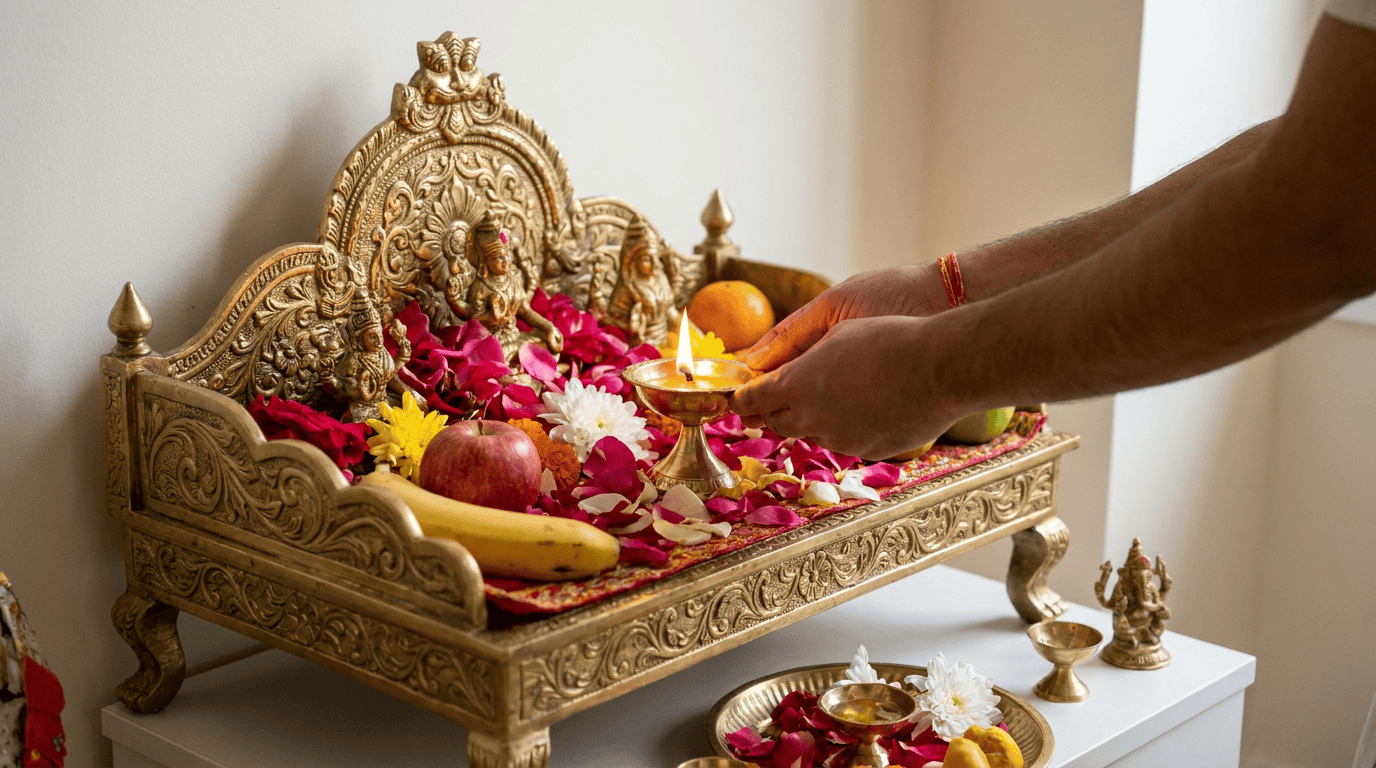
Deity worship is one of the most beautiful and practical parts of Bhakti Yoga, the path of loving devotion to God. In Sanskrit, the Deity is often called the murti, which means a sacred form. For many people new to Bhakti, this may raise a sincere question: “Is God really present in a form made of stone, wood, metal, or paint?”
Bhakti scriptures answer with compassion and clarity: God is unlimited. Because the Divine is unlimited, God can be present everywhere, including in a sacred form that has been lovingly prepared, prayed to, and worshiped according to spiritual tradition.
In the Bhagavad-gita, Lord Krishna says, “I am the source of all spiritual and material worlds” (Bhagavad-gita 10.8). If everything comes from God, then matter is also God’s energy. When that energy is offered back to God with love, it becomes spiritualized.
Deity worship is not idol worship in the sense of worshiping an ordinary object. Rather, it is a relationship with God through a visible, accessible form. Just as a photograph of a loved one can awaken real affection, the sacred Deity form helps the heart remember, serve, and love the Supreme Person.
In Bhakti Yoga, God is not distant. God is personal, loving, and willing to receive our offerings. Deity worship teaches us to live with this awareness: “God is here. God sees me. God accepts my love.”
A Simple Definition of Deity Worship
Deity worship is the practice of honoring and serving God in a sacred form with devotion. This may include offering flowers, incense, lamps, water, food, prayers, songs, and loving attention.
The Sanskrit word puja means worship or offering. In Bhakti, puja is not just a ritual. It is a way of saying, “My Lord, my life belongs to You. Please accept this small offering from my heart.”
Why the Deity Form Matters
Many of us struggle to focus the mind in prayer or meditation. The Deity gives our senses a spiritual center. We can see God, decorate God, cook for God, sing to God, and bow before God.
This is deeply practical. Instead of trying to reject the senses, Bhakti Yoga teaches us to purify them by engaging them in loving service. The eyes see the Deity. The hands offer flowers. The voice chants holy names. The ears hear sacred music and scripture. The heart slowly becomes softened.
The Scriptural Foundation of Deity Worship
Deity worship is not a modern invention. It is deeply rooted in ancient Bhakti scriptures, including the Bhagavad-gita, Srimad-Bhagavatam, Pancharatra texts, and the teachings of the great saints.
These scriptures explain that God kindly appears in forms that we can approach. In Sanskrit, this is sometimes called arca-vigraha. Arca means worshipable, and vigraha means form. The arca-vigraha is the worshipable form of the Lord, who accepts our service.
Krishna’s Teaching in the Bhagavad-gita
In the Bhagavad-gita 9.26, Lord Krishna gives one of the most tender teachings on worship:
“If one offers Me with love and devotion a leaf, a flower, fruit, or water, I will accept it.”
This verse is at the heart of Deity worship. Krishna does not say He requires wealth, status, scholarship, or perfection. He asks for love and devotion. Even a simple leaf or a cup of water becomes spiritually powerful when offered with sincerity.
This is encouraging for everyone. Whether we live in a temple, apartment, family home, dorm room, or small room with limited resources, we can offer something to God. The true ingredient is bhakti, which means devotion or loving service.
The Srimad-Bhagavatam and Loving Service
The Srimad-Bhagavatam describes many forms of devotional service, including hearing about God, chanting God’s names, remembering God, serving God’s feet, worshiping the Deity, offering prayers, becoming God’s servant, becoming God’s friend, and surrendering everything to God.
These are known as the nine processes of Bhakti. Deity worship is one of them, but it naturally includes many others. When we worship the Deity, we may chant, pray, remember, serve, hear scripture, and offer our heart.
This is why Deity worship is such a complete spiritual practice. It gathers the scattered parts of our life and gently brings them into relationship with God.
Saints and the Living Tradition
Throughout history, saints in the Bhakti tradition have worshiped the Lord’s Deity form with deep love. They did not see the Deity as stone or metal. They saw their beloved Lord.
Sri Chaitanya Mahaprabhu, the great teacher of divine love, emphasized chanting the holy names of God, especially the maha-mantra:
Hare Krishna Hare Krishna
Krishna Krishna Hare Hare
Hare Rama Hare Rama
Rama Rama Hare Hare
He also honored Deity worship as a way to awaken the heart. Chanting and worship go together. The holy name helps us feel the presence of God, and the Deity helps us serve that presence with love.
The Heart of Deity Worship: Love Over Ritual
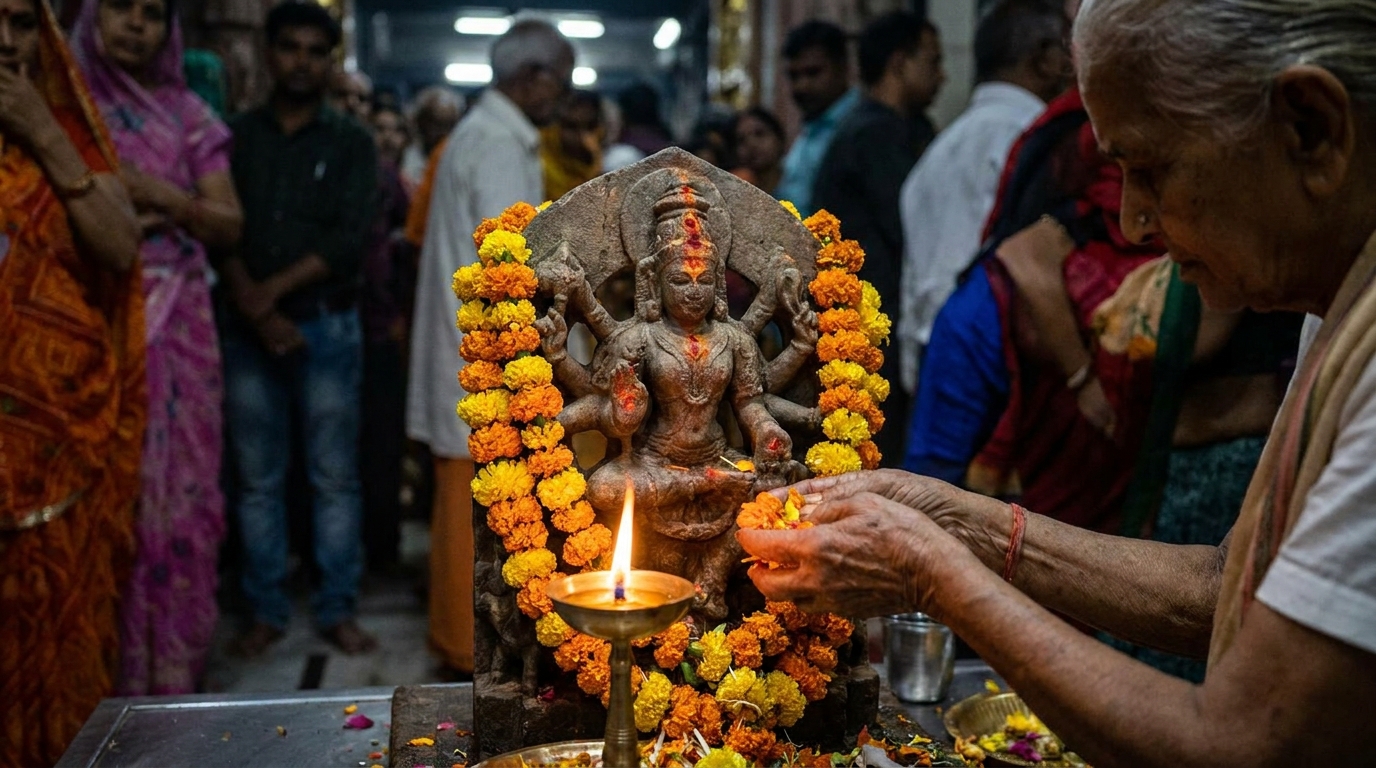
It is easy to look at Deity worship from the outside and notice the details: bells, incense, lamps, flowers, mantras, clothing, food offerings, and ceremonies. These are beautiful, but they are not the essence.
The essence is love.
Bhakti Yoga is not about performing perfectly so we can impress God. It is about offering ourselves sincerely so we can remember God, serve God, and grow in love.
Ritual as a Container for Relationship
Ritual can be misunderstood. Sometimes people think ritual is empty or mechanical. And yes, any practice can become mechanical if the heart is absent. But when performed with intention, ritual becomes a container for relationship.
A parent may kiss a child goodnight every evening. The action is repeated, but it is not meaningless. It carries love. In the same way, daily worship may include repeated actions, but those actions become sacred when filled with devotion.
Lighting a lamp before the Deity can mean, “Lord, please bring light into my heart.” Offering water can mean, “May my life become pure.” Offering food can mean, “Everything I have comes from You.”
God Accepts the Heart
In Bhakti, the heart matters more than external grandeur. A person may offer a golden plate without love, while another offers a single flower with tears of devotion. Scriptures remind us that God is attracted by sincerity.
This is especially important for beginners. We may feel unqualified. We may not know Sanskrit mantras. We may not have a temple room. We may forget things. We may feel distracted.
Still, we can begin.
A humble beginning is very dear to God. The path of Bhakti is not reserved for those who are already pure. It is the path that purifies us.
Worship as Daily Remembrance
Deity worship helps us remember God throughout the day. When we wake up and see the Lord, we remember that life is a gift. When we cook, we remember to offer our food. When we clean the altar, we remember to clean the heart. When we sing, we remember that our voice can be used in service.
This is practical spirituality. It brings devotion into ordinary life. The home becomes a sacred space. The kitchen becomes a place of offering. The heart becomes an altar.
Please visit our website for more information on our articles: articles.
How to Begin Deity Worship at Home
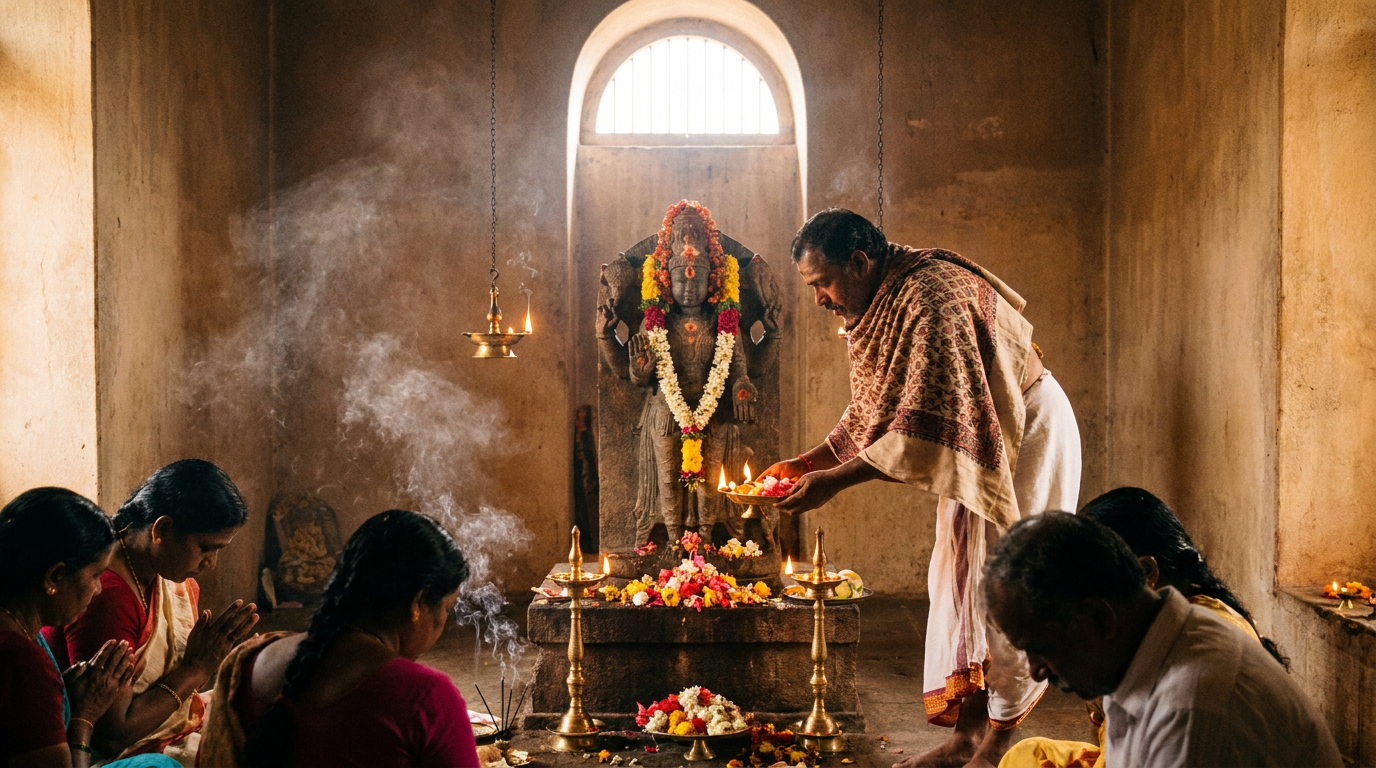
Beginning Deity worship at home can be simple, gentle, and joyful. You do not need to imitate a temple standard immediately. It is better to start with something steady and sincere than to begin with something too elaborate and later feel overwhelmed.
If possible, learn from experienced devotees, teachers, or a trusted Bhakti community. Traditional guidance helps us avoid confusion and develop healthy, respectful practices.
Create a Clean and Peaceful Sacred Space
Choose a clean place in your home for a small altar. This could be a shelf, table, or dedicated area. Keep it neat and peaceful.
You may place a picture or Deity form of Krishna, Radha-Krishna, Lord Rama, Lord Narasimha, Lord Jagannath, Lord Vishnu, or another authorized form of the Lord worshiped in the Bhakti tradition. Many people begin with sacred pictures before taking on more formal Deity worship.
You may also include pictures of saints or spiritual teachers who inspire your devotion. In Bhakti, we approach God through the mercy and guidance of devotees.
Try to keep the altar clean. Cleanliness is a form of respect. It also affects the mind. When we care for the sacred space, we learn to care for our inner life.
Offer Water, Flowers, or Incense
A very simple daily practice may include offering fresh water, a flower, and incense. If incense is not possible due to health or housing concerns, you can offer a candle, a flower, or simply your prayers.
Before offering, pause and bring your mind to God. You can say something simple:
“My Lord, please accept this offering. Please help me remember You and serve You with love.”
You do not have to be poetic. Honest prayer is beautiful.
Chant the Holy Names
Chanting is the heartbeat of Bhakti Yoga. The Sanskrit word kirtan means singing or glorifying God, often with music. Japa means personal, meditative chanting, often on beads.
You can chant the maha-mantra:
Hare Krishna Hare Krishna
Krishna Krishna Hare Hare
Hare Rama Hare Rama
Rama Rama Hare Hare
“Hare” calls upon the divine energy of the Lord, especially Srimati Radharani, the embodiment of pure devotion. “Krishna” means the all-attractive Lord. “Rama” means the source of spiritual joy.
Chanting before the Deity brings the heart into relationship. Even a few minutes daily can change the atmosphere of your home and mind.
Offer Your Food
Offering food to God is one of the most practical and transformative parts of Bhakti. Food offered with devotion becomes prasadam, which means mercy. Prasadam is not ordinary food. It is food that has been lovingly offered to the Lord and received back as grace.
To begin, prepare vegetarian food without meat, fish, or eggs. In many Bhakti traditions, devotees also avoid onion and garlic for offerings, as these foods can agitate the mind. Offer the food on a clean plate reserved for the Lord if possible.
Place it before the Deity or sacred picture and pray:
“Dear Lord Krishna, please accept this offering made with love. May it nourish devotion in my heart.”
After a few minutes, remove the plate and honor the food as prasadam. Eating becomes a sacred act when we remember that everything is God’s gift.
The Main Elements of Traditional Deity Worship
Traditional Deity worship can be very simple or very elaborate depending on the setting, training, and vows of the worshiper. In temples, Deity worship is often performed according to careful standards, with multiple daily offerings and ceremonies. At home, the practice is usually simpler.
Still, it helps to understand the main elements.
Cleanliness and Preparation
Before worship, devotees bathe or wash hands and mouth, wear clean clothing, and approach the altar with respect. This is not because God rejects us if we are imperfect, but because love naturally expresses itself through care.
When we meet someone dear, we prepare ourselves. In the same way, preparing for worship helps us shift from distraction to devotion.
Cleanliness also means mental preparation. Before worship, we can pause, breathe, and let go of worldly concerns for a moment. Even if the mind is restless, we gently bring it back.
Offering Items With Meaning
Common offerings include water, flowers, incense, lamps, food, cloth, ornaments, and prayers.
Each item carries a devotional meaning:
Water represents purity and refreshment.
Flowers represent beauty and the blossoming of the heart.
Incense represents fragrant devotion rising upward.
A lamp represents divine light removing ignorance.
Food represents gratitude and dependence on God.
Clothing and ornaments represent loving care for the Lord’s personal form.
In Bhakti, we do not think, “God needs these things.” God is complete. Rather, we need to offer. Offering awakens love within us.
Arati: Offering Light to the Lord
Arati is a worship ceremony in which various items, especially a lamp, are offered to the Deity while devotees sing. The lamp is often moved in circular motions before the Lord.
Arati is joyful and deeply symbolic. We offer light to the Lord, and then we receive that light as mercy. In many temples, devotees place their hands over the offered flame and touch their heads, honoring the Lord’s grace.
Arati reminds us that God is the center. The music, movement, fragrance, and prayers gather the community into shared devotion.
Darshan: Seeing and Being Seen
Darshan means sacred seeing. When we come before the Deity, we see the Lord, and we also allow ourselves to be seen by the Lord.
This is a profound practice. So much of spiritual life begins when we stop hiding. We come before God as we are: grateful, tired, hopeful, broken, joyful, confused, sincere. The Deity receives us.
Darshan is not only looking. It is relationship. We may pray, “Lord, please let me see You with eyes of devotion. Please see me with compassion.”
Common Questions About Deity Worship
Many sincere seekers have questions about Deity worship. Questions are welcome. Bhakti is not blind sentiment; it is thoughtful, heartfelt spiritual practice.
Is Deity Worship Idol Worship?
From a Bhakti perspective, no. Idol worship means treating an ordinary material object as God due to imagination. Deity worship means honoring a sacred form through which God agrees to receive our service.
A helpful example is a mailbox. A mailbox may look like a metal box, but because it is authorized by the postal system, placing a letter there has real effect. If we place the letter in a random box, it will not go anywhere. Similarly, the Deity form is worshiped according to scriptural guidance and devotional tradition.
The form is not considered ordinary when installed or honored properly. God’s presence is invoked through prayer, mantra, devotion, and authorized worship.
Can Beginners Worship a Deity?
Yes, beginners can begin worship in a simple way. However, formal temple-style Deity worship may require training and commitment. If someone has a carved or metal Deity at home, it is wise to ask experienced devotees how to worship respectfully.
Many beginners start with pictures of Krishna, Radha-Krishna, Lord Jagannath, or other sacred forms. This allows the practice to develop naturally without pressure.
The most important thing is consistency. Offer a little water, chant, pray, and bow. Let the relationship grow.
What If I Make Mistakes?
Mistakes happen. Bhakti Yoga is a path of grace. God is not a harsh examiner waiting to punish every error. The Lord sees our intention.
Still, respect matters. If we make a mistake, we can pray, “Please forgive me. I am learning. Please guide me.” This humility is itself devotional.
The goal is not anxiety. The goal is loving attentiveness.
Do I Need to Know Sanskrit?
No. Sanskrit mantras are powerful and beautiful, and learning them can deepen worship. But God understands every language. A simple prayer in English, Spanish, Hindi, Bengali, or any language of the heart can be offered with devotion.
That said, traditional mantras connect us with generations of saints and practitioners. We can learn gradually, one prayer at a time.
Can Deity Worship Fit Into a Busy Life?
Yes. Deity worship can be adapted in a realistic way. A busy parent, student, worker, or caregiver may not have hours each day. But even five or ten sincere minutes can become spiritually meaningful.
You might begin with:
Chanting one round of japa or a few minutes of the maha-mantra.
Offering water and a flower.
Reading one verse from the Bhagavad-gita.
Offering your breakfast or dinner.
Bowing and saying a heartfelt prayer.
Small daily practices create deep transformation over time.
Deity Worship as a Path of Inner Transformation
The purpose of Deity worship is not only to perform external offerings. It is to transform the heart. Through worship, we learn humility, gratitude, discipline, tenderness, and loving service.
In Bhakti, the Sanskrit word seva means service. Deity worship is seva. It teaches us to ask, “How can I serve?” rather than “What can I get?”
This shift is life-changing.
From Self-Centeredness to God-Centeredness
Much of modern life trains us to place ourselves at the center. We ask, “What do I want? How do I look? What do others think of me?” Deity worship gently reorients the heart.
When we place God at the center of the home, we begin to place God at the center of the mind. We cook for God, clean for God, sing for God, and live for God. Gradually, the ego softens.
This does not make us less human. It makes us more whole. When love for God awakens, compassion for others naturally grows.
Learning Consistency and Care
Daily worship teaches steadiness. Even when we do not feel inspired, we show up. This is love. In any meaningful relationship, commitment carries us through changing moods.
Some days our worship may feel joyful. Other days it may feel dry. Both are part of the journey. The practice itself purifies the heart, just as the sun rises whether or not the sky is cloudy.
Seeing All Life as Sacred
When we worship the Deity, we begin to see the world differently. We understand that all beings are connected to God. The Bhagavad-gita teaches that the wise see with equal vision, recognizing the spiritual nature within all living beings.
Deity worship should make us kinder, not proud. If our worship is real, it will show in how we speak, how we serve, how we forgive, and how we care for others.
The Lord we worship on the altar is also present in the hearts of all. This awareness is one of the fruits of Bhakti.
Practical Daily Deity Worship Routine
Here is a simple routine for home practice. Please adapt it according to your life, health, family, and guidance from trusted devotees.
Morning Practice
Begin by washing your hands and face, or bathing if possible. Approach the altar with respect.
You may bow and say:
“My Lord, thank You for this new day. Please guide my thoughts, words, and actions.”
Offer fresh water. If available, offer a flower, incense, or lamp. Chant the maha-mantra for a few minutes. Read one verse from the Bhagavad-gita or another Bhakti scripture.
Even a short morning offering can set the tone for the whole day.
Food Offering
Before eating, place a portion of your meal before the Lord. Offer it with love. Wait a few minutes, then receive it as prasadam.
If you are at work or traveling, you can silently pray before eating:
“Dear Lord, thank You for this food. Please accept it and bless me to use this energy in Your service.”
While formal offerings have standards, the habit of gratitude can be practiced anywhere.
Evening Reflection
At the end of the day, return to the altar. Offer a simple prayer.
You might say:
“Thank You for carrying me through this day. Please forgive my mistakes. Please help me grow in devotion.”
Chant or sing if you can. Even one heartfelt mantra can bring peace.
This evening practice helps us release the day into God’s hands.
Deity Worship in Community
While home worship is precious, community worship nourishes the heart in a special way. Visiting a temple, attending kirtan, joining a Bhakti gathering, or serving with others can strengthen our spiritual life.
Bhakti is personal, but it is not isolated. We grow through sanga, which means spiritual association.
Temple Worship
In temples, Deity worship is often performed with great care. The Lord may be awakened, bathed, dressed, offered meals, honored with arati, and put to rest. These services express the understanding that God is a person, not an abstract force.
When we visit a temple, we receive darshan, hear chanting, honor prasadam, and remember that we are part of a larger spiritual family.
Temple worship can inspire our home practice, but we should not feel discouraged if our home altar is simple. A small offering made with love is deeply meaningful.
Kirtan and Shared Devotion
Kirtan brings people together through sacred sound. We chant the names of God, often accompanied by instruments like harmonium, kartals, and mridanga drum.
In kirtan, the heart can open naturally. People from many backgrounds can participate. You do not need to be an expert. You can listen, sing softly, clap, or simply sit with an open heart.
Chanting before the Deity in community reminds us that love for God is both deeply personal and joyfully shared.
Service to Others
Deity worship should inspire service beyond the altar. If we offer flowers to God but speak harshly to others, our worship remains incomplete. If we decorate the altar but ignore suffering, we have more to learn.
Serving God includes serving God’s children. This may mean feeding others prasadam, welcoming guests, cleaning the temple, helping a neighbor, listening with compassion, or offering our skills for a higher purpose.
Bhakti turns ordinary acts into offerings.
Avoiding Common Misunderstandings
As with any sacred practice, Deity worship can be misunderstood or misused. A humble approach keeps us safe and sincere.
Avoid Pride
Sometimes spiritual practice can become a source of pride. We may think, “My worship is better,” or “I know more than others.” This is dangerous for the heart.
True worship makes us humble. The more we understand God’s greatness, the more we recognize our dependence on grace.
If pride appears, we can pray, “Lord, please help me serve without ego.”
Avoid Mechanical Worship
Routine is helpful, but mechanical worship can dry the heart. To keep devotion alive, pause before each offering. Remember whom you are serving. Speak to the Lord personally. Read scripture. Chant with attention.
Even if the feeling is not always strong, intention matters. We can keep returning to sincerity.
Avoid Neglecting People
A healthy altar should make the home more peaceful, kind, and loving. If worship becomes an excuse to neglect family duties, responsibilities, or compassion, we may need balance.
Bhakti is not escape. It is spiritualizing life. Caring for family, working honestly, and serving others can all be part of devotion when offered to God.
The Deeper Meaning: Inviting God Into the Home and Heart
At its deepest level, Deity worship is an invitation. We invite God into our home, our schedule, our meals, our relationships, and our inner world.
But in truth, God is already present. Worship helps us become present to God.
The Lord is not far away. Krishna says in the Bhagavad-gita that He is seated in the hearts of all living beings. Deity worship trains us to live with that sacred awareness.
The Altar as a Mirror of the Heart
When we clean the altar, we are reminded to clean resentment, envy, and selfishness from the heart. When we dress the Deity beautifully, we remember to clothe our mind in kindness. When we offer food, we remember that our life is sustained by mercy.
The outer practice reflects the inner journey.
The Lord as the Most Loving Guest
In many Bhakti homes, the Lord is treated as the most honored guest and beloved family member. Meals are offered first to God. The day begins and ends with remembrance. Decisions are made with prayer.
This does not make life perfect or free from difficulty. But it gives life a sacred center. In joy and sorrow, we have someone to turn to. We are not alone.
Growing at Your Own Pace
Every soul’s journey is unique. Some may feel drawn to elaborate worship. Others may begin with chanting and a small picture. Some may come with strong faith. Others may come with curiosity and questions.
All are welcome.
Bhakti grows through sincerity, not pressure. Take one step, then another. Ask for guidance. Keep chanting. Keep praying. Keep serving. The Lord responds to even the smallest sincere effort.
A Gentle Invitation to Begin
Deity worship is a practical path of love. It invites us to see God, serve God, feed God, sing to God, and live in relationship with God. Through simple offerings, our hearts become softer. Through chanting, our minds become clearer. Through prayer, our burdens become lighter. Through service, our lives become meaningful.
You do not need to be perfect to begin. You do not need to know everything. You do not need to come from a particular culture, country, or background. Bhakti Yoga is the soul’s natural movement toward love.
If you feel inspired, begin today with one sincere step. Offer a flower. Chant the holy names. read one verse of the Bhagavad-gita. Prepare a simple meal and offer it with gratitude. Stand before the Lord and say, “Please guide me.”
Everyone is welcome in the house of devotion. God receives the heart, and even the smallest offering made with love can open the door to a lifetime of spiritual growth.
FAQs
What is deity worship?
Deity worship, also known as idol worship, is a religious practice in which devotees offer prayers, rituals, and offerings to a representation of a deity, often in the form of a statue or image.
What are the common deities worshipped in different religions?
Common deities worshipped in different religions include Lord Krishna and Lord Rama in Hinduism, Jesus Christ in Christianity, Buddha in Buddhism, and Allah in Islam.
What are the common rituals and offerings in deity worship?
Common rituals and offerings in deity worship include bathing the deity, offering food, flowers, incense, and lamps, chanting prayers and mantras, and performing arati (waving of lights).
Why is deity worship important in some religions?
Deity worship is important in some religions as it allows devotees to establish a personal connection with the divine, express their devotion, and seek blessings and guidance from the deity.
How can one practice deity worship at home?
One can practice deity worship at home by setting up a sacred space, offering daily prayers and rituals, maintaining cleanliness, and following the guidelines and traditions of their specific religious tradition.

