
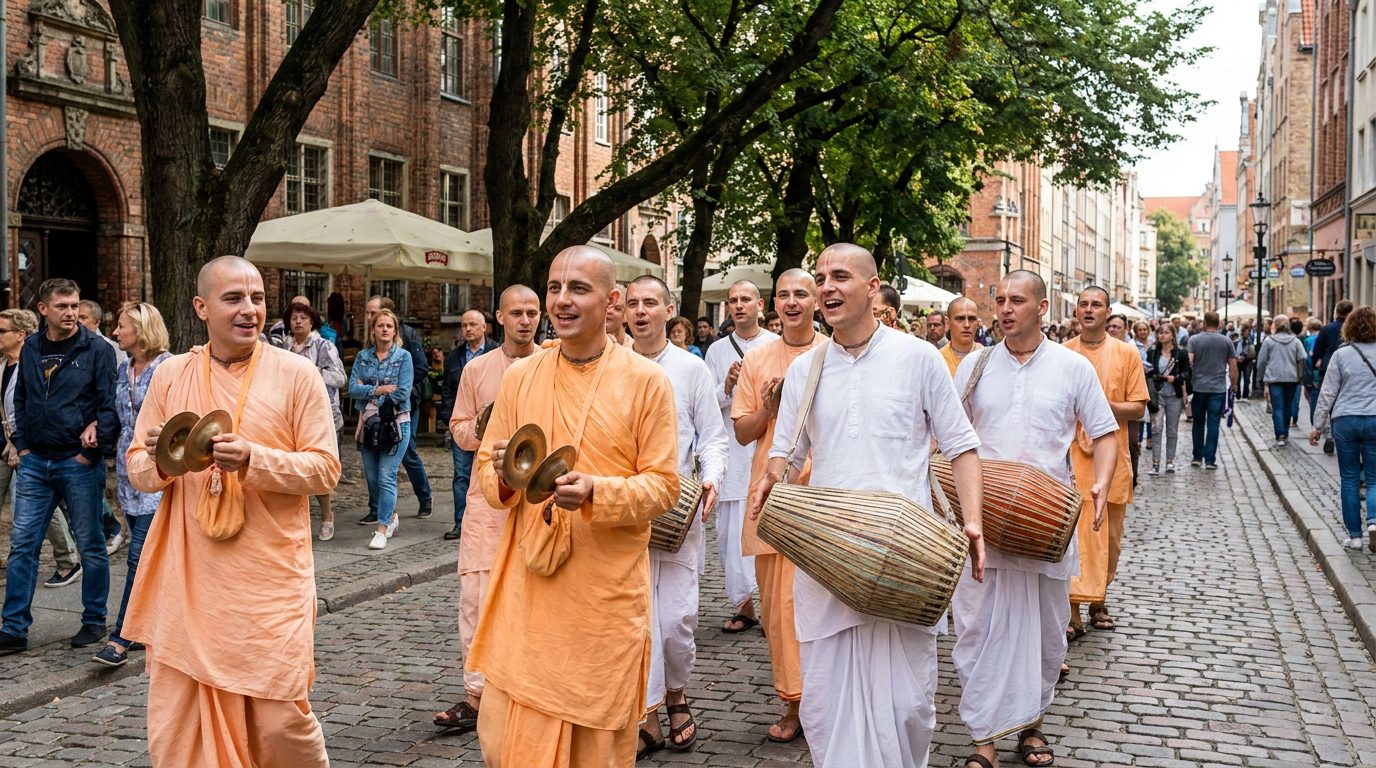
Harinama chanting is the joyful practice of calling upon the holy names of God. In the Bhakti tradition, “Hari” is a name of the Divine that means “the One who removes suffering and takes away the burdens of the heart.” “Nama” means “name.” So Harinama means “the sacred names of God.”
At The Bhakti House, we share this practice as a simple, welcoming, and deeply transformative path. You do not need to be born into any particular culture, speak Sanskrit perfectly, or have mastered meditation to begin. You only need sincerity.
The sacred sound most often sung in Harinama chanting is the maha-mantra, or “great mantra”:
Hare Krishna Hare Krishna
Krishna Krishna Hare Hare
Hare Rama Hare Rama
Rama Rama Hare Hare
This mantra is a prayer of the heart. “Krishna” means the all-attractive Lord, the source of beauty, love, and joy. “Rama” means the reservoir of spiritual happiness. “Hare” addresses the Divine energy, the compassionate feminine energy of God, asking to be engaged in loving service.
In simple words, the maha-mantra means: “O Lord, O Divine Energy of the Lord, please engage me in Your loving service.”
This is the essence of Bhakti Yoga: to awaken love for God through chanting, prayer, service, remembrance, and sincere spiritual living.
What Is Sacred Sound?
Sound That Carries Spiritual Presence
In everyday life, sound affects us deeply. A gentle word can heal. A harsh word can hurt. Music can uplift, comfort, or bring back memories. If ordinary sound has such power, the Bhakti scriptures explain that sacred sound has an even greater power because it carries divine presence.
In the Bhakti tradition, the names of God are not considered ordinary words. They are understood to be spiritually alive. The name of God and God Himself are non-different. This means that when we chant with sincerity, we are not simply repeating syllables. We are entering into contact with the Divine.
The Padma Purana, an ancient devotional scripture, teaches that the holy name is fully spiritual and complete. It is not limited by material sound. This is a beautiful and profound idea: God makes Himself available to us through sound, so that anyone, anywhere, can connect.
Why Sanskrit Mantras Are Used
Sanskrit is an ancient sacred language used in many yoga and spiritual traditions. The word “mantra” comes from two roots: “man,” meaning the mind, and “tra,” meaning to protect or liberate. A mantra is a sound vibration that helps free the mind from anxiety, distraction, and confusion.
Still, the power of Harinama chanting does not depend on our scholarship. Many people begin without knowing Sanskrit. The meaning unfolds gradually through practice, association, and grace.
Just as fire gives warmth whether or not we understand chemistry, the holy name purifies the heart whether or not we understand every layer of philosophy. Understanding helps, but sincerity is the real doorway.
Chanting as Prayer
Harinama chanting is not only meditation. It is also prayer.
When we chant “Hare Krishna,” we are asking to remember our spiritual identity. We are asking to become instruments of compassion. We are asking to love and serve rather than control and consume.
The prayer may begin simply: “Dear God, please help me.” Over time, it matures into: “Dear God, please use my life in service.” This shift is the heart of Bhakti Yoga.
The Scriptural Foundation of Harinama Chanting
The Bhagavad Gita: Remembering God in Daily Life
The Bhagavad Gita is one of the most beloved spiritual texts in the world. It is a sacred conversation between Lord Krishna and His friend Arjuna, who is facing confusion and crisis.
Krishna tells Arjuna:
“Always think of Me, become My devotee, worship Me, and offer your homage unto Me.”
Bhagavad Gita 18.65
This instruction is tender and practical. Krishna does not ask Arjuna to abandon life. He asks him to remember God while living with courage, responsibility, and devotion.
Harinama chanting helps us do exactly that. It brings remembrance into our day. Whether we are cooking, driving, walking, working, or sitting in meditation, the holy name gives the mind a sacred focus.
The Srimad Bhagavatam: Hearing and Chanting
The Srimad Bhagavatam, a central scripture of Bhakti Yoga, describes nine practices of devotion. The first two are “sravanam” and “kirtanam.”
“Sravanam” means hearing.
“Kirtanam” means chanting or glorifying.
This is very significant. The path begins with sound: hearing sacred wisdom and chanting the holy names. We may not be able to perform great austerities. We may not have perfect concentration. But most of us can hear and chant.
The Bhagavatam teaches that hearing and chanting cleanse the heart. In practical terms, this means that spiritual sound gradually softens our inner life. We may notice less anger, more patience, deeper gratitude, and a growing desire to live with purpose.
Sri Chaitanya Mahaprabhu and the Gift of Harinama
Sri Chaitanya Mahaprabhu, a great saint and incarnation of divine love who appeared in India over 500 years ago, spread the chanting of the holy names widely. He taught that in this age of distraction and spiritual confusion, Harinama chanting is the most accessible and powerful method for awakening love of God.
He prayed:
“Let there be all victory for the chanting of the holy name of Krishna, which cleanses the mirror of the heart.”
This prayer comes from the Shikshashtakam, eight beautiful verses composed by Sri Chaitanya. The image is simple and powerful: the heart is like a mirror covered by dust. Chanting removes that dust, allowing us to see who we truly are.
We are not merely our worries, roles, accomplishments, wounds, or mistakes. We are eternal souls, beloved by God, meant for loving relationship.
Check out our latest posts at https://thebhaktihouse.org/blog.
Why Harinama Chanting Is So Powerful
It Cleanses the Heart
The mind collects impressions all day long. News, conversations, advertisements, fears, memories, and desires all leave marks inside us. Without spiritual practice, the heart can become crowded and restless.
Harinama chanting acts like a gentle cleansing rain. It does not force the heart open. It patiently softens it.
At first, chanting may feel unfamiliar. The mind may wander. We may feel distracted or restless. That is normal. The practice is not about performing perfectly. It is about returning, again and again, to sacred sound.
Each return is an offering.
It Awakens Our Natural Love
Bhakti Yoga teaches that love for God is already within us. It is not something artificial that we must create. It is like a seed waiting for water.
Chanting is that water.
When we chant regularly, the seed of devotion begins to grow. We may feel more drawn to prayer, service, scripture, and compassionate living. We may become more aware of God’s presence in ordinary moments: a sunrise, a shared meal, a kind word, a quiet breath.
This awakening is not always dramatic. Often, it is gentle. We simply begin to feel that life is sacred.
It Gives Shelter in Difficult Times
Everyone faces seasons of uncertainty, grief, temptation, or loneliness. During such times, the holy name becomes shelter.
Chanting does not always remove external problems immediately. But it changes how we stand within them. It reminds us that we are not alone. God is present. Grace is available. The soul is held.
Many devotees have experienced that even when the mind cannot form a perfect prayer, the mantra can pray for us. We may simply chant and let the sacred sound carry our tears, confusion, hope, and surrender.
It Connects Us With a Living Tradition
When we chant Harinama, we join a stream of devotion that has flowed through generations. Saints, teachers, mothers, fathers, monks, householders, children, scholars, artists, and seekers have chanted these names with love.
This tradition is not meant to make us feel superior or separate from others. True chanting makes us humble. It helps us honor the spiritual longing in every heart.
Bhakti is not about creating walls. It is about opening the heart to God and to all living beings as beloved parts of God.
Ways to Practice Harinama Chanting
Japa: Personal Meditation With Beads
“Japa” means soft, personal repetition of a mantra. Many practitioners chant the maha-mantra on a string of 108 beads called “japa mala.” Each bead gives the fingers a place to rest and helps the mind stay present.
To begin japa, you can sit in a clean, quiet place. Take a few deep breaths. Hold the beads gently. Chant the full maha-mantra once on each bead:
Hare Krishna Hare Krishna
Krishna Krishna Hare Hare
Hare Rama Hare Rama
Rama Rama Hare Hare
Try to hear each word. Hearing is essential. The tongue chants, the ears receive, and the heart gradually awakens.
If you do not have beads, you can still chant. You may set a timer for five or ten minutes. The most important thing is sincerity and consistency.
Kirtan: Joyful Group Chanting
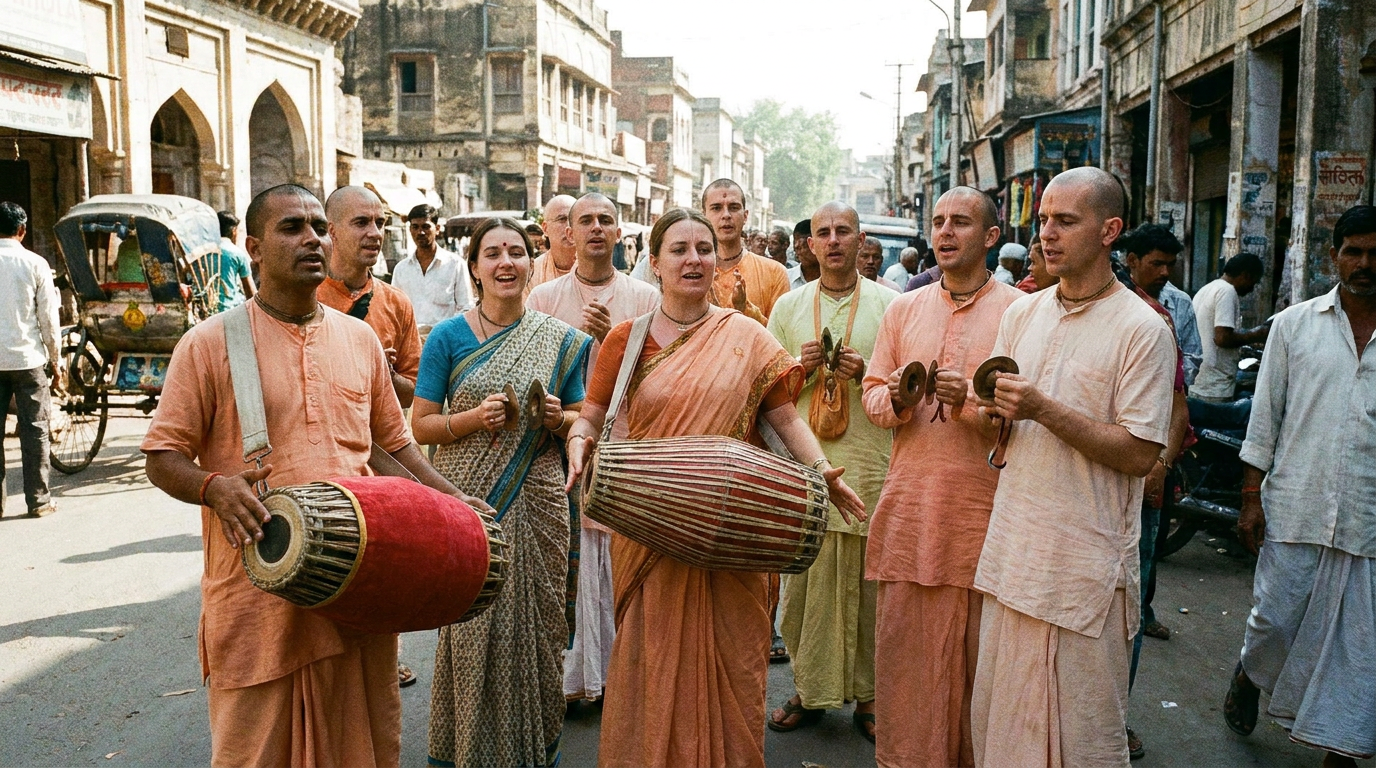
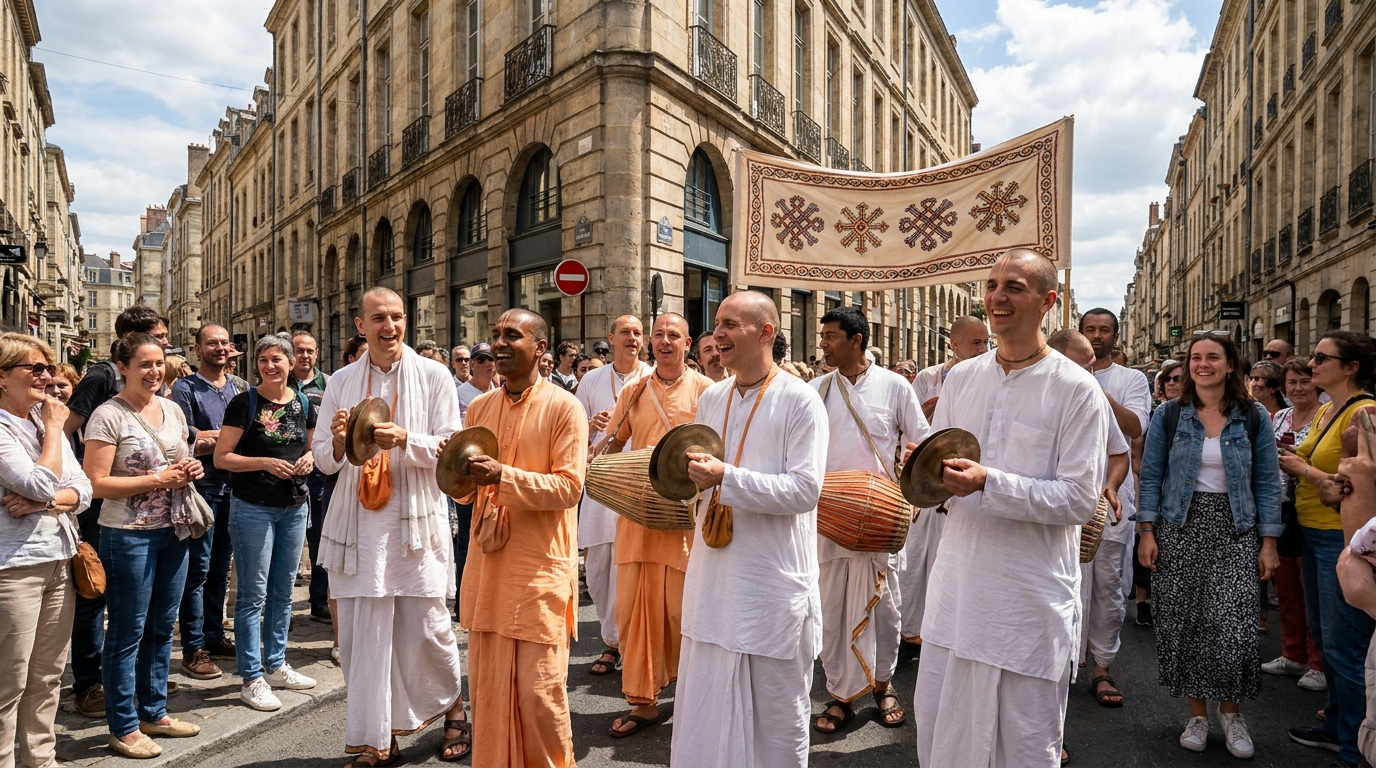
“Kirtan” means singing or chanting together, often with musical instruments such as harmonium, mridanga drum, kartals, guitar, or hand clapping. In kirtan, one person leads and others respond. This call-and-response style makes it easy for everyone to participate.
Kirtan is not a concert, though it can be musically beautiful. It is a shared prayer. The goal is not performance but devotion.
People often feel a deep sense of belonging in kirtan. Voices blend. Hearts soften. Differences fade. The sacred names create a spiritual atmosphere where everyone can participate, whether they sing loudly, softly, or simply listen.
At The Bhakti House, kirtan is a welcoming space. You can come as you are. You do not need to know the melodies. You do not need to have a “good voice.” Your presence and sincerity are enough.
Sankirtan: Sharing Sacred Sound
“Sankirtan” means the congregational chanting of the holy names, especially in public or shared spaces. Sri Chaitanya Mahaprabhu encouraged sankirtan as a way to bring spiritual joy to the world.
This can take many forms: chanting in a temple, home, yoga studio, festival, park, street, or community gathering. Wherever Harinama is chanted with love, that place becomes spiritually blessed.
Sankirtan reminds us that sacred sound is not meant to be hidden away. It is a gift. When shared humbly and respectfully, it can uplift hearts in ways we may never fully know.
Mantra Meditation in Daily Activities
Chanting can also be woven into daily life. You may softly chant while walking, cooking, cleaning, gardening, or driving. You may play kirtan in your home. You may chant before beginning work or before going to sleep.
This is not about escaping life. It is about sanctifying life.
Bhakti Yoga teaches us to bring remembrance into ordinary actions. When we chant while cooking, our food becomes an offering. When we chant while walking, the path becomes a prayer. When we chant while serving others, our service becomes an expression of love for God.
Common Questions About Harinama Chanting
Do I Have to Be Hindu to Chant?
No. Harinama chanting is open to everyone.
Although the practice comes through the Vaishnava Bhakti tradition, the holy names of God are not owned by any one group. God is the loving source of all beings. Anyone can call out to the Divine.
People from many backgrounds chant the maha-mantra: Christians, Jews, Muslims, Buddhists, Hindus, spiritual seekers, yoga practitioners, and people who are simply curious. Chanting does not require us to reject our sincere spiritual roots. It invites us to deepen our relationship with God through sacred sound.
What If My Mind Wanders?
The mind will wander. This is part of being human.
When you notice the mind drifting, gently return to the mantra. Do not become discouraged. Each time you return, you strengthen your spiritual attention.
Think of chanting like training a small child to walk. The child falls many times, but the loving parent does not condemn the child. In the same way, God sees our effort with compassion.
The goal is not to defeat the mind with harshness. The goal is to lovingly bring the mind back to Krishna, back to God, back to the sacred sound.
Does Pronunciation Matter?
Pronunciation is helpful, and we can gradually improve it by listening to experienced chanters. But the heart matters most.
If a child calls for their mother imperfectly, the mother still understands. In the same way, God hears the sincerity behind our voice.
Still, because mantras are sacred sound vibrations, we honor them by learning carefully. We listen, practice, and chant respectfully. This balance of humility and confidence is very beautiful.
How Long Should I Chant?
Start with what is realistic. Five minutes a day can be a wonderful beginning. You may choose to chant one round on japa beads, or simply chant for a set amount of time.
Over time, you may feel inspired to increase. Some practitioners chant a fixed number of rounds daily. Others attend weekly kirtan or chant during morning prayer.
Consistency is more important than quantity at the beginning. A small daily practice done with sincerity can change the heart.
What If I Do Not Feel Anything?
This is also normal.
Sometimes chanting feels peaceful or joyful. Sometimes it feels dry. Bhakti is not based only on emotion. It is based on faithful practice and relationship.
If you water a seed, you may not see growth immediately. But something is happening beneath the soil. In the same way, chanting works within the heart even when we do not feel obvious results.
Continue gently. Pray for taste. Seek good association. Hear from scripture. Serve others. Gradually, the holy name reveals its sweetness.
Harinama Chanting and Spiritual Growth
From Self-Centeredness to Service
One of the signs of real spiritual growth is a shift from “How can everything serve me?” to “How can I serve God and others?”
Chanting helps this shift happen naturally. The holy name purifies the desire to control and enjoy separately from God. It awakens the desire to love, give, and live in harmony with divine purpose.
Service, or “seva,” is essential in Bhakti Yoga. Seva means loving service offered to God and all living beings. It may include cooking, cleaning, teaching, caring for family, helping a neighbor, supporting a spiritual community, feeding others, or offering one’s talents in devotion.
When chanting and service come together, spiritual life becomes balanced. Chanting fills the heart, and service expresses that fullness.
From Anxiety to Trust
Modern life often trains us to worry constantly. We may feel pressure to prove ourselves, protect ourselves, and plan every outcome. Chanting invites us into another way of being: trust.
This does not mean becoming passive. Arjuna in the Bhagavad Gita was asked to act with courage. But Krishna taught him to act while depending on God.
Harinama chanting nurtures that dependence. We begin to remember: “I am not the ultimate controller. I am a servant of the Divine. I can do my best and offer the results.”
This attitude can bring great relief. We still work, love, choose, and serve—but with less fear and more faith.
From Isolation to Community
Spiritual growth is nourished by “sadhu-sanga,” the association of sincere spiritual people. “Sadhu” means a saintly or sincere person, and “sanga” means association.
When we chant with others, we are strengthened. We hear how others pray. We see examples of devotion. We are reminded that we are walking a shared path.
Community does not mean everyone is perfect. A Bhakti community is made of real people learning to love, forgive, serve, and grow. The holy name becomes the center that brings us back again and again to humility and grace.
From Forgetfulness to Remembrance
The soul’s difficulty, according to Bhakti wisdom, is forgetfulness of God. We forget our source. We forget our spiritual identity. We forget that every living being is sacred.
Chanting is the medicine of remembrance.
The more we chant, the more remembrance becomes natural. We may pause before speaking. We may offer gratitude before eating. We may see challenges as invitations to surrender. We may feel God’s presence not only in temples or sacred places, but in the heart of everyday life.
Creating a Simple Harinama Practice at Home
Begin With a Sacred Space
You can create a small space in your home for chanting. It may be a corner with a clean cloth, a candle, a picture of Krishna or a beloved form of God, a scripture, flowers, or your japa beads.
The space does not need to be elaborate. It simply signals to the mind and heart: “This is a place for prayer.”
Try to keep it clean and peaceful. Over time, your chanting space can become a shelter in your home.
Choose a Regular Time
Morning is especially helpful because the mind is often clearer before the day becomes busy. Even a few minutes of chanting in the morning can shape the mood of the whole day.
If mornings are difficult, choose another time. The best time is the time you will actually keep.
You may chant before breakfast, after work, before bed, or during a daily walk. Let your practice be steady and kind, not forced by guilt.
Listen Deeply
Chanting is not only speaking. It is hearing.
Try to listen to each syllable of the mantra. When the mind wanders, return to the sound. Let the mantra enter the heart through the ears.
This simple instruction—chant and hear—can carry us very far.
Offer Your Chanting
Before you begin, you may say a short prayer:
“Dear Lord, please let this chanting be an offering to You. Please help me remember You. Please purify my heart and guide my life in loving service.”
This prayerful intention transforms chanting from a technique into a relationship.
Living the Holy Name
Chanting and Character
True chanting should gradually influence how we live. If we chant God’s names but remain careless with others, we should humbly reflect and pray for deeper transformation.
The holy name teaches kindness, truthfulness, compassion, humility, and gratitude. These qualities may grow slowly, but they are signs that chanting is entering the heart.
We do not become perfect overnight. Bhakti is a path. But with each sincere step, the heart becomes more aligned with love.
Chanting and Food Offered With Love
In Bhakti Yoga, food can become spiritualized when prepared and offered to God with devotion. This is called “prasadam,” meaning mercy or grace.
Chanting while cooking and offering food to Krishna is a beautiful way to bring the holy name into daily life. We may prepare vegetarian food with care, offer it with prayer, and then receive it as sacred nourishment.
This practice reminds us that even eating can become devotional when done with gratitude and love.
Chanting and Compassion for All Beings
Because chanting awakens love for God, it also awakens compassion for all of God’s children. This includes humans, animals, and the natural world.
The more we recognize God as the source of life, the more we want to live gently and responsibly. Harinama chanting is not separate from compassion. It should make our hearts wider.
A person who chants sincerely begins to ask: “How can my words heal? How can my actions serve? How can my life reflect divine love?”
The Gift Is Available Now
Harinama chanting is both simple and profound. A child can chant it. A scholar can spend a lifetime contemplating it. A grieving person can find shelter in it. A joyful person can celebrate through it. A busy person can carry it into daily life. A seeker from any background can begin.
The holy name does not demand that we be perfect before we approach. Rather, it purifies us as we approach.
Bhakti Yoga is a practical path of love. We chant, we pray, we serve, we hear sacred wisdom, and we try to live with humility. Step by step, the heart changes. Step by step, remembrance deepens. Step by step, love awakens.
If you feel drawn to Harinama chanting, begin gently. Chant for a few minutes today. Attend a kirtan if you can. Listen to the maha-mantra. Offer one prayer from your heart. Serve someone with kindness. Read one verse from the Bhagavad Gita or Srimad Bhagavatam and ask how it can guide your life.
No sincere step is small in spiritual life. God sees the heart.
Everyone is welcome on this path. Wherever you come from, whatever you carry, however long you have been searching, the holy name is available to you. Take one sincere step toward God, and trust that divine love will meet you there.
FAQs
What is Harinama chanting?
Harinama chanting is a form of devotional singing or chanting that involves the repetition of the names of God, particularly in the Vaishnava tradition. It is considered a powerful spiritual practice for purifying the mind and connecting with the divine.
What are the benefits of Harinama chanting?
Harinama chanting is believed to have numerous benefits, including reducing stress and anxiety, increasing feelings of peace and happiness, and promoting a sense of spiritual well-being. It is also thought to help cultivate a deeper connection with the divine and foster a sense of community among participants.
How is Harinama chanting practiced?
Harinama chanting is typically practiced in a group setting, with participants coming together to sing or chant the names of God. This can be done through call-and-response chanting, where a leader sings a line and the group responds, or through the repetition of a specific mantra or sacred names.
Is Harinama chanting associated with a specific religious tradition?
Harinama chanting is closely associated with the Vaishnava tradition, particularly within the Hare Krishna movement. However, the practice of chanting the names of God is found in many spiritual traditions around the world, and can be adapted to fit within a variety of religious or philosophical beliefs.
Can anyone participate in Harinama chanting?
Yes, Harinama chanting is open to people of all backgrounds and beliefs. It is a practice that is meant to be inclusive and welcoming, and participants are often encouraged to join in regardless of their level of experience or familiarity with the tradition.

