
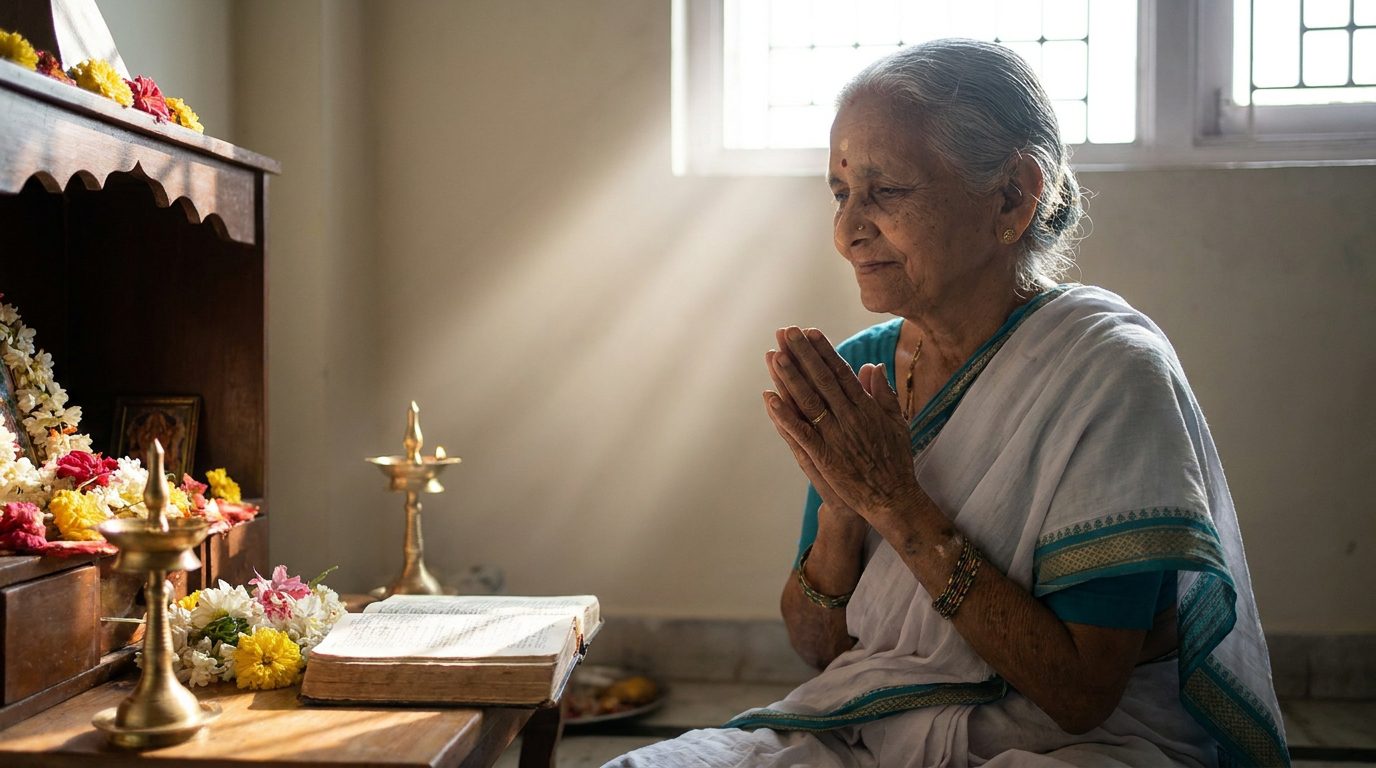
Understanding Grace in the Heart of Bhakti Yoga
Grace is one of the most beautiful and mysterious gifts on the path of Bhakti Yoga. In Sanskrit, grace is often expressed through words like kripa or prasada. Kripa means divine mercy or compassion, and prasada means a sacred gift, something received with gratitude from God.
In Bhakti Yoga, grace is not seen as something far away or reserved only for saints. Grace is the loving movement of the Divine toward the soul. It is the help we could never fully earn, the kindness we may not even know how to ask for, and the quiet guidance that brings us closer to God.
Bhakti Yoga is the yoga of devotion. The word bhakti comes from the Sanskrit root bhaj, which means to love, serve, share, or participate in relationship with the Divine. While other forms of yoga may emphasize discipline, knowledge, or meditation, Bhakti Yoga centers on love. It teaches that the soul grows through loving connection with God, expressed through chanting, prayer, worship, service, remembrance, and a humble heart.
Yet anyone who has tried to grow spiritually knows that devotion is not always easy. Our minds wander. Our hearts become distracted. Our habits pull us away from what we truly value. This is where grace becomes essential. Grace lifts us when our own strength is not enough. Grace softens the heart. Grace transforms spiritual practice from a task into a relationship.
For readers of all backgrounds, whether you are new to Bhakti, returning to spiritual life, or already walking a path of devotion, the role of grace is deeply encouraging. It reminds us that we are not walking alone. Divine love is already reaching toward us.
Grace and Effort: The Sacred Balance of Bhakti
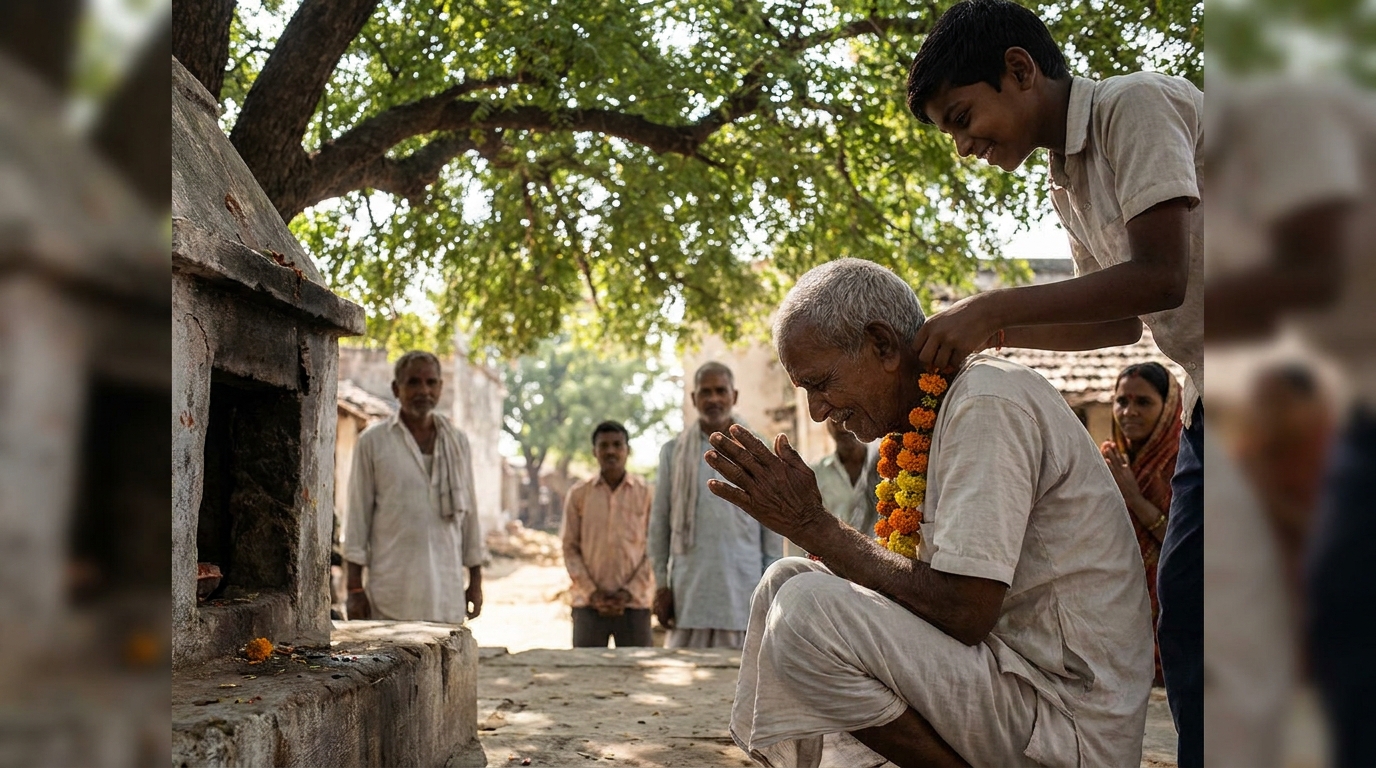
One of the most practical teachings in Bhakti Yoga is that spiritual life includes both sincere effort and divine grace. We do our best, but we do not rely only on ourselves. We practice, we pray, we chant, we serve—and then we open our hearts to receive.
This balance is not always easy to understand. Some may ask, “If everything depends on grace, why should I practice?” Others may ask, “If I practice sincerely, why do I need grace?” Bhakti offers a gentle answer: our effort invites grace, and grace empowers our effort.
The Small Offering That Opens the Heart
In the Bhagavad Gita, one of the most beloved scriptures of Bhakti Yoga, Lord Krishna says:
“Whoever offers Me with devotion a leaf, a flower, fruit, or water, I accept that loving offering from the pure-hearted soul.”
— Bhagavad Gita 9.26
This verse is wonderfully simple. God is not asking for grand displays, wealth, or perfection. A leaf, a flower, a fruit, or a little water—when offered with love—becomes sacred.
This teaches us that grace meets us in sincerity. The offering itself may be small, but the heart behind it matters deeply. In Bhakti, the Divine is moved by love. When we offer even a little time, attention, prayer, or service, we make space for grace to enter our daily life.
A person may begin with just one mantra, one candle, one quiet prayer before sleep, or one act of kindness done in remembrance of God. These small offerings are not insignificant. They are doors.
Why Effort Alone Cannot Produce Love
We can discipline the body. We can organize our schedule. We can memorize prayers and study sacred texts. These are valuable practices. But divine love is not something we manufacture by force.
Love grows through relationship. Just as we cannot demand that a flower bloom instantly, we cannot force the heart to awaken on our timeline. Bhakti practice prepares the soil. Grace brings the rain.
This is a humble truth. It does not make our effort meaningless. Rather, it makes our effort tender. We practice not to control God, but to become more available to God. We chant not to achieve spiritual status, but to remember. We serve not to be admired, but to love.
When effort becomes an offering, grace naturally has room to work.
Grace in the Teachings of the Bhakti Scriptures
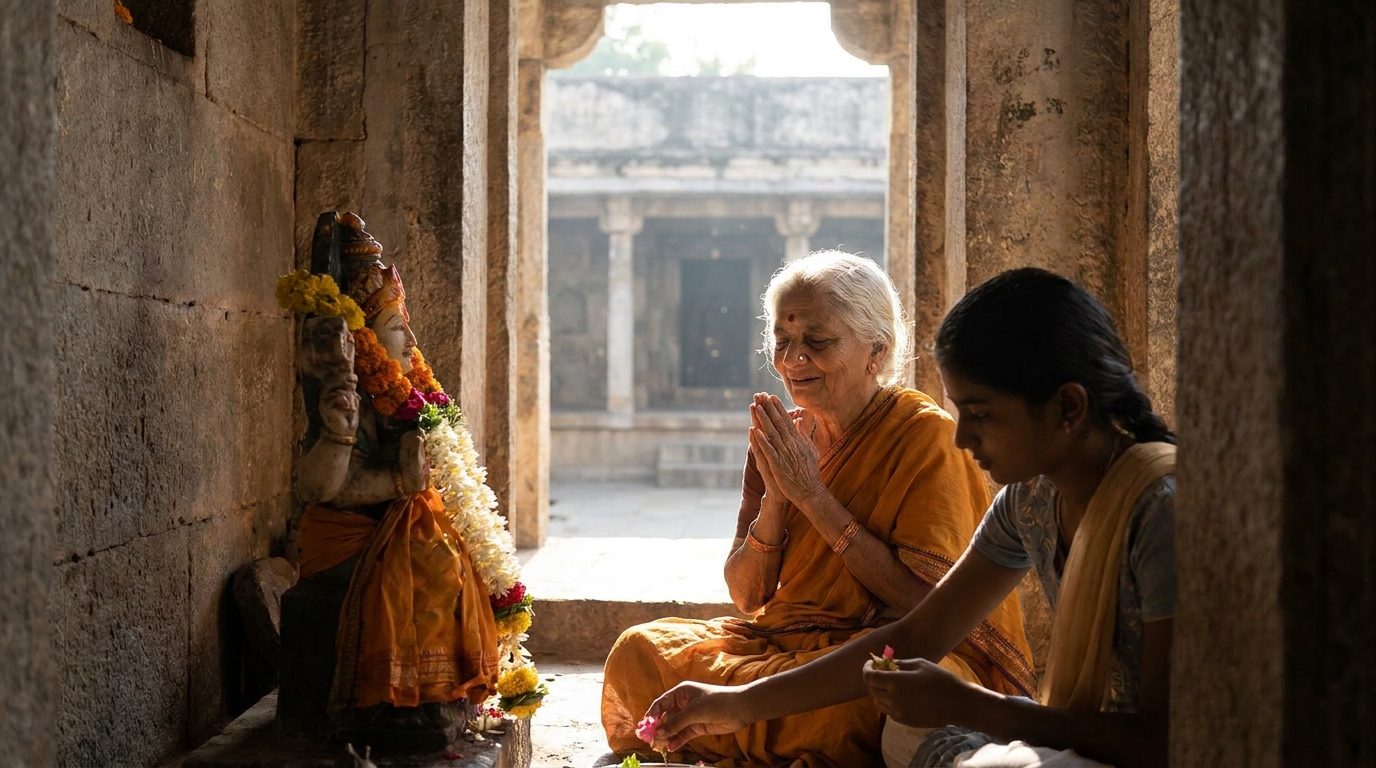
The scriptures of Bhakti Yoga are rich with stories and teachings about grace. They show us again and again that divine mercy can reach anyone—kings and villagers, scholars and children, saints and those who feel unworthy.
These sacred texts are not meant only for historical study. They are mirrors for our own lives. They remind us that wherever we are, the Divine can meet us there.
The Bhagavad Gita: Surrender and Divine Protection
A central verse on grace appears near the end of the Bhagavad Gita, where Krishna lovingly tells Arjuna:
“Abandon all varieties of separate duties and simply surrender unto Me. I shall deliver you from all sinful reactions. Do not fear.”
— Bhagavad Gita 18.66
The Sanskrit word often translated as surrender is sharanagati. It means taking shelter. It does not mean giving up in despair. It means turning toward God with trust.
In daily life, surrender may look like this: “My Lord, I do not know the way perfectly. Please guide me.” It may be a prayer whispered in difficulty, a decision to act with integrity, or a willingness to release control over outcomes.
Krishna’s promise is filled with grace: “Do not fear.” Bhakti does not ask us to become fearless by our own power. It invites us to place our fear in the hands of Divine Love.
The Srimad Bhagavatam: Devotion Beyond Qualification
The Srimad Bhagavatam, also known as the Bhagavata Purana, is one of the great devotional scriptures of India. It repeatedly teaches that sincere devotion attracts grace, even when a person feels unqualified.
One of its famous teachings describes nine forms of devotional service, called navadha bhakti. These include hearing about God, chanting divine names, remembering the Divine, serving, worshiping, praying, becoming a servant, cultivating friendship with God, and offering oneself fully.
These practices are practical pathways for receiving grace. They are not limited to a monastery or temple. We can hear sacred wisdom while commuting. We can chant while cooking. We can remember God before making a difficult decision. We can serve our family, community, and the earth as offerings.
Grace enters ordinary life when ordinary life becomes connected to devotion.
The Stories of Saints: Mercy That Transforms
Throughout the Bhakti tradition, saints have testified that divine grace changed their lives. Saints like Mirabai, Tukaram, Andal, Nammalvar, Chaitanya Mahaprabhu, and many others expressed devotion not as theory, but as living love.
Their songs often reveal humility. They do not claim, “I have achieved God by my power.” Instead, they cry, “By Your mercy, I remember You. By Your mercy, I sing Your name.”
This is the mood of Bhakti: humble, grateful, intimate, and full of longing. The saints show us that grace is not cold or abstract. It is personal. It can be sung, wept, danced, served, and lived.
Discover a wide range of insightful articles that delve into various spiritual topics. These articles provide guidance and inspiration for your personal growth journey. Stay updated with the latest articles to enhance your understanding of spiritual practices.
How Grace Awakens Through Chanting the Holy Names
One of the most accessible practices in Bhakti Yoga is chanting. Chanting sacred names or mantras is called kirtan when sung together, and japa when repeated softly or privately, often on prayer beads.
A mantra is a sacred sound or prayer that helps focus the mind and awaken the heart. In Bhakti, mantras are not merely sounds. They are understood as living connections with the Divine.
Chanting is one of the great doorways to grace because it welcomes God into the center of our awareness.
Chanting as a Prayer of the Heart
Many people come to chanting with busy minds. This is completely normal. Bhakti does not require us to arrive perfectly still. We begin wherever we are.
When we chant, we bring our wandering mind back again and again to the sacred sound. Each return is an act of love. Even if the heart feels dry, chanting plants seeds. Over time, the sound begins to cleanse, soften, and guide us.
The famous Hare Krishna maha-mantra is one widely practiced Bhakti mantra:
Hare Krishna Hare Krishna
Krishna Krishna Hare Hare
Hare Rama Hare Rama
Rama Rama Hare Hare
In simple terms, this mantra is a prayer calling upon the Divine energy (Hare) and the all-attractive Lord (Krishna) and the source of joy (Rama). It can be understood as a heartfelt request: “O Lord, O Divine Energy, please engage me in loving service.”
Chanting does not depend on background, language, education, or social position. Anyone can chant. Anyone can listen. Anyone can begin.
The Grace of Sound in Community
In Bhakti communities, group chanting is often called sankirtan, meaning collective glorification of God. When people gather to sing sacred names, something beautiful happens. Voices blend. Hearts soften. Differences fade.
One person may come with faith, another with doubt, another with grief, another with gratitude. The chanting holds everyone. This is grace in community form.
At The Bhakti House, and in devotional gatherings around the world, kirtan can become a shelter. It offers a place where people do not need to perform or pretend. We come as we are, and we sing. The holy names do the deeper work.
For someone seeking spiritual growth, chanting is a simple and profound practice. Start with five minutes a day. Sing softly. Listen carefully. Let the sound become a meeting place between your heart and God.
Grace in Prayer, Humility, and Surrender
Prayer is one of the most natural languages of Bhakti. It may be spoken aloud, whispered silently, sung, written, or held wordlessly in the heart.
In Bhakti Yoga, prayer is not only asking for things. It is relationship. It is turning toward the Divine with honesty. It is bringing our whole self—our gratitude, confusion, longing, weakness, hope, and love.
Grace often enters when prayer becomes real.
Honest Prayer Invites Divine Compassion
Many people think they must be spiritually advanced before they can pray. Bhakti teaches the opposite. We pray because we need help. We pray because we are learning how to love.
A simple prayer may be:
“Dear Lord, please help me remember You.”
“Please make my heart softer.”
“Please guide my words today.”
“Please let my life be of service.”
“Please help me forgive.”
“Please teach me how to love You.”
These prayers are powerful because they are sincere. Grace is not attracted by polished language. Grace responds to humility.
Humility in Bhakti does not mean self-hatred. It means seeing clearly: “I am not the controller. I am dependent on divine love. I am a soul, loved by God, and I need guidance.” This kind of humility brings relief. We no longer have to carry the burden of pretending to be independent from grace.
Surrender as Trust, Not Defeat
Surrender can be misunderstood. Some may hear the word and imagine passivity or loss of freedom. But in Bhakti, surrender is the awakening of our deepest freedom.
To surrender means to place our life in loving alignment with God. It means choosing truth over ego, service over selfishness, remembrance over forgetfulness. It means trusting that Divine Love is wiser than our anxious plans.
This surrender may happen gradually. We may surrender one worry, one habit, one relationship, one desire, or one day at a time. Each sincere act of surrender invites grace.
A practical way to practice surrender is to begin the day with an offering:
“May my thoughts, words, and actions today be pleasing to You. Please guide me.”
At the end of the day, we can offer again:
“Whatever I did well, may it be Yours. Wherever I fell short, please help me grow.”
This rhythm of offering turns daily life into Bhakti.
Grace Through Service: Love Made Visible
Service is central to Bhakti Yoga. The Sanskrit word seva means selfless service offered with devotion. Seva is love in action. It is the movement of the heart outward, toward God and toward all living beings as beloved parts of God.
Grace flows through service because service loosens the grip of the ego. When we serve sincerely, we begin to see that life is not only about our own comfort, recognition, or success. We become instruments of compassion.
Serving God by Serving Others
Bhakti scriptures teach that the Divine is present in every heart. In the Bhagavad Gita, Krishna says that He is seated in the hearts of all beings. This means that kindness to others can become a sacred offering.
Service may be simple. Preparing a meal with love. Cleaning a temple or community space. Listening deeply to someone in pain. Offering time to a spiritual gathering. Helping a neighbor. Caring for animals. Supporting those in need. Protecting the earth. Speaking gently.
When offered with devotion, these acts become more than good deeds. They become worship.
This is especially important for modern seekers. Many people want spirituality that is not separate from daily life. Bhakti offers that. Your kitchen can become an altar. Your workplace can become a place of integrity. Your relationships can become fields of forgiveness and service.
Receiving Grace by Becoming an Instrument
There is a sweet secret in Bhakti: when we serve, we often receive more than we give. Not necessarily materially, but inwardly. The heart becomes lighter. Gratitude grows. We feel connected.
This does not mean service is always easy. Sometimes service reveals our impatience, pride, or need for appreciation. But even this can be grace. Through service, we see what still needs healing. We learn to offer not only our strengths, but also our limitations.
A humble servant’s prayer may be:
“Please use me in whatever way brings love, healing, and remembrance.”
When we become willing instruments, grace can move through our lives in ways we may never have planned.
The Guru, Saints, and Community as Channels of Grace
In Bhakti Yoga, grace often comes through relationships. God may guide us through scripture, sacred sound, inner inspiration, nature, difficulty, and also through teachers and community.
The Sanskrit word guru means spiritual teacher. Literally, it can be understood as one who helps remove darkness by bringing light. A genuine guru does not replace God. Rather, such a teacher helps the soul turn toward God with wisdom, humility, and love.
The Mercy of Spiritual Guidance
Spiritual life can be confusing when walked alone. We may mistake emotion for realization, or discouragement for failure. A wise teacher can help us understand the path, correct our misunderstandings, and encourage sincere practice.
In the Bhakti tradition, the grace of the guru is deeply honored because the teacher carries devotional wisdom from previous saints and scriptures. This lineage is called parampara, meaning a living chain of spiritual knowledge passed from teacher to student.
For those new to this idea, it may help to think of guidance as loving support rather than control. Authentic Bhakti guidance encourages humility, compassion, scriptural understanding, personal responsibility, and deeper devotion to God.
We should approach spiritual teachers thoughtfully, with respect and discernment. True guidance does not exploit. It uplifts. It points us toward loving service, sincere practice, and the Divine.
Devotional Community as a Shelter
The word satsanga means association with truth or with spiritually minded people. In Bhakti, community is a powerful channel of grace. When we spend time with people who are trying to remember God, our own remembrance becomes easier.
A devotional community does not need to be perfect to be meaningful. Communities are made of human beings, and human beings are learning. But when the shared purpose is sincere, community becomes a place of encouragement.
We may arrive tired and leave inspired. We may come with doubt and hear something that steadies us. We may feel alone and discover spiritual friendship. This is grace working through others.
The path of Bhakti was never meant to be walked with prideful isolation. We grow through shared chanting, shared meals, shared service, shared study, and shared prayer.
Grace in Times of Struggle and Spiritual Dryness
One of the most compassionate teachings of Bhakti is that difficulty can also become a doorway to grace. This does not mean suffering is easy or that we should pretend pain is spiritual. Bhakti is honest. Life includes loss, confusion, illness, disappointment, and inner struggle.
But grace can meet us there too.
Sometimes the heart opens most deeply when we realize we cannot manage everything alone. A crisis may strip away illusion and bring us to a more sincere prayer. A season of dryness may teach us to love God beyond feelings. A failure may humble us and make us kinder.
When Devotion Feels Distant
Almost every practitioner experiences times when chanting feels mechanical, prayer feels quiet, or inspiration seems far away. This does not mean grace has left.
In Bhakti, steadiness is itself a form of devotion. Continuing gently, without harshness toward ourselves, can be very powerful. We may say, “My Lord, I do not feel much today, but I am still here.” That prayer is beautiful.
Spiritual growth is not always dramatic. Sometimes grace works underground, like roots growing in darkness. We may not see immediate change, but the heart is being prepared.
Practical steps during spiritual dryness include:
- Chanting for a short, realistic amount of time each day
- Reading a few verses of scripture with patience
- Spending time with sincere devotees or spiritual friends
- Offering simple prayers in your own words
- Serving in a small, consistent way
- Avoiding self-condemnation and returning gently to practice
Grace is not absent just because we feel weak. Often, grace is carrying us quietly.
Turning Pain Into Prayer
The Bhakti saints often turned longing, grief, and difficulty into prayer. Rather than hiding their pain, they offered it to God.
This is a practical teaching for all of us. When we are anxious, we can chant. When we are grieving, we can pray. When we are confused, we can ask for guidance. When we are joyful, we can offer thanks.
No part of life needs to be outside our relationship with the Divine. Bhakti invites us to bring everything into the light of grace.
Living by Grace in Everyday Devotion
Grace is not only a rare mystical event. It can become a way of living. To live by grace means to recognize life as a gift, to respond with gratitude, and to keep turning toward God in love.
This way of life does not require us to leave our responsibilities. Bhakti Yoga is wonderfully practical. It can be practiced in a home, a temple, a workplace, a school, a garden, a hospital, a city street, or a quiet room.
Simple Daily Practices That Invite Grace
A devotional life can begin with small, steady practices. Here are a few ways to invite grace into everyday life:
Begin the morning with remembrance. Before reaching for your phone, offer one prayer or chant one mantra.
Create a small sacred space. It may include a picture, candle, scripture, flowers, or anything that helps you remember God with respect.
Chant daily. Even five or ten minutes of sincere chanting can begin to change the atmosphere of the heart.
Read sacred wisdom. A verse from the Bhagavad Gita or Srimad Bhagavatam can guide the mind toward truth.
Offer your food. Before eating, pause and thank God. In Bhakti, food offered with love becomes prasada, mercy received as nourishment.
Serve someone. Choose one act of kindness and consciously offer it.
End the day with gratitude. Remember one moment of grace, however small.
These practices are simple, but they are not small in spiritual value. They train the heart to notice divine presence.
Seeing Grace in the Ordinary
As devotion grows, we may begin to see grace everywhere. In the breath. In the chance to begin again. In a friend’s encouragement. In a scripture verse that speaks directly to our need. In the holy name. In the beauty of nature. In forgiveness. In the strength to keep going.
This vision is not sentimental. It is a devotional way of seeing reality. Bhakti teaches that the Divine is not distant from life. God is present, inviting us into deeper love.
The more we practice gratitude, the more grace becomes visible. And the more we notice grace, the more naturally devotion grows.
Divine Love as the Goal and Gift of Grace
The ultimate gift of grace in Bhakti Yoga is love of God. In Sanskrit, this pure divine love is called prema. Prema is not ordinary affection based on convenience or personal gain. It is selfless, joyful, intimate love for the Divine.
Bhakti teaches that prema is both the goal and the gift. We practice devotion, but pure love descends by grace. We turn toward God, and God draws us closer. This is the sacred dance of Bhakti.
The path is not about becoming spiritually impressive. It is about becoming more loving. More humble. More grateful. More willing to serve. More able to remember God in all circumstances.
Grace does not erase our humanity. It purifies and fulfills it. We may still have personalities, responsibilities, and challenges. But gradually, the center of life shifts. Instead of living only for ourselves, we begin to live in relationship with Divine Love.
This is why Bhakti is so hopeful. No one is disqualified from love. No past mistake is greater than divine mercy. No sincere prayer is ignored. No small offering is wasted.
Every chant matters. Every prayer matters. Every act of service matters. Every moment of turning back toward God matters.
Taking One Sincere Step Toward God
The role of grace in Bhakti is both comforting and empowering. Grace reminds us that we are loved before we are perfect. It teaches us that God’s compassion is greater than our weakness. It encourages us to practice with sincerity, not pressure.
Bhakti Yoga offers a practical path of love: chant the holy names, pray honestly, serve with humility, study sacred wisdom, seek uplifting association, and offer your life one step at a time. Through these simple practices, the heart becomes ready to receive what it could never create alone: divine devotion and love.
Wherever you are coming from, whatever your background, and however close or far from God you may feel, you are welcome on this path. You do not need to have everything figured out. You do not need to be perfect to begin.
Just take one sincere step.
Chant one name of God. Offer one prayer. Read one verse. Serve one person. Bring one honest moment of your heart before the Divine.
Grace is already moving toward you. And in Bhakti, every sincere step toward God is met with love.
FAQs
What is Bhakti?
Bhakti is a spiritual practice in Hinduism that emphasizes devotion to a personal god. It involves expressing love and devotion through various forms of worship, prayer, and rituals, often focusing on a specific deity. Bhakti is characterized by its emotional and personal connection to the divine, making it accessible to people from all walks of life.
How does grace play a role in Bhakti?
Grace in Bhakti refers to the divine favor or blessings that a devotee receives from their chosen deity. It is believed that through sincere devotion and surrender, a devotee can attain grace, which helps them overcome obstacles on their spiritual path and deepens their connection with the divine. Grace is seen as a crucial element that facilitates spiritual growth and realization.
Can anyone practice Bhakti?
Yes, Bhakti is open to everyone, regardless of caste, creed, or background. The essence of Bhakti is the personal relationship between the devotee and the divine, which transcends social barriers. This inclusivity is one of the reasons Bhakti movements have gained popularity throughout history, allowing individuals to engage in spiritual practices that resonate with their personal beliefs.
What are some common practices associated with Bhakti?
Common practices in Bhakti include singing devotional songs (bhajans), chanting mantras, participating in communal worship (satsangs), and performing rituals (pujas) dedicated to a deity. Devotees may also engage in acts of service (seva) and express their devotion through art, poetry, and dance, all aimed at fostering a deeper connection with the divine.
How does Bhakti differ from other forms of Hindu worship?
Bhakti differs from other forms of Hindu worship, such as Jnana (knowledge) and Karma (action), by emphasizing emotional devotion over intellectual understanding or ritualistic actions. While Jnana focuses on philosophical inquiry and Karma emphasizes righteous action, Bhakti centers on love and surrender to a personal god, making it a more accessible and heartfelt approach to spirituality.

