
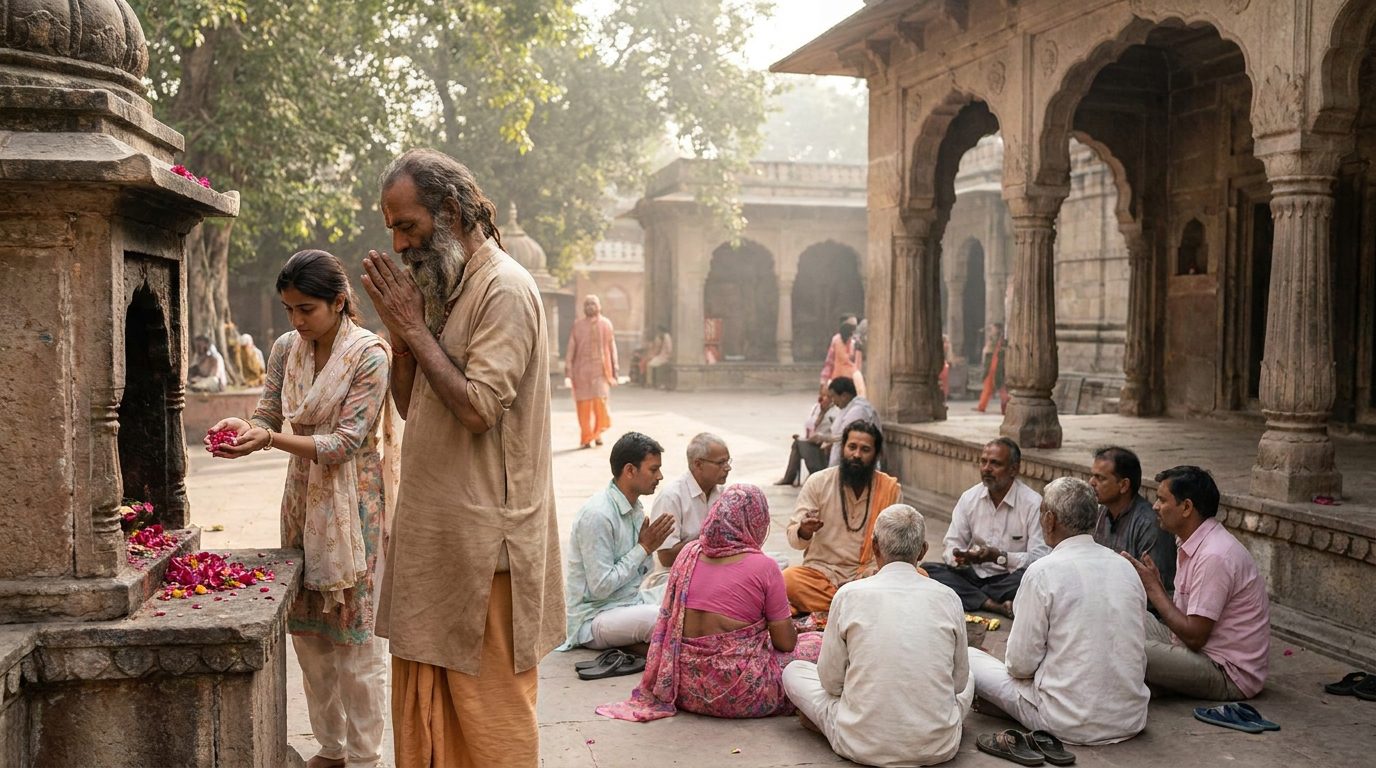
Bhakti Yoga is the path of loving relationship with God. It is not reserved for one culture, one language, or one kind of person. Bhakti means “devotion” or “loving service,” and Yoga means “connection.” So Bhakti Yoga is the practice of reconnecting the heart with the Divine through love, chanting, prayer, service, sacred study, and sincere spiritual growth.
In the Bhakti tradition, the journey of devotion is often described through nine beautiful stages. These stages help us understand how faith awakens, matures, deepens, and finally blossoms into pure love of God.
These nine stages are explained by Śrīla Rūpa Gosvāmī in the Bhakti-rasāmṛta-sindhu, a treasured devotional scripture. The same progression is also quoted in the Caitanya-caritāmṛta:
“In the beginning there is faith. Then one associates with devotees. Then one begins devotional practice. Through practice, unwanted habits are removed. Then one becomes steady, develops taste, attachment, spiritual emotion, and finally pure love of God.”
This path is not mechanical. It is deeply personal. Every soul walks with unique experiences, struggles, questions, and blessings. The nine stages of Bhakti are not meant to make us compare ourselves with others. They are meant to encourage us, guide us, and remind us that spiritual growth unfolds gradually by grace.
The nine stages of Bhakti describe the natural growth of devotion in the heart. Just as a seed becomes a sprout, then a plant, then a flowering tree, devotion also grows step by step.
In Sanskrit, the nine stages are:
- Śraddhā — initial faith
- Sādhu-saṅga — association with devotees
- Bhajana-kriyā — beginning devotional practice
- Anartha-nivṛtti — clearing unwanted habits
- Niṣṭhā — steadiness
- Ruci — spiritual taste
- Āsakti — deep attachment to God
- Bhāva — spiritual emotion
- Prema — pure love of God
These Sanskrit words may sound new, but their meaning is simple and practical. They describe what happens when a person sincerely turns toward God and continues walking with humility and hope.
Bhakti Is a Living Relationship
Bhakti is not only a philosophy. It is a relationship.
In Bhakti Yoga, we understand that God is not distant, cold, or impersonal. The Divine is loving, conscious, and deeply involved in the life of every soul. Different traditions may use different names for God—Krishna, Rama, Vishnu, Allah, Yahweh, the Divine Mother, the Supreme Lord, or simply God. The heart of Bhakti is to turn toward that Supreme Person with love.
The Bhagavad-gītā, one of the central scriptures of Bhakti Yoga, says:
“Offer Me with love and devotion a leaf, a flower, fruit, or water, and I will accept it.”
— Bhagavad-gītā 9.26
This verse shows the essence of Bhakti. God is not asking for wealth, status, or perfection. God is asking for love.
The Stages Are Not a Competition
It is important to say this gently: the nine stages are not a spiritual ladder for ego.
They are not meant for us to think, “I am advanced,” or “I am behind.” Bhakti grows by sincerity, mercy, and practice. Sometimes we may feel deep inspiration. Sometimes we may feel dry or distracted. Still, every sincere step matters.
In devotional life, progress often looks like becoming more humble, more compassionate, more prayerful, and more willing to serve.
Stage One: Śraddhā — The Awakening of Faith
Śraddhā means faith. But in Bhakti, faith does not mean blind belief. It means a soft trust that spiritual life is meaningful. It is the inner feeling that says, “There is something sacred here. I want to know more.”
This may begin in many ways. A person may hear chanting and feel peace. Someone may read the Bhagavad-gītā and feel touched. Another may meet a kind devotee and wonder what gives them such joy. Sometimes faith begins through suffering, when the heart becomes tired of living only for temporary things.
Śraddhā is the seed of Bhakti.
Faith Can Begin Very Small
Faith does not have to be dramatic. It may begin as a question:
“What is the purpose of my life?”
“Can prayer really change my heart?”
“Is God listening?”
“Why do I feel drawn to chanting?”
Even a small question can become sacred when it leads us toward truth.
In Bhakti Yoga, a tiny beginning is honored. A single sincere prayer matters. One mantra chanted with openness matters. One act of kindness offered to God matters.
Practical Ways to Nourish Faith
Faith grows when we give it gentle attention. Some simple ways include:
- Chanting the names of God daily, even for a few minutes
- Reading a few verses from the Bhagavad-gītā or Śrīmad-Bhāgavatam
- Spending time with spiritually minded people
- Offering food with gratitude before eating
- Praying honestly, in your own words
- Visiting a temple, spiritual gathering, or Bhakti community
Faith becomes stronger through experience. When we practice sincerely, we begin to feel that Bhakti is not just an idea. It is nourishment for the soul.
Stage Two: Sādhu-saṅga — Association with Devotees
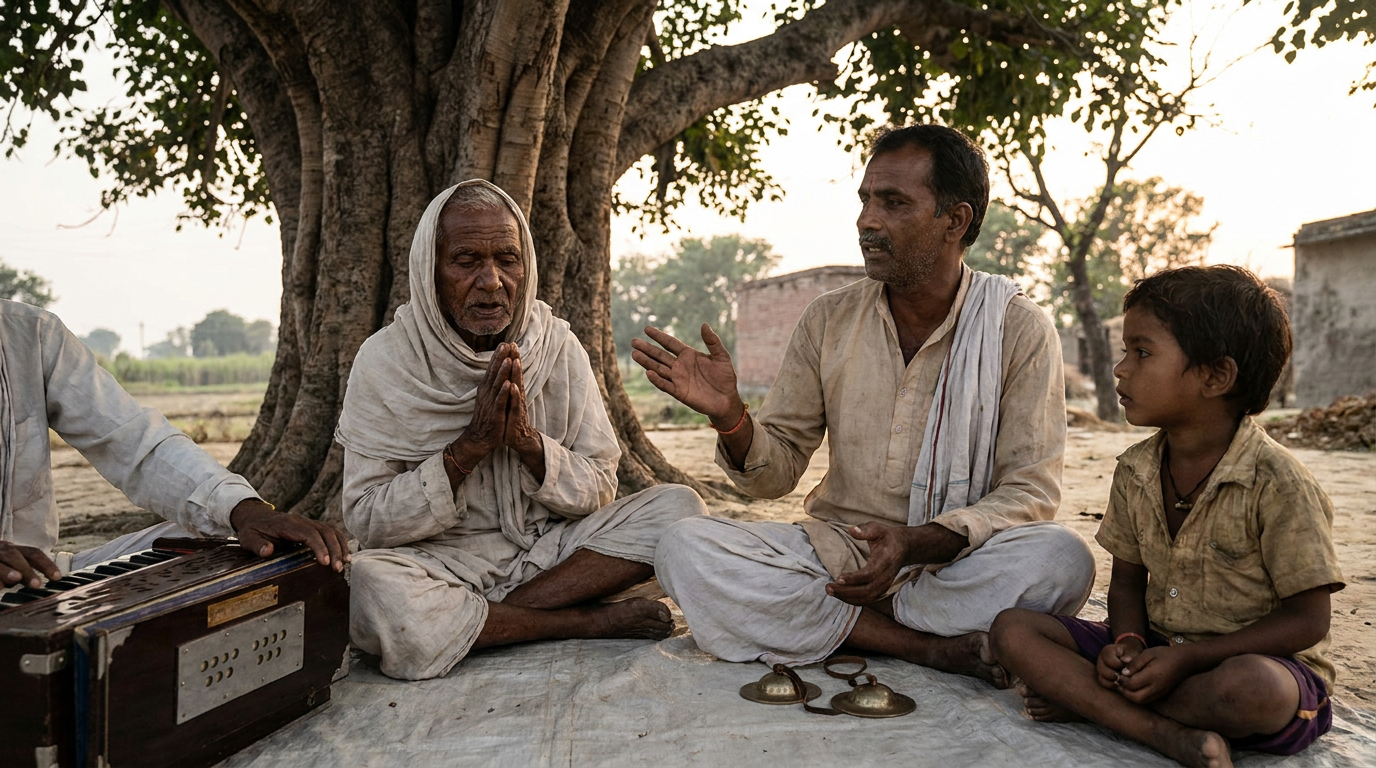
Sādhu means a saintly or sincere spiritual person. Saṅga means association. So sādhu-saṅga means spending time with people who inspire our devotion.
This stage is very important because love grows in loving company. If we want to become more prayerful, we benefit from being around people who pray. If we want to chant with devotion, we benefit from chanting with others. If we want to serve God, we learn from those who are already serving.
The Śrīmad-Bhāgavatam teaches that hearing about God in the company of devotees cleanses the heart and awakens devotion. Spiritual association is like sunlight for the seed of faith.
Why Spiritual Community Matters
Many people try to walk the spiritual path alone. Sometimes solitude is helpful, but isolation can make the journey difficult.
A Bhakti community reminds us:
“You are not alone.”
“Your struggles are understood.”
“Keep going.”
“Come chant with us.”
“Come serve with us.”
“God’s mercy is real.”
At The Bhakti House, and in many devotional spaces around the world, spiritual community is not about judgment. It is about shared growth. People come with different backgrounds, questions, cultures, and levels of experience. Everyone is learning to love.
How to Seek Good Association
Good association uplifts the heart. It brings us closer to humility, compassion, truthfulness, and devotion.
You can seek sādhu-saṅga by:
- Attending kirtan, group chanting of God’s names
- Joining a Bhagavad-gītā discussion
- Serving alongside devotees
- Asking sincere questions
- Listening to talks from authentic Bhakti teachers
- Building friendships centered on spiritual growth
A true devotee does not pressure or shame others. A true devotee encourages the soul to remember God.
Check out our latest articles at https://thebhaktihouse.org/blog.
Stage Three: Bhajana-kriyā — Beginning Devotional Practice
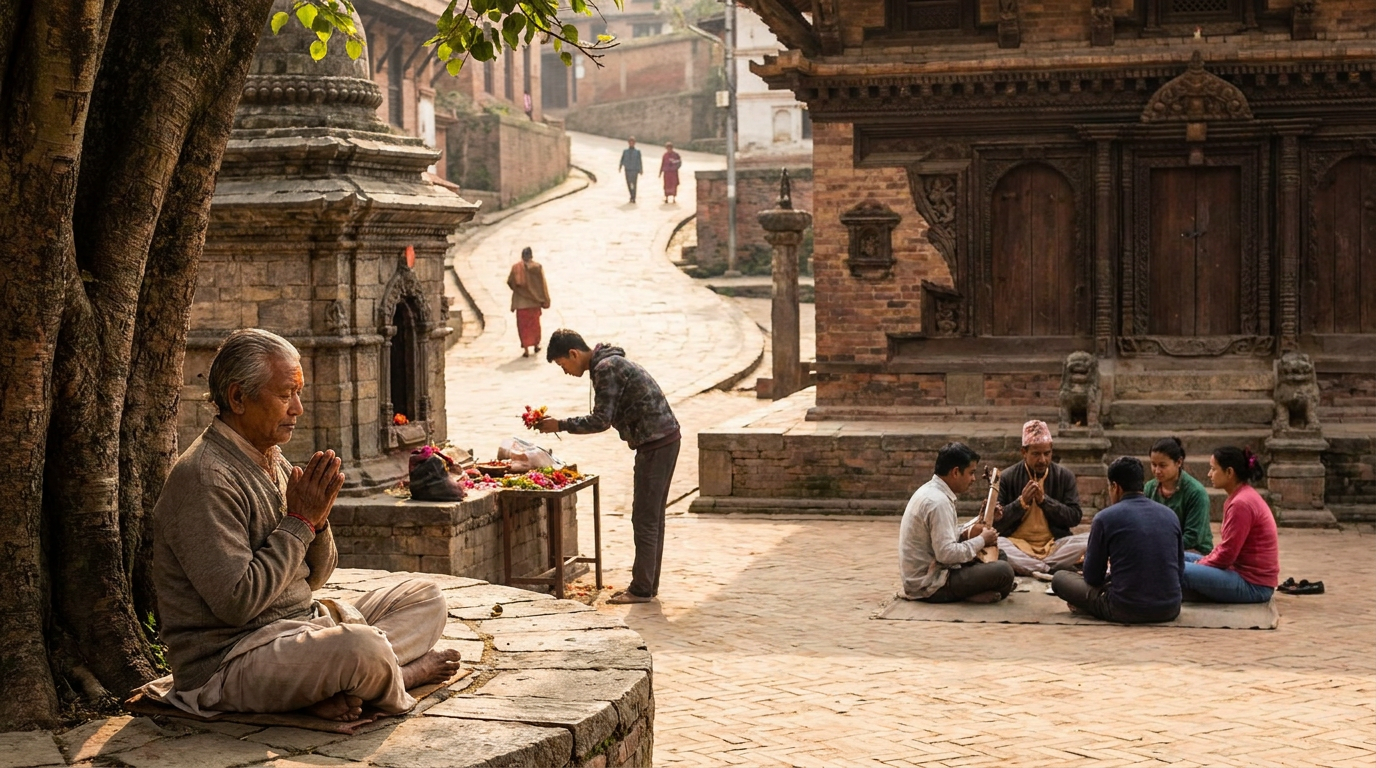
Bhajana means devotional worship or loving spiritual practice. Kriyā means action. Bhajana-kriyā is the stage where faith becomes practice.
At this point, a person begins to shape daily life around devotion. This may include chanting, prayer, study, worship, meditation, service, and making choices that support spiritual growth.
Bhakti becomes not only something we feel, but something we live.
The Power of Chanting
One of the most central practices in Bhakti Yoga is chanting the holy names of God. In the Krishna Bhakti tradition, the Hare Krishna mantra is especially beloved:
Hare Krishna Hare Krishna
Krishna Krishna Hare Hare
Hare Rama Hare Rama
Rama Rama Hare Hare
This mantra is a prayer. “Hare” calls upon the divine spiritual energy of God. “Krishna” means the all-attractive Lord. “Rama” means the source of spiritual joy. When we chant, we are asking to be reconnected with God in loving service.
Chanting can be done softly on beads, sung in kirtan, or repeated quietly in the heart. It is simple, but deeply transformative.
Creating a Daily Bhakti Practice
A daily practice does not need to be complicated. It may begin with:
- Five minutes of mantra meditation
- One prayer in the morning
- Reading one verse of scripture
- Offering your work to God
- Singing one devotional song
- Serving someone with kindness
The key is consistency and sincerity.
In the Bhagavad-gītā, Krishna says:
“Whatever you do, whatever you eat, whatever you offer or give away, do that as an offering to Me.”
— Bhagavad-gītā 9.27
This means Bhakti can enter every part of life. Cooking, parenting, working, studying, cleaning, creating, and caring can all become offerings when done with love.
Stage Four: Anartha-nivṛtti — Clearing the Heart
Anartha means unwanted things—habits, attachments, fears, selfish desires, or patterns that keep us away from love. Nivṛtti means removal or clearing. Anartha-nivṛtti is the stage where devotional practice begins to cleanse the heart.
This can be a humbling stage. When we begin spiritual life, we may feel peaceful and inspired. But over time, we may also notice things within us that need healing: pride, anger, envy, distraction, laziness, judgment, or craving for recognition.
This is not a sign of failure. It is a sign that the light is being turned on.
Spiritual Cleansing Takes Time
When sunlight enters a room, it reveals dust. The sunlight did not create the dust; it simply showed what was already there.
Similarly, Bhakti practice reveals what needs to be purified. Chanting may show us how restless the mind is. Service may reveal our desire to be appreciated. Community may expose our impatience or ego. These discoveries are not punishments. They are invitations to grow.
The holy name cleanses the heart gradually and mercifully.
How to Move Through This Stage
During anartha-nivṛtti, patience is essential. We should not become discouraged when old habits appear. Instead, we can bring them into prayer.
Helpful practices include:
- Chanting regularly, even when the mind wanders
- Asking forgiveness when we make mistakes
- Seeking guidance from trusted devotees
- Avoiding habits that weaken spiritual life
- Practicing humility and gratitude
- Serving without needing praise
Bhakti does not demand that we become perfect overnight. It invites us to keep returning to God.
Stage Five: Niṣṭhā — Steadiness in Devotion
Niṣṭhā means steadiness. At this stage, devotional life becomes more stable. The practitioner is no longer easily shaken by every mood, distraction, or external circumstance.
This does not mean life becomes free from challenges. It means the heart has found a direction.
A person in niṣṭhā may still experience difficulties, but they continue their practice. They chant whether the mind is peaceful or restless. They serve whether they are praised or unnoticed. They remember God not only when life is easy, but also when life is uncertain.
Steadiness Is Built by Small Daily Choices
Niṣṭhā grows through simple faithfulness.
Every day we have choices:
Will I chant today?
Will I pray before reacting?
Will I choose kindness?
Will I remember that I belong to God?
Will I serve even in a small way?
These small choices shape the heart.
In Bhakti Yoga, steadiness is not rigid. It is loving commitment. Just as a healthy relationship grows through regular care, our relationship with God grows through steady remembrance and service.
When Practice Feels Dry
Sometimes devotional practice may feel dry. We may chant and not feel much. We may read scripture and feel distracted. We may serve but feel tired.
Niṣṭhā means we continue with humility, trusting that God receives the offering even when our emotions are not strong.
Love is not only a feeling. Love is also faithfulness.
Stage Six: Ruci — Developing Spiritual Taste
Ruci means taste. At this stage, devotion becomes naturally attractive. The practices that once required effort begin to feel sweet.
Chanting becomes nourishing. Scripture becomes alive. Service becomes joyful. The heart begins to prefer spiritual nourishment over temporary distractions.
This taste is a gift of grace.
From Duty to Joy
In earlier stages, a person may chant because they know it is good for them. Later, they chant because they want to chant. The heart begins to feel, “This is where I find real shelter.”
This does not mean every moment is emotionally intense. But there is a growing appreciation for spiritual life. The soul begins to recognize its true food.
The Śrīmad-Bhāgavatam describes devotional hearing and chanting as deeply purifying and satisfying to the heart. Spiritual taste is not ordinary entertainment. It is the soul remembering its natural joy.
Protecting Spiritual Taste
When taste begins to awaken, it should be protected with care. Just as a small flame can be disturbed by strong wind, early spiritual taste can be weakened by careless habits or negative association.
We can protect ruci by:
- Keeping good company
- Avoiding gossip and criticism
- Chanting attentively
- Honoring sacred food, or prasāda
- Serving with gratitude
- Remembering that taste comes by mercy, not pride
Prasāda means “mercy.” In Bhakti, food offered to God with love becomes spiritually blessed. Honoring prasāda is a beautiful way to spiritualize daily life.
Stage Seven: Āsakti — Deep Attachment to God
Āsakti means attachment. In ordinary life, attachment often binds us to temporary things. But in Bhakti, attachment to God liberates the heart.
At this stage, the devotee becomes deeply drawn to the Lord. God is no longer an occasional thought or practice. God becomes the center of life.
The heart naturally remembers Krishna, or the Divine Beloved, throughout the day. The devotee longs to hear about God, chant God’s names, serve God’s devotees, and live in a way that pleases the Lord.
Attachment Transformed
Bhakti does not say we must become heartless or detached in a cold way. Rather, Bhakti teaches us to purify attachment.
We all long to love and be loved. That longing is sacred. But when we place ultimate hope in temporary things, we suffer. When the heart becomes attached to God, our love becomes whole.
Then we can love others more purely—not as objects for our own fulfillment, but as souls belonging to God.
Seeing God in Daily Life
As āśakti develops, the devotee begins to see God’s hand everywhere:
In the beauty of nature
In the kindness of others
In lessons from difficulty
In the sound of the holy name
In opportunities to serve
In the quiet moments of prayer
Life becomes a conversation with God.
Stage Eight: Bhāva — Spiritual Emotion
Bhāva means spiritual emotion or the first blossoming of pure love. It is a very advanced stage of Bhakti. At this stage, the heart becomes softened by deep devotion.
Bhāva is not ordinary emotion. It is not sentimentality or performance. It is a sacred awakening of the soul’s eternal relationship with God.
The Bhakti scriptures describe bhāva as a ray of prema, pure love. Just as the first light of dawn announces the rising sun, bhāva announces the coming of divine love.
The Softened Heart
A heart touched by bhāva becomes deeply humble, compassionate, and absorbed in God. The devotee may feel intense longing, gratitude, tears, joy, or deep reverence. But these symptoms are natural expressions of devotion, not something to imitate.
In authentic Bhakti, advanced emotion is always accompanied by humility and service.
Why We Should Not Imitate Advanced Devotion
It is important for sincere practitioners to understand that bhāva cannot be forced. We should not try to copy the external expressions of advanced saints.
Our path is simple: chant sincerely, serve humbly, hear regularly, and pray for mercy.
If tears come, let them come. If they do not, keep chanting. God sees the sincerity of the heart.
Stage Nine: Prema — Pure Love of God
Prema is pure love of God. It is the perfection of Bhakti Yoga.
In prema, love is completely selfless. The devotee desires only God’s happiness. There is no selfish motive, no demand, no bargaining. The soul is fully awakened in its eternal relationship with the Divine.
This is the highest treasure described in Bhakti scriptures.
Love Beyond Fear and Obligation
Many people approach God through fear, duty, need, or curiosity. These can all be valid beginnings. But prema is beyond fear. It is love for love’s sake.
The devotee does not love God merely to receive blessings. The devotee loves because God is supremely lovable.
This pure love is beautifully revealed in the lives of the great saints and in the devotion of the residents of Vṛndāvana, the sacred land associated with Krishna’s most intimate loving pastimes.
The Goal Is Given by Grace
Prema cannot be purchased, demanded, or achieved by ego. It is received by grace. Yet grace meets us through sincere practice.
We do not create divine love by our own power. We open the heart so that love can be revealed.
This is why Bhakti is both practical and mystical. We chant, pray, serve, and study. But we also know that the final gift comes from God.
The Nine Stages as a Practical Map for Modern Life
The nine stages of Bhakti are ancient, but they are deeply relevant today.
Modern life can feel fast, distracted, and lonely. Many people are searching for peace, meaning, and real connection. Bhakti offers a path that engages the whole person: heart, mind, body, voice, and relationships.
You do not have to leave your life to begin. You can begin right where you are.
Bhakti at Home
Your home can become a sacred space through small practices:
- Create a simple altar with a picture of Krishna or a form of God meaningful to you
- Light a candle or incense with prayer
- Chant in the morning or evening
- Offer your food before eating
- Read scripture with your family or friends
- Play soft kirtan while cooking or cleaning
Bhakti grows when we invite God into ordinary moments.
Bhakti at Work
Work can also become devotional when offered with the right intention.
Before beginning your day, you might pray:
“Dear Lord, please let my work today be an offering. Help me act with honesty, kindness, and service.”
This changes the consciousness. Work becomes more than survival or ambition. It becomes a place to practice patience, integrity, and compassion.
Bhakti in Relationships
Relationships are powerful places for spiritual growth. They reveal our ego, our needs, our wounds, and our capacity to love.
Bhakti teaches us to see others as souls. This vision helps us become more forgiving, respectful, and service-minded.
We can ask:
“How can I serve this person’s highest good?”
“How can I speak with more kindness?”
“How can I remember God in this interaction?”
In this way, relationships become part of the path.
Common Questions About the Nine Stages of Bhakti
Many sincere seekers have questions about this journey. Questions are welcome in Bhakti. Honest inquiry is a sign of awakening.
Do I Have to Be Hindu to Practice Bhakti Yoga?
No. Bhakti Yoga is rooted in the Vedic tradition of India, but love of God belongs to every soul.
People from many backgrounds practice Bhakti. Some identify as Hindu. Some come from Christian, Muslim, Jewish, Buddhist, Sikh, interfaith, or spiritual-but-not-religious backgrounds. Some are simply curious.
Everyone can chant, pray, serve, and grow in love.
What If I Am Not Sure I Believe in God?
You can still begin gently.
Bhakti does not require pretending. You can pray honestly:
“If You are there, please guide me.”
“Please help me understand.”
“Please let me experience what is true.”
Sincere openness is powerful. Faith often grows through practice.
How Long Does It Take to Move Through the Stages?
There is no fixed timeline.
Spiritual growth is personal. Some changes may happen quickly. Others take years. Sometimes we may feel we are moving forward; other times we may feel stuck. But no sincere effort is wasted.
The Bhagavad-gītā assures us that even a little progress on the spiritual path protects one from great fear.
Can Someone Be in More Than One Stage at Once?
In real life, the stages may not always feel perfectly linear. We may experience faith, practice, cleansing, steadiness, and taste in overlapping ways.
The nine stages are a map, not a cage. They help us understand the general direction of growth, but every soul’s journey is guided by God’s loving wisdom.
The Role of Grace in Every Stage
Although the nine stages describe progress, Bhakti is never merely self-improvement. It is grace-centered.
We practice, but God gives the strength to practice. We chant, but the holy name carries the power. We serve, but the opportunity to serve is a gift. We grow, but the growth is nourished by divine mercy.
This understanding keeps us humble.
Humility Opens the Heart
Humility does not mean thinking we are worthless. It means recognizing that we are dependent on God’s love.
A humble heart can receive. A humble heart can learn. A humble heart can apologize, begin again, and keep walking.
The great Bhakti saints often prayed not for wealth, followers, or fame, but for sincere devotion. This is the mood of the path.
Service Makes Love Practical
Sevā means service. In Bhakti Yoga, love is expressed through service.
Service may be grand or simple:
Cooking for others
Cleaning a temple or sacred space
Helping with kirtan
Supporting spiritual gatherings
Caring for family with devotion
Feeding people
Listening compassionately
Sharing wisdom gently
Offering your talents to God
Service transforms the heart because it moves us from “What can I get?” to “How can I love?”
How to Begin the Journey Today
The nine stages of Bhakti may seem vast, but the beginning is simple.
You do not need to master everything. You do not need to know all the Sanskrit. You do not need to be perfect. You only need sincerity.
Start With the Holy Name
Chanting is one of the most accessible ways to begin.
You can chant the Hare Krishna mantra, or you can chant another name of God that is sacred to you. The heart of the practice is calling out with love.
Try chanting for five minutes daily. Sit comfortably. Breathe gently. Let the sound enter the heart. When the mind wanders, kindly bring it back.
Offer One Thing With Love
Offer one small part of your day to God.
It may be your morning tea, your commute, your work, your meal, your walk, or your evening prayer. Say inwardly:
“May this be for You.”
This simple offering changes consciousness.
Seek Loving Association
Find people who inspire your spiritual life. Join a kirtan. Attend a Bhakti gathering. Listen to scripture. Ask questions. Serve in community.
The path becomes joyful when walked together.
Walking the Path With Patience and Hope
The nine stages of Bhakti remind us that love grows.
Faith can grow into practice. Practice can cleanse the heart. Cleansing can bring steadiness. Steadiness can awaken taste. Taste can deepen into attachment. Attachment can blossom into spiritual emotion. And by divine grace, spiritual emotion can mature into pure love of God.
This is the promise of Bhakti Yoga.
No matter where you are today, your journey is meaningful. If you feel inspired, begin. If you feel unqualified, begin. If you feel wounded, begin. If you feel full of questions, begin. God is not waiting for perfection. God is inviting your heart.
Everyone is welcome on this path. Take one sincere step toward God today—chant one holy name, offer one prayer, serve one soul, or sit quietly and ask for guidance. That one step, taken with sincerity, can open the door to a lifetime of divine love.
FAQs
What are the nine stages of Bhakti?
The nine stages of Bhakti are as follows: 1) Shraddha (faith), 2) Sadhu-sanga (association with devotees), 3) Bhajana-kriya (engagement in devotional service), 4) Anartha-nivritti (cleansing of unwanted habits), 5) Nishtha (firm faith), 6) Ruchi (taste for devotional service), 7) Asakti (attachment), 8) Bhava (ecstasy), and 9) Prema (pure love for the Supreme).
What is the significance of the nine stages of Bhakti?
The nine stages of Bhakti provide a systematic and progressive path for devotees to develop their love and devotion for the Supreme. Each stage represents a deeper level of spiritual realization and commitment, ultimately leading to the attainment of pure love for the Divine.
How can one progress through the nine stages of Bhakti?
Progression through the nine stages of Bhakti requires sincere dedication, regular practice of devotional activities such as chanting, hearing, and serving, as well as the guidance of a qualified spiritual teacher. Cultivating qualities such as humility, patience, and determination also play a crucial role in advancing through the stages.
What are some common obstacles encountered in the journey through the nine stages of Bhakti?
Common obstacles encountered in the journey through the nine stages of Bhakti include distractions, material attachments, lack of faith, and the influence of the modes of material nature. Additionally, the ego and the tendency to seek recognition or material rewards for one’s devotional activities can hinder progress.
What are the ultimate goals of progressing through the nine stages of Bhakti?
The ultimate goals of progressing through the nine stages of Bhakti are to develop a deep and loving relationship with the Supreme, to experience spiritual ecstasy and bliss, and to ultimately attain pure love for the Divine, known as Prema. This state of pure love is considered the highest perfection of Bhakti.

