
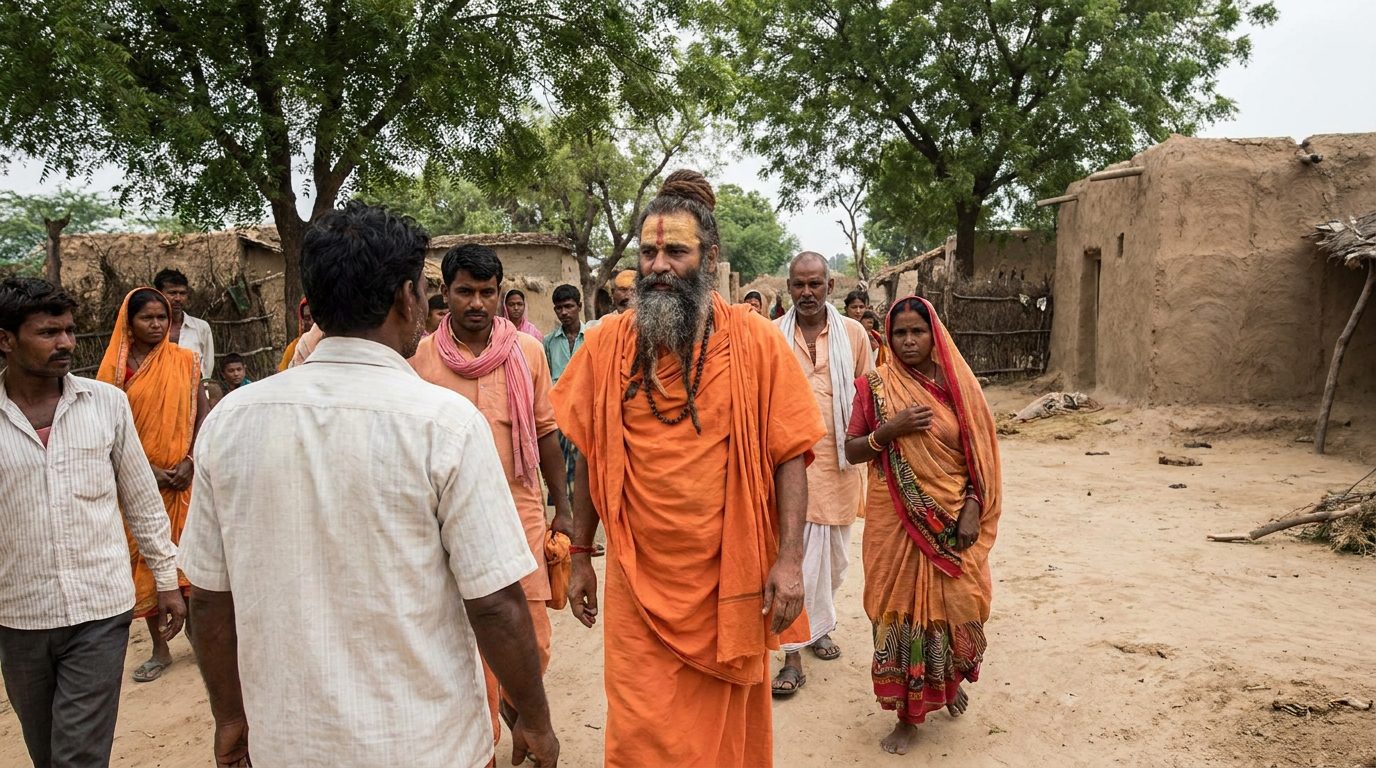
Lord Chaitanya, lovingly known as Sri Chaitanya Mahaprabhu, is one of the most beloved saints and divine teachers in the Bhakti Yoga tradition. He appeared in 1486 in Navadvipa, Bengal, a sacred town on the banks of the Ganges River. His life was a radiant expression of love for God, humility, compassion, and the joyful chanting of the holy names.
In the Gaudiya Vaishnava tradition, Lord Chaitanya is understood to be Krishna Himself appearing in the mood of His greatest devotee, Srimati Radharani. Krishna is the all-attractive Supreme Person, and Radharani is the highest expression of pure love for Krishna. Lord Chaitanya came to taste that love and to share it freely with everyone.
This is one of the most beautiful aspects of Lord Chaitanya’s mission: He did not come only for scholars, renunciants, or people born into a particular religious culture. He came for everyone—householders, monks, workers, students, seekers, doubters, saints, and sinners. His message was simple and profound: the heart can be awakened through sincere chanting, prayer, service, and love.
The Meaning of “Mahaprabhu”
The word “Mahaprabhu” means “great master” or “great Lord.” Devotees call Him Sri Chaitanya Mahaprabhu out of deep love and reverence. “Sri” is a sacred word meaning beautiful, glorious, or blessed. “Chaitanya” means consciousness or living force. In this way, His very name reminds us that spiritual life is not dry or lifeless. It is the awakening of our real consciousness—our eternal relationship with God.
Why Lord Chaitanya Matters Today
Many people today are spiritually hungry. We may have information, comfort, and technology, but still feel lonely, anxious, or disconnected. Lord Chaitanya offers a path that is both deeply mystical and beautifully practical. He taught that we can reconnect with God through the heart, especially by chanting God’s names.
This path does not require perfection before beginning. It begins with sincerity. A person may simply chant, pray, serve, or take one humble step toward divine love. Lord Chaitanya’s teachings remind us that spiritual growth is not about becoming proud or superior. It is about becoming softer, kinder, more grateful, and more devoted.
The Life of Lord Chaitanya
Lord Chaitanya’s life is described in sacred texts such as the Chaitanya Bhagavata by Vrindavan Das Thakur and the Chaitanya Charitamrita by Krishnadas Kaviraja Goswami. These books are treasured in the Bhakti tradition because they reveal His teachings, His compassion, and the deep spiritual emotions of His devotees.
His Birth in Navadvipa
Lord Chaitanya appeared on the full moon night of Phalguna, during a lunar eclipse. According to tradition, during that eclipse, people throughout Navadvipa were loudly chanting the names of God, especially “Hari,” which is a name of Krishna meaning “the one who removes suffering and steals the heart.”
This is deeply meaningful. From the moment of His birth, the chanting of God’s names surrounded Him. His mission would be to inspire the whole world to chant with love.
As a child, He was called Nimai because He was born under a neem tree. He was playful, brilliant, and charming. Even as a young boy, He had a special attraction for the chanting of God’s names.
His Youth and Scholarship
In His youth, Lord Chaitanya became known as Nimai Pandit. “Pandit” means a learned scholar. He was exceptionally intelligent and mastered grammar, logic, and scriptural study. People came from far and wide to debate with Him, and He was respected as one of the greatest scholars of His time.
Yet His early scholarly life also teaches us something important. Knowledge alone is not the end of spiritual life. Later, Lord Chaitanya would show that the highest knowledge is love of God. Scripture, philosophy, and learning are meant to soften the heart and bring us closer to divine service.
His Transformation in Gaya
A major turning point came when Lord Chaitanya traveled to Gaya, a holy place in India, and met His spiritual teacher, Ishvara Puri. There He received initiation, which means He formally accepted guidance on the spiritual path.
After this sacred meeting, Lord Chaitanya’s heart overflowed with love for Krishna. He returned to Navadvipa transformed. The great scholar became absorbed in devotion. He wept for Krishna, chanted Krishna’s names, and inspired others to gather together in kirtan—devotional singing and chanting.
His Renunciation and Mission
At the age of twenty-four, Lord Chaitanya accepted sannyasa, the renounced order of life. This was a painful moment for His family and devotees, especially His mother, Saci Devi, and His young wife, Vishnupriya. Yet He accepted this sacrifice to spread love of God more widely.
After taking sannyasa, He traveled throughout India, meeting saints, scholars, rulers, and ordinary people. Wherever He went, He shared the holy name and awakened devotion in countless hearts.
Eventually, He settled in Jagannath Puri, a sacred city in Odisha, where Lord Jagannath, a form of Krishna, is worshiped. There, Lord Chaitanya spent His later years in deep devotion, chanting, teaching, and tasting the highest moods of love for Krishna.
Lord Chaitanya’s Central Teaching: Love of God
The heart of Lord Chaitanya’s teaching is prema-bhakti. “Prema” means pure love, and “bhakti” means loving devotion or service to God. Bhakti Yoga is the path of awakening our loving relationship with the Divine.
Lord Chaitanya did not teach that God is distant, cold, or unreachable. He taught that God is personal, loving, and responsive. The soul’s deepest need is to love and be loved by God.
Bhakti Is Practical and Personal
Bhakti Yoga is not only a belief system. It is a way of living. We practice bhakti by hearing about God, chanting God’s names, praying, serving others, worshiping, remembering the Divine, and offering our lives with love.
In the Bhagavad-gita, Krishna says, “Whatever you do, whatever you eat, whatever you offer or give away, do that as an offering to Me” (Bhagavad-gita 9.27). This verse shows that spiritual life can enter every part of daily life. Cooking, working, parenting, studying, cleaning, singing, and caring for others can all become sacred when offered with love.
Lord Chaitanya made this practical devotion accessible. He did not ask everyone to leave their home or become a monk. He encouraged people to chant Krishna’s names, associate with devotees, serve sincerely, and live with humility.
The Gift of the Holy Name
Lord Chaitanya especially emphasized nama-sankirtana. “Nama” means the holy name of God, and “sankirtana” means congregational chanting—singing or reciting God’s names together.
The most well-known mantra in Lord Chaitanya’s tradition is the Hare Krishna maha-mantra:
Hare Krishna Hare Krishna
Krishna Krishna Hare Hare
Hare Rama Hare Rama
Rama Rama Hare Hare
“Maha-mantra” means “great mantra.” A mantra is a sacred sound vibration that helps focus and purify the mind. “Hare” calls out to the divine energy of the Lord, “Krishna” means the all-attractive Supreme Person, and “Rama” means the source of spiritual joy.
This mantra is a prayer: “O Lord, O divine energy of the Lord, please engage me in Your loving service.”
Chanting as a Path for Everyone
Chanting is simple, but it is not ordinary. Lord Chaitanya taught that God is fully present in His names. When we chant sincerely, we are not merely making sound; we are entering a relationship.
One may chant softly alone on beads, which is called japa. One may chant with others in music and call-and-response singing, called kirtan. One may chant while walking, cooking, driving, or beginning the day. The essential ingredient is sincerity.
Lord Chaitanya did not say that we must be perfect before chanting. Rather, chanting helps purify the heart over time. It is like sunlight entering a room. The light gradually reveals what is there and warms what has grown cold.
Sure, here is the sentence with the clickable link:
I love to visit The Bhakti House for spiritual inspiration and community.
The Golden Verse: Humility and Compassion
One of Lord Chaitanya’s most famous teachings is found in the third verse of His eight prayers called the Siksastakam. “Siksa” means instruction, and “astakam” means eight verses. These are the only eight verses widely accepted as personally written by Lord Chaitanya.
The verse says:
“Trinad api sunichena
Taror api sahishnuna
Amanina manadena
Kirtaniyah sada harih”
A simple translation is: “One should chant the holy name of the Lord in a humble state of mind, thinking oneself lower than a blade of grass, more tolerant than a tree, offering respect to others and not expecting respect for oneself. In such a state, one can chant the name of Hari constantly.”
Lower Than a Blade of Grass
This does not mean we should hate ourselves or think we have no value. In Bhakti Yoga, every soul is precious because every soul is part of God. True humility means we recognize our dependence on divine grace. We do not need to pretend to be great. We can be honest, grateful, and open-hearted.
A blade of grass is small and easily stepped on, yet it continues to grow. Lord Chaitanya teaches us to be resilient without becoming hard-hearted.
More Tolerant Than a Tree
A tree gives shade, fruit, flowers, and wood. Even when neglected, it continues to serve. Lord Chaitanya points us toward a life of patient service.
This does not mean accepting abuse or ignoring healthy boundaries. Rather, it means cultivating a heart that is not easily consumed by anger, ego, or resentment. Tolerance in bhakti is strength guided by love.
Offering Respect to Others
Lord Chaitanya taught that every living being is a soul, a spiritual person, beloved by God. Therefore, we practice seeing others with dignity. We may disagree, we may have different paths or backgrounds, but we can still offer respect.
This is especially important in spiritual communities. Devotion grows best in an atmosphere of kindness, humility, and encouragement.
Lord Chaitanya and the Scriptures
Lord Chaitanya’s teachings are rooted in the great Bhakti scriptures, especially the Bhagavad-gita, Srimad Bhagavatam, and the writings of the Goswamis of Vrindavan.
The Bhagavad-gita: A Foundation for Bhakti
The Bhagavad-gita is a sacred conversation between Krishna and Arjuna on a battlefield. It addresses duty, fear, the soul, God, karma, meditation, and devotion.
Lord Chaitanya embraced the Bhagavad-gita’s conclusion: loving surrender to Krishna. In Bhagavad-gita 18.66, Krishna says, “Abandon all varieties of dharma and simply surrender unto Me. I shall deliver you from all sinful reactions. Do not fear.”
The word “dharma” can mean duty, nature, or spiritual path. This verse does not mean we become irresponsible. It means that the heart of all spiritual duties is loving surrender to God. Lord Chaitanya showed what that surrender looks like: chanting, humility, compassion, and joyful service.
Srimad Bhagavatam: The Ripened Fruit
The Srimad Bhagavatam, also called the Bhagavata Purana, is one of the central scriptures of the Bhakti tradition. It describes the nature of God, the soul, devotion, and the loving pastimes of Krishna.
Lord Chaitanya especially loved the Srimad Bhagavatam because it presents pure devotion as the highest goal. In Srimad Bhagavatam 1.2.6, it is said that the supreme spiritual path for all humanity is loving devotional service to the Lord, performed without selfish motive and without interruption. Such devotion fully satisfies the self.
This is a powerful teaching. The soul is not fully satisfied by wealth, status, pleasure, or even intellectual achievement. The soul becomes satisfied through selfless love for God.
Chaitanya Charitamrita: The Life and Heart of Mahaprabhu
The Chaitanya Charitamrita by Krishnadas Kaviraja Goswami is one of the most important biographies of Lord Chaitanya. It presents His life, teachings, and inner moods with great theological depth.
One of its central teachings is that Lord Chaitanya came to distribute love of Krishna through the chanting of the holy name. He did not reserve this treasure for a select few. His mercy was generous and wide.
In the Chaitanya Charitamrita, we find the famous instruction: “Instruct everyone to follow the orders of Lord Krishna as they are given in the Bhagavad-gita and Srimad Bhagavatam.” This shows that Lord Chaitanya wanted His followers to share spiritual wisdom with compassion, not pride.
The Practice of Kirtan
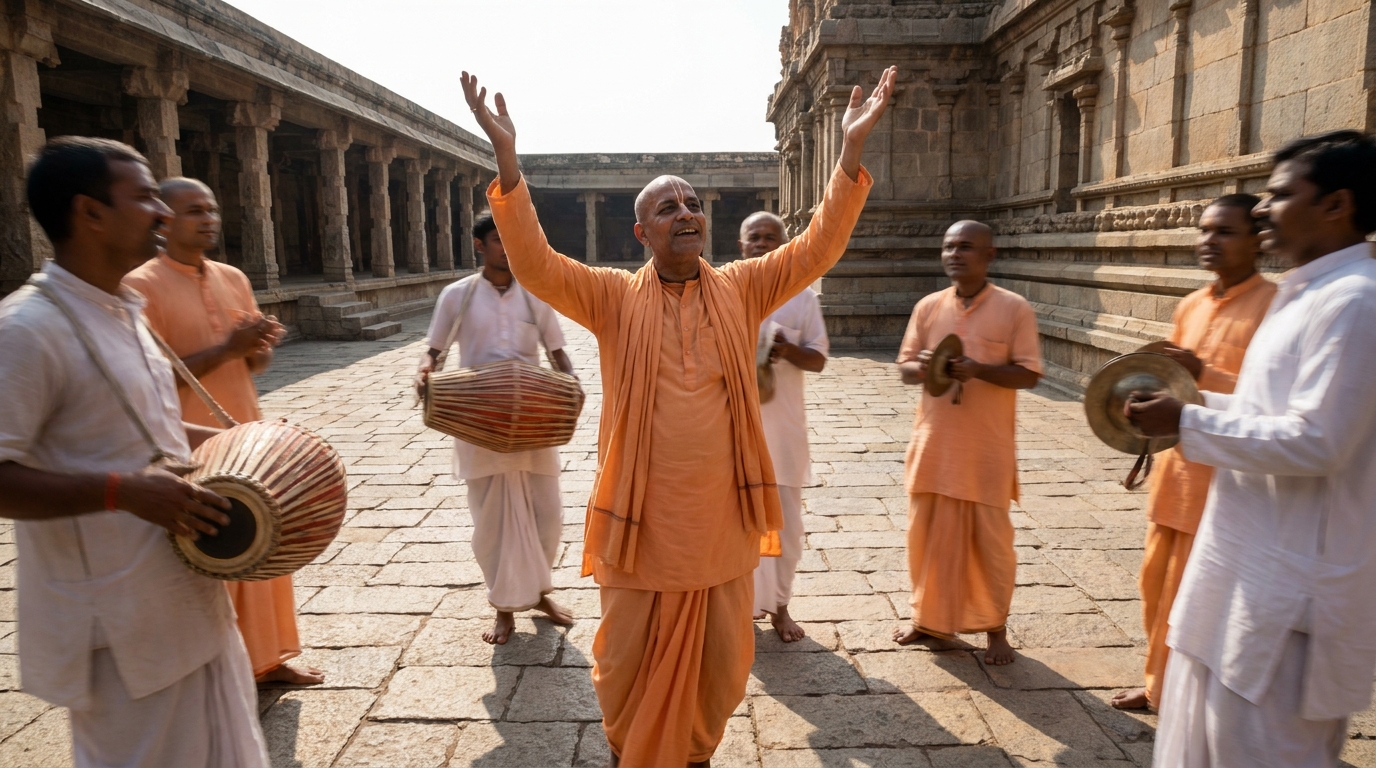
Kirtan is one of the most joyful and accessible practices in Bhakti Yoga. It usually involves singing mantras in a call-and-response style, often with instruments like harmonium, mridanga drum, and kartals, which are small hand cymbals.
But kirtan is more than music. It is prayer in sound. It is a gathering of hearts around the names of God.
Why Kirtan Touches the Heart
Many people experience something powerful in kirtan, even if they do not understand Sanskrit or come from a Hindu background. This is because sacred sound works on a deep level. It bypasses the restless mind and gently invites the heart to open.
In kirtan, we do not need to perform. We do not need to have a “good voice.” We simply participate. We listen, respond, breathe, and offer ourselves.
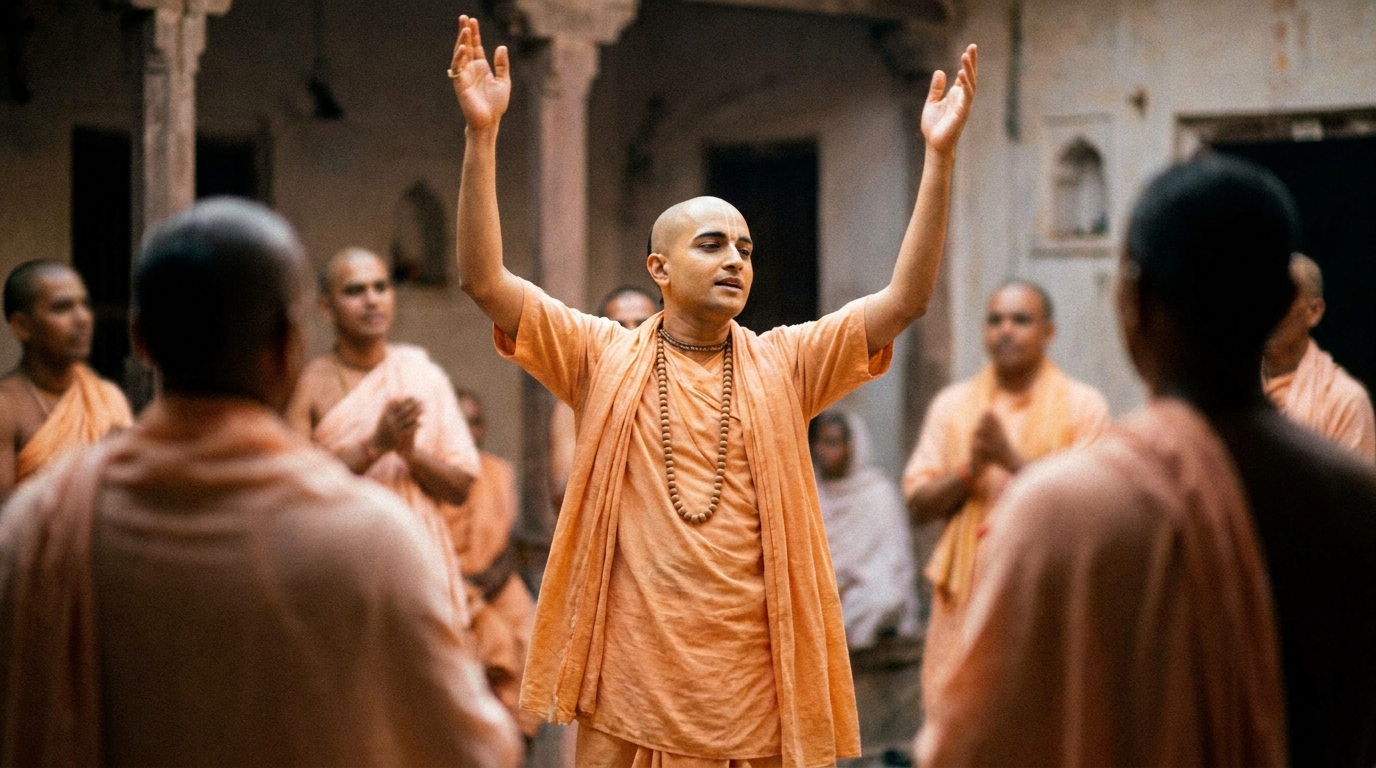
Lord Chaitanya Himself would dance and chant with His devotees, sometimes for hours. His kirtans were filled with tears, joy, surrender, and spiritual love. Through kirtan, He showed that devotion can be embodied. We can sing with our voice, clap with our hands, dance with our feet, and pray with our whole being.
Kirtan in Daily Life
You do not need a large gathering to begin. You can play a recording of the maha-mantra at home, chant softly in the morning, or join a local kirtan community. Even five minutes of sincere chanting can shift the atmosphere of the heart.
Families may chant together before meals. Friends may gather weekly for kirtan and discussion. Individuals may use chanting as a way to begin or end the day in remembrance.
The important thing is consistency. Small offerings made regularly become spiritually powerful.
Lord Chaitanya’s Associates
Lord Chaitanya did not walk alone. His mission unfolded through loving relationships with many extraordinary devotees. These associates reveal different aspects of bhakti—compassion, scholarship, surrender, service, and ecstatic love.
Nityananda Prabhu: Boundless Mercy
Nityananda Prabhu is Lord Chaitanya’s closest companion and is understood in the Gaudiya tradition as an expansion of Lord Balarama, Krishna’s first expansion. He is known for His extraordinary mercy.
Nityananda Prabhu reached out to those who were considered fallen, broken, or unqualified. He showed that no one is beyond grace. His life teaches us not to give up on ourselves or others.
If Lord Chaitanya is like the golden moon of divine love, Nityananda Prabhu is like the compassionate current that carries that love to every doorway.
Advaita Acharya: The Call for Divine Descent
Advaita Acharya was a senior saint and scholar who prayed intensely for the Lord to appear. Seeing the suffering and spiritual forgetfulness of the world, He worshiped Krishna with Ganges water and tulasi leaves, calling Him to come and deliver humanity.
“Tulasi” is a sacred plant beloved to Krishna. In Bhakti Yoga, tulasi leaves are offered with devotion. Advaita Acharya’s worship reminds us that sincere prayer can call divine mercy into the world.
Haridas Thakur: The Teacher of the Holy Name
Haridas Thakur was born in a Muslim family, yet he became one of the greatest saints in Lord Chaitanya’s movement. He chanted the holy name constantly and was honored by Lord Chaitanya as the namacharya, the teacher of chanting.
His life is especially important today because it shows that spiritual qualification is not based on birth, nationality, race, or social status. The heart’s sincerity is what matters.
Haridas Thakur faced persecution, but he remained compassionate and faithful. His example teaches us to chant with patience and trust.
The Six Goswamis of Vrindavan
Lord Chaitanya empowered six great saints known as the Six Goswamis of Vrindavan: Rupa Goswami, Sanatana Goswami, Jiva Goswami, Raghunatha das Goswami, Gopala Bhatta Goswami, and Raghunatha Bhatta Goswami.
They wrote books, established temples, revealed sacred places in Vrindavan, and explained the theology of Bhakti Yoga with great depth. Their writings continue to guide practitioners around the world.
Rupa Goswami, in particular, gave detailed teachings on the stages of devotion, the nature of pure love, and practical spiritual practice. Lord Chaitanya personally instructed him and empowered him to present the science of bhakti.
The Philosophy of Lord Chaitanya
Lord Chaitanya taught a profound spiritual philosophy known as achintya-bheda-abheda-tattva. Though the Sanskrit may sound complex, the meaning is beautiful and practical.
Achintya: Beyond the Mind
“Achintya” means inconceivable, or beyond the full grasp of the ordinary mind. This does not mean irrational. It means that God’s nature is greater than our limited categories. Divine reality can be understood through scripture, saints, reason, and experience, but never fully controlled by the mind.
Humility begins when we accept that God is greater than our concepts.
Bheda and Abheda: One and Different
“Bheda” means difference, and “abheda” means oneness. Lord Chaitanya taught that the soul and God are simultaneously one and different.
We are one with God in quality because we are spiritual, conscious, and eternal. But we are different from God in quantity because God is infinite and we are tiny parts of His energy.
A simple example is the sun and sunshine. Sunshine is one with the sun in quality—it is bright and warm—but it is not the entire sun. Similarly, the soul is divine in nature, but not the Supreme Divine.
This philosophy helps us avoid two extremes. We do not think we are God, and we do not think we are worthless. We are beloved parts of God, meant for loving relationship.
Tattva: Spiritual Truth
“Tattva” means truth or reality. Lord Chaitanya’s philosophy gives us a grounded understanding of who we are, who God is, and what love means.
We are eternal souls. God is the supreme loving person. The world is real, but temporary, and can be used in divine service. The goal of life is not escape into emptiness, but awakening pure love for Krishna.
Lord Chaitanya’s Eight Prayers: The Siksastakam
The Siksastakam is a treasure for anyone who wants to understand Lord Chaitanya’s heart. These eight verses describe the journey of the soul through chanting, humility, longing, surrender, and pure love.
Cleansing the Mirror of the Heart
The first verse begins with the phrase ceto-darpana-marjanam, which means “cleansing the mirror of the heart.” Our heart is like a mirror meant to reflect our true spiritual identity and our relationship with God. But over time, it becomes covered by dust—selfish desires, fear, envy, pride, and forgetfulness.
Chanting the holy name cleanses this mirror. Gradually, we begin to see more clearly. We remember who we are. We become less controlled by old habits and more attracted to loving service.
No Hard Rules for Chanting
In the second verse, Lord Chaitanya says that God has invested all His potencies in His holy names and that there are no hard and fast rules for chanting them.
This is wonderfully merciful. We can chant anywhere, at any time. Of course, attentive and respectful chanting is ideal. But God’s names are always available. Whether we are happy, grieving, confused, hopeful, or tired, we can call out.
The Prayer of Surrender
In the final verses of the Siksastakam, Lord Chaitanya expresses the deepest mood of surrender. He prays that Krishna may embrace Him or neglect Him, but Krishna will always remain His Lord unconditionally.
This is pure love—not devotion based on what we get, but devotion based on who God is. Most of us may not be at this level, and that is okay. The path begins wherever we are. These prayers show us the direction of the journey.
How to Practice Lord Chaitanya’s Teachings Today
Lord Chaitanya’s path is not limited to a particular time or place. His teachings can be practiced in modern life with sincerity and balance.
Begin with Chanting
The simplest way to begin is by chanting the Hare Krishna maha-mantra. You might start with five or ten minutes each day. Sit comfortably, breathe gently, and chant aloud or softly. Try to listen to each word.
You can also chant on japa beads, traditionally a strand of 108 beads. One full round means chanting the maha-mantra once on each bead. But do not worry about numbers at first. Begin with the heart.
Create a Small Sacred Space
A sacred space can be very simple. It may include a picture of Krishna, Lord Chaitanya, or a sacred symbol; a candle or lamp; a small cloth; flowers; or a scripture. This space becomes a reminder that God is welcome in your home and heart.
You can sit there for chanting, prayer, reading, or quiet reflection.
Read a Little Every Day
Spiritual reading nourishes the mind and heart. You might begin with the Bhagavad-gita, the Siksastakam, or stories from Lord Chaitanya’s life. Read slowly. Even one verse or paragraph can become meaningful when reflected upon deeply.
Ask yourself: How can I live this today? How does this help me love God and others more sincerely?
Offer Your Food
In Bhakti Yoga, food can become prasadam, which means mercy. When food is prepared and offered to God with love, it becomes spiritually uplifting.
You can simply place vegetarian food before a picture of Krishna or Lord Chaitanya and pray, “Dear Lord, please accept this offering made with love.” After a few moments, you may honor that food as prasadam.
This practice transforms eating into gratitude.
Serve Others
Service, or seva, is central to bhakti. “Seva” means loving service offered for the pleasure of God. This can include helping in a temple or spiritual community, cooking, cleaning, teaching, encouraging others, caring for family, volunteering, or offering your skills.
Lord Chaitanya’s compassion was active. He did not keep love locked inside. He shared it. When we serve others in a spirit of devotion, our heart becomes purified and expanded.
Common Questions About Lord Chaitanya
Many sincere seekers have questions when first learning about Lord Chaitanya. Questions are welcome. Bhakti grows through honest inquiry, thoughtful reflection, and lived experience.
Is Lord Chaitanya Krishna?
In the Gaudiya Vaishnava tradition, yes. Lord Chaitanya is honored as Krishna appearing in a golden form, with the mood and compassion of Radharani. This understanding is supported by the writings of His followers and scriptural interpretations from texts such as Srimad Bhagavatam and Chaitanya Charitamrita.
At the same time, those from different backgrounds can still appreciate Lord Chaitanya as a saint, teacher, mystic, and ambassador of divine love. His teachings on chanting, humility, and compassion are universally uplifting.
Do I Have to Be Hindu to Follow Lord Chaitanya?
No. Lord Chaitanya’s gift is not limited by social or religious labels. Bhakti Yoga is the soul’s natural path of love for God. People from many cultures and backgrounds chant the holy names, practice devotion, and learn from Lord Chaitanya.
Respect for tradition is important, but entrance into bhakti is through sincerity.
What If I Am Not Sure I Believe?
You can begin with openness. Bhakti does not demand artificial faith. You may chant as an experiment, pray honestly, read scripture, and spend time with sincere practitioners. Over time, experience can deepen understanding.
A simple prayer may be: “Dear God, if You are there, please guide me. Please help me take one sincere step.”
Why Is Chanting So Important?
Chanting is important because sound shapes consciousness. We are deeply affected by what we hear and repeat. Sacred sound helps redirect the mind from anxiety and distraction toward remembrance of God.
Lord Chaitanya taught that the holy name is both the means and the goal. By chanting, we associate with God. Through continued chanting, love awakens.
The Heart of Lord Chaitanya’s Mission
Lord Chaitanya’s mission is sometimes described as the distribution of Krishna-prema—pure love of Krishna. He came not with weapons, wealth, or political power, but with raised arms, tears of compassion, and the chanting of the holy names.
A Revolution of the Heart
His movement was revolutionary because it centered spiritual life on love rather than status. He embraced people beyond social boundaries. He honored sincere devotion wherever it appeared. He encouraged public chanting and shared sacred joy openly.
This revolution is still needed. The world needs hearts softened by prayer, voices lifted in sacred sound, communities built on service, and people who see one another as souls.
The Mood of Compassion
Lord Chaitanya’s compassion is not sentimental. It is deeply practical. He gave a method: chant the holy names, hear spiritual wisdom, serve devotees and all beings, live with humility, and remember Krishna.
Compassion in His tradition means helping others reconnect with their eternal spiritual nature. Sometimes this means sharing a mantra. Sometimes it means offering a meal, listening kindly, cleaning a temple floor, teaching a child, or forgiving someone.
Joyful Spiritual Life
Lord Chaitanya showed that spiritual life can be joyful. Devotion includes discipline, but it is not meant to be grim. Singing, dancing, feasting on prasadam, studying, serving, and gathering in loving community are all part of the path.
This joy is not superficial entertainment. It is the soul’s natural happiness when connected to God.
Living the Teachings with Humility
The more we learn about Lord Chaitanya, the more we are invited to become humble. Not weak, not passive, not self-hating—but humble in the sense of being truthful, grateful, and dependent on grace.
Progress Is Gradual
Spiritual growth often happens gradually. We may chant one day with focus and another day with distraction. We may feel devotion and then feel dry. This is normal. The path is not about dramatic experiences every day. It is about steady sincerity.
Lord Chaitanya’s teachings encourage us to continue. Even imperfect chanting is powerful when done with a sincere desire to grow.
Community Helps the Heart
Bhakti is personal, but it is not meant to be lonely. Sangha means spiritual community. When we gather with others to chant, study, serve, and share, we receive encouragement.
A loving community helps us remember what matters. It gives us a place to practice humility, forgiveness, service, and joy.
Mercy Is Greater Than Qualification
One of the most hopeful messages of Lord Chaitanya is that mercy is greater than qualification. We may feel unready, unworthy, or inconsistent. Still, we can receive grace.
The holy name does not wait for our perfection. Lord Chaitanya does not wait for us to become flawless before inviting us closer. He asks for sincerity.
Taking Lord Chaitanya’s Blessings into Daily Life
To follow Lord Chaitanya is to carry devotion into ordinary moments. It means letting chanting shape our speech, prayer soften our mind, service guide our actions, and love become our goal.
In the Morning
Begin the day with remembrance. Chant the maha-mantra, read a verse, or offer a simple prayer. Before looking at your phone or rushing into tasks, give a few moments to God.
Even one sincere minute can change the direction of the day.
In Relationships
Practice seeing others as souls. Speak with kindness. Listen more deeply. Forgive where possible. Set healthy boundaries without hatred. Offer respect without expecting praise.
This is the Siksastakam in action.
In Work and Service
Whatever your work may be, offer it. Pray, “May this be used in service. May I act with honesty, compassion, and devotion.” When work becomes an offering, daily life becomes spiritual practice.
In Difficulty
When life is painful, chant. When the mind is restless, chant. When you do not know what to do, chant and pray for guidance.
Lord Chaitanya’s path does not remove all challenges, but it gives us shelter within them. The holy name becomes a companion.
A Loving Invitation to Begin
Lord Chaitanya’s life is a golden doorway into the heart of Bhakti Yoga. He came to share the most precious gift: love of God, awakened through chanting, prayer, service, scripture, and humble association with sincere devotees.
You do not have to know everything to begin. You do not have to be perfect, pure, or certain. You are welcome as you are—with your questions, hopes, wounds, gifts, and longing.
Take one sincere step. Chant one mantra. Offer one prayer. Read one verse. Serve one person with love. Sit quietly and ask God to guide you.
The path of Lord Chaitanya is generous, joyful, and full of mercy. Everyone is welcome to take one sincere step toward God, and that one step can open the heart to a lifetime of divine love.
FAQs
What is the significance of Lord Chaitanya in Hinduism?
Lord Chaitanya, also known as Gauranga, is considered to be an incarnation of Lord Krishna in the Gaudiya Vaishnavism tradition of Hinduism. He is revered as a great saint and a powerful proponent of the chanting of the Hare Krishna mantra.
What are the main teachings of Lord Chaitanya?
Lord Chaitanya emphasized the importance of chanting the holy names of God, especially the Hare Krishna mantra, as a means of attaining spiritual enlightenment and liberation. He also stressed the importance of spreading love and compassion to all living beings.
What is the significance of the Hare Krishna mantra in the teachings of Lord Chaitanya?
The Hare Krishna mantra, also known as the Maha Mantra, is a central aspect of Lord Chaitanya’s teachings. He believed that the constant chanting of this mantra could cleanse the heart and bring about a state of spiritual bliss and connection with the divine.
How is Lord Chaitanya’s influence still felt today?
Lord Chaitanya’s influence is still felt today through the widespread practice of chanting the Hare Krishna mantra and the celebration of his appearance day, known as Gaura Purnima. His teachings continue to inspire millions of people around the world to lead a life of devotion and spiritual growth.
What are some important places associated with Lord Chaitanya?
Some important places associated with Lord Chaitanya include Mayapur in West Bengal, India, which is considered to be his birthplace, and Puri in Odisha, where he spent a significant portion of his life and performed many of his pastimes. These places are considered sacred by his followers and are popular pilgrimage destinations.

