
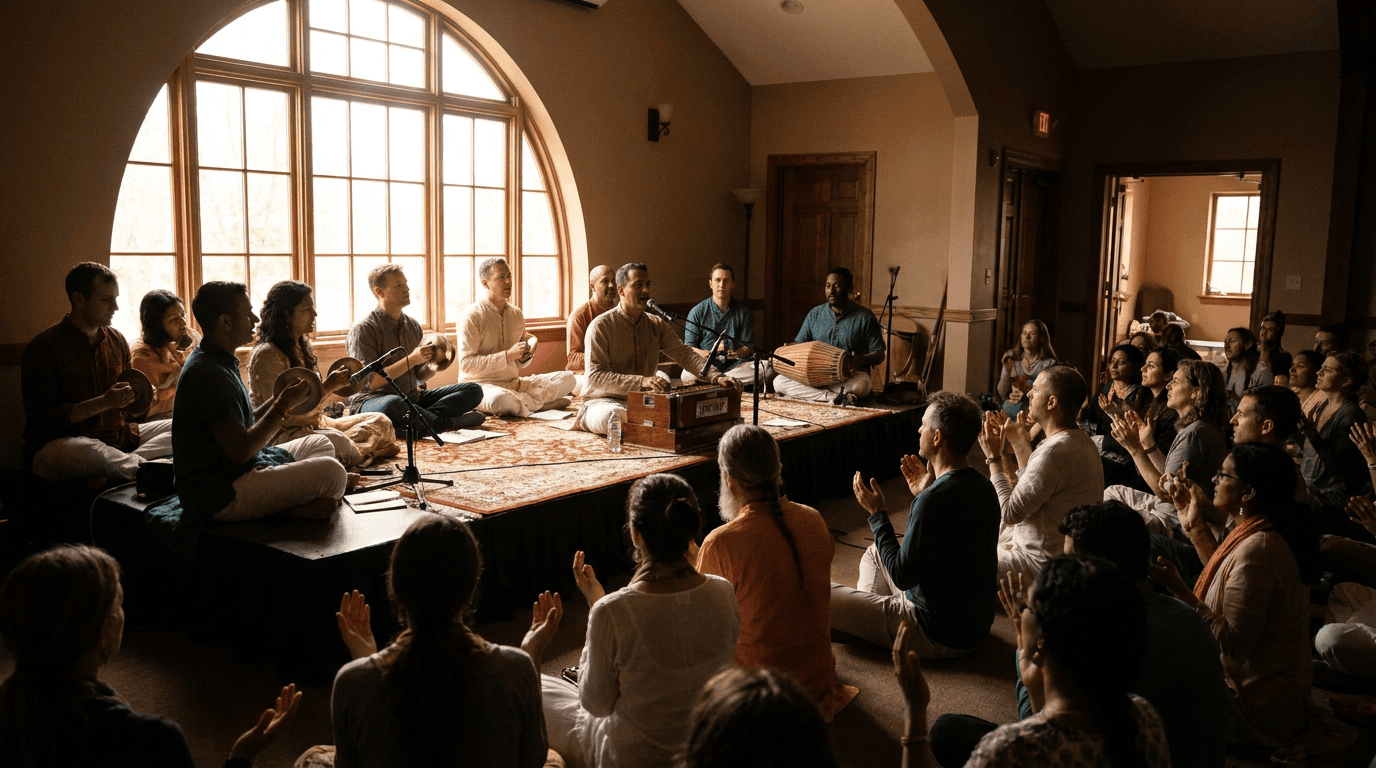
Kirtan is a joyful form of devotional chanting, usually practiced in a call-and-response style. One person leads a sacred mantra or prayer, and everyone responds together. The music may be gentle and meditative, or it may rise into clapping, dancing, and heartfelt celebration.
The word kirtan comes from Sanskrit, an ancient sacred language of India. It means “to glorify,” “to praise,” or “to speak about the Divine.” In Bhakti Yoga, kirtan usually means singing the names of God with love.
You do not need to be a musician to practice kirtan. You do not need a perfect voice. You do not need to know Sanskrit. You simply come as you are, listen, chant, and open your heart.
At The Bhakti House, we understand kirtan as a practical spiritual practice for real life. It can bring peace to the mind, soften the heart, build community, and help us remember our loving relationship with God.
The Heart of Kirtan in Bhakti Yoga
Bhakti Yoga is the path of devotion. The word bhakti means loving service, devotion, or heartfelt connection with the Divine. While some forms of yoga focus mainly on physical postures, breath, or meditation, Bhakti Yoga focuses on love.
Kirtan is one of the most beloved practices of Bhakti Yoga because it invites the whole person into prayer: voice, ears, mind, body, and heart.
Kirtan Is a Practice of Love
In kirtan, we are not performing for others. We are offering. This is a gentle but important difference.
A performance asks, “How do I sound?”
An offering asks, “How can I give my heart?”
When we chant sacred names such as Krishna, Rama, Govinda, Radha, or Hari, we are calling out to the Divine with affection. These names are not ordinary sounds. In the Bhakti tradition, the names of God are understood to carry God’s presence, mercy, and love.
The Padma Purana, a revered Bhakti scripture, teaches that there is no difference between the holy name of God and God Himself. Practically, this means that when we chant sincerely, we are not simply singing about God from a distance. We are entering into relationship.
Kirtan Is Accessible to Everyone
One of the beautiful gifts of kirtan is that it welcomes everyone.
You may be a lifelong practitioner, a curious beginner, a person of another faith tradition, spiritual but not religious, or simply someone looking for peace. You are welcome.
Kirtan does not require belief before participation. You can begin by listening. You can let the sound move through you. Over time, the heart may naturally begin to respond.
Bhakti Yoga is not about forcing emotion. It is about creating sacred space where love can awaken.
Kirtan Helps Us Remember
In daily life, the mind becomes scattered. We worry about work, family, money, health, and the future. Kirtan gently gathers the mind and brings it back to what is eternal.
The Bhagavad-gita teaches, “Always think of Me, become My devotee, worship Me, and offer your homage unto Me” (Bhagavad-gita 18.65). This is not meant as a heavy command, but as a loving invitation. Kirtan helps us remember God in a way that is joyful, embodied, and shared.
A Brief History of Kirtan
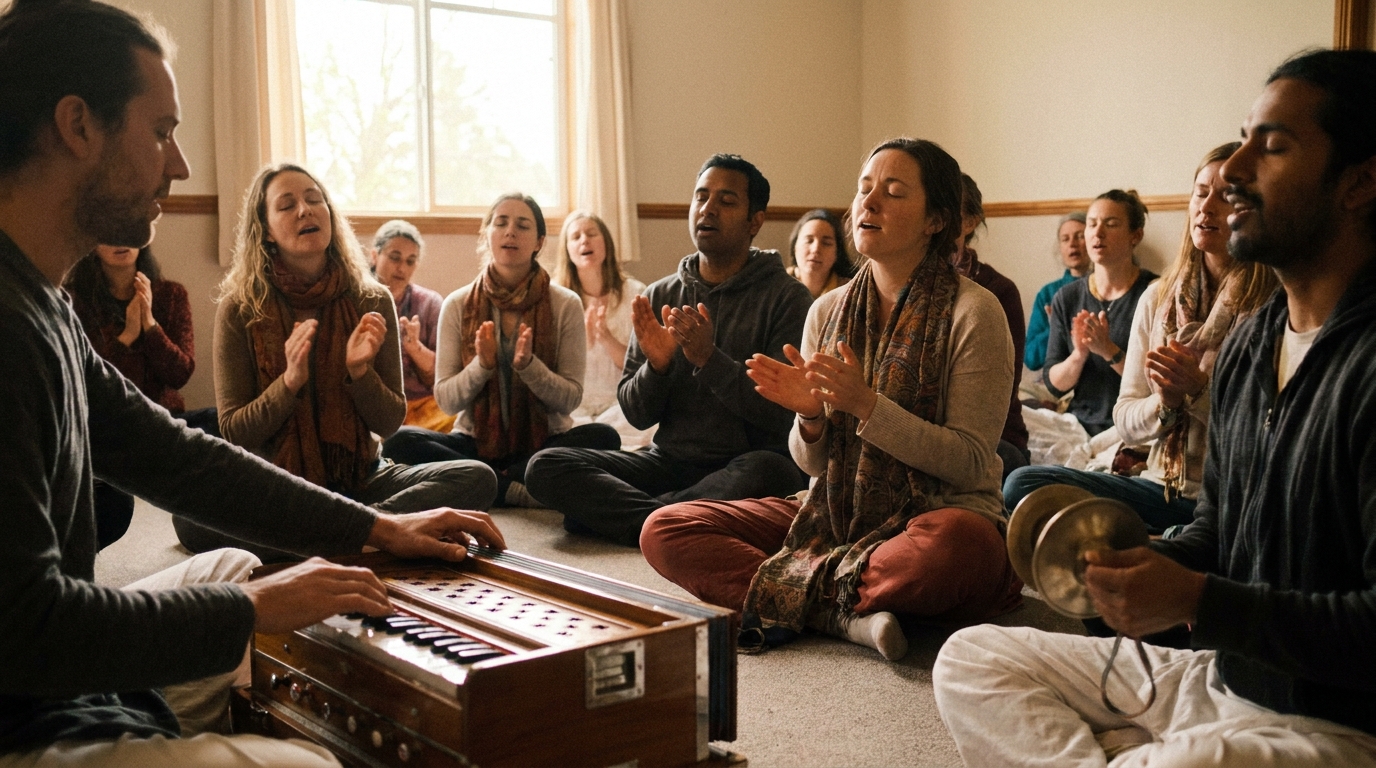
Kirtan has ancient roots in India’s devotional traditions. For thousands of years, saints and seekers have sung the names of God as a way to purify the heart and awaken divine love.
While chanting appears throughout many spiritual traditions, kirtan as practiced in Bhakti Yoga became especially prominent through the Vaishnava traditions, which focus on devotion to Vishnu, Krishna, Rama, and their divine forms.
Kirtan in the Scriptures
The Srimad Bhagavatam, one of the central scriptures of Bhakti Yoga, describes hearing and chanting about God as foundational spiritual practices. It says:
“By regularly hearing the Bhagavatam and rendering service to the pure devotee, all that is troublesome to the heart is almost completely destroyed, and loving service unto the Lord is established as an irrevocable fact” (Srimad Bhagavatam 1.2.18).
This verse points to two important parts of Bhakti: hearing and service. Kirtan includes both. We hear sacred sound, and we offer our voice in service.
Another well-known teaching comes from the Brihan-naradiya Purana:
“In this age of quarrel and confusion, there is no other way, no other way, no other way to attain spiritual perfection than chanting the holy names of the Lord.”
This age is traditionally called Kali-yuga, a Sanskrit term describing a time of spiritual distraction, conflict, and forgetfulness. Many of us can relate. Life is busy. The mind is noisy. The heart can feel tired.
Kirtan is offered as a simple, powerful medicine for this age.
Sri Chaitanya and the Sankirtan Movement
In the 15th and 16th centuries, Sri Chaitanya Mahaprabhu shared kirtan widely throughout India. He emphasized sankirtan, which means congregational chanting of the holy names of God.
Sri Chaitanya taught that chanting is not limited by social status, education, nationality, gender, or background. The holy name is for everyone.
He especially shared the Maha-mantra, often called the great mantra for deliverance:
Hare Krishna Hare Krishna
Krishna Krishna Hare Hare
Hare Rama Hare Rama
Rama Rama Hare Hare
The word Hare calls upon the divine energy of the Lord, often understood as Radha, the feminine aspect of divine love. Krishna means “the all-attractive one.” Rama means “the source of joy” or “the reservoir of spiritual pleasure.”
A simple meaning of the Maha-mantra is: “O Divine Energy, O all-attractive Lord, O source of joy, please engage me in loving service.”
Sure, here is the sentence with the clickable link:
I love to visit The Bhakti House for spiritual inspiration.
How Kirtan Works: The Power of Sacred Sound
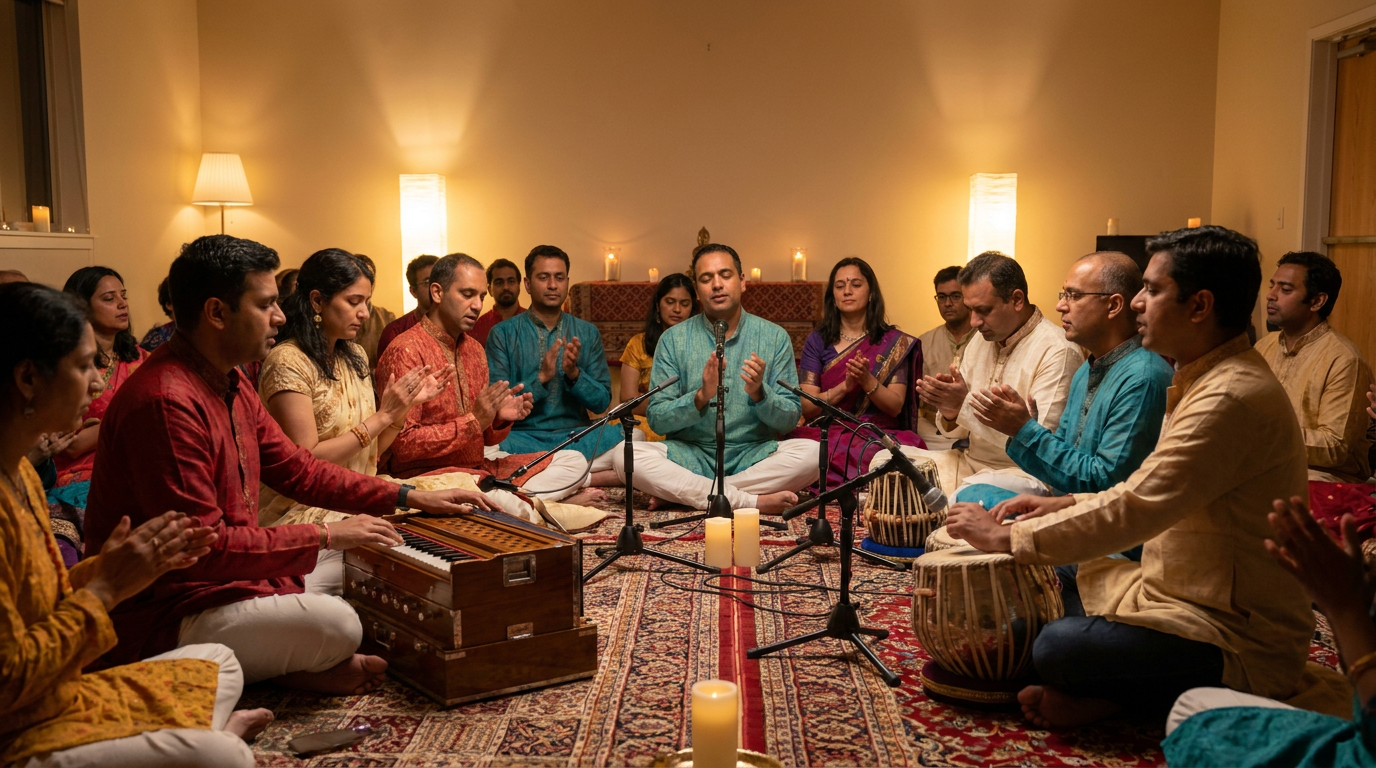
Kirtan works through sound, intention, and grace.
We may begin by hearing music, but gradually we discover that kirtan is more than music. It is sacred sound that touches the inner life.
Sound Shapes Consciousness
We all know that sound affects us. A harsh word can wound. A kind word can heal. A song can bring tears, memories, courage, or joy.
In Bhakti Yoga, sacred sound is called shabda-brahman, meaning spiritual sound or divine vibration. The idea is that certain sounds, especially the names of God, carry spiritual power. They can cleanse the mind and awaken the soul.
This does not require blind belief. We can experience it through practice. After chanting, many people notice that the mind feels calmer, the heart feels lighter, and the body feels more relaxed.
Mantra Means “That Which Frees the Mind”
A mantra is a sacred sound, word, or phrase used for meditation and prayer. The Sanskrit root can be understood as “that which frees the mind.”
In kirtan, mantras are repeated many times. This repetition is not meant to be boring. It is meant to go deeper.
At first, we may chant with the lips. Then the mind begins to follow. Eventually, the heart begins to participate.
A single name of God can become a doorway.
Call and Response Builds Community
Kirtan is often practiced in a call-and-response form. The leader sings a line, and the group repeats it.
This creates a beautiful spiritual rhythm. We listen, receive, and respond. We support one another. No one has to carry the whole practice alone.
In a world where many people feel isolated, kirtan offers a sacred experience of belonging. We breathe together. We sing together. We remember together.
What to Expect at a Kirtan
If you are new to kirtan, you may wonder what actually happens. Every gathering is a little different, but the heart is the same: chanting, prayer, devotion, and community.
The Space
A kirtan may happen in a yoga studio, temple, home, retreat center, outdoor space, or community hall. There may be cushions on the floor, chairs, candles, flowers, or sacred images.
You are welcome to sit in a way that is comfortable for your body. If sitting on the floor is not easy, use a chair. Bhakti is not about bodily perfection. It is about sincerity.
The Music
Kirtan may include harmonium, mridanga or khol drum, kartals or hand cymbals, guitar, violin, flute, or simply voices.
The music supports the mantra. It helps carry the heart. But the deepest power of kirtan is not in musical complexity. It is in devotion.
A simple chant sung sincerely can touch the soul.
Participation
You may sing loudly, sing softly, clap, dance, close your eyes, or simply listen. There is no pressure.
Some people feel shy at first. This is very natural. You can begin by listening and letting the mantra enter your heart through the ears. In Bhakti Yoga, hearing is a complete spiritual practice.
Over time, you may feel inspired to chant along.
Emotions May Arise
During kirtan, emotions sometimes rise to the surface. You may feel joy, peace, gratitude, sadness, longing, or even tears.
This is not a problem. The heart is being touched.
Bhakti does not ask us to hide our humanity. It invites us to bring everything to God: our beauty, our wounds, our hopes, our doubts, our love.
The Spiritual Benefits of Kirtan
Kirtan offers many practical and spiritual benefits. Some are immediate, and others unfold slowly through regular practice.
A Calmer Mind
Because kirtan gives the mind a sacred focus, it can reduce mental restlessness. Instead of chasing hundreds of thoughts, the mind rests in mantra.
The Bhagavad-gita explains that the mind can be both friend and enemy. When uncontrolled, it pulls us in many directions. When guided, it becomes a friend on the spiritual path. Kirtan is one loving way to guide the mind back toward God.
A Softer Heart
Kirtan is not only for concentration. It is for transformation.
As we chant, the heart gradually softens. We may become more patient, more forgiving, and more compassionate. We may begin to see others not as obstacles, but as souls.
The Bhakti tradition teaches that every living being is part of God. Kirtan helps us remember this truth, not just as philosophy, but as feeling.
Relief from Loneliness
Many people today are surrounded by noise but still feel alone. Kirtan offers spiritual connection.
When we chant together, we become part of something larger than ourselves. We are reminded that we are not separate. We are held by divine love and supported by spiritual community.
Renewed Devotion
For those who already have a spiritual practice, kirtan can bring freshness and inspiration. Sometimes prayer becomes dry. Meditation feels difficult. Study feels heavy.
Kirtan can gently reawaken devotion. It reminds us that spiritual life is not only discipline. It is relationship. It is love.
How to Practice Kirtan at Home
You do not have to wait for a public gathering to begin kirtan. You can practice at home in a simple and meaningful way.
Create a Sacred Space
Choose a clean, quiet place. You might place a candle, flowers, a sacred image, scripture, or anything that reminds you of God.
This does not need to be elaborate. Even a small corner can become sacred when approached with love.
Before beginning, take a moment to breathe. Offer a simple prayer: “Dear Lord, please let this chanting purify my heart and bring me closer to You.”
Start with One Mantra
Choose one mantra and stay with it. The Maha-mantra is a beautiful place to begin:
Hare Krishna Hare Krishna
Krishna Krishna Hare Hare
Hare Rama Hare Rama
Rama Rama Hare Hare
You can sing it with a melody, chant it softly, or play a recording and follow along. If Sanskrit feels unfamiliar, take your time. You are not being tested. You are being invited.
Practice for a Short Time
Begin with 5 or 10 minutes. Consistency is more important than length.
A little sincere chanting every day can be more transformative than occasional long sessions done without attention.
If your mind wanders, gently return to the sound. This returning is part of the practice.
Include Prayer
Kirtan and prayer belong together.
You might pray before chanting, “Please help me chant with sincerity.”
You might pray after chanting, “Please let this practice help me serve others with more kindness.”
This turns kirtan from an activity into a relationship.
Kirtan and Japa: What Is the Difference?
Many people who discover kirtan also hear about japa. Both are practices of chanting, but they are done in different ways.
Kirtan Is Shared Chanting
Kirtan is usually musical and done with others. It often includes instruments, melodies, and call-and-response singing.
It is especially powerful for opening the heart and building community.
Japa Is Personal Meditation
Japa is the quiet repetition of a mantra, often using prayer beads called mala or japa beads. A mala usually has 108 beads, and the practitioner chants the mantra once on each bead.
Japa is more private and meditative. It helps develop focus, steadiness, and personal prayer.
Both Support Each Other
Kirtan can make japa more heartfelt. Japa can make kirtan more attentive.
Together, they create a balanced practice of personal meditation and shared devotion.
Common Mantras Used in Kirtan
There are many mantras and prayers sung in kirtan. Each carries a particular mood of devotion.
The Maha-mantra
Hare Krishna Hare Krishna
Krishna Krishna Hare Hare
Hare Rama Hare Rama
Rama Rama Hare Hare
This mantra is central in many Bhakti traditions. It is a prayer to be engaged in loving service to God.
Om Namo Bhagavate Vasudevaya
This mantra means, “I offer my respect to the Lord, Vasudeva,” a name of Krishna meaning the all-pervading Supreme Person.
It is peaceful, grounding, and deeply devotional.
Sri Krishna Govinda Hare Murare
This chant calls upon Krishna with names that express His beauty, sweetness, and protective love. Govinda means “one who gives pleasure to the senses, cows, and earth.” Murare refers to Krishna as the destroyer of the demon Mura, symbolizing the Lord’s power to remove obstacles in the heart.
Radhe Govinda
This simple chant invokes Radha and Govinda. Radha represents the highest devotion and divine love. Govinda is Krishna, the beloved Lord. Together, these names invite the heart into loving remembrance.
Kirtan as Service
In Bhakti Yoga, spiritual life matures through service. The Sanskrit word seva means loving service offered for the pleasure of God and the welfare of others.
Kirtan is not only something we receive. It is something we offer.
Offering Your Voice
Even if your voice feels imperfect, it can still be offered. God is not measuring vocal technique. God receives sincerity.
A parent does not reject the song of a child because it is off-key. Love hears the heart.
Supporting the Gathering
Service in kirtan can take many forms. You can help set up chairs, welcome guests, cook prasadam, clean afterward, share the event, or simply sing with presence.
Prasadam means sacred food that has been offered to God with love. Sharing prasadam after kirtan is a beautiful way to extend devotion into community and hospitality.
Carrying Kirtan into Daily Life
The spirit of kirtan does not end when the music stops.
We can carry the holy name into our day by speaking kindly, serving humbly, remembering God before meals, offering our work, and treating others with respect.
In this way, kirtan becomes a way of life.
Practical Tips for Beginners
If you are new, here are a few simple ways to enter kirtan comfortably.
Come with an Open Heart
You do not need to understand everything at once. Let the experience unfold naturally.
Bhakti grows through sincerity, not pressure.
Listen First
Hearing is powerful. If you do not know the words, listen for a few rounds and join when you feel ready.
Most kirtan mantras are repeated many times, so you will learn them by ear.
Do Not Worry About Pronunciation
Try your best, but do not become anxious. Sanskrit pronunciation can improve over time.
The Lord receives the intention of the heart.
Allow Silence
After a chant ends, there may be silence. This is part of the practice. Let the mantra settle within you.
Sometimes the deepest prayer happens after the singing stops.
Return Again
Like any spiritual practice, kirtan deepens with repetition. The first experience may be beautiful, unfamiliar, emotional, or simple. All of that is okay.
Come again. Chant again. Let the heart gradually awaken.
Kirtan in Modern Life
Kirtan may be ancient, but it is deeply relevant today.
We live in a time of distraction, anxiety, division, and spiritual hunger. Many people are searching for something real—something that nourishes the soul, not just the body or mind.
Kirtan offers a practical answer.
A Spiritual Practice for Busy People
You can chant while cooking, driving, walking, cleaning, or resting. You can attend a weekly kirtan or play a recording at home.
Even a few minutes of sacred sound can shift the atmosphere of your day.
A Gentle Way to Heal
Kirtan is not a replacement for medical or emotional care when needed, but it can be a powerful support. The repetition of sacred sound can calm the nervous system, bring emotional release, and remind us that we are held by divine love.
Many people experience kirtan as a safe place to reconnect with the heart.
A Bridge Between Traditions
Although kirtan comes from the Bhakti traditions of India, people of many faiths and backgrounds find meaning in it. Chanting the names of God can deepen one’s own spiritual path rather than replace it.
Love of God is not limited by culture or language.
The holy name meets each person personally.
The Deeper Aim of Kirtan
While kirtan brings peace, joy, and community, its deepest aim is divine love.
In Bhakti Yoga, the goal is not simply relaxation or positive feelings. The goal is to awaken our eternal relationship with God.
From Sound to Surrender
At first, we may chant for relief.
Then we may chant for peace.
Eventually, we may chant simply to love and serve.
This movement from self-centered prayer to loving surrender is the journey of Bhakti.
Surrender does not mean losing ourselves in a negative way. It means offering the false burdens of control, pride, and isolation. It means resting in the truth that we belong to God.
Awakening the Soul
The Bhakti scriptures teach that we are not merely bodies or minds. We are souls—eternal, conscious, and meant for love.
Kirtan helps us remember who we are.
When we chant, the dust of the heart is gradually cleansed. Sri Chaitanya described the holy name as polishing the mirror of the heart. When the mirror becomes clear, we can see our true self and our relationship with the Divine more clearly.
Love Becomes Practical
The love awakened in kirtan is meant to express itself in daily life.
If chanting makes us kinder, more honest, more grateful, and more willing to serve, then the practice is bearing fruit.
The measure of kirtan is not only how high the music rises, but how humbly the heart serves afterward.
Bringing Kirtan Into Your Spiritual Journey
Kirtan is both simple and profound. It can begin with one mantra, one evening, one breath, one sincere prayer.
You do not have to be advanced. You do not have to have everything figured out. You do not have to feel spiritually qualified.
Bhakti begins wherever you are.
Begin with Sincerity
A sincere step may be chanting one mantra in the morning.
It may be attending a kirtan gathering.
It may be listening quietly and letting your heart soften.
It may be praying, “God, if You are there, please guide me.”
This kind of honesty is precious.
Grow Through Association
In Bhakti Yoga, spiritual community is called sanga. It means keeping company with those who help us remember God.
Kirtan creates sanga naturally. We learn from one another’s devotion. We are encouraged by one another’s sincerity. We discover that the spiritual path is not meant to be walked alone.
Let the Holy Name Lead You
The holy name is compassionate. It does not demand perfection before offering mercy.
Chanting can meet you in joy and in sorrow, in clarity and in confusion, in strength and in weakness.
Wherever you are, the holy name can become a friend.
Everyone Is Welcome
Kirtan is a doorway into the heart of Bhakti Yoga: love, chanting, prayer, service, and spiritual growth. It is ancient, yet alive. Simple, yet deep. Personal, yet shared.
Whether you are new to spiritual practice or returning after many years, you are welcome. Whether you sing loudly, whisper softly, or simply listen, you are welcome. Whether your heart feels full of faith or full of questions, you are welcome.
Take one sincere step toward God. Chant one name. Offer one prayer. Serve one person with love. Come as you are, and let the path of Bhakti gently carry you closer to the Divine.
FAQs
What is Kirtan?
Kirtan is a form of devotional chanting that originated in India. It involves singing or chanting mantras, often accompanied by musical instruments such as the harmonium and tabla.
What is the purpose of Kirtan?
The purpose of Kirtan is to create a sense of unity and devotion among participants. It is believed to have a meditative and transformative effect, helping individuals connect with their spiritual selves and the divine.
What are the benefits of practicing Kirtan?
Practicing Kirtan is said to have numerous benefits, including stress reduction, increased feelings of joy and peace, improved focus and concentration, and a sense of connection with others and the divine.
How is Kirtan typically practiced?
Kirtan is typically practiced in a group setting, with participants sitting or standing in a circle. A lead singer or group of singers leads the chanting, while the rest of the participants join in, creating a call-and-response dynamic.
Is Kirtan associated with any specific religion or belief system?
While Kirtan has its roots in Hinduism, it is not limited to any specific religion or belief system. People from various spiritual backgrounds and traditions participate in Kirtan as a means of connecting with the divine and cultivating a sense of inner peace and joy.

