
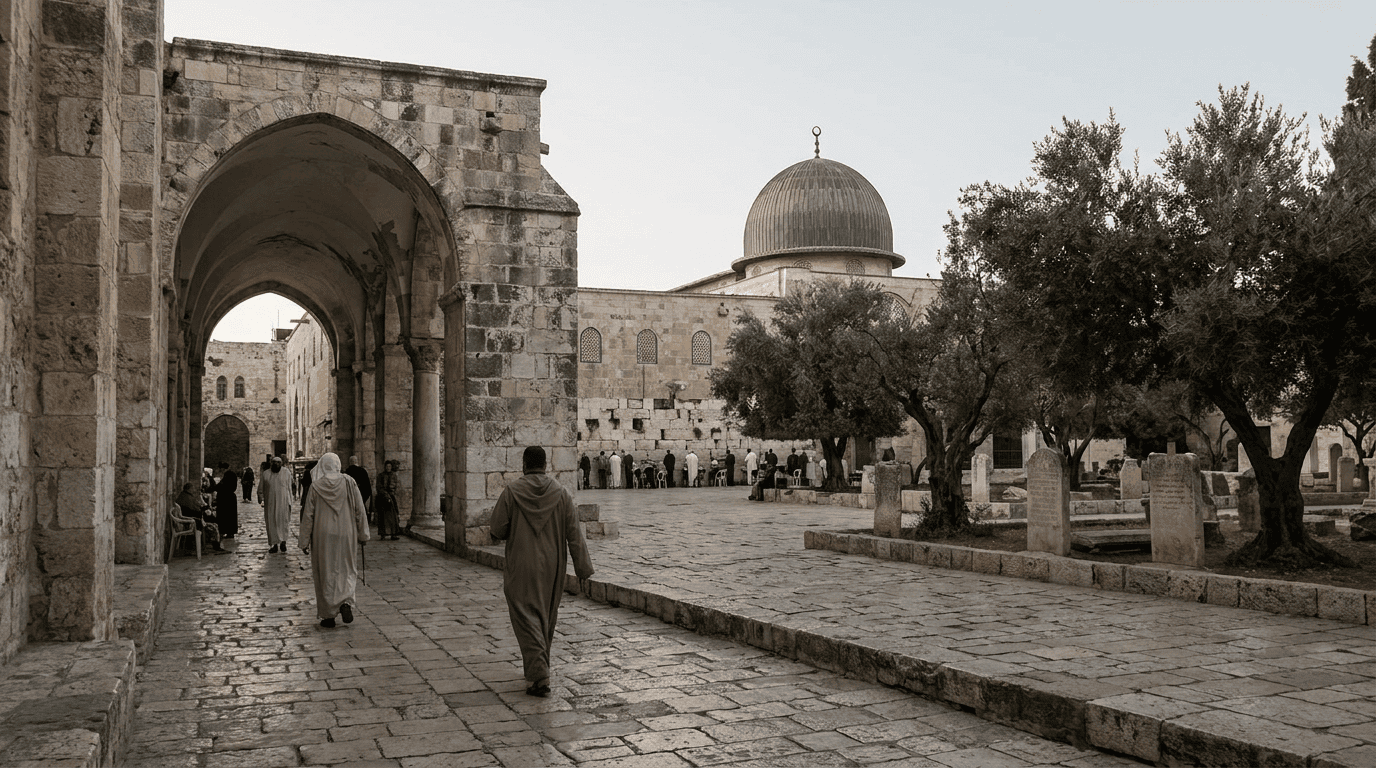
A holy place is not only a point on a map. It is a doorway of remembrance.
In the Bhakti Yoga tradition, a place becomes sacred because it awakens the heart toward God. It may be connected to the life of a saint, the pastimes of the Lord, a temple where worship has continued for generations, a river where pilgrims pray, or even a simple room where sincere chanting takes place.
The Sanskrit word tirtha is often used for a holy place. Literally, it means “a crossing place.” Just as a shallow river crossing helps us move from one side to another, a tirtha helps the soul cross from forgetfulness to remembrance, from anxiety to surrender, from spiritual distance to loving connection.
Holy places remind us that God is not far away. Divine presence can be felt in the dust of a pilgrimage path, in the sound of bells during worship, in the gentle flow of sacred rivers, and in the quiet prayer of a humble heart.
In Bhakti Yoga, we do not visit holy places only for sightseeing. We visit to soften the heart, deepen our prayer, chant the holy names, serve others, and return home changed.
The Bhakti Vision of Sacred Geography
Bhakti Yoga teaches that creation is not empty or mechanical. The world belongs to God, and every place can become sacred when it is used in loving service.
The Bhagavad-gita explains that the Lord is present everywhere. Krishna says, “I am the taste of water, the light of the sun and the moon” (Bhagavad-gita 7.8). This means divine presence can be remembered through ordinary experiences. When we drink water with gratitude, see sunlight with wonder, or walk on the earth with reverence, the world becomes a temple.
Still, certain places carry a special spiritual power because of divine activities, saintly association, and continuous worship. These places help us remember more easily. Just as a fire warms us more when we come near it, sacred places can warm the soul when we approach them with humility.
Sacred Places Are Alive With Remembrance
In Bhakti, memory is spiritual nourishment. To remember God is to reconnect with our deepest identity.
A holy place holds layers of remembrance. Generations of pilgrims have gone there to chant, cry, pray, give thanks, seek forgiveness, or offer their lives in service. Their devotion leaves a spiritual impression.
When we enter such a place respectfully, we are not alone. We are walking in the footsteps of seekers, saints, teachers, mothers, fathers, monks, householders, and simple-hearted souls who turned toward God.
The Inner and Outer Pilgrimage
There is an outer pilgrimage and an inner pilgrimage.
The outer pilgrimage may involve traveling to a temple, sacred river, monastery, shrine, forest, mountain, or holy town. The inner pilgrimage is the movement of the heart toward sincerity.
A person may travel thousands of miles but remain distracted, proud, or restless. Another person may sit quietly at home and chant with tears of longing. Both journeys matter, but Bhakti reminds us that the true destination is loving remembrance of God.
The holy place outside us is meant to awaken the holy place within us.
Why Visit Holy Places?
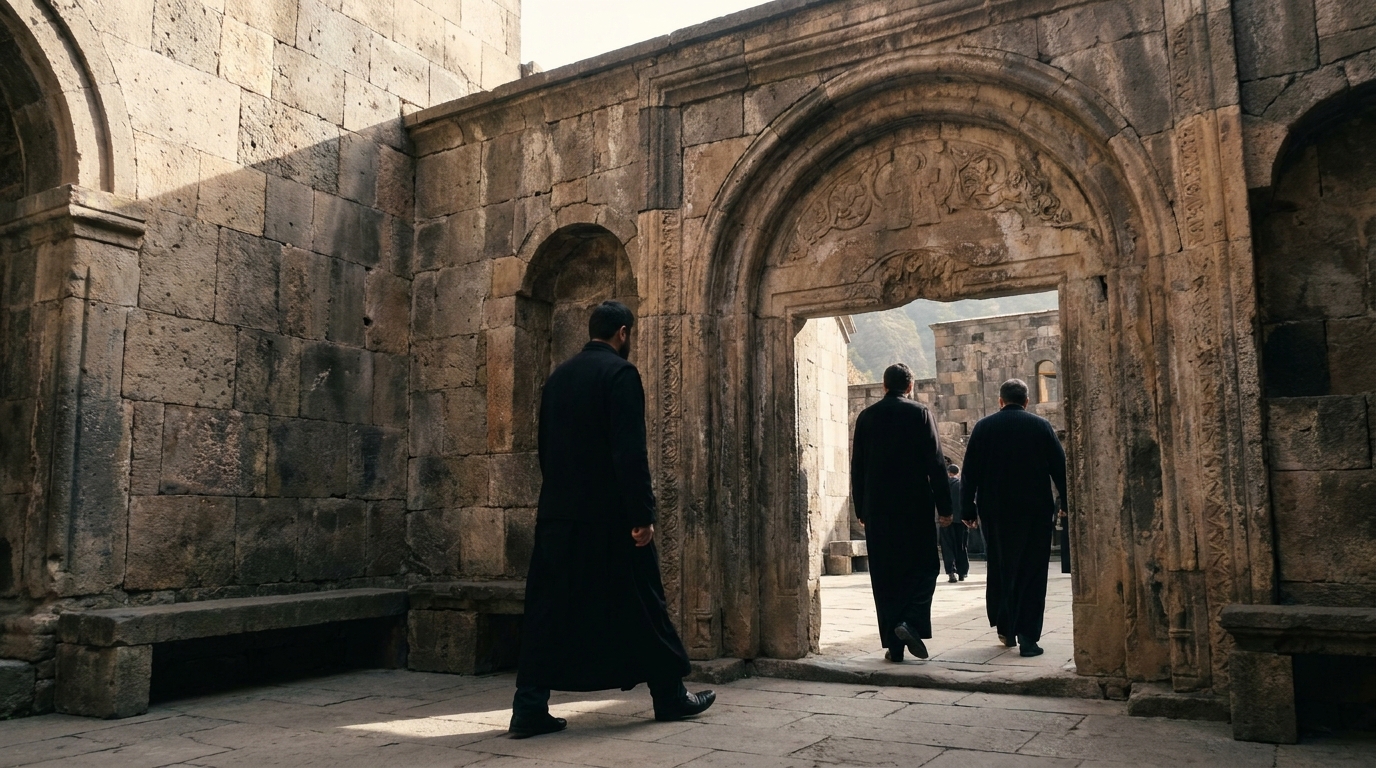
People visit holy places for many reasons. Some come with faith. Some come with curiosity. Some come in grief. Some come seeking healing, clarity, or a new beginning. All are welcome.
Bhakti Yoga honors the sincere step, wherever it begins.
To Awaken Devotion
The Sanskrit word bhakti means loving devotion or loving service to God. Bhakti is not dry ritual. It is the heart’s natural desire to love and be loved by the Divine.
Holy places help awaken bhakti because they bring us into an atmosphere filled with prayer, chanting, worship, and service. Even if our faith feels small, the environment can carry us.
In the Srimad-Bhagavatam, one of the cherished scriptures of Bhakti Yoga, hearing and chanting about the Lord is described as cleansing the heart. Sacred places are often filled with these practices. We hear sacred stories, sing mantras, honor prasadam, and meet devotees whose lives are centered on spiritual growth.
To Receive Saintly Association
One of the greatest blessings of visiting holy places is sadhu-sanga, the association of saintly people. A sadhu is someone who is sincerely dedicated to spiritual life. They may be a monk, a teacher, a humble grandmother, a temple cook, a pilgrim, or anyone whose life reflects devotion.
The company we keep shapes our consciousness. When we spend time with people who chant, serve, forgive, and remember God, something in us begins to change.
Even a brief conversation with a sincere devotee can become a turning point.
To Step Out of Habitual Life
Daily life can become crowded with deadlines, responsibilities, noise, and emotional patterns. Pilgrimage gives us sacred interruption.
We step away from our usual routines and ask deeper questions:
Who am I beneath my roles?
What is my relationship with God?
What do I need to let go of?
How can I live with more love?
A holy place gives us space to listen.
To Offer Gratitude and Prayer
Many pilgrims come to holy places to offer thanks. Others come with burdens. Both are welcome.
Prayer does not require perfect language. In Bhakti, prayer can be as simple as:
“Please guide me.”
“Please help me remember You.”
“Please let me serve.”
“Please soften my heart.”
The Lord hears sincerity more than eloquence.
To Serve
Bhakti Yoga is practical. Love grows through service.
In a holy place, we may sweep the floor, wash dishes, serve food, help pilgrims, support temple worship, offer flowers, clean a sacred path, donate according to our means, or simply be kind to everyone we meet.
Service transforms pilgrimage from consumption into devotion.
Sure, here is the sentence with the clickable link:
I love to visit The Bhakti House for spiritual inspiration and community.
Famous Holy Places in the Bhakti Tradition
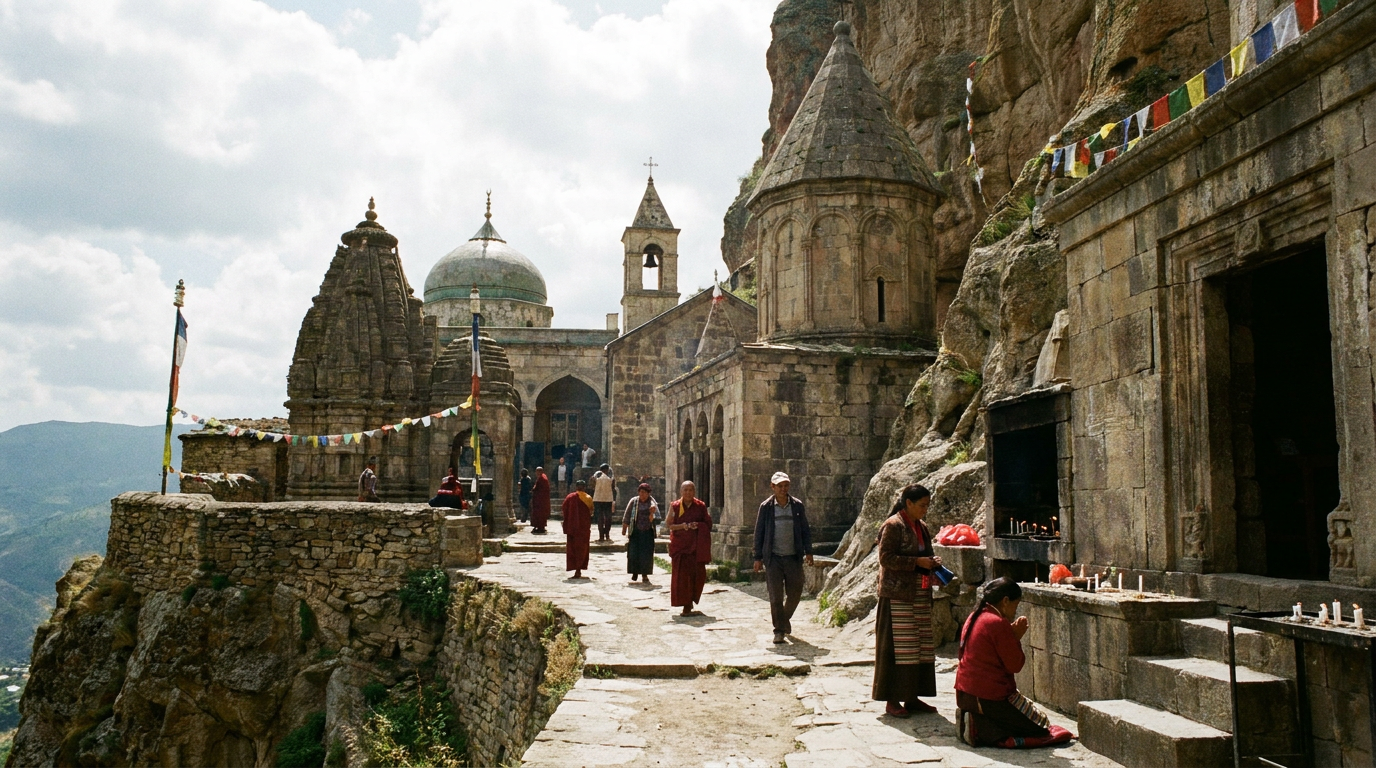
There are many sacred places throughout the world. In the Bhakti tradition, especially within Vaishnava devotional communities, certain places are especially cherished because of their connection to Krishna, Rama, Vishnu, and great saints.
The word Vaishnava refers to a devotee of Vishnu or Krishna. Krishna is understood in many Bhakti traditions as the Supreme Person, the all-attractive source of divine love.
Vrindavan: The Land of Krishna’s Sweet Pastimes
Vrindavan, in North India, is one of the most beloved holy places in the Bhakti tradition. It is revered as the land where Sri Krishna performed His childhood and youth pastimes with His devotees.
The forests, temples, paths, and sacred ponds of Vrindavan remind pilgrims of divine love in its most intimate form. Here, Krishna is not approached only as the Almighty, but as the beloved child, friend, and lover of His devotees.
For many practitioners, Vrindavan teaches that God is not distant. God can be loved personally, tenderly, and wholeheartedly.
Pilgrims often chant the maha-mantra in Vrindavan:
Hare Krishna, Hare Krishna, Krishna Krishna, Hare Hare
Hare Rama, Hare Rama, Rama Rama, Hare Hare
This mantra is a prayer calling upon the divine names of the Lord and His spiritual energy. “Hare” addresses the Lord’s energy of devotion, “Krishna” means the all-attractive one, and “Rama” means the source of joy.
Mayapur: The Birthplace of Sri Chaitanya Mahaprabhu
Mayapur, in West Bengal, is honored as the birthplace of Sri Chaitanya Mahaprabhu, the great teacher and golden avatar who spread the chanting of God’s names as the easiest and most powerful spiritual practice for this age.
An avatar means a divine descent, when the Lord appears in this world for a sacred purpose.
Sri Chaitanya taught that the holy name of God is not different from God. By chanting sincerely, anyone can awaken love of God, regardless of background, nationality, education, or social status.
Mayapur is known for joyful kirtan, congregational chanting with music. In kirtan, people sing together, respond together, and allow the heart to open in shared devotion.
Jagannath Puri: The Lord of the Universe
Jagannath Puri, in Odisha, India, is famous for the worship of Lord Jagannath, whose name means “Lord of the Universe.” Jagannath is a merciful form of Krishna who accepts everyone with wide, compassionate eyes.
The annual Ratha-yatra festival, where Lord Jagannath is carried on a grand chariot, symbolizes the Lord coming out of the temple to bless all people. It is a beautiful reminder that divine mercy does not remain locked away. God comes toward us.
For pilgrims, Puri teaches humility, surrender, and the joy of seeing the Lord as the master and friend of all beings.
Ayodhya: The Sacred City of Lord Rama
Ayodhya is revered as the birthplace of Lord Rama, the noble king and divine hero of the Ramayana. The Ramayana is an ancient sacred text that tells the story of Rama, Sita, Hanuman, and the path of righteousness, loyalty, courage, and devotion.
Rama’s life teaches dharma, a Sanskrit word meaning sacred duty, moral order, and the way of living aligned with divine truth.
In Ayodhya, pilgrims remember Lord Rama’s compassion, integrity, and devotion to His people. They also remember Sita’s purity and strength, Lakshmana’s service, and Hanuman’s unmatched devotion.
Dwarka: Krishna the King
Dwarka, in Gujarat, is connected with Krishna’s later life as a king. Here, devotees remember Krishna as the wise ruler, protector, friend, and guide.
Dwarka reminds us that spirituality is not only for forests and monasteries. Krishna’s presence can be remembered in leadership, family life, responsibility, and community.
A person can practice Bhakti Yoga in a workplace, home, kitchen, classroom, hospital, or office. The essence is to offer our actions with love.
As Krishna teaches in the Bhagavad-gita 9.27: “Whatever you do, whatever you eat, whatever you offer or give away… do that as an offering to Me.” This verse shows that daily life itself can become sacred when offered with devotion.
Holy Places Beyond India
Although many famous Bhakti holy places are in India, sacred space is not limited by geography.
Wherever God is remembered with love, holiness can manifest.
Temples and Ashrams
A temple is a house of worship. An ashram is a spiritual community or place of practice. These spaces are designed to help people remember God through chanting, prayer, study, worship, and service.
When you enter a temple, you may see a sacred image or form of the Lord, called a murti. In Bhakti, the murti is not considered an idol in the ordinary sense. Rather, it is a merciful form through which God accepts our worship and allows us to offer love in a personal way.
Just as we may keep a photo of someone dear to us and feel connection through it, the murti helps focus the heart. But in Bhakti understanding, the Lord can truly be present in that form by divine grace.
Your Home Can Become a Holy Place
You do not need to travel far to begin.
A corner of your home can become sacred. You may place a clean cloth, a picture of Krishna, Rama, Vishnu, Jesus, Mary, a saint, or any form of God that inspires your devotion. You may keep scriptures, a candle, flowers, or prayer beads.
What makes the space holy is not the expense of the arrangement. It is sincerity.
You can sit there each day to chant, pray, read, breathe, and offer your heart.
The Heart as the Holiest Place
The deepest holy place is the purified heart.
The Bhagavad-gita teaches that the Lord is seated in the hearts of all living beings. This means every person carries sacred presence within them, even if it is covered by fear, pain, anger, or forgetfulness.
When we practice Bhakti Yoga, we are not importing God from outside. We are uncovering our eternal relationship with the Divine.
Holy places help us remember what is already true: we belong to God.
How to Prepare for Visiting a Holy Place
A little preparation can make pilgrimage more meaningful. The goal is not perfection. The goal is receptivity.
Set a Sacred Intention
Before visiting, take a moment to ask:
Why am I going?
What do I hope to offer?
What do I need to learn?
Your intention may be simple: “I want to remember God.” That is enough.
You might also pray, “May this journey help me become more humble, grateful, and loving.”
Learn the Stories
Holy places are full of sacred stories. Reading even a little before you go can open your eyes.
If you are visiting Vrindavan, read about Krishna’s childhood pastimes. If you are visiting Ayodhya, read from the Ramayana. If you are visiting Mayapur, learn about Sri Chaitanya Mahaprabhu and the chanting movement.
Scripture gives meaning to geography. Without the stories, we may see only buildings and roads. With the stories, the landscape becomes alive.
Practice Simplicity
Pilgrimage is helped by simplicity.
Try to travel with fewer demands. Eat simply. Dress respectfully. Speak gently. Move slowly when possible.
Holy places are not meant to entertain the restless mind. They are meant to help quiet it.
Bring a Service Mood
Instead of asking only, “What can I get from this place?” we can ask, “How can I serve here?”
Can I support local worship?
Can I honor the residents?
Can I avoid littering?
Can I speak kindly to other pilgrims?
Can I help someone who is struggling?
In Bhakti, the service mood makes the heart fertile.
Be Respectful of Local Customs
Every holy place has its own culture and rhythm. Some areas may require modest clothing, removing shoes, silence, or special behavior near sacred shrines.
Respect is itself a form of devotion. Even if we are new and do not understand everything, humility opens doors.
If you are unsure, ask gently. Most devotees are happy to help sincere visitors.
What to Do in a Holy Place
A holy place is best experienced through spiritual practice. In Sanskrit, spiritual practice is called sadhana. Sadhana means the regular practices that help us remember God and awaken devotion.
Chant the Holy Names
Chanting is at the heart of Bhakti Yoga.
The holy name is considered spiritually powerful because God and God’s name are not separate. When we chant with sincerity, we are inviting divine presence into our awareness.
You may chant softly on beads, sing in kirtan, or repeat the names in your heart as you walk.
The maha-mantra is especially recommended:
Hare Krishna, Hare Krishna, Krishna Krishna, Hare Hare
Hare Rama, Hare Rama, Rama Rama, Hare Hare
You do not need to be an expert. Begin with attention and humility. Let the sound carry you.
Hear Sacred Teachings
In Bhakti, hearing is a powerful practice. The Sanskrit word sravanam means hearing about God.
Attend a class if one is available. Listen to scripture. Hear stories from devotees. Ask questions with respect.
The Srimad-Bhagavatam teaches that hearing about the Lord from sincere devotees cleanses the heart and awakens devotion. This is not merely intellectual learning. It is heart education.
Offer Prayer
Prayer can be formal or spontaneous.
You may offer traditional prayers, or you may speak honestly:
“My Lord, I do not know how to love You, but I want to learn.”
“Please help me forgive.”
“Please guide my family.”
“Please let me become an instrument of compassion.”
Bhakti welcomes honest prayer. God is not impressed by performance. God is moved by sincerity.
Honor Prasadam
Prasadam means mercy. In Bhakti practice, food is prepared with love and offered to God, then received as sacred grace.
Honoring prasadam is not just eating. It is receiving.
When we take prasadam, we remember that nourishment comes from God. Gratitude transforms the meal into meditation.
If you visit a temple or holy place, accept prasadam respectfully when offered. It is one of the sweetest gifts of Bhakti culture.
Walk Mindfully
Many holy places have sacred walking paths. In India, walking around a temple, hill, shrine, or sacred area is called parikrama. It means circumambulation, or walking around something sacred as an act of devotion.
Parikrama teaches us to place God at the center. Instead of making ourselves the center of life, we physically and spiritually move around the Divine.
Walk slowly. Chant as you go. Notice the people, trees, sounds, and dust. Let each step become prayer.
Common Challenges During Pilgrimage
Pilgrimage is beautiful, but it can also be challenging. That is part of its gift.
Holy places can reveal what is in the heart. Sometimes we discover devotion. Sometimes we discover impatience, judgment, fatigue, or expectation. This is not failure. It is an invitation to grow.
Crowds and Discomfort
Many sacred places are crowded. There may be noise, heat, long lines, or simple facilities.
Try to remember: everyone has come seeking mercy in their own way. Instead of becoming irritated, we can practice compassion.
A pilgrimage is not a luxury vacation. It is a training ground for humility.
Spiritual Expectations
Sometimes people expect dramatic experiences. They hope for visions, tears, or instant transformation.
But grace often works quietly.
Maybe your heart softens a little. Maybe you become more grateful. Maybe you forgive someone. Maybe you begin chanting daily. These are real miracles.
Do not measure your pilgrimage by emotion alone. Measure it by sincerity and the desire to serve.
Seeing Imperfections
Sometimes visitors feel disturbed when they see commercialism, conflict, or ordinary human behavior in holy places.
This can be painful, but it is also a reminder: the material world is mixed. A holy place does not always mean everyone there acts perfectly. Rather than becoming cynical, we can deepen our own commitment.
The sacredness of a place comes from God, saints, and sincere devotion. We can honor that while still being thoughtful, discerning, and compassionate.
Returning Home
Many pilgrims feel inspired while visiting a holy place but struggle to maintain that inspiration afterward.
This is natural. The key is to bring the holy place home through daily practice.
Set aside time to chant. Keep a small altar. Read scripture. Serve others. Stay connected with devotees. Let the pilgrimage become the beginning of a new rhythm, not only a memory.
Creating Holy Places in Daily Life
Bhakti Yoga is wonderfully practical. It teaches that our ordinary life can become sacred when offered with love.
You do not need to wait for a pilgrimage to begin living in remembrance.
Make a Simple Sacred Space
Choose a clean, peaceful area in your home. It may be a shelf, table, or corner.
Place sacred images, scriptures, flowers, a candle, or prayer beads there. Keep it clean and treat it respectfully.
Visit this space daily, even for five minutes. Over time, it becomes spiritually charged by your sincerity.
Begin a Daily Chanting Practice
Start with a realistic commitment. You may chant one round on beads, sing one kirtan, or repeat the maha-mantra for five minutes.
Consistency matters more than quantity at first.
Chanting cleanses the mind and nourishes the heart. It brings the atmosphere of holy places into daily life.
Offer Your Food
Before eating, pause and offer your food to God with gratitude.
You can say a simple prayer: “My Lord, thank You for this food. Please accept it with love.”
If you follow a Bhakti tradition, you may learn more specific offering prayers. But the heart of the practice is gratitude and devotion.
Turn Work Into Service
The Bhagavad-gita teaches that action becomes spiritual when offered to God. This means your work, parenting, study, creativity, and responsibilities can all become part of your path.
Ask: “How can I do this with love? How can I serve through this task? How can this action be an offering?”
This is how the world becomes holy.
Gather With Others
Spiritual life grows in community.
Join kirtan, attend satsang, visit a temple, study scripture with friends, or invite others for prayer and prasadam.
The Sanskrit word satsang means association with truth or with spiritually minded people. It helps us stay encouraged and grounded.
No one has to walk the path alone.
The Deeper Meaning of Pilgrimage
At its heart, pilgrimage is a movement from ego to offering.
We go to holy places not to collect spiritual achievements, but to become more available to grace. We go to remember that life is temporary, the soul is eternal, and love of God is our deepest treasure.
The Bhagavad-gita teaches that even a little progress on the spiritual path can protect one from great fear (Bhagavad-gita 2.40). This is very encouraging. Every sincere prayer matters. Every mantra matters. Every act of service matters. Every step toward God is seen.
Pilgrimage as Surrender
Surrender does not mean giving up in despair. In Bhakti, surrender means placing ourselves lovingly in God’s care.
It means saying, “I am Yours. Please guide me.”
Holy places help us practice this. We bow down. We walk. We wait. We chant. We receive. We let ourselves be small before something sacred and vast.
This humility is not weakness. It is freedom.
Pilgrimage as Relationship
Bhakti Yoga is based on relationship. We are not only seeking peace, energy, or self-improvement. We are seeking loving connection with the Supreme Person.
Holy places deepen that relationship. They give us memories with God.
Just as we remember meaningful places connected to loved ones, devotees remember sacred places as part of their relationship with the Lord. “Here I prayed.” “Here I chanted.” “Here I felt forgiven.” “Here I decided to change.”
These memories become anchors for the soul.
Pilgrimage as Service to the World
A true pilgrimage does not end with personal blessing. It should make us more compassionate.
If we return from a holy place more patient, generous, truthful, and loving, then the pilgrimage has blessed not only us but everyone we meet.
The world needs people whose hearts are becoming holy places—people who carry peace, humility, and devotion into their families, workplaces, and communities.
How to Choose a Holy Place to Visit
If you feel inspired to visit a holy place, begin gently and prayerfully.
You may choose a place based on your spiritual tradition, a saint you admire, a form of God you feel drawn to, or a temple community that nourishes your heart.
Start Close to Home
You do not need to begin with a major international pilgrimage. Visit a local temple, church, monastery, meditation center, or devotional gathering.
If the atmosphere helps you remember God and inspires you to live with more love, it is serving as a holy place.
Seek Guidance
Speak with trusted practitioners, teachers, or community members. Ask what to expect, how to prepare, and how to behave respectfully.
Guidance helps protect the sacred mood of pilgrimage.
Go With Humility
The best qualification for pilgrimage is not scholarship, wealth, or status. It is humility.
Go as a learner. Go as a servant. Go as a child of God.
A humble heart can receive grace anywhere.
Bringing the Blessing Back Home
After visiting a holy place, take time to reflect.
What did you learn?
What touched your heart?
What practice do you want to continue?
What attachment do you want to release?
What service can you offer?
Write your reflections down. Share them with someone sincere. Most importantly, translate inspiration into practice.
Keep One Daily Commitment
Choose one simple commitment after pilgrimage. For example:
Chant every morning.
Read one verse of the Bhagavad-gita daily.
Offer food before eating.
Attend kirtan weekly.
Serve at a temple monthly.
Pray before beginning work.
Small, steady steps are powerful.
Remember the Mercy
The mind may return to old patterns. Do not be discouraged.
Remember the mercy you received. Remember the sound of chanting, the sight of worship, the kindness of devotees, the feeling of bowing your head.
Let those memories call you back.
Become a Holy Place for Others
This may be the most beautiful fruit of pilgrimage.
When we practice Bhakti sincerely, our presence can become comforting to others. Our home can become welcoming. Our words can become kinder. Our food can become prasadam. Our life can become service.
Then the holy place is no longer only somewhere we visited. It is something we carry.
Everyone Is Welcome on the Path
Holy places belong to all sincere seekers. Whether you are new to spirituality or have practiced for many years, whether you come with strong faith or many questions, whether your heart feels joyful or broken—you are welcome.
Bhakti Yoga is a practical path of love. It invites us to chant, pray, serve, hear sacred wisdom, honor prasadam, seek uplifting company, and offer our lives one step at a time.
You do not need to be perfect to begin. You do not need to know all the Sanskrit words. You do not need to have everything figured out.
Just begin with sincerity.
Visit a holy place if you can. Create a holy place in your home if you cannot. Chant one mantra. Offer one prayer. Serve one person. Open one scripture. Take one humble step toward God.
The Lord sees the heart. And every sincere step is precious.
Everyone is welcome to take that step today.
FAQs
What are holy places?
Holy places are locations that hold religious or spiritual significance for a particular faith or group of people. These places are often considered sacred and are used for worship, prayer, and pilgrimage.
What are some examples of holy places?
Some examples of holy places include the Western Wall in Jerusalem for Judaism, the Kaaba in Mecca for Islam, the Vatican City for Catholicism, the Bodhi Tree in Bodh Gaya for Buddhism, and the Golden Temple in Amritsar for Sikhism.
Why are holy places important?
Holy places are important because they provide a physical space for individuals to connect with their faith, seek spiritual guidance, and participate in religious rituals and ceremonies. They also serve as a focal point for religious communities and can help preserve cultural and historical traditions.
How are holy places protected and preserved?
Holy places are often protected and preserved through various means, including legal designations as religious sites, conservation efforts, and the implementation of specific rules and regulations to maintain their sanctity and historical significance.
What is the significance of holy places for religious tourism?
Holy places often attract religious tourists who seek to deepen their faith, experience spiritual enlightenment, and connect with the history and traditions of their religion. Religious tourism also contributes to the economic and cultural development of the regions where holy places are located.

