

Temple attendance is the simple, sacred practice of visiting a place of worship to remember God, offer prayers, hear wisdom, chant holy names, serve, and grow spiritually in community. In the Bhakti Yoga tradition, the temple is not only a building. It is a spiritual home—a place where the heart is gently invited back into relationship with the Divine.
Bhakti Yoga means “the yoga of devotion” or “the path of loving service to God.” The Sanskrit word bhakti means devotion, love, or heartfelt service. This path teaches that every person, regardless of background, culture, age, or level of knowledge, can develop a living relationship with God through sincere practices such as chanting, prayer, service, study, and loving community.
Temple attendance supports this journey. When we enter a temple with humility, curiosity, and sincerity, we step into an atmosphere shaped by worship, sacred sound, and the presence of saints, seekers, and servants of God. Even if we are new, unsure, or simply exploring, the temple can become a place of peace, healing, and spiritual direction.
In the Bhagavad-gita, one of the foundational scriptures of Bhakti Yoga, Krishna says, “Always think of Me, become My devotee, worship Me, and offer your homage unto Me” (Bhagavad-gita 18.65). Temple life gives us a practical way to do this—not as a burden, but as a loving invitation.
Why Temple Attendance Matters
A Sacred Space for the Heart
Modern life can be busy, noisy, and emotionally demanding. Many of us carry stress, grief, confusion, or longing in our hearts. The temple offers a sacred pause. It gives us space to breathe, reflect, and remember what is eternal.
In Bhakti Yoga, we understand that the soul is naturally loving, joyful, and connected to God. Yet our daily responsibilities and inner struggles can make us forget this truth. Temple attendance helps us remember. The prayers, music, incense, lamps, scripture, and community all work together to awaken devotion.
A temple is like a spiritual greenhouse. Just as a delicate plant grows best in a protected environment with sunlight and water, our devotion grows when we place ourselves in uplifting association.
The Power of Spiritual Association
In Sanskrit, the word satsanga means “association with truth” or “spiritual company.” This is one of the great gifts of temple attendance. When we spend time with people who are trying to live with compassion, humility, discipline, and devotion, we naturally become inspired.
The Srimad Bhagavatam, another central Bhakti scripture, explains that hearing and chanting about God in the company of devotees purifies the heart. This does not mean we must be perfect before coming to the temple. It means that by coming sincerely, we gradually become purified and strengthened.
Spiritual association reminds us that we are not alone. Others are also learning how to pray, forgive, serve, and surrender. Temple community helps us walk the path together.
A Place to Offer Gratitude
Temple attendance also helps us cultivate gratitude. In daily life, it is easy to focus on what is missing, difficult, or uncertain. But when we come before God, we remember how much we have been given: life, breath, food, relationships, opportunities, and the chance to grow spiritually.
Even a simple prayer—“Thank You, Lord, for guiding me”—can soften the heart. Gratitude is a doorway into devotion.
What to Expect When Visiting a Bhakti Temple
A Warm Welcome
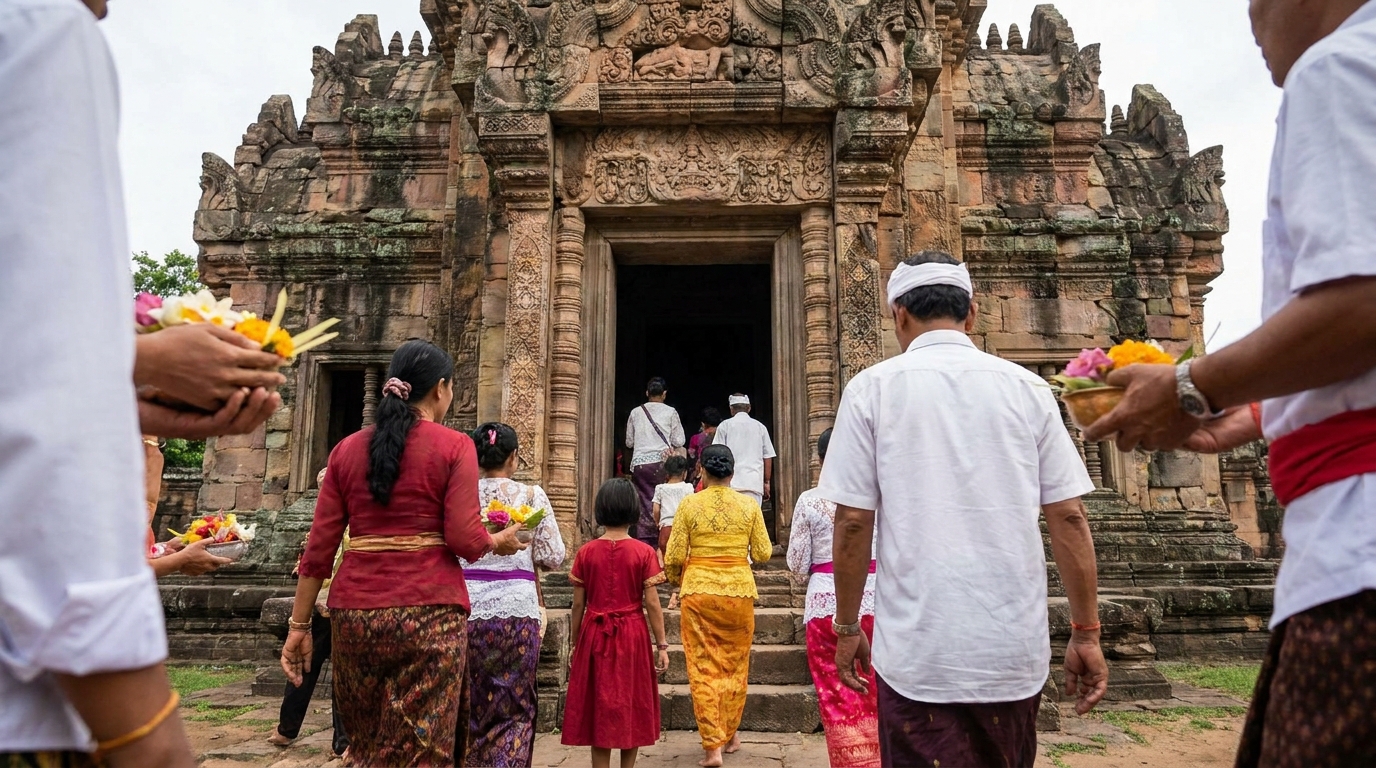
If you are visiting a Bhakti temple for the first time, please know that you are welcome. You do not need to be Hindu, Indian, vegetarian, spiritually advanced, or familiar with Sanskrit. Bhakti Yoga is a path of the heart. Sincerity matters more than external identity.
Many people come to the temple from different religious backgrounds, or with no religious background at all. Some come with deep faith. Some come with questions. Some come because they are searching for peace. All are welcome.
At a Bhakti temple, you may be greeted with kindness, offered a place to sit, invited to join chanting, or welcomed to enjoy a vegetarian meal called prasadam. The word prasadam means “mercy” or “grace.” It refers to food that has been lovingly offered to God and then shared with others.
The Temple Room
The main worship space is often called the temple room. This is where people gather for chanting, prayer, scripture classes, and ceremonies. You may see beautiful forms of the Divine on the altar. In Bhakti Yoga, these sacred forms are called Deities or murtis. They are not viewed as idols, but as merciful manifestations of God who accepts our loving service through a visible form.
Just as a photo of a loved one can awaken affection, the Deity helps devotees focus their love and service on God personally. The altar may include forms of Krishna, Radha, Rama, Sita, Narasimha, Chaitanya Mahaprabhu, or other sacred personalities in the Bhakti tradition.
Chanting and Kirtan
One of the most joyful parts of Bhakti temple life is kirtan, the congregational chanting of God’s holy names. Kirtan usually includes call-and-response singing, drums, hand cymbals, and heartfelt participation.
The most well-known mantra in the Bhakti tradition is the Hare Krishna maha-mantra:
Hare Krishna, Hare Krishna, Krishna Krishna, Hare Hare
Hare Rama, Hare Rama, Rama Rama, Hare Hare
The word mantra means a sacred sound that frees the mind. Hare calls upon the divine energy of the Lord. Krishna means “the all-attractive one.” Rama means “the source of spiritual joy.” Chanting is a prayer: “O Lord, O divine energy of the Lord, please engage me in Your loving service.”
You do not need a trained voice to chant. You only need a willing heart. In Bhakti Yoga, sacred sound is powerful because God is present in His names.
Scripture and Discussion
Many temple programs include a talk or discussion from sacred texts such as the Bhagavad-gita or Srimad Bhagavatam. These teachings are meant to be practical. They help us understand the soul, karma, devotion, humility, discipline, compassion, and our relationship with God.
The Sanskrit word shastra means scripture or sacred wisdom. Shastra is like a lamp in a dark room. It helps us see ourselves and our choices more clearly.
A good temple class should not make people feel judged or excluded. It should encourage sincere spiritual growth and help us apply wisdom in daily life.
Check out our latest articles at https://thebhaktihouse.org/blog.
How to Prepare for Temple Attendance
Come with an Open Heart
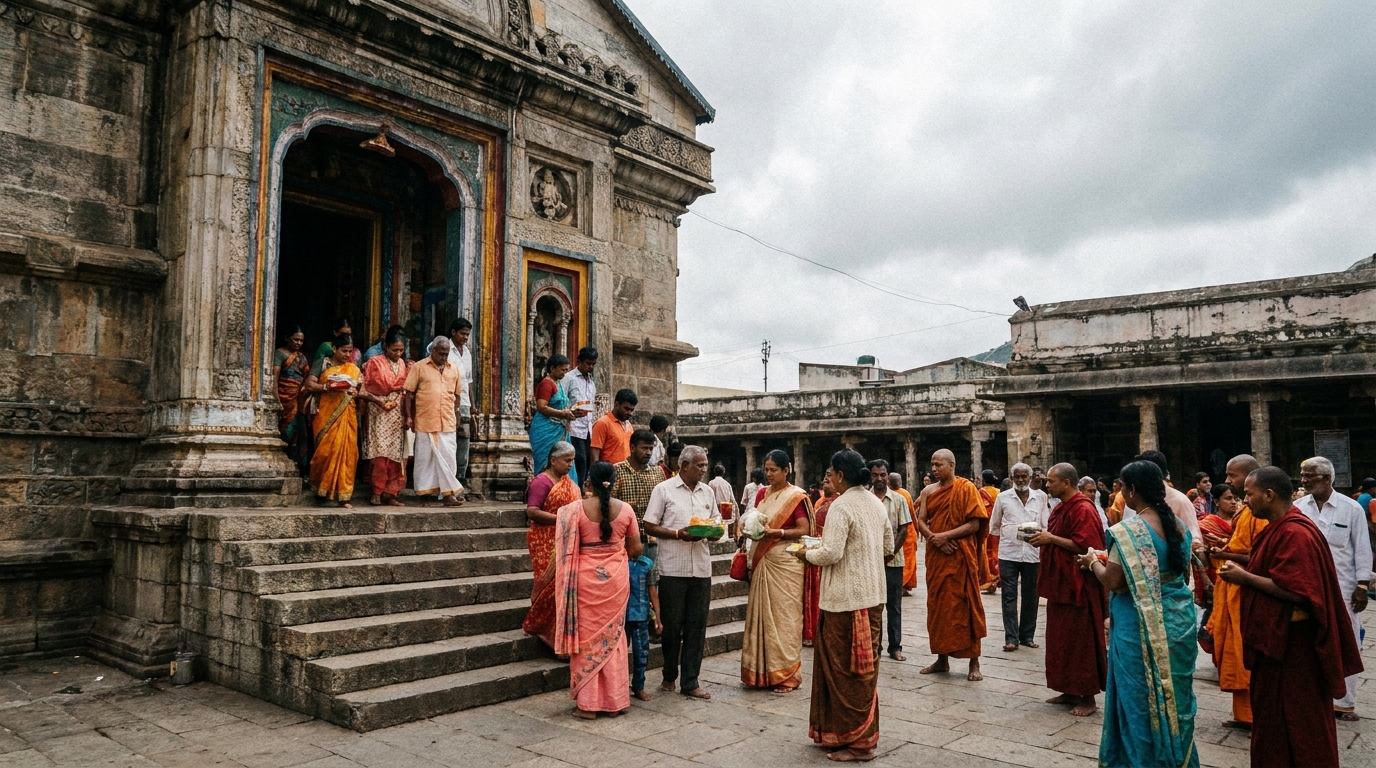
The best preparation for temple attendance is simple: come with openness. You may not understand everything at first, and that is okay. Spiritual life unfolds gradually.
You can offer a quiet prayer before arriving: “Dear God, please help me receive what is good for my soul.” This small prayer can make the visit meaningful.
Bhakti Yoga does not ask us to pretend. If you feel uncertain, bring that uncertainty honestly. If you feel devotion, bring that devotion. If you feel tired, bring your tired heart. God meets us where we are.
Dress Respectfully and Comfortably
Many temples encourage modest, respectful clothing. This does not mean you need special garments. Clean, comfortable clothing is usually enough. Some people wear traditional devotional clothing, such as saris, kurtas, or dhotis, but visitors are not expected to do so.
You may be asked to remove your shoes before entering the temple room. This is a sign of respect and cleanliness. It also helps us remember that we are entering sacred space.
Learn Basic Etiquette
Temple etiquette is not meant to intimidate anyone. It simply helps create an atmosphere of respect and devotion.
Some basic guidelines include:
- Remove shoes where requested.
- Speak softly in the temple room.
- Avoid pointing your feet toward the altar or sacred objects.
- Turn off or silence your phone.
- Ask before taking photos.
- Receive prasadam respectfully.
- If unsure about anything, kindly ask someone for guidance.
Most temple communities are happy to help newcomers. No one expects you to know everything.
Bring Your Questions
Questions are welcome in Bhakti Yoga. The Bhagavad-gita itself is a conversation between Krishna and Arjuna. Arjuna asks honest, heartfelt questions about duty, suffering, confusion, and surrender.
Krishna encourages inquiry with humility and service: “Approach a spiritual teacher, inquire submissively, and render service” (Bhagavad-gita 4.34). This means spiritual learning grows through respect, sincerity, and a willingness to practice.
If something is unfamiliar, ask gently. Temple attendance becomes deeper when we engage thoughtfully.
The Spiritual Practices You May Experience
Darshan: Seeing and Being Seen
One important practice in temple attendance is darshan. The word darshan means “sacred seeing.” When devotees come before the Deity, they do not simply look at God. They also understand that God is looking at them with compassion.
Darshan is a quiet exchange of love. You may stand or sit before the altar, offer prayers, bow, or simply observe. Even if your mind is restless, you can offer your presence.
A simple prayer during darshan might be: “My Lord, please help me remember You. Please guide my heart.”
Arati: Offering of Light
An arati is a worship ceremony in which offerings such as incense, lamps, water, cloth, flowers, and fans are presented to the Deity. These offerings symbolize the devotee’s desire to serve God with all elements of life.
During arati, people often sing, clap, bow, and watch as the lamp is offered. The lamp represents light, devotion, and the soul’s longing to be connected with the Divine.
At the end of the ceremony, the lamp may be brought to the congregation. People often place their hands over the flame and touch their hands to their head, receiving the blessing.
Japa: Personal Mantra Meditation
While kirtan is group chanting, japa is personal mantra meditation. Devotees often chant the Hare Krishna maha-mantra softly on beads called japa mala. A mala usually has 108 beads, and each bead is used to chant the mantra once.
Japa helps train the mind to rest in sacred sound. It is both simple and profound. You can begin with a few minutes a day. The goal is not mechanical repetition, but prayerful attention.
Temple attendance can inspire and support a daily chanting practice at home.
Seva: Loving Service
The Sanskrit word seva means service. In Bhakti Yoga, service is not just volunteering; it is a loving offering to God and His children.
At the temple, seva may include cooking, cleaning, greeting guests, singing, playing instruments, gardening, teaching children, helping with festivals, distributing prasadam, or supporting community outreach.
No service is small when offered with love. Sweeping the floor, washing a pot, or offering a flower can become a sacred act. Krishna says in the Bhagavad-gita (9.26), “If one offers Me with love and devotion a leaf, a flower, fruit, or water, I will accept it.” The key is love.
Benefits of Regular Temple Attendance
A More Peaceful Mind
Regular temple attendance can bring steadiness to the mind. The sacred routine—chanting, hearing, praying, serving—helps redirect our thoughts from anxiety toward trust in God.
This does not mean life becomes free from challenges. Rather, we gain spiritual strength to face challenges with more patience and faith.
The holy names, especially when chanted regularly, cleanse the heart and calm the mind. Many people find that kirtan helps them release emotional heaviness and reconnect with hope.
Deeper Faith and Understanding
Faith grows through experience. When we attend the temple regularly, we begin to see how spiritual practices affect our character and choices. We may become more compassionate, less reactive, more grateful, and more aware of God’s presence.
Scriptural teachings also become clearer over time. What first seemed unfamiliar may gradually become deeply meaningful.
Bhakti is not blind belief. It is a living practice. We hear, chant, reflect, serve, and notice how the heart changes.
Supportive Community
The temple can become a spiritual family. In a healthy devotional community, people encourage one another to grow, forgive, serve, and remember God. We celebrate together, grieve together, learn together, and support one another.
Community is especially important because spiritual life can be difficult alone. We all need reminders. We all need encouragement. We all need examples of devotion.
A Life of Service
Temple attendance naturally opens the heart toward service. As we receive spiritual nourishment, we feel inspired to share it. This may mean helping at the temple, feeding others, caring for the environment, supporting families, visiting the sick, or simply becoming kinder in daily interactions.
Bhakti Yoga teaches that every person is a beloved child of God. When we serve others with this vision, our lives become more meaningful.
Common Questions About Temple Attendance
Do I Need to Know Sanskrit?
No. You do not need to know Sanskrit to attend the temple or practice Bhakti Yoga. Many mantras, songs, and scriptures include Sanskrit, but their meanings can be explained simply.
Sanskrit is a sacred language with deep spiritual power, but devotion is not limited by language. God understands the heart. If you chant sincerely, pray in your own words, or simply listen with respect, your offering is meaningful.
Can I Attend If I Follow Another Faith?
Yes. People from all religious and spiritual backgrounds are welcome. Bhakti Yoga is centered on love for God, and many visitors find that temple attendance deepens their own prayer life and reverence for the Divine.
You do not have to abandon your background to appreciate chanting, service, sacred food, or teachings about the soul. The temple is a place for sincere seekers.
Is There a Cost to Attend?
Most temple programs are free and open to the public. Donations may be accepted to support the temple, meals, festivals, and outreach, but sincere attendance does not depend on money.
In Bhakti culture, giving is considered sacred, but it should be voluntary and heartfelt. Even offering your time, attention, or service is valuable.
What If I Feel Nervous or Out of Place?
This is very natural. Many people feel nervous the first time they visit a temple. The music, rituals, clothing, language, or altar may be unfamiliar.
Try not to judge yourself. Sit quietly, observe, and participate as much as you feel comfortable. If you meet someone kind, let them know it is your first visit. Most devotees will be happy to explain what is happening.
Remember: the temple is not only for those who already know. It is also for those who are beginning.
How to Make Temple Attendance Part of Your Life
Start Small and Be Consistent
You do not need to attend every program right away. Start with one visit. Then perhaps attend once a month, once a week, or on special festival days.
Spiritual growth is nourished by consistency. A small sincere habit is better than a big plan that becomes overwhelming.
You might begin by attending Sunday kirtan and feast, joining a scripture discussion, or coming for a morning or evening arati.
Connect Temple Practice with Home Practice
Temple attendance becomes even more powerful when it inspires home practice. You can create a small sacred space at home with a picture of Krishna, a candle, flowers, or scripture.
Simple daily practices may include:
- Chanting the Hare Krishna mantra for a few minutes.
- Reading a verse from the Bhagavad-gita.
- Offering your food to God before eating.
- Saying a morning or evening prayer.
- Practicing gratitude.
- Doing one act of service with devotion.
Bhakti is not limited to the temple. The temple teaches us how to bring devotion into every part of life.
Attend Festivals
Bhakti temples often celebrate beautiful festivals throughout the year. These may include Janmashtami, the appearance day of Lord Krishna; Gaura Purnima, honoring Sri Chaitanya Mahaprabhu; Rama Navami, honoring Lord Rama; and Radhastami, honoring Srimati Radharani, the personification of divine love.
Festivals are joyful opportunities to experience kirtan, drama, philosophy, worship, prasadam, and community. They are also a wonderful way to invite friends and family.
Find a Mentor or Spiritual Friend
As you continue attending, you may feel drawn to ask deeper questions. A mentor or spiritual friend can help you understand practices, scriptures, and personal challenges.
In Bhakti Yoga, guidance is important, but it should be offered with humility, kindness, and respect for your journey. A genuine guide helps you come closer to God, not become dependent on them.
Spiritual friendship is one of the treasures of temple life.
Temple Attendance and Inner Transformation
From Visiting to Belonging
At first, temple attendance may feel like visiting a new place. Over time, it may begin to feel like coming home. This is not only because of the people or the building, but because the soul recognizes the atmosphere of devotion.
We are all longing for love that does not fade, truth that does not change, and shelter that does not disappoint. Bhakti Yoga teaches that this longing is ultimately a longing for God.
The temple gently points us toward that eternal relationship.
Becoming More Humble and Compassionate
True temple attendance is not measured only by how often we come, but by how our hearts change. Are we becoming more patient? More forgiving? More grateful? More willing to serve?
Sri Chaitanya Mahaprabhu, the great teacher of the holy name, offered a beautiful instruction: one should chant the names of God with humility, tolerance, and respect for others. This is the mood that allows devotion to grow.
If temple attendance makes us proud, we have missed the essence. If it helps us become humble servants, then we are receiving its real gift.
Seeing All of Life as Sacred
As our practice matures, we begin to see that temple attendance trains us to live devotionally everywhere. Work can become service. Family life can become service. Cooking can become offering. Speech can become prayer. Music can become kirtan. Challenges can become opportunities to depend on God.
The temple is like a school of love. We learn there, and then we practice everywhere.
Practical Tips for a Meaningful Temple Visit
Arrive a Little Early
Arriving early allows you to settle your mind, remove shoes, find a place to sit, and observe the atmosphere. Rushing can make it harder to feel present.
A few quiet moments before the program can help you enter with prayerfulness.
Participate at Your Own Pace
You may chant, clap, bow, stand, sit, or simply listen. Participation is encouraged, but it should be sincere. Do not feel pressured to imitate everything immediately.
Bhakti grows naturally when nourished with respect and joy.
Receive Prasadam with Gratitude
If prasadam is served, receive it as a blessing. Since the food has been offered to God, devotees honor it with gratitude. Prasadam is considered spiritually purifying and is often one of the most beloved parts of temple life.
If you have dietary needs, kindly ask what ingredients are included.
Offer a Small Service
If you feel comfortable, ask if there is a simple way to help. You might assist with cleaning, serving food, arranging chairs, or welcoming guests.
Service helps us move from being observers to becoming part of the devotional offering.
Reflect Afterward
After your visit, take a few minutes to reflect. What touched your heart? What questions came up? Did you feel peace, curiosity, joy, or resistance?
All of these can be part of spiritual growth. You may want to write a few thoughts in a journal or speak with a trusted devotee.
The Heart of Temple Attendance
Temple attendance is ultimately about relationship. It is about remembering that God is not distant, and that we are not forgotten. It is about stepping into sacred sound, sacred service, and sacred community so the heart can awaken.
In Bhakti Yoga, we do not come to the temple to prove our worth. We come because we are loved by God and invited to love in return. We come with our strengths and struggles, our faith and doubts, our gratitude and our wounds. And gradually, through chanting, prayer, service, scripture, and association, the heart becomes softer, clearer, and more devoted.
Whether you are visiting for the first time or returning after many years, please know that your sincere step matters. Krishna sees the heart. A single prayer, one mantra, one act of service, one moment of humility can open the door to deep spiritual growth.
Everyone is welcome to take one sincere step toward God. Come as you are, bring your heart, and let devotion gently lead you home.
FAQs
What is temple attendance?
Temple attendance refers to the act of visiting and participating in religious activities at a temple or place of worship. It is a common practice in many religious traditions around the world.
Why is temple attendance important?
Temple attendance is important for many people as it provides a sense of community, spiritual connection, and the opportunity to participate in religious rituals and ceremonies. It can also be a way to seek guidance, find peace, and connect with a higher power.
What are the common practices during temple attendance?
Common practices during temple attendance may include prayer, meditation, singing hymns or chants, listening to sermons or teachings, making offerings, and participating in religious ceremonies or rituals specific to the particular faith tradition.
How often should one attend the temple?
The frequency of temple attendance varies depending on individual beliefs and religious traditions. Some people may attend the temple daily, while others may go weekly, monthly, or on special religious holidays and occasions.
Are there any specific guidelines or etiquette for temple attendance?
Specific guidelines and etiquette for temple attendance may vary by religious tradition, but common practices include dressing modestly, removing shoes before entering certain areas, showing respect for sacred objects and spaces, and following any specific rituals or customs observed by the particular faith community.

