

Scriptural hearing is the sacred practice of listening to spiritual wisdom with humility, attention, and an open heart.
In Bhakti Yoga, this practice is called śravaṇam—a Sanskrit word that simply means “hearing” or “listening.” But śravaṇam is more than receiving information. It is the art of allowing divine truth to enter the heart and gently transform how we see ourselves, others, and God.
Many of us are used to listening with the mind. We analyze, compare, agree, disagree, and move on. Scriptural hearing invites something deeper. It asks us to listen not only for knowledge, but for relationship. We listen because we want to remember the soul. We listen because we want to reconnect with the Supreme. We listen because the heart is hungry for something eternal.
In the Bhakti tradition, hearing is one of the most important spiritual practices. Before we can chant sincerely, pray deeply, or serve lovingly, we need to hear. We need to receive. We need to let sacred sound awaken what is already within us.
The Śrīmad-Bhāgavatam, one of the central scriptures of Bhakti Yoga, describes hearing about God as a purifying practice. It teaches that when we regularly hear divine wisdom, the heart becomes cleansed of confusion, fear, and selfish desire. This does not happen in a harsh or forced way. It happens gently, like sunlight entering a room that has been dark for a long time.
Scriptural hearing is not only for scholars, monks, or people born into a particular culture. It is for everyone. Whether you are new to spiritual life, returning after many years, or already walking a devotional path, listening with the heart can become a doorway to peace, clarity, and love.
Hearing as a Path of Love
Bhakti Yoga means the yoga of devotion, or the path of loving relationship with God. The word bhakti means devotion, love, or heartfelt service. Unlike paths that focus mainly on physical postures, intellectual study, or meditation techniques, Bhakti centers on the heart.
Scriptural hearing is one of the ways love grows.
When we hear about the qualities of the Divine—God’s compassion, beauty, kindness, playfulness, wisdom, and care for every living being—our hearts begin to soften. We start to feel that spiritual life is not only about rules or discipline. It is about coming home to a relationship that has always been waiting for us.
Listening to Remember Who We Are
The Bhakti scriptures teach that we are not merely bodies, minds, jobs, roles, or histories. We are ātman, eternal souls. The word ātman means the true self—the spiritual being within the body.
This is a simple but life-changing truth.
When we hear again and again that we are spiritual by nature, we begin to live differently. We may still have responsibilities, emotions, and struggles, but we start to see them from a higher perspective. We are not reduced to our anxiety. We are not defined by our failures. We are not alone in the universe.
In the Bhagavad-gītā, Śrī Krishna explains that the soul is eternal and cannot be destroyed by the changes of the body. Hearing this teaching can bring great comfort. It reminds us that beneath all change, there is something sacred and lasting within us.
Listening to Remember God
In Bhakti Yoga, God is not understood as distant or impersonal. God is the Supreme Person, full of love, beauty, intelligence, and compassion. Krishna, a Sanskrit name for God, means “the all-attractive one.”
When we hear about Krishna, or God, from scripture and from sincere practitioners, remembrance awakens. We may not immediately understand everything. We may have questions, doubts, or different language for the Divine. That is completely welcome. Bhakti does not demand that we pretend.
Instead, the invitation is simple: listen sincerely.
A sincere listener gradually begins to feel that God is near. Not only in temples, churches, mosques, forests, or sacred places, but also in the quiet chambers of the heart.
Why Listening with the Heart Matters
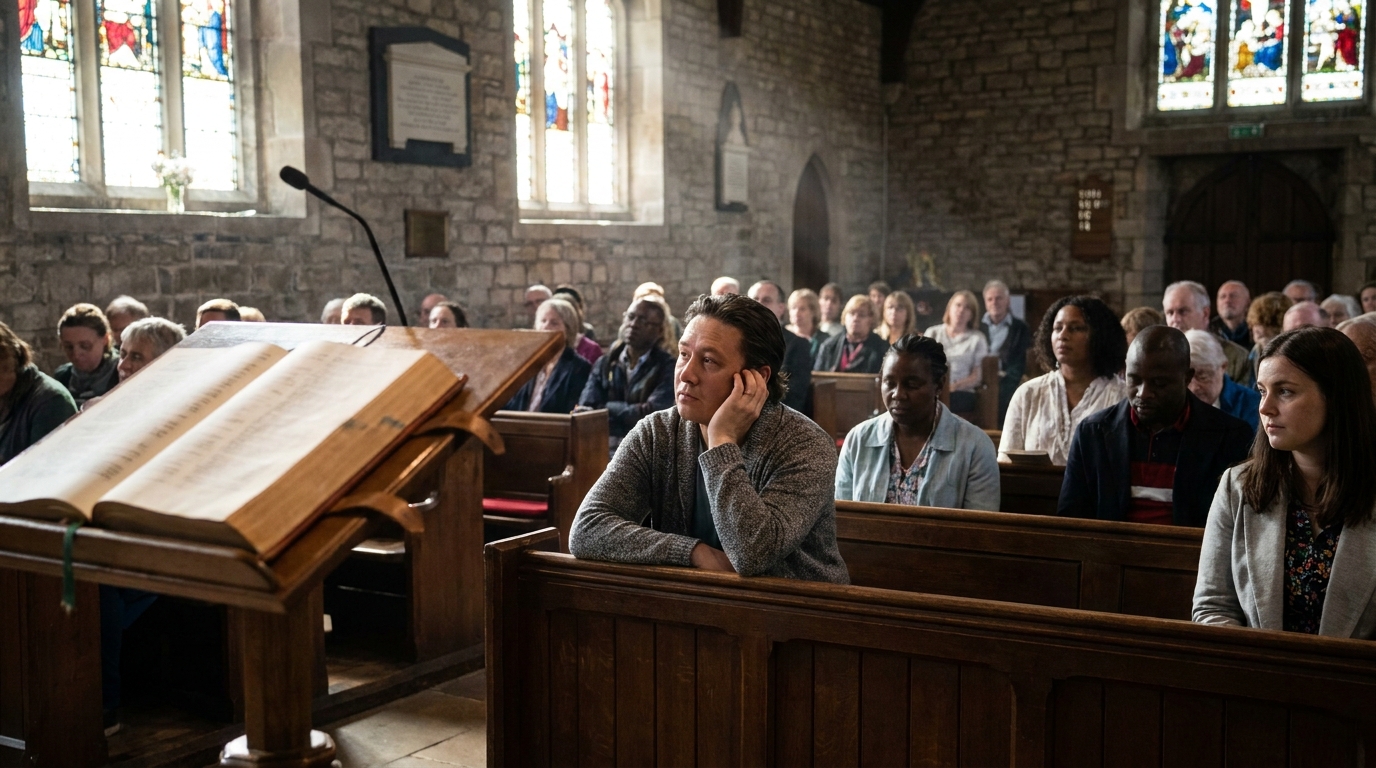
We live in a noisy world. Information is everywhere. We hear news, opinions, advertisements, songs, conversations, and inner worries all day long. Our minds become crowded. Our hearts become tired.
Scriptural hearing gives the soul nourishing sound.
Sacred sound is different from ordinary sound because it carries spiritual intention and divine presence. In Bhakti Yoga, scriptures are not seen as merely historical or philosophical documents. They are living wisdom. When approached with humility, they speak to us personally.
The Difference Between Hearing and Consuming
Modern culture often trains us to consume content quickly. We scroll, skim, react, and move on. But scripture asks us to slow down.
Listening with the heart means we are not trying to collect spiritual facts to feel superior. We are not listening just to win debates or decorate the mind. We are listening to be changed.
A humble listener may ask:
- What is God teaching me through this?
- How can I become more loving?
- Where is my heart closed?
- What quality can I practice today?
- How can I serve?
This kind of hearing becomes a spiritual mirror. It helps us see both our beauty and our growing edges. It does not shame us. It invites us closer.
Hearing Softens the Heart
The Bhakti tradition often speaks about the heart becoming softened. A hard heart is not an evil heart. Often, it is a wounded heart. It may be protected by fear, disappointment, pride, or exhaustion.
Sacred hearing gradually softens these coverings.
When we hear about saints who forgave, served, prayed, and loved through difficulty, we gain courage. When we hear about God’s mercy toward imperfect people, we gain hope. When we hear that every living being is beloved by the Divine, we begin to treat others with more care.
This is why scriptural hearing is practical. It is not only something we do in a class or temple room. It changes how we speak to our family, how we respond to stress, how we use our time, and how we view the people we meet.
Check out our latest posts at https://thebhaktihouse.org/blog.
The Scriptural Foundation of Hearing in Bhakti Yoga

Bhakti Yoga gives great importance to hearing because it is one of the primary ways devotion awakens. The scriptures repeatedly encourage us to hear from genuine sources and to keep divine wisdom close to our daily lives.
Śravaṇam: The First Practice of Devotion
In the Śrīmad-Bhāgavatam, Prahlāda Mahārāja, a young saint known for his deep devotion, lists nine practices of Bhakti. The first is śravaṇam, hearing. Then comes kīrtanam, chanting or glorifying God.
This order is meaningful.
We hear, and then we chant. We receive, and then we respond. We are nourished, and then we share. Hearing gives substance to our chanting and prayer. It gives direction to our service. It keeps spiritual life rooted in wisdom rather than sentiment alone.
The nine practices of Bhakti include hearing, chanting, remembering God, serving, worshiping, praying, becoming a servant, developing friendship with God, and offering everything. Each begins with a willingness to listen.
Bhagavad-gītā: Hearing from Krishna
The Bhagavad-gītā is a sacred conversation between Krishna and Arjuna. Arjuna is a warrior facing a heartbreaking moral crisis. He is confused, overwhelmed, and unsure of his duty. Rather than pretending to be strong, he turns to Krishna and says, in essence, “Please teach me.”
This is the beginning of true hearing.
Arjuna does not hear as a casual observer. He hears as someone who needs guidance. He hears with vulnerability. He hears because he wants to act rightly.
In our own lives, we may also come to scripture when we feel uncertain. We may ask:
- What should I do?
- How can I live with integrity?
- How do I face loss, fear, or change?
- How can I love God in the middle of ordinary life?
The Bhagavad-gītā meets us in these questions. Krishna’s teachings are profound, but they are also practical. He teaches about the soul, karma, devotion, meditation, discipline, and surrender. Most importantly, He invites Arjuna into loving trust.
Śrīmad-Bhāgavatam: Hearing the Stories of Divine Love
If the Bhagavad-gītā gives us foundational wisdom, the Śrīmad-Bhāgavatam draws us deeply into the beauty of divine relationship. It contains stories, prayers, teachings, and descriptions of Krishna and His devotees.
In Bhakti, stories are not childish or secondary. They are sacred vessels. Through them, we learn how love moves. We see devotion in parents, friends, servants, sages, children, queens, kings, and simple villagers. We see that God responds to the heart, not to external status.
Hearing these stories helps us understand that spiritual life is personal. God is not only a concept to be understood, but a beloved person to be loved.
How to Practice Scriptural Hearing in Daily Life
Scriptural hearing does not require a perfect schedule or a special qualification. It begins with sincerity. Even a few minutes of heartfelt listening can bring spiritual benefit.
The key is consistency and humility.
Begin with a Simple Prayer
Before reading or listening to scripture, pause for a moment. Offer a small prayer in your own words.
You might say:
“Dear God, please help me hear what my heart needs today. Please guide me toward love, truth, and service.”
Or:
“Krishna, please let this wisdom enter my heart. Help me live it with humility.”
Prayer prepares the heart. It shifts us from study mode into relationship. We are not just opening a book. We are opening ourselves.
Choose an Authentic Source
In Bhakti Yoga, hearing is most powerful when it comes through authentic scripture and sincere teachers who live with devotion. This does not mean a teacher must be perfect in a worldly sense, but they should be grounded in humility, service, and the teachings of the tradition.
Good places to begin include:
- The Bhagavad-gītā
- The Śrīmad-Bhāgavatam
- The Caitanya-caritāmṛta
- The songs and prayers of Bhakti saints
- Classes or discussions by sincere devotional practitioners
If you are new, do not worry about understanding everything at once. Let the teachings wash over you. Return to them again and again. Sacred wisdom often reveals itself gradually.
Listen in Community
One of the most beautiful ways to practice scriptural hearing is in satsanga. The word satsanga means “association with truth” or “spiritual company.” It refers to gathering with others who want to grow spiritually.
In community, we hear not only the scripture, but also how others are applying it. Someone may share a reflection that opens our heart. Someone may ask a question we were afraid to ask. Someone may speak from experience in a way that makes the teaching feel real.
At The Bhakti House, this spirit of shared hearing is central. People from different backgrounds, cultures, beliefs, and life experiences can sit together and receive wisdom. No one needs to have everything figured out. We come as we are, and we listen together.
Take One Teaching into the Day
After hearing scripture, choose one small teaching to carry with you.
For example:
- “I am not the body; I am the soul.”
- “Let me speak with kindness today.”
- “God is present in the heart of every being.”
- “I can offer my work as service.”
- “Let me remember Krishna before I react.”
This makes hearing practical. Rather than trying to absorb everything, we take one drop of nectar and let it nourish our actions.
Hearing and Chanting: Sacred Sound for the Heart
In Bhakti Yoga, hearing and chanting are deeply connected. We hear sacred sound, and we also participate in it through chanting.
The most widely known mantra in the Bhakti tradition is the mahā-mantra:
Hare Krishna Hare Krishna
Krishna Krishna Hare Hare
Hare Rama Hare Rama
Rama Rama Hare Hare
The word mantra means a sacred sound vibration that helps free the mind. The mahā-mantra is a prayer calling out to God and God’s divine energy. It asks to be engaged in loving service.
Chanting as Active Hearing
When we chant, we are also meant to hear. The practice is not only about saying the words. It is about listening to them.
This is why chanting can become meditation. The ears receive the sound, the mind becomes focused, and the heart becomes gradually purified.
If the mind wanders, that is normal. Gently return to the sound. There is no need for discouragement. Every sincere attempt counts. Bhakti is not mechanical perfection. It is loving effort.
Kīrtan: Hearing Together
Kīrtan means congregational chanting, often with music. It is a joyful and powerful form of devotional hearing. In kīrtan, one person leads the mantra, and others respond. This call-and-response creates a beautiful exchange.
Kīrtan welcomes everyone. You do not need to be a trained singer. You do not need to know Sanskrit. You can simply listen, hum, clap, or sit quietly. The sacred sound does its work.
Many people first experience Bhakti through kīrtan. They may not understand the philosophy yet, but they feel something soften. They feel peace, emotion, belonging, or relief. This is the heart recognizing spiritual sound.
Hearing the Holy Name in All Circumstances
The holy name refers to God’s names, which are understood in Bhakti to be spiritually present and powerful. Krishna’s name is not different from Krishna. This means chanting and hearing God’s names can bring us into direct contact with divine presence.
We can hear the holy name in a temple, at home, while walking, in the car, or quietly in the morning before the day begins. Even one sincere mantra can become a prayer.
Obstacles to Deep Hearing
Most of us face obstacles when trying to listen spiritually. This is not a sign of failure. It is part of the journey.
The heart has been listening to many things for many years—fear, ambition, comparison, grief, distraction. Learning to hear scripture deeply takes time and grace.
Distraction
The mind may wander. We may read a verse and realize we have no idea what we just read. We may listen to a class while thinking about messages, tasks, or worries.
When this happens, gently return. Do not scold yourself. Bhakti is a path of kindness. The practice is to come back again and again.
You can help your focus by:
- Turning off notifications
- Sitting in a clean, calm space
- Taking a few deep breaths before hearing
- Keeping a notebook nearby
- Listening at the same time each day
Small choices create sacred space.
Pride
Sometimes we hear scripture and immediately think of how it applies to someone else. “My partner needs to hear this.” “My friend should learn this.” “The world is full of people who do not understand.”
While it may be true that everyone can benefit from wisdom, scriptural hearing begins with ourselves.
A humble listener asks, “How is this for me?”
This does not mean we become self-critical. It means we become sincere. The teachings are not weapons for judging others. They are medicine for our own hearts.
Doubt
Doubt is not the enemy of spiritual life. Honest doubt can lead to deeper understanding when held with humility.
If something in scripture feels difficult, confusing, or unfamiliar, you can bring your questions forward. Speak with trusted practitioners. Read commentaries. Pray for understanding. Sometimes a teaching that feels distant at first becomes meaningful after time, experience, and guidance.
Bhakti welcomes sincere inquiry. Arjuna asked questions. The sages asked questions. The path grows through honest, respectful dialogue.
Listening That Becomes Service
True hearing naturally leads to service. If we hear deeply that every soul is beloved by God, we cannot remain indifferent to others. If we hear that our talents and time are gifts, we begin to ask how they can be offered.
In Sanskrit, loving service is called sevā. Sevā means service offered with devotion. It may be practical, simple, and humble. Cooking, cleaning, encouraging someone, helping in a spiritual community, caring for children, sharing food, offering music, listening to a friend—all can become sevā when offered with love.
From Inspiration to Action
After hearing scripture, it is helpful to ask:
“What is one loving action I can take today?”
Maybe the action is apologizing. Maybe it is chanting one round of japa, or prayer beads. Maybe it is cooking a meal and offering it to God. Maybe it is giving time to someone who is lonely. Maybe it is simply pausing before speaking harshly.
Spiritual hearing becomes real when it shapes our choices.
Seeing Others as Sacred
The Bhagavad-gītā teaches that a wise person sees all beings with equal vision. This does not mean we ignore differences or practical realities. It means we honor the soul within everyone.
When scripture enters the heart, we begin to see people less as obstacles and more as souls. The cashier, the child, the elder, the stranger, the person who disagrees with us—all are spiritual beings on a journey.
This vision is not always easy. It takes practice. But hearing sacred wisdom gives us the strength to try.
The Mood of Receiving
Scriptural hearing is not only about what we hear. It is also about the mood in which we hear.
The Bhakti tradition encourages us to hear with humility, gratitude, and longing. Humility does not mean thinking we are worthless. It means recognizing that divine wisdom is greater than our limited perspective. Gratitude means appreciating the opportunity to receive. Longing means allowing ourselves to desire real connection with God.
Hearing Like a Child
There is a beautiful simplicity in hearing like a child. A child may not understand every detail, but they can receive affection. In the same way, we may not grasp all the philosophy, Sanskrit terms, or scriptural context immediately. Still, we can receive the heart of the message.
God loves us. We are souls. Life has a sacred purpose. Chanting purifies the heart. Service brings joy. Love is the goal.
These truths are simple enough to begin with and deep enough to spend a lifetime exploring.
Hearing with Patience
Spiritual growth is organic. A seed does not become a tree overnight. If we water it regularly, protect it, and give it light, it grows.
Scriptural hearing is like watering the seed of devotion. In Bhakti teachings, this seed is called bhakti-latā-bīja, the seed of the creeper of devotion. Through hearing and chanting, that seed is nourished.
Some days we may feel inspired. Other days we may feel dry. Both are part of the path. The practice is to keep coming back with sincerity.
Bringing Scriptural Hearing into the Home
A home can become a sacred place through sound. Even if life is busy, even if the space is small, even if everyone in the household is not practicing in the same way, sacred hearing can gently uplift the atmosphere.
Morning Wisdom
The morning is a powerful time for spiritual hearing. Before the world’s noise enters, we can give the first moments to God.
This might look like:
- Reading one verse from the Bhagavad-gītā
- Listening to a short Bhakti class
- Chanting the mahā-mantra softly
- Offering a simple prayer
- Reflecting on one spiritual quality for the day
Even ten minutes can change the direction of the heart.
Family and Shared Hearing
If you have family or friends who are open, you can share a small passage together. Keep it simple and welcoming. Ask, “What stood out to you?” or “How could we practice this today?”
Children often respond beautifully to stories from scripture. They may ask honest questions and notice things adults overlook. Let the atmosphere be warm, not forced. The goal is not pressure. The goal is nourishment.
Sacred Sound in Ordinary Tasks
You can also hear while cooking, cleaning, driving, or walking. Playing kīrtan, lectures, or scripture readings can turn ordinary time into devotional time.
Of course, deep hearing requires attention, but even background sacred sound can uplift the mind. Over time, the heart begins to seek that sound naturally.
Hearing Through Difficulty
Sometimes the most important hearing happens when life feels painful. In grief, illness, uncertainty, or loneliness, scripture can become a companion.
This does not mean we use spiritual teachings to avoid our emotions. Bhakti is honest. Devotees cry, struggle, and pray. The scriptures are full of human emotion offered to God.
Scripture as Shelter
In difficult times, we may not be able to study deeply. We may only be able to hear one verse, one mantra, one prayer. That is enough.
The holy name can be held like a hand in the dark.
The Bhagavad-gītā can remind us that the soul is eternal.
The Śrīmad-Bhāgavatam can remind us that God is present even when life feels uncertain.
Sacred hearing does not always remove the storm immediately, but it gives shelter within the storm.
Letting the Heart Speak Back
After hearing, we can respond through prayer. Prayer is the heart speaking to God.
You do not need fancy words. You can say:
“I am tired. Please help me.”
“I do not understand, but I want to trust You.”
“Please guide me.”
“Please let me serve.”
This exchange—hearing and speaking, receiving and responding—is the living heart of Bhakti Yoga.
The Fruit of Listening with the Heart
What happens when we continue to hear sincerely?
Gradually, our values change. We become less attracted to things that leave us empty. We become more drawn to kindness, simplicity, devotion, and truth. We begin to feel that God is not an idea on the edge of life, but the center.
The fruit of scriptural hearing is not pride in knowing many verses. It is love.
More Peace
Hearing spiritual wisdom regularly helps the mind become steady. We remember that life has a higher purpose. We learn to pause before reacting. We learn that we are held by something greater than circumstance.
More Compassion
When scripture enters the heart, compassion grows. We see others as souls. We become more willing to forgive, serve, and understand.
More Devotion
Most importantly, hearing awakens devotion. We begin to want to remember God. We begin to enjoy chanting. We begin to feel grateful for the chance to serve. The heart slowly turns toward its eternal home.
A Simple Practice to Begin Today
If you would like to begin scriptural hearing, you can start very simply.
Choose one sacred text, such as the Bhagavad-gītā. Read or listen for ten minutes. Before beginning, offer a prayer. While hearing, do not rush. Afterward, write down one sentence that touched you. Then ask, “How can I live this today?”
You can also chant the mahā-mantra for a few minutes and listen carefully to the sound. Let the mantra be both prayer and shelter.
There is no need to compare your journey with anyone else’s. God sees sincerity. One honest moment of hearing can open a door.
Bhakti Yoga is a practical path of love—hearing, chanting, prayer, service, and spiritual growth. It meets us in real life, with our real questions and real hearts. Wherever you are coming from, whatever your background, you are welcome.
May we all learn to listen with the heart. May sacred wisdom soften us. May chanting awaken us. May service guide us. And may each of us take one sincere step toward God today.
FAQs
What is scriptural hearing?
Scriptural hearing refers to the act of listening to or reading passages from religious scriptures, such as the Bible, Quran, or other sacred texts, for the purpose of spiritual growth, guidance, and understanding.
Why is scriptural hearing important?
Scriptural hearing is important for individuals seeking spiritual nourishment, guidance, and wisdom from their respective religious texts. It is believed to provide insight, comfort, and direction for navigating life’s challenges and making moral and ethical decisions.
How is scriptural hearing practiced?
Scriptural hearing can be practiced individually through personal reading and reflection on religious texts, or in a communal setting such as during religious services, study groups, or prayer gatherings. It may involve listening to readings, recitations, or sermons based on the scriptures.
What are the benefits of scriptural hearing?
The benefits of scriptural hearing may include a deepened sense of spirituality, increased understanding of religious teachings, comfort in times of distress, guidance for moral decision-making, and a sense of connection to a higher power or community of believers.
Are there different approaches to scriptural hearing in different religions?
Yes, different religions have their own unique approaches to scriptural hearing. For example, in Christianity, scriptural hearing may involve reading the Bible, attending church services, and participating in Bible study groups. In Islam, scriptural hearing may involve recitation and memorization of the Quran, as well as listening to sermons and lectures based on its teachings.

