

The spiritual world is not a place of solitude. It is a world overflowing with relationships, intimacy, and love. And at the very heart of that world stands Śrīmatī Rādhārāṇī — the supreme embodiment of devotion, the eternal beloved of Lord Kṛṣṇa, and the source of all spiritual energy.
But Rādhā does not stand alone.
She is surrounded by an extraordinary inner circle of associates — devoted friends, confidantes, and servants whose lives revolve entirely around enhancing the divine love between Rādhā and Kṛṣṇa. These associates are not minor characters in the divine story. They are powerful spiritual personalities whose devotion is so deep, so selfless, that they experience a unique kind of bliss — the bliss of facilitating love rather than simply receiving it.
Understanding Rādhā’s inner circle is not just a theological exercise. It is a doorway into the deepest mysteries of Bhakti Yoga, and it reveals something beautiful about what devotion truly looks like when it reaches its highest expression.
Whether you are new to these teachings or have been walking the Bhakti path for years, we hope this exploration brings warmth, wonder, and inspiration to your heart.
Before we can appreciate the beauty of Rādhā’s inner circle, it helps to understand who She is.
In the Bhakti tradition, Śrīmatī Rādhārāṇī is understood as the hlādinī-śakti — the pleasure potency of the Supreme Lord, Kṛṣṇa. This means She is the very energy of divine love and bliss. She is not separate from Kṛṣṇa but is His most intimate counterpart, the one whose love gives Him the greatest joy.
Śrīla Prabhupāda, the founder of the International Society for Krishna Consciousness, beautifully explains:
“Rādhārāṇī is the central figure for all the goddesses of fortune. She possesses all attractiveness to attract the all-attractive Personality of Godhead. She is the primeval internal potency of the Lord.” (Caitanya-caritāmṛta, Ādi 4.83, purport)
Now, divine love is never static. It is dynamic, playful, and ever-expanding. For that love to be expressed in its fullest variety, Rādhā is surrounded by countless associates who each serve a unique role in the divine pastimes (līlās) of Vṛndāvana, the spiritual realm. These associates expand from Her own being, carrying aspects of Her devotion into countless forms of loving service.
Think of it this way: love naturally wants to be shared, celebrated, and multiplied. Rādhā’s associates are the living expression of that principle.
The Aṣṭa-Sakhīs: Rādhā’s Eight Principal Gopī Friends
Who Are the Aṣṭa-Sakhīs?
Among Rādhā’s countless associates, eight gopīs (cowherd maidens) hold the most prominent positions. They are known as the Aṣṭa-Sakhīs, or the eight principal friends of Rādhā. Their names are:
- Lalitā Devī
- Viśākhā Devī
- Citrā Devī
- Campakalatā Devī
- Tuṅgavidyā Devī
- Indulekhā Devī
- Raṅgadevī
- Sudevī
Each of these sakhīs has a distinct personality, appearance, temperament, and specialty in serving the divine couple. Some are bold and witty, others are gentle and artistic. Some excel in cooking, others in music, and still others in arranging secret meeting places for Rādhā and Kṛṣṇa.
Lalitā and Viśākhā: The Foremost Among Friends
Of the eight, Lalitā Devī and Viśākhā Devī are considered the closest to Rādhārāṇī.
Lalitā Devī is fiercely protective of Rādhā. She is bold, outspoken, and never hesitates to challenge even Kṛṣṇa Himself if she feels Rādhā’s honor is at stake. Her love for Rādhā is so intense that she would rather see Kṛṣṇa wait than see Rādhā experience even a moment of neglect.
Viśākhā Devī is Rādhā’s most intimate confidante. She shares the same birth star as Rādhā, and their bond is described as being like one soul in two bodies. Viśākhā understands every nuance of Rādhā’s heart and is the gentle counselor who soothes Rādhā’s emotions during the intense waves of divine love.
These friends are not passive observers. They are active participants in the most intimate exchanges of love in all of creation.
What the Sakhīs Teach Us About Spiritual Friendship
For those of us walking the Bhakti path, the Aṣṭa-Sakhīs offer a profound teaching: spiritual friendship is one of the greatest gifts on the journey of devotion.
We are not meant to practice Bhakti in isolation. We need friends who encourage our devotion, who hold us accountable in love, and who celebrate our relationship with the Divine. The sakhīs show us that serving the love between the soul and God is itself a form of the highest spiritual attainment.
As Śrīla Prabhupāda writes:
“The gopīs are the most perfect example of pure devotional service. They have no desire for their own satisfaction. They simply want to see Kṛṣṇa happy.” (Kṛṣṇa, The Supreme Personality of Godhead, Chapter 31)
The Mañjarīs: Rādhā’s Most Intimate Maidservants

A Love Even More Intimate Than Friendship
Beyond the sakhīs, there exists an even more intimate group of associates known as the mañjarīs. The word mañjarī means “blossom” or “bud,” and these young maidservants of Rādhā are considered to be the very buds of Her love.
The mañjarīs are unique because their devotion is directed entirely through Rādhā, toward Her pleasure. They don’t seek a direct relationship with Kṛṣṇa for themselves. Instead, their greatest joy comes from serving Rādhā and witnessing Her happiness when She is with Kṛṣṇa.
This might seem unusual at first, but it reveals one of the deepest secrets of Bhakti: the highest love is the love that serves love itself.
Rūpa Mañjarī and Rati Mañjarī
Two of the most celebrated mañjarīs are Rūpa Mañjarī and Rati Mañjarī, who are understood to be the eternal spiritual identities of two of the greatest Bhakti teachers in history — Śrīla Rūpa Gosvāmī and Śrīla Raghunātha dāsa Gosvāmī.
Śrīla Rūpa Gosvāmī, who appeared in the 16th century as a direct associate of Śrī Caitanya Mahāprabhu, systematically revealed the science of Bhakti Yoga in works like the Bhakti-rasāmṛta-sindhu (The Nectar of Devotion). His teachings are considered the foundation of the Gauḍīya Vaiṣṇava tradition.
In the Caitanya-caritāmṛta, Śrī Caitanya Mahāprabhu Himself acknowledges the unique position of Śrīla Rūpa Gosvāmī:
“Śrī Caitanya Mahāprabhu said, ‘Śrīla Rūpa Gosvāmī’s body is a storehouse of love of Godhead, and through him specific mercy is bestowed upon all the devotees.'” (Caitanya-caritāmṛta, Madhya 19.1, summary)
The mañjarī spirit teaches us that we don’t have to be the center of the spiritual story. There is immeasurable sweetness in being a humble servant of those who love God deeply.
Check out our website for more articles: more articles.
The Significance of Sevā: Service as the Heart of Rādhā’s Circle
What Does It Mean to Serve the Divine Couple?
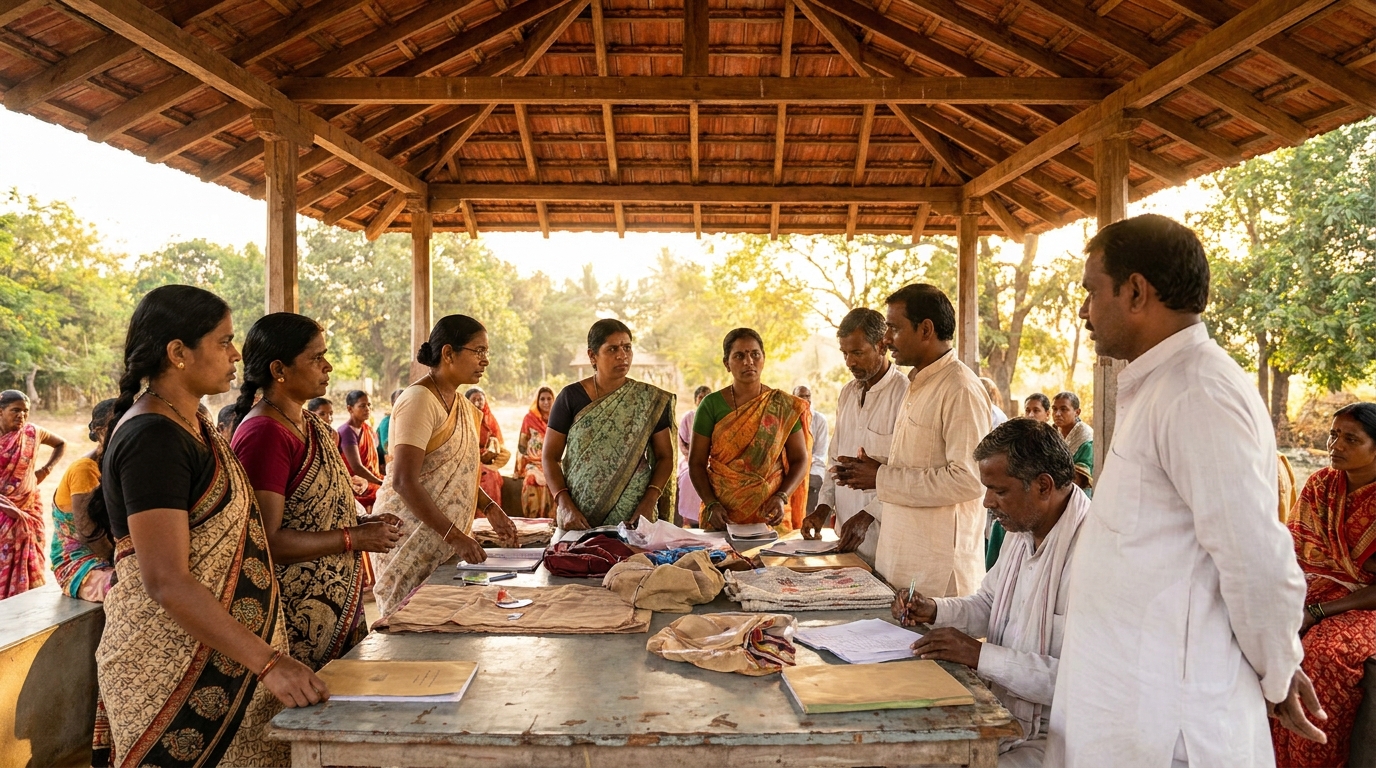
The word sevā means loving service, and it is the thread that connects every single one of Rādhā’s associates. Whether they are arranging garlands, preparing offerings of food, fanning the divine couple, singing songs, or carrying secret messages between Rādhā and Kṛṣṇa — every act is done with pure, selfless love.
In the Bhagavad-gītā, Lord Kṛṣṇa explains the essence of devotional service:
“If one offers Me with love and devotion a leaf, a flower, a fruit or water, I will accept it.” (Bhagavad-gītā 9.26)
This verse reminds us that it is not the grandeur of the offering that matters — it is the love behind it. Rādhā’s associates embody this principle perfectly. Their service is not about performing grand acts. It is about pouring every ounce of love into every small detail.
How Sevā Transforms Our Daily Lives
For us in this world, the spirit of sevā can transform even the most ordinary activities into acts of devotion. Cooking a meal with love and offering it to God, singing a simple prayer with sincerity, helping someone in need, tending a garden with gratitude — all of these become sacred when done in the spirit of the mañjarīs and sakhīs.
You don’t have to be in Vṛndāvana to serve the divine couple. You can bring Vṛndāvana into your kitchen, your workplace, your relationships, and your daily routines through the practice of conscious, loving service.
How Rādhā’s Associates Connect to Śrī Caitanya Mahāprabhu’s Mission
The Golden Avatāra and the Mood of Rādhā
One of the most beautiful teachings in the Bhakti tradition is that Śrī Caitanya Mahāprabhu — who appeared in Bengal, India, in 1486 — is Kṛṣṇa Himself, but appearing in the mood and golden complexion of Śrīmatī Rādhārāṇī. He came to experience and distribute the love that Rādhā feels for Kṛṣṇa.
The Caitanya-caritāmṛta reveals:
“Desiring to understand the glory of Rādhārāṇī’s love, the wonderful qualities in Him that She alone relishes through Her love, and the happiness She feels when She realizes the sweetness of His love, the Supreme Lord Hari, richly endowed with Her emotions, appeared from the womb of Śrīmatī Śacī-devī, as the moon appears from the ocean.” (Caitanya-caritāmṛta, Ādi 1.6)
The Associates Appear Again
When Śrī Caitanya Mahāprabhu descended, Rādhā’s associates came with Him. The Six Gosvāmīs of Vṛndāvana — Rūpa, Sanātana, Raghunātha Bhaṭṭa, Raghunātha dāsa, Gopāla Bhaṭṭa, and Jīva — are understood to be eternal associates of the divine couple who appeared to reveal the path of Bhakti to the world.
Śrī Caitanya Mahāprabhu’s movement of saṅkīrtana — the congregational chanting of the holy names, especially the Hare Kṛṣṇa mahā-mantra — is the most accessible way for all of us to enter into the mood of Rādhā’s associates:
**Hare Kṛṣṇa, Hare Kṛṣṇa, Kṛṣṇa Kṛṣṇa, Hare Hare
Hare Rāma, Hare Rāma, Rāma Rāma, Hare Hare**
When we chant “Hare,” we are calling out to Śrīmatī Rādhārāṇī (Harā), asking Her to engage us in the service of the Lord. Chanting itself is an act of entering Rādhā’s circle — humbly asking to be included in the flow of divine love.
Entering the Circle: How We Can Follow in the Footsteps of Rādhā’s Associates
Start Where You Are
You may be wondering, “This is all so elevated. How does someone like me connect to this?”
The beauty of Bhakti Yoga is that it meets you exactly where you are. You don’t need to be a scholar or a saint to begin. The very desire to love God, to serve, to chant, to pray — that desire itself is the seed of everything.
Śrīla Prabhupāda often emphasized this point with great compassion:
“The chanting of Hare Kṛṣṇa is open for everyone. There is no restriction. The process is simple, and the result is sublime.” (Lectures)
Practical Steps on the Path
Here are some simple, sincere steps you can take today to begin walking in the footsteps of Rādhā’s associates:
- Chant with love. Even a few minutes of chanting the Hare Kṛṣṇa mahā-mantra with attention and sincerity opens the heart.
- Serve others. Look for opportunities to serve the devotees of the Lord, your community, and those in need. Service is the language of the spiritual world.
- Read sacred texts. The Bhagavad-gītā, Śrīmad-Bhāgavatam, and Caitanya-caritāmṛta are like letters from the spiritual world. Even reading a single verse with devotion can change your day.
- Seek good company. Surround yourself with people who inspire your devotion. Spiritual friendship, as modeled by the sakhīs, accelerates our growth on the path.
- Offer what you have. A flower, a prayer, a song, a meal — offer it to Kṛṣṇa with love. The offering doesn’t have to be perfect. It just has to be sincere.
You Are Already Invited
Perhaps the most encouraging truth in all of this is that the invitation is already extended. Rādhā’s circle is not exclusive in the way the world understands exclusivity. It is exclusive only in the depth of love required — and even that love is a gift that comes by grace, not by our own effort alone.
Śrī Caitanya Mahāprabhu’s movement was founded on the principle that everyone is welcome. Regardless of your background, nationality, past mistakes, or current doubts — the door is open. The holy name is available. The path of loving service is waiting.
All it takes is one sincere step.
One sincere chant. One sincere prayer. One sincere act of service.
And in that one step, you may find that the inner circle of divine love has been gently drawing you closer all along.
We at The Bhakti House believe with all our hearts that you belong on this path. Wherever you are in your journey, please know that you are welcome here — and that the love of Rādhā and Kṛṣṇa is not far away. It is as close as your next heartfelt prayer.
Take that one step today. You will never regret it. 💙
FAQs
Who were Rādhā’s associates?
Rādhā’s associates were the female companions and friends who were closely associated with Rādhā, a central figure in Hindu mythology and the lover of the god Krishna. These associates played important roles in the various stories and legends surrounding Rādhā and Krishna.
What were the roles of Rādhā’s associates?
Rādhā’s associates served as her confidantes, companions, and supporters. They were often depicted as sharing in Rādhā’s love for Krishna and participating in the various adventures and romantic escapades associated with Rādhā and Krishna’s relationship.
How were Rādhā’s associates depicted in art and literature?
Rādhā’s associates were often depicted in Hindu art and literature as beautiful, devoted, and loyal women who were deeply connected to Rādhā and Krishna. They were portrayed as playing instruments, dancing, and engaging in various activities that celebrated their love for Krishna.
What are some of the names of Rādhā’s associates?
Some of the well-known names of Rādhā’s associates include Lalita, Vishakha, Chitra, Champakalata, Tungavidya, Indulekha, Rangadevi, and Sudevi. These names are often mentioned in the stories and poems that revolve around Rādhā and Krishna.
What is the significance of Rādhā’s associates in Hindu mythology?
Rādhā’s associates are significant in Hindu mythology as they represent the power of love, devotion, and friendship. Their unwavering support for Rādhā and their deep connection to Krishna symbolize the ideals of loyalty, companionship, and spiritual love in Hindu culture.

