
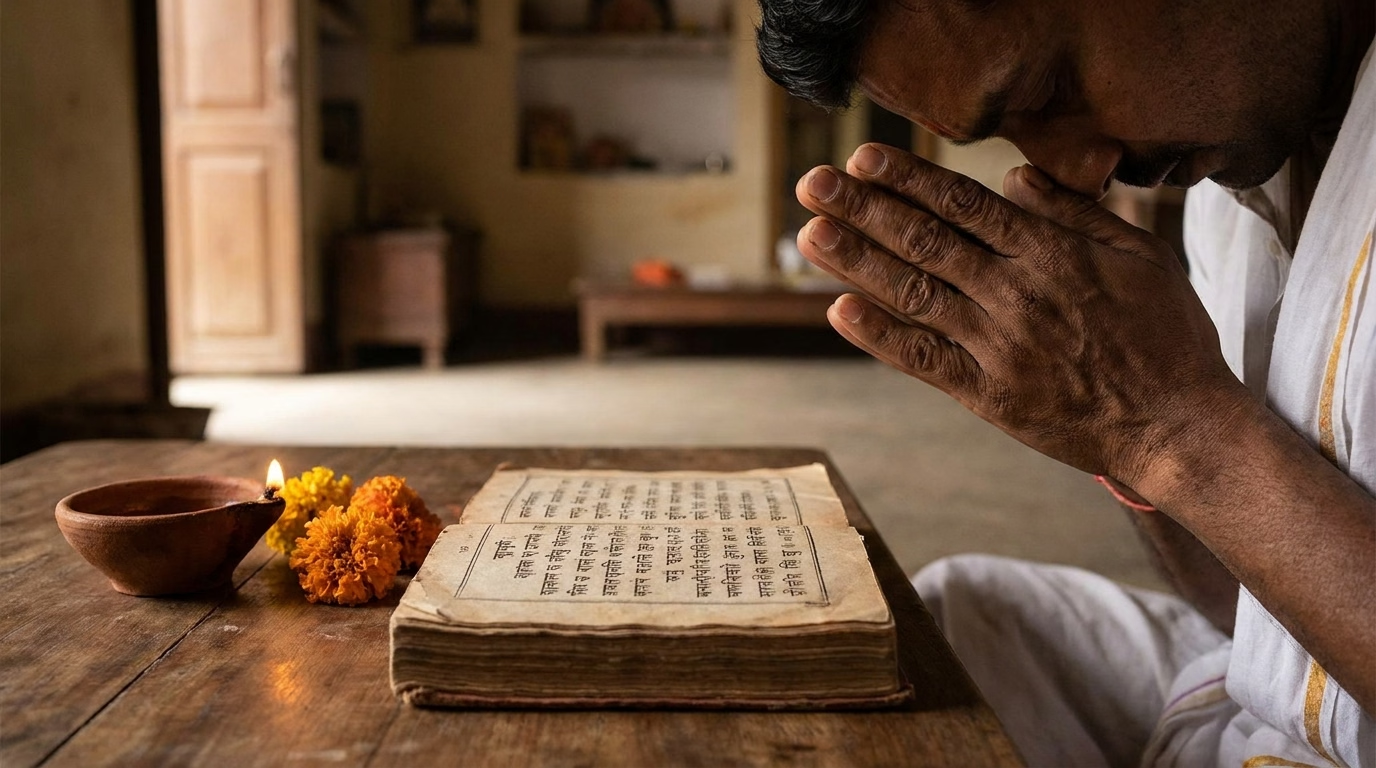
Understanding Pranam Mantra with a Humble Heart
A pranam mantra is a sacred prayer of offering respect. The word pranam comes from Sanskrit and means “bowing down,” “offering reverence,” or “honoring with humility.” A mantra is a sacred sound, prayer, or phrase that helps focus the heart and mind on the Divine.
So, a pranam mantra is a prayer we speak, chant, or meditate upon to offer respect—especially to God, the spiritual teacher, saints, scriptures, and devotees of the Lord.
In the Bhakti Yoga tradition, pranam is not only a physical act. It is a movement of the heart. When we offer pranam, we are saying, “I am not the center. I am a servant. I want to remember God. I want to live with gratitude, humility, and love.”
This practice is simple, but very deep. A child can offer pranam. A scholar can offer pranam. A beginner can offer pranam. A lifelong practitioner can offer pranam. It does not require wealth, status, or perfect knowledge. It requires sincerity.
At The Bhakti House, we welcome readers from all backgrounds—whether you are new to Sanskrit, new to prayer, returning to spiritual life, or already walking a devotional path. The pranam mantra is a beautiful doorway into Bhakti Yoga, the path of loving devotion to God.
Bhakti Yoga teaches that spiritual life is not only about information. It is about relationship. We learn to love, serve, chant, remember, and surrender to the Supreme Lord. Pranam mantras help us begin that relationship with respect.
What Does “Pranam Mantra” Mean?
To understand pranam mantra more clearly, let us gently look at its two main parts: pranam and mantra.
The Meaning of Pranam
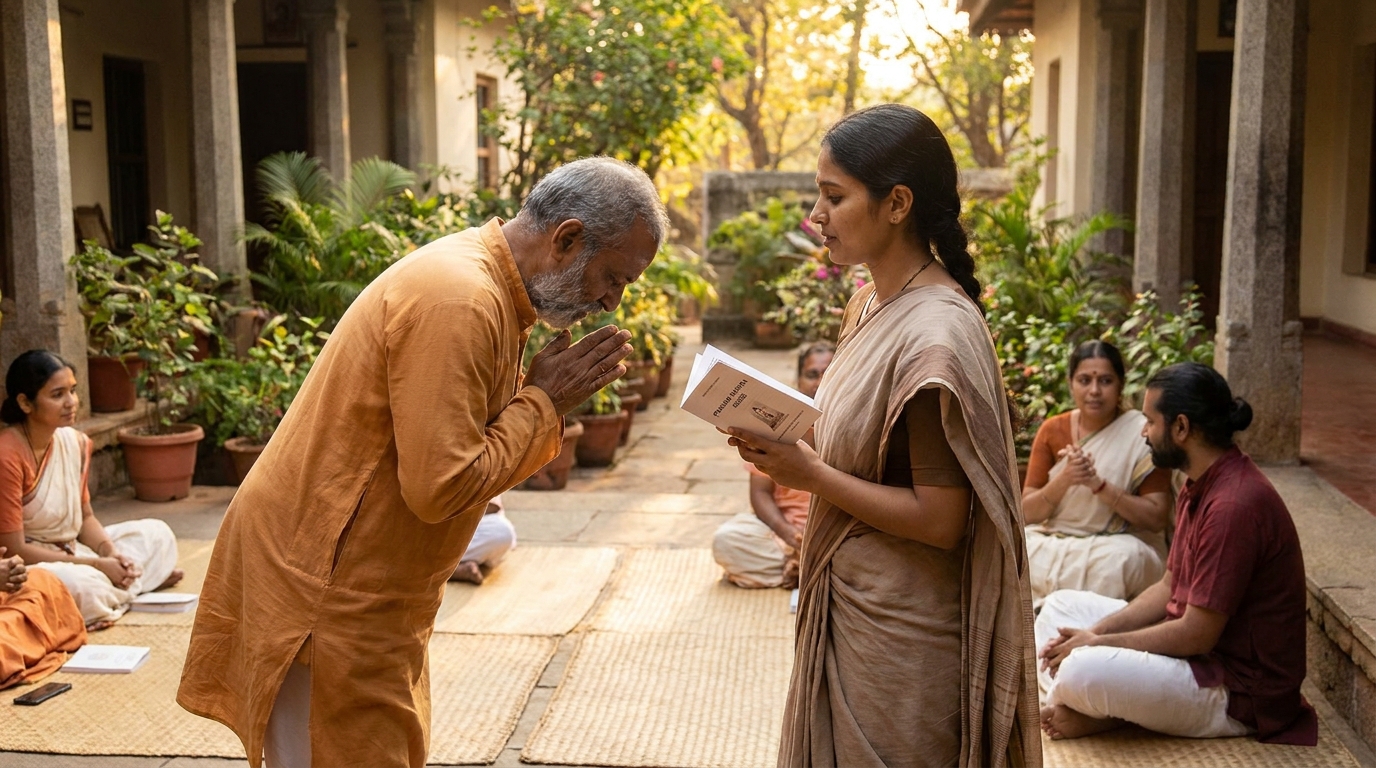
Pranam means to bow, to offer respect, or to place oneself in a humble position before someone worthy of honor. In many devotional traditions of India, offering pranam may include bowing the head, folding the palms, touching the ground, or fully prostrating the body.
But the outer gesture is meant to express an inner truth.
When we offer pranam, we acknowledge:
- God is greater than us.
- The soul is eternal and meant for loving service.
- Saints, teachers, and scriptures can guide us.
- We need grace.
- Humility opens the heart to spiritual growth.
In Sanskrit, another related word is namah, often translated as “I offer my respects” or “I bow down.” You may hear it in famous mantras such as Om Namo Bhagavate Vasudevaya, which means, “I offer my respectful obeisances to the Supreme Lord, Vasudeva,” a name of Krishna.
The Meaning of Mantra
The word mantra is often explained as that which protects or liberates the mind. “Man” refers to the mind, and “tra” suggests protection or deliverance. A mantra is not an ordinary sound. It is sacred sound received through spiritual tradition.
In Bhakti Yoga, mantras are not used merely for relaxation or personal success. They are used to awaken love for God.
A mantra may be:
- A prayer of praise
- A call to the Lord’s names
- A request for mercy
- A verse from scripture
- A prayer to the spiritual teacher or saintly devotees
A pranam mantra specifically expresses reverence. It helps us enter spiritual practice with the right mood: not pride, not control, not demand—but gratitude and surrender.
A Simple Definition
A pranam mantra is a devotional prayer used to offer humble respect to God, the guru, sacred scriptures, holy places, or devotees.
It is often recited before chanting, studying scripture, entering a temple, beginning worship, or receiving spiritual instruction.
Pranam mantras prepare the heart.
They remind us, “I am here to serve, to learn, to love, and to remember the Lord.”
Why Pranam Mantras Matter in Bhakti Yoga
Bhakti Yoga is the yoga of love and devotion. The Sanskrit word bhakti means loving service or devotion to the Supreme Person. It is a path of the heart, but it is also practical. We practice bhakti through chanting God’s names, offering prayers, serving others, hearing scripture, honoring sacred food, and remembering the Lord in daily life.
Pranam mantras are important because love begins with respect.
Humility Makes the Heart Receptive
In spiritual life, humility is not weakness. It is strength. It is the honest recognition that we are dependent on God’s grace.
The Bhagavad-gita teaches that spiritual knowledge begins with qualities like humility, nonviolence, tolerance, and simplicity. In Bhagavad-gita 13.8, humility is listed as the first quality of knowledge. This is very meaningful. Before we can truly receive divine wisdom, we must become willing to bow our ego.
A pranam mantra helps us practice humility every day.
We may not always feel humble. We may be busy, distracted, wounded, proud, or uncertain. Still, when we pause and offer pranam, even for a moment, we turn toward grace.
Respect Connects Us to a Living Tradition
Bhakti Yoga is passed down through parampara, which means a chain of spiritual teachers. This does not mean blind following. It means receiving wisdom from those who have practiced, realized, and lovingly shared the path before us.
When we chant pranam mantras to the spiritual teacher, to saints, or to the Lord, we remember that we are not inventing spiritual life alone. We are entering a sacred river that has been flowing for thousands of years.
The saints of Bhakti have offered prayers with tears, songs, poetry, and surrendered hearts. When we chant their prayers, we walk with them.
Pranam Softens the Ego
Much of our suffering comes from trying to be the controller, the enjoyer, or the most important person in the room. Bhakti gently teaches us that our true happiness comes from loving service.
Offering pranam softens the ego. It says:
“I do not have to dominate. I do not have to pretend. I can bow. I can receive. I can serve.”
This is deeply healing.
In a world that often encourages self-promotion, pranam invites sacred surrender.
Pranam Invites Grace
Bhakti scriptures repeatedly teach that the Lord is especially pleased by sincere devotion. God is not conquered by wealth, ritual perfection, or intellectual pride. The Lord is moved by love.
In the Bhagavad-gita 9.26, Krishna says that if one offers Him a leaf, flower, fruit, or water with devotion, He accepts it. The offering may be simple, but devotion makes it beautiful.
Similarly, a pranam mantra may be short. Your pronunciation may not be perfect. Your mind may wander. But if there is sincerity, the offering has spiritual value.
Discover a wealth of knowledge by exploring our insightful articles. Our articles cover a wide range of topics to inspire and educate. Stay updated with the latest trends by reading our articles.
Common Pranam Mantras and Their Meanings
There are many pranam mantras within the Bhakti tradition. Some are offered to the Supreme Lord, some to the spiritual teacher, some to Vaishnava devotees, and some to sacred scriptures.
Below are a few well-known examples, with simple meanings and practical explanations.
Mantra to Offer Respect to the Spiritual Teacher
A commonly recited guru pranam mantra is:
**om ajnana-timirandhasya
jnananjana-shalakaya
chakshur unmilitam yena
tasmai shri-gurave namah**
A simple meaning:
“I was born in the darkness of ignorance, and my spiritual teacher opened my eyes with the torchlight of knowledge. I offer my respectful obeisances unto that spiritual master.”
This mantra expresses gratitude. The guru, or spiritual teacher, is honored not as an ordinary instructor but as a compassionate guide who helps the soul see reality.
The word guru means “heavy” or “weighty,” because the true teacher carries the weight of spiritual realization. A genuine guru does not ask us to worship the ego. A genuine guru points us toward God.
When we recite this mantra, we remember that spiritual vision is a gift. We are not independent discoverers of truth. We receive mercy through guidance, scripture, prayer, and sincere practice.
Mantra to Offer Respect to Vaishnavas
A beloved pranam mantra for devotees is:
**vancha-kalpatarubhyash cha
kripa-sindhubhya eva cha
patitanam pavanebhyo
vaishnavebhyo namo namah**
A simple meaning:
“I offer my respectful obeisances again and again to the Vaishnavas, the devotees of the Lord. They are like desire trees who fulfill spiritual desires, oceans of mercy, and purifiers of the fallen souls.”
A Vaishnava is a devotee of Vishnu or Krishna. In simple terms, a Vaishnava is one who tries to live in loving service to the Supreme Lord.
This mantra teaches us to honor devotees. In Bhakti Yoga, spiritual community matters. We grow through association with people who remind us of God, encourage our practice, and show compassion.
The phrase kripa-sindhu means “ocean of mercy.” A true devotee is not harsh or proud. A true devotee carries mercy and helps others come closer to God.
Mantra to Offer Respect to Lord Krishna
One beautiful pranam mantra to Lord Krishna is:
**he krishna karuna-sindho
dina-bandho jagat-pate
gopesha gopika-kanta
radha-kanta namo ‘stu te**
A simple meaning:
“O Krishna, ocean of mercy, friend of the distressed, Lord of the universe, master of the cowherd community, beloved of the gopis, beloved of Radha, I offer my respectful obeisances unto You.”
This prayer reveals Krishna as both majestic and intimate. He is jagat-pate, the Lord of the universe, but He is also dina-bandhu, the friend of the humble and distressed.
In Bhakti, God is not distant. Krishna is the Supreme Person who can be approached with love. He hears prayer. He responds to devotion. He accepts the heart.
The name Radha-kanta means “beloved of Radha.” Srimati Radharani is honored in the Bhakti tradition as the supreme devotee of Krishna, the embodiment of pure love. Remembering Radha reminds us that the highest spiritual goal is loving devotion.
Mantra to Offer Respect to Sacred Scripture
A common prayer before studying Srimad-Bhagavatam is:
om namo bhagavate vasudevaya
A simple meaning:
“I offer my respectful obeisances to the Supreme Lord, Vasudeva.”
This mantra appears in the Srimad-Bhagavatam, one of the most cherished scriptures in the Bhakti tradition. The Srimad-Bhagavatam focuses on devotion to Krishna and the loving activities of the Lord and His devotees.
Before studying scripture, chanting this mantra helps us approach sacred knowledge with reverence. Scripture is not merely information to analyze. It is divine guidance meant to transform the heart.
When we read with humility, scripture becomes a mirror. It shows us where we are, where we can grow, and how God is inviting us closer.
Mantra to Offer Respect to Lord Chaitanya
In the Gaudiya Vaishnava tradition, devotees often offer pranam to Lord Chaitanya Mahaprabhu:
**namo maha-vadanyaya
krishna-prema-pradaya te
krishnaya krishna-chaitanya-
namne gaura-tvishe namah**
A simple meaning:
“O most generous incarnation! You are Krishna Himself appearing as Sri Krishna Chaitanya. You are giving love of Krishna freely. Your complexion is golden. I offer my respectful obeisances unto You.”
Lord Chaitanya is honored as Krishna appearing in a golden form to spread the chanting of the holy names, especially the maha-mantra:
**Hare Krishna Hare Krishna
Krishna Krishna Hare Hare
Hare Rama Hare Rama
Rama Rama Hare Hare**
The word maha means “great,” so maha-mantra means “the great mantra.” This chanting is central to Bhakti Yoga because it directly calls upon the names of God.
Lord Chaitanya taught that in this age, chanting God’s names is the most accessible and powerful spiritual practice. Anyone can chant. Anywhere. At any stage of life.
How to Practice a Pranam Mantra
Pranam mantra practice can be simple and natural. You do not need to perform it perfectly to begin. The most important ingredients are sincerity, respect, and a willingness to grow.
Choose a Sacred Focus
Before chanting a pranam mantra, decide whom or what you are offering respect to. You may offer pranam to:
- The Supreme Lord
- Your spiritual teacher or guiding mentors
- Vaishnava devotees
- Sacred scriptures
- The holy name of God
- The temple or sacred space
- The Lord in the heart of all beings
If you are new, you may begin with a simple prayer such as:
“O Lord, please guide me. I offer my respects. Please help me remember You.”
This is also a pranam in spirit.
Learn the Meaning
It is helpful to learn the meaning of the mantra you chant. Sanskrit sound has spiritual potency, but understanding the meaning engages the heart more deeply.
You do not need to know every grammar detail. Begin with a simple translation. Ask yourself:
- What mood does this prayer teach?
- What quality of God or the devotee is being honored?
- How can I live this prayer today?
For example, if you chant he krishna karuna-sindho, remembering Krishna as an “ocean of mercy,” you can carry that remembrance into your day. You may become more merciful toward others because you are meditating on divine mercy.
Pronounce with Care, Not Anxiety
Many people feel nervous about Sanskrit pronunciation. It is good to learn carefully, but please do not let fear stop your devotion.
The Lord hears the heart.
Just as a parent lovingly receives the words of a child, God receives sincere prayer, even if the pronunciation is not perfect. Over time, you can listen to experienced chanters, repeat slowly, and improve naturally.
Chant clearly, gently, and respectfully.
Use the Body to Support the Heart
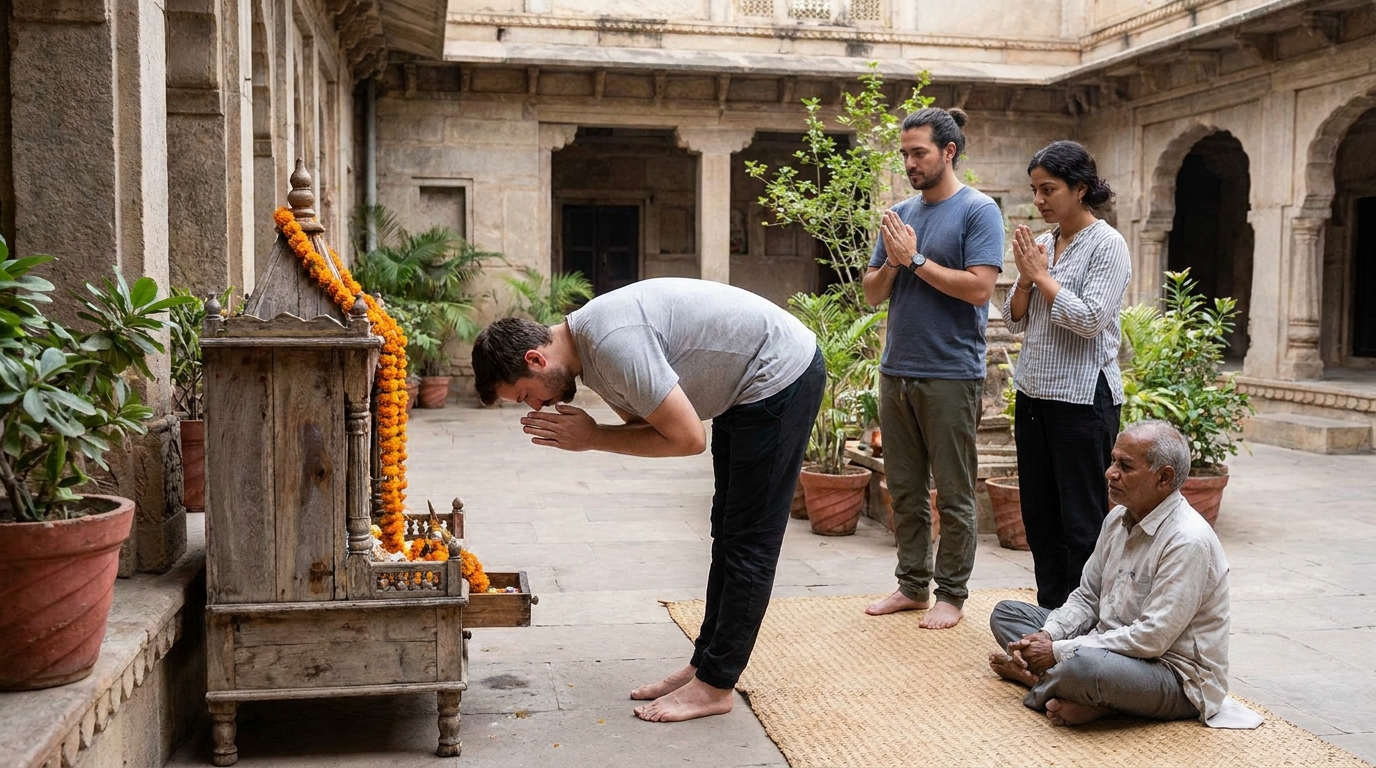
Pranam can include a physical gesture. You may fold your palms at the heart, bow your head, kneel, or offer a full prostration if that is part of your tradition and physically comfortable.
In Sanskrit devotional culture, a full bow is sometimes called dandavat pranam. Danda means “stick,” and vat means “like,” so dandavat means bowing like a stick—lying flat on the ground in full surrender.
But if you cannot bow physically due to health, age, injury, or setting, you can bow inwardly. Bhakti is not limited by the body’s ability.
A sincere heart can always bow.
Create a Daily Rhythm
A pranam mantra becomes powerful when practiced regularly. You might chant it:
- Upon waking
- Before meditation or japa
- Before reading scripture
- Before meals offered to God
- Before entering a temple or sacred room
- Before beginning service
- Before sleep
Even one sincere pranam each day can gradually change the heart.
You may begin with one mantra and repeat it three times. Or you may recite several pranam mantras before chanting the holy names.
Let your practice be steady but not mechanical. The goal is relationship, not performance.
Pranam Mantra Before Chanting Japa
In Bhakti Yoga, japa means personal mantra meditation, often practiced by softly chanting on beads. Many devotees chant the Hare Krishna maha-mantra on a strand of 108 beads.
Before beginning japa, pranam mantras help us enter the right mood. They remind us that chanting is not ordinary sound. It is a meeting with the Divine through the holy name.
Preparing the Mind for the Holy Name
Our minds are often full of noise. Plans, worries, memories, messages, responsibilities, and emotions can crowd the heart.
A pranam mantra creates a sacred pause.
Before chanting japa, you might sit quietly, take a breath, and offer respect to your teachers, the devotees, and the Lord. This helps shift the mind from daily busyness to devotional presence.
You might pray:
“Please help me chant with attention. Please help me hear Your name. Please let my chanting be an offering of love.”
This simple prayer can make a great difference.
Remembering That the Name Is Personal
In Bhakti, the holy name of God is not separate from God. This is a profound teaching. When we chant Krishna’s names, we are associating with Krishna through sound.
The Padma Purana explains that the holy name is spiritually complete and full of divine potency. The name is not material sound when received and chanted in devotion.
Therefore, before chanting, we offer pranam. We are not using the name. We are serving the name.
This shift is important. Instead of thinking, “I will chant to get something,” we can pray, “May I chant to please You. May I be purified. May I remember You.”
Offering Respect to the Line of Teachers
Many practitioners chant guru pranam and Vaishnava pranam before japa. This honors the spiritual lineage through which the holy name has come to us.
We may think, “I did not create this path. I received it. Let me chant with gratitude.”
Gratitude protects chanting from becoming dry or proud. It helps us remember that every step in spiritual life is supported by mercy.
The Inner Mood of Pranam
A pranam mantra is more than words. Its real fruit comes when the heart gradually becomes shaped by the mood of the prayer.
Gratitude
Gratitude is central to pranam. When we bow, we remember that life itself is a gift. The body, breath, food, friendship, scripture, holy names, and opportunities to serve—all are gifts.
A grateful person becomes peaceful. Gratitude shifts the heart from complaint to appreciation.
In devotional life, gratitude becomes personal. We are grateful not just to the universe in an abstract sense, but to the Supreme Lord, who lovingly maintains all beings.
Surrender
The Sanskrit word saranagati means surrender or taking shelter. In Bhakti, surrender does not mean losing our individuality. It means offering our individuality in love.
Surrender means:
- I accept God as my protector.
- I trust divine guidance.
- I let go of harmful habits.
- I seek the Lord’s will.
- I serve with sincerity.
- I remember that I belong to God.
Every pranam mantra carries a seed of surrender. When we bow, we say, “I am Yours.”
This is not forced. It grows over time through chanting, prayer, and experience.
Service
Bhakti is love expressed through service. The Sanskrit word seva means devotional service. We serve God, and we serve others as beloved parts of God.
A pranam mantra should inspire action. If we offer respect to devotees, we can also serve them. If we offer respect to scripture, we can live by its teachings. If we offer respect to Krishna, we can offer our food, work, words, and relationships to Him.
Prayer becomes complete when it shapes how we live.
Compassion
When we bow to God, we begin to see others differently. Every living being is a soul, a child of the Divine. This vision softens judgment and awakens compassion.
A person who practices pranam sincerely becomes less interested in superiority and more interested in kindness.
Even if we disagree with someone, we can remember: “The Lord is in their heart also.”
This is a powerful spiritual discipline.
Scriptural Foundations for Offering Pranam
Pranam is deeply rooted in Bhakti scriptures. Again and again, sacred texts show devotees bowing, praying, and offering respect before the Lord and His representatives.
Bhagavad-gita: Bowing with Devotion
In Bhagavad-gita 18.65, Krishna says:
“Always think of Me, become My devotee, worship Me, and offer your homage unto Me.”
The phrase “offer your homage” includes bowing and offering pranam. Krishna is inviting Arjuna—and all of us—into a loving relationship. He does not simply say, “Believe in Me.” He says to remember, worship, bow, and come to Him.
This verse shows that pranam is part of a complete devotional life. We think of God, we love God, we worship God, and we bow to God.
Bowing is not empty ritual. It is an expression of devotion.
Srimad-Bhagavatam: Prayers of the Great Devotees
The Srimad-Bhagavatam is filled with prayers offered by saints, kings, sages, children, mothers, and humble seekers. Prahlada Maharaja, a young devotee, offers prayers to Lord Narasimha. Queen Kunti offers deep prayers to Krishna. Dhruva Maharaja offers heartfelt praise after receiving the Lord’s vision.
These prayers teach us that every situation can become an opportunity for devotion.
Queen Kunti’s prayers are especially moving because she sees Krishna as her shelter in difficulty. She does not pray only for comfort. She prays to remember Him always.
This is the heart of pranam: “My Lord, may I remember You. May I take shelter of You.”
Chaitanya Tradition: Chanting with Humility
Lord Chaitanya Mahaprabhu gave a famous instruction in the Sikshashtakam, a collection of eight devotional verses:
“One should chant the holy name of the Lord in a humble state of mind, thinking oneself lower than a blade of grass, more tolerant than a tree, free from pride, and ready to offer respect to all.”
This teaching is essential for anyone practicing mantra meditation.
Pranam mantras help cultivate this mood. They train us to offer respect, not demand it. They invite us to become humble enough to chant purely.
When we practice this, spiritual life becomes sweeter. Our chanting becomes less mechanical and more heartfelt.
Practical Ways to Bring Pranam into Daily Life
The beauty of Bhakti Yoga is that it can enter every part of life. Pranam mantra practice does not have to remain only in a temple or formal meditation space. It can shape how we wake, work, speak, eat, and relate to others.
Begin the Day with Respect
Before checking your phone or rushing into responsibilities, pause for a moment. Sit up, fold your palms, and offer a simple pranam mantra.
You may chant:
om namo bhagavate vasudevaya
Or you may pray in your own words:
“Dear Lord, thank You for this day. Please guide my thoughts, words, and actions. Let me serve with love.”
This small beginning can set a sacred direction for the whole day.
Offer Pranam Before Meals
In Bhakti Yoga, food can be offered to God with love and then honored as prasadam. The word prasadam means mercy. It refers to food that has been offered to the Lord and received back as grace.
Before eating, you can offer a prayer of thanks. Even if you do not know formal offering prayers, you can say:
“My Lord, this food is Your gift. Please accept my gratitude. May this nourish me for service.”
This turns eating into remembrance.
Offer Respect in Relationships
Pranam is not only something we do in front of an altar. It can become a way of seeing people.
When speaking with family, coworkers, neighbors, or strangers, we can inwardly remember: “This person is a soul. The Lord is in their heart.”
This does not mean we ignore healthy boundaries or accept harmful behavior. Bhakti includes wisdom. But even with boundaries, we can avoid hatred and cultivate respect.
Bow Before Sacred Study
Before reading Bhagavad-gita, Srimad-Bhagavatam, or other devotional texts, offer pranam. Ask for guidance.
Scripture opens more deeply when approached with humility. Instead of reading only to collect ideas, we read to be transformed.
You might pray:
“Please let me hear what I need to hear. Please help me apply this wisdom with sincerity.”
End the Day with Surrender
At night, offer pranam again. Reflect gently:
- Where did I remember God today?
- Where did I forget?
- Whom did I serve?
- Whom did I hurt?
- What can I offer back to the Lord?
Then pray for forgiveness, strength, and deeper devotion.
A simple night prayer may be:
“Dear Lord, whatever I did today, knowingly or unknowingly, I offer to You. Please forgive my mistakes and help me grow in love.”
This practice brings peace to the heart.
Common Questions About Pranam Mantra
Many sincere seekers have questions about pranam mantras, especially when they are new to Sanskrit or devotional practice. Questions are welcome. Bhakti grows through honest inquiry.
Do I Have to Be Hindu to Chant a Pranam Mantra?
No. Bhakti Yoga is a universal path of love for God. While pranam mantras come from the Vedic and Vaishnava traditions, sincere people from all backgrounds may respectfully chant and learn.
The heart of the practice is devotion, humility, and loving remembrance of the Divine.
If you come from another faith tradition, you may notice similarities: bowing, prayer, gratitude, sacred names, and reverence for teachers and saints. Bhakti does not ask you to be artificial. It invites you to deepen your relationship with God.
What If I Do Not Understand Sanskrit?
You can still begin. Learn the meaning gradually. Chant slowly. Read translations. Ask questions.
Sanskrit is sacred and beautiful, but Bhakti is not limited to language. You can also pray in English or your own mother tongue. God understands every language, including the language of tears, silence, and longing.
Over time, Sanskrit mantras may become dear to you because they carry the devotion of countless saints and practitioners.
How Many Times Should I Chant a Pranam Mantra?
There is no single rule for everyone. Some people chant a pranam mantra once before prayer. Others chant it three times. Some include several pranam mantras in their daily practice.
If you are beginning, choose one mantra and chant it once or three times daily with attention. Quality matters more than quantity.
Let the mantra become meaningful, not rushed.
Can I Chant Without a Guru?
You can certainly begin offering prayers, chanting God’s names, and learning Bhakti teachings. Spiritual life often begins with sincere curiosity and personal prayer.
At the same time, Bhakti scriptures emphasize the value of guidance from genuine teachers and saintly devotees. A guru helps us understand scripture, avoid confusion, and grow steadily.
If you do not yet have a guru, pray for guidance. Associate with sincere devotees. Study authentic teachings. Let your heart become prepared.
What If I Feel Nothing When I Chant?
This is normal. Spiritual practice is not always emotional. Sometimes the heart feels dry, distracted, or distant. Do not be discouraged.
Continue gently.
A farmer waters seeds even before seeing the plant. In the same way, pranam mantras water the seed of devotion. Over time, through chanting, service, prayer, and good association, the heart softens.
Feelings may come and go, but sincere practice leaves a deep impression.
Mistakes to Avoid in Pranam Mantra Practice
Because pranam is a sacred practice, it is helpful to approach it thoughtfully. The goal is not fear, but awareness.
Avoid Mechanical Recitation
It is easy to repeat words while the mind is somewhere else. This happens to everyone. When you notice it, gently return.
Before chanting, pause. Remember whom you are addressing. Even one attentive mantra can be deeply nourishing.
Try not to rush through pranam mantras as a checklist. Let them become a real offering.
Avoid Pride in Spiritual Practice
Sometimes spiritual practice can accidentally feed the ego. We may think, “I know this mantra,” or “I am more advanced than others.”
Pranam mantras are meant to dissolve pride, not increase it.
If we are truly bowing, we become more kind, patient, and humble. The fruit of mantra is seen in character.
Avoid Disrespecting Other Paths
Bhakti teaches us to honor sincere spiritual effort. We do not need to criticize others to deepen our own devotion.
A person may pray in a church, mosque, synagogue, temple, forest, home, or silent heart. God is not limited. While we may faithfully follow our path, we can still offer respect to others.
Lord Chaitanya’s teaching—offering respect to all and expecting none for oneself—is a beautiful guide.
Avoid Treating Mantras as Magic Spells
A pranam mantra is not a magic formula to control life or force divine results. It is a prayer of respect and surrender.
Of course, mantras are powerful. They purify the heart and connect us with God. But their purpose is loving transformation, not manipulation.
We chant not to control God, but to be lovingly guided by God.
A Simple Pranam Mantra Practice for Beginners
If you are wondering how to begin, here is a simple daily practice you can try. It may take only five minutes.
Step One: Create a Quiet Space
Find a clean, peaceful place. You may sit before a picture of Krishna, Rama, Vishnu, Lord Chaitanya, your spiritual teacher, or any sacred image that helps you remember God.
If you do not have an altar, simply sit quietly and turn your heart toward the Divine.
Step Two: Take Three Slow Breaths
Let the body settle. Let the mind slow down. You are entering sacred time.
With each breath, release a little tension.
Step Three: Fold Your Palms and Offer Respect
Fold your palms at your heart. This gesture is often called anjali mudra, a posture of reverence.
You may bow your head slightly.
Step Four: Chant a Pranam Mantra
Chant slowly:
om namo bhagavate vasudevaya
Meaning:
“I offer my respectful obeisances to the Supreme Lord, Vasudeva.”
Repeat it three times.
Let each repetition be an offering.
Step Five: Pray in Your Own Words
After chanting, speak honestly to God. You might say:
“Please guide me today. Please help me remember You. Please help me serve others with kindness. Please purify my heart.”
This personal prayer is very important. Bhakti is relationship.
Step Six: Chant the Holy Names
If you feel inspired, chant the Hare Krishna maha-mantra:
**Hare Krishna Hare Krishna
Krishna Krishna Hare Hare
Hare Rama Hare Rama
Rama Rama Hare Hare**
Chant for a few minutes, softly and attentively.
Step Seven: Carry the Mood into the Day
When you rise, try to keep the mood of pranam. Speak gently. Serve someone. Offer your work to God. Remember that humility is not just a posture—it is a way of living.
Pranam Mantra as a Path of Love
The pranam mantra is a small doorway into a vast spiritual world. Through it, we learn to bow, to honor, to listen, to receive, and to love.
In Bhakti Yoga, the goal is not simply peace of mind, though peace may come. The goal is not simply moral improvement, though character becomes purified. The goal is prema, pure love for God.
Every sincere pranam points us toward that love.
When we bow to Krishna, we remember that the Supreme Lord is not impersonal emptiness but the all-attractive Person who lovingly invites us into relationship.
When we bow to the guru, we remember that divine wisdom comes through mercy.
When we bow to the devotees, we remember that we need spiritual community.
When we bow to scripture, we remember that truth is revealed to the humble heart.
When we bow inwardly to the Lord in all beings, we learn compassion.
This is the beauty of Bhakti. Nothing is separate from spiritual growth. Our words, gestures, meals, relationships, songs, service, and prayers can all become offerings.
You do not have to be perfect to begin. In fact, pranam begins with admitting we are not perfect. We need help. We need grace. We need God.
That honest humility is precious.
The Lord sees the smallest sincere step. A bowed head, a whispered mantra, a tearful prayer, a moment of gratitude—these are not small in the eyes of God.
Taking One Sincere Step Today
If this practice is new to you, begin simply. Choose one pranam mantra. Learn its meaning. Chant it once each morning. Offer your day to God.
If you already practice Bhakti Yoga, let your pranam mantras become fresh again. Slow down. Hear the words. Feel the gratitude. Let each bow soften the heart.
The path of Bhakti is practical and full of grace. We chant, pray, serve, study, and grow. We fall and rise again. We are carried by the holy names, the scriptures, the devotees, and the mercy of the Lord.
Wherever you are coming from, you are welcome.
With humility and hope, take one sincere step toward God today. Offer one pranam. Chant one holy name. Speak one prayer from the heart. Serve one person with kindness.
The door of devotion is open, and everyone is welcome to enter.
FAQs
What is the Pranam mantra?
The Pranam mantra is a traditional Sanskrit invocation used in Hindu practices to express reverence and gratitude. It is often recited at the beginning of prayers, rituals, or meditation sessions to honor the divine and seek blessings.
How is the Pranam mantra typically recited?
The Pranam mantra is usually recited with a focused mind and a respectful attitude. Practitioners often chant it aloud or silently, while maintaining a calm posture, sometimes with hands in a prayer position (Anjali Mudra) to enhance the spiritual connection.
What are the benefits of reciting the Pranam mantra?
Reciting the Pranam mantra can promote a sense of peace, enhance concentration, and foster a deeper connection with the divine. It is believed to help in grounding oneself, reducing stress, and cultivating a mindset of gratitude and humility.
Can the Pranam mantra be used in daily life?
Yes, the Pranam mantra can be incorporated into daily life as a way to start the day with positivity or to center oneself during stressful moments. Many people find it beneficial to recite it before meals, during meditation, or at the beginning of any important task.
Are there different versions of the Pranam mantra?
Yes, there are various versions of the Pranam mantra, depending on the specific tradition or context in which it is used. Some may include additional verses or specific names of deities, while others may focus on a more general invocation of respect and gratitude.

