
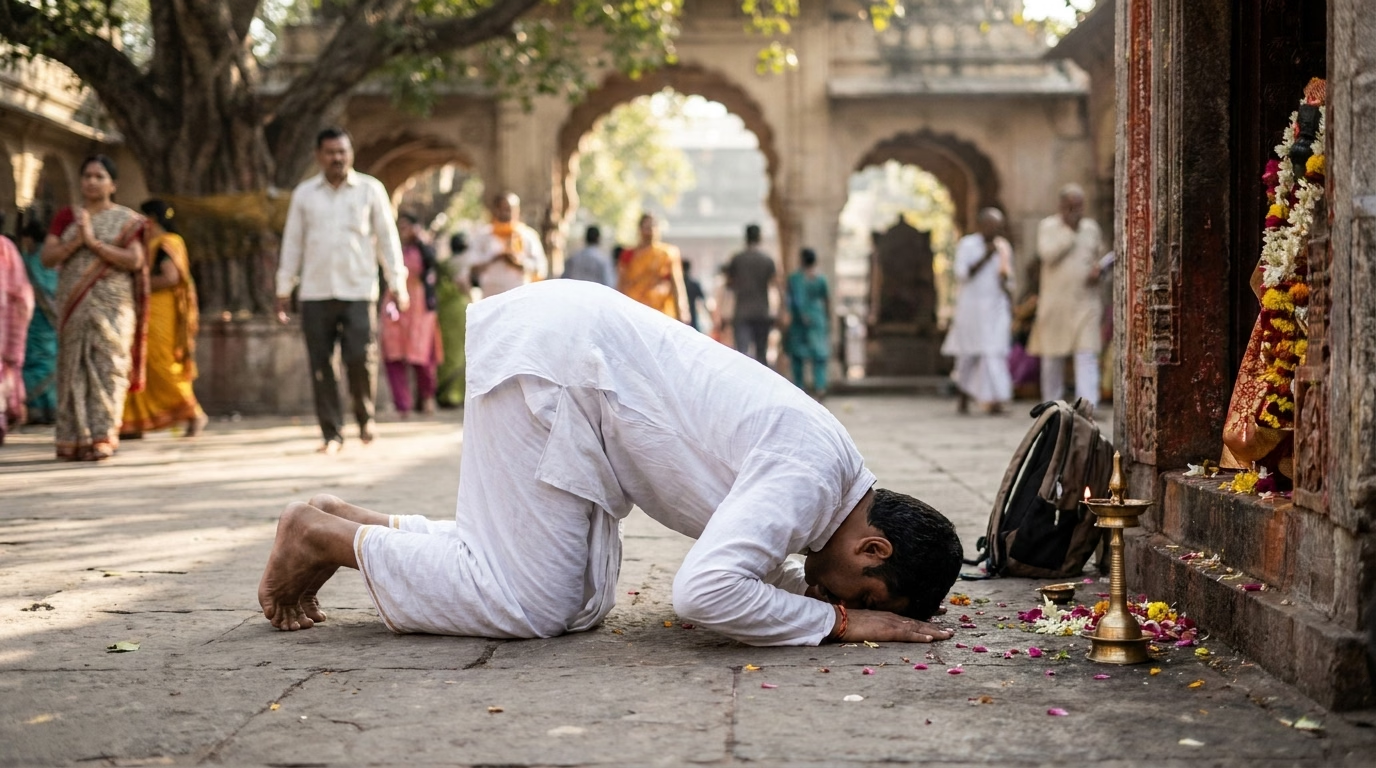
Understanding Dandavat Pranam and the Heart of Indian Greetings
In the beautiful spiritual culture of India, greetings are not only social customs. They are sacred opportunities to honor the presence of the Divine within another person. Whether we say “Namaste,” bow with folded palms, touch the feet of an elder, or offer full dandavat pranam, the deeper mood is the same: humility, respect, and love.
The Sanskrit phrase dandavat pranam can be understood simply. Danda means “stick” or “rod,” vat means “like,” and pranam means “bowing down with respect.” So dandavat pranam means offering respect by bowing down like a stick—placing the whole body on the ground in a humble posture of surrender.
For many people, this may feel unfamiliar at first. In modern life, greetings are often quick: a handshake, a wave, a smile, or a simple “hello.” These are meaningful too when offered sincerely. But in Bhakti Yoga, the path of devotion, greetings are more than etiquette. They are a way to remember God, soften the heart, and cultivate a spirit of service.
Dandavat pranam is especially practiced in temples, ashrams, holy places, and devotional communities. Devotees may offer dandavat pranam before the Deity, to sacred scriptures, to a spiritual teacher, to saintly people, or even while entering a holy place. The purpose is not to perform an empty ritual. The purpose is to train the heart to become humble, grateful, and open to divine grace.
This guide welcomes readers of all backgrounds. You may be Hindu, a practitioner of Bhakti Yoga, spiritually curious, interfaith, or simply interested in respectful Indian greetings. Wherever you are beginning, you are welcome. The essence of dandavat pranam is not cultural performance; it is sincere reverence.
The Meaning of Pranam in Indian Spiritual Culture
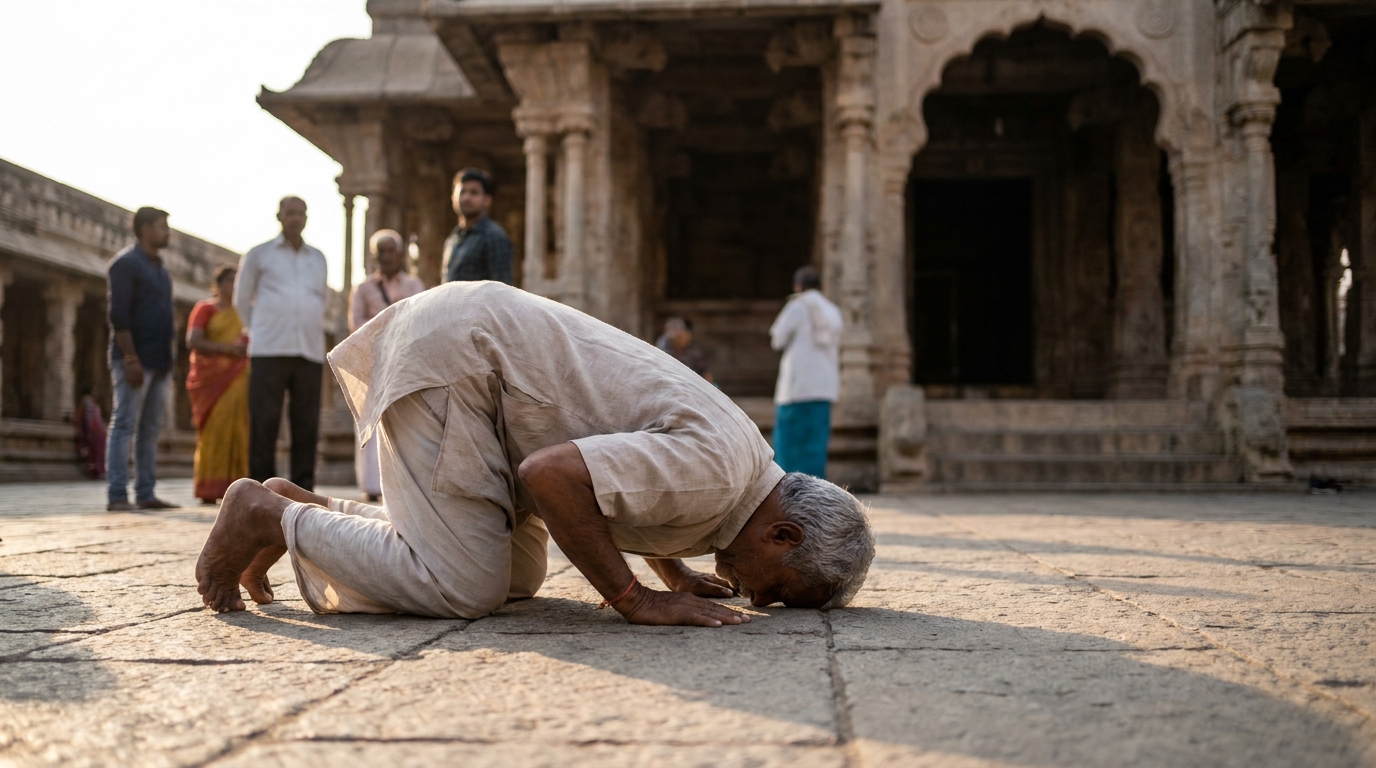
The word pranam comes from Sanskrit roots that suggest bowing, offering respect, and acknowledging something greater than oneself. In Indian spiritual traditions, pranam may be offered through words, gestures, or the whole body.
At its heart, pranam means, “I honor you.” More deeply, it means, “I honor the Divine presence connected with you.”
This is why traditional Indian greetings often carry spiritual meaning. When someone says Namaste or Namaskar, they are not merely saying “hello.” They are offering respect. A simple explanation often given is: “The divine in me honors the divine in you.” While the exact Sanskrit meaning may be nuanced, the devotional mood is beautiful and true.
Namaste, Namaskar, and Pranam
Many people wonder about the difference between these greetings.
Namaste is one of the most widely known Indian greetings. It is usually offered with palms joined at the heart, called anjali mudra. The word includes namah, meaning “I bow” or “I offer respect,” and te, meaning “to you.”
Namaskar is similar and often used in formal or respectful settings. It also expresses reverence and honor.
Pranam usually has a deeper devotional tone. It may involve bowing the head, touching the feet of elders, or offering a full prostration. When devotees say, “Please accept my pranam,” they are expressing heartfelt respect.
Dandavat pranam is the most complete physical expression of this reverence, because the entire body is offered in humility.
Why Respect Is Sacred in Bhakti
Bhakti Yoga means the yoga of love and devotion. The word bhakti comes from a Sanskrit root meaning loving service, devotion, or participation in divine love. In Bhakti, respect is not just good manners. Respect is spiritual practice.
When we offer pranam, we remember that we are not the center of everything. We remember that life is sacred. We remember that every person is a soul, loved by God.
The Bhagavad-gita, one of the most beloved Bhakti scriptures, teaches humility as the beginning of wisdom. In Bhagavad-gita 13.8, Sri Krishna lists amanitvam, humility, as a quality of true knowledge. Bowing can help us practice that humility with the body, not only with the mind.
In this way, respectful Indian greetings can become everyday spiritual exercises.
What Dandavat Pranam Looks Like in Practice
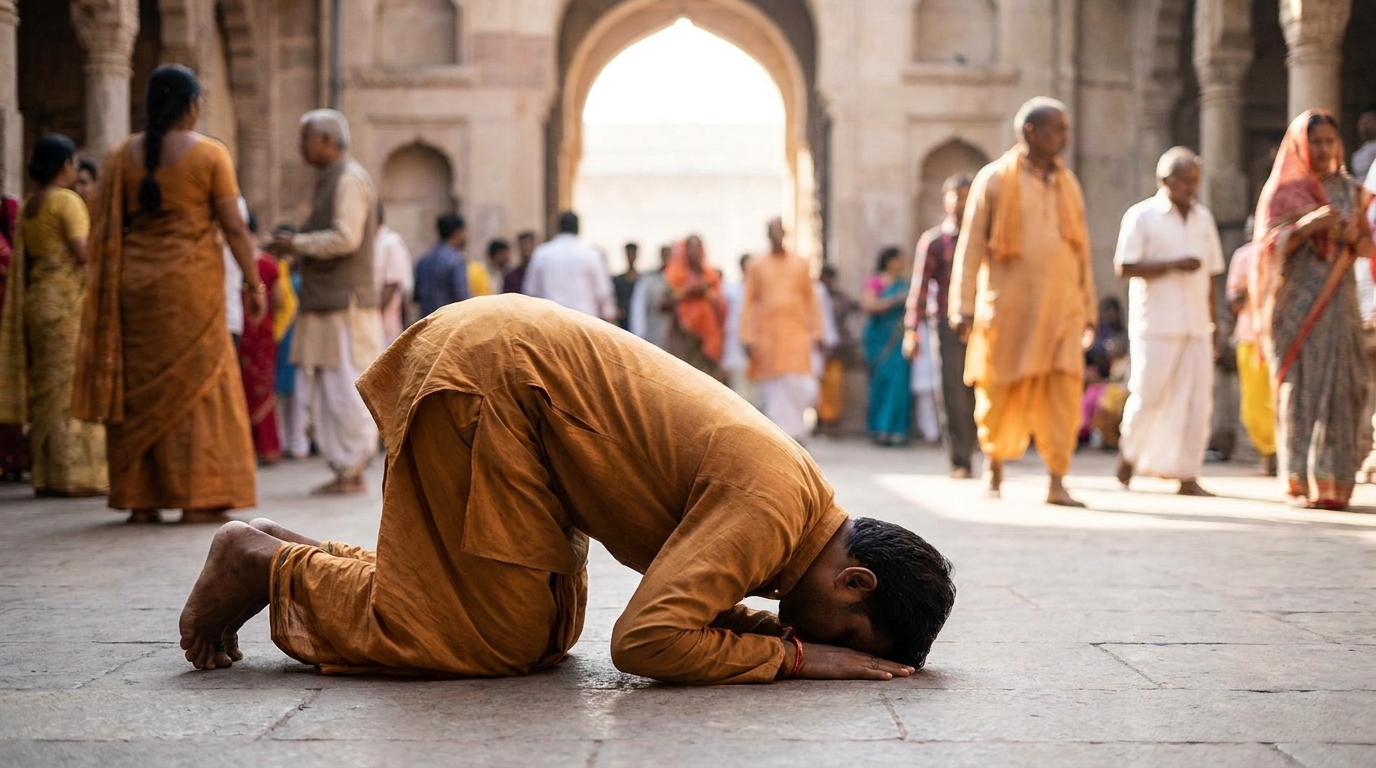
Dandavat pranam is a full-body bow. Traditionally, a person lowers themselves to the ground, stretching out flat like a stick. The posture may vary slightly depending on tradition, space, health, and gender customs, but the inner meaning remains humility and surrender.
Some devotees place the palms together above the head or in front. Some touch the forehead to the floor. Some lie fully flat, with arms extended. Others perform a modified bow if full prostration is not physically possible.
Please remember: God sees the heart. A sincere bow of the mind can be more meaningful than a dramatic gesture performed without devotion.
A Simple Step-by-Step Guide
If you are physically able and in an appropriate setting, here is a simple way to offer dandavat pranam respectfully:
- Stand or kneel in a clean place, facing the person, Deity, altar, scripture, or sacred space you wish to honor.
- Fold your palms at the heart in a prayerful gesture.
- Gently bow your head and bring to mind a prayer of gratitude or respect.
- Lower yourself carefully to the ground.
- Stretch your body forward, placing the body flat or nearly flat, like a stick.
- Touch your forehead to the ground if comfortable.
- Offer a simple prayer, such as: “Please bless me to serve with humility,” or “O Lord, please guide my heart.”
- Rise slowly and respectfully, without rushing.
The outer movement is simple. The inner movement is profound: from pride to humility, from distraction to remembrance, from separateness to loving connection.
Modified Dandavat for Health and Accessibility
Not everyone can lie flat on the ground. Some people have knee pain, back conditions, pregnancy considerations, disability, age-related limitations, or emotional discomfort with full prostration. In Bhakti, no one should feel excluded.
A modified dandavat pranam may include:
- Bowing the head with folded palms
- Kneeling and touching the forehead to the floor
- Sitting and bowing forward
- Offering pranam mentally
- Placing the palms together and praying silently
- Touching the floor with the right hand and then touching the heart or forehead
The essence is not physical perfection. The essence is sincere respect.
A humble heart is always welcome.
Discover a wide range of insightful articles that delve into various spiritual topics. These articles offer guidance and inspiration for your personal growth journey. Stay updated with the latest articles to enhance your understanding of spiritual practices.
When and Where Dandavat Pranam Is Offered
Dandavat pranam is most commonly offered in devotional, temple, and spiritual settings. In Bhakti Yoga communities, you may see devotees offering pranam when they enter a temple room, before an altar, after chanting, or upon seeing a spiritual teacher.
The practice may look different across regions and traditions. India is beautifully diverse, and respectful greetings vary among families, temples, sampradayas, and communities. A sampradaya is a spiritual lineage or tradition through which teachings are passed down.
Rather than trying to imitate perfectly, it is best to observe, ask gently, and follow with humility.
Before the Deity or Altar
In Bhakti temples, the Deity is not seen as a statue or symbol only. The Deity, called murti or archa-vigraha, is worshiped as a merciful form of the Lord who accepts loving service from devotees. When devotees offer dandavat pranam before the Deity, they are bowing to God personally.
This is a deeply sacred moment. One may pray:
“My Lord, I am Yours. Please help me remember You. Please guide my actions today.”
Even if someone is new to this understanding, they can simply offer respect: “May I approach this sacred space with humility.”
To Spiritual Teachers and Saints
In many Bhakti traditions, disciples and students offer pranam to a guru, meaning a spiritual teacher who guides one toward God. The guru is honored not as an ordinary celebrity, but as a servant and representative of divine wisdom.
The Bhagavad-gita 4.34 teaches:
“Approach a spiritual master, inquire submissively, and render service. The self-realized souls can impart knowledge because they have seen the truth.”
This verse does not encourage blind following. It describes a sacred relationship of humility, sincere questions, and service. Offering pranam is one way of acknowledging that spiritual wisdom is precious.
Devotees may also offer pranam to saintly persons, elders, and advanced practitioners—not because the body is worshiped, but because a life dedicated to God is worthy of honor.
Upon Entering Holy Places
Many pilgrims offer dandavat pranam when entering sacred places such as temples, ashrams, riverbanks, or holy towns like Vrindavan, Mayapur, Puri, or Rameshwaram. The earth of a holy place is considered spiritually blessed by the prayers, chanting, and footsteps of saints.
In the Srimad Bhagavatam, a treasured Bhakti scripture, we repeatedly hear of the power of saintly association and sacred places. Holy places help awaken remembrance of God. Bowing upon arrival is a way of saying, “I have not come here to consume or control. I have come to receive grace.”
During Devotional Practices
Dandavat pranam may be offered before or after kirtan, which is joyful chanting of God’s names, often with music. It may be offered before japa, which is personal mantra meditation, often using beads. It may be offered before reading scripture, serving prasadam, or beginning worship.
Prasadam means “mercy.” It refers to food lovingly offered to God and then received as sacred nourishment. Even before honoring prasadam, some devotees bow inwardly with gratitude.
In Bhakti, daily life becomes filled with opportunities to offer respect.
The Spiritual Mood Behind Dandavat Pranam
Without the right mood, dandavat pranam can become a habit, a social expectation, or even a display of religiosity. But with sincere intention, it becomes a doorway to transformation.
The body bows, and the ego becomes lighter.
The forehead touches the ground, and the heart remembers its true shelter.
The hands offer themselves, and the soul whispers, “I am here to serve.”
Humility Without Shame
Sometimes people misunderstand humility. They think it means feeling worthless. But Bhakti does not teach that we are worthless. Bhakti teaches that we are eternally valuable, beloved parts of God.
True humility means seeing clearly: “I am not the Supreme. I am not independent. I am a soul, loved by God, meant for loving service.”
This kind of humility is healthy and freeing. It releases us from the burden of pretending to be in control. It allows us to receive help. It opens the heart to prayer.
Sri Chaitanya Mahaprabhu, the great teacher of divine love and congregational chanting, offered a famous verse in the Shikshashtakam:
“One should chant the holy name of the Lord in a humble state of mind, thinking oneself lower than a blade of grass, more tolerant than a tree, free from false pride, and ready to offer respect to all.”
This teaching is central to Bhakti Yoga. Dandavat pranam is a physical practice that supports this inner mood.
Surrender as Loving Trust
Another Sanskrit word connected to dandavat pranam is sharanagati, meaning surrender or taking shelter. In Bhakti, surrender does not mean defeat in a negative sense. It means loving trust.
A child rests safely in the arms of a caring parent. A devotee rests in the guidance of God.
When we bow down, we may pray:
“Lord, I cannot do this life alone. Please guide me. Please purify my intentions. Please help me love You and serve others.”
This surrender is not weakness. It is spiritual courage.
Respect for All Beings
A genuine devotee does not reserve respect only for temples and teachers. The practice of pranam gradually teaches us to see all beings with kindness.
The Bhagavad-gita 5.18 describes the wise as seeing with equal vision: a learned person, a cow, an elephant, a dog, and a person considered outcast are all seen spiritually as souls. This does not erase practical differences, but it invites us to treat life with reverence.
If we bow before God but speak harshly to people, our practice is incomplete. Dandavat pranam should soften how we listen, how we serve, how we apologize, how we care for family, and how we treat strangers.
Dandavat Pranam and Other Respectful Indian Greetings
India offers many beautiful forms of greeting, each carrying a different flavor of respect. Understanding them can help visitors, seekers, and new practitioners feel more comfortable in devotional spaces.
Namaste With Folded Palms
Namaste is perhaps the most universal Indian greeting. It is appropriate in many settings: temples, homes, yoga studios, cultural gatherings, and everyday meetings.
To offer Namaste, bring the palms together near the heart, gently bow the head, and say “Namaste.” This simple gesture is respectful, non-invasive, and widely understood.
For those new to Bhakti communities, Namaste is often a safe and sincere beginning.
Touching the Feet of Elders
In many Indian families, younger people touch the feet of parents, grandparents, teachers, or elders. Feet are considered symbolically humble, and touching them expresses deep respect. The elder often gives blessings by placing a hand on the head or offering kind words.
In devotional settings, touching the feet of advanced saints or gurus may be practiced, but it should be done according to local custom and permission. Not every teacher or community encourages physical contact, and respectful boundaries matter.
If unsure, folded palms and a bow are always appropriate.
Sashtanga Pranam
Another term often heard is sashtanga pranam. Sa means “with,” ashta means “eight,” and anga means “limbs” or “parts of the body.” Sashtanga pranam means bowing with eight parts of the body touching the ground, traditionally understood as hands, feet, knees, chest, head, eyes, mind, and speech, or in some explanations, physical points such as hands, knees, chest, and forehead.
Dandavat pranam and sashtanga pranam are closely related and sometimes used interchangeably. Both express full surrender and reverence.
Pranams in Different Traditions
Different Bhakti traditions may have specific ways of offering pranam. Vaishnava devotees, who worship Vishnu or Krishna as the Supreme Lord, may offer full dandavats while reciting prayers to the guru and Krishna. Shaiva devotees, who worship Shiva, may bow before Shiva-linga and chant mantras like “Om Namah Shivaya.” Shakta devotees, who worship the Divine Mother, may bow before forms of Devi with deep reverence.
The details may differ, but the heart is shared: respect, devotion, and surrender to the Divine.
How to Practice Dandavat Pranam Respectfully as a Beginner
If you are new to Indian spiritual customs, it is natural to feel uncertain. You may wonder, “Am I doing it correctly?” or “Will I offend someone?” Please be peaceful. Sincerity is more important than perfection.
Most devotional communities are happy when someone approaches with humility. You do not need to pretend to know everything. You can learn gently.
Observe Before Imitating
When entering a temple or ashram, take a moment to observe. Notice where people bow, how they move, whether shoes are removed, where the altar is, and how others behave in the sacred space.
If you are unsure, you can quietly ask:
“Is it appropriate for me to offer pranam here?”
“What is the respectful way to bow in this temple?”
“May I simply fold my palms if I am not comfortable lying down?”
Such questions show respect and sincerity.
Dress and Space Awareness
In temples, modest clothing is often appreciated. This does not mean everyone must dress in Indian clothes. It simply means dressing with respect for a sacred environment.
If offering dandavat pranam, be mindful of the space around you. Avoid blocking pathways, touching others unexpectedly, or bowing in crowded areas where someone may trip.
Also be mindful of the direction of your feet. In many Indian traditions, pointing feet toward an altar, sacred scripture, or respected person is considered disrespectful. If you are lying down for dandavat pranam, local customs may guide which direction is appropriate.
Keep the Heart Prayerful
Before bowing, pause. Let your mind become quiet. Offer one simple prayer.
You may say internally:
“Thank You for allowing me to be here.”
“Please help me grow in love and humility.”
“May my actions today be pleasing to You.”
A short sincere prayer is powerful. Bhakti is not about complicated language. God understands the heart.
Common Questions About Dandavat Pranam
Many sincere seekers have practical questions about dandavat pranam and respectful Indian greetings. These questions are welcome. Bhakti grows through honest inquiry.
Is Dandavat Pranam Only for Hindus?
No. While dandavat pranam comes from Hindu and broader Indian spiritual culture, the values behind it—humility, reverence, gratitude, and surrender—are universal.
Someone from any background may respectfully offer pranam if they feel comfortable and understand the sacred mood. At the same time, no one should feel forced. Devotion must be voluntary.
Bhakti Yoga invites the heart; it does not pressure the heart.
Should I Bow to Another Human Being?
This depends on your understanding and the context. In Bhakti, bowing to a spiritual teacher or saint is not meant to replace worship of God. It is a way of honoring God’s grace working through that person.
Still, discernment is important. Respect should never be used to manipulate, control, or silence someone. Authentic spiritual culture protects dignity, humility, and freedom.
If you are uncomfortable offering full pranam to a person, you may fold your palms and bow your head. Respect can be expressed in many ways.
Can Women Offer Dandavat Pranam?
Practices vary by tradition and culture. In some communities, men offer full dandavat pranam while women offer a kneeling or half-bow form of pranam. In other communities, women also offer full prostrations. In still others, people choose based on comfort, health, and local etiquette.
The safest approach is to observe the community you are visiting and ask respectfully. The spiritual principle is the same: sincere reverence.
What If I Feel Self-Conscious?
Feeling self-conscious is normal. Bowing physically can make us aware of our ego, our vulnerability, and our unfamiliarity. That awareness can itself become part of the practice.
You do not need to force anything. Begin with folded palms. Bow your head. Pray quietly. Over time, as trust grows, you may feel ready to offer a fuller pranam.
God is patient.
Is the External Gesture Enough?
No external gesture is complete without inner sincerity. At the same time, the body can help train the heart. Just as singing can awaken feeling, and kneeling can deepen prayer, bowing can cultivate humility.
In Bhakti, we engage body, mind, words, and heart in devotion. Dandavat pranam is one way the body participates in love.
Dandavat Pranam as a Daily Spiritual Practice
Dandavat pranam is not only for temples. It can become a gentle daily practice at home, adapted to your life and circumstances.
You may create a small sacred space with a picture of Krishna, Rama, Vishnu, Shiva, Devi, your chosen form of God, saints, or sacred scripture. You may light a candle or lamp, offer flowers, chant, pray, or simply sit quietly.
Before beginning the day, you can offer pranam physically or mentally:
“Dear Lord, may I serve You today. May my words be kind. May my work be honest. May my heart remember You.”
At night, you may bow again:
“Thank You for carrying me through this day. Please forgive my mistakes. Please help me grow.”
Combining Pranam With Chanting
Chanting is central to Bhakti Yoga. The Sanskrit word mantra means a sacred sound that helps free the mind. One of the most beloved mantras in the Bhakti tradition is the Hare Krishna maha-mantra:
Hare Krishna, Hare Krishna, Krishna Krishna, Hare Hare
Hare Rama, Hare Rama, Rama Rama, Hare Hare
Hare calls upon the divine energy of the Lord. Krishna means the all-attractive Lord. Rama means the source of spiritual joy.
Before chanting, you may offer pranam and ask for blessings to chant with attention. After chanting, you may bow in gratitude.
This simple combination—bowing and chanting—can gradually transform the heart.
Pranam Through Service
The deepest pranam is not only on the ground. It is in how we live.
When we serve others with kindness, we are bowing with our actions. When we cook with love and offer food to God, we are bowing with our hands. When we forgive, we bow with our ego. When we listen to someone in pain, we bow with our attention.
Bhakti Yoga is practical. It asks us to bring devotion into cooking, cleaning, parenting, studying, working, singing, giving, and resting.
Dandavat pranam reminds us: “My life is not meant for pride. My life is meant for loving service.”
Scriptural Reflections on Bowing and Devotion
Bhakti scriptures frequently describe bowing, offering obeisance, and approaching God with humility. These teachings help us understand dandavat pranam not as a mere cultural custom, but as a spiritual practice rooted in sacred wisdom.
Bhagavad-gita: Bowing With Love
In Bhagavad-gita 9.34, Sri Krishna says:
“Always think of Me, become My devotee, worship Me, and offer your homage unto Me.”
The phrase “offer your homage” includes bowing, honoring, and surrendering. Krishna does not ask for empty fear. He invites loving remembrance. He asks for the heart.
This verse gives a practical path: think of God, become devoted, worship, and offer respect. Dandavat pranam is one beautiful way to embody that respect.
Srimad Bhagavatam: Humility Opens the Heart
The Srimad Bhagavatam is filled with prayers of devotees who bow before the Lord. Great saints, kings, sages, and ordinary people all become spiritually elevated through humility and devotion.
Again and again, the Bhagavatam shows that God is conquered not by wealth, scholarship, or social position, but by love. A simple-hearted person who bows sincerely may be closer to God than a proud person who knows many verses.
This is encouraging for all of us. We do not need to be perfect before we begin. We begin, and grace helps us grow.
Chaitanya Tradition: Offering Respect to Everyone
Sri Chaitanya Mahaprabhu emphasized chanting the holy names of God and cultivating humility. His instruction to offer respect to all, while expecting none for oneself, is a powerful foundation for devotional life.
Dandavat pranam can help us practice this teaching physically. But the real test comes when we rise from the ground. Do we speak more gently? Do we judge less? Do we serve more willingly? Do we remember God more often?
The bow is the beginning. The transformed life is the offering.
Cultural Sensitivity and the Inner Essence
As Indian greetings and yoga practices become more known around the world, it is important to approach them with sensitivity. Dandavat pranam is not a performance, trend, or exotic gesture. It belongs to a living spiritual culture filled with devotion, history, family traditions, and sacred meaning.
If we adopt the practice, we should do so with gratitude and respect.
Avoiding Superficial Imitation
It is possible to copy the outer form without understanding the heart. Bhakti invites us to go deeper.
Before offering dandavat pranam, ask:
“Am I doing this to be seen, or to become humble?”
“Am I honoring the tradition this comes from?”
“Am I willing to let this gesture shape how I treat others?”
These questions help protect the sacredness of the practice.
Learning From Devotees and Elders
If you have the opportunity, learn from sincere practitioners. Visit a temple. Attend kirtan. Ask questions after a class. Read the Bhagavad-gita with guidance. Join a devotional community where humility and compassion are practiced.
Spiritual culture is best learned through relationship. In Bhakti, knowledge is not only information; it is received through association, service, and grace.
Bringing Respect Into Everyday Greetings
Even if you do not offer dandavat pranam daily, you can bring its mood into ordinary greetings.
When you say hello, truly see the person.
When you say Namaste, mean it.
When you shake someone’s hand, do it with kindness.
When you message someone, write with respect.
When you disagree, remember the soul within the other person.
This is the broader gift of Indian spiritual greetings: they remind us that every meeting can become sacred.
A Gentle Invitation to Begin
Dandavat pranam is a complete offering of respect. The body bows like a stick, but the heart rises in devotion. It teaches humility without shame, surrender without fear, and reverence without distance. It helps us remember that we are souls, that God is our shelter, and that every person deserves to be treated with dignity.
Whether you are new to Bhakti Yoga or have walked this path for many years, you can begin again today. Fold your palms. Bow your head. Chant one holy name. Offer one prayer. Serve one person with love. Read one verse of sacred wisdom. Take one sincere step toward God.
At The Bhakti House, everyone is welcome—wherever you come from, whatever your background, whatever questions you carry. The path of Bhakti is a practical path of love, chanting, prayer, service, and spiritual growth. You do not have to be perfect to begin. You only need a sincere heart.
May your greetings become prayers. May your prayers become service. May your service awaken love. And may every humble pranam bring you closer to the loving shelter of the Divine.
FAQs
What is Dandavat Pranam?
Dandavat Pranam is a traditional form of respectful greeting in Hindu culture, where an individual offers their full prostration to the ground, symbolizing humility and devotion. It is often used in spiritual contexts, particularly among devotees of Krishna and other deities, as a way to show reverence.
How is Dandavat Pranam performed?
To perform Dandavat Pranam, one begins by standing upright, then bends down to touch the ground with their forehead while keeping their arms extended along the sides. This act signifies surrender and respect. It is typically done in front of deities, spiritual leaders, or fellow devotees.
What is the significance of Dandavat Pranam?
The significance of Dandavat Pranam lies in its expression of humility and devotion. It serves as a reminder of the devotee’s place in the universe and their relationship with the divine. This act of surrender is believed to purify the heart and mind, fostering a deeper connection with spirituality.
When is Dandavat Pranam commonly used?
Dandavat Pranam is commonly used during religious ceremonies, festivals, and daily worship practices. Devotees may perform this gesture when entering a temple, greeting spiritual teachers, or during group prayers to show respect and devotion.
Are there any variations of Dandavat Pranam?
Yes, there are variations of Dandavat Pranam depending on cultural and regional practices. Some may include additional gestures or chants, while others may adapt the position or timing of the prostration. However, the core principle of showing respect and humility remains consistent across different traditions.

