
Every spiritual community is built on love. At its heart, Bhakti Yoga — the path of devotion — teaches us that every living being is a beloved child of God. The Bhagavad Gita (5.18) reminds us that a truly wise person sees every soul with equal vision, whether a learned scholar or a struggling stranger.
And yet, even in the most loving communities, there come moments that test our hearts deeply. Sometimes, for the wellbeing of the whole community, a leader or group of caretakers must ask a member to step away — temporarily or even permanently. This is one of the most difficult conversations any spiritual family can face.
If you’ve ever been in this situation, or if you sense it may be approaching, please know: you are not alone. This is not a failure of love. In fact, when handled with honesty, compassion, and dignity, this conversation can itself become an act of devotion — a form of seva (selfless service) to everyone involved, including the person being asked to leave.
Let’s walk through this together, gently, with practical guidance rooted in the spirit of Bhakti.
In a Bhakti community — whether it’s a temple, a kirtan group, a study circle, or an online sangha — relationships are the foundation. We come together to chant the holy names, to serve one another, and to grow closer to God. The Sanskrit word sangha means “association,” and the quality of that association shapes our spiritual lives profoundly.
The Chaitanya Charitamrita (Madhya 22.83) teaches that associating with devotees is one of the most powerful practices on the Bhakti path. But this also means that when someone’s behavior consistently disrupts, harms, or destabilizes the community, the sangha itself is at risk.
Asking someone to leave is not about punishment. It is about protection — protecting the sacred space, the trust between members, and often, protecting the individual themselves from causing further harm that weighs on their own heart.
The Difference Between Judgment and Discernment
One of the biggest fears leaders face is the worry that they are “judging” someone. In Bhakti, we are taught not to judge the soul — every soul is eternally precious to God. But discernment is different from judgment.
Discernment means honestly assessing behavior and its impact. It means recognizing patterns. It means caring enough about everyone — including the person causing harm — to act rather than look away.
Lord Krishna Himself demonstrates this in the Bhagavad Gita. He is the most loving, compassionate being, and yet He guides Arjuna to take action when action is needed. Love without courage is incomplete.
When Avoidance Becomes Its Own Harm
Many spiritual communities delay these conversations far too long. Out of kindness — or fear of conflict — leaders allow harmful behavior to continue until multiple members are hurt, trust is broken, and the damage is much harder to repair.
Avoidance is not compassion. When we allow someone to repeatedly harm others without accountability, we are not serving anyone. We are enabling suffering. True ahimsa (non-violence) sometimes requires the courage to set firm, loving boundaries.
Preparing Your Heart Before the Conversation
Before you ever sit down with the community member, the most important preparation happens within your own heart. This is where Bhakti practice becomes deeply practical.
Pray Sincerely
Before anything else, pray. Chant. Sit with God and offer your anxiety, your sadness, your uncertainty. Ask for guidance. The Bhagavata Purana (11.2.46) assures us that the Lord resides in the heart of every being. When we approach Him sincerely, He gives us the clarity and strength we need.
You might pray something like: “Dear Lord, please help me act with honesty and compassion. Please help me see this person as You see them — as Your beloved child — even as I must set a boundary. Please guide my words.”
Consult Trusted Advisors
Don’t carry this alone. Speak with other mature members of your leadership team, a mentor, or a counselor. Seek perspective. Bhakti is a communal path, and decisions that affect the community should involve more than one person’s perspective.
Gather the Facts with Honesty
Be clear about what behaviors are at issue. Document specific incidents if possible — not to build a case against someone, but so that your conversation can be grounded in reality rather than vague feelings. The person deserves to understand exactly why this decision is being made.
Check Your Own Motives
This is a humble but essential step. Ask yourself honestly: Am I acting out of genuine concern for the community, or is there personal frustration, ego, or resentment driving this? If you find mixed motives — and most of us will — that doesn’t disqualify you from acting. It simply means you bring those feelings to God in prayer and proceed with extra care.
How to Have the Conversation with Dignity and Love
This is the moment that requires the most courage and the most tenderness. Here is a practical framework rooted in Bhakti values.
Choose the Right Setting
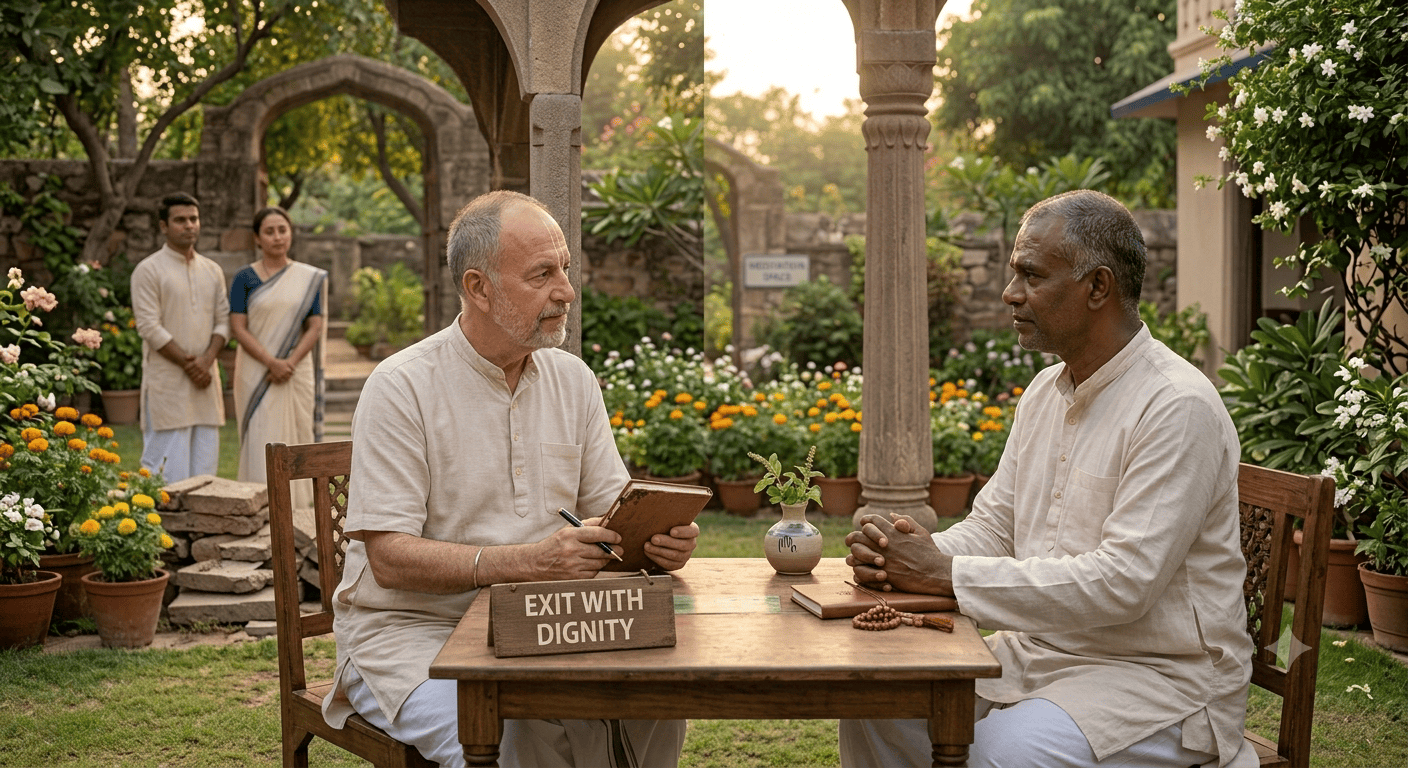
Have the conversation privately, in a calm and neutral space. Never publicly embarrass someone. Never announce this decision in front of the community before speaking directly to the person first.
Ideally, have one or two other trusted leaders present — both for support and for accountability. This protects everyone involved.
Lead with Care, Not Accusation
Begin by acknowledging the person’s humanity and, if genuine, any positive contributions they’ve made. This is not flattery — it is the basic respect that every soul deserves.
You might say something like: “We value you as a person, and we recognize that you’ve been part of our community. This conversation is difficult for us, and we want to approach it with honesty and respect.”
Be Clear and Direct
After the initial acknowledgment, state clearly and kindly what behaviors have led to this decision. Avoid vague language. Avoid lecturing. Simply be honest.
For example: “Over the past several months, there have been repeated situations where [specific behaviors]. We’ve addressed these concerns with you on [specific dates or occasions], and unfortunately, the pattern has continued. After much prayer and discussion, we’ve made the difficult decision to ask you to step away from the community.”
Explain the Why
Help the person understand that this decision is about behavior and its impact — not about their worth as a human being or their spiritual standing before God. No one can take away another person’s relationship with the Divine.
You might say: “This is not a statement about who you are in God’s eyes. Every soul is infinitely precious. But our responsibility as caretakers of this space is to ensure that it remains safe and nourishing for everyone.”
Listen, But Hold the Boundary
Give the person a chance to respond. Listen with genuine attention. They may be hurt, angry, confused, or defensive. That’s understandable. You don’t need to argue or convince them. Simply listen, acknowledge their feelings, and hold the boundary.
“I hear that this is painful, and I’m sorry for that pain. Our decision stands, but we want you to know that it was not made lightly.”
Offer a Path Forward When Possible
In some cases, you may be able to offer conditions under which the person could return — perhaps after a period of time, after seeking counseling, or after demonstrating changed behavior. If this is appropriate, share it clearly.
In other cases, the separation may need to be permanent. Be honest about this too.
Sure, here is the sentence with the clickable link:
Check out our website for more bhakti articles.
Caring for the Community Afterward
The conversation with the individual is only part of the process. The community also needs care.
Communicate with Transparency and Discretion
Other community members will likely notice when someone is no longer present. Prepare a brief, honest, and compassionate statement. You don’t need to share private details, but you should acknowledge the reality.
Something like: “After careful consideration and prayer, [person’s name] has been asked to step away from our community for a time. We ask for your prayers for everyone involved. If you have questions or concerns, please speak with [specific leaders] privately.”
Create Space for Feelings
Some members may feel relief. Others may feel grief, confusion, or even anger at the leadership. All of these responses are valid. Create opportunities for people to process — whether through private conversations, a community meeting, or simply being available.
Reaffirm Community Values
Use this moment to gently remind the community of the shared values that hold you together: kindness, honesty, accountability, devotion, and mutual respect. Not as a lecture, but as a reassurance that the community’s foundation is strong.
Learning and Growing from the Experience
Every difficult experience carries seeds of growth. After the dust settles, take time as a leadership team to reflect.
Review Your Community Guidelines
Did you have clear expectations and behavioral guidelines in place? If not, this is an opportunity to create them. Written community agreements — shared openly with all members — can prevent many problems and make future conversations easier.
Strengthen Your Support Systems
Consider whether your community has adequate support structures: mentorship for new members, regular check-ins, conflict resolution processes, and access to professional counseling when needed. Prevention is always more loving than intervention.
Extend Ongoing Compassion
Even after someone has left, hold them in your prayers. You may never know the full story of their struggles. The Bhagavata Purana teaches that a Vaishnava — a devotee of God — is para-duhkha-duhkhi, one who feels sadness at the suffering of others. Let that empathy remain, even from a distance.
When You Are the One Being Asked to Leave
If you are reading this because you are the one who has been asked to step away from a community, our heart goes out to you. This is a deeply painful experience, and your feelings of hurt, confusion, or anger are completely valid.
Please know: being asked to leave a community does not mean God has rejected you. Nothing can separate you from the love of the Divine. The Bhagavad Gita (9.30-31) contains one of the most merciful promises in all of scripture — that even someone who has committed serious mistakes, if they turn sincerely toward God, is quickly restored to righteousness and finds lasting peace.
Take time to grieve. Seek support from a counselor or trusted friend. And when you are ready, honestly reflect on the feedback you received. Growth often comes from the most uncomfortable places.
Your spiritual journey is not over. It may be entering a new and deeper chapter.
An Invitation to Take One Sincere Step
Whether you are a community leader carrying a heavy decision, a member processing a difficult change, or someone who has been asked to walk a different path for a while — you are seen. You are loved. You are not alone.
Bhakti teaches us that God meets us exactly where we are. He doesn’t demand perfection. He asks only for sincerity. One sincere prayer. One moment of honest chanting. One humble step toward love.
At The Bhakti House, we believe that everyone — every single person, from every background, with every kind of past — is welcome on this path of devotion. The door of God’s love is never locked.
Take one step today. Chant one holy name. Offer one honest prayer. And trust that the same God who holds the universe together is gently, lovingly holding you.
Hare Krishna, Hare Krishna, Krishna Krishna, Hare Hare
Hare Rama, Hare Rama, Rama Rama, Hare Hare
You are welcome here. Always.

