
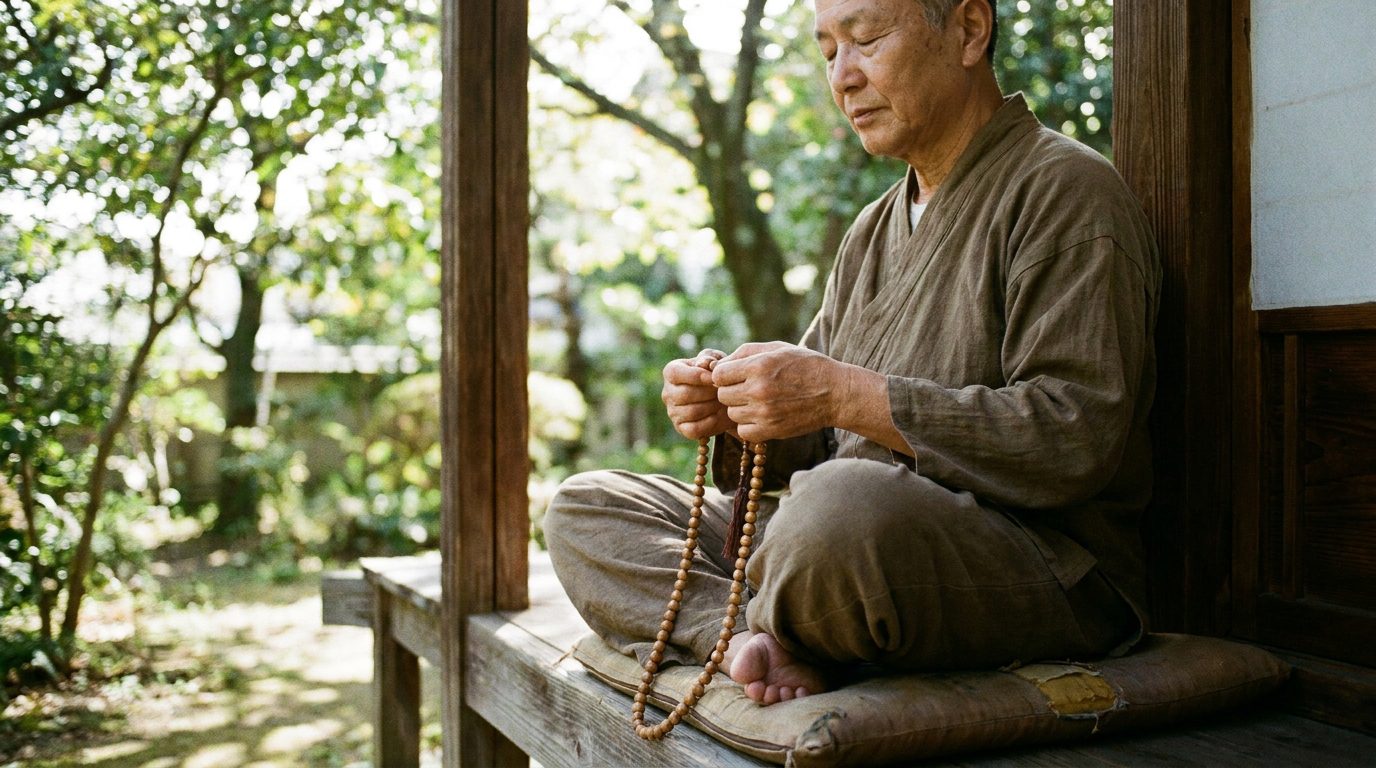
Japa is a Sanskrit word that means the soft, repeated recitation of a sacred mantra. In Bhakti Yoga—the yoga of love and devotion—japa chanting is a simple and beautiful practice of calling upon the names of God with attention, humility, and affection.
Many Bhakti practitioners chant the Hare Krishna maha-mantra:
Hare Krishna Hare Krishna
Krishna Krishna Hare Hare
Hare Rama Hare Rama
Rama Rama Hare Hare
“Maha-mantra” means “great mantra.” A mantra is a sacred sound that helps free the mind from anxiety and reconnect the heart with the Divine. In this mantra, “Krishna” means the all-attractive Supreme Person, “Rama” means the source of spiritual joy, and “Hare” is a call to God’s loving energy. In simple words, this prayer means: “O Lord, O Divine Energy of the Lord, please engage me in Your loving service.”
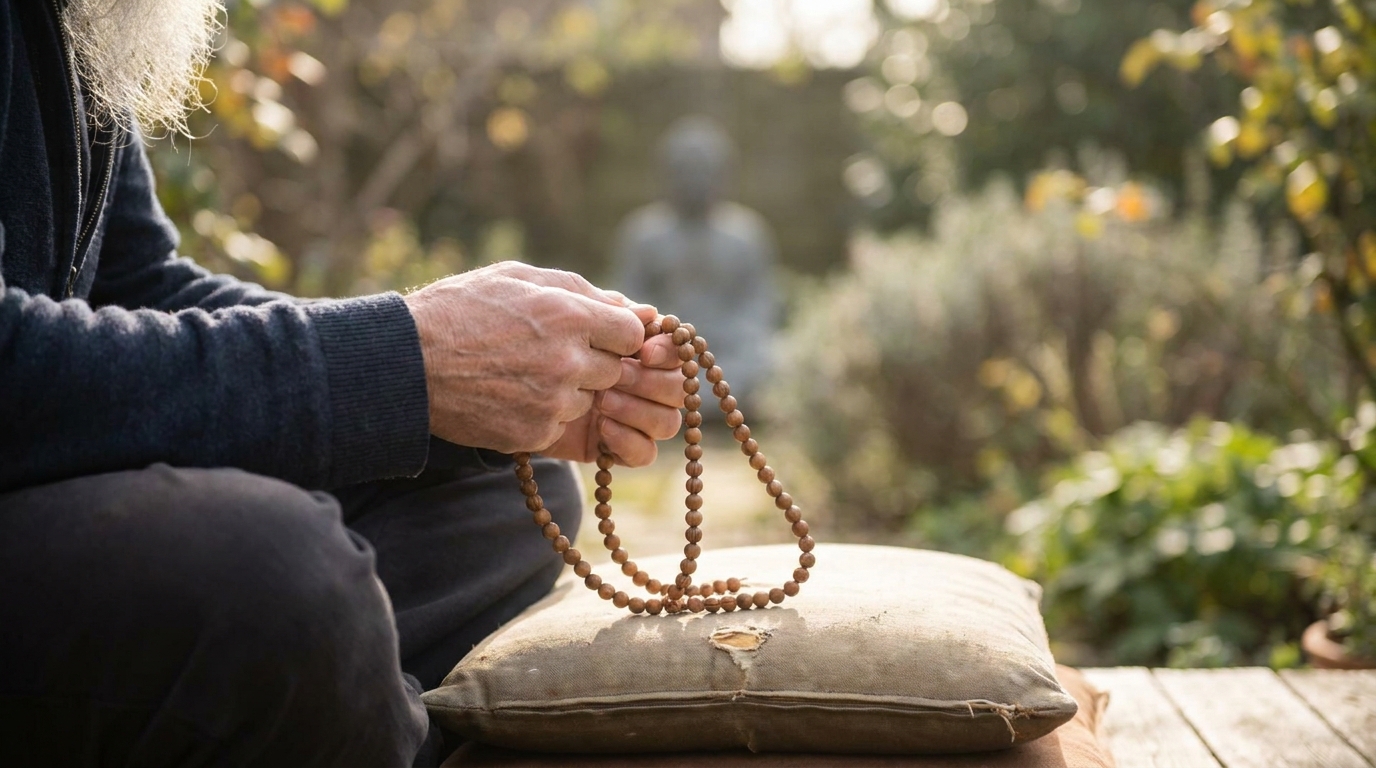
Japa is usually practiced with beads, called japa mala. A traditional mala has 108 beads. Each time we chant the mantra once, we move to the next bead. This gives the hands something gentle to do, helps the mind focus, and allows us to count our chanting without becoming overly mental about it.
Yet the heart of japa is not counting. The heart of japa is relationship.
We are not simply repeating sounds. We are turning toward God. We are making time to listen, to pray, and to remember who we truly are: eternal souls, loved by the Divine, meant to live in loving connection.
Why the “Right Amount” of Japa Matters
Many sincere people ask, “How much japa chanting should I do?” This is a very honest and important question.
Some people are just beginning. They may wonder if one round is enough. Others have been practicing for years and may feel called to chant more deeply. Some struggle with consistency, while others struggle with pride or pressure around numbers.
The right amount of japa chanting is not simply the amount that looks impressive. It is the amount that helps you remember God, soften your heart, and grow steadily in devotion.
Japa Is a Practice, Not a Performance
In spiritual life, it is easy for the ego to take even sacred things and turn them into measurements of self-worth. We may think, “If I chant more, I am advanced,” or “If I chant less, I am failing.”
But Bhakti Yoga is not a competition. Bhakti means loving devotion. The purpose of japa is to awaken love for God, not to create spiritual anxiety.
In the Bhagavad-gita, Krishna says:
“Whatever you do, whatever you eat, whatever you offer or give away, and whatever austerities you perform—do that as an offering to Me.”
—Bhagavad-gita 9.27
This means our chanting becomes powerful when it is offered with sincerity. Even a small amount of japa, offered with attention and humility, can nourish the soul.
Too Little, Too Much, or Just Right
If we chant too little, we may not feel much spiritual effect. The mind remains restless, and worldly habits stay strong.
If we take on too much too quickly, we may feel overwhelmed. Our chanting may become rushed, mechanical, or burdened by guilt.
The “right amount” is often the amount that is both sincere and sustainable. It should stretch us gently, but not break us. It should invite discipline, but not dryness. It should help us develop a daily relationship with God.
Like watering a plant, japa works best when done regularly. A little water every day is better than flooding the plant once and forgetting it for weeks.
Beginning Where You Are
One of the most compassionate principles in Bhakti Yoga is this: begin where you are.
God is not waiting for us to become perfect before we approach Him. He is inviting us now, in the middle of our real lives, with our busy schedules, tired minds, hopes, wounds, and questions.
If You Are New to Japa Chanting
If you are new to japa chanting, you might begin with just five minutes a day. Sit in a quiet place if possible. Take a few deep breaths. Hold your beads if you have them, or simply chant softly.
You can chant the Hare Krishna mantra, or another name of God that is meaningful in your tradition. Bhakti Yoga welcomes the sincere calling of God’s names. The mood is more important than external identity.
If five minutes feels easy after some time, you may increase to ten minutes. Then perhaps one round on beads. One full round of the Hare Krishna mantra on a 108-bead mala usually takes about seven to ten minutes, depending on your pace.
The key is to begin without pressure and continue with care.
If You Have a Busy Family or Work Life
Many people want to chant more but feel they do not have enough time. Parents, students, workers, caregivers, and community leaders often carry many responsibilities.
Bhakti Yoga does not reject worldly duties. It teaches us to spiritualize them.
If mornings are hectic, you may chant a small amount before anyone wakes up. If you commute, you may listen to sacred chanting and softly chant along when appropriate. If you have children, you may chant with them for a few minutes. If your day is full, you may chant one round before bed as an offering.
It is better to chant a steady, humble amount than to create an unrealistic standard and then abandon the practice.
If You Are Returning After a Break
Sometimes people stop chanting for a while. Life becomes difficult. Faith feels dry. The mind becomes distracted. Or perhaps guilt builds up, and the person feels unworthy to begin again.
Please be gentle with yourself.
In Bhakti Yoga, every sincere return is meaningful. Krishna says in the Bhagavad-gita:
“Even if one commits the most improper action, if one is engaged in devotional service, he is to be considered saintly because he is properly situated in determination.”
—Bhagavad-gita 9.30
This does not mean our mistakes do not matter. It means that turning back toward God matters deeply. If you have been away from japa, begin again with one bead, one mantra, one prayerful moment. Let that be your doorway.
Check out our latest articles at https://thebhaktihouse.org/blog.
Traditional Guidelines for Japa Chanting
Bhakti traditions often provide helpful structure. Structure can support love, just as a trellis helps a vine grow upward.
In the Hare Krishna tradition, initiated practitioners often vow to chant a minimum of sixteen rounds of the Hare Krishna maha-mantra daily. This is a sacred commitment and a powerful discipline. It generally takes around two hours, depending on the chanter’s speed and focus.
For beginners, sixteen rounds may feel far away. That is okay. A high standard is not meant to discourage us. It gives us a direction to grow toward.
Understanding Rounds
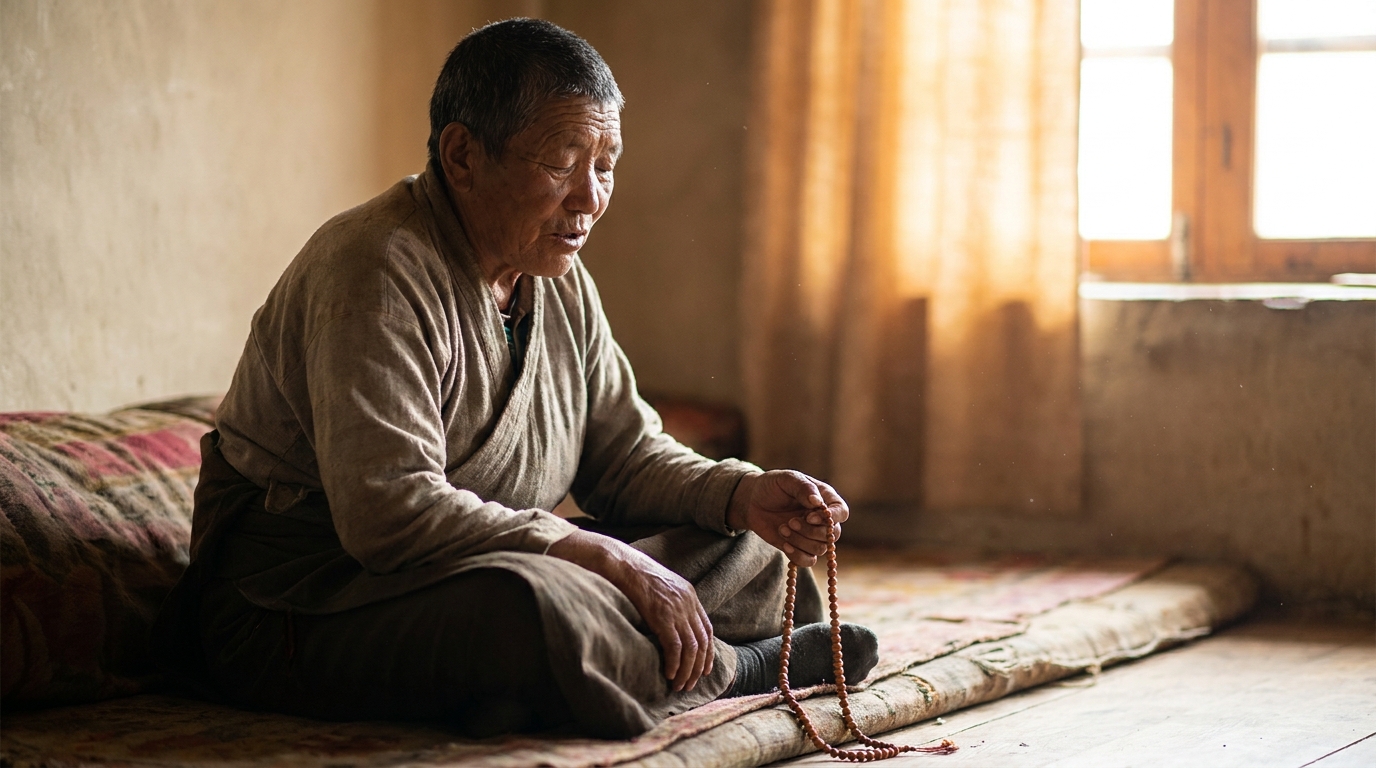
A “round” means chanting the full mantra once on each of the 108 beads of a japa mala. Many malas also have a larger bead called the Krishna bead or guru bead. Traditionally, we do not chant on this bead. We chant around the circle, then turn the beads around and continue in the other direction.
Counting rounds can be useful because it gives clarity. Instead of vaguely thinking, “I should chant more,” we can say, “Today I will chant one round,” or “Today I will chant four rounds.”
A clear vow, even a small one, can protect our spiritual intention.
The Value of a Daily Minimum
A daily minimum is very helpful. It creates steadiness. It tells the mind, “This is part of my life now.”
Your daily minimum might be:
- One sincere mantra upon waking
- Five minutes of chanting
- One round daily
- Four rounds daily
- Eight rounds daily
- Sixteen rounds daily
The number should be chosen prayerfully and honestly. It should be something you can keep on ordinary days, not only on inspired days.
There may be special days when you chant more. But your minimum is your daily anchor.
Increasing Gradually
If you want to increase your japa chanting, gradual growth is usually best.
For example, you might chant one round daily for a month. Then increase to two rounds. Later, perhaps four. Over time, the practice becomes natural.
This gradual approach respects the body, mind, and heart. It also helps protect us from spiritual burnout.
The goal is not to make a dramatic beginning and then stop. The goal is lifelong loving remembrance.
Quality and Quantity: Finding the Balance
When discussing the right amount of japa chanting, we naturally come to the relationship between quality and quantity.
Some people say, “Quality is all that matters.” Others say, “Quantity is essential.” In Bhakti Yoga, both have their place.
Quantity gives us time in the presence of the holy name. Quality helps us be truly present during that time.
Why Quantity Helps
The mind is restless. In the Bhagavad-gita, Arjuna says:
“The mind is restless, turbulent, obstinate, and very strong, O Krishna.”
—Bhagavad-gita 6.34
Anyone who has tried to chant knows this is true. We sit down with good intentions, and suddenly the mind runs to emails, memories, worries, conversations, plans, and desires.
Because the mind takes time to settle, quantity helps. If we chant only for a few seconds, the mind may never soften. But when we give the practice enough time, something begins to shift. The waves of thought may still come, but we learn to return to the sound.
Each mantra becomes another opportunity to come back.
Why Quality Matters
At the same time, if we chant many rounds with no effort to hear, pray, or remember, japa may become mechanical.
Quality means we try to hear the mantra. We notice when the mind wanders and gently bring it back. We chant as a prayer, not as a task to finish.
Good japa does not mean there are no distractions. Good japa means we keep returning to the holy name with sincerity.
A simple prayer before chanting can help:
“Dear Lord, please help me hear Your names. Please let this chanting be pleasing to You. Please cleanse my heart and awaken love.”
The Sweet Spot
The right amount of japa chanting is often found where quality and quantity support each other.
If you chant so little that you never enter the practice, consider increasing slightly.
If you chant so much that you rush, resent it, or become inattentive, consider improving your schedule, slowing down, or seeking guidance from a trusted teacher.
Bhakti Yoga is personal. The holy name is personal. Our practice should become a living offering, not a lifeless burden.
Listening: The Heart of Japa
Japa is not only speaking. It is listening.
We chant with the tongue, but we practice hearing with the ear and the heart. In Bhakti scriptures, hearing and chanting are central forms of devotion. The Srimad-Bhagavatam, one of the great devotional texts of India, teaches that hearing about and chanting the names and glories of God cleanses the heart.
In Srimad-Bhagavatam 1.2.17, it is said that Krishna, who is present in the heart, helps cleanse the desire for selfish enjoyment from those who hear His messages with faith and devotion.
This is a deeply hopeful teaching. We are not purifying ourselves by our own strength alone. When we sincerely hear and chant, God helps from within.
Hearing the Sound
A practical way to improve japa is to focus on hearing each word of the mantra.
Hare Krishna Hare Krishna
Krishna Krishna Hare Hare
Hare Rama Hare Rama
Rama Rama Hare Hare
Try not to blur the words together. Let each name be clear. If the mind wanders, do not become discouraged. Simply come back to the next mantra.
The next mantra is always a fresh beginning.
Chanting With Prayer
Because japa is relational, prayer is essential.
We can pray before, during, and after chanting. Prayer may be simple:
“Krishna, please accept me.”
“God, please guide me.”
“Please help me love You.”
“Please help me serve today.”
“Please protect me from pride and distraction.”
Prayer brings warmth into japa. It reminds us that we are not doing a technique; we are approaching a Person.
Allowing the Heart to Change
Sometimes people expect immediate mystical experiences from chanting. Sometimes they do come—peace, joy, tears, clarity, gratitude. But often the transformation is gentle and gradual.
We may notice that we become a little more patient. A little less reactive. A little more grateful. A little more interested in service. A little more aware of our inner life.
This is the holy name working in the heart.
Common Challenges in Japa Chanting
Every sincere practitioner faces challenges. Difficulty does not mean you are unqualified. It means you are human, and the path is inviting you deeper.
“My Mind Wanders Constantly”
This is very common. The mind has been wandering for many years, so we should not expect it to become still overnight.
When the mind wanders, gently return to the sound. Do this again and again. Each return is part of the practice.
You may also try chanting in the morning, before screens and responsibilities fill the mind. Sitting with good posture can help. Chanting audibly, so your ears can hear, is also very useful.
“I Feel Nothing When I Chant”
There may be days when chanting feels dry. This does not mean nothing is happening.
Spiritual growth often happens beneath the surface. A seed planted in the ground may look inactive for some time, but life is developing within.
On dry days, chant as an offering. You might pray, “I do not feel much today, but I am here. Please accept this small effort.”
This kind of humble chanting is very precious.
“I Rush to Finish My Rounds”
Rushing is another common challenge, especially when we have taken a vow to chant a certain number of rounds.
If you notice yourself rushing, pause for a moment. Take a breath. Remember why you are chanting. It may help to set aside a more realistic time for japa, rather than squeezing it into the margins.
The goal is not just to finish the rounds. The goal is to meet the holy name.
“I Compare Myself to Others”
Comparison can quietly poison spiritual life. One person chants sixteen rounds. Another chants four. Another chants one. Someone else chants with great taste, while you feel distracted.
Please remember: God sees the heart.
We can be inspired by others without comparing ourselves harshly. Let advanced practitioners encourage you. Let beginners remind you of simplicity. Let your own journey unfold with honesty.
Creating a Sustainable Japa Routine
A sustainable japa routine helps us chant regularly and peacefully. We are embodied souls, so practical details matter.
Choose a Sacred Time
Morning is especially recommended in many Bhakti traditions. The early morning hours are often quieter, and the mind is less crowded.
If possible, chant before checking your phone. Even a short morning practice can shape the whole day.
If morning does not work, choose another consistent time. The best time is the time you will actually protect.
Create a Sacred Space
You do not need a temple room to chant. A small clean corner is enough.
You might keep a picture of Krishna, Radha-Krishna, Lord Chaitanya, your spiritual teacher, or a sacred image from your tradition. You might light a candle or incense if appropriate. You might keep your japa beads in a bead bag or clean cloth.
The external space helps remind the inner heart: “This time is for God.”
Reduce Distractions
If possible, put your phone away or on airplane mode. Let family members know you are taking a few minutes for prayer. Sit where you are less likely to be interrupted.
Of course, life is not always quiet. If you are a parent or caregiver, interruptions may happen. Offer them too. Bhakti is not fragile. Krishna is present in the sincere attempt.
Chant Clearly and Steadily
A steady pace helps concentration. Chant audibly enough that you can hear yourself. Pronounce the mantra clearly.
If you are chanting the Hare Krishna mantra, do not worry if your pronunciation is not perfect at first. Try sincerely and improve over time. The holy name is merciful.
Keep a Gentle Record
Some people benefit from keeping a simple japa journal. You may note how many rounds you chanted, what helped, what distracted you, and any prayer that arose.
The purpose is not self-judgment. The purpose is awareness.
Over time, you may see patterns. Perhaps your japa is better before breakfast. Perhaps walking japa helps you stay awake. Perhaps late-night chanting makes you sleepy. Use this information kindly.
How to Decide Your Right Amount of Japa
Finding the right amount of japa chanting is a personal and prayerful process. Here are some guiding questions.
What Can I Do Every Day?
Choose an amount you can do daily, even when life is not ideal.
If you choose too high an amount and regularly miss it, you may become discouraged. If you choose a realistic amount and keep it, faith grows.
Steadiness builds strength.
What Amount Helps Me Remember God?
After chanting, ask yourself: “Did this help me remember God? Did it soften my heart? Did it make me more aware, humble, or grateful?”
If your amount is too small, you may feel little connection. If it is too rushed, you may feel tension. Adjust with honesty.
What Do My Guides Recommend?
In Bhakti Yoga, spiritual guidance is very important. A teacher, mentor, or experienced practitioner can help us see ourselves clearly.
If you are part of a spiritual community, ask for guidance. Share your current practice, your responsibilities, and your aspiration. A mature guide will not simply pressure you; they will help you grow steadily.
What Is My Long-Term Aspiration?
It is helpful to have both a current practice and a long-term aspiration.
Your current practice might be two rounds daily. Your aspiration might be to one day chant sixteen rounds with sincerity and steadiness.
This allows you to honor where you are while still moving forward.
Japa as Love in Action
Japa chanting is not separate from life. It is meant to transform how we live.
The names of God enter the heart and gradually shape our speech, choices, relationships, and service.
Chanting and Service
In Bhakti Yoga, seva means service offered with devotion. Japa gives us spiritual strength for seva, and seva gives practical expression to our chanting.
After chanting, we can ask: “How can I serve today?”
Maybe service means cooking with love. Listening to someone with patience. Helping at a temple or spiritual gathering. Offering our work to God. Caring for the earth. Supporting someone in pain. Speaking kindly. Forgiving. Sharing sacred sound.
Japa is the root; service is the fruit.
Chanting and Character
The Bhagavad-gita teaches that spiritual practice should help us become more peaceful, compassionate, self-controlled, and devoted.
If our chanting makes us proud, harsh, or judgmental, we need to return to the mood of prayer. The holy name is pure, but our approach may need softening.
Real japa should make us more humble. More loving. More willing to see others as children of God.
Chanting and Community
Sankirtana means congregational chanting of the holy names. While japa is often personal and quiet, sankirtana is shared and musical.
Both nourish each other.
Chanting with others can renew our enthusiasm. Hearing others chant reminds us that we are part of a larger family of seekers and servants. If you struggle with personal japa, joining kirtan or community chanting can help awaken taste.
Bhakti grows beautifully in the company of sincere souls.
When to Increase Your Japa Chanting
There may come a time when your current amount feels too small—not because of guilt, but because of hunger.
You may feel, “I want more time with the holy name.” This is a wonderful sign.
Signs You May Be Ready
You may be ready to increase your japa if:
- You are steady in your current commitment
- You feel nourished rather than burdened
- You can make time without neglecting essential duties
- You want deeper remembrance
- You have guidance or support
- Your increase feels prayerful, not ego-driven
Increasing by one round at a time is often wise.
Special Times for Extra Chanting
Some days are naturally suited for more japa. Holy days, retreats, pilgrimage, Ekadashi, or personal prayer days can be opportunities to chant extra.
Ekadashi is a sacred day observed twice a month in many Vaishnava traditions. It is often used for increased remembrance, simplified eating, and devotional practices.
Even if you do not follow all traditional observances, you can choose certain days to give more time to chanting and spiritual reflection.
Avoiding Pride in Increased Practice
If you chant more, be grateful. But be careful not to think, “I am better than others.”
The holy name is a gift. Our ability to chant is a gift. The time, the beads, the breath, the desire—all are gifts.
The more we chant, the more humble we should become.
When to Simplify Without Giving Up
There may also be seasons when life becomes unusually demanding: illness, grief, new parenthood, major transitions, emotional hardship, or heavy service responsibilities.
In such times, you may need to simplify your practice temporarily. This should be done thoughtfully, not casually.
Keep the Connection Alive
If you cannot chant your usual amount, keep a thread of connection.
Chant one round. Chant ten minutes. Chant while walking. Chant softly while resting. Listen to kirtan. Pray the mantra in your mind.
Do not let the mind say, “If I cannot do everything, I will do nothing.”
In Bhakti, even a small sincere offering has eternal value.
Return When You Can
If you reduce your chanting for a season, make a plan to return. Speak with a guide if possible. Ask for blessings. Rebuild gradually.
Spiritual life is not all-or-nothing. It is a relationship, and relationships are renewed through honest return.
Let Mercy Lead
Lord Chaitanya, the great teacher of chanting the holy names, offered a prayer in the Shikshashtakam:
“O my Lord, Your holy name alone can bestow all blessings upon living beings, and You have hundreds and millions of names… You have invested all Your energies in those names, and there are no hard and fast rules for chanting them.”
This prayer reveals the mercy of the holy name. God has made Himself available through His names. We can call out anywhere, at any time.
Yes, discipline is important. But mercy is deeper than our discipline.
A Simple Plan for Different Levels
Here is a gentle way to think about finding your right amount of japa chanting. These are not rigid categories, but helpful starting points.
The Curious Beginner
Start with five minutes a day or one round a few times per week. Learn the mantra. Listen to recordings. Attend kirtan if possible. Focus on developing a positive relationship with chanting.
Prayer: “God, please help me begin.”
The Daily Practitioner
Choose a daily minimum, such as one to four rounds. Protect a regular time. Try to chant before screens. Begin improving attention and pronunciation.
Prayer: “Please help me be steady.”
The Growing Devotee
Increase gradually to four, eight, or more rounds daily. Study Bhakti scriptures. Seek spiritual association. Begin seeing japa as one of the central practices of your life.
Prayer: “Please help me chant with devotion.”
The Committed Practitioner
With guidance, you may take up a strong daily vow, such as sixteen rounds. Organize your life around spiritual priorities. Continue deepening humility, service, and hearing.
Prayer: “Please let my chanting become loving service.”
The Real Measure of Japa
So, what is the right amount of japa chanting?
It is the amount that you can offer sincerely and steadily.
It is the amount that helps you remember God.
It is the amount that gradually purifies your heart.
It is the amount that supports your service, not your pride.
It is the amount that you can grow from, with patience and grace.
The number matters because commitment matters. But the mood matters most because love is the goal.
In the Bhagavad-gita, Krishna gives a simple and profound invitation:
“Always think of Me, become My devotee, worship Me, and offer your homage unto Me.”
—Bhagavad-gita 18.65
Japa chanting is one of the most practical ways to “always think of Me.” We may not be able to think of God constantly right away, but we can begin with a few minutes. A few beads. A few sincere names.
And those names can change everything.
Taking Your Next Sincere Step
If you are wondering how much japa chanting is right for you, begin with honesty, humility, and hope.
Do not wait for the perfect schedule, the perfect mind, or the perfect spiritual feeling. Begin today with what you can offer.
If you already chant, consider how to make your practice a little more attentive, a little more prayerful, a little more steady. If you feel ready, increase gently. If you feel overwhelmed, simplify without disconnecting. If you feel dry, keep calling. If you feel inspired, give thanks.
The holy name is not far away. God is not far away. Every sincere mantra is heard.
At The Bhakti House, all are welcome—wherever you come from, whatever your background, whatever your level of experience. Bhakti Yoga is a path of love, and love begins with one sincere step.
May your japa chanting become a daily meeting with grace. May the holy names bring peace to your mind, courage to your heart, and devotion to your life. And may each of us, in our own simple and sincere way, take one step closer to God today.
FAQs
1. What is Japa?
Japa is a spiritual practice in Hinduism, Buddhism, and Jainism that involves the repetition of a mantra or divine name as a form of meditation.
2. How much Japa should one chant?
The amount of Japa one should chant varies depending on individual preferences and spiritual goals. Some people may chant for a few minutes each day, while others may engage in longer sessions.
3. Are there recommended guidelines for Japa chanting?
There are no strict guidelines for how much Japa one should chant. It is often recommended to start with a manageable amount of time, such as 5-10 minutes, and gradually increase the duration as one becomes more comfortable with the practice.
4. What are the benefits of Japa chanting?
Japa chanting is believed to have numerous benefits, including promoting inner peace, reducing stress, and deepening spiritual connection. It is also thought to purify the mind and help cultivate a sense of focus and concentration.
5. Can Japa chanting be personalized?
Yes, Japa chanting can be personalized to suit individual preferences and spiritual inclinations. Some people may choose specific mantras or divine names that resonate with them, while others may incorporate Japa into their existing meditation or prayer routines.

