
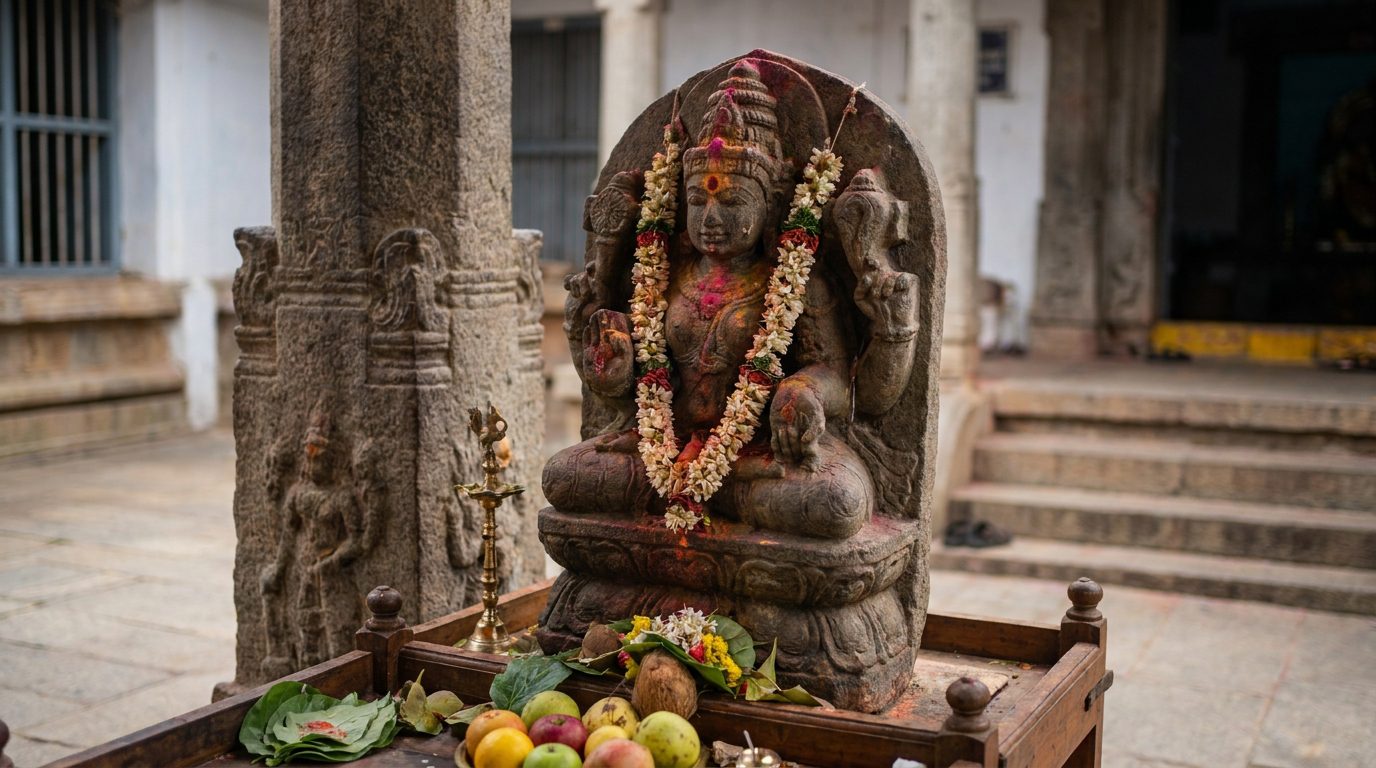
If you have ever walked into a temple and seen a beautiful form of Krishna, Rama, Vishnu, Radha, Shiva, Durga, or another sacred form of the Divine, you may have wondered: “What is a murti? Is it a statue? Is it symbolic? How do devotees relate to it?”
These are sincere and important questions.
In Bhakti Yoga, the murti is not approached as ordinary stone, metal, wood, or paint. A murti is a sacred form of God or God’s beloved servants, worshiped with love, prayer, and devotion. Through the murti, the Lord becomes visible and approachable for our eyes, hands, hearts, and daily lives.
The word “murti” comes from Sanskrit and can be translated as “form,” “embodiment,” or “sacred image.” In the path of Bhakti, which means loving devotion, the murti helps us build a personal relationship with the Divine. We offer flowers, water, food, incense, lamps, songs, and, most importantly, our hearts.
This complete guide will gently explore what a murti is, why devotees worship murtis, how murti worship is practiced, and how this sacred tradition can support spiritual growth in a practical, loving way.
A murti is a sacred form of the Divine used in worship, meditation, and devotional service. It may be made of stone, marble, metal, wood, clay, or painted on canvas. Some murtis are large temple deities, while others are small home altar forms.
In simple terms, a murti gives our devotion a loving focus.
Bhakti Yoga teaches that God is unlimited. The Divine is not restricted by matter, time, or space. If God is truly unlimited, then God can also choose to appear in a visible form to receive our love and help us remember our eternal relationship.
Murti Means “Sacred Form”
The Sanskrit word “murti” means form or embodiment. In Bhakti traditions, it refers to a form of God that has been respectfully installed and worshiped according to sacred principles.
A murti is different from ordinary art because it is not created merely for decoration. It is created and worshiped as a sacred meeting place between the devotee and the Divine.
Just as a photograph of someone we love can awaken real feelings in our heart, a murti helps awaken remembrance, reverence, and love for God. But in the Bhakti understanding, the murti is more than a reminder. The Lord can be personally present through that form, accepting the devotion offered with sincerity.
The Difference Between a Murti and an Idol
Many people hear the word “idol” and imagine worshiping something material as if it were God. Bhakti Yoga offers a different understanding.
Devotees do not believe that stone or metal itself is God in a limited sense. Rather, they understand that God can graciously manifest through a consecrated form to accept loving service.
A helpful example is a mailbox. The mailbox may be made of metal, but when it is authorized by the postal service, placing a letter inside has real meaning. Similarly, when a murti is made and worshiped according to sacred tradition, it becomes an authorized way to offer devotion.
The Bhagavad-gita explains that God is present everywhere. Krishna says, “I am seated in everyone’s heart” (Bhagavad-gita 15.15). If the Lord is present in every heart and every atom, then He can certainly be present in a form worshiped with love.
Why Form Matters in Devotion
Human beings naturally relate through form. We remember faces. We express love through gestures. We decorate our homes with images of loved ones. We gather around tables, light candles, sing songs, and create sacred spaces.
Bhakti Yoga honors this human need for relationship. Instead of asking us to love an abstract idea, Bhakti invites us to love the Supreme Person.
The murti gives us a way to see, serve, and remember God throughout the day. We can offer a flower in the morning, light a lamp in the evening, or simply pause and pray: “Please guide me. Please help me serve with love.”
The Spiritual Meaning of Murti Worship
Murti worship is called “arca-vigraha seva” in Sanskrit. “Arca” means worshipable form, “vigraha” means form, and “seva” means service. Together, this means loving service offered to the worshipable form of the Lord.
In Bhakti Yoga, worship is not meant to be fear-based or mechanical. It is a practice of relationship. The devotee approaches the murti not to demand from God, but to offer love and receive grace.
God Becomes Approachable
The Supreme Lord is beyond our material senses, yet out of compassion, He becomes approachable.
The Srimad-Bhagavatam, one of the beloved Bhakti scriptures, describes how the Lord accepts many forms to bless the hearts of devotees. The murti is one of these merciful manifestations. Through the murti, God allows us to serve Him in simple and tangible ways.
We may not be able to understand the infinite with our small minds, but we can offer a cup of water. We can chant a holy name. We can bow with humility. We can cook with love.
This is the beauty of Bhakti: the infinite Lord accepts the finite offerings of a sincere heart.
Worship Trains the Heart in Love
Murti worship gently trains us to become less self-centered and more God-centered.
Every offering says, “This is not just for me. This is for You.”
When we place fresh water on the altar, we learn attentiveness. When we clean the altar, we learn humility. When we cook and offer food, we learn gratitude. When we sing before the murti, we learn vulnerability and joy.
Little by little, our daily life becomes sacred.
Bhakti Yoga is not only a philosophy. It is a way of living. Murti worship turns ordinary actions—cleaning, cooking, decorating, singing—into acts of devotion.
The Lord Accepts Love
A central teaching of the Bhagavad-gita is that God accepts even the simplest offering when it is given with devotion.
Krishna says:
“Whoever offers Me with love and devotion a leaf, a flower, fruit, or water, I accept it.”
Bhagavad-gita 9.26
This verse is the heart of murti worship. The Lord does not ask for wealth, status, or perfection. He asks for love.
A leaf, a flower, a fruit, or water—these are simple things. Anyone can offer them. The offering becomes spiritually powerful not because of its material value, but because of the devotion behind it.
The Scriptural Foundation of Murti Worship
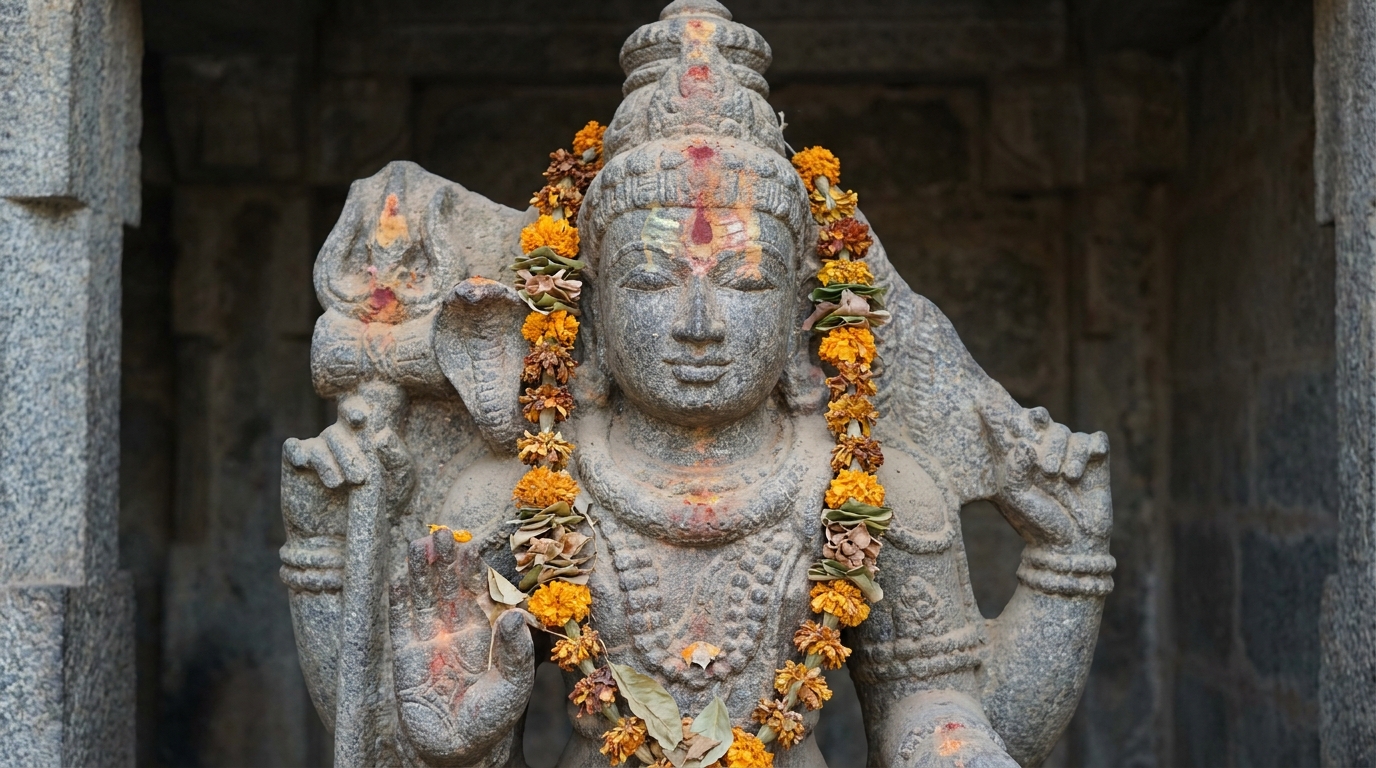
Murti worship is deeply rooted in the Bhakti scriptures and has been practiced for thousands of years in many devotional traditions. It is not a modern invention or a cultural decoration. It is a sacred method of connecting with God through loving service.
The Bhagavad-gita and Personal Devotion
In the Bhagavad-gita, Krishna teaches that He responds to the devotion of His devotees. He is not distant or indifferent. He is personal, loving, and involved.
Krishna says:
“As all surrender unto Me, I reward them accordingly.”
Bhagavad-gita 4.11
This means God reciprocates with each soul according to their approach. For the devotee who approaches through prayer, chanting, service, and worship, the Lord responds in the heart.
Murti worship is one way of surrendering. It says, “My home, my food, my time, my talents, my senses, and my heart belong to You.”
The Srimad-Bhagavatam and Sacred Seeing
The Srimad-Bhagavatam teaches that hearing and chanting about God purifies the heart. It also honors seeing the Lord’s form, remembering His qualities, and serving Him with devotion.
In Bhakti, “darshan” is an important Sanskrit word. Darshan means “sacred seeing” or “divine vision.” When devotees visit a temple, they often say, “I am going for darshan.” This does not simply mean, “I am going to look at the deity.” It means, “I am going to see and be seen by the Lord.”
Darshan is a moment of grace. We bring our heart before God, and we allow God’s presence to touch us.
The Pancharatra Tradition
Many details of murti worship are described in texts known as Pancharatra scriptures. These texts give practical guidance for temple worship, deity installation, cleanliness, offerings, mantras, and daily service.
While temple standards can be very detailed, home worship can be simple. The main principle is sincerity, respect, and regular loving attention.
Not everyone needs to perform elaborate rituals. A small home altar with a picture or murti, a candle, a flower, and heartfelt chanting can be deeply meaningful.
Check out our latest articles at https://thebhaktihouse.org/blog.
Types of Murtis in Bhakti Traditions
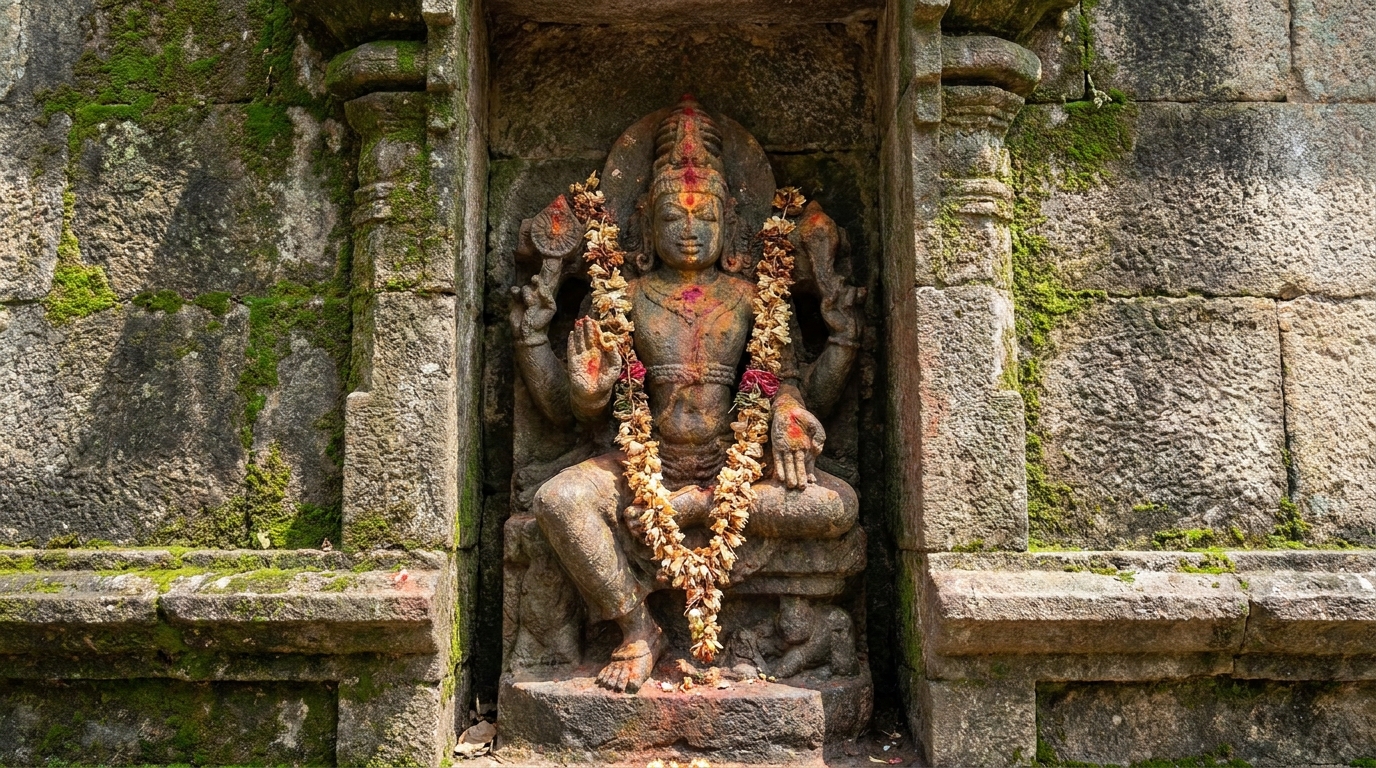
There are many forms of murtis worshiped across Bhakti traditions. Different communities may worship different forms of the Divine according to their lineage, scripture, and devotional mood.
Krishna Murtis
In many Bhakti Yoga communities, Krishna is worshiped as the Supreme Personality of Godhead—the all-attractive Lord. Krishna murtis may show Him playing the flute, standing in a graceful threefold bending form, or accompanied by Srimati Radharani, His eternal beloved and the embodiment of pure devotion.
Radha-Krishna worship represents the highest love between the soul and God. Radha’s devotion teaches us how to love without selfishness.
Rama Murtis
Lord Rama is worshiped as the ideal king, son, husband, and servant of dharma. “Dharma” means sacred duty, righteousness, or the path that upholds spiritual truth.
Rama murtis often include Sita, Lakshmana, and Hanuman. Sita represents purity and devotion. Lakshmana represents service. Hanuman represents strength, humility, and complete surrender.
For many devotees, worshiping Rama brings steadiness, courage, and a deep sense of moral clarity.
Vishnu and Narayana Murtis
Vishnu, also called Narayana, is worshiped as the preserver and maintainer of the universe. Vishnu murtis often show the Lord holding a conch, disc, club, and lotus. Each item has symbolic meaning.
The conch calls the soul to awaken. The disc represents divine protection and the cutting away of ignorance. The club represents strength and justice. The lotus represents purity and spiritual beauty.
Gaura-Nitai Murtis
In the Gaudiya Vaishnava tradition, devotees worship Sri Chaitanya Mahaprabhu and Nityananda Prabhu, often called Gaura-Nitai. Chaitanya Mahaprabhu is honored as Krishna in the mood of a devotee, who came to spread the chanting of the holy names.
Gaura-Nitai murtis are often shown with arms raised, inviting everyone to chant, dance, and receive divine love. Their worship is especially merciful and accessible.
The main practice they shared is the chanting of the maha-mantra:
Hare Krishna, Hare Krishna, Krishna Krishna, Hare Hare
Hare Rama, Hare Rama, Rama Rama, Hare Hare
“Hare” calls upon the divine energy of the Lord, “Krishna” means the all-attractive one, and “Rama” means the reservoir of joy. This mantra is a prayer: “O Lord, O divine energy of the Lord, please engage me in loving service.”
Other Sacred Forms
Many Bhakti communities also worship murtis of Shiva, Durga, Ganesha, Lakshmi, Saraswati, Hanuman, and other divine personalities. Depending on the tradition, these sacred beings may be understood as forms, servants, energies, or empowered representatives of the Supreme.
A respectful heart honors sincere devotion wherever it is found.
At The Bhakti House, we welcome seekers from all backgrounds. Whether you are new to Sanskrit words, familiar with temple worship, or simply curious about spiritual life, the path of Bhakti invites you to come closer through love.
How Murti Worship Is Practiced
Murti worship may be simple or elaborate. In a temple, trained priests may offer multiple daily services with mantras, incense, lamps, food, music, and sacred decorations. At home, a devotee may offer a flower, water, and a heartfelt prayer.
The essence is loving attention.
Creating a Sacred Space
A home altar can be simple. You may place a murti or sacred picture on a clean shelf or table. Keep the area peaceful, respectful, and uncluttered if possible.
You might include:
- A small cloth
- A candle or ghee lamp
- Fresh flowers
- A cup of water
- Incense, if suitable for your home
- A scripture such as the Bhagavad-gita
- Prayer beads for chanting
This space becomes a gentle reminder: “My life is connected to God.”
Even if your home is busy, small, or imperfect, you can still create a corner for devotion. Bhakti begins where we are.
Offering Food
Food offered to God is called “prasadam,” meaning mercy or grace. When we prepare vegetarian food with love and offer it to the Lord, it becomes spiritually blessed.
A simple offering prayer may be:
“My dear Lord, thank You for this food. Please accept this offering made with love. May my heart become purified through Your mercy.”
After offering, the food can be honored and shared. Eating prasadam is a beautiful practice because it turns nourishment into remembrance.
In Bhakti, we do not only eat to satisfy the body. We receive food as a gift from God.
Offering a Lamp
Offering a lamp is called “arati.” Arati is a devotional ceremony in which a lamp, incense, water, cloth, flowers, and other items may be offered to the murti while devotees sing.
The lamp represents the light of love and knowledge. When we offer light to God, we are also praying for the darkness in our own hearts to be removed.
A simple home arati may be just lighting a candle and singing or chanting. The Lord accepts the heart more than the complexity of the ritual.
Chanting Before the Murti
Chanting is one of the most important practices in Bhakti Yoga. The Sanskrit word “kirtan” means singing or glorifying the names of God, often in a call-and-response style. “Japa” means softly repeating a mantra, usually on beads.
Chanting before the murti helps focus the mind and soften the heart. Instead of wandering through endless thoughts, the mind gradually rests in the holy name.
The holy name and the murti work together. We see the Lord’s form and hear His name. Our senses become engaged in devotion.
Cleaning and Decorating
Cleaning the altar, arranging flowers, changing cloth, or decorating the murti are all forms of seva, or loving service.
These acts may seem small, but they can transform the heart. When we clean God’s space, we also ask God to clean our consciousness. When we offer beauty, we remember that all beauty comes from the Divine.
Murti worship is not only something we do for God. It is something God uses to lovingly reshape us.
Murti Worship at Home: A Practical Guide
If you are new to murti worship, it is natural to feel unsure. You may wonder if you are doing things “correctly.” Please take heart. Bhakti grows through sincerity, patience, and guidance.
Start simply. Let love lead.
Begin With a Picture or Small Murti
If you are not ready for formal deity worship, you can begin with a sacred picture of Krishna, Rama, Radha-Krishna, Gaura-Nitai, or another form of the Divine meaningful to your heart.
A picture can be honored with the same devotional mood. Offer a flower, light a candle, chant, and pray.
If you bring a murti into your home, treat it respectfully. Keep it clean. Offer regular attention. A murti is not meant to be forgotten on a shelf. It is an invitation into relationship.
Keep Your Practice Sustainable
It is better to offer five sincere minutes daily than to begin with an elaborate routine that becomes overwhelming.
You might start with:
- Bowing or offering a simple prayer in the morning
- Chanting one round or a few minutes of mantra meditation
- Offering water or a flower
- Reading one verse from the Bhagavad-gita
- Offering your meals before eating
Spiritual life becomes strong through consistency. Small daily offerings create deep inner change over time.
Learn From Trusted Teachers
Bhakti is traditionally learned through association. The Sanskrit word “sadhu-sanga” means the company of sincere spiritual people. When we spend time with devotees, ask questions, and observe their practices, our own devotion becomes nourished.
If you want to worship a murti at home, it is helpful to learn from a trusted temple, teacher, or Bhakti community. They can guide you in simple standards of cleanliness, offerings, mantras, and respectful care.
Do not be afraid to ask beginner questions. Every devotee began somewhere.
Common Questions About Murtis
Many thoughtful seekers have questions about murti worship. Bhakti welcomes honest inquiry. Questions asked with humility can deepen faith rather than weaken it.
Is Murti Worship Polytheistic?
Bhakti traditions may include many divine forms, but this does not necessarily mean many separate competing gods. In many Vaishnava Bhakti teachings, there is one Supreme Reality who appears in many forms and expands through many energies and servants.
Just as one sun can be reflected in many bodies of water, the one Divine can be honored in many sacred forms.
The key is not to reduce the Divine to our categories. God is one, yet unlimited. Personal, yet all-pervading. Near, yet beyond everything.
Can God Really Be Present in a Murti?
From a Bhakti perspective, yes—by divine grace.
God is not forced into the murti by human ritual. Rather, the Lord kindly agrees to become accessible through the murti for the sake of loving exchange.
If God can hear prayers spoken silently in the heart, He can also receive flowers offered before His sacred form. If God can be present everywhere, He can be especially present where He is lovingly invited and worshiped.
What If I Make Mistakes?
Everyone makes mistakes. Bhakti is not a performance for God; it is a relationship with God.
If you forget a mantra, offer the wrong flower, or feel distracted, do not become discouraged. Offer your imperfection too. Pray, “Please accept my small effort and help me grow.”
Of course, respect matters. We should not be careless. But we should also remember that the Lord is compassionate. Like a loving parent, God sees the intention of the child.
Do I Need to Be Hindu to Worship a Murti?
Bhakti Yoga is rooted in the Vedic and Hindu devotional traditions, but love of God is not limited by ethnicity, nationality, or background.
Anyone can chant the holy names. Anyone can pray. Anyone can offer a flower with sincerity. Anyone can begin a life of devotion.
If you are from another religious background, you can approach with respect and openness. Bhakti does not ask you to pretend. It invites you to explore relationship with the Divine through love, humility, and service.
The Inner Purpose of Murti Worship
The outer practices of murti worship are beautiful, but their purpose is inner transformation. The goal is not ritual for ritual’s sake. The goal is prema—pure love of God.
“Prema” is a Sanskrit word meaning divine love, selfless love, love that wants only to serve and please the beloved.
From Seeing the Murti to Seeing God Everywhere
At first, we may see God only on the altar. Over time, the practice teaches us to see God everywhere.
We begin to remember that every person is a soul. Every meal is a gift. Every talent can be offered. Every challenge can become a prayer. Every moment can become a chance to serve.
The murti becomes the center from which sacred vision expands into life.
From Offering Flowers to Offering the Heart
A flower is lovely, but the Lord ultimately wants our heart.
Murti worship invites us to ask: What am I really offering? Am I offering my attention? My gratitude? My ego? My fears? My plans? My relationships? My work?
In Bhakti, nothing has to be separate from spiritual life. We can offer our home, our parenting, our art, our grief, our service, our recovery, our questions, and our hopes.
The altar teaches us how to live: with God in the center.
From Ritual to Relationship
Any spiritual practice can become mechanical if we forget its purpose. Murti worship stays alive when we remember that we are relating to a person—the Supreme Person, full of compassion and love.
Speak to the Lord. Sing sincerely. Listen inwardly. Serve gently. Let your practice be honest.
Some days your heart may feel full of devotion. Other days it may feel dry. Still, come. Stand before the murti. Chant one name. Offer one prayer. This faithfulness is itself beautiful.
Murti Worship and Bhakti Yoga in Daily Life
Bhakti Yoga means the yoga of love and devotion. “Yoga” means connection, and Bhakti Yoga is the path of reconnecting the soul with God through loving service.
Murti worship is one part of this larger devotional life. It supports chanting, prayer, scripture study, community, compassion, and service.
Chanting as the Heart of Bhakti
In this age, Bhakti scriptures especially recommend chanting the holy names of God. The holy name is accessible anywhere—at home, in the car, on a walk, in joy, or in pain.
When we chant before the murti, our chanting becomes personal. We are not just repeating sound. We are calling out to the Lord.
The maha-mantra is both simple and profound:
Hare Krishna, Hare Krishna, Krishna Krishna, Hare Hare
Hare Rama, Hare Rama, Rama Rama, Hare Hare
You do not need to understand everything before you begin. Chanting itself brings understanding.
Service as Worship
The mood of murti worship can extend into service to others.
If we decorate the altar but speak harshly to people, our worship is incomplete. If we offer food to God but ignore the hungry, we have missed part of the lesson. If we bow before the murti but refuse humility in relationships, the practice is asking us to go deeper.
True worship softens the heart.
Serving people, caring for the earth, feeding others prasadam, welcoming guests, listening with compassion, and using our gifts for good are all extensions of Bhakti.
Prayer as Daily Relationship
Prayer does not need to be fancy. It can be as simple as:
“Thank You.”
“Please guide me.”
“Please help me forgive.”
“Please let me serve.”
“Please bring me closer to You.”
When prayer becomes natural, life becomes a conversation with God.
The murti gives us a place to return to—morning and evening, in happiness and uncertainty, with questions and gratitude.
Respectful Guidelines for Murti Worship
Because a murti is sacred, devotees approach with care. These guidelines are not meant to create fear, but to help cultivate reverence.
Keep Cleanliness
Cleanliness supports clarity and respect. Try to keep the altar area clean. Wash your hands before offering items. Use clean dishes for offerings if possible.
In Bhakti, cleanliness is both outer and inner. We clean the space and also pray for a clean heart.
Offer What Is Appropriate
In many Vaishnava traditions, offerings are vegetarian and prepared without meat, fish, eggs, onion, or garlic. Different traditions may have different standards, so it is good to learn from your lineage or community.
The mood is to offer foods that are pure, fresh, and prepared with care.
Most importantly, do not offer something with the mood of carelessness. Offer as you would offer to a dearly loved guest.
Be Regular, Not Rushed
A steady practice is more important than a dramatic one. Even a short daily practice can be deeply nourishing.
If life is busy, offer a brief prayer. If you are traveling, chant. If you are ill, mentally offer flowers. The Lord understands your situation.
Bhakti is practical and compassionate.
Avoid Treating the Murti as Decoration
A murti should not be treated like ordinary home décor. If you choose to keep a murti, place it respectfully and offer some regular attention.
If you are unsure whether you can maintain worship, begin with a picture or scripture. Let your practice grow naturally.
How a Murti Helps Spiritual Growth
The murti supports spiritual growth by engaging the senses in devotion. Instead of using the eyes, ears, hands, voice, and mind only for worldly pursuits, we use them in service to God.
The Eyes Learn to See Sacredly
When we look at the murti, we practice seeing with reverence. Over time, this sacred seeing can extend to others. We begin to see each person as a soul, loved by God.
The Hands Learn to Serve
Offering flowers, cooking, cleaning, and arranging the altar teach the hands to serve. This service mood can then enter our family life, work life, and community life.
The Voice Learns to Chant
Singing and chanting purify speech. Instead of using words only to complain, criticize, or promote ourselves, we learn to use words for praise, prayer, truth, and kindness.
The Mind Learns to Remember
The mind often runs in many directions. Murti worship gently brings the mind back to God. The altar becomes an anchor for remembrance.
The Heart Learns to Love
This is the deepest gift. Through repeated acts of devotion, the heart becomes softer, humbler, and more receptive to grace.
Beginning Your Journey With Murti Worship
If you feel drawn to murti worship, begin with humility and joy. You do not need to be perfect. You do not need to know every mantra. You do not need to compare your practice with anyone else’s.
Start with one sincere offering.
A Simple Daily Practice
Here is a gentle practice you can try:
- Sit or stand before a sacred picture or murti.
- Take a few deep breaths and become present.
- Offer a simple prayer of gratitude.
- Chant the maha-mantra or another name of God.
- Offer water, a flower, or your meal.
- Ask for guidance in serving with love that day.
This can take five minutes, or it can become longer as your devotion grows.
A Simple Prayer
You may pray:
“My dear Lord, I do not know how to love You fully, but I want to begin. Please accept this small offering. Please guide my heart. Please help me remember You, serve others, and grow in devotion.”
Such a prayer is precious.
Come as You Are
Some people come to Bhakti with strong faith. Some come with curiosity. Some come with wounds from past religious experiences. Some come with doubts. Some come simply because chanting brings them peace.
All are welcome.
The path of Bhakti Yoga is not about pretending to be advanced. It is about turning sincerely toward God, one step at a time.
Murti as a Doorway to Love
A murti is a doorway, not an obstacle. It is a sacred invitation into relationship. Through the murti, the Lord allows us to practice love in ways we can see, touch, hear, and offer.
We offer a flower, and the heart begins to open.
We light a lamp, and inner darkness begins to soften.
We chant the holy names, and the soul begins to remember.
We bow down, and pride begins to loosen.
We serve, and love begins to grow.
This is the gift of murti worship in Bhakti Yoga. It makes spiritual life practical, personal, and tender.
Whether you are new to the word “murti” or have stood before temple deities for many years, may this sacred practice help you feel closer to the Divine. May your home become a place of prayer. May your meals become offerings. May your voice become an instrument of chanting. May your hands become instruments of service. May your heart become a small temple of love.
Everyone is welcome at The Bhakti House. Wherever you are from, whatever your background, and however your journey has unfolded, you can take one sincere step toward God today—chant one holy name, offer one prayer, serve one soul, or place one flower before the Lord with love.
FAQs
What is a Murti?
A Murti is a sacred image or statue in Hinduism, typically representing a deity or divine being. It is used as a focus for devotion and worship in temples and homes.
How are Murtis made?
Murtis are traditionally made by skilled artisans using various materials such as stone, metal, wood, or clay. The process involves sculpting, carving, and sometimes painting to create a lifelike representation of the deity.
What is the significance of Murtis in Hinduism?
Murtis are considered to be a physical embodiment of the divine and are used as a means of connecting with the deity during worship and prayer. They are believed to carry the presence and blessings of the deity they represent.
How are Murtis worshipped?
Murtis are worshipped through rituals and offerings, including the lighting of incense, the offering of flowers and food, and the recitation of prayers and mantras. Devotees may also perform aarti, a ritual of waving a lamp in front of the Murti.
Are there specific guidelines for caring for Murtis?
Yes, there are specific guidelines for caring for Murtis, including regular cleaning, dressing the Murti with appropriate clothing and ornaments, and ensuring that they are placed in a clean and respectful environment. Additionally, Murtis should be handled with care and reverence.

