

When we think of Krishna, we often picture Him as the enchanting flute player of Vrindavan, surrounded by cowherd friends and the beloved Gopis. But there is another chapter of Krishna’s life that is equally breathtaking — His life as a king, a husband, and a householder in the magnificent city of Dvaraka.
In Dvaraka, Krishna married and shared His life with extraordinary women — queens whose devotion, intelligence, courage, and love reveal some of the deepest truths about the relationship between the soul and God. Their stories are not fairy tales from a distant past. They are living invitations, showing each of us what it looks like to love the Divine with every fiber of our being.
Whether you are new to Bhakti or have been walking this path for years, the stories of Krishna’s queens offer something profoundly personal. They show us that God is not distant or indifferent. He is intimately responsive to the love of His devotees — and He cherishes every sincere heart that turns toward Him.
Let’s explore the lives of these remarkable women together.
Krishna’s queens are traditionally counted as eight principal queens, known as the Ashtamahishi (ashta meaning “eight” and mahishi meaning “queen”). Each of these women came to Krishna through unique and often dramatic circumstances — rescued from danger, united through divine arrangement, or drawn by the irresistible pull of pure devotion.
The Srimad Bhagavatam, one of the most cherished scriptures in the Bhakti tradition, tells us about these queens in beautiful detail. Their names are Rukmini, Satyabhama, Jambavati, Kalindi, Mitravinda, Nagnajiti (also called Satya), Bhadra, and Lakshmana.
Each queen had her own personality, her own way of loving Krishna, and her own lessons to teach us. And beyond these eight, Krishna also married 16,100 women whom He rescued from the demon Narakasura — giving each of them dignity, protection, and a loving home.
This is not simply a story about royal marriages. It is a revelation of how the Supreme Person responds to the longing of every soul.
Rukmini Devi: The Goddess of Fortune Herself
Of all Krishna’s queens, Rukmini Devi holds a uniquely special place. She is understood in the Bhakti tradition to be none other than Lakshmi, the Goddess of Fortune, appearing in this world to be with her eternal Lord.
Rukmini’s story begins with a desperate act of faith. Her brother Rukmi had arranged for her to marry the wicked king Shishupala. But Rukmini’s heart already belonged to Krishna. She had heard about Him, meditated on Him, and fallen deeply in love — without ever having met Him in person.
In one of the most tender moments in all of scripture, Rukmini wrote a letter to Krishna, pouring out her heart and begging Him to come rescue her. The Srimad Bhagavatam (10.52.37) records her words:
> “O unconquerable one, upon hearing of Your qualities, beauty, and character, which fill the ears and minds of all living beings, and upon hearing of Your personal beauty, which fulfills all desires of those who hear about it, what young woman of good breeding in this world would not choose You as her husband?”
These are not the words of a passive woman waiting to be saved. This is a soul declaring its love boldly, vulnerably, and with total trust. Rukmini took initiative. She sent a trusted messenger. She prayed with all her being. And Krishna responded — He came to her, swept her onto His chariot, and defeated the armies that tried to stop them.
Rukmini teaches us that devotion is not passive. It is courageous. It speaks up. It reaches out. And when we reach for God with sincerity, He reaches back.
Satyabhama: The Bold and Beautiful Devotee
Satyabhama was the daughter of King Satrajit, and her relationship with Krishna reveals another flavor of divine love — one that is spirited, bold, and sometimes even filled with what the tradition calls mana, a kind of loving jealousy or pride.
Satyabhama was confident, passionate, and deeply devoted. She once accompanied Krishna to the heavenly planets and was so determined to have the celestial Parijata flower that Krishna actually uprooted the entire tree from Indra’s garden and brought it to her courtyard. This led to a playful conflict with the demigods themselves!
But beneath Satyabhama’s boldness was a heart completely surrendered to Krishna. Her spirited nature was not worldly ego — it was the intensity of a soul that could not bear to be separated from its beloved even for a moment.
In the Bhakti tradition, we learn that God does not want identical, expressionless devotion from everyone. He delights in the unique personality of each devotee. Satyabhama reminds us that we can come to God exactly as we are — with all our fire, all our feelings, all our humanness — and He will love us completely.
Jambavati, Kalindi, and the Other Queens
Jambavati: Daughter of the Bear King
Jambavati was the daughter of Jambavan, the great bear warrior who had served Lord Rama in a previous age. When Krishna went searching for the precious Syamantaka jewel, He entered Jambavan’s cave and the two engaged in a fierce battle that lasted twenty-eight days.
When Jambavan finally recognized that Krishna was none other than his beloved Lord Rama appearing in a new form, he was overcome with devotion. He offered the jewel — and his daughter Jambavati — to Krishna with tears of love.
Jambavati’s story is a beautiful reminder that God appears again and again throughout history, and that the thread of devotion connects all these appearances. Her father’s recognition of Krishna teaches us that love for God transcends time, form, and circumstance.
Kalindi: The One Who Waited by the River
Kalindi is one of the most quietly inspiring of Krishna’s queens. She was the daughter of the Sun god, and she had been performing intense austerities on the bank of the Yamuna River, praying for one thing only — to have Krishna as her husband.
She didn’t seek wealth, power, or fame. She simply wanted God. And Krishna, while walking with His friend Arjuna, found her there and accepted her wish.
Kalindi’s story speaks to anyone who has ever felt that their prayers are going unanswered. She waited. She persevered. She held onto her desire for the Divine with quiet, unshakable faith. And in His own perfect timing, Krishna came to her.
Mitravinda, Satya, Bhadra, and Lakshmana
Each of Krishna’s remaining principal queens — Mitravinda, Satya (Nagnajiti), Bhadra, and Lakshmana — came to Him through extraordinary circumstances involving tests of valor, such as taming wild bulls or defeating rival suitors.
These stories, described in the Tenth Canto of Srimad Bhagavatam, show us that the union between the soul and God is never accidental. It is chosen, fought for, and earned through sincerity and grace working together.
The 16,100 Queens: Grace Beyond Measure
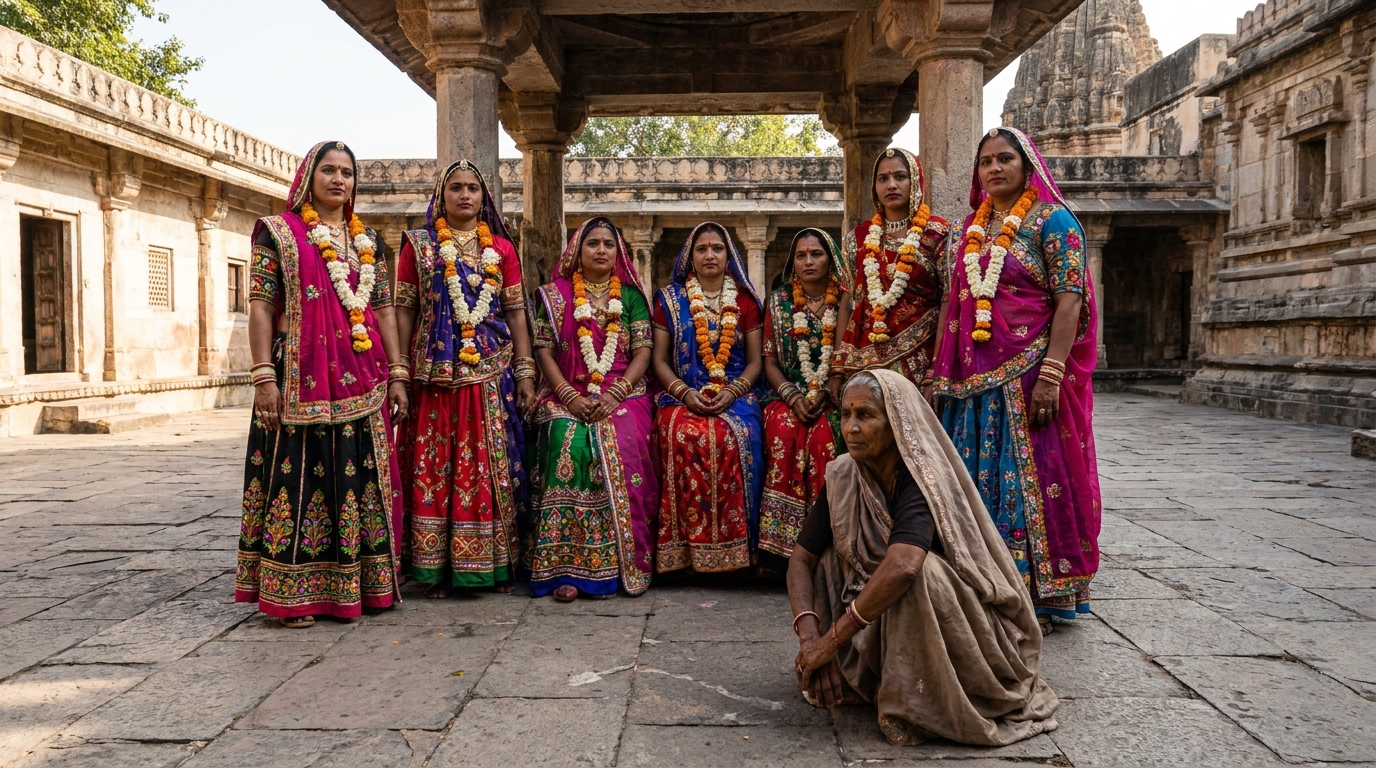
One of the most astonishing stories in the Srimad Bhagavatam is Krishna’s rescue of 16,100 women who had been kidnapped and held captive by the demon Narakasura. After slaying the demon, Krishna freed all these women. But they faced a heartbreaking reality — society would not accept them back. They had nowhere to go.
So Krishna married each and every one of them. He gave them homes, respect, love, and dignity. And through His divine mystical power, He expanded Himself into 16,100 forms so that each queen felt she had Krishna entirely to herself.
The Srimad Bhagavatam (10.59.42) describes this:
> “The Lord brought the women to Dvaraka, and there the members of the Yadu dynasty honored them. He married them in proper ceremonies, performed simultaneously in all their palaces.”
This is not a story about quantity. It is a story about the infinite capacity of God’s love. No one is too broken, too overlooked, or too rejected for Krishna’s embrace. He takes in those the world has cast aside and makes them royalty.
For anyone who has ever felt unworthy of God’s love, this story is a direct answer: You are worthy. You are wanted. Come as you are.
Sure, here is the sentence with the clickable link:
Check out our website for more articles: more articles.
What Krishna’s Queens Teach Us About Bhakti
Devotion Takes Many Forms
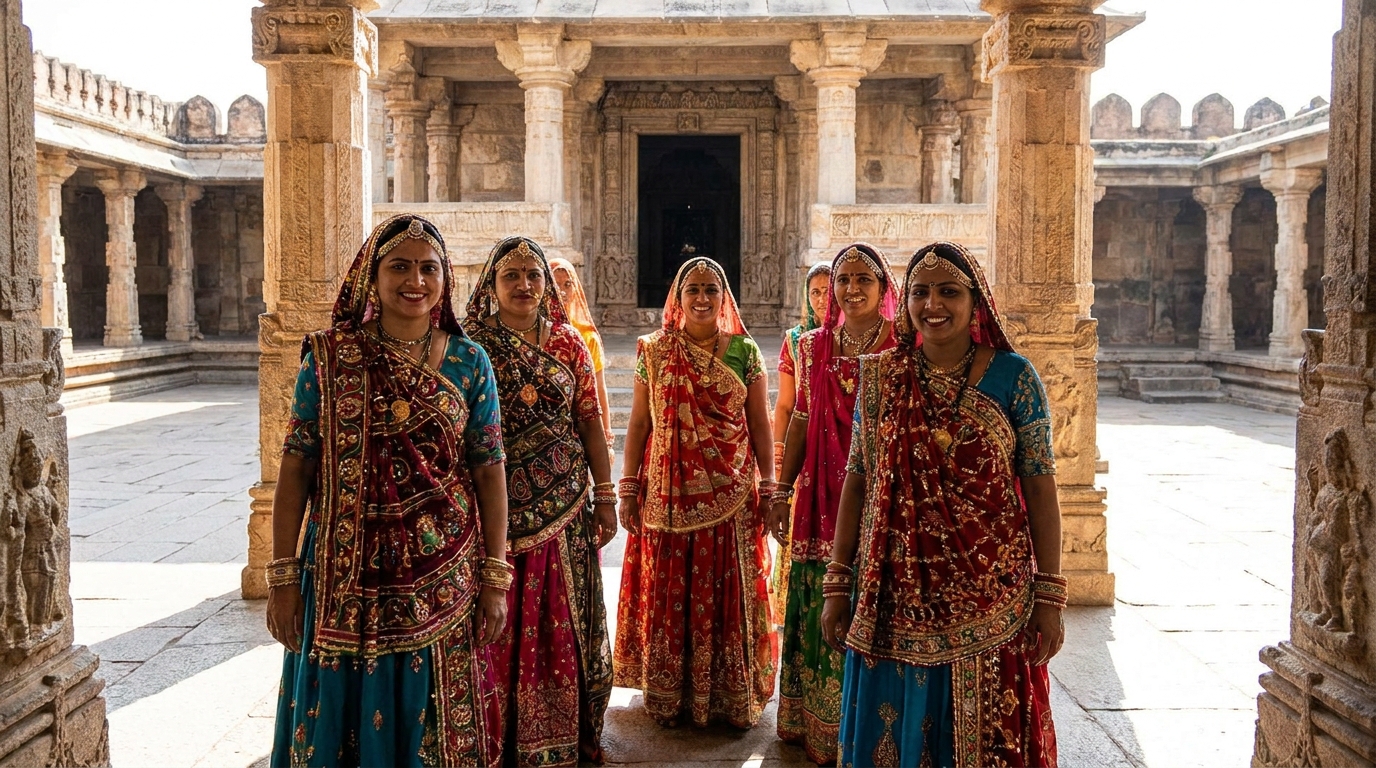
One of the most beautiful lessons from the queens of Dvaraka is that there is no single “correct” way to love God. Rukmini’s love was gentle and devoted. Satyabhama’s was fiery and bold. Kalindi’s was patient and meditative. Jambavati’s came through the heritage of lifetimes of service.
In Bhakti Yoga, we honor this diversity. Whether you express your love for God through chanting (kirtan), prayer, service (seva), study, or simply through a quiet moment of gratitude in your heart — it all counts. It all matters. God sees every offering.
As Krishna Himself says in the Bhagavad Gita (9.26):
> “If one offers Me with love and devotion a leaf, a flower, a fruit or water, I will accept it.”
The offering matters far less than the love behind it.
Love Is an Exchange
The relationships between Krishna and His queens beautifully illustrate that Bhakti is a relationship, not a transaction. Krishna did not simply accept the love of His queens and give nothing in return. He cooked for them, joked with them, comforted them, and went out of His way to make each one feel uniquely cherished.
This tells us something essential: God is not a distant, impersonal force. He is a person who longs for relationship with us just as we long for relationship with Him. When we take one step toward Krishna, He takes ten steps toward us.
Surrender Is Strength
Every queen, in her own way, surrendered to Krishna — not out of weakness, but out of the deepest strength. Rukmini risked everything to send her letter. Kalindi spent years in prayer. The 16,100 queens trusted Krishna with their broken lives.
Surrender in Bhakti is not giving up. It is giving over — placing our hearts, our worries, our hopes, and our very selves into the hands of the One who loves us most. And in that surrender, we find not less of ourselves, but more.
An Invitation for You
The stories of Krishna’s queens are not meant to remain on the pages of ancient texts. They are meant to enter our hearts and change the way we see ourselves, each other, and God.
Perhaps you see yourself in Rukmini’s courage, or Kalindi’s patience, or Satyabhama’s passion. Perhaps you resonate with the 16,100 queens who wondered if they were worthy of love. Wherever you find yourself, know this: you are already beloved.
Bhakti does not ask you to be perfect. It asks you to be sincere. It asks you to take one step — one prayer, one chant, one act of kindness, one moment of turning your heart toward the Divine.
At The Bhakti House, we believe that everyone is welcome on this path. No matter your background, your tradition, your doubts, or your questions — there is a place for you here. Krishna’s love has room for every soul, just as He had room for every queen in Dvaraka.
Take one sincere step today. Chant His name. Offer a prayer. Open your heart. And trust that He is already reaching back for you.
FAQs
What is the significance of Krishna’s queens in Hindu mythology?
In Hindu mythology, Krishna’s queens, also known as the Ashtabharya, are considered to be the consorts of Lord Krishna. They are revered for their devotion and love for Krishna, and their stories are often used to illustrate the concept of divine love and devotion in Hinduism.
How many queens did Krishna have?
According to Hindu scriptures, Lord Krishna had 16,108 queens. These queens were known for their unwavering love and devotion to Krishna, and their stories are often celebrated in Hindu religious texts and folklore.
What are some of the names of Krishna’s queens?
Some of the well-known names of Krishna’s queens include Rukmini, Satyabhama, Jambavati, Kalindi, Mitravinda, Nagnajiti, Bhadra, and Lakshmana. Each queen is revered for her unique qualities and devotion to Lord Krishna.
What are some popular stories associated with Krishna’s queens?
One of the most popular stories associated with Krishna’s queens is the story of Rukmini’s devotion and love for Krishna, as well as the story of Satyabhama’s fierce loyalty and dedication to Krishna. These stories are often used to illustrate the concept of divine love and devotion in Hinduism.
How are Krishna’s queens celebrated in Hindu culture?
Krishna’s queens are celebrated in Hindu culture through various festivals, rituals, and religious ceremonies. Their stories are often depicted in traditional dance, music, and art forms, and their devotion to Krishna is revered as an example of divine love and devotion in Hinduism.

