
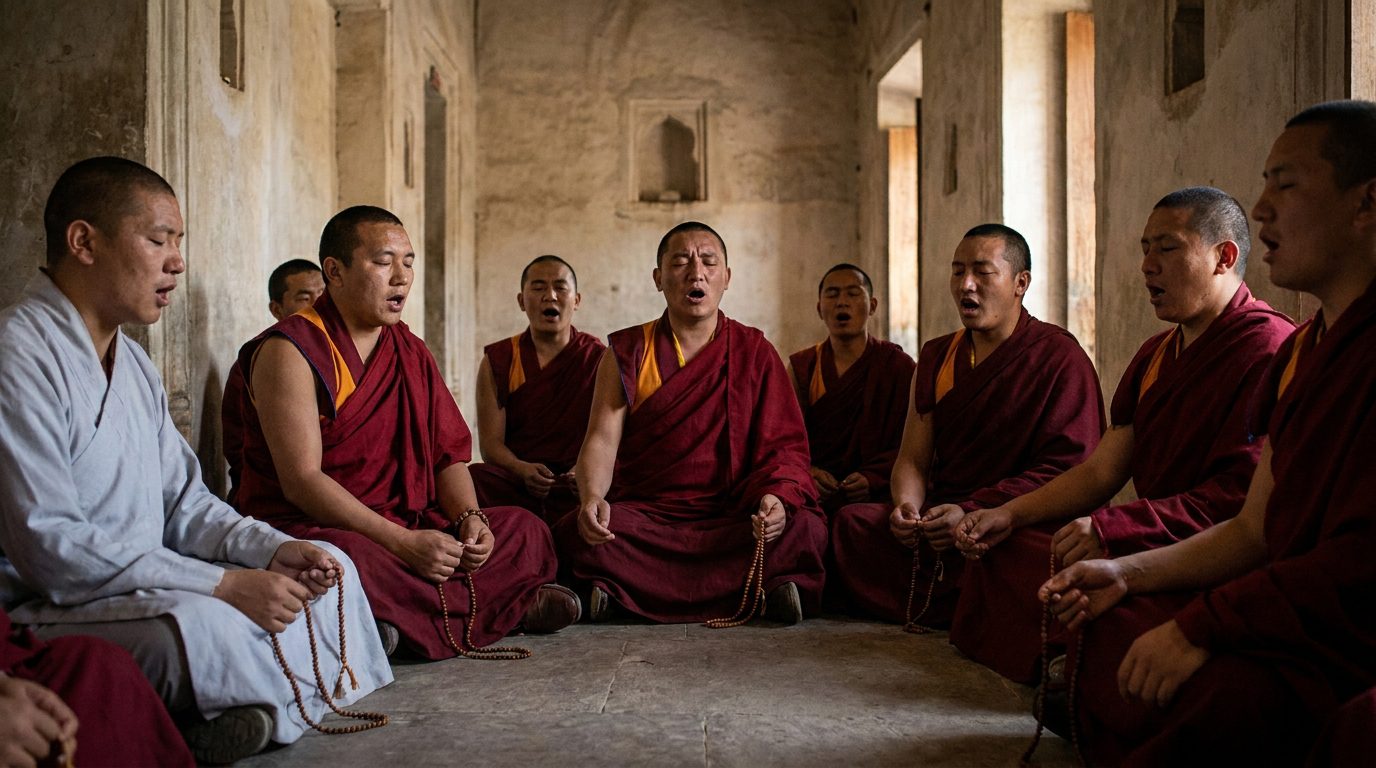
There is something deeply human about singing.
Before we have perfect words, polished theology, or a clear spiritual practice, we can cry out. We can whisper. We can call. We can sing.
In Bhakti Yoga, the path of loving devotion to God, this sacred calling is known as kīrtanam. The Sanskrit word kīrtanam means “chanting,” “glorifying,” or “speaking about the names, qualities, and activities of the Divine.” It is one of the most beloved practices of Bhakti because it is simple, accessible, and powerful. You do not need to be a scholar, a musician, or a lifelong practitioner. You can begin exactly where you are.
Kīrtanam is the practice of chanting the holy names of God, often together in community, with music, rhythm, and heartfelt devotion. In the Bhakti tradition, the names of God are not considered ordinary sound. They are spiritual sound vibration, carrying divine presence, grace, and healing. When we chant sincerely, the heart gradually softens. The mind becomes clearer. The soul remembers its relationship with God.
At The Bhakti House, we often say that Bhakti Yoga is not about becoming someone else. It is about becoming more fully who we truly are: a soul made for love, service, and connection with the Divine.
Kīrtanam is one of the central practices of Bhakti Yoga. It can be done alone or in a group. It may be soft and meditative, or joyful and full of music. It may involve traditional Sanskrit mantras, prayers in one’s own language, or heartfelt songs glorifying God.
At its essence, kīrtanam means turning our voice toward the Divine.
The Meaning of “Kīrtanam”
The word kīrtanam comes from the Sanskrit root kīrt, meaning “to praise,” “to glorify,” or “to celebrate.” In devotional life, kīrtanam means praising God through sound.
This may include:
- Chanting sacred names, such as the Hare Krishna maha-mantra
- Singing devotional songs and prayers
- Speaking about God’s qualities and compassion
- Remembering divine stories from scripture
- Gathering with others to glorify the Lord
Kīrtanam is not only music. It is not only performance. It is a spiritual offering.
The heart of kīrtanam is devotion.
The Holy Name as Spiritual Sound
In Bhakti scriptures, the names of God are understood to be spiritually alive. The name is not separate from the One being named. This may be a new idea for some readers, so we can approach it gently.
In ordinary life, a name helps us remember a person. If someone says the name of a loved one, something stirs within us. Memories, feelings, and connection awaken.
In a deeper spiritual way, the holy names of God awaken our relationship with the Divine. They bring our attention back to the eternal source of love.
The Hare Krishna maha-mantra is one of the most well-known mantras in the Bhakti tradition:
*Hare Krishna Hare Krishna
Krishna Krishna Hare Hare
Hare Rama Hare Rama
Rama Rama Hare Hare*
“Krishna” means “the all-attractive Lord.” “Rama” means “the reservoir of joy” or “the Lord who gives spiritual pleasure.” “Hare” is a call to the divine energy of the Lord, often understood as a prayer to be engaged in loving service.
A simple meaning of the mantra is: “O Lord, O divine energy of the Lord, please engage me in Your loving service.”
Kīrtanam Is for Everyone
One of the beautiful gifts of chanting is that it welcomes everyone. You may come from any religion, culture, background, or life experience. You may be full of faith, full of questions, or somewhere in between.
Kīrtanam does not demand that we arrive perfect. It invites us to arrive honest.
You can chant with a joyful heart. You can chant with a broken heart. You can chant when you feel close to God, and you can chant when you feel very far away.
The holy name meets us where we are.
Why Chanting Changes the Heart
Many spiritual traditions teach that the heart is the center of transformation. In Bhakti Yoga, the heart is not merely an organ or a symbol of emotion. It is the seat of our deepest longing: to love and be loved by God.
But over time, the heart becomes covered. We may carry fear, pride, grief, resentment, anxiety, or forgetfulness of our spiritual nature. Kīrtanam gently cleanses these coverings.
Chanting Softens the Inner World
The mind is often restless. It runs toward the past and future. It replays conversations. It imagines problems. It tries to control outcomes.
Chanting gives the mind a sacred place to rest.
Instead of forcing the mind into silence, kīrtanam gives it something beautiful to hold: the holy name. The tongue chants, the ears hear, the heart gradually follows.
In the Śrīmad-Bhāgavatam, one of the most cherished Bhakti scriptures, hearing and chanting about God are described as purifying practices. The text explains that when we regularly hear and chant divine sound, unwanted things in the heart begin to diminish, and devotion awakens.
This is not usually instant. It is often gradual, like sunlight entering a room little by little.
Chanting Reorients Our Desires
Much of human life is shaped by desire. We desire comfort, appreciation, success, safety, pleasure, belonging. These are not all wrong, but when they become disconnected from God, they can leave us restless.
Kīrtanam reorients desire.
When we chant, we begin to desire connection with the Divine. We begin to pray, “May my life become an offering. May my words, work, relationships, and choices be guided by love.”
This is one reason chanting changes the heart: it does not merely calm us down. It redirects us toward our highest purpose.
Chanting Awakens Humility
True chanting invites humility.
We are not chanting to impress God. We are not chanting to prove ourselves spiritual. We are calling out because we need grace.
In the Bhakti tradition, humility is not self-hatred. It is truthful vision. We recognize that we are small, dependent, and loved. We recognize that God is great, compassionate, and near.
The great saint Śrī Caitanya Mahāprabhu, who widely shared the practice of congregational chanting in India over 500 years ago, taught that one should chant the holy name with humility, patience, and respect for others. His famous verse says one can chant constantly when one is humbler than a blade of grass, more tolerant than a tree, and ready to offer respect to all.
This teaching is practical. If our chanting makes us proud, harsh, or dismissive, we have missed the mood. But if chanting makes us kinder, more patient, and more willing to serve, then it is entering the heart.
Kīrtanam in the Bhakti Scriptures
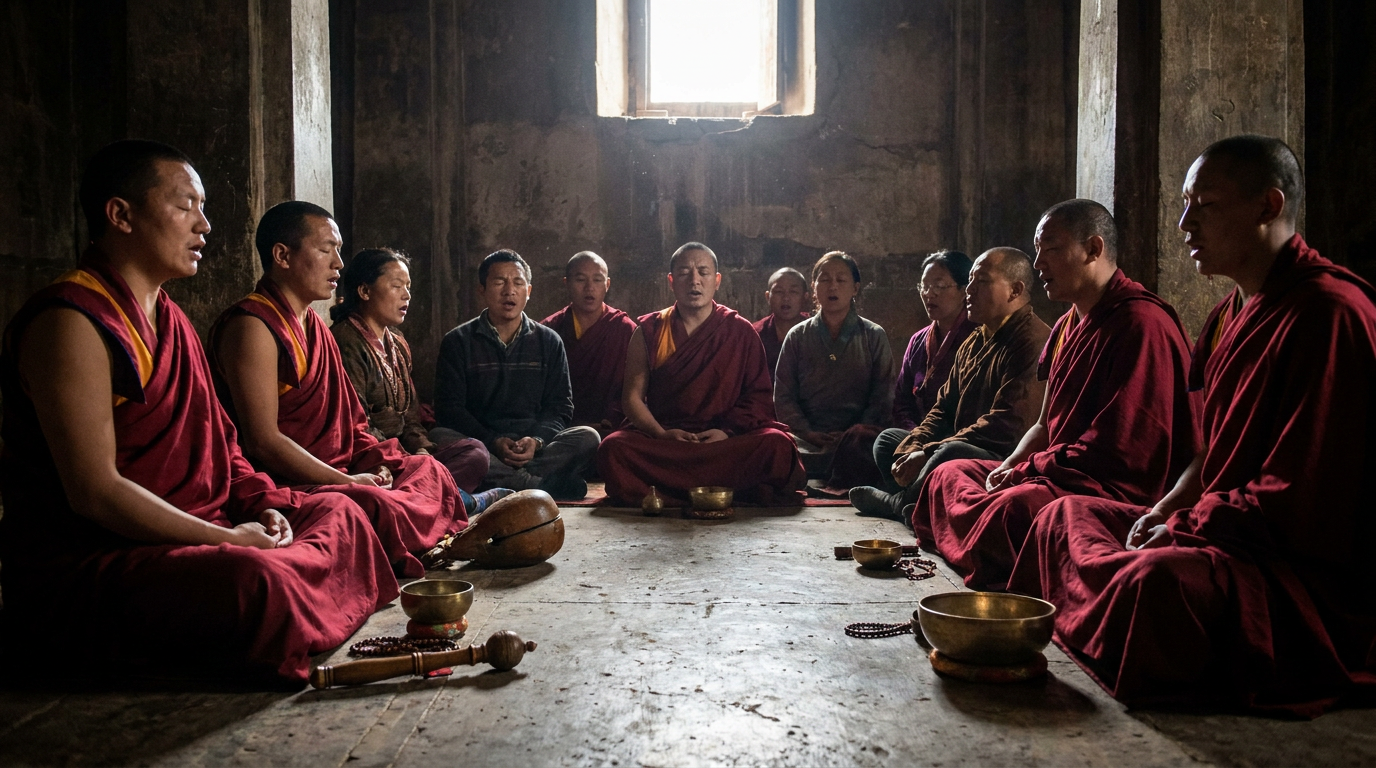
Bhakti Yoga is a living tradition, rooted in sacred texts and carried by generations of teachers, saints, families, and communities. Kīrtanam is not a modern invention. It is deeply woven into the scriptures of devotion.
The Nine Practices of Devotion
The Śrīmad-Bhāgavatam describes nine primary practices of Bhakti:
- Hearing about God
- Chanting God’s names and glories
- Remembering God
- Serving God’s feet
- Worshiping the Lord
- Offering prayers
- Serving as God’s servant
- Becoming God’s friend
- Surrendering everything to God
In Sanskrit, these are known as śravaṇam, kīrtanam, viṣṇoḥ smaraṇam, and so on. The first two—hearing and chanting—are especially emphasized because they are accessible and powerful.
We hear sacred sound, and then we chant it. We receive, and then we offer. This rhythm of receiving and offering is the heartbeat of Bhakti.
The Bhagavad-gītā and Devotional Remembrance
The Bhagavad-gītā, a sacred conversation between Lord Krishna and His devotee Arjuna, teaches that we can spiritualize our lives by remembering God and offering our actions with love.
Krishna says in the Bhagavad-gītā that great souls are always chanting His glories, striving with determination, and bowing before Him with devotion. This does not mean that every person must live in a monastery or leave the world. Rather, it shows that the heart can remain connected to God through remembrance, prayer, and devotion even while we live our daily lives.
Kīrtanam helps us remember.
When we chant in the morning, our day becomes more centered. When we chant during difficulty, we remember that we are not alone. When we chant with others, we remember that spiritual life is not only individual—it is shared.
The Age of Chanting
Many Bhakti teachers explain that in this age, when life is fast, distracted, and often spiritually confusing, chanting the holy names is especially recommended.
Why? Because chanting is simple.
We may not have the time, training, or purity for complex spiritual disciplines. But we can chant. We can hear. We can gather. We can call upon God with sincerity.
The holy name does not require wealth, status, intellectual qualification, or social position. It asks for the heart.
Please visit our website for more information on our articles: articles.
The Practical Benefits of Kīrtanam
While kīrtanam is ultimately a spiritual practice meant to awaken love of God, many people also experience practical benefits in daily life. These benefits are not the final goal, but they can encourage us to continue.
Kīrtanam Calms the Mind
Sound affects consciousness. What we hear shapes what we think and feel. Many of us are surrounded by noise—news, notifications, advertisements, arguments, and constant stimulation.
Sacred sound creates a different atmosphere.
When we chant, the nervous system often begins to settle. Breathing becomes more rhythmic. The mind becomes less scattered. Even if thoughts continue, they no longer feel as overwhelming.
This is one reason mantra meditation and kirtan music have become meaningful to many people around the world. But in Bhakti, we understand that the deepest peace comes not merely from sound as technique, but from sound connected to God.
Kīrtanam Opens Emotional Honesty
Sometimes we carry emotions we do not know how to express. Grief, longing, gratitude, repentance, hope—these can all find a home in chanting.
Kīrtanam gives us permission to bring our whole self before God.
You do not have to pretend in front of the holy name. You can chant through tears. You can chant with doubt. You can chant when your voice cracks. You can chant when you feel numb. Over time, chanting helps the heart become honest, tender, and receptive.
In community kirtan, many people feel a kind of shared vulnerability. No one is alone. Voices blend together. The focus is not on “my voice” or “your voice,” but on offering our voices to God.
Kīrtanam Builds Spiritual Community
Bhakti is personal, but it is not isolated.
Congregational chanting, often called saṅkīrtana, means chanting together. The Sanskrit prefix sam means “together” or “complete,” so saṅkīrtana refers to collective glorification of God.
When people chant together, walls come down. Differences remain, but they become held within a deeper unity. We may come from different countries, faith backgrounds, ages, and life stories, yet we can sit together and chant the same sacred names.
This shared practice builds community rooted in something higher than opinion or preference. It gathers us around the Divine.
Kīrtanam Encourages Service
Authentic chanting naturally leads to service.
If we chant God’s names but ignore the suffering of others, our practice remains incomplete. The holy name softens the heart so that we become more willing to serve—our families, neighbors, communities, the earth, and all living beings.
In Bhakti Yoga, service is called seva. Seva means loving service offered without selfish expectation. Kīrtanam nourishes seva because chanting reminds us that every living being is connected to God.
A heart touched by kīrtanam begins to ask: “How can I help? How can I offer? How can my life become useful in love?”
How to Practice Kīrtanam in Daily Life
You do not need a perfect setting to begin chanting. You do not need instruments, though they can be beautiful. You do not need to know all the melodies. You only need sincerity and a willingness to call upon God.
Begin with Listening
If you are new to kīrtanam, begin by listening.
Play a simple recording of the Hare Krishna mantra or another devotional chant. Let the sound enter gently. You do not have to understand everything immediately. Just listen with openness.
In Bhakti, hearing is itself a sacred practice. The ears become a doorway to the heart.
You might listen while sitting quietly, walking, cooking, driving, or resting. Over time, the mantra becomes familiar, like a friend.
Chant Softly at Home
A simple daily practice can be very powerful.
You might begin with five minutes each morning:
- Sit comfortably.
- Take a few gentle breaths.
- Offer a simple prayer: “Dear Lord, please help me chant with sincerity.”
- Chant the mantra slowly and clearly.
- Listen to each word as you say it.
If you chant the Hare Krishna maha-mantra, you can repeat:
*Hare Krishna Hare Krishna
Krishna Krishna Hare Hare
Hare Rama Hare Rama
Rama Rama Hare Hare*
Do not worry if the mind wanders. When you notice it has wandered, gently return to the sound. This returning is part of the practice.
Use Japa Meditation
In Bhakti Yoga, personal mantra meditation is often called japa. Japa means softly repeating a mantra, usually on beads. A strand of japa beads traditionally has 108 beads, and practitioners chant the mantra once on each bead.
Japa is quiet and personal. Kīrtanam is often musical and shared. Both are forms of chanting, and they support one another beautifully.
If you are not ready for a full round of 108 mantras, begin with a smaller commitment. Chant for a few minutes. The Lord sees sincerity, not performance.
Join a Kirtan Gathering
If possible, attend a kirtan gathering in person. Sitting with others and chanting can be deeply nourishing.
A typical kirtan may include:
- A lead singer chanting a mantra
- The group responding
- Instruments such as harmonium, drum, or kartals
- Periods of energetic singing and quiet reflection
- A welcoming atmosphere of devotion
You do not need to know the words perfectly. You can listen, hum, clap, or simply sit in prayer. Participation can be gentle.
The point is not musical excellence. The point is offering the heart.
Bring Chanting into Ordinary Moments
Kīrtanam is not limited to temples, yoga studios, or sacred gatherings. It can enter daily life.
You can chant while:
- Washing dishes
- Walking to work
- Preparing food
- Feeling anxious
- Before making an important decision
- After receiving good news
- When you need strength to forgive
- Before sleep
In this way, chanting becomes a companion. The holy name walks with us through ordinary moments and gradually reveals that no moment is truly ordinary when offered to God.
Common Questions About Kīrtanam
Many sincere people have questions when they first encounter chanting. Questions are welcome. Bhakti grows through honest inquiry, personal experience, and the guidance of saintly wisdom.
Do I Need to Be Hindu to Chant?
No.
Kīrtanam comes from the Bhakti traditions of India, and we should approach it with respect, gratitude, and humility. At the same time, the holy names of God are not limited by nationality, ethnicity, or social identity.
Anyone can chant sincerely.
Bhakti Yoga teaches that every living being is a soul, eternally connected to God. Chanting is a way to awaken that connection. People from many backgrounds—Christian, Jewish, Muslim, Buddhist, Hindu, spiritual-but-not-religious, and others—have found meaning in chanting.
You do not need to erase your background to begin. You can come as you are, with respect and openness.
What If I Do Not Feel Anything?
This is very common.
Sometimes chanting feels peaceful or joyful. Sometimes it feels dry. Sometimes the mind resists. Spiritual growth is not always measured by immediate emotion.
If you plant a seed, you may not see the roots growing underground. But with water, sunlight, and time, life begins to appear.
Chanting is like watering the seed of devotion in the heart. Even when we do not feel dramatic results, the practice is working in subtle ways.
Try to chant regularly, even for a short time. Let the holy name do its work.
What If My Mind Wanders?
The mind wanders for almost everyone.
Do not become discouraged. The practice is not to have a perfectly silent mind. The practice is to return to the mantra again and again.
Each return is an act of devotion.
If your mind wanders one hundred times and you return one hundred times, that is not failure. That is practice.
Is Kīrtanam the Same as Music?
Kīrtanam often uses music, but it is more than music.
Music can move emotions, create beauty, and bring people together. Kīrtanam does all of that, but its purpose is devotional. It is meant to glorify God and awaken love.
This distinction matters. In kīrtanam, the singer is not the center. The melody is not the center. The audience is not the center. God is the center.
When the mood is right, everyone becomes a servant of the sacred sound.
Can Chanting Help During Suffering?
Yes, chanting can be a profound shelter during suffering.
It may not remove every external difficulty, but it can change how we pass through difficulty. The holy name gives us a way to pray when we do not know what to say. It gives us strength when our own strength feels small.
In painful seasons, chanting may sound like a cry. That cry is sacred.
Bhakti does not ask us to deny suffering. It teaches us to bring suffering into relationship with God.
The Inner Transformation of the Heart
Kīrtanam changes the heart because it reconnects the heart with its source.
We often try to change ourselves through pressure. We criticize ourselves into improvement. We compare ourselves with others. We make resolutions and then feel ashamed when we fall short.
Bhakti offers another way: transformation through loving connection.
From Restlessness to Remembrance
The restless heart is always searching. It looks for satisfaction in things that cannot fully satisfy. But when we chant, remembrance awakens.
We remember: I am not only a body. I am not only my roles, wounds, achievements, or failures. I am a soul. I belong to God.
This remembrance brings dignity and peace.
From Pride to Gratitude
Chanting gradually teaches us that everything is a gift.
Our breath is a gift. Our voice is a gift. Our ability to pray is a gift. The holy name itself is a gift.
As gratitude grows, pride weakens. We begin to see life less as something to control and more as something to offer.
From Isolation to Relationship
The deepest teaching of Bhakti Yoga is that reality is personal. God is not merely distant energy or abstract truth. God is the supreme person, full of beauty, love, and relationship.
Kīrtanam awakens relationship.
When we chant, we are not simply repeating syllables. We are calling to the Divine Person. We are saying, “Please remember me. Please guide me. Please let me serve You. Please let me love You.”
And in the mystery of grace, we begin to feel that God has been calling us all along.
Living the Spirit of Kīrtanam
The true test of chanting is how we live after the music stops.
Does our chanting help us speak more kindly? Does it help us forgive? Does it help us become honest, steady, and compassionate? Does it inspire us to serve?
Kīrtanam is not meant to remain only in the temple room or gathering space. It is meant to shape our character.
Let the Holy Name Guide Your Speech
If we chant sacred names, we can also try to make our ordinary speech more sacred.
This may mean speaking truthfully, avoiding gossip, offering encouragement, apologizing when needed, and using words to heal rather than harm.
The same tongue that chants can bless.
Let Chanting Inspire Compassion
Every person we meet is carrying a story. Everyone is longing for love, safety, and meaning. When chanting softens our heart, we become more sensitive to others.
We may begin to notice opportunities for small acts of seva: listening patiently, feeding someone, helping without being asked, praying for someone, or welcoming a newcomer.
These acts are also part of kīrtanam’s fruit.
Let Devotion Become Daily
Spiritual life grows through steady, simple offerings.
A few minutes of chanting each day can change the direction of a life. A weekly kirtan gathering can become a spiritual anchor. A sincere prayer before work can transform the mood of the day.
Bhakti Yoga is practical because love is practical. Love cooks, listens, cleans, forgives, chants, serves, and begins again.
A Simple Practice to Begin Today
If your heart feels drawn, you can begin right now.
Find a quiet place. Take a breath. Place your hand on your heart if that feels natural. Offer a simple prayer in your own words:
“Dear God, I do not know everything. I may not understand this fully. But I want to come closer to You. Please guide me.”
Then chant slowly:
*Hare Krishna Hare Krishna
Krishna Krishna Hare Hare
Hare Rama Hare Rama
Rama Rama Hare Hare*
Listen as you chant. Let the sound be gentle. Let it be sincere.
You may chant once, three times, or for five minutes. There is no need to force anything. Just offer your voice.
Over time, this simple practice can become a doorway into deeper prayer, loving service, spiritual friendship, and a more God-centered life.
Kīrtanam changes the heart because it brings the heart into contact with divine love. It reminds us that we are not alone, not forgotten, and not beyond grace. The holy name is always available—on joyful days, difficult days, clear days, and confused days.
Wherever you are on your journey, you are welcome. Whether you are new to Bhakti Yoga or returning after a long time, whether your faith feels strong or fragile, you can take one sincere step toward God today. Chant one name. Offer one prayer. Do one act of service. The path of love begins with a single, heartfelt call.
FAQs
What is Kīrtanam?
Kīrtanam is a form of devotional chanting in the Indian spiritual tradition. It involves the repetitive singing or chanting of mantras, names of deities, or sacred verses.
How does chanting in Kīrtanam affect the heart?
Chanting in Kīrtanam is believed to have a calming and uplifting effect on the heart and mind. It is said to create a sense of inner peace, joy, and connection to the divine.
What are the benefits of practicing Kīrtanam?
Practicing Kīrtanam is believed to have numerous benefits, including reducing stress and anxiety, improving concentration, and fostering a sense of community and unity among participants.
Is Kīrtanam associated with any specific religious tradition?
Kīrtanam is commonly associated with Hinduism, but it is also practiced in other spiritual traditions, such as Buddhism and Sikhism. It is a form of devotional practice that transcends specific religious boundaries.
How can one participate in Kīrtanam?
One can participate in Kīrtanam by attending group chanting sessions led by experienced practitioners, or by chanting individually using recordings or written materials. It is a practice that is open to people of all backgrounds and beliefs.

