

Daily worship is not only a religious duty. At its heart, it is a relationship.
In Bhakti Yoga, the path of devotion, we understand spiritual life as a gradual awakening of love for the Divine. The Sanskrit word bhakti means loving devotion. It is the natural affection of the soul for God, expressed through prayer, chanting, service, remembrance, and a life guided by compassion.
Daily worship helps us return to that loving connection again and again.
Many people come to spiritual practice carrying different backgrounds, questions, beliefs, wounds, hopes, and longings. Some grew up with faith. Some are rediscovering it. Some are simply curious and seeking peace. Wherever you are, daily worship can become a gentle doorway into deeper meaning.
In the Bhakti tradition, God is not distant or impersonal. The Divine is lovingly present, aware of our hearts, and eager to receive even the simplest offering when it is given sincerely. In the Bhagavad-gita, one of the most beloved scriptures of Bhakti Yoga, Krishna says:
“If one offers Me with love and devotion a leaf, a flower, fruit, or water, I will accept it.”
— Bhagavad-gita 9.26
This verse is beautifully practical. It tells us that worship is not about wealth, status, perfection, or performance. It is about love. A simple flower offered with devotion can be more meaningful than a grand ritual performed without heart.
Daily worship is the sacred art of offering our time, our attention, our gratitude, and our life back to the One who sustains us.
Creating a Sacred Space at Home
A daily worship practice often begins with a dedicated space. This does not have to be elaborate. A small table, shelf, or quiet corner can become a place where the heart remembers God.
Keep It Simple and Sincere
A home altar may include sacred images, scriptures, candles, flowers, incense, or other items that inspire devotion. In Bhakti Yoga, many practitioners keep images of Krishna, Radha, Lord Chaitanya, or other forms of the Divine worshiped in the tradition. Others may include sacred symbols or pictures that help them feel connected to God.
The most important ingredient is sincerity.
A sacred space is not meant to impress anyone. It is meant to help us pause, soften, and turn inward. It is a place where the home becomes a temple, and ordinary life becomes touched by grace.
You might begin with:
- A clean cloth
- A picture or sacred image
- A small candle or lamp
- A flower or plant
- A copy of a scripture or prayer book
- A small bowl of water or offering plate
Even a very simple altar can remind us: “This life is sacred. This day belongs to God.”
Cleanliness as Care
In Bhakti, cleanliness is a form of love. Keeping the worship space clean helps the mind become clear and respectful. Before worship, you may wash your hands, tidy the altar, refresh flowers, or wipe the surface.
These little actions are not mechanical chores. They are acts of care.
When we clean a sacred space, we are also asking God to help clean the inner space of the heart—removing distraction, pride, resentment, and forgetfulness.
Making the Home Feel Like a Temple
A temple is a place where people gather to remember the Divine. But the spirit of the temple can enter our daily home life. When we chant, pray, cook with love, speak kindly, and serve others, the home becomes spiritually alive.
Daily worship at home reminds us that God is not only found in formal places of worship. The Divine can be honored in the kitchen, in the living room, at the bedside, in the garden, and in the quiet moments before dawn.
Beginning the Day with Remembrance

Morning is a powerful time for spiritual practice. Before the day becomes filled with responsibilities, messages, tasks, and conversations, we can offer the first moments to God.
In Sanskrit, remembrance of the Divine is called smaranam. It means bringing God to mind with love. This remembrance can shape the whole day.
Waking Up with Gratitude
A simple morning prayer may be as short as:
“Dear Lord, thank You for this day. Please guide my thoughts, words, and actions. May I live in a way that pleases You and serves others.”
This kind of prayer does not require advanced theology. It simply opens the heart.
Gratitude is one of the most accessible forms of worship. Before asking for anything, we can thank God for life, breath, shelter, food, loved ones, lessons, and even challenges that help us grow.
A grateful heart becomes fertile ground for devotion.
Offering the First Thoughts
The mind often begins running the moment we wake up. We may think about work, family, worries, or plans. Daily worship helps us gently redirect the mind.
Instead of letting anxiety take the first seat, we can invite divine remembrance:
- Chant a sacred name.
- Read one verse of scripture.
- Bow your head in prayer.
- Sit quietly for a few minutes.
- Offer the day’s work to God.
The first thoughts of the day are like seeds. If we plant remembrance, peace and purpose can grow.
Reading Sacred Wisdom
Reading a small passage from scripture each morning can nourish the soul. In Bhakti Yoga, texts such as the Bhagavad-gita, Srimad Bhagavatam, and the teachings of saints offer deep guidance for daily life.
The Bhagavad-gita teaches that we are not merely the body or mind, but eternal spiritual beings. This understanding helps us move through life with humility and courage. We begin to see that our real identity is connected to God, and our deepest fulfillment comes through loving service.
Even one verse, read slowly and prayerfully, can become a companion throughout the day.
Check out our latest posts at https://thebhaktihouse.org/blog.
Chanting the Holy Names
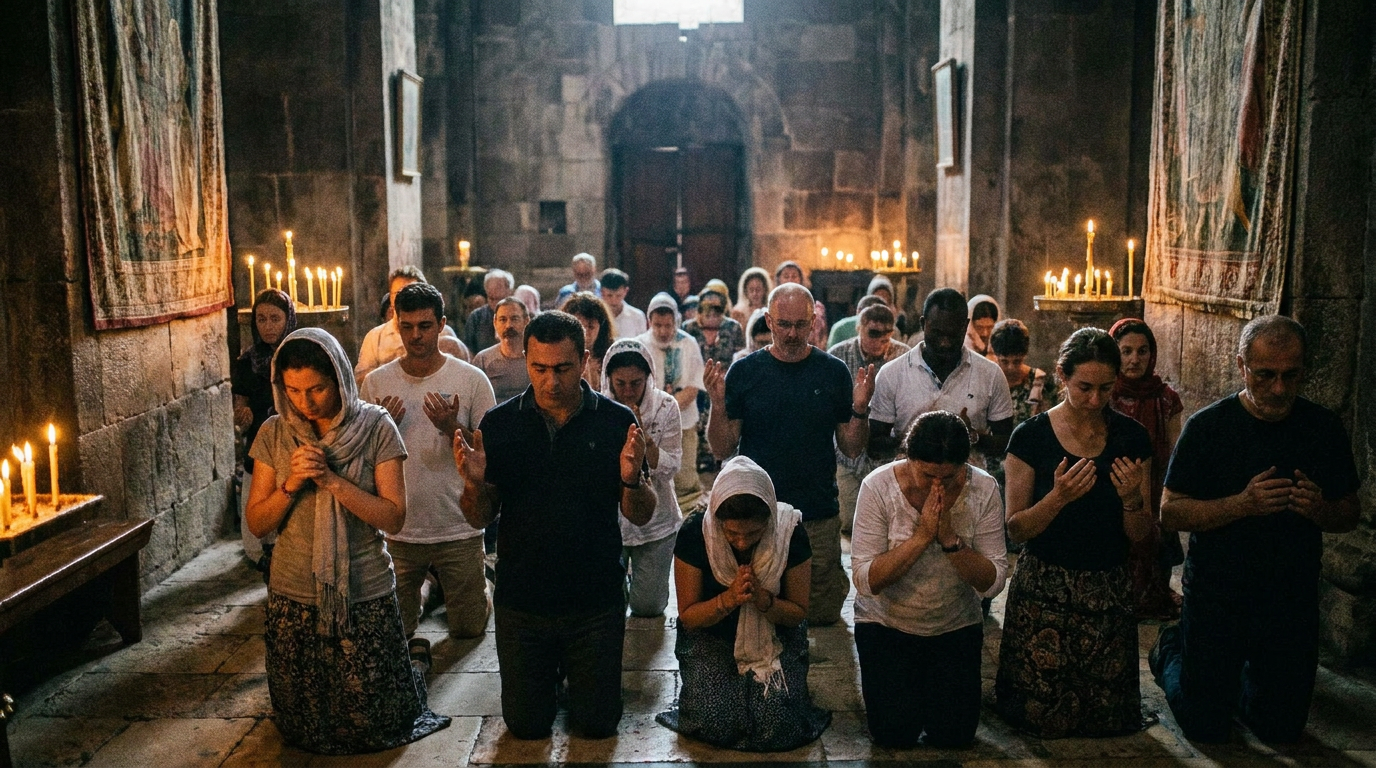
One of the central practices of Bhakti Yoga is chanting the names of God. In Sanskrit, this is called kirtan when sung together, and japa when repeated softly or privately, often on prayer beads.
Chanting is both simple and profound. It does not require wealth, social position, or intellectual qualification. Anyone can chant.
Why Sacred Sound Matters
In the Bhakti tradition, God’s names are understood to carry divine presence. When we chant sincerely, we are not merely making sound; we are calling out to the Divine.
A well-known mantra in the Bhakti tradition is the Hare Krishna maha-mantra:
Hare Krishna, Hare Krishna, Krishna Krishna, Hare Hare
Hare Rama, Hare Rama, Rama Rama, Hare Hare
The word mantra means a sacred sound that helps free the mind. Maha-mantra means “great mantra.” This prayer calls upon the Divine energy (Hare) and the all-attractive Lord (Krishna) and the reservoir of joy (Rama).
A simple way to understand this mantra is: “O Lord, O Divine Energy, please engage me in Your loving service.”
Japa: Personal Prayer Through Repetition
Japa meditation is a personal practice of chanting quietly and attentively. Many practitioners chant on beads, moving one bead for each repetition of the mantra. This gives the hands something sacred to do and helps the mind focus.
You can begin with a few minutes each day. There is no need to imitate someone else’s level. Start where you are.
The practice is not about forcing the mind to become perfectly silent. It is about patiently bringing the mind back to the sound, again and again. Each return is an offering.
Over time, chanting can soften the heart, calm the nervous system, purify thoughts, and deepen one’s sense of relationship with God.
Kirtan: Singing Together in Devotion
Kirtan is devotional singing, often call-and-response, where people gather to chant sacred names with music. It can be joyful, meditative, tearful, peaceful, or ecstatic.
In kirtan, we do not have to be professional singers. The offering is the heart.
The beauty of kirtan is that it welcomes everyone. Some sing loudly, some softly, some simply listen. Still, all are touched by sacred sound. The shared chanting creates a spiritual atmosphere where people feel connected—to God, to one another, and to their own inner longing for love.
Prayer as Honest Conversation
Prayer is one of the most natural expressions of the soul. It can be formal or spontaneous, spoken or silent, joyful or tearful.
In daily worship, prayer becomes an honest conversation with the Divine.
Come as You Are
Sometimes people feel they must be pure, calm, or spiritually advanced before they can pray. Bhakti teaches the opposite: we pray because we need help, grace, and connection.
You can pray when you feel grateful. You can pray when you are confused. You can pray when you are angry, ashamed, hopeful, lonely, or full of love.
God already knows the heart. Prayer allows us to become honest before that loving presence.
A humble prayer might be:
“Dear Lord, I do not know how to love You fully. Please teach me. Please guide me. Please help me remember You.”
This kind of prayer is deeply powerful because it is real.
Asking for Guidance, Not Control
Much of our prayer may begin with requests: “Please help me get this,” “Please remove that,” “Please change this situation.” There is nothing wrong with bringing our needs to God. The Divine is compassionate.
But as devotion matures, prayer becomes less about controlling life and more about aligning with God’s will.
We may begin to pray:
“Please help me learn what You want me to learn.”
“Please make me an instrument of Your compassion.”
“Please give me strength to serve with humility.”
“Please help me love You in all circumstances.”
This shift brings peace. We no longer feel alone in trying to manage everything. We begin to trust.
Listening After Prayer
Prayer is not only speaking. It is also listening.
After offering your words, sit quietly for a moment. Let the heart rest. You may not hear a dramatic answer, but you may feel a gentle clarity, a softened mood, or a subtle reminder of what is right.
Sometimes God answers through scripture, through a teacher, through a friend, through circumstances, or through the quiet intelligence within the heart.
Daily worship gives us the inner stillness to notice.
Offering Food with Love
In Bhakti Yoga, food can become sacred through loving offering. This practice is called offering bhoga to God, and when the food is accepted and honored, it becomes prasadam. The Sanskrit word prasadam means mercy or grace.
This is one of the most beautiful and practical forms of daily worship.
Cooking as Devotion
Preparing food with a devotional mood transforms cooking from a routine task into sacred service. We can cook with cleanliness, gratitude, and care, thinking, “This is for God.”
In many Bhakti traditions, vegetarian food is offered to Krishna with love. The principle is nonviolence, purity, and compassion. Fresh fruits, grains, vegetables, nuts, seeds, milk products, and simple homemade dishes can all be offered.
The mood matters deeply. Even a piece of fruit or a glass of water can be offered.
As the Bhagavad-gita teaches, God accepts a leaf, a flower, fruit, or water when offered with love and devotion.
A Simple Offering Prayer
You do not need to know an elaborate ritual to begin. Place the food before the Divine, bow your head, and pray:
“Dear Lord, this food is Yours. Thank You for providing it. Please accept this offering made with love, and bless all who receive it.”
You may chant the Hare Krishna mantra or another prayer from your tradition. Then wait a few moments before serving.
This practice reminds us that food is not merely fuel. It is a gift. Eating becomes an act of gratitude.
Sharing Prasadam
Prasadam is meant to be honored and shared. When food is prepared and offered with love, it carries a spiritual quality that nourishes both body and soul.
Sharing prasadam with family, guests, neighbors, or community members is a simple and powerful form of service. Many people first experience Bhakti not through philosophy, but through a plate of lovingly prepared sacred food.
In this way, hospitality becomes worship.
Service as Daily Worship
Bhakti is not limited to what happens at an altar. Love naturally expresses itself through service. In Sanskrit, devotional service is called seva. It means serving God and all beings with a humble heart.
Daily worship becomes complete when it flows into how we treat others.
Seeing Others as Beloved Souls
Bhakti Yoga teaches that every living being is a soul, a child of God. This vision changes how we relate to people, animals, and the earth.
Instead of seeing others as objects for our enjoyment, competition, or judgment, we begin to see them as sacred persons on their own journey.
This does not mean we ignore boundaries or pretend harmful behavior is acceptable. Rather, we try to act with compassion, wisdom, and respect.
A kind word, patient listening, honest work, caring for children, helping elders, protecting animals, feeding guests, or encouraging someone in distress can all become worship when offered to God.
Offering Your Work
The Bhagavad-gita gives a practical teaching for spiritualizing daily life:
“Whatever you do, whatever you eat, whatever you offer or give away, and whatever austerities you perform—do that as an offering to Me.”
— Bhagavad-gita 9.27
This verse expands the meaning of worship. It tells us that every part of life can become an offering.
Your job can be worship if done with integrity and service. Parenting can be worship. Studying can be worship. Cleaning can be worship. Art, music, leadership, caregiving, gardening, and community work can all be worship when connected to divine purpose.
The question becomes: “How can I do this for God, with love?”
Serving Without Pride
Service purifies the heart when we practice humility. Humility does not mean thinking we are worthless. It means recognizing that our gifts come from God and are meant to be used in love.
Sometimes service is visible and appreciated. Sometimes it is hidden and unnoticed. Daily worship teaches us to offer both equally.
God sees the heart.
A small act done with sincerity may be spiritually greater than a large act done for recognition.
Building a Rhythm You Can Sustain
Many people become inspired and try to do too much too quickly. Then, when life becomes busy, they feel discouraged. A sustainable daily worship practice should be steady, realistic, and kind.
Bhakti grows through consistency more than intensity.
Start Small and Grow Naturally
If you are new to daily worship, begin with a simple rhythm:
- Offer one prayer in the morning.
- Chant for five minutes.
- Read one verse or paragraph of sacred wisdom.
- Offer your food before eating.
- Do one act of service consciously.
- End the day with gratitude.
This may take only 10 to 20 minutes. But if done sincerely, it can transform the atmosphere of your life.
As love grows, the practice may naturally expand.
Anchor Practice to Daily Habits
One practical way to build consistency is to connect worship with something you already do.
For example:
- After waking, say a prayer.
- Before breakfast, offer the food.
- During a commute, listen to kirtan or sacred teachings.
- Before sleep, reflect on the day and thank God.
- While walking, softly chant a mantra.
Daily worship does not have to feel separate from life. It can gently weave through the day.
Be Patient with the Mind
The mind may wander during prayer. The heart may feel dry during chanting. Some days worship may feel joyful; other days it may feel like effort.
This is normal.
Bhakti is a relationship, and relationships deepen through faithful presence. We show up, not because every moment feels dramatic, but because love is cultivated through care.
If you miss a day, begin again. Do not let guilt become a wall between you and God. The Divine is patient, and spiritual growth is a journey.
Overcoming Common Obstacles in Daily Worship
Every sincere practitioner faces challenges. Rather than seeing obstacles as failures, we can see them as invitations to deepen our dependence on grace.
“I Don’t Have Enough Time”
Many people feel too busy for daily worship. But worship does not always require long hours. Even a few sincere minutes can change the direction of the heart.
Ask yourself: “What is one small practice I can do every day?”
Perhaps it is chanting one round of beads, reading one verse, lighting a candle, or offering a simple prayer before leaving home.
Small daily offerings create spiritual momentum.
“I Don’t Feel Qualified”
Bhakti is not reserved for the perfect. In fact, devotion often begins when we honestly admit our need for help.
The saints of the Bhakti tradition repeatedly teach that God is attracted by humility and sincerity, not by external qualification. A person may know many scriptures but remain proud. Another may know only one prayer but offer it with tears of love.
Come as you are. Begin where you are. God can work with a willing heart.
“My Family or Friends Don’t Understand”
Sometimes people around us may not share our spiritual interests. This can feel lonely. In such situations, it is helpful to practice gently, without pressure or superiority.
Let your devotion make you kinder, more patient, more honest, and more loving. Over time, others may respect the change they see in you.
Daily worship should not make us harsh or judgmental. It should make us more compassionate.
“My Faith Feels Weak”
Faith is not always a constant feeling. Sometimes it is a small flame protected from the wind.
In Sanskrit, faith is called shraddha. It means trust, reverence, or heartfelt confidence. In Bhakti Yoga, even a little faith can begin the journey.
If faith feels weak, nourish it through chanting, scripture, prayer, community, and service. Spend time with people who inspire your devotion. Listen to sacred music. Read the lives of saints. Ask sincere questions.
Faith grows when it is cared for.
The Role of Community in Worship
Daily worship is personal, but it is also strengthened by community. In Sanskrit, spiritual association is called sanga. It means keeping company with those who help us remember God.
Why Spiritual Friendship Matters
We are shaped by the people we spend time with. When we gather with others who value prayer, chanting, service, and spiritual growth, our own practice becomes stronger.
A devotional community offers encouragement, accountability, and shared joy. It reminds us that we are not walking alone.
At The Bhakti House, the mood is one of welcome. People come from many walks of life—some experienced, some brand new, some full of questions. The heart of the community is not judgment, but shared longing for divine connection.
Learning from Teachers and Saints
Bhakti Yoga has been carried through generations by teachers, saints, and practitioners who lived lives of devotion. Their wisdom can help us avoid confusion and deepen our practice.
A genuine teacher does not demand blind following. Rather, they guide us toward humility, scripture, service, and a personal relationship with God.
The Srimad Bhagavatam, another central Bhakti scripture, emphasizes hearing about the Divine in the company of sincere devotees. Hearing sacred wisdom regularly helps cleanse the heart and awaken devotion.
Worshiping Together
Group worship may include kirtan, scripture discussion, shared meals, festivals, prayer circles, or service projects. These gatherings can uplift the heart in ways that are difficult to access alone.
When voices come together in sacred sound, something beautiful happens. We remember that devotion is both deeply personal and wonderfully shared.
Evening Reflection and Surrender
Just as morning worship begins the day with remembrance, evening worship helps us close the day with gratitude and surrender.
Before sleep, we can place the day in God’s hands.
Reviewing the Day with Compassion
A simple evening reflection may include three questions:
- Where did I remember God today?
- Where did I forget?
- How can I take one sincere step tomorrow?
This reflection is not meant for self-condemnation. It is meant for awareness and growth.
If we made mistakes, we can ask forgiveness. If we received blessings, we can give thanks. If we struggled, we can ask for strength.
Daily worship teaches us to live honestly before God.
Offering Success and Failure
The day may bring success, failure, praise, blame, joy, and difficulty. Bhakti invites us to offer all of it.
“Dear Lord, whatever I did well today, please accept it. Whatever I did poorly, please help me learn. I offer this day to You.”
This kind of surrender brings deep rest. We no longer have to carry everything alone.
Sleeping in Divine Remembrance
Before sleeping, you might chant softly, listen to gentle kirtan, read a verse, or say a prayer. Let the last impressions of the day be sacred.
Just as we offered the morning to God, we can offer the night as well.
In this way, daily worship becomes a rhythm of love: waking in remembrance, living in service, and resting in surrender.
Daily Worship and Inner Transformation
The purpose of daily worship is not merely to complete spiritual tasks. The purpose is transformation of the heart.
Over time, sincere practice can change how we see ourselves, others, and the world.
From Anxiety to Trust
When we remember God daily, we begin to feel less alone. Life may still bring challenges, but we face them with deeper support.
Chanting and prayer help calm the restless mind. Scripture offers perspective. Service gives purpose. Community gives encouragement.
Gradually, anxiety can give way to trust.
From Self-Centeredness to Service
The ego often asks, “How can I be honored? How can I control? How can I enjoy?” Bhakti gently redirects the heart to ask, “How can I love? How can I serve? How can I please God?”
This shift is liberating.
We discover that love expands when shared. Service does not diminish us; it connects us to our true nature.
From Forgetfulness to Love
The Bhakti scriptures describe the soul as eternal, joyful, and naturally connected to God. Our suffering comes largely from forgetfulness—forgetting who we are and forgetting our relationship with the Divine.
Daily worship is the medicine of remembrance.
Every prayer, every mantra, every offering, every act of kindness says: “I want to remember. I want to love. I want to come closer.”
And God responds to that desire.
A Simple Daily Worship Practice You Can Begin Today
If you are wondering how to start, here is a gentle daily worship practice that anyone can adapt.
Morning: Begin with God
When you wake up, sit for a moment and offer gratitude. Say a simple prayer asking for guidance. Chant a mantra or sacred name for a few minutes. If possible, read one verse from the Bhagavad-gita or another sacred text.
Keep it simple. Let the heart lead.
Midday: Remember Through Action
Before eating, offer your food with love. During work or daily responsibilities, pause once or twice to remember God. Ask, “How can I serve in this moment?”
If you feel stressed, take a few breaths and softly chant.
Evening: Reflect and Surrender
At the end of the day, thank God for the blessings you noticed. Ask forgiveness for mistakes. Offer your worries and plans. Chant or pray before sleep.
Let the day end in grace.
Weekly: Join Community
If possible, attend kirtan, a Bhakti gathering, scripture discussion, or service opportunity. Spiritual community can nourish your daily practice and help you stay inspired.
Even one gathering a week can strengthen the heart.
Everyone Is Welcome on the Path of Bhakti
Daily worship is a beautiful way to cultivate a deeper connection with the Divine. It does not require perfection, wealth, scholarship, or a particular background. It begins with sincerity.
You can begin with a prayer. You can begin with a song. You can begin with a flower, a candle, a few minutes of chanting, a shared meal, or a quiet moment of gratitude.
Bhakti Yoga is practical because love is practical. We chant, we pray, we serve, we offer, we remember, and little by little the heart awakens.
The Divine is not far away. God is present in the holy names, in sacred wisdom, in the kindness we offer others, in the food we prepare with love, and in the quiet longing of the soul.
Wherever you are on your journey, you are welcome. Take one sincere step toward God today. Offer one prayer, chant one mantra, serve one person, or give thanks for one blessing. A single sincere step, taken with love, can open the door to a lifetime of devotion.
FAQs
What is daily worship?
Daily worship refers to the practice of setting aside time each day for spiritual devotion, prayer, and meditation. It is a way for individuals to connect with their faith and deepen their relationship with their spiritual beliefs.
What are some common forms of daily worship?
Common forms of daily worship include prayer, reading sacred texts, meditation, singing hymns or devotional songs, and performing rituals or ceremonies specific to one’s faith tradition.
Why is daily worship important?
Daily worship is important for individuals as it provides a regular opportunity to reflect on their beliefs, seek guidance, find inner peace, and strengthen their spiritual connection. It also helps to cultivate a sense of discipline and mindfulness in daily life.
How long does daily worship typically last?
The duration of daily worship can vary depending on individual preferences and religious traditions. Some people may spend a few minutes each day in prayer and meditation, while others may dedicate longer periods of time, such as 30 minutes to an hour, for their daily worship practices.
Can daily worship be practiced in different ways?
Yes, daily worship can be practiced in various ways to accommodate different schedules, preferences, and religious beliefs. Some people may prefer solitary worship at home, while others may participate in group worship at a place of worship such as a church, temple, or mosque. Additionally, the specific rituals and practices involved in daily worship can vary widely across different faith traditions.

