
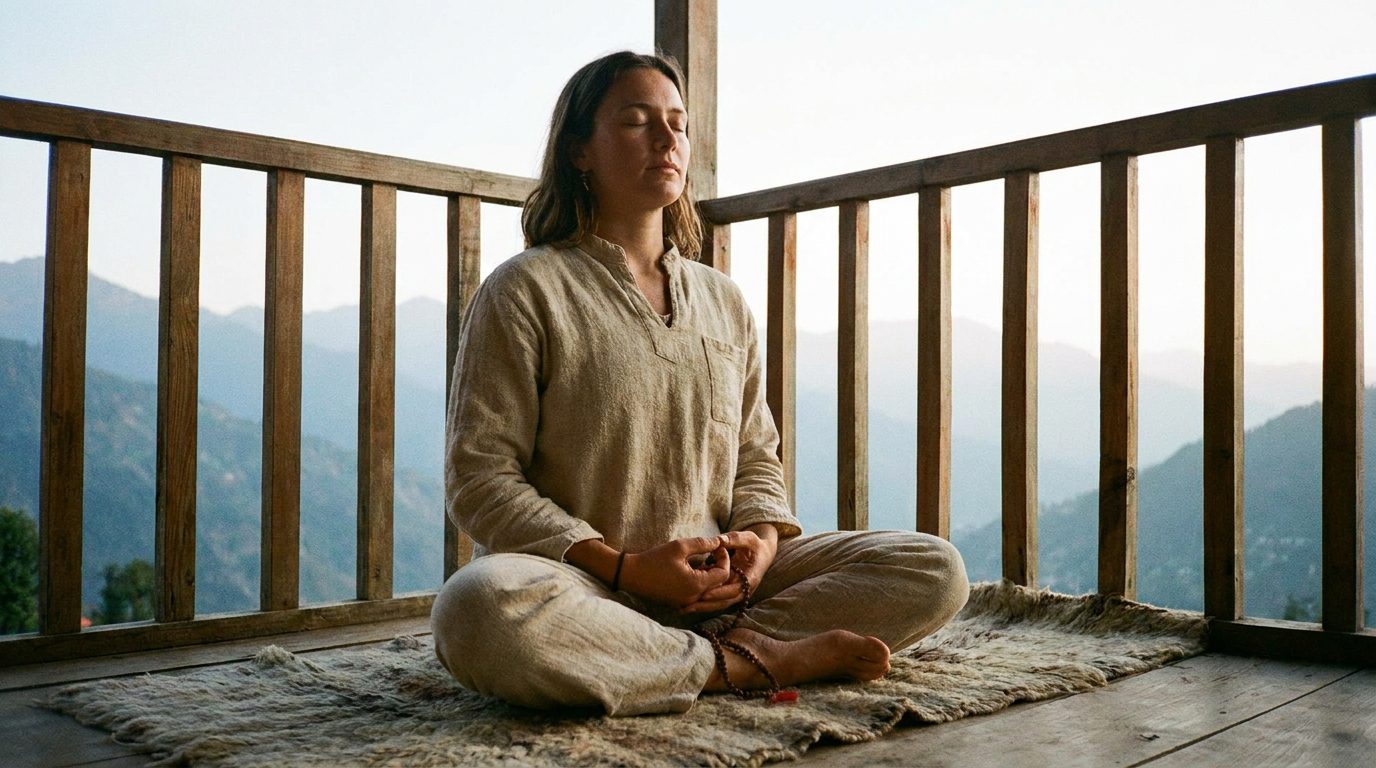
Many people today are searching for peace. Some come from a religious background. Some feel unsure about God. Some are simply exhausted by stress, anxiety, distraction, and the constant noise of modern life.
In the Bhakti Yoga tradition, we are invited to begin with something very simple and very human: sound.
A mantra is a sacred sound, word, or phrase used for meditation, prayer, and spiritual remembrance. The word “mantra” comes from Sanskrit, an ancient language of India. A simple meaning is: “that which helps free the mind.” In Bhakti Yoga, mantra meditation is not only a calming technique. It is a loving way to reconnect the heart with God.
But many sincere seekers wonder: Is mantra meditation scientifically beneficial?
The short answer is yes, many scientific studies suggest that mantra meditation can support mental, emotional, and even physical well-being. At the same time, Bhakti Yoga offers something even deeper: mantra as a path of love, devotion, healing, and relationship with the Divine.
Let us explore both with humility—honoring science, honoring scripture, and honoring each person’s unique journey.
What Is Mantra Meditation?
Mantra meditation is the practice of gently repeating a sacred sound or prayer to focus the mind and awaken the heart. This repetition may be spoken aloud, whispered, sung, or repeated silently within.
In Bhakti Yoga, one of the most cherished forms of mantra meditation is kirtan, the joyful singing or chanting of sacred names of God, often together in community. Another practice is japa, the personal repetition of a mantra, often using beads to help count and stay attentive.
Mantra as Sacred Sound
In many spiritual traditions, sound is seen as powerful. Words can wound, heal, inspire, and transform. A kind word can change someone’s day. A prayer can bring comfort in grief. A song can bring tears to the eyes.
Bhakti scriptures teach that spiritual sound carries spiritual presence. This is especially true of the names of God. In the Bhakti tradition, God’s names are not considered ordinary words. They are understood to be alive with divine grace.
The Bhagavad Gita, one of the central texts of Bhakti Yoga, teaches that remembering God with love helps purify the mind and bring the soul closer to its true nature. In simple terms, when we lovingly turn our attention toward the Divine, our consciousness begins to change.
Common Mantras in Bhakti Yoga
One well-known mantra in the Bhakti tradition is the Hare Krishna maha-mantra:
Hare Krishna, Hare Krishna
Krishna Krishna, Hare Hare
Hare Rama, Hare Rama
Rama Rama, Hare Hare
“Maha” means “great,” so maha-mantra means “great mantra.” “Krishna” means “the all-attractive one,” a name of God. “Rama” means “the source of joy.” “Hare” addresses the divine energy of God, often understood as the compassionate energy that helps us return to loving relationship with the Divine.
A simple prayerful meaning is: “O Lord, O divine energy of the Lord, please engage me in loving service.”
You do not need to be born into a certain culture or religion to chant sincerely. Bhakti is a path of the heart. It welcomes anyone who wishes to take one honest step toward God.
What Does Science Say About Mantra Meditation?
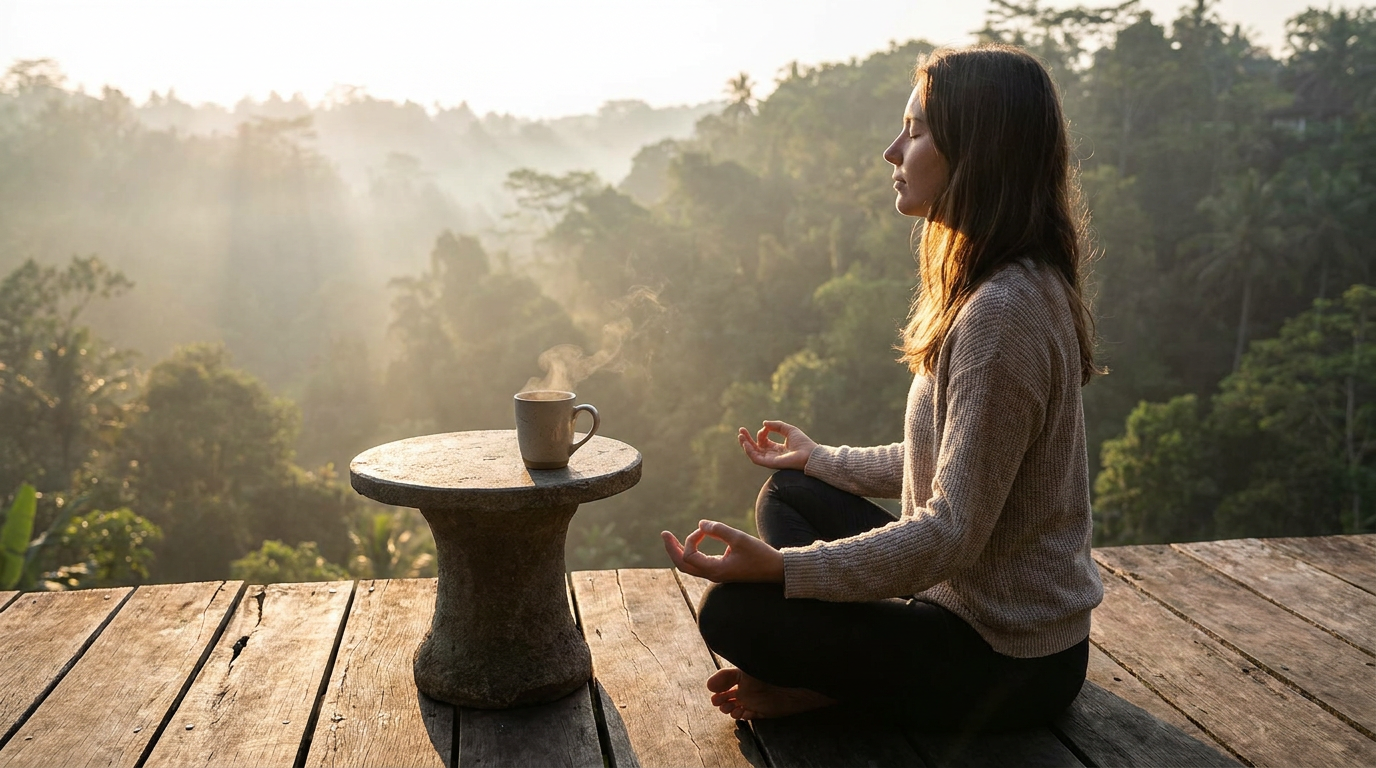
Scientific research on meditation has grown greatly over the past several decades. While studies vary in size and method, a growing body of evidence suggests that meditation practices—including mantra-based meditation—may support stress reduction, emotional regulation, attention, sleep, and overall well-being.
Science usually studies measurable effects: heart rate, brain activity, stress hormones, mood, sleep quality, and attention. Spiritual traditions also care about these things, but they point further—to love, humility, compassion, surrender, and the awakening of the soul.
Both perspectives can be helpful.
Stress Reduction and the Nervous System
One of the most widely studied benefits of meditation is stress reduction. Mantra meditation may help calm the nervous system by giving the mind a steady, peaceful focus.
When we are stressed, the body often enters “fight or flight” mode. The heart may race, muscles tighten, breathing becomes shallow, and thoughts become restless. Meditation can support the body’s relaxation response, helping us move toward calm, balance, and rest.
Repeating a mantra gently can slow the breath, soften mental agitation, and help the body feel safer. Over time, this may support resilience—the ability to meet life’s challenges without becoming completely overwhelmed.
In Bhakti language, we might say that sacred sound gives the mind a shelter. Instead of being pulled in many directions, the heart is invited to rest in remembrance.
Anxiety, Mood, and Emotional Balance
Many people try meditation because they feel anxious, sad, or emotionally exhausted. Research suggests that meditation practices can help reduce symptoms of anxiety and improve mood for some people.
Mantra meditation may be especially helpful for those who find silent meditation difficult. Some people sit quietly and immediately feel flooded by thoughts. A mantra gives the mind something positive and sacred to hold.
Rather than fighting the mind, we gently redirect it.
If the mind wanders, we return to the mantra. If worries arise, we return to the mantra. If emotions come up, we breathe and return to the mantra.
This simple returning is part of the healing.
In the Bhagavad Gita, the mind is described as restless and difficult to control. Arjuna, the sincere spiritual seeker and warrior, honestly says that controlling the mind seems harder than controlling the wind. Krishna does not shame him. Instead, He explains that the mind can be trained by practice and detachment.
This is encouraging. We do not need to be perfect meditators. We simply practice returning.
Attention, Focus, and Mental Clarity
Modern life trains the mind to jump quickly from one thing to another: messages, notifications, tasks, worries, news, entertainment. Many of us feel scattered.
Mantra meditation may support attention by strengthening the ability to remain with one point of focus. The mantra becomes an anchor. Each repetition is like gently bringing the mind home.
Some research on meditation suggests improvements in attention, working memory, and cognitive flexibility. While meditation is not a magic cure for distraction, consistent practice can help us notice when the mind wanders and return more easily.
In Bhakti Yoga, focus is not meant to become dry or mechanical. We focus with feeling. The mantra is not only a concentration tool; it is a loving call. When the heart joins the sound, meditation becomes prayer.
Sleep and Relaxation
Many people struggle with sleep because the mind remains active long after the body is tired. Mantra meditation before bed may help create a calming transition from the busyness of the day into rest.
Soft chanting, prayerful repetition, or listening to gentle kirtan can quiet mental noise. Some people find that replacing anxious thoughts with sacred sound helps them sleep more peacefully.
Of course, sleep challenges can have many causes, and some require medical support. But as a daily spiritual and wellness practice, mantra meditation can be a beautiful part of an evening routine.
Check out our latest posts at https://thebhaktihouse.org/blog.
How Mantra Meditation May Affect the Brain and Body
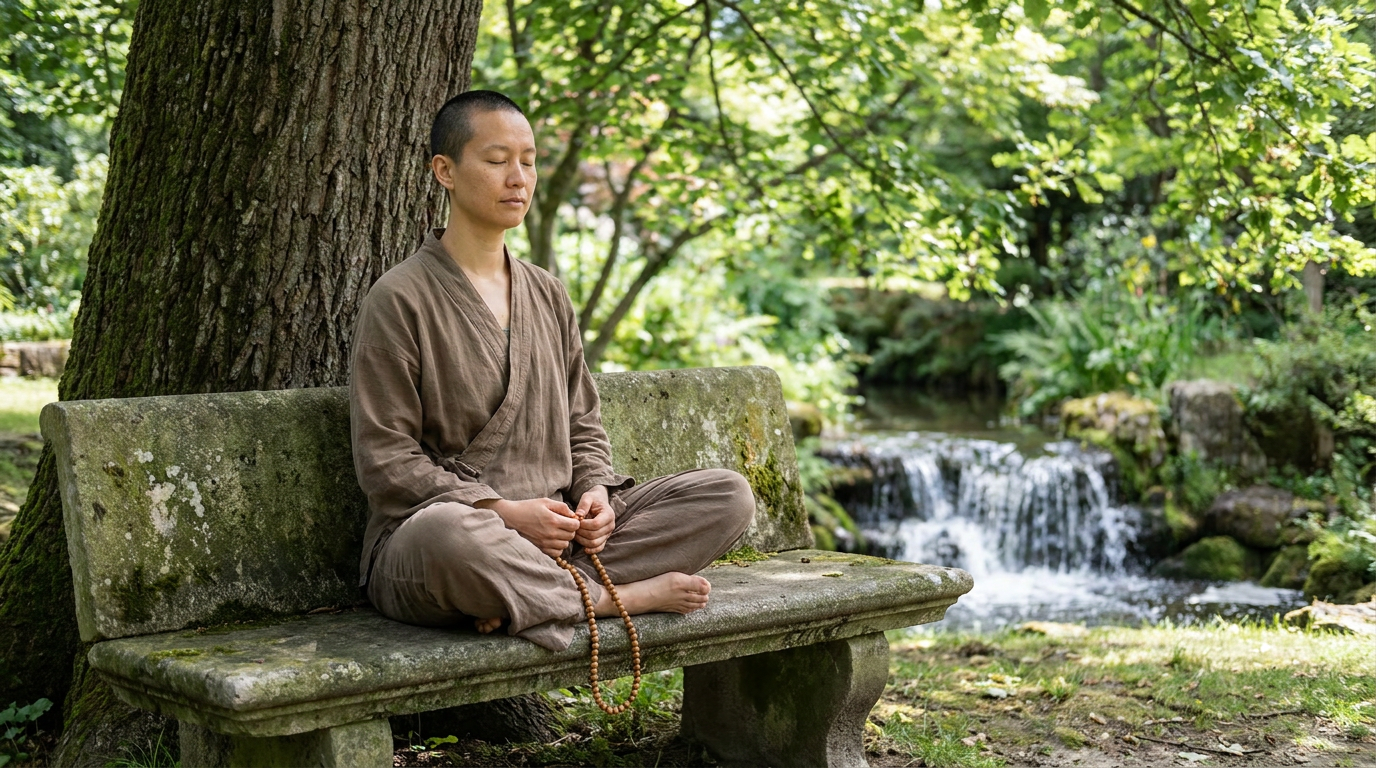
Science is still exploring exactly how meditation works. Yet several possible mechanisms have been discussed by researchers.
Mantra meditation appears to engage attention, breath, emotion, and the body’s stress systems. When practiced regularly, it may help shape patterns of response in the brain and nervous system.
Repetition and Neural Pathways
The brain changes with repeated experience. This is sometimes called neuroplasticity—the brain’s ability to adapt and form new connections.
When we repeatedly practice worry, the mind becomes skilled at worry. When we repeatedly practice gratitude, patience, prayer, and calm attention, those pathways can become stronger too.
Mantra meditation gives us a sacred pattern to repeat. Instead of repeating fear-based thoughts, we repeat divine sound. Instead of rehearsing resentment, we remember God. Instead of feeding restlessness, we cultivate presence.
From a scientific view, this repetition may support healthier mental habits. From a Bhakti view, it purifies the heart and awakens love.
Breath, Rhythm, and Regulation
Chanting often naturally slows and regulates the breath. Singing or repeating a mantra can create rhythm in the body. Rhythm is deeply calming for many people.
Think of a mother singing to a child, a community singing together, or a prayer repeated in times of difficulty. Rhythmic sound can soothe the nervous system.
In kirtan, the combination of melody, repetition, breathing, and group participation can be especially powerful. People often describe feeling lighter, connected, and peaceful after chanting together.
Science may describe this in terms of breath, vagal tone, social bonding, and emotional regulation. Bhakti describes it as the mercy of sacred sound and the joy of remembering God together.
Both can be true in their own ways.
Community and Belonging
One scientific benefit that is sometimes overlooked is the role of community. Loneliness has become a serious concern in modern life. Spiritual communities can support health by offering belonging, shared values, encouragement, and compassionate relationships.
Kirtan and group mantra meditation bring people together in a noncompetitive, heart-centered way. You do not have to sing perfectly. You do not have to know all the words. You can simply listen, breathe, and participate as you feel comfortable.
In Bhakti Yoga, spiritual community is called sadhu-sanga. “Sadhu” means a sincere spiritual person, and “sanga” means association or company. Sadhu-sanga means keeping uplifting spiritual company.
Good association helps us remember who we truly are. It strengthens our practice and reminds us that we are not alone.
Is Mantra Meditation Different from Mindfulness?
Mindfulness and mantra meditation share some similarities, but they are not exactly the same.
Mindfulness often emphasizes observing the present moment with nonjudgmental awareness. Mantra meditation focuses the mind through repeated sacred sound. In Bhakti Yoga, mantra meditation is also relational: it is directed toward God with devotion, gratitude, and longing.
A Practice of Attention
Like mindfulness, mantra meditation trains attention. We notice the wandering mind and gently return.
This can help us become less reactive. We may begin to see thoughts as passing events rather than absolute truth. We may become more patient with ourselves and others.
A Practice of the Heart
Bhakti Yoga adds a deeply personal dimension. The mantra is not only a sound but a prayer. It carries meaning, affection, surrender, and remembrance.
If mindfulness says, “Be here now,” Bhakti mantra meditation may say, “Be here now with God.”
This does not mean one practice must compete with another. Many people appreciate both. But for those drawn to a devotional path, mantra meditation offers a way to engage not only the mind, but also the heart.
A Practice of Relationship
Bhakti means devotion, loving service, or divine love. Yoga means connection. So Bhakti Yoga means the path of reconnecting with God through love.
In this path, mantra meditation helps us remember our relationship with the Divine. We are not isolated beings trying to manufacture peace on our own. We are beloved souls invited into loving exchange.
This understanding can bring great comfort. Meditation becomes less about performance and more about relationship.
What Do Bhakti Scriptures Say About Mantra Meditation?
Bhakti scriptures speak often about the power of sacred sound. They describe chanting as a practice for spiritual purification, remembrance, and awakening divine love.
These teachings are not meant to be abstract philosophy only. They are practical guidance for daily life.
The Bhagavad Gita: Remembering God in Daily Life
In the Bhagavad Gita, Krishna encourages Arjuna to remember Him and continue his duty. This is a beautiful teaching for modern life.
Spiritual life does not require us to run away from all responsibilities. We can remember God while caring for family, working honestly, studying, serving others, and facing challenges.
Mantra meditation helps us practice remembrance. When we chant in the morning, the sound can accompany us through the day. When stress arises, we can pause and repeat the mantra. When gratitude appears, we can offer it back to God.
The Gita teaches that whatever we do can be offered with devotion. This transforms ordinary life into sacred life.
The Srimad Bhagavatam: Hearing and Chanting
The Srimad Bhagavatam, another treasured Bhakti scripture, emphasizes hearing and chanting about God as powerful spiritual practices. Hearing sacred sound softens the heart. Chanting invites us to participate actively in remembrance.
In practical terms, this means we can nourish our inner life through what we listen to and what we repeat.
If we constantly hear fear, anger, and gossip, the heart becomes burdened. If we regularly hear wisdom, prayer, and sacred music, the heart becomes uplifted.
Mantra meditation is a way of choosing what enters the heart.
The Holy Name as Compassion
The Bhakti tradition teaches that God is compassionate and makes Himself accessible through His names. This is a very tender idea.
Not everyone can perform complex rituals. Not everyone has deep philosophical understanding. Not everyone has time for long retreats. But almost everyone can chant a simple prayer.
A child can chant. A busy parent can chant. A person in grief can chant. A person full of doubts can chant. A person who has made many mistakes can chant.
The mantra meets us where we are.
Practical Benefits People Often Experience
While every person is different, many practitioners report meaningful benefits from mantra meditation over time. Some are supported by scientific research; others are personal and spiritual.
It is helpful to approach the practice without demanding instant results. Mantra meditation is like watering a seed. With regular care, something begins to grow.
More Calm in Daily Stress
A daily chanting practice can become a steady place to return. Even five or ten minutes can help create a pause between stimulus and response.
When a difficult email arrives, when family tension rises, when the mind spirals into worry, the mantra can help us breathe before reacting.
This does not mean we become passive. Rather, we become more grounded. We can respond with greater wisdom and kindness.
A Softer Heart
Bhakti Yoga is not only about feeling peaceful. It is about becoming more loving.
When we chant sincerely, we may begin to notice our own impatience, pride, resentment, or fear. This awareness is not meant to discourage us. It is part of purification.
The mantra gently reveals what needs healing and gives us strength to grow.
Over time, many people feel more compassion, gratitude, humility, and desire to serve. These are signs of spiritual health.
A Sense of Meaning
Modern wellness can sometimes focus only on feeling better. Bhakti includes that, but goes further: it invites us to live for a higher purpose.
Mantra meditation reminds us that we are spiritual beings, not just bodies and minds. We are meant for love, service, and relationship with God.
This sense of meaning can be deeply healing. When life is difficult, purpose gives strength.
Support During Grief and Change
Mantra meditation can be especially comforting during seasons of loss, uncertainty, or transition. Sacred sound gives the heart something to hold when life feels unstable.
Chanting does not erase grief, but it can create a holy space within grief. It can help us cry, pray, remember, and surrender.
In Bhakti, surrender does not mean giving up in despair. It means placing ourselves in God’s care, one breath at a time.
How to Begin Mantra Meditation
You do not need to be an expert to begin. You do not need special clothing, perfect posture, or prior knowledge. You can begin sincerely, right where you are.
The most important ingredient is humility: “I am willing to try. I am willing to listen. I am willing to open my heart.”
Choose a Mantra
If you feel drawn to the Bhakti tradition, you may begin with the Hare Krishna maha-mantra:
Hare Krishna, Hare Krishna
Krishna Krishna, Hare Hare
Hare Rama, Hare Rama
Rama Rama, Hare Hare
You may chant it aloud, softly, or silently. If you are new, listening to a gentle recording or joining a kirtan can help you learn the melody and pronunciation.
Start Small and Stay Consistent
Begin with five minutes a day. That is enough to start.
You might chant in the morning before looking at your phone. You might chant during a walk. You might chant softly before sleep.
Consistency matters more than quantity. A small daily practice, offered sincerely, can become very powerful over time.
Use Beads if Helpful
In Bhakti Yoga, many people use japa beads to count mantra repetitions. A traditional strand often has 108 beads. You hold one bead at a time and chant the mantra, moving bead by bead.
The beads help the hands participate and give the mind a gentle structure. But if you do not have beads, that is perfectly fine. You can simply chant with attention and devotion.
Let the Mind Wander and Return
Please do not be discouraged if your mind wanders. This happens to everyone.
The practice is not to have no thoughts. The practice is to return.
Each return is meaningful. Each return is a small act of devotion. Each return says, “Dear Lord, I am trying to remember You.”
Add Prayer
Mantra meditation becomes deeper when joined with prayer. Before you chant, you can say something simple:
“God, please help me hear this mantra with sincerity.”
“Please guide my heart.”
“Please help me become more loving and useful.”
“Please let this practice bring me closer to You.”
Prayer makes meditation personal. It opens the heart.
Can Anyone Practice Mantra Meditation?
Yes. Mantra meditation can be practiced by people of many backgrounds. You may be Hindu, Christian, Muslim, Jewish, Buddhist, spiritual but not religious, unsure, curious, or questioning. The Bhakti House spirit is to welcome sincere seekers with warmth and respect.
Of course, if you are rooted in another faith tradition, you may wish to speak with a trusted spiritual guide about how mantra meditation fits into your path. Bhakti Yoga does not ask us to become artificial. It asks us to become sincere.
If You Are New to Sanskrit
Sanskrit may feel unfamiliar at first. That is okay.
You do not need to understand every detail immediately. Just as a child benefits from sunlight without understanding physics, the heart can benefit from sacred sound even before the mind understands everything.
Still, learning meanings can deepen your practice. For example:
- “Krishna” means the all-attractive Lord.
- “Rama” means the source of spiritual joy.
- “Hare” calls upon God’s divine energy.
The mantra is a prayer for loving service and spiritual awakening.
If You Have Doubts
Doubts are not disqualifications. They can be part of sincere seeking.
You can approach mantra meditation as an experiment: “Let me try this daily for a few weeks and observe the effect on my mind, heart, and actions.”
Science itself values honest experiment. Bhakti also welcomes honest practice. You do not need to pretend. You can bring your questions with you.
If You Are Struggling Emotionally
Mantra meditation can be deeply supportive, but it is not a replacement for professional care when needed. If you are experiencing severe anxiety, depression, trauma symptoms, or thoughts of self-harm, please seek help from a qualified mental health professional or trusted support person.
Spiritual practice and professional support can work together. There is no shame in receiving help. In Bhakti, accepting support can also be an expression of humility and wisdom.
Mantra Meditation as a Practical Path of Love
The scientific benefits of mantra meditation are meaningful. Less stress, better focus, emotional balance, improved sleep, and nervous system support are all valuable.
But Bhakti Yoga gently invites us to ask an even deeper question: What is the purpose of a peaceful mind?
A peaceful mind can help us love better. Serve better. Forgive more easily. Listen more deeply. Remember God more sincerely.
Chanting
Chanting is the heart of mantra meditation in Bhakti Yoga. Whether alone or with others, chanting sacred names helps redirect the mind toward the Divine.
The practice is simple, but not shallow. A lifetime can be spent deepening our hearing, sincerity, and love.
Prayer
Prayer gives voice to the soul. It allows us to be honest before God.
We can pray with gratitude, confusion, longing, repentance, or joy. No sincere prayer is wasted.
Service
Bhakti is not only what we do on a meditation cushion. It is how we live.
Service means offering our time, energy, talents, and care for the pleasure of God and the welfare of others. Cooking, cleaning, teaching, listening, encouraging, protecting, creating, and giving can all become service when offered with love.
Spiritual Growth
Mantra meditation supports spiritual growth by helping us become more conscious of our inner life. We begin to notice what pulls us away from love and what brings us closer.
Growth may look like becoming more patient with family, more honest in work, more compassionate toward strangers, or more steady in prayer.
These small changes matter. They are signs that the mantra is entering the heart.
So, Is Mantra Meditation Scientifically Beneficial?
Yes, research suggests that mantra meditation can offer real benefits for stress reduction, emotional balance, attention, relaxation, and well-being. It can help calm the nervous system, focus the mind, and support healthier mental patterns.
But from the Bhakti Yoga perspective, the greatest benefit is not only scientific. It is spiritual.
Mantra meditation helps us remember God. It opens the heart to divine love. It gives us a practical way to pray, to heal, to serve, and to grow. It meets us in our ordinary lives and gently turns our consciousness toward the sacred.
You do not have to master everything today. You do not have to have perfect faith. You do not have to feel peaceful immediately.
Just begin.
Chant one mantra. Offer one prayer. Take one breath with remembrance. Sit with others in kirtan. Serve someone with kindness. Let sacred sound become a small lamp in the room of the heart.
At The Bhakti House, everyone is welcome—wherever you come from, whatever you believe, however ready or unready you feel. Take one sincere step toward God, and trust that divine love can meet you there.
FAQs
What is mantra meditation?
Mantra meditation is a type of meditation that involves the repetition of a specific word, phrase, or sound to focus the mind and achieve a state of relaxation and inner peace.
What are the potential scientific benefits of mantra meditation?
Scientific research suggests that mantra meditation may have several benefits, including reducing stress and anxiety, improving focus and attention, and promoting overall well-being.
How does mantra meditation affect the brain?
Studies using brain imaging techniques have shown that mantra meditation can lead to changes in brain activity, including increased activity in areas associated with attention and emotional regulation, and decreased activity in areas associated with stress and anxiety.
Are there any scientific studies supporting the benefits of mantra meditation?
Yes, several scientific studies have been conducted on mantra meditation, with findings indicating its potential to reduce stress, improve mental clarity, and enhance overall psychological well-being.
Is mantra meditation suitable for everyone?
Mantra meditation can be beneficial for many people, but it may not be suitable for individuals with certain mental health conditions or those who have difficulty focusing on repetitive tasks. It’s important to consult with a healthcare professional before starting any new meditation practice.

