
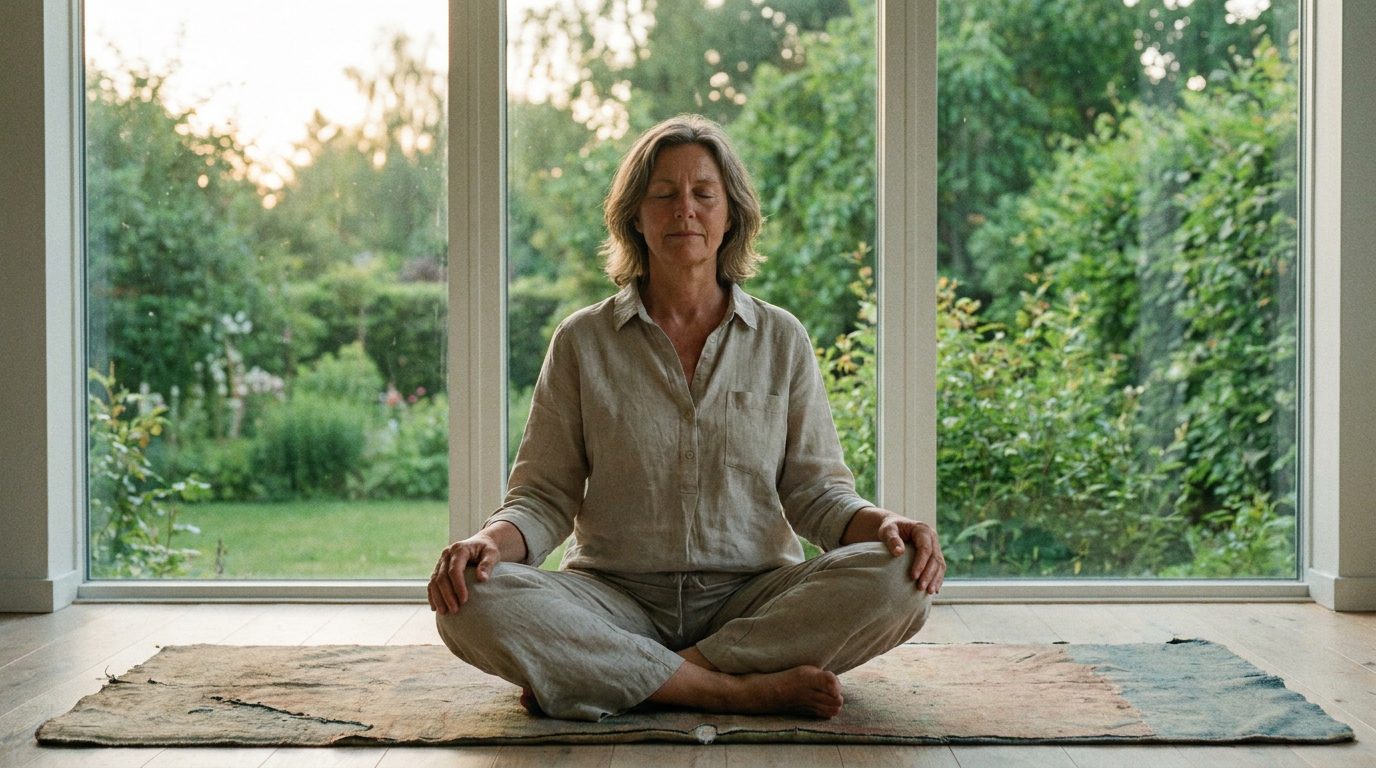
In a world that moves quickly, many of us long for a quiet place within. We may carry full schedules, family responsibilities, worries about the future, or the simple heaviness of everyday life. Bead meditation offers a humble and practical way to return to peace, focus, and the presence of God.
In the Bhakti Yoga tradition, bead meditation is often called japa. The Sanskrit word japa means the soft, repeated chanting or recitation of a sacred mantra. A mantra is a spiritual sound vibration, a prayer made of sacred names or words that help guide the mind toward God.
This practice is simple. We hold a strand of beads, chant a sacred mantra on each bead, and gently bring the heart back again and again. No force is needed. No special background is required. Whether you are new to spiritual practice, returning after many years, or already walking a devotional path, bead meditation can become a loving companion.
At The Bhakti House, we understand Bhakti Yoga as a path of love. It is not about becoming perfect before approaching God. It is about approaching God sincerely, with whatever heart we have today.
What Is Bead Meditation?
Bead meditation is a spiritual practice that uses prayer beads to help focus the mind and heart. In many traditions, beads are used for prayer, remembrance, and contemplation. In Bhakti Yoga, beads are commonly used to chant the holy names of God.
The Meaning of Japa
Japa is the quiet repetition of a mantra. It may be spoken softly, whispered, or chanted in a way that only you can hear. The purpose is not mechanical repetition, but loving remembrance.
In Bhakti, remembrance is deeply important. The heart naturally becomes shaped by what it remembers. If we constantly remember our worries, our anxieties grow. If we remember God, divine qualities such as peace, compassion, patience, and courage begin to awaken within us.
The Bhagavad Gita, one of the most beloved scriptures of the Bhakti tradition, teaches that the mind can be both a friend and a challenge. In Chapter 6, Krishna explains that the mind must be gently trained. Bead meditation is one practical way to train the mind—not through harsh discipline, but through loving repetition.
What Are Japa Beads?
A traditional strand of Bhakti meditation beads is called a japa mala. The word mala means “garland.” A japa mala usually has 108 beads, plus one larger bead often called the Krishna bead, guru bead, or meru bead.
Each bead gives the fingers a simple place to rest. As the hand moves bead by bead, the mind receives a rhythm. The body, voice, breath, and heart begin to work together.
You do not need expensive beads to begin. A simple set of prayer beads is enough. What matters most is sincerity.
Why Beads Help the Mind Focus
The mind often wanders. This is not a failure; it is simply the nature of the mind. Beads give the mind a gentle anchor.
When you chant on beads, several parts of your being are engaged:
- The voice chants the mantra.
- The ears hear the sacred sound.
- The fingers touch each bead.
- The breath begins to slow.
- The heart is invited into prayer.
This makes bead meditation practical for modern life. Rather than asking the mind to become empty, Bhakti Yoga gives the mind something sacred to hold.
The Heart of Bhakti Yoga

Bhakti Yoga is the yoga of devotion. The word bhakti means loving devotion, heartfelt service, or divine love. Yoga means connection. So Bhakti Yoga is the path of reconnecting with God through love.
Bead meditation is not only a technique for calmness. It is a relationship practice. Through chanting, we turn toward the Divine Person, offering our attention, our longing, our gratitude, and even our struggles.
Love as a Spiritual Path
Many people think spirituality must begin with great knowledge or deep concentration. Bhakti begins with love.
Love may be quiet. It may be imperfect. It may appear as a small prayer whispered in the morning: “Please guide me.” It may appear as chanting one round of beads before work. It may appear as serving a meal, forgiving someone, or offering a kind word.
In Bhakti Yoga, the heart is not an obstacle to spiritual growth. The heart is the doorway.
Chanting the Holy Names
One of the central practices of Bhakti Yoga is chanting the holy names of God. In the Vaishnava tradition, a widely practiced mantra is the Maha Mantra:
Hare Krishna Hare Krishna
Krishna Krishna Hare Hare
Hare Rama Hare Rama
Rama Rama Hare Hare
Maha means “great,” so Maha Mantra means “the great mantra.” This prayer calls upon the Divine through the names Hare, Krishna, and Rama.
- Krishna means “the all-attractive one,” a name of God who draws the heart through beauty, love, and compassion.
- Rama means “the source of joy” or “the one who gives spiritual pleasure.”
- Hare refers to the divine energy of God, often understood as a call to the Lord’s loving spiritual energy.
A simple way to understand this mantra is: “O Lord, O Divine Energy of the Lord, please engage me in loving service.”
This is the mood of Bhakti. We are not chanting to control God. We are chanting to be changed by love.
Prayer, Service, and Growth
Bead meditation naturally supports prayer. As we chant, we may become aware of what we need to surrender. We may feel gratitude. We may remember people we love and pray for them. We may notice our restlessness and ask for patience.
Over time, chanting can inspire seva, or service. Seva means loving service offered without selfish expectation. A person who chants sincerely may gradually feel moved to serve others, care for the world, speak more gently, or live more consciously.
This is spiritual growth. It is not just sitting peacefully for a few minutes. It is becoming more loving in daily life.
Sure, here is the sentence with the clickable link:
Check out our latest posts on posts.
How to Practice Bead Meditation

Bead meditation is simple enough for anyone to begin. You do not need to wait until life is calm. You can start where you are, with five minutes, a sincere heart, and a willingness to return.
Choose a Quiet Time
Many practitioners prefer early morning because the mind is fresh and the world is quieter. In Sanskrit, the early morning spiritual time is sometimes called brahma-muhurta, a peaceful period before sunrise that is considered especially supportive for prayer and meditation.
But if morning is not possible, choose another time. The best time is the time you can actually keep.
You might chant:
- Before starting work
- During a lunch break
- In the evening before bed
- After reading scripture
- Before making an important decision
- Whenever the heart feels restless
Consistency matters more than length.
Hold the Beads Gently
Traditionally, a japa mala is held in the right hand. Many practitioners use the thumb and middle finger to move from bead to bead, avoiding the index finger because it symbolizes ego or pointing outward. However, if this is unfamiliar or physically difficult, do not become discouraged. Hold the beads in a way that is respectful and comfortable.
Begin on the bead next to the larger head bead. Chant the full mantra once on each bead. Then move to the next bead.
When you reach the larger bead, do not cross over it. Instead, turn the mala around and chant in the other direction if you wish to continue.
Chant Clearly and Listen
One of the most important instructions in japa meditation is: hear the mantra.
The mind may wander. Thoughts may come. You may remember an email, a conversation, or a worry. When this happens, gently return to the sound.
Do not shame yourself. The return is part of the practice.
Chant clearly enough that your ears can hear. Listening brings the attention back to the present moment. The sacred sound becomes the guide.
Begin with a Realistic Commitment
A full traditional round on a 108-bead mala may take around 7 to 10 minutes, depending on pace. Some people chant one round daily. Others chant more. Some begin with only a few minutes.
If you are new, you might start with:
- 5 minutes of chanting each morning
- One round of japa per day
- 10 beads during a stressful moment
- One mantra repeated with full attention before sleep
A small practice done sincerely is powerful. Bhakti is not measured only by quantity. It is measured by the heart’s offering.
Finding Peace Through Sacred Sound
Many people come to bead meditation because they want peace. This is natural. The mind can become tired from constant stimulation. Sacred sound offers rest.
But the peace of Bhakti meditation is not only the absence of stress. It is the presence of divine connection.
Peace Is More Than Silence
Sometimes we imagine peace as a perfectly quiet mind. But most of us do not experience that right away. If we wait for the mind to become silent before we pray, we may wait a long time.
Bead meditation allows us to bring a noisy mind into sacred sound. We do not have to pretend to be peaceful. We chant as we are.
In the Bhagavad Gita 9.22, Krishna says that He personally cares for those who remember Him with devotion. This is a deeply comforting teaching. The practice of remembrance is not one-sided. When we turn toward God, we are also held by God.
The Nervous System and the Heart
From a practical perspective, chanting can help calm the nervous system. Repeated sound, steady breathing, and focused touch can bring the body into a more grounded state.
But Bhakti Yoga goes further. It teaches that the heart is nourished by divine relationship. The soul, known in Sanskrit as atma, is spiritual by nature. The atma longs for loving connection with the Supreme.
So when we chant, we are not merely relaxing the body. We are feeding the soul.
Letting Go of Inner Burdens
As we chant on beads, we may notice burdens rising to the surface. This is not a problem. Sometimes peace comes after honesty.
You may become aware of grief, regret, anger, or longing. Offer it into the mantra. Let the holy names hold what feels too heavy to carry alone.
A simple prayer during japa can be:
“Dear Lord, please help me remember You. Please help me release what keeps me from love.”
This kind of prayer softens the heart.
Developing Focus in a Distracted World
We live in an age of distraction. Our phones, messages, plans, and worries pull attention in many directions. Bead meditation gently gathers our scattered energy and brings it back to one sacred purpose.
Training Attention with Kindness
Focus grows through repetition. Each bead is a new beginning. If you lose attention on one bead, the next bead welcomes you back.
This is one of the beautiful lessons of japa: every moment can be renewed.
Rather than judging yourself for distraction, you can think, “Here is another chance to return.” This mood is humble and hopeful.
The Mind Needs a Higher Taste
Bhakti scriptures teach that the mind cannot be satisfied by emptiness alone. It needs a higher taste. In the Bhagavad Gita 2.59, Krishna explains that lower attachments fall away when one experiences something higher.
Sacred sound offers that higher taste. The mantra is not ordinary sound. It carries spiritual meaning, presence, and grace. As we chant regularly, the mind gradually becomes attracted to that sweetness.
At first, practice may feel like discipline. Over time, it can become nourishment.
Creating a Sacred Space
A sacred space can support focus. It does not need to be elaborate. You might create a small corner with:
- Your beads
- A candle or lamp
- A picture or symbol that inspires devotion
- A scripture such as the Bhagavad Gita or Srimad Bhagavatam
- Fresh flowers or a simple offering
The purpose is to remind the heart: “This is time for God.”
Even if you live in a busy home, a small intentional space can help. If you cannot create a physical space, create a sacred rhythm. Sit in the same chair. Chant at the same time. Begin with the same prayer.
Bead Meditation and Daily Life
The true fruit of bead meditation is seen in how we live. If chanting helps us become kinder, more patient, more truthful, and more compassionate, then the practice is entering the heart.
Bhakti Yoga is not separate from daily responsibilities. It transforms how we meet them.
Beginning the Day with Remembrance
When we begin the day with chanting, we place God at the center before the world rushes in. This can change the mood of the entire day.
A morning japa practice may help you:
- Respond instead of react
- Remember your deeper purpose
- Carry a prayerful mood into work
- Speak with more care
- Notice opportunities to serve
Even one round of sincere chanting can become a spiritual foundation.
Chanting in Times of Stress
Bead meditation is especially helpful during stressful seasons. When life feels uncertain, the beads give the hands something peaceful to do and the heart somewhere sacred to rest.
You may chant before a difficult conversation. You may chant in a hospital waiting room. You may chant after receiving painful news. You may chant when you do not know what to do next.
The mantra does not always remove the difficulty immediately. But it brings God into the difficulty. That changes everything.
Turning Ordinary Actions into Service
As chanting deepens, daily life becomes an offering. Cooking can become service. Parenting can become service. Work can become service. Listening to someone with compassion can become service.
In Bhakti, this offering mood is called karma-yoga when our actions are offered to God. Karma means action, and yoga means connection. Karma-yoga teaches us to act responsibly while offering the results to the Divine.
Bead meditation helps cultivate this mood because it reminds us daily: “I am not the center. I am a servant of love.”
Common Challenges in Bead Meditation
Every sincere practitioner faces challenges. This does not mean you are doing something wrong. It means you are human. The path of Bhakti is patient and merciful.
“My Mind Wanders Constantly”
This is the most common experience. The mind wanders because it has been wandering for many years. Be gentle.
When you notice distraction, return to hearing the mantra. Again and again. Each return is an act of devotion.
You might slow down the chanting slightly. You might pronounce each word more clearly. You might sit more upright. You might begin with a short prayer asking for help.
“I Feel Dry or Mechanical”
Sometimes chanting feels sweet. Sometimes it feels dry. Both seasons can be meaningful.
When the practice feels dry, sincerity becomes especially important. You can pray, “I do not feel much today, but I am here. Please accept this small effort.”
Bhakti is personal. God sees the heart behind the practice.
The Srimad Bhagavatam, another treasured Bhakti scripture, glorifies hearing and chanting about the Lord as a purifying process. Even when we do not feel immediate emotion, sacred sound is working within us, cleansing the heart gradually.
“I Don’t Know If I’m Qualified”
You are welcome to begin.
Bhakti Yoga does not require birth, status, wealth, academic learning, or a perfect past. The holy names are for everyone. The practice is open to all sincere souls.
In the Bhagavad Gita 9.26, Krishna says that if one offers Him a leaf, a flower, fruit, or water with devotion, He accepts it. The offering may be simple, but devotion makes it beautiful.
Your chanting may feel small. Offer it anyway.
Deepening the Practice Over Time
Bead meditation grows naturally when nourished with good association, scripture, prayer, and service.
Chant with Others
Chanting alone is beautiful. Chanting with others can be deeply strengthening.
In Bhakti communities, group chanting is often called kirtan. Kirtan means singing or glorifying the names of God, usually with music and response. While japa is often quiet and personal, kirtan is shared and expressive.
Both practices support each other. Kirtan can awaken joy in the heart, and japa can help deepen personal focus.
If you have the opportunity, join a local kirtan, visit a Bhakti center, or chant with sincere friends. Spiritual community helps us remember what matters.
Read Sacred Wisdom
Scripture gives meaning to practice. A few verses from the Bhagavad Gita can nourish the mind before chanting. Stories from the Srimad Bhagavatam can help us understand the beauty of devotion.
You do not need to read a lot. Even one verse, read slowly and prayerfully, can guide the heart.
Try asking:
- What is this teaching revealing about God?
- What is it showing me about myself?
- How can I live this today?
Then chant with that reflection in your heart.
Offer Your Practice
Before beginning japa, you may offer a simple prayer:
“Dear Lord, please let this chanting be pleasing to You. Please help me serve with a sincere heart.”
This shifts the mood from self-improvement alone to loving offering. Peace and focus may come, but they are not the only goal. The deeper goal is relationship with God.
Be Patient with Spiritual Growth
Growth in Bhakti is often gradual. A seed does not become a tree overnight. It needs water, sunlight, and time.
The seed of devotion is watered by hearing and chanting. Each mantra is like a drop of spiritual water. Even if you do not see immediate results, something sacred is being nourished.
Trust the process. Stay humble. Keep returning.
A Simple Bead Meditation Practice for Beginners
If you are ready to begin, here is a simple practice you can try.
Step 1: Sit Comfortably
Find a clean, peaceful place. Sit in a way that helps you stay alert but relaxed. Take a few natural breaths.
You may close your eyes or keep them softly open.
Step 2: Set an Intention
Offer a short prayer. It can be in your own words.
For example:
“Dear God, please guide my heart. Please help me chant with sincerity. Please help me remember You.”
Step 3: Chant One Mantra on Each Bead
Hold the first bead and chant the mantra clearly. Then move to the next bead.
If you are chanting the Maha Mantra, repeat:
Hare Krishna Hare Krishna
Krishna Krishna Hare Hare
Hare Rama Hare Rama
Rama Rama Hare Hare
Let your ears hear each word.
Step 4: Return When Distracted
When thoughts come, gently return. Do not argue with the mind. Do not become discouraged. Simply hear the next mantra.
Each bead is a fresh invitation.
Step 5: End with Gratitude
When you finish, pause for a moment. Offer gratitude.
You might pray:
“Thank You for allowing me to chant. Please help me carry this remembrance into my day.”
Then try to do one small act of kindness or service. Let the meditation become life.
The Gifts of Bead Meditation
Bead meditation can bring many gifts, both practical and spiritual. These gifts may unfold slowly, but they are deeply meaningful.
Greater Inner Peace
The sacred rhythm of chanting can help calm anxiety and soften emotional tension. Over time, you may find that you are less controlled by passing thoughts.
Peace becomes less dependent on outer circumstances and more rooted in divine remembrance.
Improved Focus
By returning to the mantra again and again, attention becomes stronger. This focus can support work, relationships, study, and decision-making.
But in Bhakti, focus is not only mental sharpness. It is the ability to keep the heart turned toward God.
A Softer Heart
Perhaps the greatest gift is tenderness. Chanting can help dissolve hardness, resentment, and pride. The heart becomes more willing to forgive, serve, and love.
This is the beauty of Bhakti Yoga. The practice does not merely make us calmer; it helps make us more loving.
A Living Relationship with God
Through regular chanting, God may begin to feel less distant. Prayer becomes more natural. Gratitude becomes more frequent. Service becomes more joyful.
Bead meditation is a way of saying, bead by bead, “I want to remember You. I want to come closer.”
And the Bhakti scriptures assure us that God responds to sincere remembrance.
Everyone Can Begin
Bead meditation is simple, but it is not small. A few minutes of sincere chanting can open a doorway to peace, focus, and divine love.
You do not need to have everything figured out. You do not need to be perfectly calm. You do not need to know Sanskrit or belong to a particular culture. The holy names of God are welcoming, merciful, and alive with grace.
If you have beads, pick them up. If you do not, begin with your breath and your voice. Chant one mantra. Offer one prayer. Do one act of service. Take one sincere step.
At The Bhakti House, all are welcome—seekers, beginners, longtime practitioners, the curious, the joyful, the tired, and the unsure. Wherever you are on the path, you are invited to take one sincere step toward God today.
FAQs
What is bead meditation?
Bead meditation is a form of meditation that involves using beads to count breaths or mantras. It is a tactile and visual way to focus the mind and promote relaxation and mindfulness.
How does bead meditation work?
During bead meditation, individuals hold a string of beads and move their fingers along each bead as they take deep breaths or recite a mantra. This repetitive motion helps to anchor the mind and bring about a sense of calm and focus.
What are the benefits of bead meditation?
Bead meditation can help reduce stress, anxiety, and promote a sense of inner peace. It can also improve concentration, enhance self-awareness, and promote emotional well-being.
What kind of beads are used for bead meditation?
Beads used for meditation can vary, but commonly include natural materials such as wood, gemstones, or seeds. The number of beads on a strand can also vary, with 108 beads being a traditional number in some meditation practices.
How can I start practicing bead meditation?
To start practicing bead meditation, you can find a quiet and comfortable space to sit, hold the beads in your hand, and begin to move your fingers along each bead as you take deep breaths or recite a mantra. There are also guided bead meditation practices available online or through meditation apps.

