
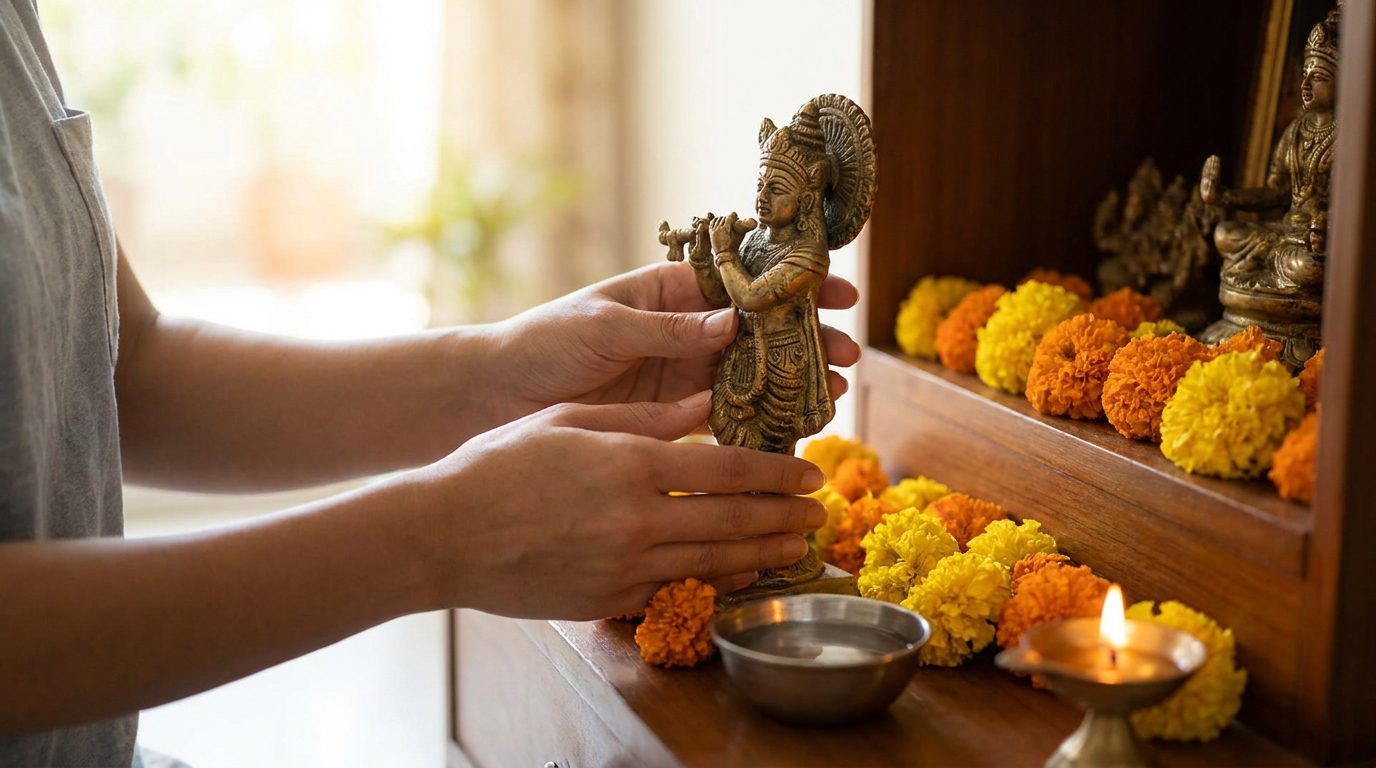
An intimate relationship with Krishna is not a distant religious idea. It is a living, personal, heart-to-heart connection with the Divine Person, Sri Krishna, who is described in the Bhakti scriptures as the all-attractive source of love, beauty, wisdom, and joy.
In Bhakti Yoga, we do not approach God only as a concept, a force, or a judge. We approach Krishna as a loving person who knows us completely and welcomes us lovingly. This relationship is built through devotion, remembrance, prayer, chanting, service, and sincere spiritual practice.
The word bhakti means devotion, loving service, or the path of divine love. Yoga means connection. So Bhakti Yoga means reconnecting with God through love.
This path is open to everyone. You do not need to be born in a particular culture, know Sanskrit, have a perfect lifestyle, or feel spiritually advanced. You can begin exactly where you are. Krishna meets sincerity, not perfection.
In the Bhagavad-gita, Krishna says:
“Always think of Me, become My devotee, worship Me, and offer your homage unto Me. Thus you will come to Me without fail.”
— Bhagavad-gita 18.65
This verse is a loving invitation. Krishna is not asking for something complicated. He is asking for our heart.
Who Is Krishna?
To build an intimate relationship with Krishna, it helps to understand who Krishna is according to the Bhakti tradition.
Krishna as the Supreme Person
In the Bhagavad-gita, Krishna reveals Himself as the Supreme Lord, the source of all spiritual and material worlds. Yet He is not only majestic and powerful. He is also deeply personal, playful, compassionate, and loving.
The name Krishna means “the all-attractive one.” He attracts the heart through His beauty, kindness, flute music, wisdom, and loving nature.
In the Srimad Bhagavatam, one of the most cherished Bhakti scriptures, Krishna is described not only as God but as a beloved friend, child, and lover of His devotees. This is one of the unique gifts of Bhakti Yoga: God is not only worshiped with awe, but also loved with tenderness.
Krishna in Vrindavan
Vrindavan is the sacred village where Krishna performs His sweetest childhood and youth pastimes. In Vrindavan, Krishna is loved intimately by His devotees. The cowherd boys see Him as their best friend. Mother Yashoda sees Him as her beloved child. The gopis, the devoted cowherd maidens, love Him with pure, selfless spiritual love.
These relationships show us that the soul’s relationship with Krishna can become very personal. We may begin with respect, curiosity, or prayer, but over time the heart awakens to affection, trust, and deep love.
Krishna in the Heart
Krishna is not far away. The Bhagavad-gita explains that He is present in everyone’s heart as Paramatma, the Supersoul, the inner guide.
This means that even before we turn toward Krishna, He is already with us. He has witnessed our struggles, hopes, mistakes, and longings. He patiently waits for us to remember Him.
An intimate relationship with Krishna begins with this simple realization: “I am not alone. Krishna is with me.”
What Does Intimacy with Krishna Mean?
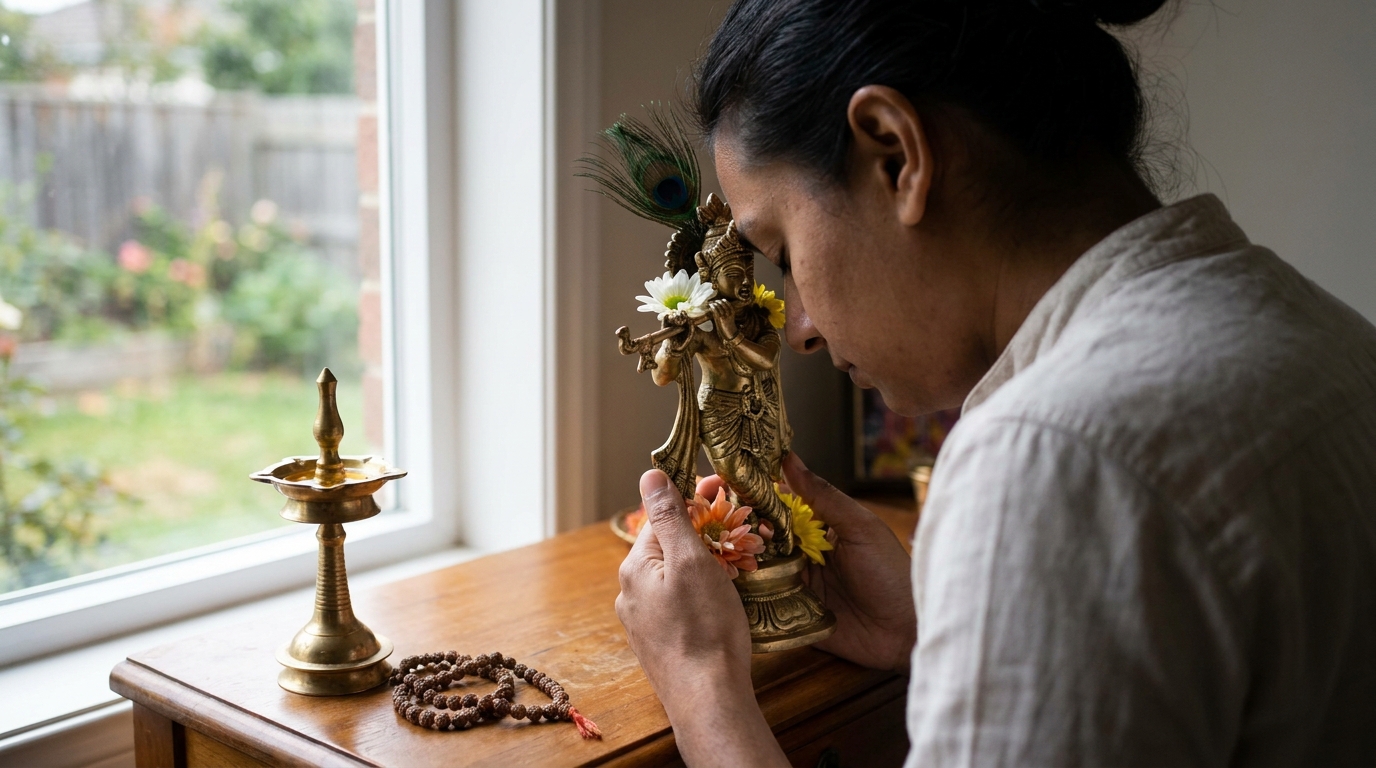
When people hear the word “intimate,” they may think only of human closeness. In Bhakti Yoga, spiritual intimacy means a deep, honest, loving connection with Krishna. It means allowing Krishna into our daily life, our decisions, our emotions, our service, and our inner world.
Intimacy Means Honesty
A real relationship with Krishna does not require pretending. We can come to Krishna with our joy, pain, doubts, gratitude, confusion, and longing.
Sometimes people think, “I should only pray when I am pure,” or “I should not approach God until I have everything together.” But Bhakti teaches the opposite. We become purified by approaching Krishna.
A simple prayer may be:
“Krishna, I do not know how to love You fully, but I want to learn. Please guide me.”
This kind of honest prayer is powerful because it is real.
Intimacy Means Dependence
In the material world, dependence can feel frightening because people may disappoint us. But dependence on Krishna brings strength. It does not make us weak; it connects us with the source of courage, wisdom, and compassion.
Krishna says in the Bhagavad-gita:
“To those who are constantly devoted and worship Me with love, I give the understanding by which they can come to Me.”
— Bhagavad-gita 10.10
This means Krishna helps the sincere seeker from within. When we turn to Him regularly, He gives guidance, clarity, and spiritual intelligence.
Intimacy Means Loving Service
In Bhakti Yoga, love is expressed through seva, which means service. Service is not forced labor. It is the natural expression of affection.
When we love someone, we want to do something for them. Similarly, when we love Krishna, we want to offer our time, talents, words, food, work, and relationships in a spirit of devotion.
Even simple acts can become spiritual when offered with love.
Check out our latest articles at https://thebhaktihouse.org/blog.
The Foundation: Chanting Krishna’s Holy Names
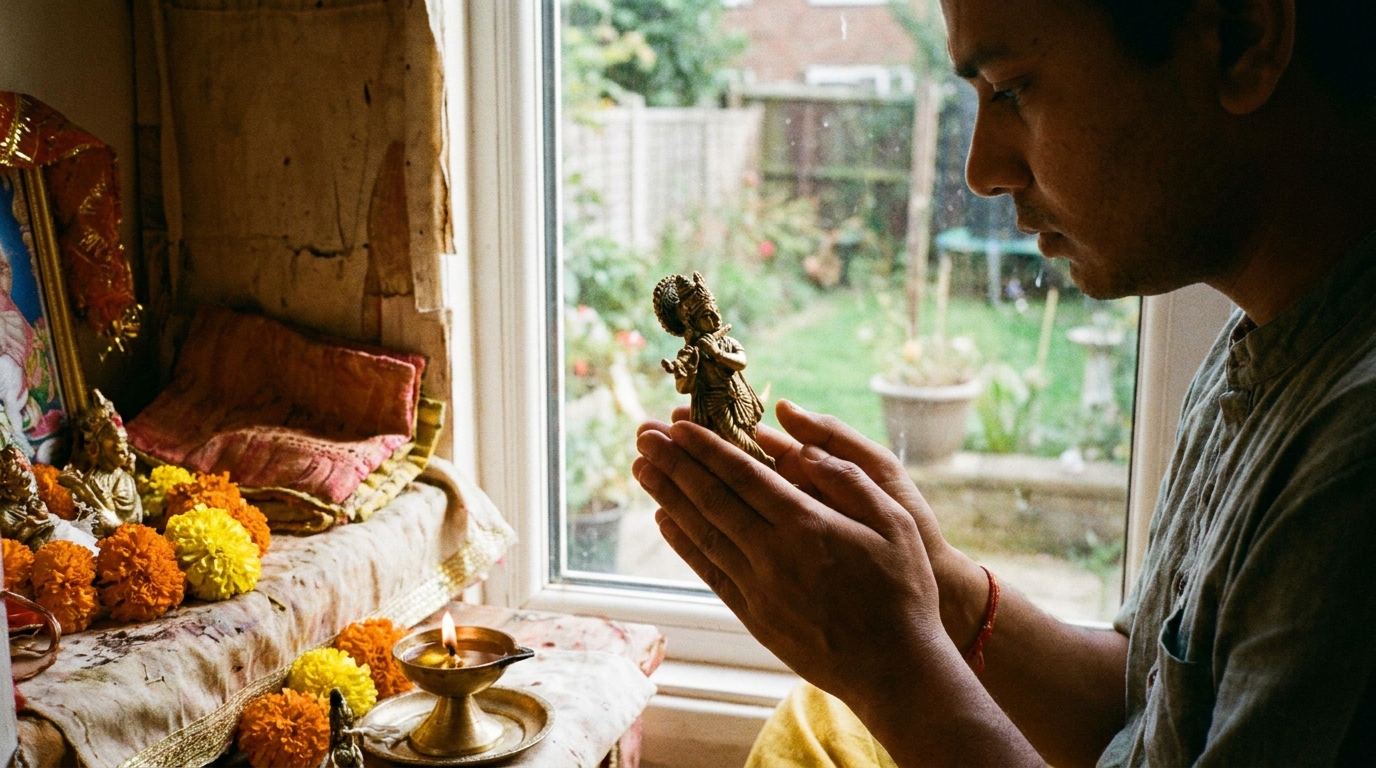
One of the most accessible and powerful ways to develop an intimate relationship with Krishna is through chanting His names.
What Is Mantra Meditation?
A mantra is a sacred sound vibration that helps lift the mind and heart toward the Divine. In Bhakti Yoga, the most recommended mantra for this age is the Hare Krishna maha-mantra:
Hare Krishna Hare Krishna
Krishna Krishna Hare Hare
Hare Rama Hare Rama
Rama Rama Hare Hare
Maha-mantra means “great mantra.” This prayer calls upon Krishna and His divine energy, asking to be engaged in loving service.
“Hare” refers to the divine energy of the Lord, especially Srimati Radharani, Krishna’s supreme beloved and the embodiment of pure devotion. “Krishna” means the all-attractive Lord. “Rama” means the reservoir of spiritual joy.
In simple words, the mantra means:
“O Lord, O divine energy of the Lord, please engage me in Your loving service.”
Why Chanting Creates Closeness
Krishna and His names are understood to be spiritually non-different. This means that when we chant Krishna’s name sincerely, we are directly associating with Krishna.
Chanting is not just a technique for relaxation, though it may bring peace. It is a relationship practice. Just as calling the name of a loved one brings their presence into our heart, calling Krishna’s name invites His presence into our consciousness.
The more we chant with attention and sincerity, the more the heart becomes softened. We begin to feel that Krishna is real, near, and responsive.
How to Begin Chanting
You can begin simply.
Set aside five or ten minutes each day. Sit in a peaceful place. Take a few deep breaths. Then chant the Hare Krishna mantra softly, either aloud or in your mind.
If you have meditation beads, called japa mala, you can chant one mantra on each bead. Japa means personal, meditative chanting. Many practitioners gradually build a daily japa practice.
If the mind wanders, gently bring it back. Do not become discouraged. The practice is not about perfect concentration at first. It is about sincere returning.
Each time you return to Krishna’s name, you take a step closer.
Prayer: Speaking to Krishna from the Heart
Prayer is one of the most natural ways to grow closer to Krishna. It turns philosophy into relationship.
Personal Prayer
You can speak to Krishna in your own words. You do not need poetic language. You do not need to sound holy.
You might pray:
“Krishna, thank You for this day.”
“Please help me make the right choice.”
“I feel lost. Please guide me.”
“Please help me love and serve others.”
“Please let me remember You.”
These simple prayers cultivate a mood of companionship with Krishna. Over time, prayer becomes less like a formal request and more like a loving conversation.
Scriptural Prayers
Bhakti scriptures are filled with prayers offered by great devotees. Reading and reciting these prayers helps shape our inner life.
For example, Queen Kunti prays in the Srimad Bhagavatam with deep surrender. Prahlada Maharaja prays with faith even in hardship. The gopis of Vrindavan pray with intense longing for Krishna’s presence.
These prayers teach us that devotion includes many emotions: gratitude, longing, humility, courage, and love.
Listening After Prayer
A relationship is not only speaking; it is also listening. After prayer, sit quietly for a moment. Notice what arises in the heart.
Krishna may guide us through scripture, through the wisdom of teachers, through devotees, through conscience, or through a quiet inner sense of what is right.
Listening is an important part of intimacy.
Service: Offering Your Life with Love
Bhakti Yoga becomes practical when we learn to offer our daily actions to Krishna.
What Is Seva?
Seva means loving service. It is service offered not for ego, recognition, or reward, but for Krishna’s pleasure and the upliftment of others.
Seva can be done in a temple, at home, at work, in the community, or within the family. It can be cooking, cleaning, teaching, singing, writing, organizing, gardening, caring for children, helping guests, supporting spiritual gatherings, or encouraging someone in their faith.
What matters most is the intention.
Krishna says in the Bhagavad-gita:
“If one offers Me with love and devotion a leaf, a flower, fruit, or water, I will accept it.”
— Bhagavad-gita 9.26
This verse is so tender. Krishna does not ask for wealth or status. He asks for love.
Offering Food to Krishna
One beautiful daily practice is offering food to Krishna before eating. Food offered to Krishna with devotion is called prasadam, which means mercy or grace.
You can prepare vegetarian food with care, place it before a picture or deity of Krishna, and pray:
“Dear Krishna, please accept this offering made with love.”
After a few moments, you can honor that food as Krishna’s mercy. Eating becomes sacred. Cooking becomes devotion. The home becomes a place of worship.
Serving Others as Krishna’s Children
An intimate relationship with Krishna naturally expands into compassion for others. If Krishna is in everyone’s heart, then every person is worthy of respect.
Bhakti is not an escape from the world. It is a way to see the world through spiritual eyes.
When we serve others with kindness, patience, and humility, we are also serving Krishna.
Hearing and Remembering Krishna
Relationships grow through hearing. If we want to know Krishna deeply, we need to hear about Him from authentic sources.
Hearing from Scripture
The Bhagavad-gita gives us Krishna’s direct teachings. It helps us understand the soul, karma, devotion, duty, surrender, and the nature of God.
The Srimad Bhagavatam reveals Krishna’s qualities, devotees, and divine pastimes. It nourishes the heart with stories of devotion and spiritual courage.
The Bhakti tradition recommends sravanam, which means hearing. Hearing about Krishna cleanses the heart and awakens remembrance.
A simple practice is to read a few verses daily. Read slowly. Ask:
“What is Krishna teaching me?”
“How can I apply this today?”
“What quality of devotion is being shown here?”
Remembering Krishna During the Day
Smaranam means remembrance. We may begin by remembering Krishna during formal practice, but gradually we can remember Him throughout the day.
You can remember Krishna while walking, cooking, driving, working, or resting. You can keep a small picture of Krishna nearby. You can listen to kirtan, devotional music, or scripture classes. You can pause before a task and say, “Krishna, let this be for You.”
Spiritual intimacy grows through these small moments.
Kirtan: Singing Together
Kirtan means congregational chanting, often with music. It is joyful, healing, and deeply connecting.
In kirtan, we chant Krishna’s names together. Some people sing with full confidence; others simply listen. Both are welcome. The power is in the sacred sound and the shared intention.
Kirtan reminds us that Bhakti Yoga is not only individual. It is also communal. We grow through spiritual friendship.
Understanding Your Eternal Relationship with Krishna
Bhakti scriptures explain that every soul has an eternal relationship with Krishna. This relationship may be awakened gradually through practice and grace.
The Soul’s Natural Identity
In Sanskrit, the soul is called atma. The atma is eternal, conscious, and spiritual. We are not merely the body or the mind. We are spiritual beings longing for lasting love.
The deepest hunger of the soul is not for possessions, praise, or control. It is for loving connection with Krishna.
This is why material success alone cannot fully satisfy the heart. The soul needs spiritual nourishment.
Different Loving Moods
In Bhakti, devotees may relate to Krishna in different loving moods, called rasas. A rasa is a spiritual relationship or flavor of love.
Some love Krishna as a servant, with reverence and dedication. Some love Him as a friend, with trust and closeness. Some love Him as a child, with protective affection. Some love Him in the mood of divine beloved, with complete selfless love.
These are not ordinary emotions. They are purified spiritual relationships revealed in the hearts of advanced devotees.
For beginners, we do not need to artificially imagine our eternal relationship. We simply practice sincerely, chant, serve, hear, and pray. Krishna gradually reveals what is needed.
Following the Footsteps of Devotees
One of the safest ways to grow in intimacy with Krishna is to follow the example of genuine devotees. Their lives show us what love looks like in practice.
Great Bhakti saints such as Srila Prabhupada, Sri Chaitanya Mahaprabhu, Mirabai, Narada Muni, Prahlada Maharaja, and the residents of Vrindavan teach us devotion through their words, songs, sacrifices, and love.
Sri Chaitanya Mahaprabhu, who is honored in the Gaudiya Vaishnava tradition as Krishna appearing in the mood of His own devotee, emphasized the chanting of the holy names as the most merciful path for this age.
His prayer is simple and profound:
“O Lord, I have no desire for wealth, followers, beautiful companions, or even liberation. I only want Your causeless devotional service, birth after birth.”
This is the heart of pure Bhakti: love without bargaining.
Common Obstacles in Developing Closeness with Krishna
Every sincere seeker faces challenges. Obstacles do not mean failure. They are part of the journey.
“I Feel Unworthy”
Many people feel, “I have made too many mistakes. Why would Krishna accept me?”
But Krishna’s compassion is greater than our past. In the Bhagavad-gita, Krishna assures that even someone with a troubled history can become saintly by sincerely turning toward Him.
Bhakti is not for the flawless. It is for the sincere.
A humble heart is often closer to Krishna than a proud heart that appears religious.
“My Mind Wanders When I Chant”
This is very common. The mind has been wandering for many lifetimes. It will not become still overnight.
When the mind wanders, gently bring it back to the mantra. Each return is an offering. Krishna sees the effort.
Do not measure your chanting only by feelings. Sometimes chanting feels sweet. Sometimes it feels dry. Both can purify the heart when done sincerely.
“I Do Not Feel Krishna’s Presence”
Relationships take time. If we plant a seed, we water it patiently before seeing fruit.
Similarly, Bhakti grows through regular practice. The seed of devotion is watered by hearing and chanting about Krishna. Gradually, faith deepens, habits change, and the heart becomes more sensitive.
Even when we do not feel Krishna, He is present.
“I Am Busy”
Modern life can be full. But intimacy with Krishna does not require leaving everything behind. It begins by bringing Krishna into what we already do.
Chant while walking. Offer your meals. Read one verse. Say one prayer. Listen to kirtan while commuting. Serve someone with devotion.
Small sincere practices, done consistently, open the heart.
A Daily Practice for Intimacy with Krishna
A complete guide should also be practical. Here is a simple daily rhythm anyone can adapt.
Morning Connection
Begin the day by remembering Krishna before checking your phone or entering your responsibilities.
You might say:
“Krishna, thank You for another day. Please guide my thoughts, words, and actions. Let me serve You and others with love.”
Then chant the Hare Krishna mantra for a few minutes. If possible, read one verse from the Bhagavad-gita or Srimad Bhagavatam.
Starting the morning with Krishna sets the tone for the day.
Midday Remembrance
Pause during the day. Take one minute to breathe and chant quietly. Offer your work to Krishna.
If you eat lunch, offer it first with a simple prayer. Remember that the food, body, energy, and opportunity to serve are all gifts.
This turns ordinary life into spiritual practice.
Evening Reflection
At night, reflect gently.
Ask yourself:
“Where did I remember Krishna today?”
“Where did I forget?”
“How did I serve?”
“What can I offer tomorrow?”
Do not reflect with harshness. Reflect with humility and hope.
End with gratitude:
“Krishna, thank You for staying with me today. Please help me remember You more tomorrow.”
Weekly Devotional Community
If possible, join a Bhakti community. Attend kirtan, scripture discussion, prasadam gatherings, temple programs, or online sangha.
Sangha means spiritual association. We need the company of those who inspire our devotion. Community gives encouragement, accountability, friendship, and joy.
The spiritual path becomes much easier when walked with kind-hearted devotees.
The Role of Guru and Guidance
In Bhakti Yoga, spiritual guidance is very important. A guru is a spiritual teacher who helps us understand Krishna and practice devotion in a grounded way.
Why Guidance Matters
The path of love is simple, but the heart can be complicated. We may confuse emotion with devotion, or ego with service. Genuine guidance helps us stay humble, balanced, and connected to authentic teachings.
The Bhagavad-gita recommends approaching spiritual teachers with humility, sincere questions, and service.
A true teacher does not replace Krishna. A true teacher helps us come closer to Krishna.
Choosing Healthy Spiritual Association
Because spirituality is sacred, we should seek guidance from people who live with integrity, compassion, scriptural grounding, and humility.
Healthy Bhakti association encourages personal growth, responsibility, kindness, and sincere practice. It does not exploit fear, control, or blind following.
Krishna is loving. A genuine path toward Krishna should help the heart become more loving, truthful, and spiritually strong.
Intimacy with Krishna in Relationships and Daily Life
An intimate relationship with Krishna transforms how we relate to others.
Seeing Others Spiritually
When we remember that Krishna lives in every heart, we become less quick to judge. We may still need boundaries and discernment, but our vision becomes more compassionate.
We begin to see people not as objects for our pleasure or obstacles to our plans, but as souls loved by Krishna.
This spiritual vision softens family life, friendships, work, and community service.
Offering Your Talents
Your unique gifts can become offerings. Music, art, cooking, teaching, business, counseling, writing, parenting, leadership, gardening, technology, hospitality—all can be used in Krishna’s service.
Bhakti does not erase individuality. It purifies and spiritualizes it.
Ask yourself:
“What has Krishna given me?”
“How can I use it to serve?”
“How can my life become an offering?”
Moving from Control to Surrender
Saranagati means surrender. In Bhakti, surrender does not mean giving up in despair. It means lovingly trusting Krishna and aligning our life with His guidance.
Surrender includes accepting what helps devotion, avoiding what harms devotion, trusting Krishna’s protection, depending on His grace, offering ourselves, and staying humble.
This is not always easy. But it is deeply freeing.
The more we trust Krishna, the less we need to control everything.
The Sweetness of Krishna’s Love
The goal of Bhakti Yoga is not merely peace, morality, or wisdom, though these may come. The goal is prema, pure love of God.
What Is Prema?
Prema means divine love, the fully awakened love of the soul for Krishna. It is selfless, joyful, steady, and deeply intimate.
Prema is not manufactured by force. It is awakened by grace through sincere practice. Like the sun rising, it gradually illuminates the heart.
The practices of Bhakti—chanting, hearing, prayer, service, worship, remembrance, and friendship with devotees—prepare the heart to receive this love.
Krishna Reciprocates
One of the most beautiful teachings of the Bhagavad-gita is that Krishna responds personally to our approach.
“As all surrender unto Me, I reward them accordingly.”
— Bhagavad-gita 4.11
This means your relationship with Krishna is personal. He sees your sincerity. He knows your pace. He accepts even a small offering when it is made with love.
No sincere step is wasted.
The Journey Is Eternal
An intimate relationship with Krishna is not completed in a day. It is an eternal journey of deepening love.
Some days may feel inspired. Some days may feel ordinary. Keep going. Chant again. Pray again. Offer again. Serve again. Hear again.
Spiritual growth is often gentle and gradual. Krishna is patient with us. We can learn to be patient with ourselves.
A Simple Beginning for Everyone
If you are new to Krishna, you are welcome. If you come from another faith background, you are welcome. If you are unsure what you believe, you are welcome. If you have practiced Bhakti for many years and want to go deeper, you are welcome.
Krishna is not limited by labels. He is the loving Lord in the heart of all beings.
You can begin with one sincere step:
Chant the Hare Krishna mantra once with attention.
Offer one meal with gratitude.
Read one verse from the Bhagavad-gita.
Say one honest prayer.
Serve one person as a child of God.
Attend one kirtan.
Ask Krishna for guidance.
Bhakti Yoga is a practical path of love. It is not about becoming someone artificial. It is about awakening who you truly are: an eternal soul, loved by Krishna, meant to love and serve Him with joy.
May your journey toward an intimate relationship with Krishna be blessed with sincerity, humility, and hope. Wherever you are today, Krishna is near. Take one sincere step toward God, and trust that He lovingly takes many steps toward you.
FAQs
What is an intimate relationship with Krishna?
An intimate relationship with Krishna refers to a deep, personal, and loving connection with the Hindu deity Krishna. It involves devotion, surrender, and a sense of closeness to Krishna on a spiritual level.
How can one develop an intimate relationship with Krishna?
One can develop an intimate relationship with Krishna through practices such as bhakti yoga, which involves devotional service, chanting of Krishna’s names (mantra meditation), reading scriptures like the Bhagavad Gita, and engaging in acts of loving service to Krishna and others.
What are the benefits of having an intimate relationship with Krishna?
The benefits of having an intimate relationship with Krishna include experiencing inner peace, spiritual fulfillment, a sense of purpose, and a deep connection to the divine. It can also lead to a greater understanding of one’s true self and the nature of reality.
Are there any challenges in maintaining an intimate relationship with Krishna?
Challenges in maintaining an intimate relationship with Krishna may include distractions from material desires, doubts and difficulties in understanding Krishna’s teachings, and the need for consistent effort and dedication in spiritual practices.
Can anyone have an intimate relationship with Krishna?
Yes, anyone can develop an intimate relationship with Krishna regardless of their background, nationality, or religious affiliation. The path of bhakti yoga is open to all individuals who seek a deeper connection with the divine.

