
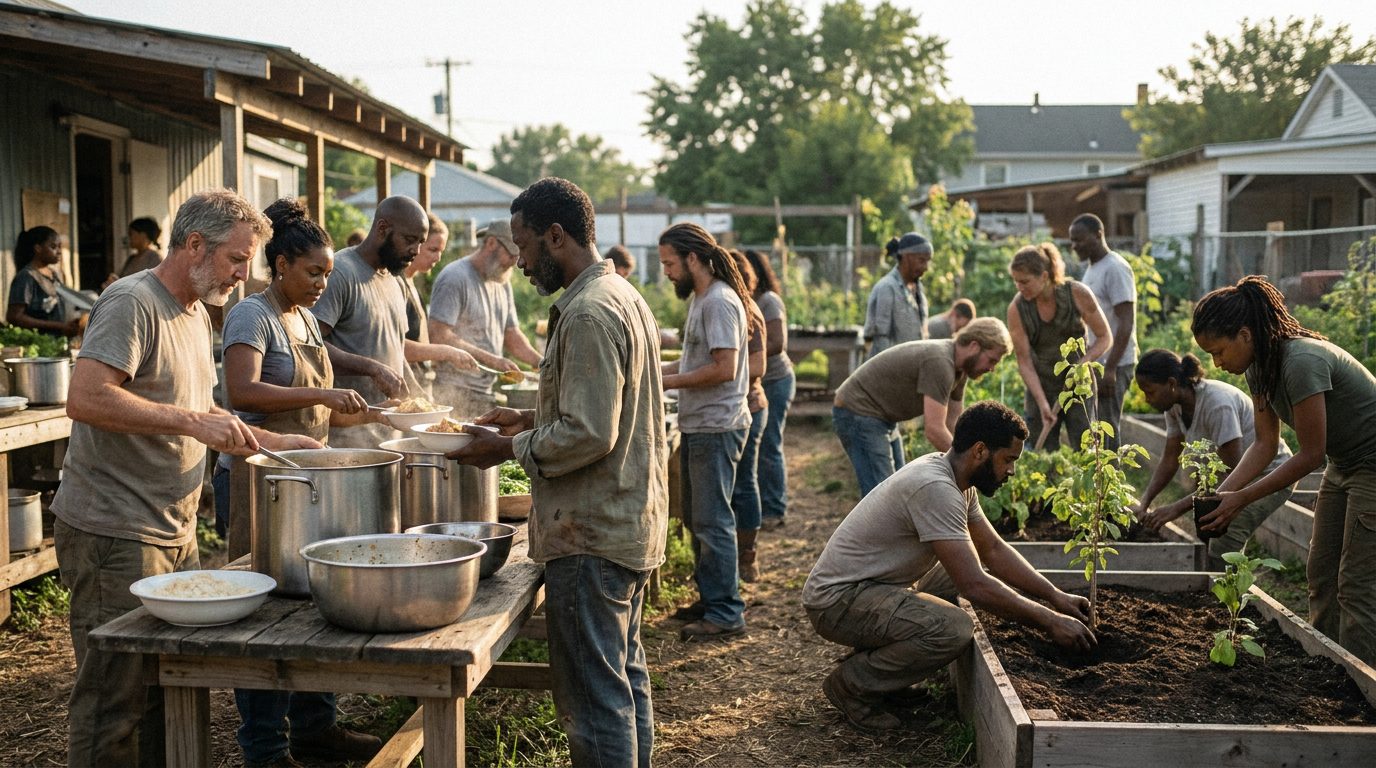
Seva is a beautiful Sanskrit word that means “selfless service.” In the Bhakti Yoga tradition, seva is not simply volunteering, doing good deeds, or helping when it is convenient. Seva is service offered with love, humility, and devotion to God and all living beings.
In Bhakti, we understand that every soul is sacred. Every person, every creature, and every part of creation is connected to the Divine. When we serve others with a sincere heart, we are not just serving a person in front of us—we are serving God within them.
This is the heart of seva.
Seva can be as simple as preparing a meal, listening with compassion, cleaning a sacred space, helping someone in need, chanting for the benefit of others, or offering our daily work to God. It is not measured by size, status, or public recognition. It is measured by love.
At The Bhakti House, we often remind one another that Bhakti Yoga is practical. It is not only something we read about or meditate on. It is something we live—through chanting, prayer, kindness, community, and service.
Seva brings spiritual life into our hands, our words, our relationships, and our daily responsibilities.
Seva Means Serving With the Heart
The word seva comes from the Sanskrit root meaning “to serve” or “to attend to.” But in Bhakti Yoga, seva carries a deeper feeling. It means serving with devotion, not ego. It means offering our energy in a spirit of gratitude, not superiority.
Sometimes we may think service means, “I am helping someone who has less than me.” But true seva softens that idea. In genuine service, we begin to see that the person we serve is also helping us. They are giving us an opportunity to open our hearts, become humble, and remember God.
In this way, seva is not one-directional. It is sacred exchange.
Service as an Offering to God
In the Bhagavad Gita, one of the central scriptures of Yoga, Lord Krishna teaches that our actions can become spiritual when we offer them with devotion. He says:
“Whatever you do, whatever you eat, whatever you offer or give away, and whatever austerities you perform—do that as an offering to Me.”
Bhagavad Gita 9.27
This verse gives us a practical doorway into seva. We do not have to abandon our lives to become spiritual. We can begin by offering what we already do.
Cooking can become seva. Parenting can become seva. Work can become seva. Cleaning can become seva. Encouraging a friend can become seva. When our intention becomes loving service, ordinary life becomes a sacred path.
Why Seva Matters in Bhakti Yoga
Bhakti Yoga is the yoga of love and devotion. The Sanskrit word bhakti means “devotional love” or “loving service.” It is the path of reconnecting the heart with God through practices such as chanting the holy names, prayer, scripture, worship, community, and seva.
In Bhakti, love is not only a feeling. Love is expressed through action. If we love someone, we naturally want to serve them. A parent serves a child. A friend supports a friend. A lover cares for the beloved. In the same way, as love for God awakens, the desire to serve naturally grows.
Seva helps us move from spiritual ideas into spiritual character. It teaches us patience, compassion, steadiness, and humility. It helps us become less self-centered and more God-centered.
Seva Purifies the Heart
Many Bhakti scriptures explain that the heart is originally pure, but it becomes covered by selfish desires, fear, pride, envy, and forgetfulness of God. Seva is one way those coverings begin to loosen.
When we serve, we are gently challenged. We may notice our desire to be appreciated. We may become impatient when things do not go our way. We may compare our service to someone else’s service. These moments are not failures. They are invitations.
Seva reveals what is in the heart so it can be healed.
Through steady service, we learn to pray, “God, please help me serve without expecting anything in return. Help me become an instrument of Your compassion.”
This kind of prayer is powerful. It transforms service from activity into spiritual practice.
Seva Connects Us With Others
Modern life can make people feel isolated, unseen, and disconnected. Many are longing for deeper community, but do not know where to begin. Seva creates connection because it brings people together around a shared purpose.
When we serve side by side—cooking, cleaning, chanting, organizing, caring, welcoming—we begin to experience spiritual family. We learn that community is not built only through conversation. It is built through shared offering.
In Bhakti communities around the world, seva is often the heartbeat. People gather to prepare sacred food, sing kirtan, decorate the altar, distribute meals, teach children, welcome newcomers, care for guests, and support one another through life’s joys and sorrows.
This is spiritual life made visible.
Seva Helps Us Remember God
One of the central practices of Bhakti Yoga is remembrance—remembering God throughout the day. Sanskrit scriptures often use the word smaranam, which means “remembering” or “meditative remembrance.”
Seva helps with remembrance because it gives the mind and body a devotional focus. Instead of thinking only, “What do I want?” we begin asking, “How can I serve? How can I please God? How can I bring kindness into this moment?”
This shift is simple, but deeply transformative.
Even if we forget many times a day, seva gives us a way to return.
The Inner Mood of Seva
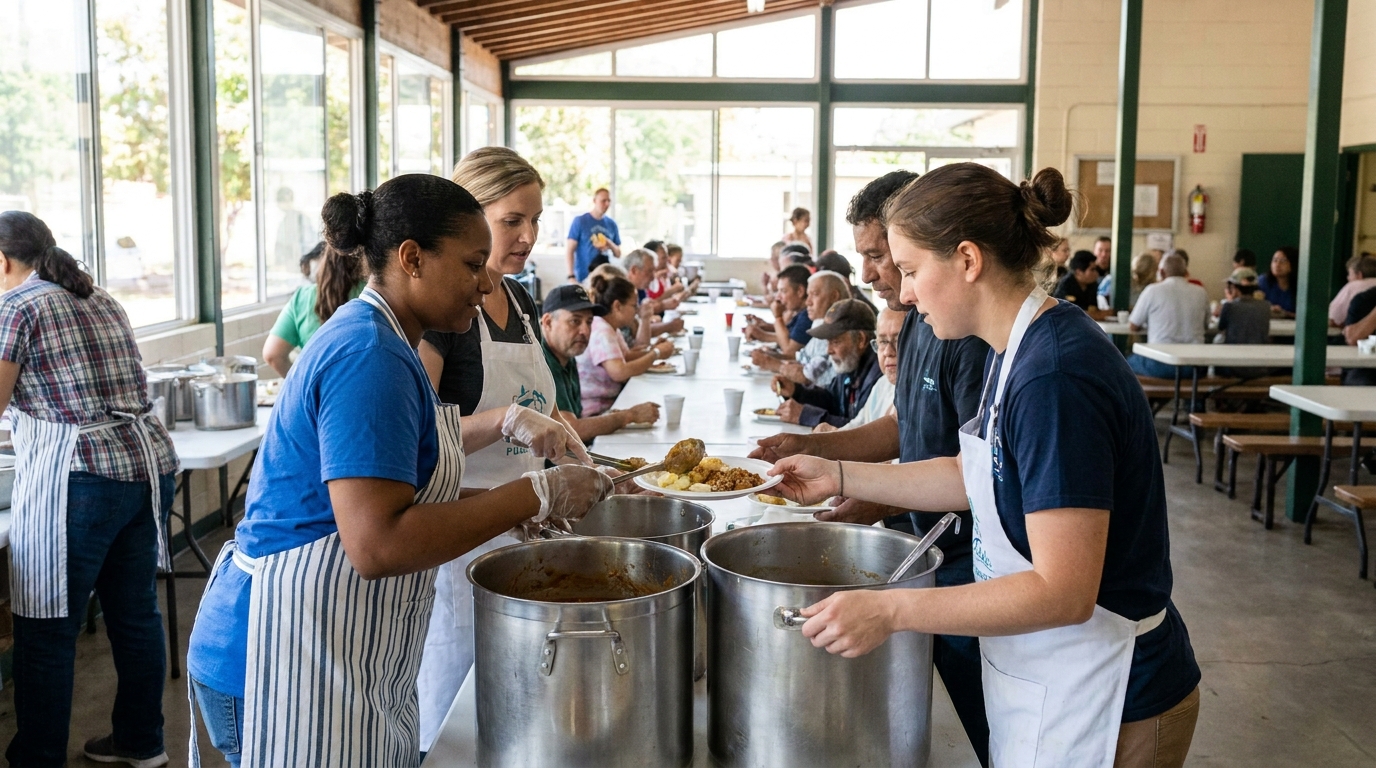
The outer action of service matters, but the inner mood matters even more. Two people may do the same task—one with resentment, another with love. Externally, the action may look similar. Internally, the offering is different.
Bhakti Yoga invites us to pay attention not only to what we do, but how we do it.
Seva is not meant to make us harsh, exhausted, or proud. It is meant to make us tender, steady, and surrendered. The goal is not to become a “busy spiritual person,” but to become a loving servant of God and all beings.
Humility: The Foundation of Seva
Humility does not mean thinking badly of ourselves. It means seeing ourselves truthfully. We are not the center of everything. We are dependent on grace. Our gifts, energy, intelligence, and opportunities are blessings.
In the Bhagavad Gita, Krishna describes humility as one of the qualities of true knowledge. Humility allows us to serve without needing applause. It helps us receive guidance. It protects us from the subtle pride that can enter even spiritual work.
A humble person may think, “I am grateful to be allowed to serve.”
This mood brings sweetness into every action.
Gratitude: Serving From Fullness
Sometimes we serve because we feel guilty or pressured. But seva in Bhakti grows best from gratitude.
We reflect: “God has given me life. God has given me breath. God has given me food, shelter, guidance, and countless forms of mercy. How can I offer something back?”
This gratitude does not need to be dramatic. It can be quiet and sincere. A person washing dishes after a community meal may inwardly pray, “Thank You for letting me serve.” A person caring for a family member may remember, “This is also my offering.” A person at work may think, “Let my work today be useful and honest.”
Gratitude turns duty into devotion.
Compassion: Seeing the Soul in Everyone
Bhakti teaches that we are not merely bodies, labels, or social identities. We are atma, a Sanskrit word meaning “soul” or “self.” The atma is eternal, spiritual, and beloved by God.
When we remember this, our service becomes more compassionate. We begin to see beyond appearances. The person who is difficult, lonely, angry, poor, successful, young, old, familiar, or foreign—all are souls on a journey.
Compassion does not mean we abandon wisdom or healthy boundaries. It means we do not forget the sacredness of another being.
Seva is compassion in motion.
Please visit our website for more information on our articles: articles.
Practical Ways to Embrace Seva Daily

A life of service does not require perfection. It begins with one sincere step. Each of us can practice seva according to our nature, capacity, stage of life, and responsibilities.
Some people serve through teaching. Others through cooking, organizing, cleaning, listening, healing, gardening, music, writing, caring for children, supporting elders, or simply showing up with a steady heart.
The key is to offer what we can, where we are.
Begin the Day With an Offering
Before stepping into the busyness of the day, pause for a moment. You may place your hand on your heart and say a simple prayer:
“Dear God, please guide my thoughts, words, and actions today. Let whatever I do become an offering of love. Help me serve with humility and kindness.”
This small practice can change the direction of the entire day.
In Bhakti Yoga, intention is powerful. When the day begins with offering, even ordinary tasks can become spiritual.
Serve Through Your Work
Many people wonder how to practice Bhakti Yoga while living a full modern life. Work may take up much of our time and energy. But work can become seva when done with integrity, care, and remembrance of God.
If you are a teacher, you can serve by educating with patience. If you are a parent, you can serve by nurturing with devotion. If you are in business, you can serve by acting honestly and considering the welfare of others. If you work in healthcare, service may already be woven into your daily life. If you clean, cook, build, manage, design, or organize, your work can be offered.
The Bhagavad Gita teaches karma-yoga, the yoga of offering our actions without attachment to selfish results. When karma-yoga is infused with devotion, it becomes part of Bhakti.
We can think, “God, I offer this work to You. May it benefit others.”
Serve at Home
Sometimes we imagine seva only happening in temples, ashrams, churches, mosques, community centers, or public service projects. But home is also a sacred place for service.
Washing dishes, caring for children, supporting a partner, tending to parents, feeding guests, creating peace in the home—these can all become seva when offered with love.
Home can be a place where Bhakti is practiced quietly and deeply. A meal prepared with prayer can nourish more than the body. A kind word can become healing. A clean space can become welcoming. A family routine can become a rhythm of devotion.
Serve Through Listening
One of the most needed forms of seva today is sincere listening.
Many people carry unseen burdens. They may not need advice as much as presence. To listen without rushing, judging, or turning the conversation back to ourselves is a powerful act of service.
Listening says, “You matter. I see you. Your pain is not invisible.”
In devotional life, listening is also sacred. The Sanskrit word shravanam means “hearing.” In Bhakti, hearing about God, hearing sacred wisdom, and hearing the hearts of others can all soften us.
When we listen with compassion, we make space for grace.
Serve Through Food
Food has a special place in Bhakti Yoga. In many Bhakti traditions, food is prepared with devotion and offered to God before being shared. This sanctified food is called prasadam, meaning “mercy” or “grace.”
Prasadam reminds us that eating is not separate from spiritual life. We receive food as a gift, offer it with gratitude, and share it with others.
Preparing and serving prasadam is one of the most joyful forms of seva. It nourishes the body, warms the heart, and creates community. Even a simple meal—rice, vegetables, fruit, bread, soup—can become sacred when offered with love.
If you are new to this practice, you can begin simply. Before eating, pause and say, “Dear God, thank You for this food. May it nourish me so I can serve with love.”
Seva and Chanting: Serving Through Sacred Sound
Chanting is central to Bhakti Yoga. The practice of chanting God’s names is often called kirtan when sung together, and japa when repeated softly or personally, often on prayer beads.
In Bhakti, divine names are not considered ordinary sound. They carry spiritual presence. Chanting cleanses the heart, calms the mind, awakens love, and helps us remember God.
But chanting is not only for our own peace. It can also be seva.
Kirtan as Community Service
Kirtan is the joyful practice of singing sacred mantras, often in a call-and-response style. A mantra is a sacred sound or prayer that helps focus the mind and awaken devotion.
When we participate in kirtan, we serve by adding our voice, attention, and sincerity. Some may sing loudly. Some may sing softly. Some may simply listen. All are welcome.
Kirtan creates a field of spiritual nourishment. People come with stress, grief, hope, confusion, gratitude, or longing. Through sacred sound, hearts begin to soften. The room becomes a place of prayer.
Offering kirtan to others is seva because it gives people a chance to reconnect with the Divine.
Japa as Inner Service
Japa is the personal repetition of a mantra. One widely practiced mantra in Bhakti Yoga is the maha-mantra, meaning “great mantra”:
Hare Krishna Hare Krishna
Krishna Krishna Hare Hare
Hare Rama Hare Rama
Rama Rama Hare Hare
“Hare” calls upon the Divine energy of love. “Krishna” means the all-attractive Lord. “Rama” means the source of joy and spiritual pleasure.
Chanting japa may seem private, but it affects how we show up in the world. A person who chants sincerely may become more patient, more forgiving, and more grounded. In this way, inner practice becomes outer service.
When our hearts are nourished by chanting, we have more love to offer.
Prayer for the Welfare of Others
Prayer is also seva. We can pray for those who are suffering, for those who feel lost, for our families, for our communities, for the earth, and even for those with whom we struggle.
To pray for another person is to carry them gently before God.
A simple prayer may be:
“Dear Lord, please bless this person. Please guide them, protect them, and help them feel Your love.”
We may not always know how to fix someone’s pain. But we can offer prayer. And sometimes prayer changes us first, giving us the clarity and compassion to act wisely.
Serving Without Burning Out
Because seva is beautiful, sincere people sometimes overextend themselves. They may say yes to everything, ignore their own health, or confuse exhaustion with devotion. But Bhakti Yoga is not a path of resentment or self-neglect.
True seva is sustainable. It is rooted in connection with God, supported by healthy community, and guided by wisdom.
We are not the ultimate controller. We are instruments. This understanding brings relief.
Know Your Capacity
Each person has a different capacity. Some can serve for many hours. Some can offer a small amount of time. Some are caring for children, elders, illness, or demanding work. Some have emotional wounds that need tenderness.
God sees the heart. A small service done sincerely can be spiritually powerful.
In the Bhagavad Gita, Krishna says:
“If one offers Me with love and devotion a leaf, a flower, a fruit, or water, I will accept it.”
Bhagavad Gita 9.26
This verse is deeply comforting. Krishna does not ask for grand offerings. He asks for love.
A leaf, a flower, a fruit, or water—offered with devotion—becomes precious.
Serve From Connection, Not Emptiness
If we try to serve without spiritual nourishment, we may become dry. Bhakti practices such as chanting, prayer, reading scripture, taking prasadam, and spending time with sincere devotees help refill the heart.
We serve best when we remain connected to the Source of love.
This is why personal practice matters. Morning prayer, even for a few minutes, can steady us. Chanting can cleanse the mind. Scripture can give direction. Community can encourage us. Rest can help us continue with sincerity.
Serving from connection allows love to flow through us, rather than forcing ourselves to produce love from our limited strength.
Healthy Boundaries Can Support Seva
Boundaries are not the opposite of service. Sometimes boundaries protect service.
We may need to say, “I cannot do that today,” or “I need rest,” or “I can help in this way, but not in that way.” This can be done with kindness and honesty.
A humble servant is not someone who has no limits. A humble servant is someone who recognizes that the body, mind, and time are also gifts from God and should be cared for responsibly.
When we honor our capacity, our service becomes more steady and joyful.
Seva in Sacred Scripture
Bhakti scriptures are full of examples of devotion expressed through service. These stories are not only ancient history. They are mirrors for our own spiritual lives.
They show us that God is moved by sincerity more than status, by love more than performance, and by devotion more than outward greatness.
Hanuman: The Joy of Devoted Service
In the Ramayana, Hanuman is one of the most beloved examples of seva. He serves Lord Rama with courage, humility, intelligence, and unwavering love.
Hanuman does not serve for fame. He serves because his heart belongs to Rama. Whether leaping across the ocean, comforting Sita, carrying a mountain of healing herbs, or standing with folded hands, Hanuman’s life is an offering.
His example teaches us that devotion gives strength. When service is connected to love for God, even impossible tasks become possible by grace.
We may not leap across oceans, but we all face challenges. Hanuman reminds us to pray, remember God, and serve with courage.
Arjuna: Serving Through One’s Duty
In the Bhagavad Gita, Arjuna faces confusion and moral pain on the battlefield of Kurukshetra. He does not know what to do. Krishna guides him not toward escapism, but toward sacred action performed with devotion and surrender.
Arjuna’s service is not simple or comfortable. It requires wisdom, courage, and deep trust in God.
This is important for us. Seva is not always soft or easy. Sometimes service means doing the difficult right thing. Sometimes it means fulfilling responsibility. Sometimes it means acting with integrity when we would rather avoid discomfort.
Krishna teaches Arjuna to act as an instrument of Divine will. We can also pray, “Please guide me. Let my actions be aligned with Your purpose.”
The Gopis: Love Beyond Selfishness
In the Srimad Bhagavatam, the gopis of Vrindavan are celebrated as great examples of pure devotion to Krishna. Their love is not motivated by personal gain. Their hearts are fully absorbed in pleasing Krishna.
While their devotion is very elevated and often difficult to understand fully, we can take a simple lesson: the highest love is selfless. It seeks the joy of the Beloved.
In our daily seva, we can practice a small reflection of this mood. Instead of asking, “What will I get?” we ask, “How can I offer love?”
This question can transform our relationships, our spiritual practice, and our community life.
Bringing Seva Into Community Life
Seva becomes especially powerful when practiced in community. A spiritual community gives us opportunities to serve, learn, grow, and be supported. It also helps us discover gifts we may not have recognized.
At The Bhakti House, and in Bhakti communities everywhere, people of all backgrounds can come together around shared devotion. Some may be new to Sanskrit words, scriptures, or chanting. Some may have practiced for years. Some may come from different faith traditions or no formal tradition at all.
Everyone can participate in the spirit of service.
Welcoming Newcomers
One of the most meaningful forms of seva is welcoming others.
A smile, a greeting, an explanation, an invitation to sit, a shared plate of prasadam—these simple gestures can help someone feel safe and included. Many people arrive at spiritual spaces carrying uncertainty. They may wonder, “Do I belong here? Will I understand? Am I spiritual enough?”
A welcoming servant helps answer with love: “Yes, you are welcome.”
This is not a small service. It can open a door in someone’s life.
Serving Together With Respect
Community service requires cooperation. Cooperation requires humility. Not everyone will do things exactly the way we prefer. Seva teaches us to appreciate different gifts.
One person may be organized. Another may be artistic. Another may be quiet but dependable. Another may be good at speaking, cooking, cleaning, teaching, or caring for children. All sincere service has value.
When we respect one another, seva becomes joyful rather than competitive.
We can remember: this is not my project, my glory, or my control. This is an offering to God.
Turning Conflict Into Growth
Where there is community, there may also be misunderstanding. Seva does not mean pretending conflict never happens. It means approaching conflict with honesty, humility, and prayer.
We can ask ourselves:
“Am I listening?”
“Am I attached to being right?”
“Can I speak truthfully but kindly?”
“Can I remember that this person is also loved by God?”
In this way, even difficulty can become part of our spiritual growth.
The Transformation That Seva Brings
A life of seva gradually changes us. Often the change is quiet. We may not notice it day by day, but over time the heart becomes softer.
We become less controlled by selfishness. We become more sensitive to the needs of others. We begin to find joy in giving. We start to see God’s presence in ordinary moments.
This transformation is one of the gifts of Bhakti Yoga.
From “Me” to “We”
Seva widens the heart. The mind often thinks in terms of “me” and “mine.” My comfort. My plans. My recognition. My problems.
Service expands that circle.
We begin to think about family, community, strangers, animals, the earth, and future generations. We begin to see that our happiness is connected with the well-being of others.
This does not erase our individuality. Rather, it harmonizes our individuality with love.
From Control to Surrender
Seva teaches surrender. Surrender is not weakness. In Bhakti, surrender means trusting God and offering ourselves lovingly to Divine guidance.
We may serve with a certain hope, but results are not always in our control. A person may not appreciate us. A project may not succeed as planned. Our efforts may seem small compared to the world’s suffering.
Still, we offer.
The Bhagavad Gita teaches that we have a right to our actions, but not to control the results. This wisdom helps us serve without becoming bitter. We do our part and place the outcome in God’s hands.
From Duty to Love
At first, seva may feel like duty. That is not wrong. Duty can be a noble beginning. But as Bhakti deepens, duty becomes love.
We no longer serve only because we “should.” We serve because love naturally wants to give.
This is the beauty of the Bhakti path. Practices that may begin with discipline gradually become joyful expressions of the heart.
Taking One Sincere Step
Embracing seva does not mean we must change everything overnight. Spiritual growth is often gentle and gradual. God is not looking for our perfection. God is looking for our sincerity.
You can begin today with one small act of service.
Offer your meal with gratitude. Call someone who needs encouragement. Clean a space as an offering. Chant one round of japa. Join a kirtan. Volunteer in your community. Pray for someone who is suffering. Help prepare or serve prasadam. Welcome someone who feels new. Do your work honestly and offer the results to God.
Every sincere offering matters.
A Simple Seva Prayer
You may like to carry this prayer with you:
“Dear God, please let my life become an offering. Guide me to serve with humility, compassion, and love. Help me see You in every heart. Please accept whatever small service I can offer today.”
This prayer can be spoken in the morning, before work, before serving food, before entering a difficult conversation, or anytime the heart needs realignment.
Everyone Is Welcome
Bhakti Yoga is a path of love, and love is not limited by background, culture, language, age, or previous experience. You do not need to know Sanskrit. You do not need to have everything figured out. You do not need to be perfect to begin.
Come as you are.
If your heart longs to love more deeply, serve more sincerely, and grow closer to God, that longing itself is sacred. Let seva become a gentle doorway. Let chanting nourish you. Let prayer guide you. Let community support you. Let scripture offer wisdom. Let each small act of kindness become part of your journey home.
Everyone is welcome to take one sincere step toward God today.
FAQs
What is Seva?
Seva is a Sanskrit word that means selfless service or work performed without any thought of reward or personal benefit.
What are the benefits of living a life of Seva?
Living a life of Seva can bring a sense of fulfillment, purpose, and connection to others. It can also help cultivate compassion, gratitude, and a sense of community.
How can one incorporate Seva into their daily life?
One can incorporate Seva into their daily life by volunteering, helping others in need, or simply performing acts of kindness without expecting anything in return.
Are there any specific practices or traditions associated with Seva?
Seva is a common practice in many spiritual and religious traditions, such as Hinduism, Sikhism, and Buddhism. However, the concept of selfless service is also valued in many secular and non-religious communities.
What are some examples of Seva in action?
Examples of Seva in action include volunteering at a local shelter, helping a neighbor with household chores, or participating in community clean-up efforts. Additionally, acts of kindness such as donating to charity or offering support to someone in need can also be considered forms of Seva.

