
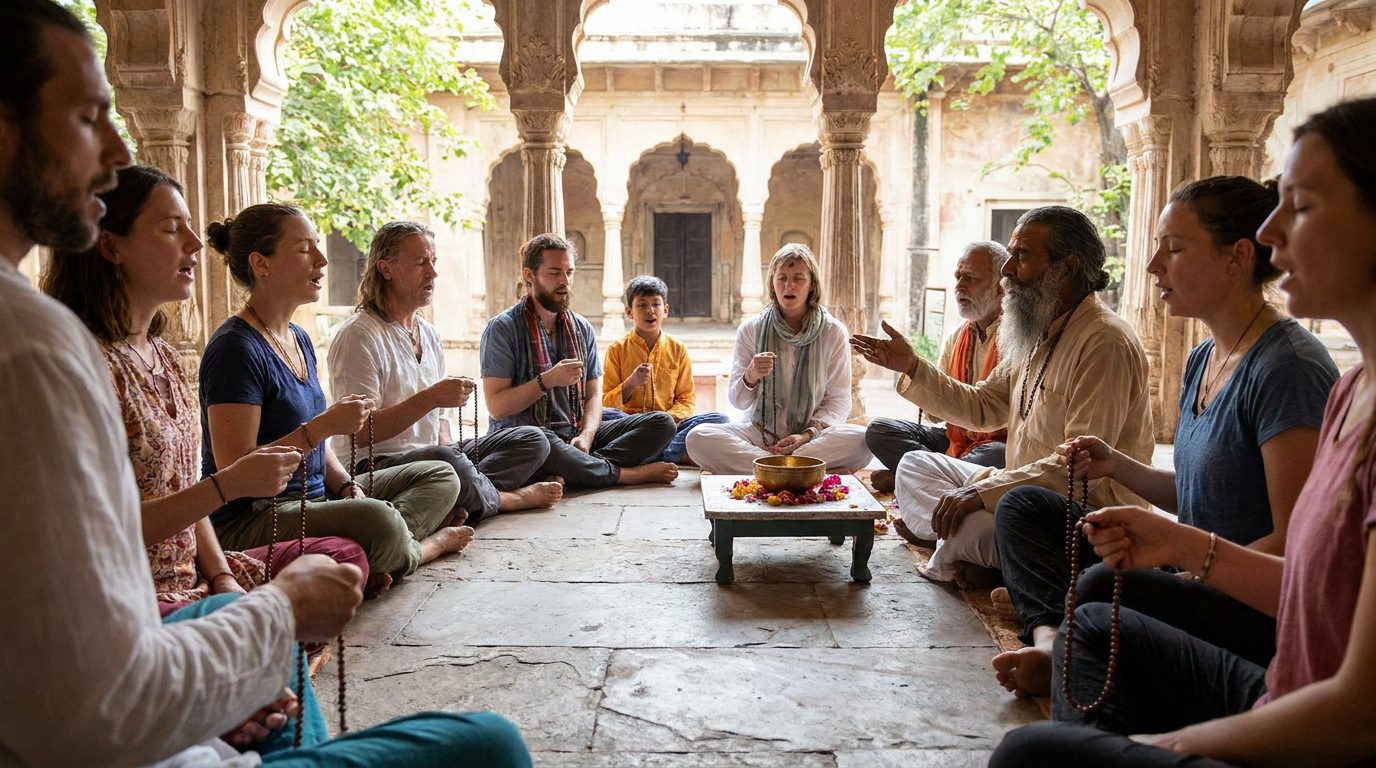
Chanting as the Heartbeat of the Bhakti Devotion Journey
In Bhakti Yoga, chanting is not only a practice we do with our voice. It is a way of turning the heart toward God.
Bhakti means devotion, loving service, or the path of divine love. Yoga means connection. So Bhakti Yoga is the path of reconnecting with the Divine through love. This love can be expressed through prayer, singing, serving others, remembering God, reading sacred wisdom, and offering our daily life with sincerity.
Chanting, known in Sanskrit as kirtan when sung together and japa when repeated personally or softly, is one of the most accessible practices in Bhakti. It does not require wealth, advanced knowledge, physical flexibility, or a perfect life. It simply asks for our willingness to call out.
For some, chanting begins as music. For others, it begins as meditation, curiosity, healing, or a quiet longing for spiritual connection. Wherever we begin, the holy names of God gently meet us there.
The Bhakti scriptures teach that divine sound carries spiritual power. In the Bhagavad-gita, Krishna says, “Among sacrifices, I am the chanting of the holy names” (Bhagavad-gita 10.25). This means that in this age, a simple offering of sacred sound can become a profound spiritual act.
Chanting supports every stage of the Bhakti devotion journey because it grows with us. When we are new, it gives us a doorway. When we struggle, it gives us shelter. When we serve, it gives us strength. When we deepen, it reveals love.
Beginning the Journey: Chanting Opens the Door

Many people come to Bhakti Yoga from different backgrounds. Some were raised in a religious tradition. Some feel spiritual but not religious. Some are healing from pain. Some are simply searching for meaning. Some are drawn by the beauty of mantra music and community.
Chanting welcomes everyone.
A mantra is a sacred sound or phrase used to focus and uplift the mind. The Sanskrit word mantra can be understood as “that which frees the mind.” In Bhakti, mantras often include names of God, such as Krishna, Rama, Govinda, Gopala, Radha, or Hari. These names are not seen as ordinary sounds, but as living invitations into relationship with the Divine.
For a beginner, chanting may feel unfamiliar at first. The words may be new. The melodies may be different. The idea of singing to God may feel intimate or even vulnerable. But Bhakti does not demand perfection. It invites sincerity.
Chanting Helps the Mind Become Peaceful
The mind is often restless. It moves from memory to worry, from planning to comparison, from fear to desire. Chanting gives the mind a sacred place to rest.
Instead of fighting the mind, we gently give it something beautiful to hold. The sound of the mantra becomes an anchor. Even if the mind wanders, we can return again and again. This returning is part of the practice.
In the Bhagavad-gita, Krishna explains that the mind can be difficult to control, but it can be trained by practice and detachment (Bhagavad-gita 6.35). Chanting is one of the kindest ways to practice this. We do not force the heart open; we keep offering sound, attention, and prayer.
Chanting Requires No Previous Qualification
One of the great gifts of Bhakti Yoga is that chanting is open to all. You do not need to know Sanskrit perfectly. You do not need to have a spiritual title. You do not need to understand every philosophy before you begin.
You can chant while sitting in meditation. You can chant while walking. You can chant with beads. You can chant in a temple, yoga studio, home, car, or quiet room. You can chant loudly in kirtan or softly within your heart.
The beginning stage is often about building trust. Chanting helps us discover that spiritual life is not far away. God can be approached through the simple offering of our voice and attention.
Growing in Faith: Chanting Nourishes the Heart
As a person continues in Bhakti, chanting begins to move from being an external practice to an inner nourishment. It becomes less like something we “try” and more like something we turn to.
Faith in Bhakti is not blind pressure. It is a living relationship that grows through experience. We chant, we listen, we notice subtle changes. Perhaps we become more patient. Perhaps we feel less alone. Perhaps we begin to choose kindness where we once chose reaction. These small shifts are signs of spiritual growth.
In Sanskrit, shraddha means faith, trust, or heartfelt confidence. Shraddha is often the first tender sprout on the Bhakti path. Chanting waters that sprout.
Chanting Builds a Daily Spiritual Rhythm
A Bhakti devotion journey becomes steady through regular practice. Just as the body needs food each day, the soul needs spiritual nourishment. Chanting provides that daily nourishment in a simple, repeatable way.
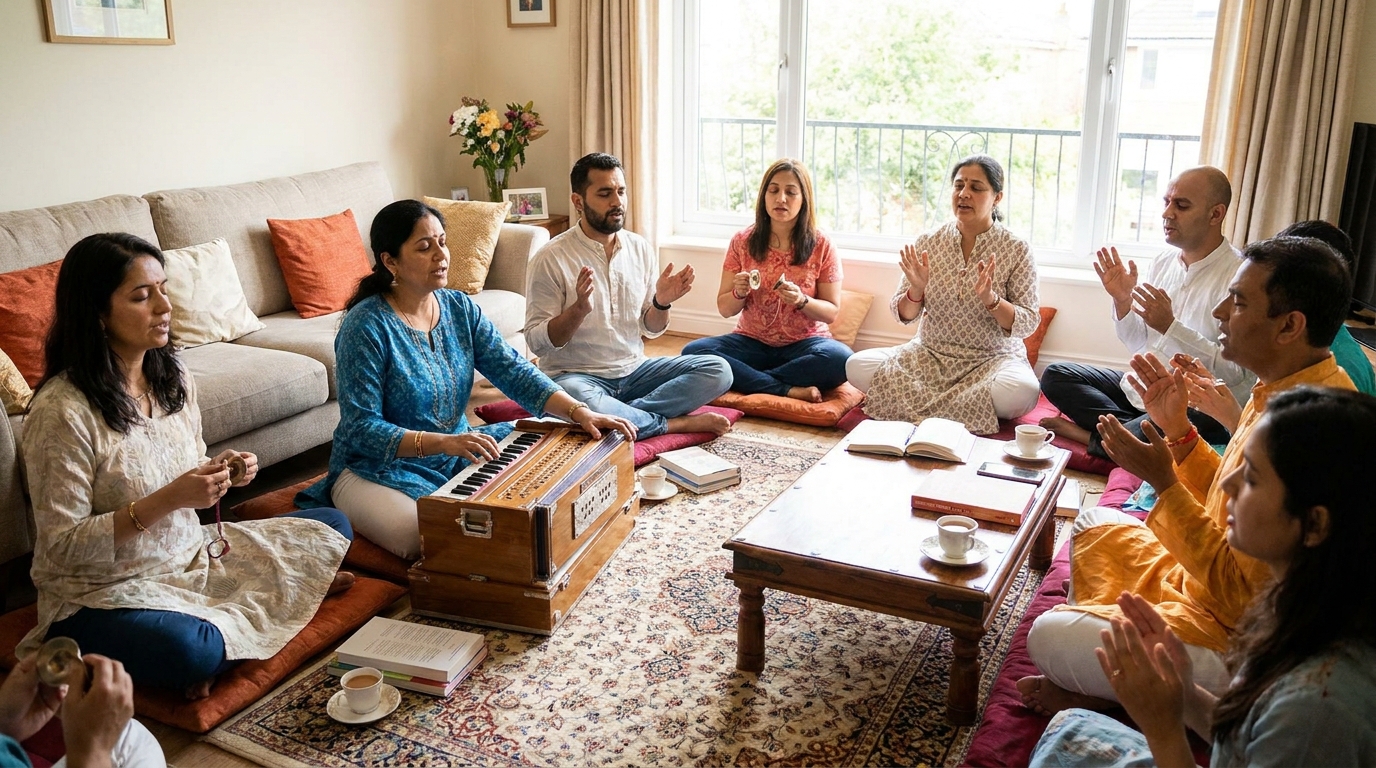
Many practitioners chant japa using a string of prayer beads called mala beads. A traditional mala has 108 beads. With each bead, one mantra is repeated. This helps the mind stay engaged and gives the practice a clear structure.
Others may begin with five minutes a day. Some may chant one round on beads. Some may listen to kirtan during their morning routine. The amount matters less than the sincerity and consistency.
A helpful prayer before chanting is: “Dear Lord, please help me hear Your name. Please help me remember You. Please guide my heart.”
This simple prayer transforms chanting from a technique into a relationship.
Chanting Softens the Heart
Bhakti Yoga is not only about controlling the mind. It is about awakening love.
The heart may become covered by stress, disappointment, pride, grief, or fear. Chanting gradually softens these coverings. It creates space for humility, gratitude, compassion, and forgiveness.
The Srimad-Bhagavatam, one of the central Bhakti scriptures, describes hearing and chanting about God as a cleansing process for the heart (Srimad-Bhagavatam 1.2.17). This does not mean our lives become instantly easy. Rather, chanting helps us see more clearly and respond more lovingly.
Sometimes chanting brings joy. Sometimes it brings tears. Sometimes it brings resistance. All of these can be part of purification. The holy name meets not only our polished self, but our real self.
Discover a wide range of insightful articles that delve into various spiritual topics. These articles provide guidance and inspiration for your personal growth journey. Stay updated with the latest articles to enhance your understanding of spiritual practices.
Chanting Through Struggle, Doubt, and Dry Seasons
Every sincere spiritual journey includes seasons of difficulty. There may be days when chanting feels sweet and effortless. There may also be days when it feels dry, distracted, or mechanical.
This does not mean we are failing. It means we are human.
Bhakti is a path of relationship, and relationships deepen through honesty. We can bring our doubt, fatigue, grief, and confusion into chanting. We do not have to hide them from God.
Chanting Becomes Shelter in Hard Times
When life feels overwhelming, chanting can become a sacred shelter. The mantra gives us something steady when circumstances are uncertain.
In difficult times, we may not have many words to pray. The holy name becomes our prayer. We may simply chant and let the sound carry what the heart cannot express.
The Bhagavad-gita teaches that God is seated in the heart of all beings (Bhagavad-gita 18.61). This means we are never spiritually abandoned. Chanting helps us remember this presence within and around us.
Even one sincere mantra can be powerful when offered from a humble place. We may chant through tears, confusion, or weakness, and still be held.
Chanting Helps Us Move Beyond Performance
Sometimes spiritual life can become tangled with comparison. We may think, “I do not chant as well as others,” or “My mind is too distracted,” or “I should be more advanced by now.”
Chanting gently teaches us to release performance. The goal is not to impress others. The goal is to call out with sincerity.
In Bhakti, humility is not self-hatred. It is the honest understanding that we are dependent on divine grace. We do our part, and we trust that God is kind.
A traditional prayerful mood in chanting is: “I am not perfect, but I am here. Please accept this small offering.”
That mood is precious.
Chanting During Spiritual Dryness
There are times when the heart feels dry. The mind may resist. The sweetness may seem hidden. During these times, steady chanting becomes especially meaningful.
Love matures when it continues beyond immediate emotion. Just as a gardener waters seeds even before seeing flowers, a practitioner chants even when the results are not visible.
Dry seasons can deepen our sincerity. They help us ask: “Am I seeking only a feeling, or am I seeking a relationship with God?”
If chanting feels difficult, it can help to simplify. Chant fewer mantras with more attention. Sit with others in kirtan. Read a verse from scripture before chanting. Offer a heartfelt prayer. Listen carefully to each syllable.
The holy name is still working, even when we cannot perceive it.
Chanting and Service: Turning Devotion Into Action
Bhakti Yoga is not meant to stay only on the meditation cushion or in the singing circle. Genuine devotion naturally expresses itself through service.
In Sanskrit, seva means service offered with love. Seva may include cooking, cleaning, teaching, caring for family, helping a neighbor, supporting a spiritual community, feeding others, sharing wisdom, or offering one’s talents for a higher purpose.
Chanting and service support each other beautifully. Chanting purifies the intention behind service. Service gives practical expression to the love awakened by chanting.
Chanting Purifies Our Motivation
It is possible to serve with mixed motives. We may want recognition, control, appreciation, or a sense of importance. This is not unusual. The heart is being refined gradually.
Chanting helps us remember whom we are serving and why.
Before beginning service, we can chant or pray: “May this be for Your pleasure. May this help others. May I serve without pride.”
This simple remembrance changes the inner quality of action. Even ordinary work can become sacred when offered with devotion.
In the Bhagavad-gita, Krishna teaches that whatever we do, whatever we eat, whatever we offer, and whatever austerity we perform can be offered to Him (Bhagavad-gita 9.27). This is a beautiful foundation for Bhakti living. Chanting helps us keep that offering alive throughout the day.
Chanting Gives Strength for Compassionate Living
Serving others can be joyful, but it can also be tiring. Those who care for families, communities, students, patients, or those in need may sometimes feel emotionally drained.
Chanting reconnects us with the source of love. Rather than serving only from personal energy, we learn to serve from divine connection.
This does not mean we ignore healthy boundaries or rest. Bhakti is not burnout disguised as holiness. Rather, chanting helps us serve with steadiness, humility, and dependence on grace.
When the heart is nourished by sacred sound, service becomes more sustainable.
Chanting Makes Daily Life Worship
Not everyone lives in a monastery or temple. Many practitioners have jobs, families, studies, responsibilities, and full schedules. Bhakti Yoga is practical because it can enter daily life.
You can chant while preparing food and then offer that food with gratitude. You can chant before an important conversation. You can chant quietly when anxious. You can play kirtan while cleaning your home. You can pause during work and repeat a mantra inwardly.
In this way, chanting helps transform ordinary moments into offerings. The Bhakti devotion journey becomes woven into life, not separate from it.
Chanting in Community: The Gift of Kirtan and Spiritual Friendship
While personal chanting is deeply important, chanting with others has a special power. Kirtan is the practice of singing sacred names, often in a call-and-response style. One person leads, and others respond. Instruments like harmonium, mridanga drum, kartals, guitar, or hand clapping may accompany the singing.
Kirtan is joyful, prayerful, and communal. It welcomes participation rather than performance. One does not need to be a trained singer. The heart is the true instrument.
Kirtan Helps Us Feel We Are Not Alone
Many people carry spiritual longing quietly. In kirtan, we discover others are also seeking, praying, healing, and reaching toward God.
This shared chanting creates spiritual friendship, known in Sanskrit as sadhu-sanga, or association with sincere spiritual people. Sadhu means a saintly or sincere person, and sanga means company or association.
The Bhakti scriptures repeatedly praise the company of devotees because our hearts are shaped by what we hear, speak, and share. When we chant with others, our faith is strengthened by their faith. Their voices carry us when ours feels weak.
Kirtan Welcomes the Whole Person
In some forms of meditation, the body is still and silent. Kirtan allows the whole person to participate. We may sing, sway, clap, listen, cry, smile, or sit quietly. All are welcome.
This embodied practice can be healing. The breath deepens. The heart opens. The mind becomes absorbed. The nervous system softens. The community atmosphere helps many people feel safe and uplifted.
Kirtan is not entertainment in the ordinary sense, though it may be musically beautiful. It is a collective offering. The purpose is remembrance, connection, and devotion.
Community Chanting Inspires Personal Practice
After experiencing kirtan, many people feel inspired to begin personal chanting at home. The melodies and mantras continue in the heart. What began as a group experience becomes a personal relationship.
In this way, kirtan and japa nourish each other. Kirtan awakens enthusiasm. Japa deepens intimacy. Together, they create balance in the Bhakti devotion journey.
Chanting and Inner Transformation: From Cleansing to Love
As chanting continues over time, its deeper purpose becomes clearer. It is not only for peace, although peace may come. It is not only for stress relief, although stress may lessen. It is not only for community, although community may blossom.
The deeper purpose of chanting is to awaken pure love for God.
In Sanskrit, prema means divine love. Prema is the mature fruit of Bhakti. It is love without selfish demand, love that delights in serving and remembering the Divine.
This may sound very elevated, and it is. But every sincere mantra is a step in that direction.
Chanting Reveals Our Attachments Kindly
As sacred sound enters the heart, we may become more aware of habits, attachments, and patterns that keep us from love. This can be uncomfortable, but it is also merciful.
We may notice envy, impatience, pride, resentment, or fear. Rather than becoming discouraged, we can see this awareness as part of healing. The holy name is showing us what needs compassion and purification.
Bhakti does not ask us to become pure by our own strength alone. It invites us to bring everything into relationship with God. Chanting is the way we keep returning.
Chanting Awakens Remembrance
A central practice in Bhakti is smaranam, or remembrance of God. Chanting naturally supports remembrance because the mantra carries divine names and qualities.
When we chant “Krishna,” we may remember the all-attractive Lord who draws the heart with beauty and compassion. When we chant “Rama,” we may remember the source of spiritual joy. When we chant “Hare,” we are calling upon divine energy, often understood in the Bhakti tradition as the compassionate energy of the Lord who helps us reconnect.
The widely known maha-mantra, or “great mantra,” is:
Hare Krishna Hare Krishna
Krishna Krishna Hare Hare
Hare Rama Hare Rama
Rama Rama Hare Hare
A simple meaning is: “O Divine Energy of the Lord, O all-attractive Lord, O source of joy, please engage me in loving service.”
This mantra is both prayer and meditation. It is a cry of the soul to be reconnected with love.
Chanting Changes How We See Others
As chanting softens the heart, we gradually begin to see others differently. We remember that every person is a soul, a beloved child of God. This vision is not sentimental; it is deeply practical.
If we see others as souls, we become more careful with our words. We become less eager to judge. We become more willing to serve. We recognize dignity in people of every background, faith, culture, and life story.
This is one of the beautiful fruits of chanting: it expands love beyond the self.
Chanting at Advanced Stages: Deepening Surrender and Loving Relationship
The Bhakti path is sometimes described as a gradual journey from initial faith to deep love. Different teachers explain these stages in various ways, but the essence is simple: we begin by turning toward God, and by grace, the heart becomes increasingly surrendered and loving.
Surrender in Bhakti does not mean losing our personality. It means offering our life in trust. We become more fully ourselves because we are reconnected with our eternal relationship with the Divine.
Chanting Becomes Less About Asking and More About Offering
At the beginning, many of us chant because we need help. We may ask for peace, healing, clarity, protection, or relief. These prayers are natural and welcome.
As devotion matures, chanting becomes less centered on what we want from God and more centered on how we can love God.
The prayer changes from “Please give me” to “Please guide me” and eventually to “Please let me serve.”
This shift is not forced. It happens gradually through grace, practice, and spiritual nourishment.
Chanting Deepens Dependence on Grace
Advanced devotion is marked by humility. The more the heart grows, the more it recognizes the greatness of God and the kindness of divine mercy.
A mature practitioner does not think, “I have achieved everything.” Rather, they feel grateful for every opportunity to chant, serve, and remember.
The Chaitanya tradition of Bhakti especially emphasizes chanting the holy names with humility, patience, respect for others, and freedom from the desire for honor. Sri Chaitanya Mahaprabhu taught that in such a mood, one can chant constantly.
This teaching is deeply practical. If we want to chant with love, we can cultivate humility in daily life: listening more carefully, apologizing when needed, honoring others, and serving without demanding praise.
Chanting Becomes a Companion at Every Moment
At deeper stages, chanting is no longer limited to a specific time. The holy name begins to accompany the practitioner internally.
While walking, working, resting, or serving, remembrance continues. The heart quietly turns toward God again and again.
This does not mean one becomes disconnected from the world. Rather, one becomes more lovingly present. The world is seen as God’s energy, and life becomes an opportunity for devotion.
Practical Ways to Chant at Every Stage
Whether you are just beginning or have practiced for many years, chanting can meet you where you are. The key is to begin sincerely and continue gently.
There is no need to imitate someone else’s practice. Bhakti grows best when nourished with honesty, consistency, and guidance.
Start With a Simple Daily Commitment
If you are new to chanting, begin with a small, realistic commitment. You might chant for five minutes each morning. You might repeat the maha-mantra three times before sleep. You might listen to a kirtan recording while making breakfast.
Small daily steps matter. A sincere practice that you can maintain is better than an ambitious plan that quickly becomes overwhelming.
As your taste grows, you can increase naturally.
Create a Sacred Space
A simple sacred space can support chanting. It might include a clean corner, a candle, sacred image, scripture, flowers, mala beads, or anything that reminds you of God.
The purpose is not decoration alone. It is to create an environment that invites remembrance.
Before chanting, take a breath. Sit comfortably. Offer a short prayer. Then chant and listen.
Listening is essential. Chanting is not only speaking the mantra; it is receiving the mantra through the heart.
Chant With Others When Possible
If you have access to a Bhakti community, kirtan gathering, temple, satsang, or spiritual circle, consider joining. Satsang means gathering in truth or spiritual association.
Community can strengthen your practice and help you feel supported. If you do not live near a community, online kirtans, classes, and prayer groups may also be helpful.
The Bhakti House spirit is one of welcome: come as you are, bring your questions, bring your heart, and take one step.
Let Chanting Shape Your Character
A powerful way to deepen chanting is to let it influence how you live. After chanting, ask:
“How can I be more kind today?”
“How can I serve someone?”
“What can I offer to God?”
“Where can I practice humility?”
“Who needs my forgiveness or compassion?”
Chanting becomes transformative when it flows into action.
Common Questions About Chanting in Bhakti Yoga
People often have tender and honest questions about chanting. These questions are welcome. Bhakti is not afraid of inquiry. In the Bhagavad-gita, Krishna encourages approaching spiritual truth with humility, questions, and service (Bhagavad-gita 4.34).
Do I Have to Be Hindu to Chant?
No. While Bhakti Yoga comes through the sacred traditions of India and is deeply rooted in Vedic and devotional scriptures, the practice of chanting divine names is open to everyone.
People from many spiritual, religious, and cultural backgrounds chant. Some understand the names through a Hindu devotional lens. Others experience them as sacred sound, prayer, or a way to connect with the Divine.
Respect for the tradition is important, but exclusion is not the mood of Bhakti. The holy name is compassionate.
What If I Do Not Understand Sanskrit?
You can still chant. Understanding can deepen the practice, but the spiritual potency of the holy name does not depend on perfect linguistic knowledge.
That said, learning simple meanings can help the heart engage. For example, Krishna means “the all-attractive one,” Rama means “the source of joy,” and Hare calls upon the Lord’s divine energy.
Over time, the words become familiar, like the names of a dear friend.
What If My Mind Wanders?
The mind will wander. This is normal.
When you notice distraction, gently return to the sound. Do not become harsh with yourself. Each return is an offering.
Chanting is not about proving that the mind never moves. It is about training the heart to return to God.
Can Chanting Help With Anxiety or Stress?
Many people find chanting calming and grounding. The repetition, breath, sacred focus, and devotional mood can support emotional balance.
However, chanting should not be used as a substitute for professional mental health care when that is needed. Bhakti Yoga can beautifully complement therapy, medical care, rest, and healthy relationships.
God’s grace can reach us through many forms of support.
The Lifelong Journey of Chanting and Devotion
The Bhakti devotion journey is not a race. It is a relationship that unfolds over a lifetime and beyond. Chanting supports every stage because it is simple enough for a beginner and deep enough for a saint.
At the beginning, chanting opens the door.
In growing faith, chanting nourishes the heart.
In struggle, chanting offers shelter.
In service, chanting purifies intention.
In community, chanting creates belonging.
In transformation, chanting awakens love.
In maturity, chanting becomes constant remembrance.
The sacred sound patiently walks with us.
Some days our chanting may be full of feeling. Some days it may be quiet and distracted. Some days it may be our lifeline. Some days it may feel like a small lamp in a dark room. Still, that lamp matters.
The Bhakti scriptures assure us that sincere spiritual effort is never lost. In the Bhagavad-gita, Krishna says that even a little practice on this path can protect one from great fear (Bhagavad-gita 2.40). This is a deeply comforting promise. Every sincere mantra counts. Every prayer matters. Every act of devotion is seen.
Chanting teaches us that God is not reached by pride, performance, or spiritual perfectionism. God is approached through sincerity, humility, and love.
So wherever you are on the path—curious, new, returning, struggling, steady, or longing for deeper devotion—you are welcome. You can begin with one mantra, one prayer, one moment of honest remembrance.
May chanting bring peace to your mind, softness to your heart, strength to your service, and love to your relationship with God.
Everyone is welcome to take one sincere step toward God today.
FAQs
What is Bhakti?
Bhakti is a spiritual practice in Hinduism that emphasizes devotion to a personal god. It involves expressing love and devotion through various forms of worship, including chanting, singing, and prayer. Bhakti can be practiced by anyone, regardless of their background or social status, and is often seen as a path to spiritual liberation.
How does chanting support the practice of Bhakti?
Chanting serves as a powerful tool in Bhakti by helping practitioners focus their minds and hearts on the divine. It creates a meditative state that fosters emotional connection and devotion. The rhythmic repetition of mantras or names of God can enhance spiritual experiences and deepen one’s relationship with the divine.
What are the different stages of Bhakti?
The stages of Bhakti typically include Shraddhā (faith), Sādhanā (practice), Bhāva (emotion), and Prema (divine love). Each stage represents a deepening of devotion and connection to God, with chanting playing a crucial role in facilitating progress through these stages.
Can chanting be beneficial for mental health?
Yes, chanting can have significant mental health benefits. It can reduce stress, anxiety, and depression by promoting relaxation and mindfulness. The repetitive nature of chanting can also help calm the mind, leading to improved emotional well-being and a greater sense of inner peace.
Is chanting limited to any specific language or tradition?
No, chanting is not limited to any specific language or tradition. While many chants in Bhakti are in Sanskrit or regional languages, practitioners can chant in any language that resonates with them. The essence of chanting lies in the intention and devotion behind the words, rather than the language itself.

