
The Sacred Place of Tulasi in Bhakti Yoga
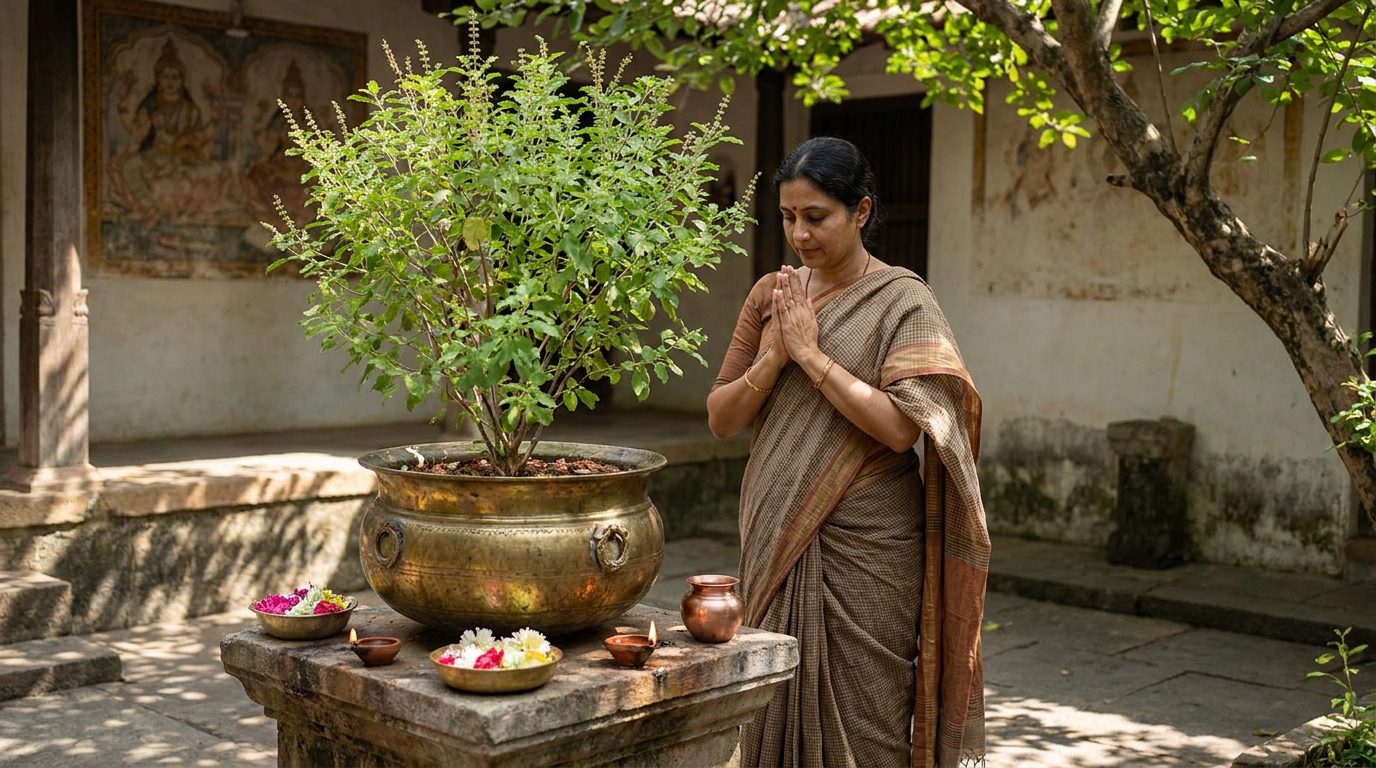
In the heart of Bhakti Yoga, Tulasi is honored as a beloved servant of God and a living reminder of devotion. Many people know Tulasi as holy basil, a sacred plant with fragrant leaves and healing qualities. In the Bhakti tradition, however, Tulasi is much more than a plant. She is revered as Tulasi Devi, a divine personality who helps sincere souls grow in love for the Supreme.
Bhakti Yoga means “the yoga of devotion.” It is the path of loving relationship with God through chanting, prayer, worship, service, remembrance, and a life of compassion. Tulasi has a special place in this path because she teaches us how to offer our hearts simply and sincerely.
Whether you are new to Bhakti, from another spiritual background, or already practicing daily devotion, honoring Tulasi can become a gentle and powerful way to invite sacredness into everyday life. Her presence reminds us that spiritual growth does not require pride, performance, or perfection. It begins with humility, gratitude, and one sincere offering.
In many Bhakti homes and temples, Tulasi is cared for with deep affection. Devotees water her, offer prayers, circumambulate her, and place her leaves at the feet of Krishna, a name of God meaning “the all-attractive one.” These practices are not empty rituals. They are loving acts that help the heart become softer, more attentive, and more connected to God.
Who Is Tulasi Devi?
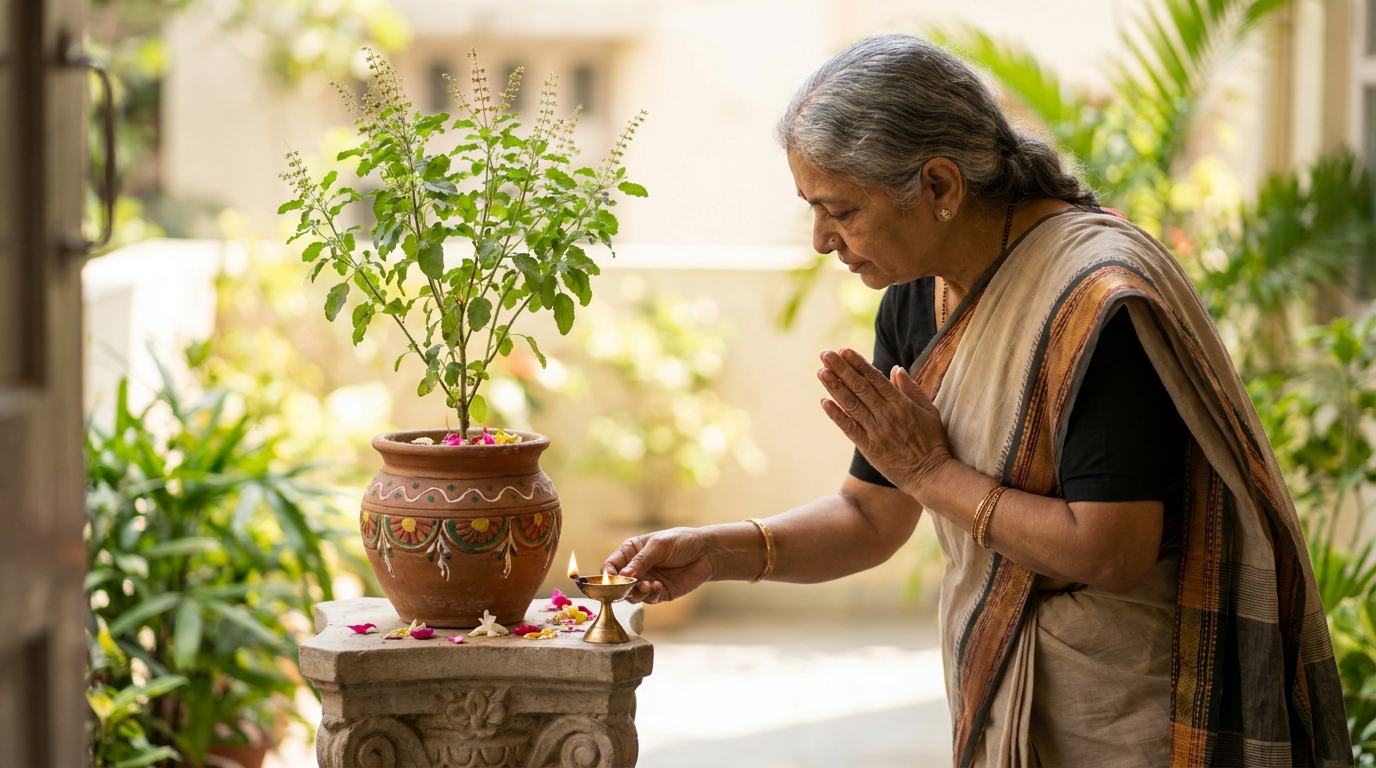
Tulasi Devi is honored in the Vaishnava tradition, a devotional tradition centered on loving service to Vishnu or Krishna. The word “Devi” means “goddess” or “divine lady.” So when devotees say “Tulasi Devi,” they are not merely referring to a sacred herb. They are honoring her as a pure devotee who assists others on the path of Bhakti.
Tulasi as the Beloved of Krishna
In the scriptures and devotional songs of Bhakti Yoga, Tulasi is praised as very dear to Krishna. Her leaves are considered especially pleasing to Him when offered with love. This is why many devotees place a Tulasi leaf on food offerings, flowers, or water before presenting them to Krishna.
The Bhagavad-gita, one of the foundational texts of Bhakti Yoga, offers a simple and beautiful teaching. Krishna says:
“If one offers Me with love and devotion a leaf, a flower, a fruit, or water, I accept it.”
Bhagavad-gita 9.26
This verse is deeply encouraging. God is not asking for wealth, status, or complicated qualifications. He asks for love. A leaf, when offered with devotion, becomes spiritually meaningful. In the Bhakti tradition, Tulasi leaves are considered among the most beloved leaves one can offer to Krishna.
This teaches us a practical lesson: the heart behind the offering matters most. Even a small act, done with sincerity, can become a doorway to divine connection.
The Meaning of Tulasi in Daily Devotion
The Sanskrit word “Tulasi” is often understood to mean “incomparable” or “matchless.” Devotees see her as matchless in her devotion and mercy. She stands as a living teacher of surrender, service, and faithfulness.
Many people approach spiritual life looking for inspiration. Tulasi gives that inspiration quietly. She does not speak loudly, yet her presence invites prayer. She does not demand attention, yet she draws the heart toward service. Caring for her can help us slow down, breathe, and remember what is sacred.
For families, Tulasi can become a center of spiritual life in the home. For single practitioners, she can become a dear companion in devotion. For temple communities, she is honored as a sacred presence around whom devotees gather to chant, pray, and serve.
Why Devotees Honor Tulasi
To honor Tulasi is to honor devotion itself. In Bhakti Yoga, we do not worship nature separately from God, nor do we exploit nature as an object. We learn to see creation as connected to the Divine. Tulasi helps us remember that life is sacred and that love is expressed through care.
Tulasi Teaches Humility
Humility is not self-hatred. It is clear-hearted honesty. It means recognizing that we are dependent on grace, that we are not the controller of everything, and that every gift in life can be received with gratitude.
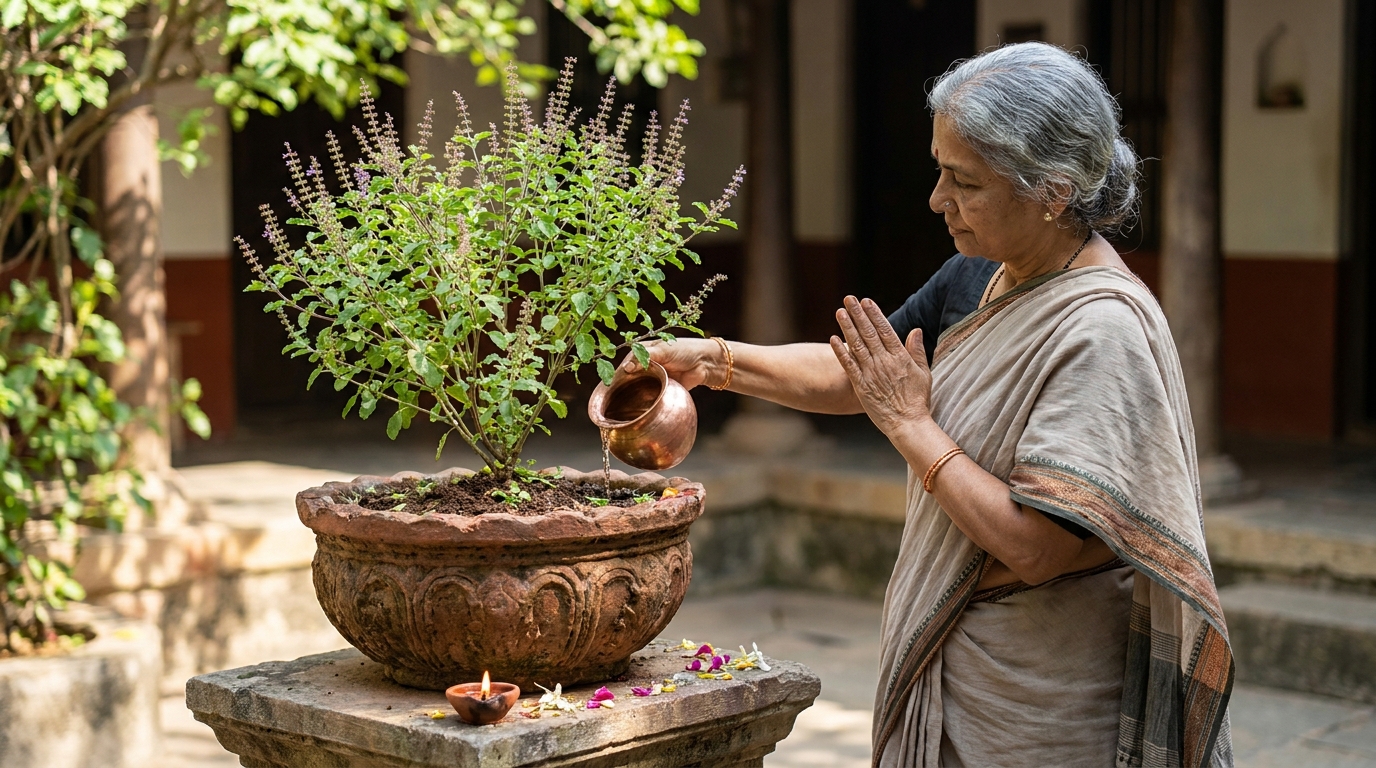
When we water Tulasi, offer a lamp, or bow before her, we practice humility. We acknowledge that spiritual growth is not manufactured by force. It is cultivated like a garden. We plant seeds, we water them, we remove weeds, and we wait with faith.
Tulasi teaches this beautifully. She grows when cared for gently. Too much water can harm her. Neglect can weaken her. In the same way, our spiritual life needs steady, balanced care. A little chanting each day, a little prayer, a little service, and a little honest reflection can nourish the soul.
Tulasi Connects the Home to Sacred Living
Many people long for a peaceful home. Bhakti traditions offer simple ways to make the home feel sacred, and caring for Tulasi is one of them. A Tulasi plant in the home can remind us to begin the day with prayer, speak more kindly, prepare food with gratitude, and make choices that support spiritual growth.
A home does not need to look like a temple to become spiritually alive. A small clean space, a candle or lamp, a picture of Krishna or another beloved form of God, and a Tulasi plant cared for with love can create an atmosphere of devotion.
For those living in apartments, shared housing, or places with limited sunlight, honoring Tulasi may look different. Some may care for a small potted Tulasi indoors. Others may offer prayers to Tulasi at a temple. Some may wear Tulasi beads, chant on Tulasi japa beads, or simply remember her with respect. The essence is devotion, not external perfection.
Tulasi Invites Compassion for All Beings
Honoring Tulasi also teaches us to relate to the natural world with reverence. If we can care for one sacred plant with love, we may become more thoughtful toward other plants, animals, people, and the Earth itself.
Bhakti Yoga is not escapism. It is a path that transforms how we live. When our hearts soften through devotion, we become more willing to serve. We may cook for others, listen with patience, reduce harm, speak truthfully, and live more simply. Tulasi’s presence can quietly remind us: love should become practical.
If you’re looking for insightful spiritual guidance, check out the latest articles on Bhakti House. The articles cover a wide range of topics to deepen your understanding. For regular updates, make sure to bookmark their articles page.
Traditional Tulasi Rituals and Their Meaning
Rituals in Bhakti Yoga are not meant to be mechanical. They are embodied prayers. They give the mind, body, and heart a way to participate in devotion. The sacred traditions around Tulasi are simple enough for beginners and deep enough for lifelong practitioners.
Offering Water to Tulasi
One of the most common practices is offering water to Tulasi Devi. Devotees often do this in the morning, after bathing or washing their hands. The water is offered with respect, not casually, and usually accompanied by prayer.
The practical side is also important. Tulasi should not be overwatered. She needs appropriate care according to the climate, soil, pot, and season. In devotional life, love includes learning how to serve properly. Before watering, it is wise to check the soil. If it is still moist, you may wait.
Spiritually, offering water teaches us to nourish devotion. Just as Tulasi needs water to grow, the heart needs remembrance of God. A few sincere moments each morning can change the tone of the whole day.
A simple prayer may be:
“O Tulasi Devi, please bless me with devotion to God. Please help me serve with humility and love.”
You do not need elaborate Sanskrit to begin. If you know traditional prayers, you may chant them. If not, speak sincerely in your own language.
Circumambulating Tulasi
Circumambulation means walking respectfully around a sacred person, place, or object. In Sanskrit, this is called “parikrama,” meaning to go around with reverence. Devotees often walk around Tulasi, usually clockwise, while chanting prayers or the names of God.
This practice symbolizes placing the Divine at the center. So much of daily life revolves around our worries, desires, and plans. When we circumambulate Tulasi, we physically remind ourselves: “Let my life revolve around devotion. Let God be the center.”
Even one or three gentle circumambulations can be meaningful. Some devotees offer four, seven, or more, depending on their tradition and time. The number matters less than the sincerity. Walk slowly, respectfully, and prayerfully.
Offering a Lamp and Incense
In many homes and temples, devotees offer a small lamp or incense to Tulasi. This is often part of “arati,” a devotional ceremony in which items such as a lamp, incense, water, flowers, and cloth may be offered to the Lord and His devotees.
A lamp represents the offering of light. We ask that divine wisdom illuminate the heart. Incense represents fragrance, reminding us that a devotional life can become pleasing and uplifting, not only for ourselves but for everyone around us.
If you offer a lamp at home, do so safely and simply. A small ghee lamp, oil lamp, or candle may be used. If fire is not possible, you can offer a flower, a prayer, or a moment of silent gratitude.
Singing Tulasi Prayers
Many Bhakti communities sing traditional prayers to Tulasi Devi, especially in the morning and evening. One well-known prayer begins with “Namo namah Tulasi Krishna-preyasi,” which means, “Repeated respects to Tulasi, who is dear to Krishna.”
These prayers ask Tulasi Devi to bless us with service to Krishna and entrance into a life of pure devotion. For beginners, the Sanskrit may feel unfamiliar. That is okay. You may listen, repeat slowly, learn the meaning, and let the sound gradually enter the heart.
In Bhakti Yoga, sacred sound is very important. Chanting is not merely music or recitation. It is a way of connecting with God through the heart and voice. Singing to Tulasi can help us feel part of a living tradition of devotion.
Offering Tulasi Leaves to Krishna
One of the most cherished traditions is offering Tulasi leaves to Krishna. In many Vaishnava temples, no offering to Krishna is considered complete without Tulasi. Her leaves are placed on food, flowers, and even water offered to the Lord.
Why Tulasi Leaves Are Offered
Tulasi is dear to Krishna, and therefore her leaves make offerings especially pleasing. This does not mean God is limited or dependent. Rather, it expresses a loving relationship. Just as a person may be delighted by a gift connected to someone they love, Krishna is pleased when offerings are made with Tulasi and devotion.
The Padma Purana and other Vaishnava texts praise the glories of Tulasi and describe the spiritual benefit of honoring her. Such scriptural praise is meant to awaken love, not superstition. The deeper message is that God is moved by devotion, and Tulasi helps us offer with a pure mood.
When placing a Tulasi leaf on an offering, we can pray:
“Dear Lord, please accept this offering. It is simple, but I offer it with love. Dear Tulasi Devi, please help me offer it properly.”
How to Pick Tulasi Leaves Respectfully
Traditionally, Tulasi leaves are not plucked casually. Devotees approach with clean hands, prayer, and gratitude. The mood is not “taking” but “requesting service.” We ask Tulasi Devi’s permission and only take what is needed.
A common prayer before picking leaves is a request for forgiveness for any offense and a prayer that the leaves may be used in Krishna’s service. If you do not know a formal prayer, you can say:
“O Tulasi Devi, please forgive me. May these leaves be offered in loving service to God.”
Pick gently, avoiding harm to the plant. Do not tear branches carelessly. Avoid picking leaves when the plant is unhealthy or stressed. Many traditions also avoid picking Tulasi leaves at night, on certain sacred days, or without proper cleanliness. Local customs may vary, so it is helpful to learn from experienced devotees in your community.
The principle is simple: reverence. Tulasi is not an ingredient to be used thoughtlessly. She is honored as a sacred devotee.
Offering Food with Tulasi
In Bhakti Yoga, cooking can become meditation. Food prepared with love and offered to God is called “prasada,” which means “mercy” or “grace.” After food is offered to Krishna, it is received as sacred nourishment.
A simple home offering may include fruit, cooked grains, vegetables, or water. Before eating, place the food before a picture or deity form of Krishna and offer a prayer. If you have Tulasi leaves available, place one leaf on each preparation or at least on the main plate.
You may say:
“My dear Lord, please accept this food. May it nourish devotion. May all beings be blessed.”
Then wait a few moments in prayer or chant the Hare Krishna maha-mantra:
Hare Krishna Hare Krishna
Krishna Krishna Hare Hare
Hare Rama Hare Rama
Rama Rama Hare Hare
“Maha-mantra” means “great mantra.” A mantra is sacred sound that helps focus and purify the mind. This mantra calls upon Krishna and Rama, names of God, and upon Hara, the divine energy of the Lord. It is a prayer to be engaged in loving service.
Caring for Tulasi at Home
Caring for Tulasi at home can be a beautiful devotional practice, but it also requires practical attention. Spiritual love includes learning what helps her thrive.
Creating a Clean and Peaceful Space
Tulasi is traditionally kept in a clean, respected place. If possible, choose a location with good sunlight, fresh air, and protection from harsh weather. In warm climates, she may grow well outdoors. In colder climates, she may need to be indoors near a bright window or under a grow light.
Keep her area tidy. You may place her on a small stand or altar-like space. Some devotees decorate her pot or place sacred images nearby. Simplicity is perfectly fine. The most important decoration is devotion.
Avoid placing Tulasi in unclean areas or where she may be neglected. If you have pets or small children, ensure she is protected kindly and safely.
Water, Sunlight, and Seasonal Care
Tulasi generally likes warmth, sunlight, and well-draining soil. Overwatering is one of the most common mistakes. The soil should not remain soggy. Check the top layer of soil before watering. If it is dry, water gently. If it is still damp, wait.
In winter or cold climates, Tulasi may slow her growth. She may need less water and more warmth. Protect her from frost and cold drafts. If her leaves fall, do not panic. Observe, adjust care, and ask experienced gardeners or devotees for guidance.
Caring for Tulasi can teach patience. Sometimes she flourishes. Sometimes she struggles. Like our spiritual life, she invites steady care rather than anxiety.
What to Do When Tulasi Appears Unwell
If Tulasi’s leaves yellow, wilt, or drop, first look at practical causes: too much water, too little water, insufficient sunlight, pests, poor drainage, or temperature stress. Devotion does not replace practical wisdom. It inspires us to seek it.
You may gently prune dead leaves, improve the soil, adjust watering, or move her to better light. If pests appear, use natural and safe methods whenever possible. Avoid harsh chemicals, especially if leaves may be offered.
And pray. Prayer does not mean we refuse action. Prayer means we act with dependence on grace.
If a Tulasi plant leaves this world, devotees treat her remains respectfully. The wood may be used for sacred purposes, such as beads, if suitable, or returned to the earth in a clean and honored way. The mood is gratitude: “Thank you for allowing me to serve you.”
Tulasi Beads, Japa, and Sacred Remembrance
Tulasi is also honored through beads made from her wood. Many Bhakti practitioners wear Tulasi neck beads and chant on Tulasi japa beads.
Wearing Tulasi Neck Beads
Tulasi neck beads, often called “kanthi mala,” are worn by devotees as a sign of dedication to Krishna. “Mala” means garland or string of beads. These beads remind the wearer to live with spiritual intention.
Wearing Tulasi beads is not meant to be a fashion statement or a claim of superiority. It is a humble reminder: “I belong to God. Let me act accordingly.” For some, receiving and wearing Tulasi beads is connected with guidance from a spiritual teacher. In different communities, customs may vary.
If you are new, you can ask a trusted Bhakti teacher or temple community about the meaning and responsibilities of wearing Tulasi beads. The essence is respect, sincerity, and a desire to grow.
Chanting on Tulasi Japa Beads
“Japa” means quiet, repeated chanting of a mantra. In Bhakti Yoga, many practitioners chant the Hare Krishna maha-mantra on a string of 108 beads. Tulasi japa beads are especially cherished because they connect the chanting practice with Tulasi Devi’s mercy.
Chanting is one of the most accessible practices of Bhakti Yoga. You do not need to be perfect, scholarly, or born into a certain culture. You can begin with one round, a few minutes, or even one sincere mantra.
As you chant, try to listen. When the mind wanders, gently return to the sound. This is not a performance. It is a relationship. Each mantra is a call of the heart.
Tulasi beads can help the hands, voice, and mind work together in prayer. Over time, chanting may bring clarity, steadiness, and a deeper taste for spiritual life.
Tulasi in Scripture and Devotional Tradition
Bhakti traditions are rooted in sacred texts, living teachers, and communities of practice. Tulasi’s glories are described in various Vaishnava scriptures, including the Padma Purana, Skanda Purana, and other devotional writings. These texts praise Tulasi as dear to Vishnu and Krishna and describe the spiritual power of serving her.
Understanding Scriptural Praise Practically
Scriptures often speak in poetic, elevated language. When they glorify Tulasi, they are inviting us into reverence. They are not encouraging a shallow or magical mentality. The purpose is transformation of the heart.
For example, when scripture says that offering Tulasi brings great spiritual benefit, we can understand that sincere devotion purifies consciousness. When we honor someone dear to God, we become connected to that current of love. When we serve with humility, pride is softened. When we make offerings, selfishness is reduced.
The Bhakti tradition repeatedly teaches that devotion is the essence. Ritual without devotion can become dry. But even a small ritual with sincere love can become powerful.
Tulasi and the Mood of Service
The Sanskrit word “seva” means service. In Bhakti Yoga, seva is not forced labor or religious obligation. It is loving offering. Tulasi embodies seva because everything about her is used in Krishna’s service—her leaves, flowers, wood, shade, fragrance, and presence.
She invites us to ask: “How can my life become an offering?”
This question can guide our daily choices. We can offer our work by doing it honestly. We can offer our relationships by practicing kindness. We can offer our struggles by praying through them. We can offer our talents by serving others. We can offer our food, words, time, and attention.
Tulasi teaches that a life of devotion is not separate from ordinary life. It transforms ordinary life from within.
Common Questions About Honoring Tulasi
Many sincere people have questions when they first encounter Tulasi worship. Questions are welcome. Bhakti Yoga is a path of relationship, and honest inquiry can deepen faith.
Do I Have to Be Hindu to Honor Tulasi?
No. Bhakti Yoga welcomes sincere seekers from all backgrounds. Tulasi is honored within the Vaishnava tradition, but her blessings are not limited by nationality, ethnicity, or previous religious identity.
If you approach with respect, humility, and openness, you can honor Tulasi. You do not need to imitate everything immediately. Begin with simple appreciation. Learn gradually. Ask questions. Visit a temple if possible. Chant, pray, and let your heart be guided.
Bhakti is not about external labels. It is about awakening love for God.
Can I Grow Tulasi If I Am New to Bhakti?
Yes, if you are willing to care for her respectfully and practically. Growing Tulasi is a sacred responsibility, but it can also be a very gentle beginning. If you are uncertain, you might start by visiting Tulasi at a temple, learning from experienced devotees, or caring for a plant with guidance.
If you do bring Tulasi into your home, treat her as sacred. Keep her clean, offer water properly, and avoid neglect. Even if your care is simple, let it be sincere.
What If I Make Mistakes?
Everyone makes mistakes. Bhakti Yoga is a path of grace. If you overwater Tulasi, forget a prayer, mispronounce Sanskrit, or feel distracted while chanting, do not become discouraged. Learn, apologize inwardly, and continue with humility.
The Lord sees the heart. Tulasi Devi is compassionate. The goal is not to become anxious about rules but to become more loving, attentive, and sincere.
Respectful traditions help protect devotion, but they should not crush the beginner’s heart. Let them guide you gently.
Can Tulasi Be Used Medicinally?
Tulasi, or holy basil, is known in Ayurveda and herbal traditions for its health-supporting qualities. “Ayurveda” means “the science of life,” a traditional Indian system of wellness. Many people drink Tulasi tea or use Tulasi in natural remedies.
In devotional settings, however, Tulasi is treated first as sacred. Leaves are not taken casually for personal enjoyment. Practices vary by tradition, and some devotees only use Tulasi leaves as prasada after they have been offered to Krishna.
If you are using Tulasi medicinally, do so with respect and proper guidance, especially if you are pregnant, nursing, taking medication, or managing health conditions. Spiritual reverence and practical health wisdom can go together.
Bringing Tulasi’s Lessons Into Everyday Life
Honoring Tulasi is not limited to a morning ritual. Her teachings can enter the way we speak, eat, work, and relate to others.
Begin the Day With a Simple Offering
A beautiful way to start is by offering a few moments each morning. Stand or sit near Tulasi, or simply remember her if you do not have a plant. Offer a prayer:
“Dear God, please guide me today. Dear Tulasi Devi, please help me serve with love.”
Then chant the names of God, even briefly. This small practice can anchor the day in devotion.
Make Your Meals Sacred
Before eating, pause. Offer gratitude. If you practice Krishna Bhakti, offer your food to Krishna with a Tulasi leaf when available. Receive the meal as prasada, mercy.
This transforms eating from consumption into communion. It reminds us that food is a gift, the Earth is a gift, and life itself is a gift.
Serve Someone With No Expectation
Tulasi’s mood is service. Each day, look for one way to serve without needing recognition. Send a kind message. Help clean a shared space. Offer food. Listen deeply. Pray for someone in pain.
Service purifies the heart because it turns love into action.
Chant With Patience
Chanting may feel peaceful one day and restless the next. Continue gently. The holy names are not ordinary sound. In Bhakti understanding, God is present in His names. When we chant, we associate with the Divine.
Tulasi supports this practice. Whether through japa beads, prayers, or her living presence, she encourages us to keep returning to sacred sound.
A Gentle Invitation to Honor Tulasi Today
Tulasi Devi stands at the doorway of Bhakti, inviting us into a life of love. She does not ask us to be perfect. She invites us to become sincere. She teaches that devotion can be simple: offer water, chant God’s names, prepare food with love, bow with humility, serve others, and remember that we are held by divine grace.
If you are new, begin small. Offer one prayer. Chant one mantra. Visit one temple. Water one sacred plant with attention. Read one verse from the Bhagavad-gita. Take one step toward God with an honest heart.
If you have been practicing for many years, Tulasi still invites you deeper. Serve with more tenderness. Chant with more attention. Offer with more gratitude. Let devotion become not only what you do, but who you are becoming.
At The Bhakti House, all sincere seekers are welcome. Whatever your background, wherever you are on the path, you can begin again today. Tulasi reminds us that love grows through care, and God lovingly accepts even the smallest offering when it is given with devotion.
May Tulasi Devi bless your home, your heart, and your journey. May your life become a fragrant offering of love. And may each of us take one sincere step toward God, trusting that every humble step is seen, cherished, and answered with grace.
FAQs
What is Tulasi and why is it considered sacred?
Tulasi, also known as Holy Basil (Ocimum sanctum), is a revered plant in Hinduism, often associated with the goddess Lakshmi and Lord Vishnu. It is considered sacred due to its medicinal properties and its role in spiritual practices, symbolizing purity and devotion. Many households in India maintain a Tulasi plant as a part of their daily worship rituals.
How is Tulasi used in religious practices?
Tulasi leaves are commonly used in various religious rituals, including pujas (prayer ceremonies) and offerings to deities. Devotees often place Tulasi leaves on the altar, use them in garlands, or consume them as prasadam (blessed food). The plant is also believed to purify the environment and enhance spiritual energy.
What are the health benefits of Tulasi?
Tulasi is known for its numerous health benefits, including its anti-inflammatory, antioxidant, and antimicrobial properties. It is often used in traditional medicine to alleviate stress, improve respiratory health, and boost the immune system. Additionally, Tulasi is used in herbal teas and supplements for its potential to enhance overall well-being.
How should Tulasi be cultivated at home?
To cultivate Tulasi at home, choose a sunny location with well-drained soil. It can be grown from seeds or cuttings, and regular watering is essential, especially in dry conditions. Pruning the plant encourages bushier growth and more leaves. Tulasi thrives in warm climates, so it is best to protect it from frost during colder months.
What are some common varieties of Tulasi?
There are several varieties of Tulasi, with the most common being Rama Tulasi (green leaves) and Krishna Tulasi (purple leaves). Each variety has its unique flavor and aroma, with Krishna Tulasi often considered more potent in medicinal properties. Other varieties include Vana Tulasi, which is wild and less cultivated, and Kapoor Tulasi, known for its strong fragrance.

