
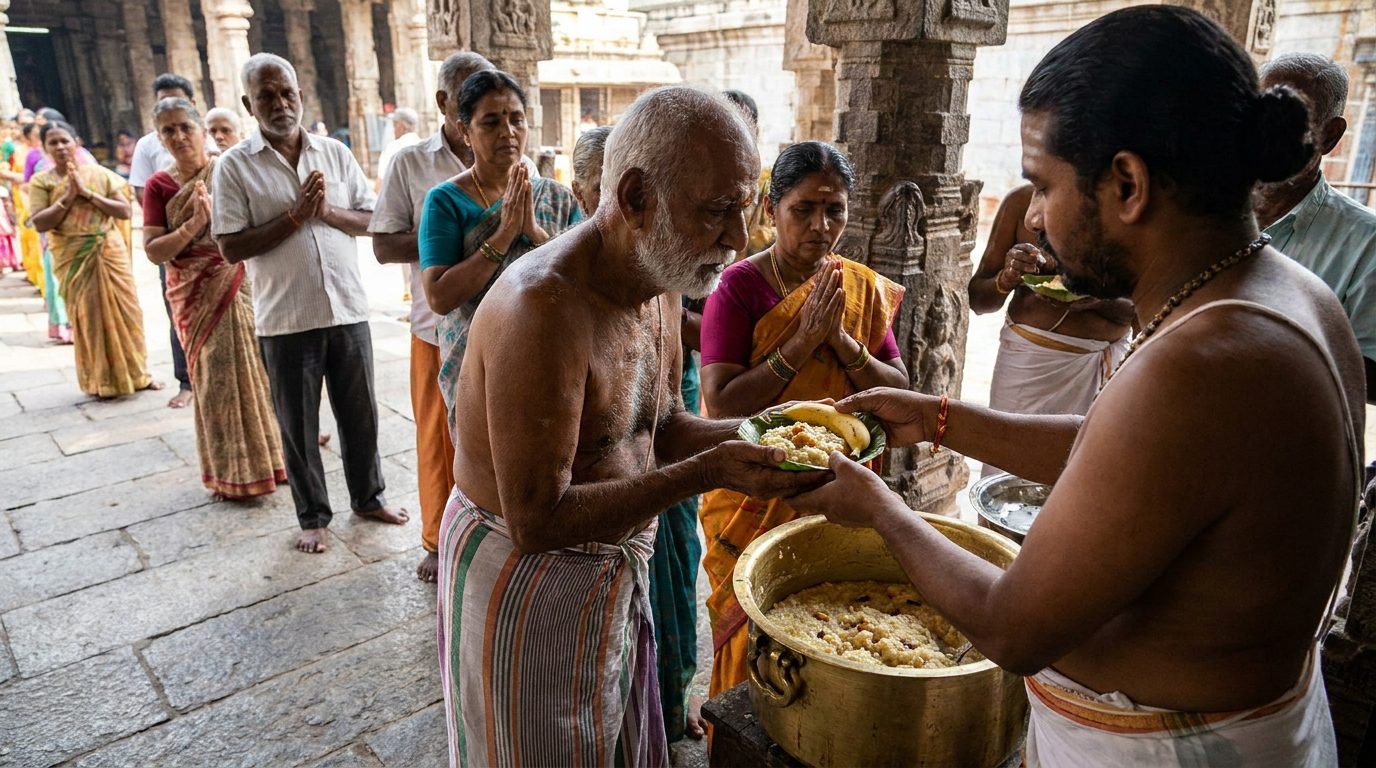
Understanding Prasadam: Sacred Food Given by Grace
In Bhakti Yoga, food is not only fuel for the body. Food can become a sacred meeting place between the soul and God.
The Sanskrit word prasadam means “mercy,” “grace,” or “a kind blessing.” In the devotional tradition of Bhakti, prasadam refers to food that has been lovingly prepared and offered to God, especially to Krishna, and then received back as divine grace.
This simple practice transforms an ordinary meal into an act of love.
At The Bhakti House, we often say that Bhakti Yoga is practical spirituality. It is not only philosophy, meditation, or worship in a temple. It is also cooking, sharing, eating, cleaning, singing, serving, and remembering God in daily life. Prasadam beautifully brings all of this together.
When we honor prasadam, we are not merely “eating food.” We are receiving a gift.
This is why devotees often say “honor prasadam” rather than “eat prasadam.” The word “honor” reminds us to receive sacred food with gratitude, humility, and awareness. It helps us slow down and remember that life itself is sustained by divine kindness.
Whether you are new to Bhakti Yoga, returning after many years, or simply curious about sacred food traditions, prasadam is a gentle and welcoming doorway. Everyone eats. Everyone needs nourishment. And everyone can begin to spiritualize daily life through the simple act of offering food with love.
Why Food Matters on the Bhakti Path
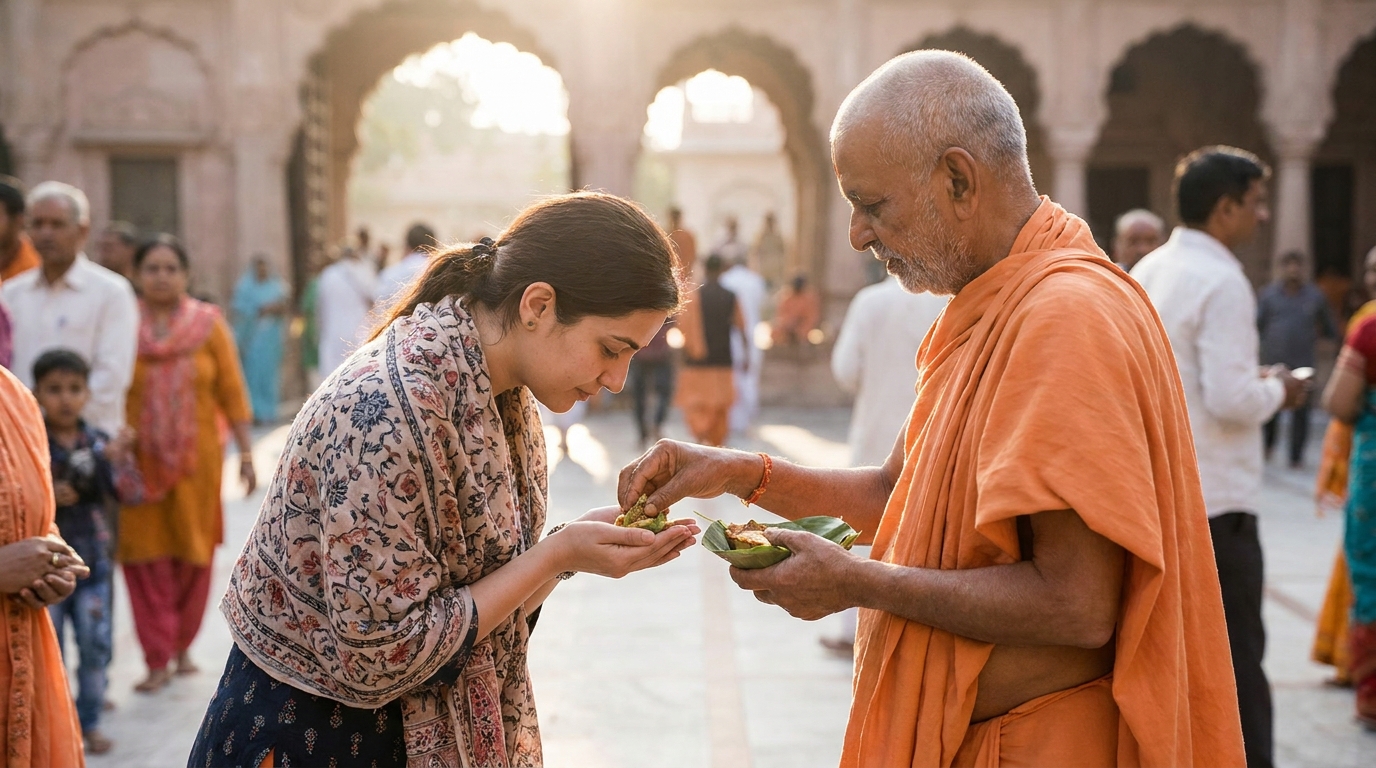
Bhakti Yoga is the yoga of love and devotion. The word bhakti means loving service to God. In this tradition, love is not only a feeling in the heart; it is expressed through action.
We chant sacred names. We pray. We hear spiritual wisdom. We serve others. We care for the world around us. And we offer what we have.
Food is one of the most natural things we can offer.
In the Bhagavad-gita, one of the central scriptures of Bhakti Yoga, Krishna says:
“Whoever offers Me with devotion a leaf, a flower, a fruit, or water, I accept that loving offering from the pure-hearted soul.”
— Bhagavad-gita 9.26
This verse is very tender. Krishna does not ask for something expensive or rare. He asks for love. A leaf, a flower, a fruit, or water can be enough when offered with devotion.
This gives great hope to all of us.
We may not feel spiritually advanced. We may not know many Sanskrit prayers. We may be busy, imperfect, or still learning. Yet Krishna invites us to begin with something simple and sincere.
Food Carries Consciousness
In Bhakti wisdom, consciousness matters. The mood of the cook affects the food. The intention behind the offering affects the heart. The way we receive prasadam shapes our inner life.
Most of us have felt this in ordinary ways. A meal made with love by a caring friend or family member feels different from something prepared carelessly. Food can carry warmth, attention, and affection.
Bhakti takes this understanding deeper. When food is prepared with cleanliness, devotion, and prayer, then offered to God, it becomes spiritually nourishing. It does not only support the body; it helps awaken the soul.
Eating as a Spiritual Practice
Many people think spirituality requires leaving ordinary life behind. But Bhakti Yoga teaches that ordinary life can become sacred when connected to God.
Cooking can become meditation.
Serving can become worship.
Eating can become gratitude.
Sharing food can become compassion.
Prasadam teaches us that God can be remembered in the kitchen, at the table, in community meals, during festivals, and even in quiet moments alone.
This is one reason prasadam is so loved in Bhakti communities around the world. It brings people together, softens the heart, and reminds us that divine love is meant to be shared.
Preparing an Offering with Love and Care
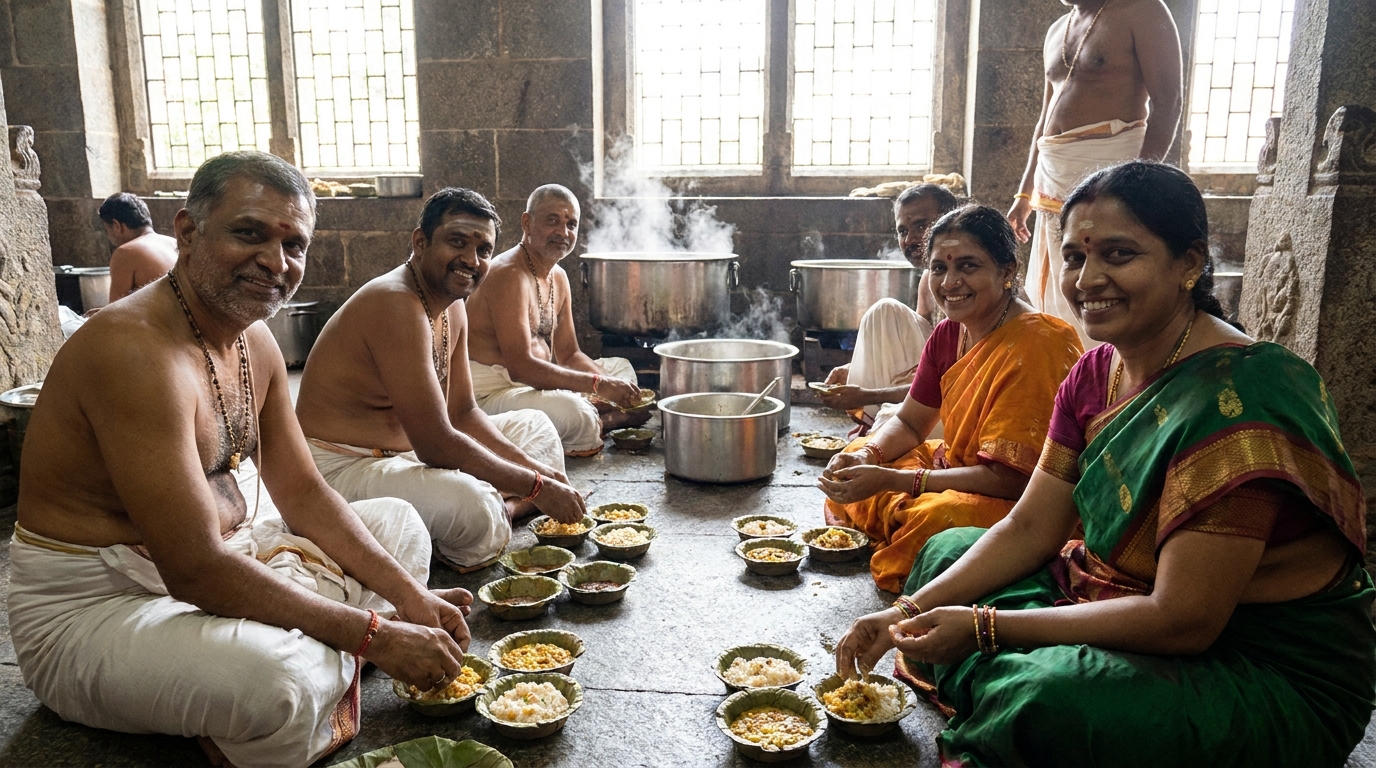
Preparing prasadam begins before the food reaches the altar. The heart of the practice is devotion, but devotion is supported by cleanliness, mindfulness, and care.
You do not need to be an expert cook to prepare an offering. You do not need a large kitchen or elaborate ingredients. What matters most is sincerity.
Still, a few practical guidelines can help us approach the process with respect.
Choose Ingredients That Can Be Offered
In the Bhakti tradition, devotees generally offer vegetarian foods prepared without meat, fish, or eggs. Many also avoid onions and garlic when cooking specifically for Krishna, following traditional devotional standards.
Common offerings include:
- Fresh fruits
- Cooked vegetables
- Rice, grains, and breads
- Lentils and beans
- Milk products, when ethically sourced if possible
- Nuts and seeds
- Sweets
- Water, herbal drinks, or fresh juices
The principle is simple: offer foods in the mode of purity, kindness, and devotion.
If you are new to this, begin gently. You might start by offering a piece of fruit, a glass of water, or a simple vegetarian meal. Bhakti grows naturally through steady, sincere steps.
Cook with Cleanliness and Mindfulness
Cleanliness is considered important in devotional cooking. This includes both outer cleanliness and inner intention.
Before cooking, it is helpful to:
- Wash your hands
- Clean the cooking space
- Use clean utensils
- Avoid tasting the food before offering
- Keep a peaceful mood as much as possible
Not tasting before offering may feel unusual at first. The idea is that the food is prepared first for God’s pleasure. After it is offered, we receive it as prasadam.
This small discipline can be very powerful. It gently shifts the mood from “This is for me” to “This is for You.”
Cooking can also become a form of chanting or prayer. Some devotees softly chant the maha-mantra while preparing offerings:
Hare Krishna, Hare Krishna, Krishna Krishna, Hare Hare
Hare Rama, Hare Rama, Rama Rama, Hare Hare
The word mantra means a sacred sound that helps free the mind. The maha-mantra is a prayer calling upon God through the names Krishna and Rama, asking to be engaged in loving service.
If you are from another faith background, you may pray in the language of your heart. The essential mood is gratitude and loving remembrance.
Offer What Is Fresh and Thoughtful
In Bhakti, we try to offer the best we reasonably can. This does not mean luxury. It means thoughtfulness.
A simple banana offered with love is beautiful. A bowl of rice and vegetables prepared with care is beautiful. A little water offered sincerely is beautiful.
The offering is not judged by worldly standards. It is measured by devotion.
As Krishna teaches in the Bhagavad-gita, even a leaf, flower, fruit, or water can be accepted when offered with love.
Discover a wide range of insightful articles that delve into various spiritual topics. These articles provide guidance and inspiration for your personal growth journey. Stay updated with the latest articles to enhance your understanding of spiritual practices.
How to Offer Food to Krishna at Home
Offering food at home can be simple, peaceful, and deeply meaningful. You do not need to wait until everything in life is perfect. You can begin today with whatever sincere capacity you have.
If you have a home altar, you may place the offering there. If not, you can choose a clean, respectful space. Some people keep a picture of Krishna, Radha-Krishna, Lord Chaitanya, or their spiritual teacher. Others begin simply with a prayerful heart.
A Simple Step-by-Step Offering
Here is a gentle way to offer food:
- Prepare vegetarian food with cleanliness and care.
- Place a portion on a clean plate or in a clean bowl reserved, if possible, for offerings.
- Set the plate before a picture or sacred space.
- Offer a simple prayer, asking Krishna to accept it.
- Chant or sit quietly for a few minutes.
- Remove the plate and mix the offered food back with the rest, or serve it separately.
- Receive and share the prasadam with gratitude.
A simple prayer might be:
“Dear Krishna, please accept this offering. I have prepared it with whatever love I have. Please bless my heart, my home, and all who receive this prasadam.”
If you know traditional prayers, you may chant them. If not, speak sincerely. God hears the heart.
Traditional Offering Prayers
In many Bhakti communities, devotees chant prayers to the spiritual teacher, Lord Chaitanya, and Krishna before offering food. These prayers express humility and ask that the offering be accepted through the mercy of the devotional lineage.
The Sanskrit word guru means teacher or spiritual guide. In Bhakti, the guru helps us learn how to serve God with love. The word parampara means a chain of spiritual teachers who pass down wisdom faithfully.
If you are still learning, do not feel discouraged. Traditional prayers can be learned over time. The foundation is sincerity.
How Long Should the Offering Stay?
In many homes and temples, offerings are left on the altar for a few minutes, often while prayers or chanting are offered. Elaborate temple worship may follow more detailed standards, but home offerings can be simple.
The important mood is not mechanical timing. It is awareness.
Pause. Pray. Remember. Offer.
Then receive.
Honoring Prasadam with Gratitude
Once food has been offered, it is no longer seen as ordinary. It is prasadam—God’s mercy.
This changes how we approach eating.
To honor prasadam means to receive it reverently, gratefully, and with the desire to grow spiritually. It is not about guilt or rigid performance. It is about relationship.
We are receiving something sacred.
Begin with Thanks
Before honoring prasadam, many devotees offer a short prayer. It may be as simple as:
“Thank You, Krishna, for this prasadam.”
Some chant traditional prayers glorifying prasadam and the mercy of the Lord. Others sit quietly for a moment of gratitude.
This pause matters. In a fast-paced world, eating can become rushed and distracted. Prasadam invites us to slow down and remember the source of our nourishment.
Eat with Awareness
Honoring prasadam does not require a dramatic mood. It may simply mean eating peacefully, avoiding unnecessary criticism, and remembering that the food is a gift.
A helpful practice is to notice:
- The kindness behind the meal
- The effort of those who cooked and served
- The presence of God’s mercy
- The opportunity to nourish the body for service
The body is not rejected in Bhakti Yoga. It is respected as a gift, a vehicle for devotion. When we honor prasadam, we nourish the body so we can chant, serve, learn, love, and grow.
Avoid Waste
Because prasadam is sacred, devotees try not to waste it. This can be practiced in a kind and realistic way.
Take what you can honor. If you need more, you can take more. If leftovers remain, store them respectfully when possible or share them with others.
This practice teaches gratitude and simplicity. It also helps us become more conscious of consumption, the earth, and the labor behind every meal.
The Spiritual Power of Sharing Prasadam
Prasadam is not meant to be kept only for oneself. It is naturally generous.
In temples, homes, festivals, retreats, and gatherings, prasadam is shared freely. People from all backgrounds sit together and receive the same mercy. In this way, prasadam becomes a powerful expression of spiritual equality.
Everyone is welcome.
No one needs to be wealthy, scholarly, or socially important. The soul is honored. The heart is nourished.
Prasadam Builds Community
Many people first experience Bhakti Yoga through prasadam. They come for a yoga class, a kirtan, a festival, or a Sunday gathering, and then someone offers them a plate of sacred food.
Something softens.
The chanting may touch the heart. The philosophy may awaken curiosity. But prasadam makes the experience tangible. Love becomes edible.
In the Chaitanya tradition, Lord Chaitanya Mahaprabhu, a great 15th-century teacher and incarnation of divine love, emphasized chanting the holy names and sharing Krishna’s mercy widely. His movement was marked by singing, dancing, scripture, compassion, and prasadam.
Prasadam distribution continues this mood. It says, “Please come. Please be nourished. Please receive grace.”
Feeding Others as Devotional Service
The Sanskrit word seva means service. In Bhakti Yoga, service is not forced labor or obligation. It is love in action.
Cooking prasadam, serving plates, washing pots, sweeping the floor after a meal, and making sure guests are cared for are all forms of seva.
Sometimes people think spiritual service must be grand. But Bhakti honors humble service. A person cutting vegetables with devotion may be doing something deeply sacred. Someone washing dishes after a feast may be offering beautiful worship.
When food is offered and shared, everyone involved receives spiritual benefit—the cook, the server, the donor, the cleaner, and the guest.
Prasadam as Compassion
In a world where many people feel lonely, anxious, or spiritually hungry, prasadam is a gentle form of compassion.
It feeds the body, but it also carries a message:
You are loved.
You are not forgotten.
God’s mercy is available.
There is a place for you.
Many Bhakti communities distribute prasadam in public spaces, on college campuses, during festivals, and to people facing hardship. This is not merely charity; it is sacred hospitality.
The goal is not to pressure anyone, but to share grace freely.
Scriptural Foundations for Sacred Offerings
The practice of offering food is deeply rooted in Bhakti scripture. These teachings help us understand why prasadam is so central.
Scripture does not present offering as a dry ritual. It is a loving exchange between the soul and the Supreme.
Bhagavad-gita: Offering with Devotion
As mentioned earlier, Bhagavad-gita 9.26 is one of the most beloved verses about offerings:
“Whoever offers Me with devotion a leaf, a flower, a fruit, or water, I accept that loving offering from the pure-hearted soul.”
This verse reveals the heart of Bhakti. Krishna accepts love.
The offering may be simple, but if it is given with devotion, it becomes meaningful. This teaching is especially encouraging for people who feel they do not have much to give.
Krishna is not hungry for our food. He is complete. But He is eager for loving relationship.
When we offer food, we practice giving our heart.
Bhagavad-gita: Spiritualizing Daily Work
In Bhagavad-gita 9.27, Krishna expands the principle:
“Whatever you do, whatever you eat, whatever you offer or give away, and whatever austerities you perform—do that as an offering to Me.”
This verse shows that Bhakti is not limited to one part of life. Eating, working, giving, and daily duties can all be connected to God.
Prasadam is one of the easiest ways to begin living this verse. Every day we eat. Every day we can remember. Every day we can offer.
Srimad-Bhagavatam: Hearing, Chanting, and Serving
The Srimad-Bhagavatam, another treasured Bhakti scripture, teaches that devotion grows through hearing about God, chanting His names, remembering Him, serving, worshiping, praying, and surrendering with love.
Prasadam supports all of these practices.
It is often served after kirtan, the joyful singing of God’s names. It nourishes people who gather to hear spiritual wisdom. It strengthens the body for service. It creates a sacred atmosphere in homes and communities.
In this way, prasadam is not separate from Bhakti practice. It is woven into the whole path.
Common Questions About Prasadam
Many sincere people have questions when they first learn about prasadam. Questions are welcome. Bhakti is a path of loving inquiry, not blind pressure.
Do I Have to Be Hindu to Offer or Honor Prasadam?
No. Bhakti Yoga welcomes people of all backgrounds.
While prasadam comes from the devotional traditions of India, the heart of the practice is universal: prepare food with love, offer it to God, and receive it with gratitude.
People from many cultures and faith backgrounds honor prasadam. Some understand Krishna as the Supreme Person. Some are still exploring. Some simply feel drawn to the sacredness of the practice.
You are welcome to begin sincerely from where you are.
What If I Do Not Know the Right Mantras?
You can still offer.
Traditional mantras are beautiful and powerful, and you may learn them over time. But sincerity is the beginning. A heartfelt prayer in your own words is meaningful.
You might say:
“Dear Lord, please accept this food. May it nourish me in body, mind, and spirit. May I use my life in loving service.”
As your practice grows, you can learn more traditional prayers from trusted teachers and communities.
Can I Offer Food at Work or While Traveling?
Yes, you can practice in simple ways.
If you are traveling, you might offer fruit, nuts, or a simple vegetarian meal with a quiet prayer. At work, you can pause before eating and mentally offer your food to Krishna.
When possible, prepare and offer food carefully at home. But do not let imperfect circumstances stop you from remembering God.
Bhakti is both sacred and practical.
What If I Accidentally Taste While Cooking?
Do not become discouraged.
Devotional life is a path of growth. If you accidentally taste, simply continue with humility and try again next time. The purpose is to cultivate loving consciousness, not anxiety.
Over time, the habit of cooking first for Krishna becomes natural and joyful.
Is Prasadam Only Temple Food?
No. Temple prasadam is very special because it is offered with formal worship and community devotion. But prasadam can also be prepared in a home kitchen.
Your home can become a sacred space. Your table can become a place of gratitude. Your family meals can become part of your spiritual life.
Bringing Prasadam into Daily Life
Prasadam is not only for festivals or special events. It can become a steady, nourishing rhythm in daily life.
Even small practices can make a deep difference over time.
Start with One Daily Offering
If offering every meal feels overwhelming, begin with one offering a day.
You might offer breakfast fruit, a cup of water, or dinner. Keep it simple and consistent. Let the practice become sweet, not stressful.
As your heart becomes more attracted, you may naturally want to offer more.
Create a Peaceful Kitchen Mood
The kitchen can be a sacred place. Try playing kirtan, chanting softly, or cooking in a mood of prayer.
If your home is busy, do what you can. Bhakti does not require perfect silence. A parent cooking while caring for children can still offer beautiful devotion. A student preparing a simple meal in a small apartment can do the same.
God sees the heart.
Share with Family and Friends
Offering prasadam to others can be simple and natural. You do not have to give a long explanation unless someone asks. You can simply say, “This is food I offered with prayer,” or “This is prasadam—sacred food offered to Krishna.”
Let the prasadam speak through kindness.
Many hearts open through taste, warmth, and hospitality.
Connect Prasadam with Chanting and Prayer
Prasadam becomes even more meaningful when connected with other Bhakti practices.
You might chant one round of the maha-mantra before cooking. You might read a verse from the Bhagavad-gita before dinner. You might gather with others for kirtan and then share a meal.
These practices support one another. Chanting purifies the heart. Prayer deepens intention. Service expresses love. Prasadam nourishes the journey.
The Inner Meaning: Receiving God’s Mercy
At its deepest level, prasadam teaches us how to receive.
Many of us are trained to achieve, control, compete, and consume. Prasadam invites another way. It teaches us to accept grace.
We prepare something with our hands, offer it with our heart, and receive it back transformed.
This is a beautiful picture of the Bhakti path.
We offer our life to God—not because it is perfect, but because it is ours to give. Then God returns our life with meaning, purification, and love.
From Enjoyment to Relationship
Ordinary eating can be centered on personal enjoyment: “What do I want?” “What tastes best to me?” “How can I satisfy my craving?”
Prasadam gently shifts the center.
We begin to ask, “What would please Krishna?” “How can I cook with love?” “How can I share?” “How can this meal help me serve?”
This shift does not make life less joyful. It makes joy deeper.
Instead of trying to enjoy separately from God, we learn to enjoy in relationship with God.
Gratitude Softens the Heart
A grateful heart becomes peaceful. When we honor prasadam, we remember that we are dependent on so many gifts: soil, rain, sunlight, farmers, cooks, community, and ultimately the mercy of God.
This remembrance softens pride. It awakens humility. It helps us see life as sacred.
In Bhakti, humility does not mean thinking we are worthless. It means recognizing that we are loved, dependent, and meant for service. We are part of something divine.
Prasadam and Spiritual Growth
Prasadam supports spiritual growth in quiet but powerful ways.
It helps purify the senses. It brings sacredness into daily routines. It creates community. It encourages discipline without harshness. It reminds us to offer, receive, and share.
Many devotees can testify that prasadam has changed their lives. A single plate received at a temple. A sweet offered during a festival. A simple meal shared after kirtan. These moments can plant seeds of devotion that grow over years.
No sincere contact with divine mercy is ever wasted.
A Simple Prasadam Practice for Beginners
If you are ready to begin, here is a very simple practice you can try today.
Choose a piece of fruit, a glass of water, or a small vegetarian meal. Place it on a clean plate. Set it before a picture of Krishna if you have one, or simply hold it in a prayerful mood.
Say:
“Dear Krishna, please accept this offering. Thank You for sustaining me. Please help me grow in love, gratitude, and service.”
If you like, chant the maha-mantra once or several times:
Hare Krishna, Hare Krishna, Krishna Krishna, Hare Hare
Hare Rama, Hare Rama, Rama Rama, Hare Hare
Wait a moment. Then receive the food as prasadam.
Eat slowly. Give thanks. Notice how it feels to receive rather than simply consume.
This one small offering can become the beginning of a lifelong relationship.
Everyone Is Welcome to Honor Prasadam
Prasadam is one of the most beautiful gifts of Bhakti Yoga because it is so accessible. You do not need to be advanced. You do not need to know everything. You do not need to have a perfect home, perfect mind, or perfect history.
You can begin with love.
Bhakti Yoga is a practical path of chanting, prayer, service, sacred study, community, and spiritual growth. Prasadam brings all of these into the simple act of preparing and receiving food.
When we honor prasadam, we honor God’s mercy. We honor the earth. We honor those who cook and serve. We honor the sacred potential of daily life. And we honor the soul’s deep hunger for divine love.
Wherever you are on your journey, you are welcome. Come with your questions, your hopes, your doubts, and your sincere heart. Take one small step: offer a fruit, chant a prayer, share a meal, serve someone, or simply receive prasadam with gratitude.
God meets us in that sincerity.
May every meal become a reminder of grace. May every kitchen become a place of devotion. May every heart discover the sweetness of offering and receiving love.
Everyone is welcome to take one sincere step toward God.
FAQs
What is prasadam?
Prasadam is a term used in Hinduism to refer to food that has been offered to deities during worship and is then distributed to devotees. It is considered sacred and is believed to carry the blessings of the deity, making it a significant part of religious rituals and ceremonies.
How is prasadam prepared?
Prasadam is typically prepared with great care and devotion, often using vegetarian ingredients. The preparation usually involves cooking the food in a clean environment, often in the presence of a priest or during a religious ceremony, to ensure that it is blessed before being offered to the deity.
What are the common types of prasadam?
Common types of prasadam include sweets like laddu, halwa, and barfi, as well as savory items like puliyodarai (tamarind rice) and curd rice. The specific types of prasadam can vary based on regional traditions and the particular deity being worshipped.
Can prasadam be consumed by anyone?
Yes, prasadam can be consumed by anyone, regardless of their religious beliefs. However, it is important to treat prasadam with respect, as it is considered sacred. Many devotees believe that consuming prasadam brings blessings and spiritual benefits.
How should prasadam be stored and handled?
Prasadam should be stored in a clean and dry place, preferably in an airtight container to maintain its freshness. It is important to handle prasadam with clean hands and to avoid any contamination, as it is considered a sacred offering.

