
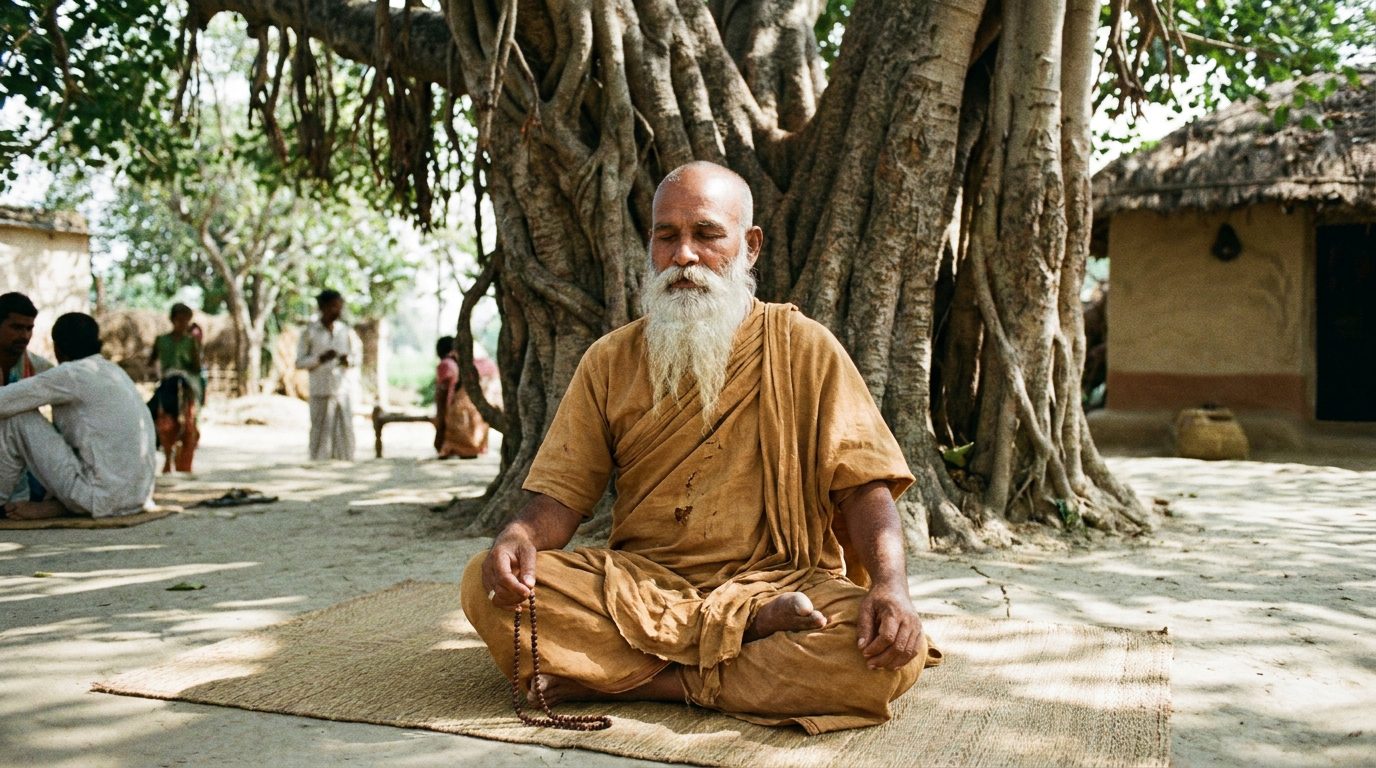
Haridāsa Ṭhākura is one of the most beloved and inspiring figures in the Bhakti tradition. Known as the Nāmācārya — the great teacher of the Holy Name — he dedicated his entire life to chanting the names of God with unwavering devotion, humility, and love.
His story is not just a historical account from centuries ago. It is a living invitation for all of us, regardless of where we come from, to discover the transformative power of sincere devotion. Whether you are new to Bhakti Yoga or have been walking this path for years, the life of Haridāsa Ṭhākura has something deeply personal to offer your heart.
Born in a Muslim family in Bengal, India, during the 15th century, Haridāsa Ṭhākura embraced the chanting of the Hare Kṛṣṇa mahā-mantra as his life and soul. His very existence became a testament to the universal nature of divine love — that God does not see our external labels, our birth, or our social status. God sees the sincerity of our hearts.
Śrī Caitanya Mahāprabhu, the golden avatāra who inaugurated the saṅkīrtana movement of congregational chanting, personally honored Haridāsa Ṭhākura with the title of Nāmācārya. This was not a ceremonial gesture. It was a recognition of a soul who lived, breathed, and embodied the Holy Name in every moment.
A Soul Beyond All Boundaries
One of the most beautiful aspects of Haridāsa Ṭhākura’s life is how it shatters every artificial barrier we place between ourselves and God. In the rigid social structure of his time, a person born outside the Hindu caste system was often considered ineligible for spiritual practices. Yet here was Haridāsa — embraced by the Supreme Lord Himself as the foremost teacher of chanting.
This tells us something profoundly important: Bhakti, the path of devotional love, is open to everyone. It does not matter where you were born, what tradition you grew up in, or what mistakes you have made in the past. What matters is the genuine longing of your heart to connect with the Divine.
As the Śrīmad-Bhāgavatam (2.4.18) beautifully declares:
> “kirāta-hūṇāndhra-pulinda-pulkaśā ābhīra-śumbhā yavanāḥ khasādayaḥ ye ‘nye ca pāpā yad-apāśrayāśrayāḥ śudhyanti tasmai prabhaviṣṇave namaḥ”
> “Kirāta, Hūṇa, Āndhra, Pulinda, Pulkaśa, Ābhīra, Śumbha, Yavana, members of the Khasa races and even others addicted to sinful acts can be purified by taking shelter of the devotees of the Lord, due to His being the supreme power. I beg to offer my respectful obeisances unto Him.”
Haridāsa Ṭhākura is living proof of this verse. His life shows us that the Holy Name does not discriminate. It purifies and uplifts anyone who calls upon it with sincerity.
His Extraordinary Vow of Chanting
Perhaps the most well-known aspect of Haridāsa Ṭhākura’s devotional practice was his daily vow to chant 300,000 names of God every day. Using a simple set of prayer beads (japa-mālā), he would chant the Hare Kṛṣṇa mahā-mantra continuously:
Hare Kṛṣṇa, Hare Kṛṣṇa, Kṛṣṇa Kṛṣṇa, Hare Hare / Hare Rāma, Hare Rāma, Rāma Rāma, Hare Hare
This was not a mechanical or ritualistic exercise. For Haridāsa Ṭhākura, every single name was a prayer, a conversation with God, an expression of deep love. He chanted with such absorption that the Holy Name became inseparable from his very being.
What We Can Learn From His Chanting Practice
Now, you might hear “300,000 names a day” and think, “That’s beautiful, but I could never do that.” And that’s perfectly okay. Haridāsa Ṭhākura’s example is not meant to intimidate us. It is meant to inspire us.
The real teaching here is about consistency and sincerity. Even if you chant one round of the mahā-mantra on your beads — 108 repetitions — with genuine attention and feeling, you are walking in the footsteps of Haridāsa Ṭhākura. What he demonstrated was not that we must chant an impossibly large number, but that the Holy Name deserves our deepest attention, our most heartfelt effort.
In the Śikṣāṣṭaka (verse 3), Śrī Caitanya Mahāprabhu Himself teaches us the mood in which to chant:
> “tṛṇād api su-nīcena taror iva sahiṣṇunā amāninā māna-dena kīrtanīyaḥ sadā hariḥ”
> “One should chant the holy name of the Lord in a humble state of mind, thinking oneself lower than the straw in the street; one should be more tolerant than a tree, devoid of all sense of false prestige, and should be ready to offer all respect to others. In such a state of mind one can chant the holy name of the Lord constantly.”
Haridāsa Ṭhākura perfectly embodied this verse. His chanting flowed from a heart drenched in humility.
Making Chanting Part of Your Daily Life
If you are inspired by Haridāsa Ṭhākura and want to bring more chanting into your own life, here are a few gentle suggestions:
- Start small and stay consistent. Even five or ten minutes of chanting each morning can transform your day.
- Chant with attention. Try to hear each name as you say it. The practice of listening to your own chanting is at the heart of japa meditation.
- Create a sacred space. Find a quiet corner, light a candle or some incense, and let that be your chanting spot. Over time, that space will feel like a sanctuary.
- Be patient with yourself. The mind will wander. That is natural. Gently bring it back to the sound of the Holy Name, again and again.
Trials and Tribulations: Unwavering Faith Under Persecution
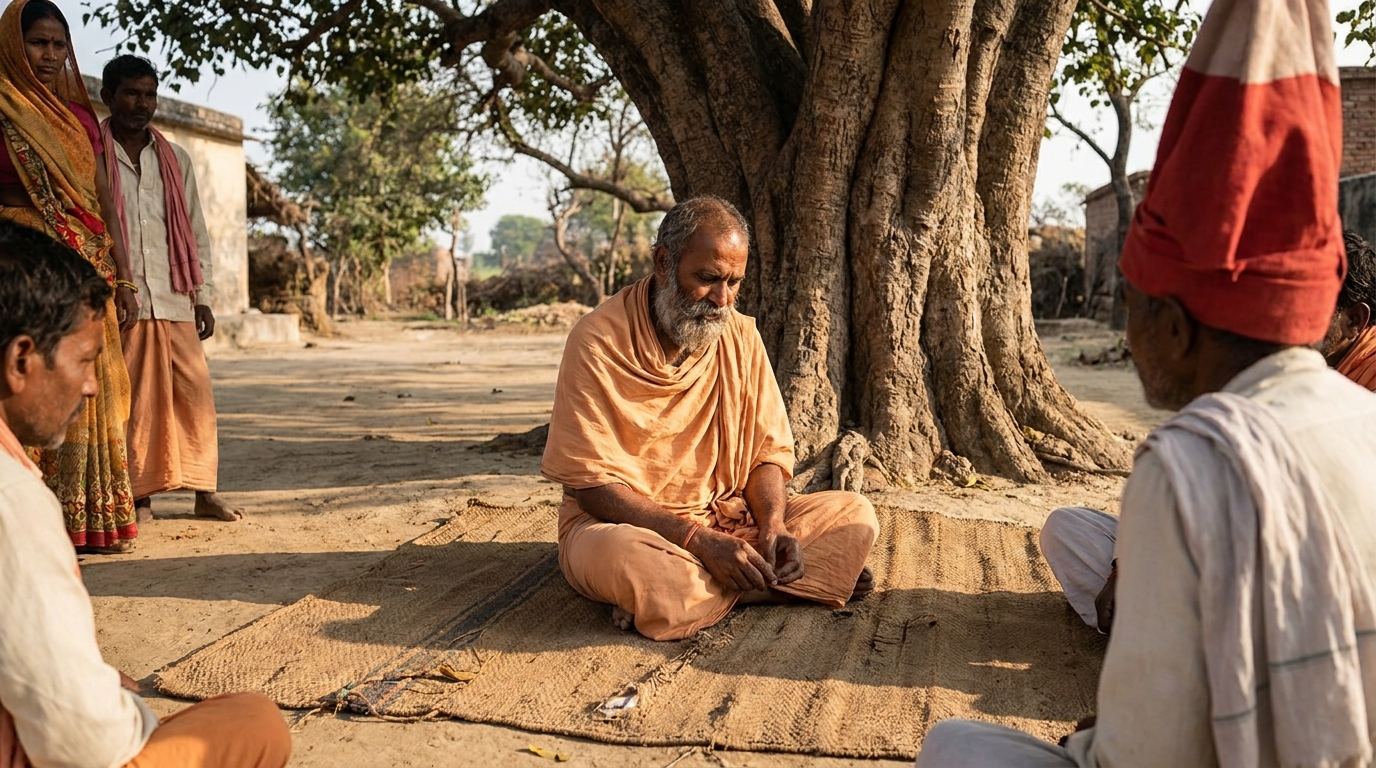
Haridāsa Ṭhākura’s devotion was tested in ways that most of us can barely imagine. When the local Muslim ruler learned that Haridāsa had taken to chanting Hindu names of God, he was furious. Haridāsa was ordered to stop his chanting and return to the Islamic faith. When he humbly refused — not out of defiance, but out of deep, unshakable love for God — he was sentenced to a horrific punishment.
He was beaten in twenty-two marketplaces. The soldiers struck him mercilessly, dragging him from place to place, inflicting pain that would have killed an ordinary person many times over. And yet, through it all, Haridāsa Ṭhākura continued to chant the Holy Name. He did not curse his persecutors. He did not cry out in anger. He prayed for their well-being.
The Power of Forgiveness and Grace
This is one of the most powerful lessons from his life: true devotion gives us the strength to respond to hatred with love. Haridāsa Ṭhākura did not merely survive his persecution. He transformed it into an offering of devotion. His tolerance was not passive resignation — it was an active, radiant expression of his faith that God was present even in the midst of suffering.
His persecutors were eventually astonished. Some accounts describe the soldiers themselves falling at his feet, begging for forgiveness. The power of a pure devotee’s love is that it can soften even the hardest hearts.
This echoes the teaching of the Bhagavad-gītā (12.13-14), where Lord Kṛṣṇa describes the qualities of His dear devotee:
> “adveṣṭā sarva-bhūtānāṁ maitraḥ karuṇa eva ca nirmamo nirahaṅkāraḥ sama-duḥkha-sukhaḥ kṣamī santuṣṭaḥ satataṁ yogī yatātmā dṛḍha-niścayaḥ mayy arpita-mano-buddhir yo mad-bhaktaḥ sa me priyaḥ”
> “One who is not envious but is a kind friend to all living entities, who does not think himself a proprietor and is free from false ego, who is equal in both happiness and distress, who is tolerant, always satisfied, self-controlled, and engaged in devotional service with determination, his mind and intelligence fixed on Me — such a devotee of Mine is very dear to Me.”
Haridāsa Ṭhākura was the living embodiment of these words.
Sure, here is the sentence with the clickable link:
Check out our website for more articles: more articles.
His Relationship With Śrī Caitanya Mahāprabhu
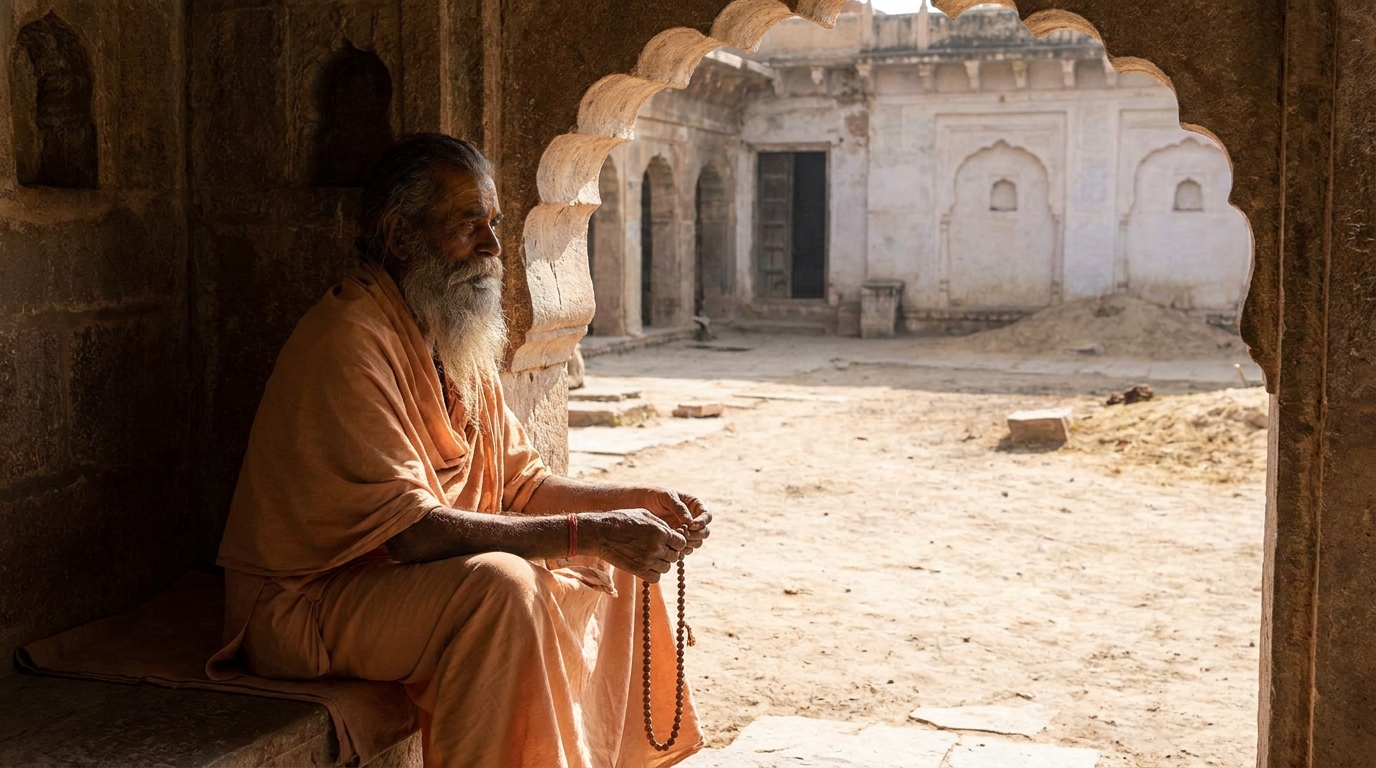
The bond between Haridāsa Ṭhākura and Śrī Caitanya Mahāprabhu is one of the most tender and beautiful relationships in Bhakti literature. When Lord Caitanya established His mission in Jagannātha Purī, Haridāsa Ṭhākura accompanied Him. However, because of his birth in a Muslim family, Haridāsa considered himself unworthy to enter the Jagannātha temple and chose to stay in a nearby garden, chanting continuously.
Lord Caitanya, far from accepting this separation, would personally visit Haridāsa Ṭhākura every day. He would send him mahā-prasādam — sanctified food from the Jagannātha temple — and spend time in intimate spiritual conversation with him.
The Lord Honors His Devotee
This daily exchange reveals something extraordinary about the nature of God in Bhakti philosophy. The Supreme Lord, who is worshiped by millions, went out of His way to honor and serve His devotee. In Bhakti, the relationship between God and the devotee is not one of distant reverence alone. It is a relationship of mutual love, where God delights in the devotion of His beloved, and the devotee finds everything in the embrace of the Divine.
Haridāsa Ṭhākura’s humility made him feel unqualified. But Lord Caitanya’s love made him the most honored person in the entire community. This teaches us that we never need to feel “not good enough” for God. When we take even one sincere step toward Him, He takes ten steps toward us.
Lessons in Humility for Our Own Lives
Haridāsa Ṭhākura never demanded respect, recognition, or a special position. He was content to sit in his small dwelling, chanting the Holy Name, serving however he could. And yet, precisely because of this genuine humility, he was elevated by the Lord Himself to the highest position.
In our own lives, this is a powerful reminder. Spiritual growth does not come from titles, social media followers, or being seen at the right events. It comes from the quiet, sincere, daily practice of turning our hearts toward God — in chanting, in prayer, in service, in kindness.
The Sacred Departure of Haridāsa Ṭhākura
The passing of Haridāsa Ṭhākura is one of the most moving episodes in Bhakti history. When he felt his time was near, he expressed his desire to leave this world while gazing upon the face of Śrī Caitanya Mahāprabhu and hearing the chanting of the Holy Name.
Lord Caitanya came to him, and Haridāsa Ṭhākura placed the Lord’s lotus feet upon his chest. Surrounded by the sounds of kīrtana — devotional singing — he departed from this world, his lips still moving with the names of God.
What happened next is even more remarkable. Śrī Caitanya Mahāprabhu personally carried the body of Haridāsa Ṭhākura to the sea, bathed him, and buried him in the sand with His own hands. The Lord then performed a great festival in Haridāsa’s honor, dancing and singing, distributing prasādam to all the devotees.
What His Departure Teaches Us
The manner of Haridāsa Ṭhākura’s departure teaches us that a life lived in devotion leads to the most auspicious end — leaving this world in full consciousness of God, surrounded by love, free from fear. This is the ultimate fruit of Bhakti Yoga.
It also shows us how deeply God cherishes His devotees. The Supreme Lord becoming a pallbearer for His servant — this is not something we find in dry philosophy or abstract theology. This is love in its purest form, and it is the essence of what Bhakti is all about.
The Living Legacy of Haridāsa Ṭhākura
Today, Haridāsa Ṭhākura’s samādhi — his sacred burial site — still stands in Jagannātha Purī, India. Devotees from around the world visit to offer prayers and chant the Holy Name in his memory.
But his real legacy is not found in a physical place. It is found every time someone picks up their japa beads and chants with sincerity. It is found every time someone chooses forgiveness over resentment. It is found every time someone, regardless of their background, takes a step toward God and discovers that the door was always open.
Haridāsa Ṭhākura showed us that the path of Bhakti is not about being perfect. It is about being sincere. It is not about where you start. It is about the love you bring to each step.
Carrying His Spirit Forward
You do not need to chant 300,000 names a day to honor the legacy of Haridāsa Ṭhākura. You honor him every time you chant with your whole heart, even for a few minutes. You honor him when you treat others with kindness, when you forgive, when you remain humble, and when you trust that God’s love is big enough for you — exactly as you are.
At The Bhakti House, we believe that every soul is welcome on this path. Whatever brought you here today — curiosity, longing, grief, joy, or a quiet whisper in your heart — we are grateful you are here.
Take one sincere step. Chant one sincere prayer. Offer one sincere act of kindness. That is enough. God meets us where we are, and He walks with us from there.
You are welcome here. You are loved. And the Holy Name is waiting for you, just as it waited for Haridāsa Ṭhākura — with open arms and infinite grace.
FAQs
Who was Haridāsa Ṭhākura?
Haridāsa Ṭhākura was a prominent Vaishnava saint and a close associate of Chaitanya Mahaprabhu, a 15th-century saint and proponent of the Gaudiya Vaishnavism tradition.
What is Haridāsa Ṭhākura known for?
Haridāsa Ṭhākura is known for his unwavering devotion to the chanting of the Hare Krishna mantra and for his exemplary character and piety.
What is the significance of Haridāsa Ṭhākura in the Gaudiya Vaishnavism tradition?
Haridāsa Ṭhākura is considered to be one of the most important figures in the Gaudiya Vaishnavism tradition, and his life and teachings are revered by followers of this tradition.
What are some key teachings of Haridāsa Ṭhākura?
Haridāsa Ṭhākura emphasized the importance of chanting the holy names of God, especially the Hare Krishna mantra, as a means of attaining spiritual liberation and developing love for God.
How is Haridāsa Ṭhākura honored in the Gaudiya Vaishnavism tradition?
Haridāsa Ṭhākura is honored through various festivals, such as the celebration of his disappearance day, and through the recitation of his glories and teachings in the form of kirtans, bhajans, and other devotional activities.

