
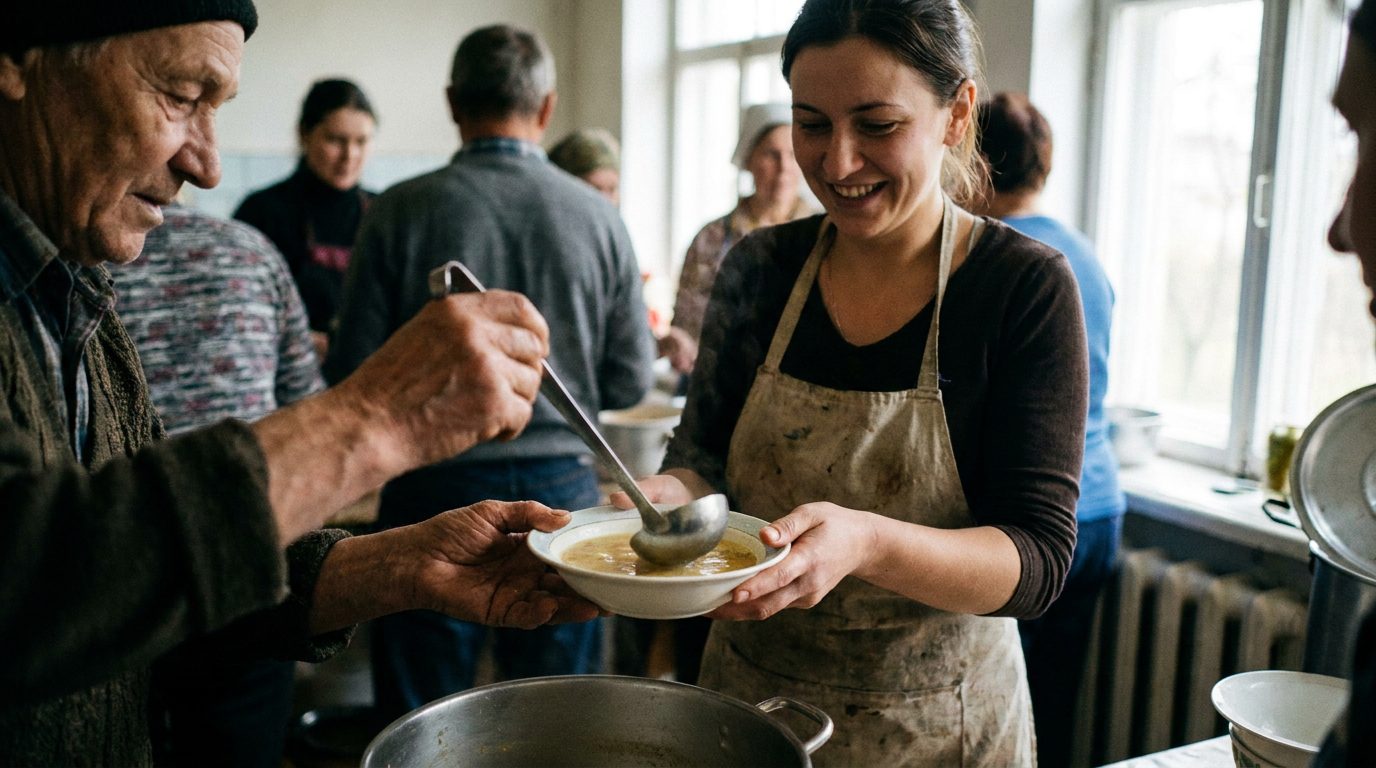
Caregiving is one of the most universal experiences in the world. At some point, every person receives care, gives care, or longs for care. A child needs the loving protection of a parent. An elder may need support, patience, and companionship. A friend may need someone to listen. A community may need volunteers to cook, clean, teach, encourage, and uplift.
In its simplest form, caregiving means responding to another person’s need.
Sometimes we care because it is our responsibility. We care because someone depends on us. We care because life has placed us in a role: parent, spouse, child, nurse, teacher, friend, neighbor, or spiritual community member.
But on the path of Bhakti Yoga, caregiving can become something even deeper. It can evolve from duty into loving service.
Bhakti means devotion, or loving connection with God. Yoga means union, or a path that helps us reconnect with our true spiritual nature. So Bhakti Yoga is the path of loving devotion to the Divine. It teaches that our ordinary actions—cooking, cleaning, listening, helping, protecting, encouraging—can become sacred when offered with love.
This shift does not require us to become perfect. It begins with a simple change of heart.
We may begin by thinking, “I have to care for this person.”
Over time, through prayer, chanting, humility, and spiritual understanding, that feeling can become, “I am grateful to serve. May this care be an offering to God.”
That is the evolution of caregiving.
From Obligation to Offering
Many caregivers know the feeling of duty. Duty can be noble. It keeps us steady when emotions rise and fall. It helps us show up even when we feel tired. In Sanskrit, the word dharma often refers to duty, purpose, or the natural responsibility that sustains life and harmony.
Dharma is not meant to be cold or mechanical. True dharma is meant to uplift the heart. When we perform our duties with sincerity, we create a foundation for love to grow.
Still, duty alone may become heavy. If we only think, “This is my burden,” the heart may become dry. We may become resentful, exhausted, or lonely. Bhakti Yoga gently invites us to bring the soul back into the action.
Seeing Care as Sacred
The Bhagavad-gita, one of the central scriptures of Bhakti Yoga, teaches that work can be spiritualized when it is offered to God. In Bhagavad-gita 9.27, Krishna says:
“Whatever you do, whatever you eat, whatever you offer or give away, and whatever austerities you perform—do that as an offering to Me.”
This verse is deeply practical. It means that spirituality is not limited to a temple, church, mosque, synagogue, meditation room, or sacred place. The kitchen can become sacred. The hospital room can become sacred. The bedside of a loved one can become sacred. The phone call to someone in distress can become sacred.
When we offer our caregiving to God, we are not just completing a task. We are placing our heart into divine hands.
The Inner Shift
The difference between duty and loving service is not always visible from the outside.
Two people may perform the same action: bringing water to someone who is ill. One person may do it with irritation, thinking, “Why must I always do this?” Another may do it with prayer, thinking, “May this person feel comfort. May God be pleased by this small act.”
The action is the same. The consciousness is different.
In Bhakti Yoga, consciousness matters. The word seva means service offered with devotion. Seva is not merely helping. It is helping with a heart that remembers God and honors the soul within every being.
This does not mean we never feel tired or frustrated. It means we bring those feelings honestly into our spiritual life. We pray, “God, I am tired. Please give me strength. Please help me serve with kindness.”
That prayer itself is a step toward love.
The Bhakti Vision: Every Soul Is Worthy of Care
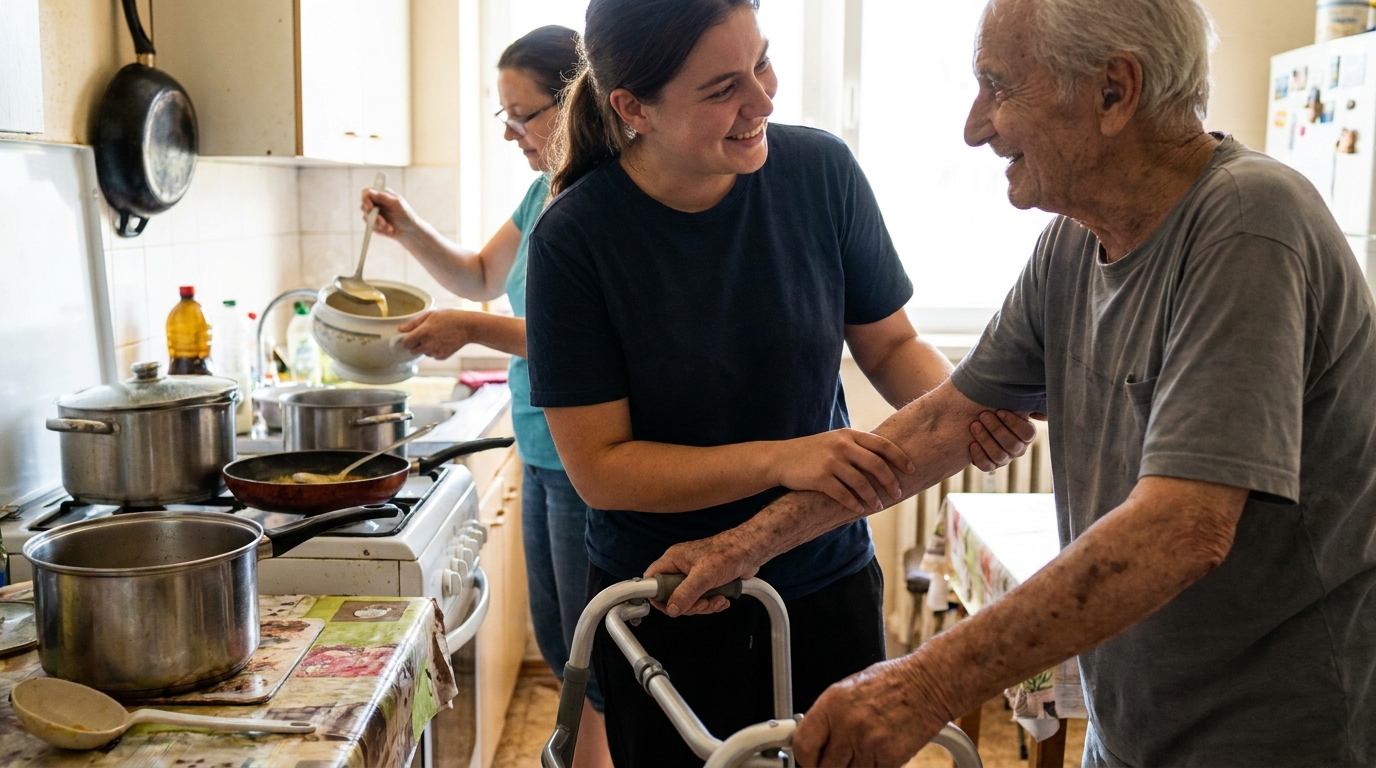
Bhakti Yoga teaches that every living being is a spiritual soul, loved by God. We may have different bodies, cultures, beliefs, abilities, ages, and life stories, but beneath all external differences is the atma, the soul.
Atma is a Sanskrit word meaning the true self—the eternal spiritual being within the body. We are not merely bodies that need food, medicine, and shelter. We are souls who need love, meaning, and connection.
This vision transforms caregiving.
When we see only the body, caregiving may feel like managing symptoms, schedules, appointments, medications, meals, or emotional needs. All of that is important. But when we also see the soul, caregiving becomes an act of reverence.
We are not caring for a problem. We are caring for a person.
Seeing Beyond the Role
It is easy for caregiving roles to become fixed.
“This is my sick parent.”
“This is my difficult child.”
“This is my aging spouse.”
“This is my patient.”
“This is the person who always needs something.”
Bhakti invites us to look deeper. This person is not just a role in our life. This person is a beloved child of God. Their dignity does not disappear because they are weak, confused, emotional, dependent, disabled, or near the end of life.
In the Srimad-Bhagavatam, a treasured Bhakti scripture, saintly vision is described as seeing the presence of the Divine in all beings. This does not mean we ignore practical realities. It means we allow compassion to guide our actions.
Caregiving Without Superiority
Loving service is not “I am higher, and you are lower.” It is not “I am the helper, and you are helpless.” In Bhakti, service is humble. We understand that today I may serve, and tomorrow I may need to be served.
Life changes quickly. Health changes. Strength changes. Circumstances change. But the soul remains.
Humility protects caregiving from pride. It reminds us: “I am not the controller. I am an instrument. Let me serve with sincerity.”
In Bhagavad-gita 3.27, Krishna explains that the false ego thinks, “I am the doer.” Bhakti softens this illusion. We may do our best, but ultimately life is held by God. This understanding can bring relief to caregivers who feel they must carry everything alone.
We are responsible to serve, but we are not God.
That realization can save the heart.
Please visit our website for more information on our articles: articles.
The Challenges of Caregiving Are Real

A devotional view of caregiving does not deny suffering. Bhakti Yoga is not sentimental. It does not ask caregivers to pretend everything is easy.
Caregiving can be physically exhausting, emotionally demanding, and spiritually testing. It may involve long nights, financial pressure, family tension, grief, uncertainty, or the pain of watching someone suffer.
Some caregivers feel invisible. Others feel guilty for needing rest. Some struggle with resentment and then feel ashamed for feeling resentful. Many wonder, “Am I doing enough?”
The Bhakti path meets us honestly in these places.
Compassion Includes the Caregiver
If you are a caregiver, your needs matter too. Your body and mind are also gifts from God. To care for yourself is not selfish when it helps you continue serving with patience and balance.
In Bhakti Yoga, the body is sometimes described as a temple because it can be used in God’s service. If the body is a temple, then basic care—rest, nourishing food, healthy boundaries, prayer, and support—is part of spiritual responsibility.
You do not need to burn out to prove your love.
Love is not measured only by exhaustion. Sometimes love means staying up all night. Sometimes love means asking for help. Sometimes love means saying, “I need a moment to breathe so I can return with a softer heart.”
The Pain of Not Being Appreciated
Many caregivers quietly suffer because their service is not acknowledged. They cook, clean, drive, organize, comfort, and sacrifice, yet no one says thank you. Sometimes the person receiving care is unable to express gratitude. Sometimes family members do not understand how much is being carried.
Bhakti offers a healing perspective: no sincere service is unseen by God.
In Bhagavad-gita 2.40, Krishna says that even a little progress on this path protects one from great fear. No loving effort is wasted. Even if others do not notice, the Divine notices the intention of the heart.
This does not mean we should never communicate our needs. Healthy communication is important. But when appreciation is absent, remembrance of God can protect us from bitterness.
We can pray, “May this service purify my heart. May I not become hard. May I remember that You see.”
When Caregiving Brings Grief
Some caregiving journeys lead toward loss. Caring for someone with declining health, dementia, chronic illness, or terminal disease can bring ongoing grief. We may grieve the person they used to be. We may grieve our former life. We may grieve what cannot be fixed.
Bhakti Yoga teaches that the soul is eternal. In Bhagavad-gita 2.20, Krishna explains that the soul is never born and never dies. The body changes, but the soul continues.
This teaching does not remove grief, but it gives grief a sacred horizon. We still cry. We still miss our loved ones. But we can also hold hope that love is not destroyed by death. The soul belongs to God, always.
In times of grief, chanting the holy names of God can become a lifeline.
Chanting and Prayer: Nourishment for the Caregiver’s Heart
Caregiving requires inner nourishment. We cannot give endlessly from an empty heart. Bhakti Yoga offers practical spiritual practices that can be woven into daily life, even when time is limited.
One of the central practices is chanting, especially chanting the names of God. In Sanskrit, mantra means a sacred sound that helps free the mind from anxiety and reconnect it with the Divine. A widely practiced mantra in the Bhakti tradition is the maha-mantra, meaning the “great mantra”:
Hare Krishna, Hare Krishna, Krishna Krishna, Hare Hare
Hare Rama, Hare Rama, Rama Rama, Hare Hare
Krishna means “the all-attractive Lord.” Rama means “the source of joy.” Hare addresses the divine energy of the Lord, calling for grace and loving service.
Chanting is a prayer of the heart: “Please engage me in Your love. Please help me remember You.”
Chanting in the Middle of Real Life
You do not need a perfect schedule to chant. You can chant softly while cooking. You can chant in the car. You can chant before entering a hospital room. You can chant quietly while folding laundry, walking, waiting, or sitting beside someone who is resting.
Even one sincere mantra can shift the atmosphere of the heart.
Chanting does not magically remove all difficulty, but it helps us remember we are not alone. It brings the mind back from fear into relationship with God.
For caregivers, this can be especially powerful. So much of caregiving involves uncertainty. Chanting gives the heart a place to rest.
Prayer as Honest Conversation
Prayer in Bhakti Yoga is not only formal. It can be simple and honest.
“God, please help me be patient.”
“Please guide my words.”
“Please give comfort to this person.”
“Please forgive me for my harshness.”
“Please let my service be sincere.”
“Please show me when to act and when to surrender.”
Surrender does not mean passivity. In Sanskrit, sharanagati means taking shelter of God. It means we do what we can with devotion, and we place what we cannot control into divine care.
For caregivers, this is essential. We can serve, but we cannot control every outcome. We can love, but we cannot prevent every pain. We can be present, but we cannot personally solve the mystery of life and death.
Prayer helps us carry responsibility without pretending to be the ultimate controller.
Service as a Path of Spiritual Growth
Caregiving often reveals our inner life. It shows us where we are patient and where we are impatient. It reveals our attachments, fears, expectations, and limits. This can be uncomfortable, but it can also be transformative.
In Bhakti Yoga, spiritual growth is not only about peaceful meditation or beautiful singing. It is also about how we respond when someone needs us at an inconvenient time. It is about whether we can speak gently when we are tired. It is about whether we can forgive, listen, and keep our heart open.
Caregiving can become a sacred classroom.
Learning Patience
Patience is not weakness. It is strength guided by love.
When caring for someone, things may move slowly. A child may ask the same question many times. An elder may need extra time to walk. A person in pain may be irritable. A loved one may not heal as quickly as we hoped.
Bhakti teaches us to see patience as service. We remember that God has been patient with us through many mistakes, delays, and forgetful moments. When we extend patience to others, we reflect a small part of divine compassion.
This does not mean accepting abuse or neglecting boundaries. It means that within healthy limits, we practice kindness again and again.
Purifying the Ego
Caregiving can expose the ego’s desire to be praised, obeyed, or in control. We may think, “After all I’ve done, they should listen to me.” Or, “Why does no one recognize my sacrifice?”
These feelings are human. We do not need to hate ourselves for having them. But Bhakti invites us to purify them.
Seva means serving for the pleasure of God, not simply for recognition. This is a high ideal, and most of us grow into it gradually. We may begin with mixed motives. That is okay. Bhakti is a path. The heart becomes purified by continuing to offer ourselves sincerely.
A humble prayer might be: “Dear Lord, my motives are not pure, but I want to love. Please help me serve with less pride and more devotion.”
Transforming Repetition Into Remembrance
Much of caregiving is repetitive. Meals, medicine, cleaning, appointments, emotional support, errands, phone calls, and daily routines can feel endless.
But repetition can become remembrance.
Each repeated act can be joined with a simple inner offering:
“This meal is for You.”
“This cleaning is for You.”
“This drive is for You.”
“This difficult conversation is for You.”
“This patience is for You.”
In this way, caregiving becomes meditation in motion. The ordinary becomes sacred not because the task changes, but because the heart turns toward God.
The Balance of Boundaries and Love
Loving service does not mean saying yes to everything. This is an important point. Sometimes people misunderstand spiritual service as having no boundaries, no rest, and no personal needs. But healthy Bhakti service is guided by wisdom.
Krishna does not ask us to become careless with our body, mind, or spiritual life. He asks us to act with devotion and intelligence.
In Bhagavad-gita 6.17, Krishna teaches that yoga is helped by balance in eating, recreation, work, sleep, and wakefulness. This is a compassionate instruction. Spiritual life is not meant to destroy us. It is meant to harmonize us.
Boundaries Can Be an Act of Care
A boundary is not a wall of hatred. A healthy boundary is a doorway with wisdom.
For example, a caregiver may need to say:
“I can help with this today, but I need rest tonight.”
“I want to support you, but I cannot be spoken to harshly.”
“I need other family members to share responsibility.”
“I will visit at this time, and then I must go home.”
“I need professional help for this level of care.”
These statements can be loving. They protect the caregiver from collapse and may help the person receiving care relate more respectfully.
Bhakti does not teach us to enable harm. It teaches us to serve with compassion, humility, and truth.
Asking for Help
Caregiving is not meant to be done alone. Even in spiritual communities, people sometimes hesitate to ask for help because they fear being a burden. But allowing others to serve can also be a gift.
Community care is a beautiful expression of Bhakti. When devotees, friends, neighbors, or family members come together to cook, visit, chant, drive, clean, or pray, caregiving becomes shared.
The Sanskrit word satsanga means association with truth, or uplifting spiritual company. In practical terms, satsanga means we walk together. We remind one another of God. We support one another in living with compassion.
If you are carrying too much, asking for help may be one of the most spiritual steps you can take.
Caregiving in Families, Communities, and the World
Caregiving is not limited to private life. A society is measured by how it cares for the vulnerable: children, elders, the ill, the poor, the lonely, the disabled, the grieving, and the spiritually searching.
Bhakti Yoga offers a vision of culture rooted in service rather than consumption. Instead of asking, “What can I get?” the heart learns to ask, “How may I serve?”
This does not mean neglecting our own wellbeing. It means understanding that love is the deepest purpose of life.
Family as a Place of Practice
Family caregiving can be especially intense because it is filled with history. Old wounds, expectations, and patterns may surface. Serving family members can test us in ways that serving strangers may not.
Yet family care can also become a powerful field for healing.
A son caring for his mother, a wife caring for her husband, a parent caring for a child, siblings supporting one another—these relationships can become offerings when we invite God into them.
We may not be able to change the past, but we can bring devotion into the present moment. We can soften our speech. We can apologize. We can chant. We can serve a meal with love. We can listen without needing to win every argument.
Small acts matter.
Community Service as Devotion
In Bhakti communities, service often includes preparing and sharing prasadam. Prasadam means “mercy” or “grace,” and it refers to food that has been lovingly offered to God and then shared with others.
Cooking prasadam is caregiving. Feeding people is sacred. Offering nourishing vegetarian food with devotion can uplift the body, mind, and soul.
Other forms of community seva may include welcoming guests, cleaning the temple or gathering space, teaching children, visiting the sick, supporting spiritual programs, caring for the earth, and helping those in need.
Every service can become an expression of love when offered sincerely.
Care for All Living Beings
Bhakti expands caregiving beyond human relationships. The vision of the soul includes animals and all living beings. Compassion grows as we understand that life is sacred.
This is why many Bhakti practitioners embrace vegetarian or plant-based offerings to God, honoring the principle of ahimsa, or nonviolence. Ahimsa means avoiding harm as much as possible and living with compassion.
Caregiving, in this wider sense, becomes a way of living gently in the world.
The Example of Divine Love
Bhakti scriptures are filled with examples of loving service. The residents of Vrindavan, the sacred land of Krishna’s pastimes, are celebrated not because they performed grand public achievements, but because they loved Krishna completely.
Mother Yashoda cared for Krishna as her child. She fed Him, protected Him, corrected Him, and worried about Him with motherly affection. Her caregiving was filled with love. Though Krishna is worshiped as the Supreme Lord, He allowed Himself to be cared for by His devotee.
This is one of the beautiful mysteries of Bhakti: God is not only great and powerful; God is also personal and loving. He receives the affection of His devotees.
Mother Yashoda and Loving Care
Mother Yashoda’s example teaches us that caregiving can be intimate worship. She did not think, “I am performing a religious ritual.” She simply loved Krishna. She churned butter, prepared food, cleaned, protected, and embraced Him.
Her ordinary motherly acts became the highest devotion because they were filled with pure love.
For modern caregivers, this example is deeply encouraging. It reminds us that God can be served through simple, embodied acts of care. A spoonful of soup, a clean blanket, a gentle word, a patient presence—these can become offerings.
Hanuman and Devoted Service
Another beloved example is Hanuman, the great servant of Lord Rama. Hanuman’s service was courageous, practical, and wholehearted. He did not serve for fame. He served because he loved Rama.
Hanuman shows us that loving service may require strength, intelligence, humility, and action. Sometimes caregiving is soft and tender. Sometimes it requires advocacy, protection, organization, and endurance.
Bhakti is not passive. Love moves.
The Lord in the Heart
The Bhagavad-gita teaches that God is present in the heart of every living being as Paramatma, the indwelling Lord or Supersoul. This means that when we approach another person with care, we are also approaching a sacred presence.
This awareness can transform how we speak, touch, listen, and serve.
Before entering a room, we might pause and pray, “May I honor the soul in this person. May I remember that You are present here.”
Such remembrance can make caregiving a holy practice.
Practical Ways to Evolve From Duty to Loving Service
The movement from duty to loving service usually happens gradually. We should not expect instant purity of heart. Bhakti is kind. It grows through steady practice.
Here are practical ways to bring devotion into caregiving.
Begin the Day With Intention
Before the demands of the day rush in, take one quiet moment.
You might say:
“Dear God, please guide my service today. May my words be kind. May my actions be useful. May I remember You in the person I care for.”
This simple morning intention can shape the whole day.
Offer One Task Consciously
Choose one caregiving task each day and offer it to God with awareness. It may be preparing breakfast, changing bedding, making a phone call, giving medicine, driving to an appointment, or sitting quietly with someone.
Before you begin, pause and think, “This is my offering.”
Over time, more tasks can become offerings.
Chant While Serving
Let sacred sound accompany your service. Chant the maha-mantra, a favorite name of God, a psalm, a prayer, or any sincere invocation from your tradition. Bhakti welcomes the heart. The essence is loving remembrance.
If the person you care for appreciates it, you may chant or pray aloud. If not, chant silently within.
God hears the heart.
Practice Gentle Speech
Caregiving can be stressful, and speech may become sharp. One powerful practice is to slow down before speaking.
Ask inwardly:
“Is this true?”
“Is this necessary?”
“Can I say it with kindness?”
In Bhakti, the tongue is sacred. It can chant God’s names, speak truth, offer encouragement, and share prasadam. Gentle speech is a form of care.
Take Rest as Service
Rest can be offered too. Instead of thinking, “I am failing because I need rest,” we can think, “I will rest so I may return to service with a clearer heart.”
This is not indulgence. It is stewardship.
Remember That Small Acts Count
Sometimes caregivers feel discouraged because they cannot do something dramatic. But Bhakti values sincerity over size. A small act done with love can be spiritually powerful.
In Bhagavad-gita 9.26, Krishna says that if one offers Him a leaf, a flower, fruit, or water with devotion, He accepts it.
The offering may be simple. The devotion makes it meaningful.
In the same way, a small act of care—done with love—can be accepted by God.
When Love Feels Difficult
There may be days when loving service feels far away. You may feel numb, angry, overwhelmed, or spiritually dry. This does not disqualify you from Bhakti. It simply means you are human.
The path of devotion is not about pretending to be saintly. It is about turning toward God as we are.
Bring Your Whole Heart
If you feel resentment, bring it to prayer.
If you feel grief, bring it to chanting.
If you feel helpless, bring it to satsanga and ask for support.
If you feel guilty, bring it to the Lord and begin again.
Bhakti is not only for peaceful people. It is for all of us—busy parents, exhausted caregivers, doubting seekers, grieving hearts, joyful singers, quiet servants, and anyone longing to love and be loved.
Begin Again and Again
One of the most beautiful truths of spiritual life is that we can begin again. A difficult morning does not have to define the whole day. A harsh word can be followed by an apology. A tired heart can be renewed by one sincere prayer.
God is not looking for performance. God is looking for sincerity.
The holy names are always available. Service is always available. Mercy is always available.
Caregiving as a Journey Back to Love
The evolution of caregiving is the evolution of consciousness.
We may begin with duty: “This is my responsibility.”
Then we grow into compassion: “This person is suffering, and I want to help.”
Then we deepen into devotion: “This soul belongs to God. Let my care be an offering.”
This journey does not erase the challenges. There will still be appointments, dishes, fatigue, bills, tears, and difficult decisions. But devotion gives meaning to the effort. It connects our daily care with eternal love.
In Bhakti Yoga, the goal is prema, pure love of God. Prema is not abstract. It is cultivated in real life, through real relationships, with real sacrifices and real tenderness.
Caregiving can become one of the ways our heart learns prema.
Every act of sincere care can polish the mirror of the heart. Every prayer can soften us. Every mantra can bring us closer to the Divine. Every service can remind us who we truly are: not isolated beings struggling alone, but beloved souls connected to God and to one another.
Everyone Is Welcome on the Path of Loving Service
Whether you are caring for a child, a parent, a spouse, a patient, a friend, a community, or your own wounded heart, please know this: your sincere service matters.
You do not need to know Sanskrit. You do not need to have all the answers. You do not need to be perfect, peaceful, or spiritually advanced to begin. Bhakti Yoga welcomes everyone.
Start with one small offering.
Chant one holy name.
Say one honest prayer.
Serve one person with a little more patience.
Ask for help when you need it.
Offer one ordinary task to God.
This is how duty becomes devotion. This is how caregiving becomes loving service. This is how the heart grows.
At The Bhakti House, all are welcome—people of every background, tradition, culture, and life story. Wherever you are on your journey, you can take one sincere step toward God today. And that one step, offered with love, is deeply precious.
FAQs
What is the main concept of “From Duty to Loving Service”?
The main concept of “From Duty to Loving Service” is the shift from performing tasks out of obligation or duty to performing them out of love and genuine care for others.
How does the article suggest making the transition from duty to loving service?
The article suggests making the transition from duty to loving service by cultivating a mindset of compassion, empathy, and genuine concern for the well-being of others. It also emphasizes the importance of self-reflection and self-awareness in order to understand one’s motivations and intentions.
What are some practical ways to practice loving service in daily life?
Some practical ways to practice loving service in daily life include actively listening to others, offering help and support without expecting anything in return, and approaching tasks with a positive and caring attitude. Additionally, showing gratitude and appreciation for others is also a way to practice loving service.
What are the potential benefits of shifting from duty to loving service?
The potential benefits of shifting from duty to loving service include improved relationships, a sense of fulfillment and purpose, and a positive impact on the well-being of both the giver and the recipient. It can also lead to a more harmonious and compassionate community and society.
How can one overcome challenges in transitioning to loving service?
One can overcome challenges in transitioning to loving service by practicing patience, self-compassion, and perseverance. It may also be helpful to seek support from others, engage in self-care practices, and continuously remind oneself of the positive impact of loving service.

