
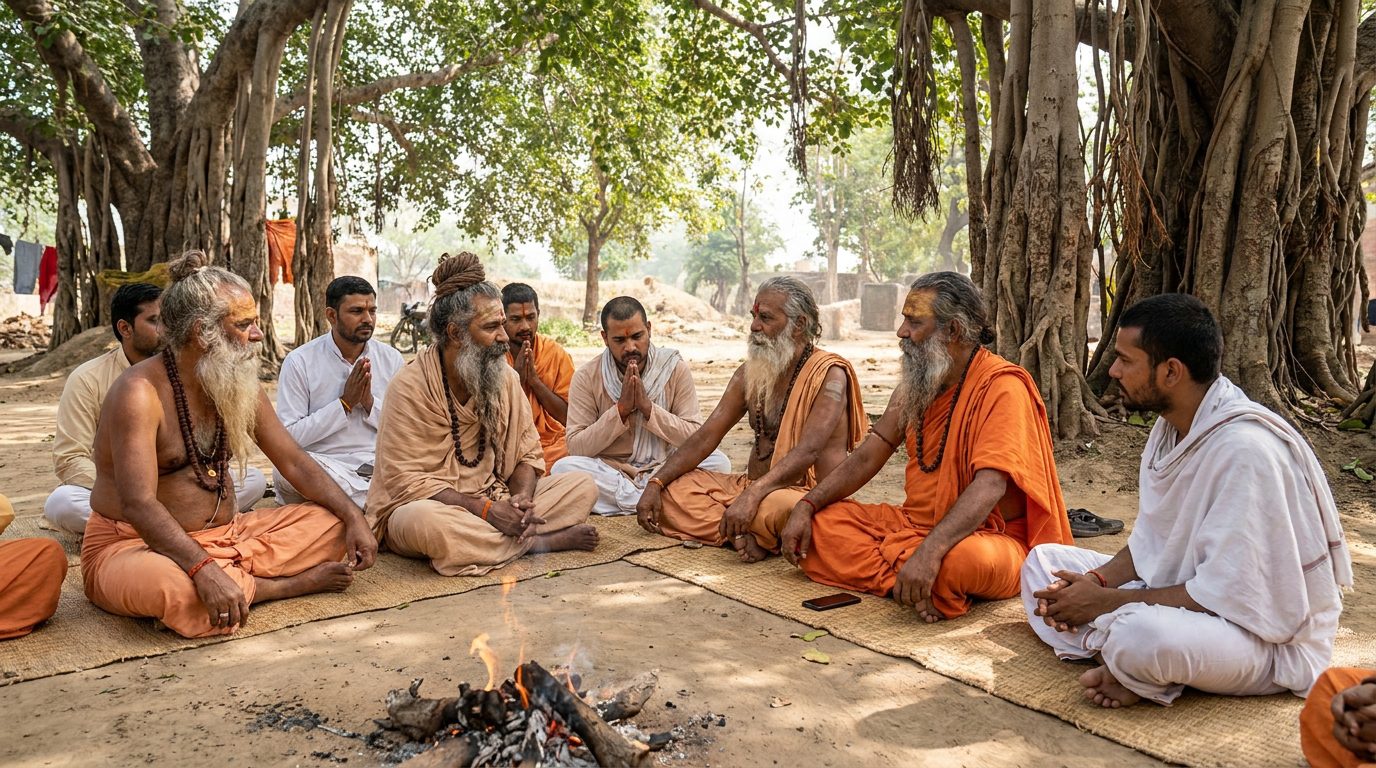
Sādhu-saṅga is one of the most beautiful and practical gifts in Bhakti Yoga.
The Sanskrit word sādhu means a saintly person, a sincere devotee, or someone who is striving to live in truth and love for God. The word saṅga means association, company, or connection. So sādhu-saṅga means “the company of saintly people” or “spiritual association with devotees.”
In simple words, sādhu-saṅga means spending time with people who help us remember God.
This does not mean we need to find someone wearing special clothes, living in a temple, or speaking perfectly about scripture. A sādhu is recognized by the heart. A true sādhu inspires humility, compassion, devotion, service, and remembrance of the Divine. They may be a teacher, a friend, a parent, a humble servant in the community, or someone quietly chanting the Holy Names with sincerity.
In Bhakti Yoga, the path of devotion, sādhu-saṅga is considered essential because love grows through loving company. Just as a small flame becomes stronger when protected from the wind, our spiritual life becomes steady when nourished by the warmth of sincere devotees.
The Śrīmad-Bhāgavatam, one of the great Bhakti scriptures, says that in the association of sincere devotees, discussions about God become pleasing to the heart and ear. These sacred conversations awaken faith and gradually lead to love. This is the essence of sādhu-saṅga: it helps the soul wake up.
Why Sādhu-saṅga Matters in Bhakti Yoga
Bhakti Yoga is the yoga of love and devotion. It is not only a philosophy or a meditation technique. It is a relationship with God, cultivated through chanting, prayer, service, hearing, remembrance, and living with a softened heart.
But relationships grow in community. We learn love from those who love.
We Become Shaped by Our Association
Every person is influenced by the company they keep. Our thoughts, habits, desires, and priorities are shaped by what we hear, what we watch, and who we spend time with.
If we regularly associate with people who value material success above all else, we may begin to measure ourselves by achievement, appearance, or possessions. If we spend time with people who live in gratitude, service, and devotion, we naturally begin to absorb those qualities.
Bhakti scriptures often remind us that association is powerful. It can lift the heart toward God or pull the mind deeper into distraction. This is not meant to make us judgmental toward others. Rather, it invites us to become mindful. We can love everyone, but we should choose our deepest influences carefully.
Sādhu-saṅga gives us spiritual nourishment. It reminds us of who we truly are: not merely the body, mind, job title, or social identity, but an eternal soul, loved by God and meant to love God.
Devotion Grows Through Devotees
In the Caitanya-caritāmṛta, a beloved text in the Gauḍīya Vaiṣṇava tradition, it is said:
“sādhu-saṅga, sādhu-saṅga—sarva-śāstre kaya
lava-mātra sādhu-saṅge sarva-siddhi haya”
This means, “The scriptures repeatedly say: associate with devotees, associate with devotees. Even a moment of association with a true sādhu can bring all spiritual perfection.”
This verse is not exaggeration. A single moment with a sincere devotee can change the direction of a life. A kind word, a prayer, a song, a glance of compassion, or an invitation to chant can awaken something deep within the soul.
Many people begin their spiritual journey not through a complex argument, but through meeting someone whose peace feels real. They see humility. They hear the Holy Name. They feel accepted. And something inside says, “This is what I have been searching for.”
Sādhu-saṅga Protects the Heart
The modern world is loud. We are surrounded by constant messages telling us we are incomplete, not enough, or needing more things to be happy. The mind can become exhausted from comparison, fear, and endless stimulation.
Sādhu-saṅga creates a sacred shelter.
In the company of devotees, we remember that we do not have to perform for love. We are already loved by God. We remember that our worth is not based on productivity, beauty, wealth, or popularity. We remember that the deepest joy comes from service, gratitude, and connection with the Divine.
This kind of association protects the tender plant of devotion.
The Inner Qualities of a Sādhu

To understand sādhu-saṅga, it helps to understand what makes someone a sādhu. A sādhu is not defined only by outer appearance. Real saintliness is known by qualities of the heart.
Humility and Compassion
A true sādhu is humble. Humility does not mean low self-esteem. It means seeing clearly: “Everything I have is a gift from God.” Humility allows a person to serve without needing to be the center.
A sādhu is also compassionate. They feel concern for the suffering of others and want to help people reconnect with God. Their compassion may come through teaching, feeding, listening, chanting, encouraging, or simply being present.
In the Bhagavad-gītā, Lord Krishna describes qualities dear to Him: one who is non-envious, kind to all beings, free from false ego, forgiving, peaceful, and devoted. These qualities are the fragrance of a devotional heart.
Steady Faith and Sincere Practice
A sādhu may not be perfect in an external sense, but they are sincere. They are committed to spiritual growth. They chant, pray, study, serve, and try to live according to divine principles.
Their steadiness inspires us. When we see someone return to God again and again, even through challenges, we learn what real devotion looks like. It is not about never struggling. It is about continuing to turn toward Krishna, toward God, with trust.
The Sanskrit name Krishna means “the all-attractive one.” In Bhakti Yoga, Krishna is understood as the Supreme Person, the source of all beauty, love, wisdom, and joy. Sādhus help us remember Krishna not as a distant concept, but as a loving Lord who can be approached through the heart.
A Life Centered on Service
Service is central to Bhakti Yoga. The Sanskrit word seva means devotional service—offering our actions with love for God and for the benefit of others.
A sādhu lives with the mood of seva. They may cook, clean, teach, sing, care for guests, support community, or quietly pray for others. Their service may be visible or hidden. But the essence is the same: “How can I please God? How can I serve God’s children?”
When we associate with such people, our own desire to serve awakens. We begin to see that service is not a burden. It is a doorway to joy.
Check out our latest articles at https://thebhaktihouse.org/blog.
The Many Forms of Sādhu-saṅga

Sādhu-saṅga can happen in many ways. It is not limited to one culture, location, or style. God is generous, and spiritual association can meet us wherever we are.
Hearing from Devotees
One of the most powerful forms of sādhu-saṅga is hearing. In Bhakti Yoga, hearing sacred wisdom is called śravaṇam. This can include hearing from scriptures like the Bhagavad-gītā, Śrīmad-Bhāgavatam, or the songs and teachings of saints.
When we hear from devotees, we receive more than information. We receive faith, mood, and inspiration. A sincere speaker does not simply explain ideas; they share their heart.
Hearing can happen in a temple, a home gathering, a retreat, an online class, a podcast, or a personal conversation. What matters most is the sincerity of the source and the openness of our own heart.
Chanting Together
Chanting the Holy Names is one of the main practices of Bhakti Yoga. The Sanskrit word kīrtan means congregational chanting—singing God’s names together, often with instruments and call-and-response melodies.
The most well-known mantra in the Bhakti tradition is the Hare Krishna mahā-mantra:
Hare Krishna Hare Krishna
Krishna Krishna Hare Hare
Hare Rama Hare Rama
Rama Rama Hare Hare
A mantra is a sacred sound that helps free the mind and connect the heart with God. The word mahā means “great,” so the mahā-mantra is the “great mantra” for awakening divine love.
When we chant together, we enter a shared sacred space. Some people come with strong faith. Some come with questions. Some come with pain. Some simply come because the music touches them. In kīrtan, everyone can participate. No one has to be perfect. We offer our voice, our breath, and our heart.
Sādhu-saṅga through chanting can soften the mind and awaken joy in a way that words alone cannot.
Serving in Community
Another form of sādhu-saṅga is serving alongside devotees. Sometimes the deepest bonds are formed while washing pots, preparing food, setting up chairs, cleaning a sacred space, distributing meals, caring for children, or welcoming guests.
Service reveals the heart. It teaches patience, cooperation, humility, and gratitude. It helps us move from “What can I get?” to “What can I offer?”
In a devotional community, even simple tasks become sacred when done with love. Cooking becomes an offering. Cleaning becomes worship. Greeting someone becomes service to God within their heart.
This is practical Bhakti Yoga. Spiritual life is not separate from daily life. It transforms daily life.
Sādhu-saṅga and the Awakening of Faith
Faith in Bhakti Yoga is not blind belief. Faith is a living trust that grows through experience, practice, and association.
The Sanskrit word śraddhā is often translated as faith. It means a gentle, sincere confidence that the path of devotion is meaningful and that turning toward God will nourish the soul.
Faith Begins as a Seed
Bhakti teachers often compare faith to a seed. When we receive the seed of devotion, it must be watered. The main waters are hearing and chanting. But the seed also needs protection from weeds, such as pride, distraction, resentment, or spiritual laziness.
Sādhu-saṅga is like the gardener’s care. Devotees encourage us, correct us gently when needed, celebrate our growth, and remind us to keep watering the seed.
A new person may think, “I do not know much. I do not understand Sanskrit. I am not sure where I belong.” But in the company of kind devotees, they learn that sincerity matters most. Spiritual life begins with one honest step.
We Learn by Example
Children learn by watching. In many ways, all of us learn devotion like children. We observe how a devotee prays, how they speak, how they respond to difficulty, how they honor food offered to God, how they chant, how they forgive.
This example teaches more deeply than theory.
A sādhu may show us how to pause before reacting. How to offer gratitude before eating. How to speak truthfully without harshness. How to see every living being as part of God’s family. How to continue chanting even when the mind wanders.
In this way, sādhu-saṅga makes Bhakti Yoga practical.
Encouragement in Times of Struggle
Everyone faces struggle. Spiritual life does not remove all pain from the world, but it gives us shelter, meaning, and strength.
When we feel discouraged, sādhu-saṅga helps us keep going. A devotee may remind us, “Just chant one round.” “Just pray honestly.” “Just come sit with us.” “Krishna sees your effort.” “You are not alone.”
Sometimes this is exactly what the heart needs.
In the Bhagavad-gītā, Krishna lovingly promises that one who takes shelter in Him is never lost. Sādhu-saṅga helps us trust that promise, especially when our own faith feels weak.
Practicing Sādhu-saṅga in Everyday Life
Sādhu-saṅga does not require us to abandon our responsibilities. It can be woven into daily life with simplicity and intention.
Create Sacred Rhythms
A daily rhythm of devotion helps us stay connected. Even a few minutes can be meaningful.
You might begin the morning by chanting the Hare Krishna mantra softly. You might read one verse from the Bhagavad-gītā. You might offer a simple prayer before starting work: “Dear Lord, please guide my thoughts, words, and actions today.”
You might listen to a class or kīrtan while driving, walking, or cooking. You might join a weekly gathering with devotees. You might invite a friend for spiritual discussion over tea.
Small rhythms become powerful over time.
Choose Nourishing Association
Not all association is equal. We can ask ourselves with honesty: Who helps me become more truthful, compassionate, and God-centered? What media strengthens my devotion? What conversations leave my heart peaceful and inspired?
Choosing sādhu-saṅga does not mean rejecting people who are different from us. Bhakti teaches respect for all. But we do need spiritual nourishment, just as the body needs healthy food.
We can love widely and associate deeply with those who help us remember our highest purpose.
Bring Devotion into Relationships
Sādhu-saṅga can also mean becoming better association for others. We do not only seek saints; we try to grow in saintly qualities ourselves.
Can we listen with more patience? Can we speak with more kindness? Can we forgive more quickly? Can we encourage someone’s spiritual growth? Can we invite someone to chant or share a meal offered to God?
Bhakti is not meant to stay private. Love naturally wants to be shared.
When we practice devotion sincerely, our homes, friendships, and families can become places of spiritual support.
The Role of Scripture in Sādhu-saṅga
Authentic sādhu-saṅga is rooted in sacred wisdom. In Bhakti Yoga, scriptures are not dry books. They are living guides that reveal the nature of God, the soul, and the path of love.
The Bhagavad-gītā: Guidance for Daily Life
The Bhagavad-gītā is a conversation between Lord Krishna and Arjuna, a warrior facing confusion and moral crisis. Krishna teaches Arjuna about the soul, duty, meditation, devotion, and surrender.
For someone seeking sādhu-saṅga, the Gītā offers a clear message: spiritual life can be practiced in the middle of responsibility. Arjuna did not leave the world to find God. He learned to act in the world with devotion.
This is deeply relevant today. We can practice Bhakti Yoga while working, parenting, studying, serving, and facing modern challenges. Sādhu-saṅga helps us understand how to apply Krishna’s teachings with balance and compassion.
The Śrīmad-Bhāgavatam: Hearing About God with Love
The Śrīmad-Bhāgavatam is filled with stories and teachings that reveal God’s loving nature and the lives of great devotees. It emphasizes hearing and chanting about the Lord in the company of devotees.
One famous teaching explains that by regularly hearing sacred topics from pure-hearted devotees, the impurities in the heart are gradually cleansed. This does not mean we become perfect overnight. It means the heart begins to heal.
Anger softens. Greed loosens. Envy becomes less attractive. Gratitude grows. The desire to serve becomes natural.
This is the gentle work of Bhakti.
The Teachings of Lord Chaitanya
Lord Chaitanya Mahāprabhu, a 15th-century saint and divine teacher, spread the chanting of the Holy Names as the easiest and most merciful path for this age. He taught that love of God is the highest goal and that chanting together is a powerful way to awaken it.
Lord Chaitanya welcomed people across social, cultural, and spiritual backgrounds. His movement was rooted in compassion and kīrtan. In this mood, The Bhakti House and many devotional communities today seek to create spaces where everyone can come as they are and take part in the path of love.
Common Misunderstandings About Sādhu-saṅga
Because sādhu-saṅga is so important, it is helpful to approach it with maturity and care.
It Is Not About Spiritual Elitism
Sādhu-saṅga does not mean thinking, “We are better than others.” That would miss the heart of Bhakti.
A true devotee becomes more humble, not proud. Spiritual association should help us see every person with dignity. Everyone is a soul. Everyone is loved by God. Everyone is on a journey.
Choosing uplifting association is not judgment; it is nourishment. Just as someone recovering health may choose wholesome food, a spiritual seeker chooses wholesome company.
It Is Not Blind Following
Honoring sādhus does not mean turning off our intelligence. Bhakti encourages sincere inquiry. In the Bhagavad-gītā, Krishna tells Arjuna to approach realized teachers with humility, questions, and service.
Healthy sādhu-saṅga includes thoughtful questions, scriptural grounding, humility, accountability, and care. A genuine spiritual guide does not exploit others. They help people come closer to God.
If association creates fear, control, pride, or dependence on a person rather than deeper devotion to God, we should pause and seek wise guidance.
It Is Not Only for Advanced Practitioners
Sometimes people think, “I am not spiritual enough to be around devotees.” But sādhu-saṅga is especially important for beginners.
You do not need to know all the prayers. You do not need to pronounce every Sanskrit word perfectly. You do not need to have a certain background, lifestyle, or level of knowledge.
Come with sincerity. Sit. Listen. Chant if you can. Ask questions. Receive kindness. Offer what you are able.
Bhakti begins where we are.
How to Recognize Healthy Spiritual Association
Healthy sādhu-saṅga leaves the heart more connected to God and more compassionate toward others.
It Increases Remembrance of God
After spending time with sincere devotees, we may feel inspired to chant, pray, read, serve, or make better choices. Even if we also notice our shortcomings, we feel hopeful rather than crushed.
True sādhu-saṅga brings us closer to Krishna. It awakens remembrance, gratitude, and longing for divine love.
It Encourages Humility and Joy
Spiritual association should not make us harsh or arrogant. It should help us become softer, more honest, and more joyful in service.
Humility and joy can live together. In fact, they strengthen each other. When we stop pretending to be the controller, we can relax into God’s care. When we serve without needing recognition, joy becomes more natural.
It Supports Real Growth
Real growth may include comfort and challenge. Sometimes a devotee’s guidance may lovingly reveal an area where we need to change. But the mood should be compassionate, not condemning.
Healthy sādhu-saṅga supports steady transformation. It does not demand instant perfection. It honors the soul’s journey and encourages sincere practice.
Bringing the Essence of Sādhu-saṅga into the Heart
The essence of sādhu-saṅga is not merely being near spiritual people. It is receiving their mood of devotion and allowing it to transform us.
We can sit in a temple and remain distracted, or we can hear one sentence from a devotee and let it change our life. The outer form matters, but the inner receptivity matters too.
Listen with an Open Heart
When we hear from devotees, we can practice humble listening. This does not mean passive listening. It means listening with the hope of being changed.
We might ask inwardly, “What is Krishna trying to teach me through this person?” “How can I apply this today?” “What small step can I take?”
This turns hearing into practice.
Chant with Sincerity
Chanting in the company of devotees is powerful, but we can also carry that association into our personal chanting.
When chanting the Hare Krishna mantra, we are calling out to the Divine energy and the Lord: “Please engage me in Your loving service.” Even if our mind wanders, we gently return. Even if our voice trembles, we offer it.
Sincere chanting connects us with all the saints who have chanted before us and all the devotees chanting around the world today.
Serve with Gratitude
Sādhu-saṅga becomes complete when it inspires service. After hearing and chanting, we ask, “How can I live this love?”
Maybe we serve in a Bhakti community. Maybe we cook a meal and offer it to God. Maybe we help a neighbor. Maybe we forgive someone. Maybe we donate, volunteer, teach, clean, or simply show up with a willing heart.
Service makes devotion tangible.
Sādhu-saṅga in a Diverse and Modern World
The beauty of Bhakti Yoga is that it speaks to the soul beyond labels. People come from many backgrounds: different religions, cultures, languages, ages, and life experiences. Some are lifelong seekers. Some are curious. Some are healing. Some are returning after years away.
All are welcome.
A People-First Path of Love
At its heart, Bhakti is relational. It is about love for God and love for all beings. Sādhu-saṅga should reflect that love through hospitality, respect, and warmth.
A devotional community becomes truly meaningful when people feel seen, not judged. When questions are welcomed. When newcomers are guided gently. When experienced practitioners remain humble. When the Holy Name is shared freely.
This mood reflects the generosity of Lord Chaitanya, who gave kīrtan as a spiritual shelter for everyone.
Using Technology Wisely
Today, sādhu-saṅga can also happen through online classes, livestream kīrtans, devotional podcasts, and virtual study groups. While in-person association has a special sweetness, digital resources can be a blessing, especially for those who live far from a temple or community.
Still, it is wise to balance online inspiration with real relationships and practical service. Bhakti is embodied. It grows through voice, presence, food, kindness, and shared service.
Building Spiritual Community
A Bhakti community is not perfect because people are not perfect. But when the center is God, the community becomes a place of purification and grace.
We learn to cooperate. We learn to apologize. We learn to appreciate different services. We learn to make room for others. We learn to celebrate each person’s offering.
Sādhu-saṅga is not only something we receive. It is something we help build.
Simple Ways to Begin Sādhu-saṅga Today
If you are new to Bhakti Yoga, you may wonder where to begin. The good news is that the first step can be very simple.
Attend a Kīrtan or Bhakti Gathering
Find a local kīrtan, temple program, satsang, or Bhakti Yoga gathering. Satsang is a Sanskrit word meaning “association with truth” or “spiritual gathering.” Come as you are. You can listen, sing, ask questions, or simply sit quietly.
Let yourself receive the atmosphere.
Read One Verse Daily
Choose a Bhakti scripture such as the Bhagavad-gītā and read one verse each day. Do not worry about understanding everything at once. Read slowly. Reflect. Ask, “How does this apply to my life?”
If possible, study with devotees who can explain the teachings in a practical and compassionate way.
Chant One Mantra with Attention
Set aside a few minutes to chant:
Hare Krishna Hare Krishna
Krishna Krishna Hare Hare
Hare Rama Hare Rama
Rama Rama Hare Hare
You can chant aloud, softly, or in your heart. The power is in sincerity. The Holy Name is not limited by our experience level.
Offer One Act of Service
Do one thing today as an offering to God. Prepare food with gratitude. Help someone without expecting praise. Clean a space. Speak kindly. Pray for someone. Support a spiritual community.
Service turns ordinary life into devotion.
The Blessing of Taking One Sincere Step
Discovering the essence of sādhu-saṅga is discovering that we do not walk the spiritual path alone.
God sends people into our lives to remind us of love. Sometimes they guide us with wisdom. Sometimes they inspire us through song. Sometimes they show us devotion through quiet service. Sometimes they simply sit beside us and help us remember that Krishna is near.
In Bhakti Yoga, every sincere step matters. A moment of chanting matters. A humble prayer matters. A question asked with openness matters. A small act of service matters. A visit to a devotional gathering matters.
The path of Bhakti is not reserved for the perfect. It is for the willing. It is for the hungry heart. It is for anyone who wants to love and be loved by God.
So wherever you are coming from, whatever your background, and whatever your level of experience, you are welcome. Come gently. Come honestly. Come with your questions, your hopes, your wounds, and your longing.
Take one sincere step toward God today. Chant one mantra. Offer one prayer. Seek one moment of uplifting association. Serve one person with love.
Krishna sees the heart, and the saints are always blessing us onward.
FAQs
What is Sādhu-saṅga?
Sādhu-saṅga refers to the association with spiritually-minded individuals or saintly persons in the Hindu and Buddhist traditions. It is believed that such association can help one progress on the spiritual path and attain higher levels of consciousness.
Why is Sādhu-saṅga important?
Sādhu-saṅga is considered important because it provides an opportunity for individuals to learn from and be inspired by those who have advanced on the spiritual path. It is believed that the association with spiritually-minded individuals can help one cultivate positive qualities and overcome negative tendencies.
How can one find Sādhu-saṅga?
One can find Sādhu-saṅga by seeking out spiritual communities, attending satsangs (spiritual gatherings), visiting ashrams or monasteries, and participating in spiritual retreats or pilgrimages. It is also possible to find Sādhu-saṅga through online communities and forums dedicated to spiritual growth.
What are the benefits of Sādhu-saṅga?
The benefits of Sādhu-saṅga include gaining spiritual knowledge, receiving guidance from experienced practitioners, finding inspiration and motivation for spiritual practice, and developing a sense of community and support on the spiritual path.
How does Sādhu-saṅga contribute to spiritual growth?
Sādhu-saṅga contributes to spiritual growth by providing a conducive environment for learning and practicing spiritual principles, fostering a sense of devotion and dedication to the spiritual path, and offering opportunities for self-reflection and inner transformation through the influence of saintly individuals.

