
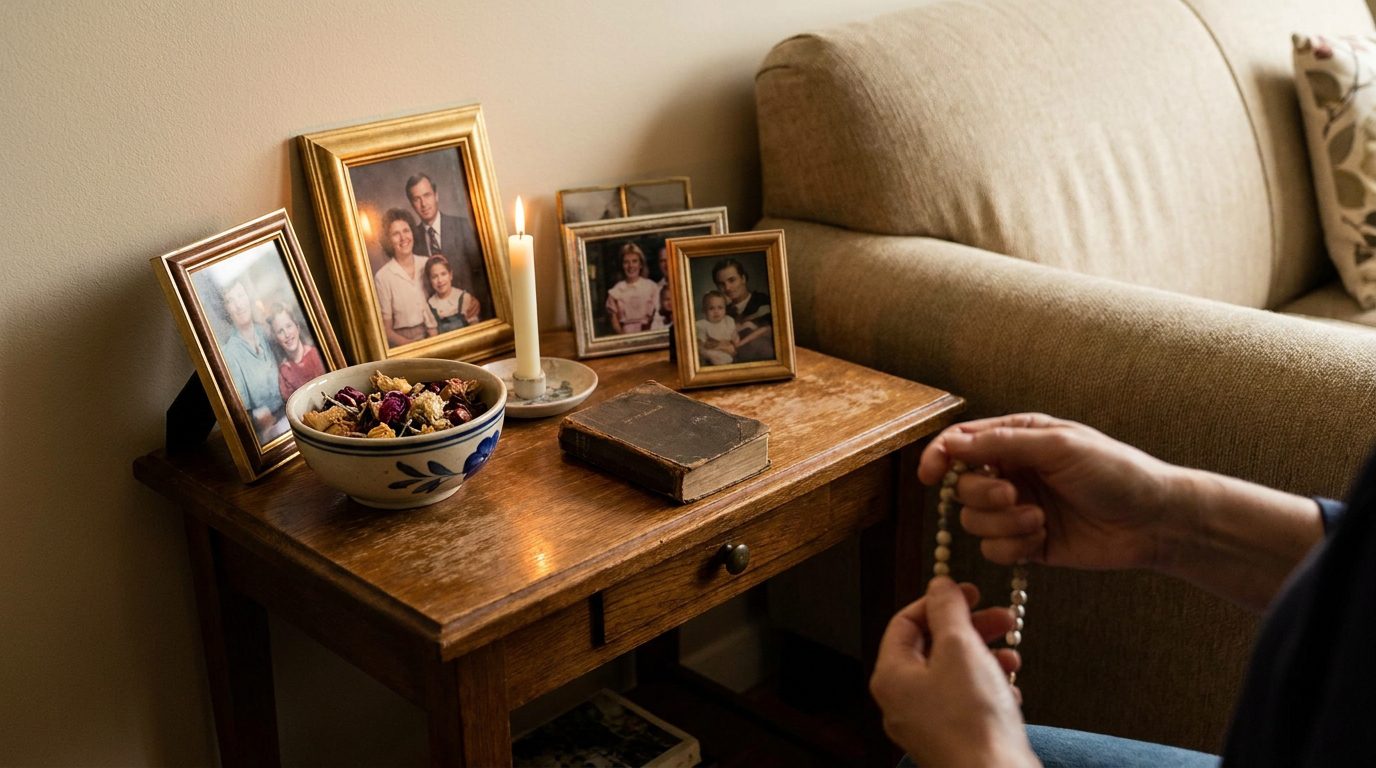
Home worship is one of the most beautiful ways to make spiritual life real, personal, and steady. It does not require a perfect house, expensive items, or advanced knowledge. It begins with a sincere heart.
In the Bhakti tradition, worship is not only a ritual. It is a relationship. Bhakti means “devotion” or “loving service” to God. Bhakti Yoga is the path of awakening that love through prayer, chanting, sacred study, service, and remembrance.
Whether you live alone, with family, in a small apartment, a busy city, or a quiet countryside home, your space can become a place of peace. A corner of your room can become a sanctuary. A few minutes each morning can become a doorway into grace.
This ultimate guide to home worship is offered for everyone—beginners, lifelong seekers, people from different faith backgrounds, and those who are simply curious. You do not need to become someone else to begin. You can start where you are, with what you have, and offer one sincere step toward God.
Home worship means creating a regular practice of honoring God in your own living space. In Sanskrit, one common word for worship is puja, which means an offering of love, respect, and devotion. Puja can be simple or elaborate, but its heart is always the same: “Dear Lord, I remember You. I offer myself to You.”
In Bhakti Yoga, home worship may include chanting God’s names, offering food, lighting a candle or lamp, reading scripture, bowing, praying, singing, or serving others with devotion. These practices help us remember that God is not far away. The Divine is present in our home, in our heart, and in every living being.
The Bhagavad-gita, one of the central scriptures of Bhakti Yoga, teaches that God accepts even the simplest offering when it is given with love. Krishna says:
“Whoever offers Me with devotion a leaf, a flower, a fruit, or water, I accept that loving offering from the pure-hearted devotee.”
— Bhagavad-gita 9.26
This verse is deeply comforting. It reminds us that the value of worship is not measured by wealth, performance, or outer appearance. God sees the love.
Home Worship Is a Relationship
A helpful way to understand home worship is to think of it as caring for a sacred relationship. Just as we nourish friendships through attention, conversation, and kindness, we nourish our relationship with God through remembrance, prayer, and loving offerings.
This relationship can be formal at times, and very personal at other times. You may chant a mantra, offer incense, or read from scripture. You may also speak honestly to God about your fears, hopes, mistakes, gratitude, and longing.
Both are welcome.
Home Worship Is for Daily Life
The goal is not to escape your life, but to spiritualize it. Home worship helps turn ordinary moments into offerings. Cooking can become service. Cleaning can become devotion. Parenting, working, resting, and caring for others can all become part of a life centered in love.
Bhakti Yoga teaches that spiritual growth is not only found in temples, monasteries, or sacred places. It can happen in the kitchen, at the bedside, near a small altar, or during a quiet morning walk while chanting the holy names.
Creating a Sacred Space at Home
A sacred space helps the mind remember what the heart longs for. It does not need to be large or ornate. Even a small shelf, table, windowsill, or clean corner can become a home altar.
The purpose of an altar is simple: it gives your devotion a place to land. It becomes a visual reminder that God is welcome in your home.
Choosing a Place for Your Altar
Choose a place that is clean, peaceful, and easy to approach daily. If possible, select a spot that is not directly on the floor, in the bathroom, or in a cluttered area. A small table, shelf, or cabinet can work beautifully.
If you live with others, especially those who may not share your practice, choose a respectful and practical location. Home worship should bring more peace into the household, not tension. A simple and discreet altar can be very powerful.
Try to keep this space clean. In Bhakti, cleanliness is considered supportive of spiritual consciousness. When we care for the altar, we are also training the heart to become more attentive and loving.
What to Place on a Home Altar
Your altar may include:
- A picture or sacred image of God
- A picture of Krishna, Rama, Vishnu, Radha-Krishna, Jagannath, or another form of the Divine dear to your heart
- A picture of a saint, guru, or spiritual teacher
- A candle, lamp, or small light
- Fresh flowers or a plant
- A small bowl or cup for water
- Incense, if suitable for your home
- Prayer beads, called japa mala
- A scripture such as the Bhagavad-gita, Srimad Bhagavatam, or another sacred text
In Bhakti Yoga, Krishna is understood as the all-attractive Supreme Person, the source of all love. Radha represents the highest devotion and pure love for Krishna. But newcomers do not need to understand every theological detail before beginning. You can simply approach the altar with respect and an open heart.
Keeping It Simple and Sincere
It is better to have a simple altar you actually visit than a beautiful altar you ignore. One flower offered with attention is more meaningful than many items offered mechanically.
If you are just beginning, start with a picture, a candle, and a small daily prayer. Let the space grow naturally as your devotion grows.
Daily Practices for Home Worship
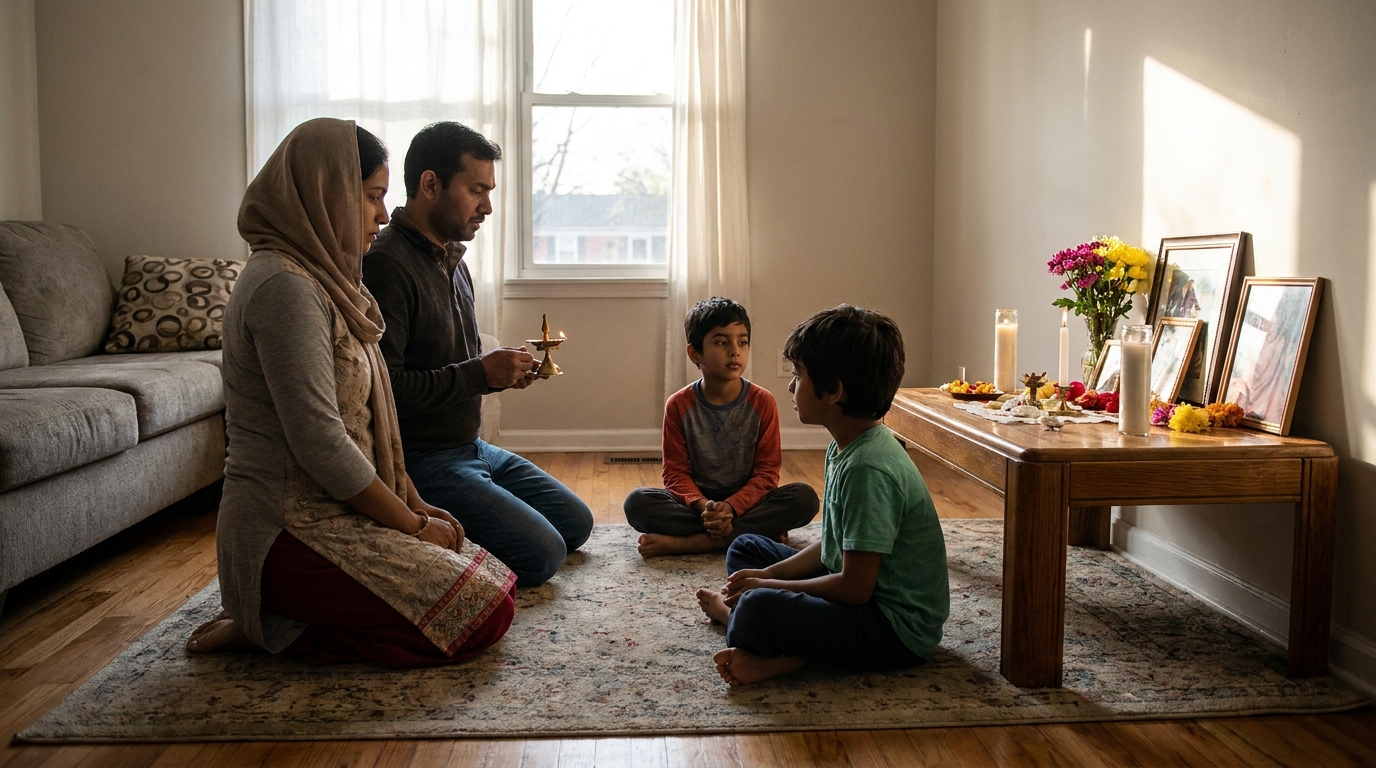
A daily rhythm helps devotion become steady. In Sanskrit, spiritual practice is often called sadhana, meaning a regular discipline that leads us toward spiritual realization. Sadhana is not meant to be harsh or dry. In Bhakti, it is a loving structure that helps us return to God again and again.
You may practice for five minutes, twenty minutes, or an hour. The main thing is consistency. A little devotion every day can transform the heart over time.
Begin with Cleansing and Centering
Before worship, you may wash your hands, face, or mouth. If it is morning, bathing before worship is ideal when possible. This is not about shame or rigid purity. It is a simple way of saying, “I am preparing myself to be present.”
Then sit or stand before your altar. Take a few slow breaths. Let the mind settle.
You might say:
“Dear Lord, please help me remember You. Please accept this small offering. Please guide my heart toward love.”
This simple beginning opens the door.
Light a Candle or Lamp
Lighting a candle or lamp symbolizes inviting divine presence and wisdom into the home. In many Bhakti homes, devotees offer a small flame called an arati lamp. Arati is a ceremony of offering light to the Lord with gratitude and reverence.
If you are new, you can simply light a candle safely and offer a prayer. As the light glows, reflect: “May my heart become illuminated. May my home become a place of peace. May I live in a way that pleases God.”
Offer Water, Flowers, or Food
Offerings are central to Bhakti Yoga because love naturally wants to give. You can offer a flower, a leaf, fresh water, fruit, or a simple meal.
When offering food, Bhakti practitioners often prepare vegetarian meals with care and offer them to Krishna before eating. This sanctified food is called prasadam, meaning “mercy” or “grace.” The idea is that food offered with love becomes spiritually nourishing.
A simple prayer before eating might be:
“Dear Krishna, dear Lord, this food is Yours. Thank You for providing it. Please accept it with love, and please bless all beings with nourishment.”
After a few moments, you may honor the food as prasadam.
Bow or Offer Respect
Bowing is an ancient way of expressing humility. It reminds us that we are not the center of the universe. We belong to God, and our life is sacred.
You do not have to force anything. You may bow fully, kneel, place your hands together, or simply lower your head. The outer gesture helps awaken the inner mood: gratitude, surrender, and reverence.
Please visit our website for more information on our articles: articles.
Chanting: The Heart of Bhakti Yoga
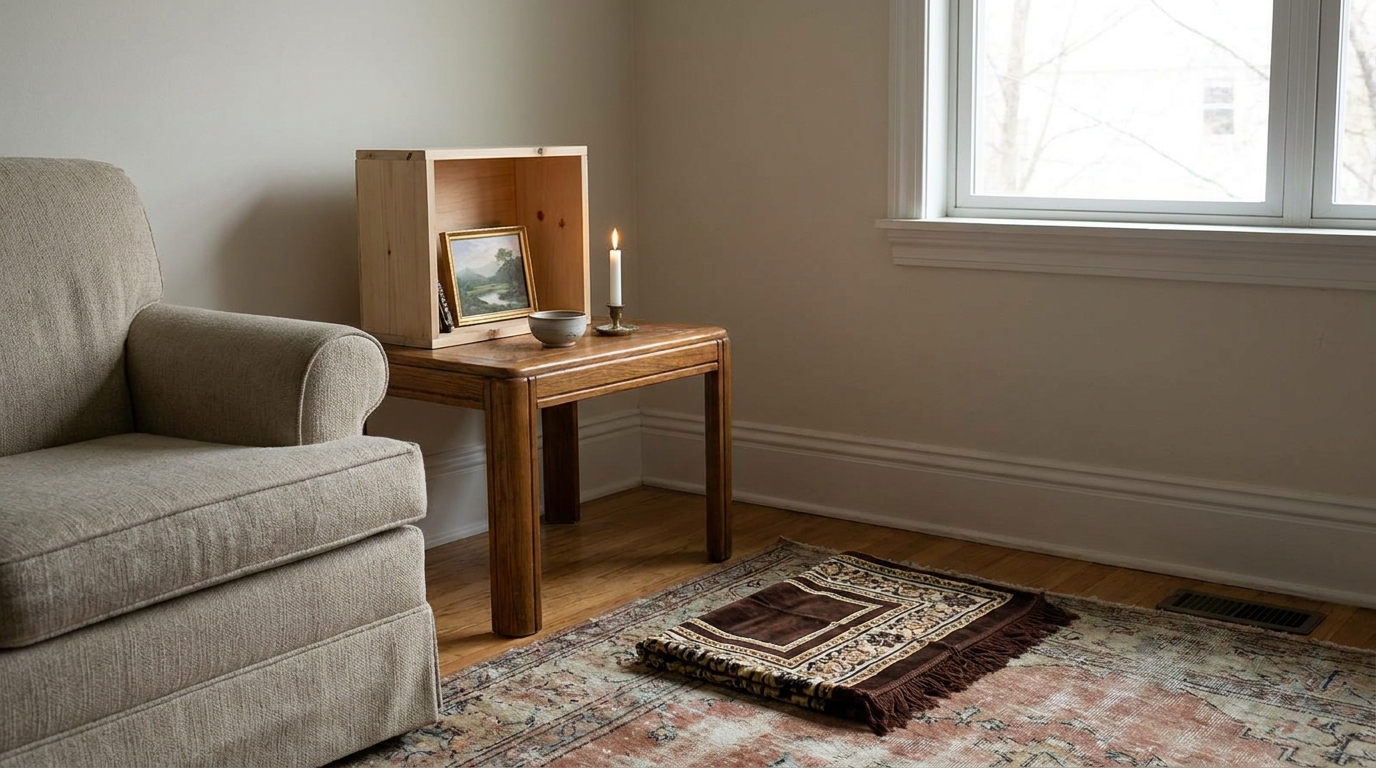
Chanting is one of the most accessible and powerful forms of home worship. It does not require wealth, status, or advanced education. It simply asks for your voice, your attention, and your heart.
In the Bhakti scriptures, chanting the holy names of God is highly praised for this age. The Kali-santarana Upanishad especially glorifies the maha-mantra, the “great mantra”:
Hare Krishna, Hare Krishna, Krishna Krishna, Hare Hare
Hare Rama, Hare Rama, Rama Rama, Hare Hare
A mantra is a sacred sound vibration that helps free the mind and awaken spiritual consciousness. The word mantra can be understood as “that which protects or liberates the mind.”
What Does the Hare Krishna Mantra Mean?
“Hare” refers to the divine energy of the Lord, especially Srimati Radharani, the embodiment of pure devotion. “Krishna” means “the all-attractive one.” “Rama” means “the source of joy” or “the reservoir of pleasure.”
A simple meaning of the mantra is:
“O Lord, O divine energy of the Lord, please engage me in Your loving service.”
This is not a demand. It is a prayer. It is the soul calling out for reconnection.
Japa: Personal Mantra Meditation
Japa means softly repeating a mantra, often on prayer beads called a mala. A traditional japa mala has 108 beads. You chant the mantra once on each bead, moving bead by bead with attention.
If you are beginning, you do not need to chant many rounds. Start with one round, half a round, or even five minutes. The goal is sincerity, not performance.
Try this simple practice:
- Sit comfortably before your altar or in a quiet place.
- Hold your beads gently, or count on your fingers.
- Chant the maha-mantra clearly enough to hear yourself.
- When the mind wanders, gently return to the sound.
- End with a short prayer of gratitude.
The sound itself is the meditation. In Bhakti, the holy name is understood to be non-different from God. This means that when we chant sincerely, we are not merely thinking about God—we are associating with God through sacred sound.
Kirtan: Singing Together
Kirtan means singing or glorifying God, often with music and call-and-response chanting. At home, kirtan can be simple. You may sing alone, with family, or with friends. You can use harmonium, drum, kartals, guitar, or just your voice.
Kirtan is especially helpful when the heart feels dry or the mind feels restless. Singing softens us. It brings emotion into worship. It reminds us that devotion is not only a philosophy; it is living love.
Even one song in the evening can change the atmosphere of a home.
Prayer and Sacred Study
Home worship becomes deeper when we speak to God and listen through scripture. Prayer is how we open the heart. Sacred study is how we receive guidance.
In Bhakti, scripture is not meant to be used as a weapon or a source of pride. It is a lamp. It helps us see who we are, who God is, and how to live with love.
Simple Daily Prayer
Prayer does not need to be polished. God already knows your heart. Speak honestly.
You might pray:
“Dear Lord, thank You for this day. Please help me serve with kindness. Please forgive my mistakes. Please guide my thoughts, words, and actions. Please help me remember You.”
You can pray for your family, friends, community, and even those with whom you struggle. Prayer gradually expands the heart beyond selfishness.
Reading the Bhagavad-gita at Home
The Bhagavad-gita is a sacred conversation between Krishna and Arjuna, a warrior facing confusion, grief, and moral crisis. Its teachings are deeply practical for home worship because Arjuna does not receive wisdom while sitting in a cave. He receives it in the middle of life’s difficulty.
Krishna teaches:
“Whatever you do, whatever you eat, whatever you offer or give away, and whatever austerities you perform—do that as an offering to Me.”
— Bhagavad-gita 9.27
This verse expands home worship beyond the altar. It teaches us to offer our whole life. Work, meals, relationships, and responsibilities can all become part of devotion when done with love and remembrance.
Try reading one verse a day. Do not rush. Read, reflect, and ask: “How can I live this today?”
Learning from the Srimad Bhagavatam
The Srimad Bhagavatam, also called the Bhagavata Purana, is a beloved Bhakti scripture filled with stories, prayers, and teachings about devotion to Krishna. It describes the lives of saints, kings, children, sages, and ordinary people transformed by love for God.
One famous teaching from the Bhagavatam describes hearing and chanting about God as powerful forms of devotion. Hearing sacred wisdom cleanses the heart, just as regular bathing cleanses the body.
At home, you can read a small passage, listen to a class, or discuss a devotional story with your family. The key is to hear with humility and apply what you learn.
Offering Food with Love
Food is a daily part of life, which makes it a natural part of home worship. In Bhakti Yoga, cooking and eating can become sacred when we prepare food with devotion and offer it to God.
This practice is not only symbolic. It changes our consciousness. Instead of thinking, “This is for my pleasure,” we learn to think, “This is for God’s pleasure, and I receive it as mercy.”
Preparing Food in a Devotional Mood
When cooking for offering, try to keep the kitchen clean and the mind peaceful. You may play kirtan or chant while preparing the meal. Avoid tasting the food before offering it, as the idea is to let God be the first enjoyer.
Traditional Bhakti offerings are vegetarian and avoid meat, fish, and eggs. Many practitioners also avoid onion and garlic when preparing offerings for Krishna, following traditional devotional standards. If this is new for you, begin gently. Learn gradually. Let your practice grow with understanding.
How to Offer Food at Home
You can make a small plate for the Lord with a portion of each preparation. Place it on the altar or before a sacred image. Offer a prayer.
A simple offering prayer:
“Dear Krishna, please accept this food prepared with love. I know everything belongs to You. Thank You for allowing me to serve You.”
Leave the plate for a few minutes. Then remove it and share the food as prasadam.
Honoring Prasadam
To “honor” prasadam means to receive it with gratitude, not merely consume it. Before eating, pause and remember: “This is God’s mercy.”
Prasadam can be shared with family, friends, neighbors, and guests. In Bhakti, feeding others is a beautiful form of service. A simple meal offered with love can bring comfort, healing, and spiritual blessing.
Worshiping as a Family or Community
Home worship can be practiced alone, but it also becomes very sweet when shared. Families, couples, roommates, and friends can create a devotional rhythm together.
It is important, however, to lead with love rather than pressure. Bhakti cannot be forced. Devotion grows best in an atmosphere of kindness, respect, and joy.
Including Children in Home Worship
Children often respond naturally to devotional practices when they are joyful and simple. Let them offer a flower, ring a bell, sing a mantra, draw a picture for Krishna, or help place fruit on the altar.
Keep it short and sweet. A child may not sit for a long scripture reading, but they may love dancing in kirtan or hearing a story about Krishna’s childhood pastimes.
Teach by example. If children see that worship makes you gentle, patient, and grateful, they will understand its value.
Respecting Different Faith Backgrounds
Many homes include people from different spiritual paths or levels of interest. Home worship should be practiced with sensitivity. If your spouse, family member, or roommate does not share your devotion, be considerate.
You can still maintain your practice quietly. Chant softly. Keep your altar clean and respectful. Let your behavior be the strongest teaching.
Bhakti Yoga honors sincere devotion wherever it is found. The language, form, and tradition may differ, but love for God is universally beautiful.
Hosting a Simple Home Satsang
Satsang means “association with truth” or gathering with spiritually minded people. A home satsang can be very simple:
- Begin with kirtan or chanting
- Read a verse from the Bhagavad-gita
- Discuss how to apply it practically
- Share prasadam
- End with prayer
You do not need to be an expert. You can gather as sincere seekers. The mood is not performance; it is shared remembrance.
Turning Daily Duties into Devotion
One of the most practical teachings of Bhakti Yoga is that our daily responsibilities can become offerings. Home worship is not limited to a morning ritual. It continues in how we speak, work, clean, cook, forgive, listen, and serve.
The Bhagavad-gita teaches the principle of offering our actions to God. This transforms ordinary work into karma-yoga, or spiritual action. When karma-yoga is infused with love and devotion, it becomes part of Bhakti.
Cleaning as Service
Cleaning your home can be worship when done with the thought, “May this space be pleasing to God. May those who enter feel peace.”
Cleaning the altar is especially meaningful. Wiping the altar, changing flowers, arranging items neatly—these are small acts of love. They train us to be attentive.
Work as an Offering
Many people wonder how to stay spiritual while working long hours. Bhakti offers a practical answer: remember God before, during, and after your work.
Before work, pray: “May my work today be honest and helpful.”
During work, practice patience and integrity.
After work, offer the results: “Whatever came from this effort, I offer to You.”
This does not mean we become passive. It means we work responsibly while remembering that we are servants, not controllers.
Relationships as a Field of Bhakti
Our closest relationships often reveal where we need spiritual growth. Home worship should help us become more compassionate, truthful, forgiving, and humble.
If we chant but speak harshly, our practice is inviting us to go deeper. If we worship at the altar but ignore someone’s pain, Krishna may be teaching us to see Him in others.
Bhakti is love in action.
Common Challenges in Home Worship
Everyone faces obstacles. Please do not be discouraged if your practice feels inconsistent or imperfect. Spiritual life grows through patience.
The path of Bhakti is not about pretending to be pure. It is about sincerely returning to God, again and again.
“I Don’t Have Enough Time”
Start small. Five minutes of sincere chanting is better than waiting for a perfect hour that never comes.
Try attaching worship to an existing habit. After brushing your teeth, chant one mantra. Before breakfast, offer your food. Before sleep, say one prayer. Small daily anchors create lasting change.
“My Mind Wanders When I Chant”
This is normal. The mind wanders because it has been wandering for a long time. Do not hate the mind. Gently bring it back to the sound.
Each return is part of the practice. Every time you come back to the mantra, you are choosing remembrance.
“I Don’t Know If I’m Doing It Correctly”
Learning is important, but sincerity is the foundation. If you are respectful, humble, and willing to grow, God accepts your effort.
Seek guidance from trusted teachers, authentic scriptures, and sincere devotees. But do not let fear stop you from beginning. A child learning to walk may stumble, but the loving parent is pleased by the effort.
“My Home Is Too Busy or Messy”
Many homes are busy. Many people are tired. Bhakti can meet you there.
Choose one small area to keep sacred. Even if the rest of the home is full of life and activity, let one corner remind you of God. Over time, that sacred corner may influence the whole house.
Building a Sustainable Home Worship Routine
A sustainable routine is one you can actually maintain. It should be sincere, realistic, and nourishing.
Do not imitate someone else’s advanced practice too quickly. Let your devotion grow like a plant—with care, patience, and daily watering.
A Simple Morning Routine
Here is a beginner-friendly morning home worship routine:
- Wash your hands and face
- Sit before your altar
- Light a candle or lamp
- Offer a short prayer
- Chant the Hare Krishna mantra for 5–15 minutes
- Read one verse from the Bhagavad-gita
- Offer your day to God
This can take as little as ten minutes. If done regularly, it can transform the direction of your day.
A Simple Evening Routine
Evening worship helps release the burdens of the day.
You might:
- Offer gratitude for three blessings
- Sing one kirtan or chant softly
- Read a short devotional passage
- Pray for forgiveness and guidance
- Offer your rest to God
Before sleeping, you can chant quietly or remember the holy names. The consciousness we cultivate at night influences the heart deeply.
Weekly Deepening Practices
Once a week, you may choose to spend extra time in worship. This could include:
- Preparing a special prasadam offering
- Hosting kirtan with friends
- Reading a chapter of scripture
- Cleaning and decorating the altar
- Serving someone in need
- Visiting a temple or devotional community
These weekly practices strengthen your daily routine.
The Inner Mood of Home Worship
External practices matter, but the inner mood is the soul of worship. Bhakti is not mechanical religion. It is the gradual awakening of love.
The great Bhakti teachers often emphasize humility, gratitude, and service. We approach God not as masters demanding blessings, but as souls longing to serve.
Humility
Humility does not mean thinking we are worthless. It means understanding that everything we have is a gift. Our body, breath, intelligence, family, food, and opportunities all come by grace.
When we worship with humility, the heart becomes soft. We become easier to guide.
Gratitude
Gratitude is one of the quickest ways to feel spiritually connected. Begin your worship by thanking God for something specific: a meal, a lesson, a friend, a breath, a new chance.
Gratitude turns the mind from complaint toward remembrance.
Service
In Bhakti, love is expressed through service, called seva. Seva means serving God and all beings in a devotional spirit.
Home worship should inspire us to serve beyond the altar. We can serve by feeding others, listening with compassion, giving charity, caring for the earth, helping our family, or encouraging someone spiritually.
The altar is where we remember love. The world is where we practice it.
Home Worship for Beginners: Start Here
If you feel inspired but unsure where to begin, keep it very simple. Do not try to do everything at once.
Choose one small practice and do it daily for a week.
Step One: Create a Sacred Corner
Place a clean cloth, a sacred image, and a candle or flower in one peaceful spot. This is enough to begin.
Step Two: Offer One Prayer Daily
Speak to God in your own words. Thank Him. Ask for guidance. Offer your heart.
Step Three: Chant the Holy Names
Chant the Hare Krishna maha-mantra for five minutes a day:
Hare Krishna, Hare Krishna, Krishna Krishna, Hare Hare
Hare Rama, Hare Rama, Rama Rama, Hare Hare
Let the sound carry you. You do not need to feel something dramatic. Just keep showing up.
Step Four: Offer Your Food
Before one meal each day, pause and offer it to God. Receive it with gratitude.
Step Five: Read One Verse
Read one verse from the Bhagavad-gita daily or a few times a week. Reflect on how it applies to your life.
These five steps are simple, but they are powerful. They bring God into the rhythm of everyday life.
Growing Deeper Over Time
As your practice becomes steady, you may feel drawn to deepen. This may include learning traditional prayers, studying Bhakti scriptures more carefully, chanting more rounds of japa, observing holy days, visiting temples, or receiving guidance from a teacher.
Let this growth be natural. Devotion is not a race. The Lord is patient, and we can be patient too.
Seek Good Association
Bhakti grows in the company of sincere devotees. This is called sadhu-sanga, the association of saintly people or sincere spiritual practitioners.
Good association encourages us when we are weak, corrects us when we are proud, and reminds us of what matters most.
If you cannot meet devotees in person, you can hear classes, join online gatherings, read books by authentic teachers, or attend local kirtan when possible.
Learn with Discernment
There is a lot of spiritual information available today. Some of it is helpful, and some may be confusing. Try to learn from authentic Bhakti sources, qualified teachers, and scriptures such as the Bhagavad-gita and Srimad Bhagavatam.
A good teaching should increase humility, compassion, devotion, and practical service—not pride, fear, or hatred.
Let Worship Change Your Character
The real fruit of home worship is transformation. Are we becoming more patient? More truthful? More compassionate? More grateful? More willing to serve?
This is the test of spiritual practice.
Krishna is not impressed by decoration without devotion. But He is deeply pleased by a sincere heart trying to love Him and love others.
Bringing God Into Every Room
Over time, home worship can spread beyond the altar. The kitchen becomes a place of offering. The dining table becomes a place of prasadam. The living room becomes a place for kirtan. The bedroom becomes a place of prayerful rest.
Even difficult moments become opportunities to remember God.
When conflict arises, pause and pray.
When anxiety comes, chant softly.
When joy appears, give thanks.
When confusion comes, read scripture.
When someone needs help, serve.
This is the beauty of Bhakti Yoga. It meets the whole person in the whole of life.
Home worship is not about making a perfect spiritual image. It is about inviting God into our real life, with all its beauty and struggle. It is a humble, daily offering: “Please be with me. Please guide me. Please teach me to love.”
Everyone Is Welcome
No matter your background, age, culture, family situation, or level of experience, you are welcome to begin home worship. You do not need to know every Sanskrit word. You do not need to have a perfect altar. You do not need to feel spiritually advanced.
Bring what you have.
Bring a flower.
Bring a song.
Bring a prayer.
Bring your questions.
Bring your tired heart.
Bring your gratitude.
God receives sincere love.
The Bhakti path is practical and merciful. Chant the holy names. Offer your food. Read a verse. serve someone with kindness. Pray honestly. Keep returning.
May your home become a place of peace, your heart become a place of devotion, and your life become a loving offering to the Lord.
Everyone is welcome to take one sincere step toward God today.
FAQs
What is home worship?
Home worship refers to the practice of religious or spiritual activities and rituals that are conducted within the home, rather than in a formal religious setting such as a church, temple, or mosque.
What are some common practices of home worship?
Common practices of home worship may include prayer, meditation, reading religious texts, singing hymns or spiritual songs, and participating in religious rituals such as lighting candles, burning incense, or making offerings.
Why do people engage in home worship?
People engage in home worship for a variety of reasons, including personal spiritual growth, a desire for a more intimate and private connection with their faith, or as a supplement to their participation in formal religious services.
How can one create a sacred space for home worship?
Creating a sacred space for home worship can be done by designating a specific area within the home for spiritual practice, incorporating meaningful symbols or religious items, and maintaining a peaceful and quiet environment conducive to prayer and meditation.
Are there any resources available for those interested in home worship?
Yes, there are numerous resources available for those interested in home worship, including books, online articles, podcasts, and videos that provide guidance on spiritual practices, rituals, and creating a meaningful home worship experience.

